



Glycocholic acid
Based on 4 publication(s) in Google Scholar
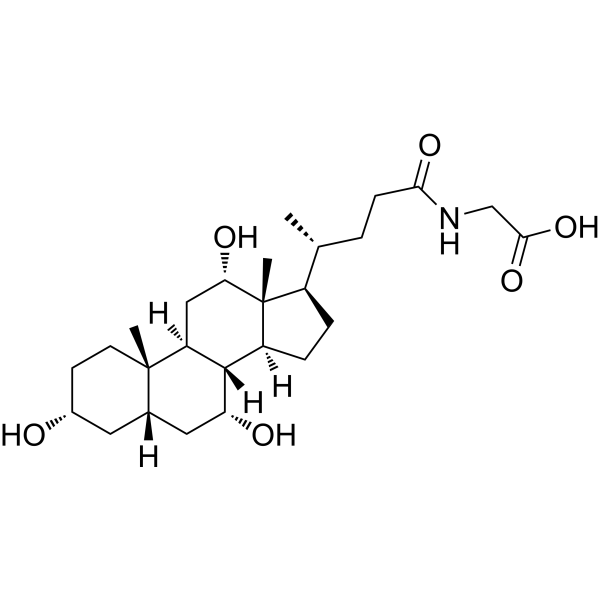
Glycocholic acid is a bile acid derivative. Glycocholic acid downregulates MDR1, Bcl-2, MRP1, MRP2 and FXR, upregulates Bax, p53, caspase-9, caspase-3, TGR5 and S1PR2. Glycocholic acid inhibits multidrug resistance and efflux pumps, induces mitochondrial apoptosis, and enhances chemosensitivity. Glycocholic acid modulates related bile acid receptor signaling. Glycocholic acid suppresses growth and conjugation of Enterobacteriaceae and increases their antibiotic susceptibility. Glycocholic acid can be used for the research of colon adenocarcinoma and cholangiocarcinoma (CCA).
For research use only. We do not sell to patients.
- Purity : 99.90%
- CAS No.: 475-31-0
- Formula: C26H43NO6
- Molecular Weight:465.62
-
Storage:Powder -20°C, 3 years , 4°C, 2 years ; In solvent -80°C, 6 months , -20°C, 1 month

To place orders, for customer services and technical support, please contact: MedChemExpress USA
Tel: 609-228-6898 E-mail: [email protected] [email protected]


-
 Biological Activity
-
Chemical Information
-
Solvent & Solubility
- Protocols
- Purity & Documentation
- References
-
 Help & FAQs


-
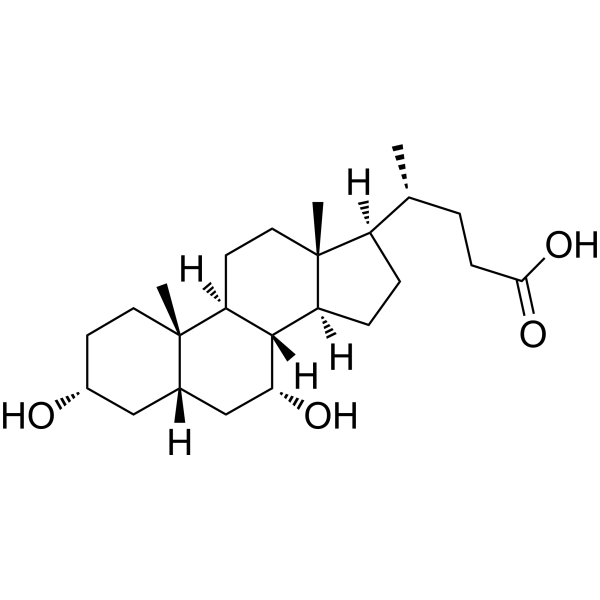
HY-76847
Chenodeoxycholic AcidEndogenous Metabolite -
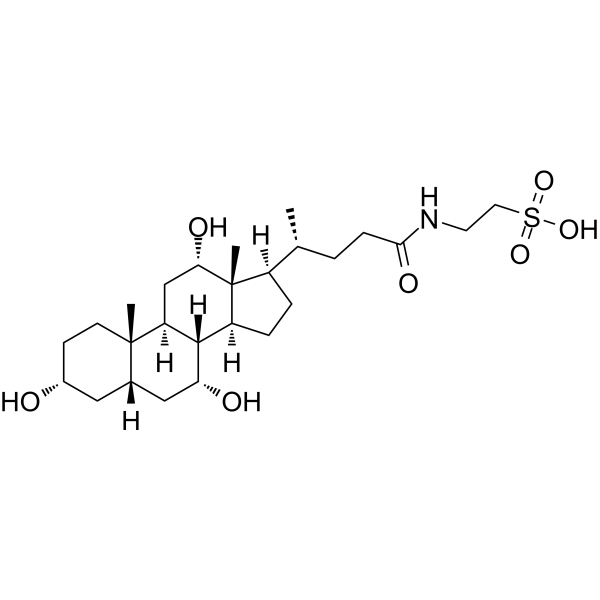
HY-B1788
Taurocholic acidImmunoregulation Agent -
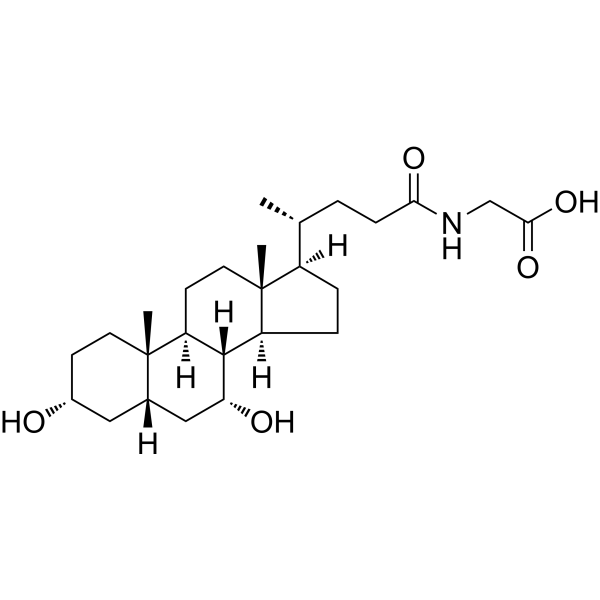
HY-N2334
Glycochenodeoxycholic acidEndogenous Metabolite -
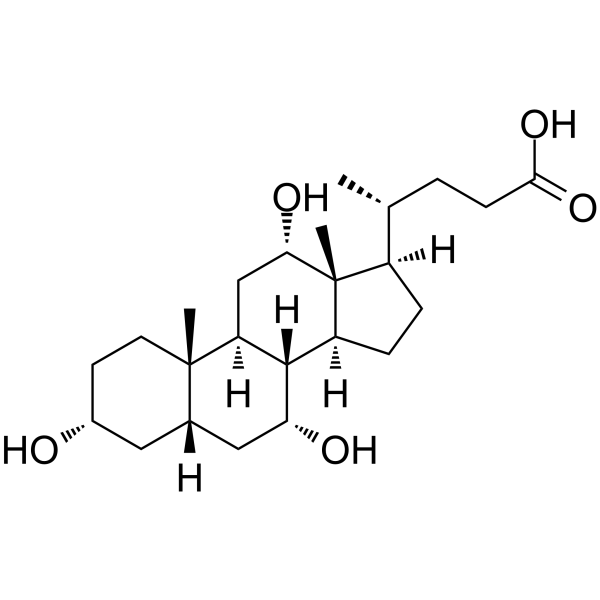
HY-N0324
Cholic acidEndogenous Metabolite -
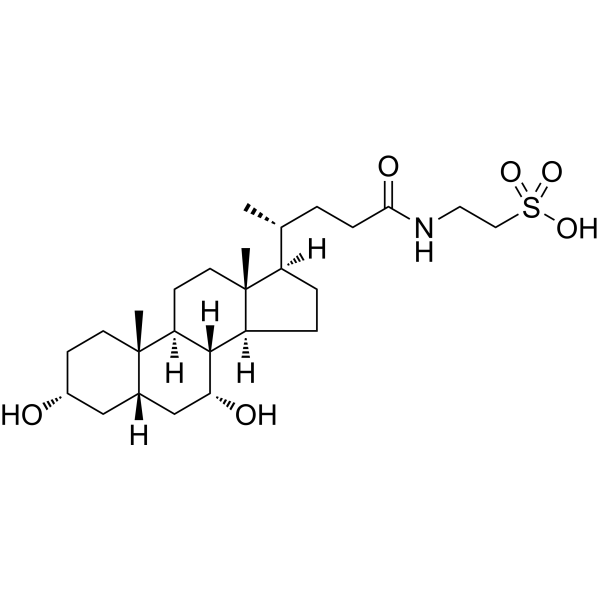
HY-N2027
Taurochenodeoxycholic acidEndogenous Metabolite -
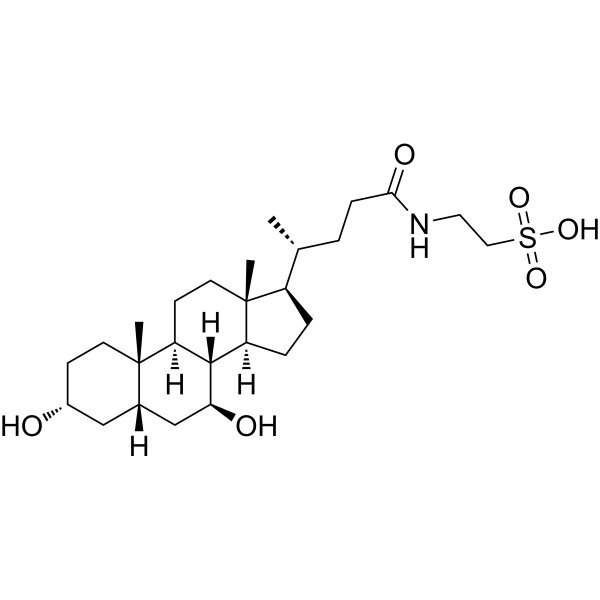
HY-19696
TauroursodeoxycholateEndoplasmic Reticulum Stress Inhibitor -
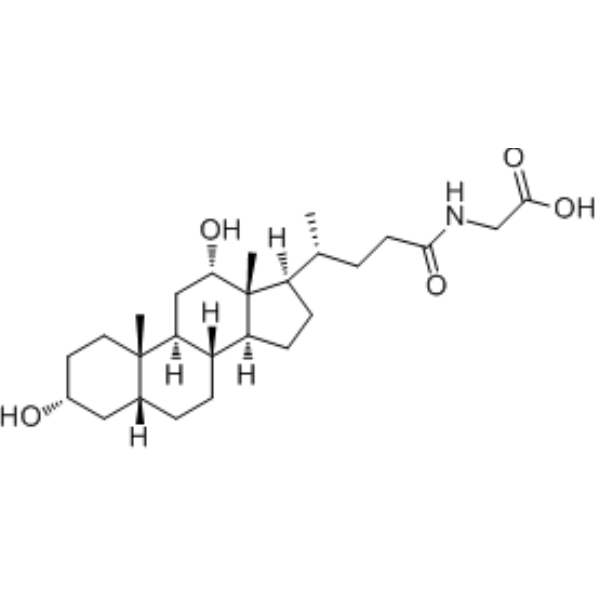
HY-125731
Glycodeoxycholic acidEndogenous Metabolite -
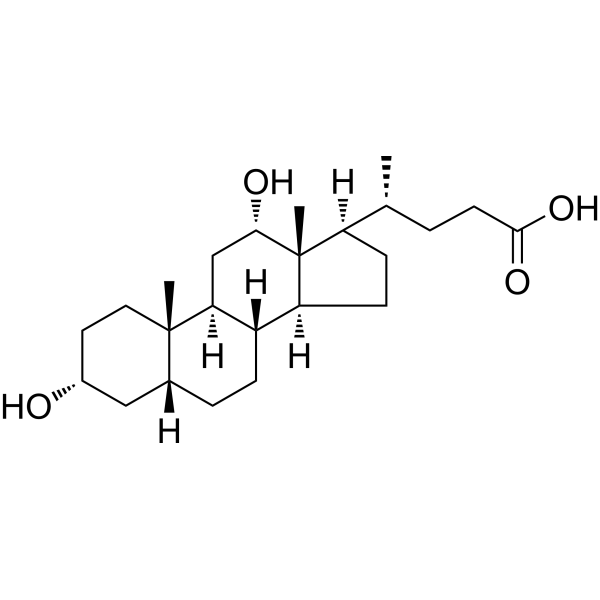
HY-N0593
Deoxycholic acidBile Acid Receptor Activator -
HY-B0172
Lithocholic acidAutophagy Inducer -
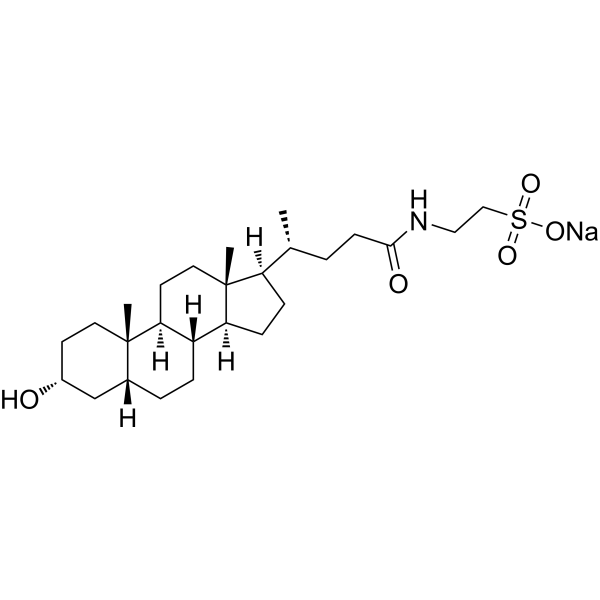
HY-113308A
Taurolithocholic acid sodium saltCholestatic Agent -
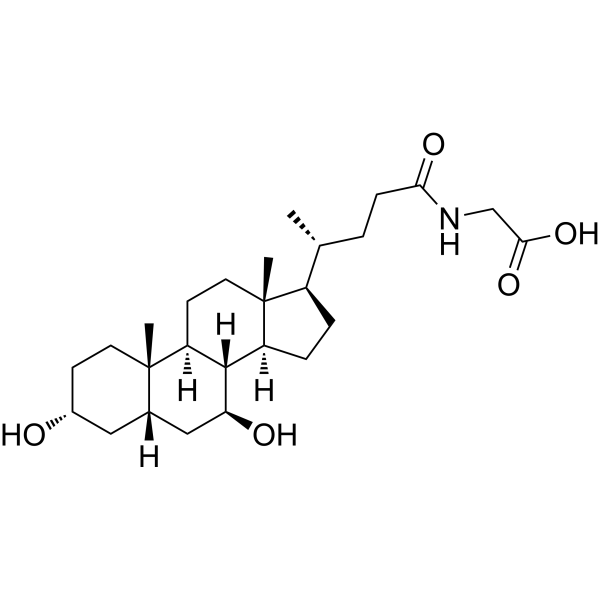
HY-N1424
Glycoursodeoxycholic acidEndogenous Metabolite -
HY-B1899
Taurodeoxycholic acidAnti-inflammatory Agent
Publications Citing Use of MedChemExpress (MCE) Glycocholic acid
More Customer Validation & Images

-
RT-PCR
All Endogenous Metabolite Isoforms
MoreAll Caspase Isoforms
More

Biological Activity
Description
IC50 & Target
[1]|
Microbial Metabolite |
Human Endogenous Metabolite |
Cellular Effect
|
Cell Line

|
Type | Value | Description | References |
|---|---|---|---|---|
| CHO | EC50 |
13.6 μM
Compound: 5b, glyco
|
Agonist activity at human TGR5 expressed in CHO cells by luciferase assay
Agonist activity at human TGR5 expressed in CHO cells by luciferase assay
|
[PMID: 18307294] |
| HEK293 | IC50 |
400 μM
Compound: Glycocholate
|
TP_TRANSPORTER: inhibition of E217betaG uptake in membrane vesicles from MRP4-expressing HEK-293 cells
TP_TRANSPORTER: inhibition of E217betaG uptake in membrane vesicles from MRP4-expressing HEK-293 cells
|
[PMID: 12523936] |
In Vitro
Glycocholic acid (0-500 μM; 0, 24, 48, 72 h) reduces the viability of human colon adenocarcinoma Caco-2 cells in a time- and concentration-dependent manner[1].
Glycocholic acid (250 μM; 72 h) at 250 μM significantly increases the chemosensitivity of human colon adenocarcinoma Caco-2 cells to Epirubicin (HY-13624)[1].
Glycocholic acid (250 μM; 72 h) alters the expression of multidrug resistance and apoptosis-related genes in human colon adenocarcinoma Caco-2 cells, downregulating MDR1, MRP1, MRP2, and Bcl-2 while upregulating Bax, caspase-3, caspase-9, and p53, and increasing the Bax-to-Bcl-2 ratio[1].
Glycocholic acid (250 μM; 72 h) reduces hMDR1 promoter activity in human colon adenocarcinoma Caco-2 cells[1].
Glycocholic acid (250 μM; 72 h) induces chromatin condensation, a marker of apoptosis, in human colon adenocarcinoma Caco-2 cells[1].
Glycocholic acid (250 μM; 72 h) increases the sub-G1 DNA content population, indicating apoptosis, in human colon adenocarcinoma Caco-2 cells[1].
Glycocholic acid (GCA) (1.6 μM; 48 h) modulates bile acid receptor gene expression in SNU-245 cholangiocarcinoma cells, reducing FXR expression and increasing TGR5 and S1PR2 expression[2].
Glycocholic acid inhibits late logarithmic phase growth of E. coli K1037, clinical UTI E. coli, Klebsiella pneumoniae, Klebsiella oxytoca, Salmonella Typhimurium, Raoultella ornithinolytica, and Citrobacter freundii in liquid LB culture, but not on solid LB agar medium[3].
Glycocholic acid reduces the MIC of ampicillin for E. coli K1037 by 2-fold and the MIC of chloramphenicol for Raoultella ornithinolytica and Citrobacter freundii by 2-fold, resulting in additive antimicrobial interactions (FIC index 0.625-0.75)[3].
Glycocholic acid (0.125-2%; 6 h) reduces conjugation frequency of multiple Enterobacteriaceae conjugative plasmids by 70 to 97% in a dose-dependent manner, with no prominent reduction in donor strain viability[3].
Glycocholic acid (0.2-2%; 16 h) significantly reduces E. coli K1037 motility on soft LB agar by downregulating fliC gene expression[3].
Glycocholic acid (0.125-2%) increases membrane permeability and compromises membrane integrity of E. coli K1037, as shown by increased NPN/EtBr uptake and cytoplasmic DnaK leakage[3].
MedChemExpress (MCE) has not independently confirmed the accuracy of these methods. They are for reference only.
Clinical Trial
| NCT Number | Sponsor | Condition | Start Date |
Phase
|
|---|---|---|---|---|
| NCT01329991 | Plexxikon| | 2011-05 | PHASE1 |


Chemical Information
-
CAS No. 475-31-0
-
Appearance Solid
-
Molecular Weight 465.62
-
Formula C26H43NO6
-
Color White to off-white
-
SMILES
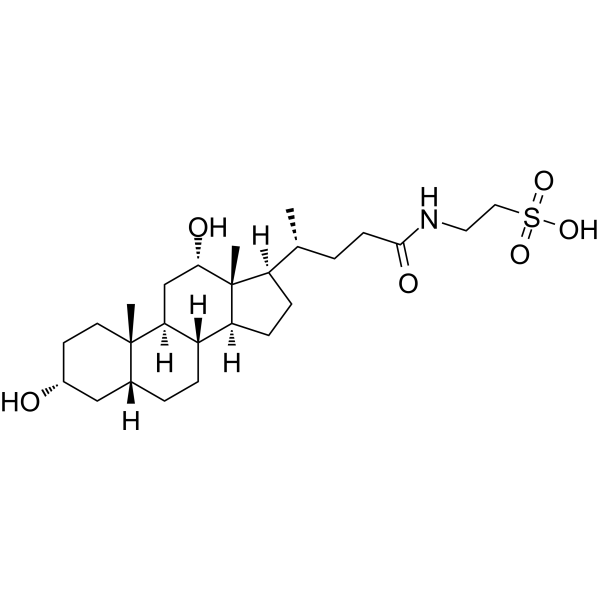
O=C(O)CNC(CC[C@@H](C)[C@H]1CC[C@@]2([H])[C@]3([H])[C@H](O)C[C@]4([H])C[C@H](O)CC[C@]4(C)[C@@]3([H])C[C@H](O)[C@]12C)=O
-
Structure Classification
-
Initial Source
-
Shipping
Room temperature in continental US; may vary elsewhere.
-
Storage
Powder -20°C 3 years 4°C 2 years In solvent -80°C 6 months -20°C 1 month


Publications (4)
-
Journal Impact Factor
-
Most Recent
-
Nature
2025 Jul;643(8070):192-200. PMID: 39695227 -
Nat Commun
2024 Sep 19;15(1):8221. PMID: 39300135 -
Adv Sci (Weinh)
Targeting FDFT1 Reduces Cholesterol and Bile Acid Production and Delays Hepatocellular Carcinoma Progression Through the HNF4A/ALDOB/AKT1 Axis. [Abstract]2025 Mar;12(12):e2411719. PMID: 39899681
Glycocholic acid purchased from MedChemExpress. Usage Cited in: Adv Sci (Weinh). 2025 Mar;12(12):e2411719. [Abstract]
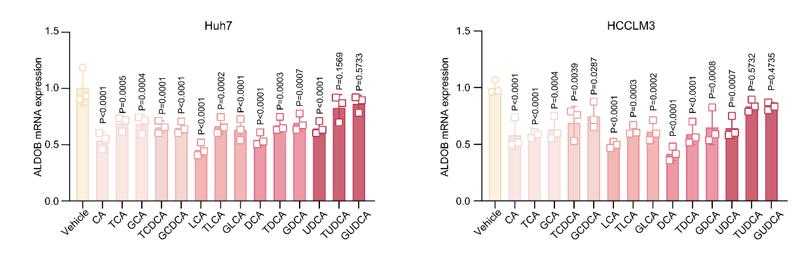
The mRNA levels of ALDOB in Huh7 or HCCLM3 cells treated with various bile acids (100 μM, 24 h). All data are presented as mean ± SD. Data were analyzed by one-way ANOVA with Bonferroni multiple-comparison correction. CA, cholic acid; TCA, taurocholic acid; GCA, glycocholic acid; TCDCA, taurochenodeoxycholic acid; GCDCA, glycochenodeoxycholic acid; LCA, lithocholic acid; TLCA, taurolithocholic acid; GLCA, glycolithocholic acid; DCA, deoxycholic acid; TDCA, taurodeoxycholic acid; GDCA, glycodeoxycholic acid; UDCA, ursodeoxycholic acid; TUDCA, tauroursodeoxycholic acid; GUDCA, glycoursodeoxycholic acid.
-


Solvent & Solubility
In Vitro:
Methanol : ≥ 100 mg/mL (214.77 mM)
DMSO : ≥ 100 mg/mL (214.77 mM; Hygroscopic DMSO has a significant impact on the solubility of product, please use newly opened DMSO)
H2O : < 0.1 mg/mL (insoluble)
* "≥" means soluble, but saturation unknown.
Please refer to the solubility information to select the appropriate solvent. Once prepared, please aliquot and store the solution to prevent product inactivation from repeated freeze-thaw cycles.
Storage method and period of stock solution: -80°C, 6 months; -20°C, 1 month. When stored at -80°C, please use it within 6 months. When stored at -20°C, please use it within 1 month.
Please refer to the solubility information to select the appropriate solvent. Once prepared, please aliquot and store the solution to prevent product inactivation from repeated freeze-thaw cycles.
Storage method and period of stock solution: -80°C, 6 months; -20°C, 1 month. When stored at -80°C, please use it within 6 months. When stored at -20°C, please use it within 1 month.
Concentration (start) × Volume (start) = Concentration (final) × Volume (final)
In Vivo:
Select the appropriate dissolution method based on your experimental animal and administration route.
- For the following dissolution methods, please ensure to first prepare a clear stock solution using an In Vitro approach and then sequentially add co-solvents:
- To ensure reliable experimental results, the clarified stock solution can be appropriately stored based on storage conditions. As for the working solution for In Vivo experiments, it is recommended to prepare freshly and use it on the same day.
- The percentages shown for the solvents indicate their volumetric ratio in the final prepared solution. If precipitation or phase separation occurs during preparation, heat and/or sonication can be used to aid dissolution.
Add each solvent one by one: 10% DMSO 40% PEG300 5% Tween-80 45% Saline
Solubility: ≥ 2.08 mg/mL (4.47 mM); Clear solution
This protocol yields a clear solution of ≥ 2.08 mg/mL (saturation unknown).
Taking 1 mL working solution as an example, add 100 μL DMSO stock solution (20.8 mg/mL) to 400 μL PEG300, and mix evenly; then add 50 μL Tween-80 and mix evenly; then add 450 μL Saline to adjust the volume to 1 mL.
Preparation of Saline: Dissolve 0.9 g sodium chloride in ddH₂O and dilute to 100 mL to obtain a clear Saline solution.
Add each solvent one by one: 10% DMSO 90% (20% SBE-β-CD in Saline)
Solubility: ≥ 2.08 mg/mL (4.47 mM); Clear solution
This protocol yields a clear solution of ≥ 2.08 mg/mL (saturation unknown).
Taking 1 mL working solution as an example, add 100 μL DMSO stock solution (20.8 mg/mL) to 900 μL 20% SBE-β-CD in Saline, and mix evenly.
Preparation of 20% SBE-β-CD in Saline (4°C, storage for one week): 2 g SBE-β-CD powder is dissolved in 10 mL Saline, completely dissolve until clear.
In Vivo Dissolution Calculator
Please enter the basic information of animal experiments:
-
-
-
-
Recommended: Prepare an additional quantity of animals to account for potential losses during experiments.
Please enter your animal formula composition:
-
%DMSO +
Recommended: Keep the proportion of DMSO in working solution below 2% if your animal is weak.
-
%+
-
+%Tween-80 + +
-
%Saline +
The co-solvents required include: DMSO, . All of co-solvents are available by MedChemExpress (MCE). , Tween 80. All of co-solvents are available by MedChemExpress (MCE).
Working solution concentration: 0.22 mg/mL
Method for preparing stock solution: mg drug dissolved in μL DMSO. Stock solution concentration: mg/mL.
1. Take μL DMSO stock solution;
2. Add μL .
μL , mix evenly;
3. Then add μL Tween 80, mix evenly;
4. Then add μL
Please ensure that the stock solution in the first step is dissolved to a clear state, and add co-solvents in sequence. You can use ultrasonic heating (ultrasonic cleaner, recommended frequency 20-40 kHz), vortexing, etc. to assist dissolution.


Purity & Documentation
-
Data Sheet (292 KB)
-
SDS (396 KB)
- English - EN (396 KB)
- Français - FR (396 KB)
- Deutsch - DE (396 KB)
- Norwegian - NO (396 KB)
- Español - ES (396 KB)
- Swedish - SV (396 KB)
- Italian - IT (396 KB)
- Korean - KR (396 KB)
- Portuguese - PT (396 KB)
-
Handling Instructions (2659 KB)
References
[1]. Lo YL, et al. Inhibit multidrug resistance and induce apoptosis by using glycocholic acid and epirubicin. Eur J Pharm Sci. 2008;35(1-2):52-67. [Content Brief]
[2]. Song WS, et al. Discovery of glycocholic acid and taurochenodeoxycholic acid as phenotypic biomarkers in cholangiocarcinoma. Sci Rep. 2018;8(1):11088. Published 2018 Jul 23. [Content Brief]
[3]. Piscon B, et al. The Effect of glycocholic acid on the growth, membrane permeability, conjugation and antibiotic susceptibility of Enterobacteriaceae. Front Cell Infect Microbiol. 2025;15:1550545. Published 2025 Mar 20. [Content Brief]
[4]. Lo YL, et al. Inhibit multidrug resistance and induce apoptosis by using glycocholic acid and epirubicin. Eur J Pharm Sci. 2008 Sep 2;35(1-2):52-67. [Content Brief]


Complete Stock Solution Preparation Table
Please refer to the solubility information to select the appropriate solvent. Once prepared, please aliquot and store the solution to prevent product inactivation from repeated freeze-thaw cycles.
Storage method and period of stock solution: -80°C, 6 months; -20°C, 1 month. When stored at -80°C, please use it within 6 months. When stored at -20°C, please use it within 1 month.
| Optional Solvent | Concentration Solvent Mass | 1 mg | 5 mg | 10 mg | 25 mg |
|---|---|---|---|---|---|
| Methanol / DMSO | 1 mM | 2.1477 mL | 10.7384 mL | 21.4767 mL | 53.6919 mL |
| 5 mM | 0.4295 mL | 2.1477 mL | 4.2953 mL | 10.7384 mL | |
| 10 mM | 0.2148 mL | 1.0738 mL | 2.1477 mL | 5.3692 mL | |
| 15 mM | 0.1432 mL | 0.7159 mL | 1.4318 mL | 3.5795 mL | |
| 20 mM | 0.1074 mL | 0.5369 mL | 1.0738 mL | 2.6846 mL | |
| 25 mM | 0.0859 mL | 0.4295 mL | 0.8591 mL | 2.1477 mL | |
| 30 mM | 0.0716 mL | 0.3579 mL | 0.7159 mL | 1.7897 mL | |
| 40 mM | 0.0537 mL | 0.2685 mL | 0.5369 mL | 1.3423 mL | |
| 50 mM | 0.0430 mL | 0.2148 mL | 0.4295 mL | 1.0738 mL | |
| 60 mM | 0.0358 mL | 0.1790 mL | 0.3579 mL | 0.8949 mL | |
| 80 mM | 0.0268 mL | 0.1342 mL | 0.2685 mL | 0.6711 mL | |
| 100 mM | 0.0215 mL | 0.1074 mL | 0.2148 mL | 0.5369 mL |


Glycocholic acid Related Classifications
HY-N1423 Related Classifications
 Powered by Bioz