



Ursodeoxycholic acid sodium
Based on 32 publication(s) in Google Scholar
Ursodeoxycholic acid (Ursodeoxycholate) sodium is a secondary bile acid issued from the transformation of (cheno)deoxycholic acid by intestinal bacteria, acting as a key regulator of the intestinal barrier integrity and essential for lipid metabolism. Ursodeoxycholic acid sodium acts as signaling molecule, exerting its effects by interacting with bile acid activated receptors, including G-protein coupled bile acid receptor 5 (TGR5, GPCR19) and the farnesoid X receptor (FXR). Ursodeoxycholic acid sodium can be used for the research of a variety of hepatic and gastrointestinal diseases. Orally active.
For research use only. We do not sell to patients.
- Purity : 99.95%
- CAS No.: 2898-95-5
- Formula: C24H39NaO4
- Molecular Weight:414.55
-
Storage:
4°C, sealed storage, away from moisture
* In solvent : -80°C, 6 months; -20°C, 1 month (sealed storage, away from moisture)

To place orders, for customer services and technical support, please contact: MedChemExpress USA
Tel: 609-228-6898 E-mail: [email protected] [email protected]


-
 Biological Activity
-
Chemical Information
-
Solvent & Solubility
- Protocols
- Purity & Documentation
- References
-
 Help & FAQs


-
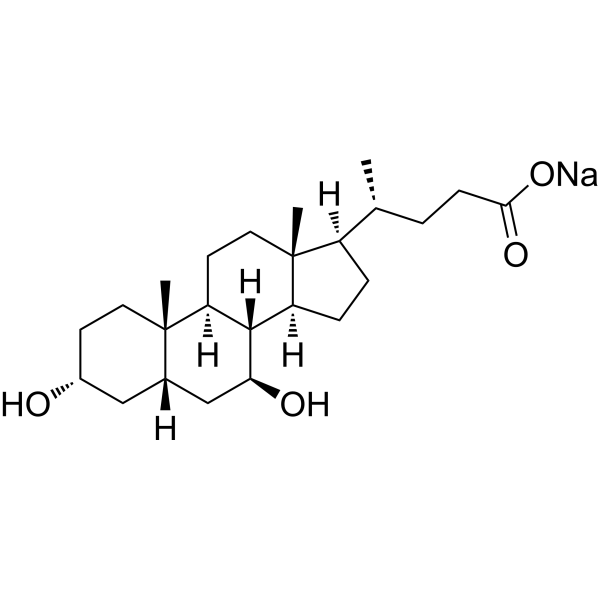
HY-128853
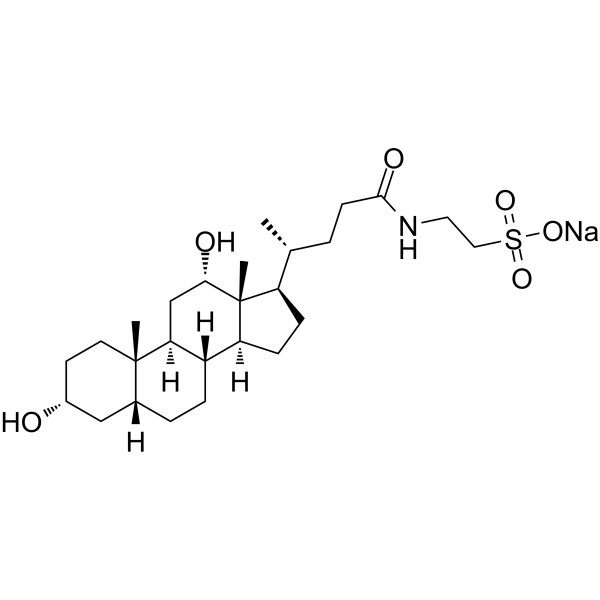
Taurodeoxycholate sodiumAnti-inflammatory Agent -
HY-19696A
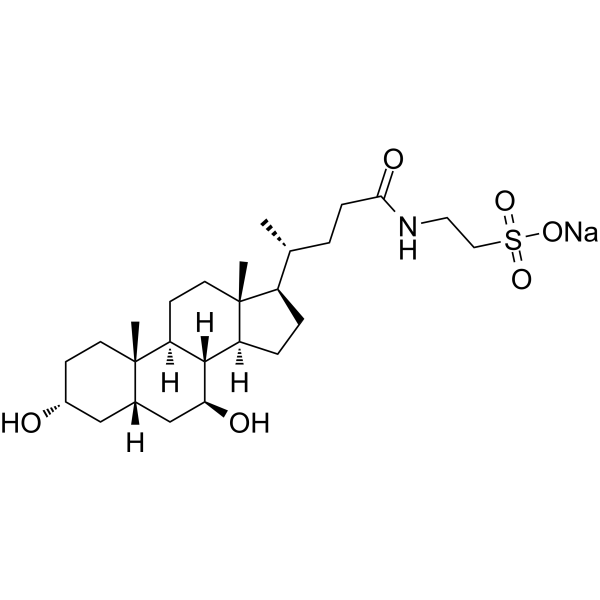
Tauroursodeoxycholate sodiumEndoplasmic Reticulum Stress Inhibitor -
HY-76847A
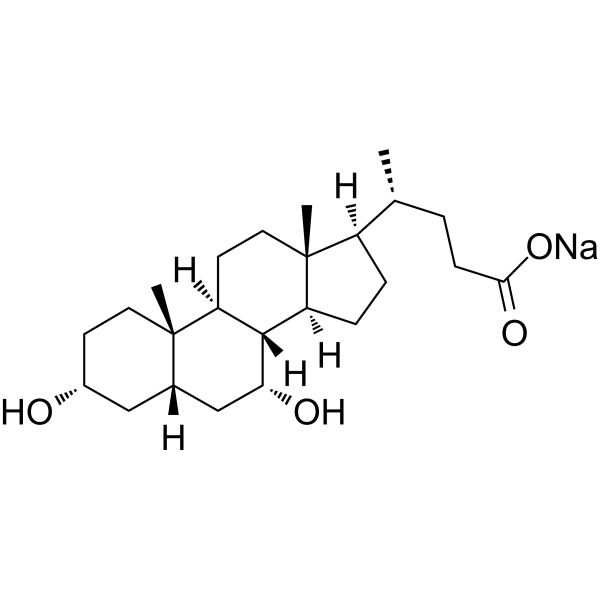
Chenodeoxycholic acid sodiumEndogenous Metabolite -
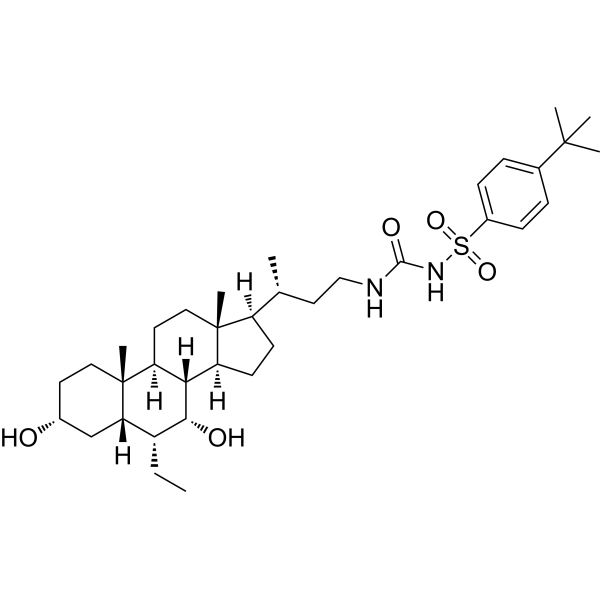
HY-134988
EDP-305FXR Agonist -
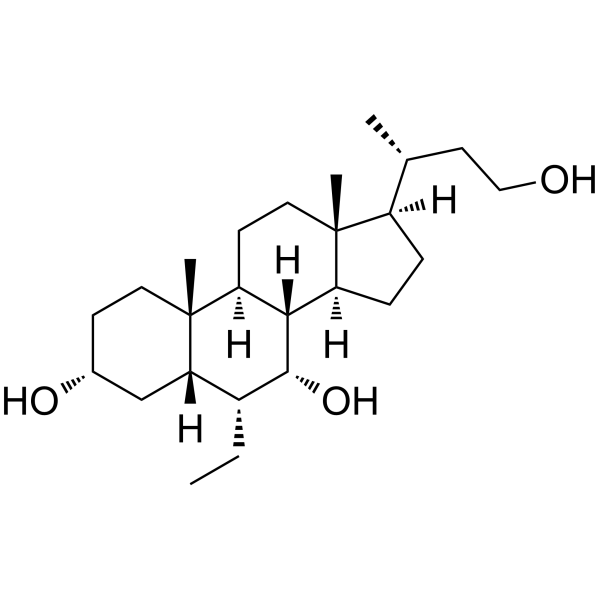
HY-101273
BAR502FXR/GPBAR1 Agonist -
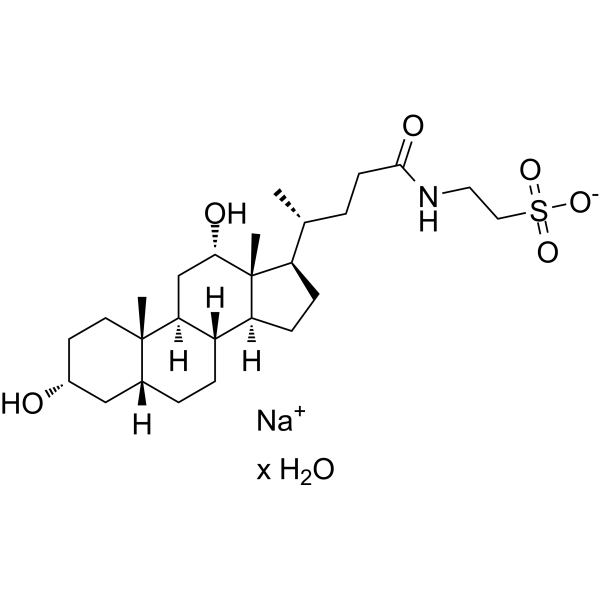
HY-W089835
Sodium taurodeoxycholate hydrateAnti-inflammatory Agent -
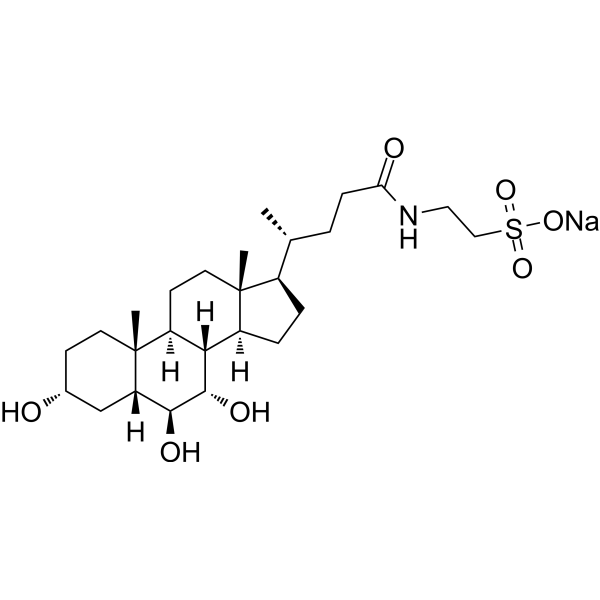
HY-133890A
Tauro-α-muricholic acid sodiumFXR Antagonist -

HY-101274A
(3α,5β,6β,7α)-BAR501Cholane Scaffolds -

HY-128853R
Taurodeoxycholate sodium salt (Standard)Anti-inflammatory Agent -

HY-W089835R
Sodium taurodeoxycholate hydrate (Standard)Bile Acid
Publications Citing Use of MedChemExpress (MCE) Ursodeoxycholic acid sodium
More- Nature. 2025 Jul;643(8070):192-200. [Abstract]
- Cell Host Microbe. 2024 Feb 14;32(2):191-208.e9. [Abstract]
- Nat Commun. 2025 Aug 16;16(1):7638. [Abstract]
- Nat Commun. 2023 May 2;14(1):2523. [Abstract]
- Adv Sci (Weinh). 2025 Oct 27:e15370. [Abstract]
- Adv Sci (Weinh). 2025 Mar;12(12):e2411719. [Abstract]
- Phytomedicine. 2025 Apr:139:156495. [Abstract]
- Phytomedicine. 2024 Sep:132:155886. [Abstract]
- J Transl Med. 2024 Dec 20;22(1):1124. [Abstract]
- Food Res Int. 2026 Feb 17.
- Mater Today Adv. 2026 May 6;30:100799.
- Free Radic Biol Med. 2020 May 20:152:821-837. [Abstract]
- Cell Prolif. 2023 Nov;56(11):e13488. [Abstract]
- Br J Pharmacol. 2026 Jul 1.
- J Ethnopharmacol. 2026 May 23:363:121421. [Abstract]
- JCI Insight. 2025 Sep 23;10(18):e190716. [Abstract]
- Cells. 2022 Sep 21;11(19):2951. [Abstract]
- Commun Biol. 2025 Jul 5;8(1):1009. [Abstract]
- Eur J Pharmacol. 2026 Apr 10:1020:178775. [Abstract]
- Eur J Pharmacol. 2026 Apr 29:178910. [Abstract]
- Int Immunopharmacol. 2026 Oct 1:186:117129.
- Int Immunopharmacol. 2026 Jun 15:179:116602. [Abstract]
- Int J Mol Sci. 2024 Jan 11;25(2):919. [Abstract]
- Biochim Biophys Acta Mol Basis Dis. 2024 Mar;1870(3):167029. [Abstract]
- Aquaculture. 2024 Nov 15.
- Microbiol Spectr. 2026 Jun 2;14(6):e0363325. [Abstract]
- Vet Microbiol. 2026 May:316:110973. [Abstract]
- Neurosci Lett. 2021 Jan 10:741:135493. [Abstract]
- Lett Drug Des Discov. 2025 Nov 26.
- Clin Neuropharmacol. 2022 Nov-Dec;45(6):168-174. [Abstract]
- Res Sq. 2025 Nov 17.
- Research Square Preprint. 2021 Aug.
 Customer Validation & Images

-
Histological Imaging/Staining
-
RT-PCR
-
RT-PCR
-
WB
-
IF
All Endogenous Metabolite Isoforms
More

Biological Activity
Description
IC50 & Target
|
Microbial Metabolite |
Human Endogenous Metabolite |
In Vivo
MedChemExpress (MCE) has not independently confirmed the accuracy of these methods. They are for reference only.
-
Animal Model:5 week old C57BL/6J WT mice (male and female)[1]
-
Dosage:50, 150, and 450 mg/kg dissolved in corn oil
-
Administration:Oral gavage; daily for 21 days
-
Result:Mice in the 50 and 450 mg/kg groups sustained significant weight loss within a week. At 50 mg/kg, this weight loss persisted over the course of the experiment. At 450 mg/kg, initially weight loss was noted during the first and third week of ursodiol administration. At 150 mg/kg, it did not have significantly different weights compared to the untreated mice.


Chemical Information
-
CAS No. 2898-95-5
-
Appearance Solid
-
Molecular Weight 414.55
-
Formula C24H39NaO4
-
Color White to off-white
-
SMILES
C[C@@]12[C@](CC[C@]2([H])[C@H](C)CCC(O[Na])=O)([H])[C@@]3([H])[C@@](CC1)([H])[C@@]4([C@](C[C@@H](CC4)O)([H])C[C@@H]3O)C
-
Synonyms
Ursodeoxycholate sodium; Ursodiol sodium; UCDA sodium
-
Structure Classification
-
Initial Source
intestinal bacteria
-
Shipping
Room temperature in continental US; may vary elsewhere.
-
Storage
4°C, sealed storage, away from moisture
* In solvent : -80°C, 6 months; -20°C, 1 month (sealed storage, away from moisture)


Publications (32)
-
Journal Impact Factor
-
Most Recent
-
Nature
2025 Jul;643(8070):192-200. PMID: 39695227 -
Cell Host Microbe
A gut microbiota-bile acid axis promotes intestinal homeostasis upon aspirin-mediated damage. [Abstract]2024 Feb 14;32(2):191-208.e9. PMID: 38237593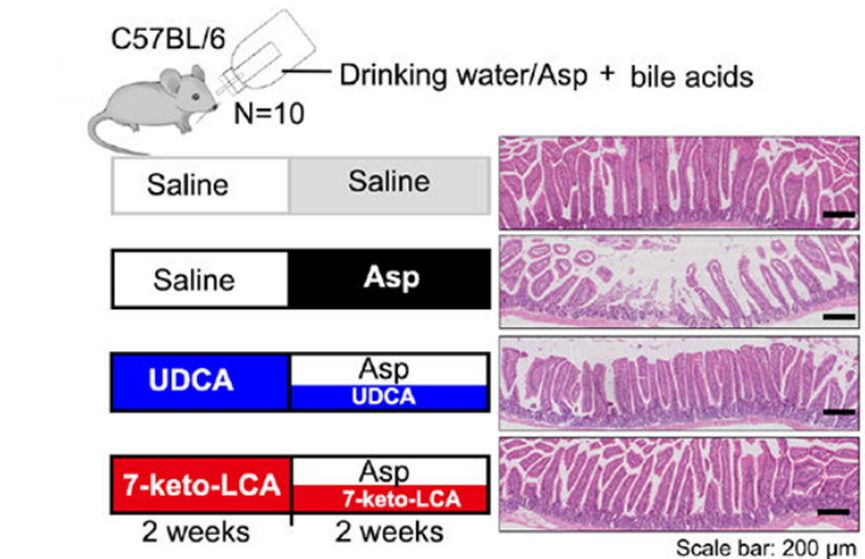
Ursodeoxycholic acid sodium purchased from MedChemExpress. Usage Cited in: Cell Host Microbe. 2024 Feb 14;32(2):191-208.e9. [Abstract]
H&E-stained demonstrated Ursodeoxycholic acid (UDCA) (50 mg/kg/day, gavage, 2 weeks) and 7-keto-LCA protected against aspirin-induced intestinal epithelial damage.
-
Nat Commun
2025 Aug 16;16(1):7638. PMID: 40819131
Ursodeoxycholic acid sodium purchased from MedChemExpress. Usage Cited in: Nat Commun. 2025 Aug 16;16(1):7638. [Abstract]
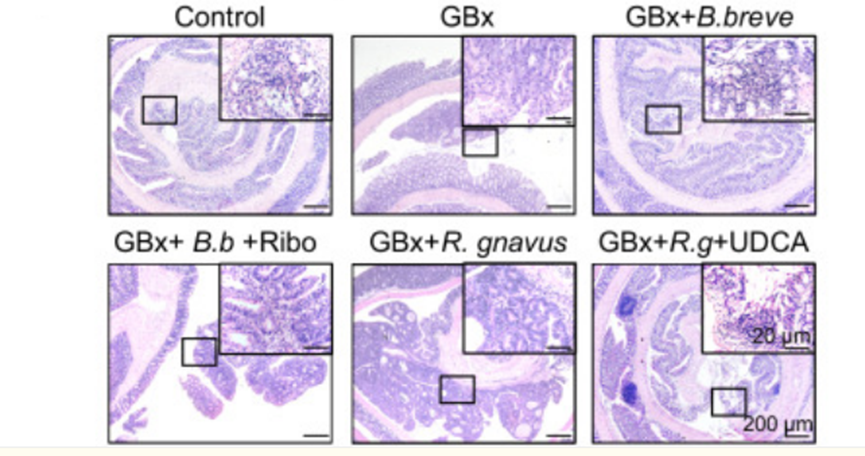
Mice were gavaged with B. breve or R. gnavus and then treated with BSH inhibitor riboflavin or 7β-HSDH inhibitor Ursodeoxycholic acid (UDCA) (50 mg/kg, p.o.) H&E staining showed normal, dysplastic mucosae and carcinoma in the colon tissues.
-
Nat Commun
Reduced hepatic bradykinin degradation accounts for cold-induced BAT thermogenesis and WAT browning in male mice. [Abstract]2023 May 2;14(1):2523. PMID: 37130842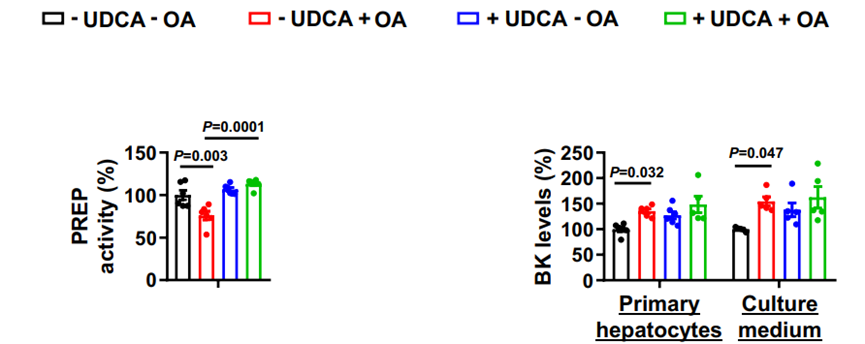
Ursodeoxycholic acid sodium purchased from MedChemExpress. Usage Cited in: Nat Commun. 2023 May 2;14(1):2523. [Abstract]
Ursodeoxycholic acid (UDCA) (0.1 mM, 6 h) blocked OA-decreased PREP activity and -increased BK content.
-
Adv Sci (Weinh)
Medicago Sativa L. Saponin-Driven Lactobacillus Intestinalis Restores Intestinal Stemness in Naturally Aged Mice via the Bile Acid-FXR-Wnt Signaling Axis. [Abstract]2025 Oct 27:e15370. PMID: 41144719
Ursodeoxycholic acid sodium purchased from MedChemExpress. Usage Cited in: Adv Sci (Weinh). 2025 Oct 27:e15370. [Abstract]
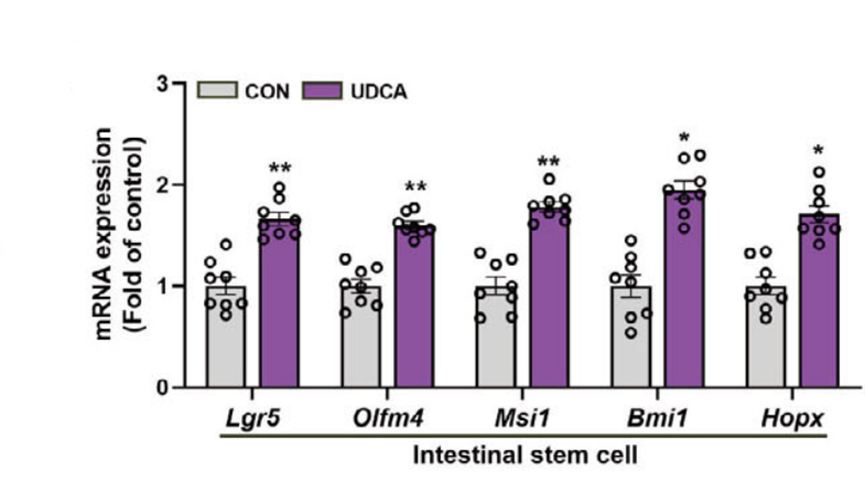
RT‐PCR analysis showed that Ursodeoxycholic acid (UDCA) (20 μM. 24 h) supplementation significantly increased the mRNA levels of critical markers of ISCs.
Ursodeoxycholic acid sodium purchased from MedChemExpress. Usage Cited in: Adv Sci (Weinh). 2025 Oct 27:e15370. [Abstract]
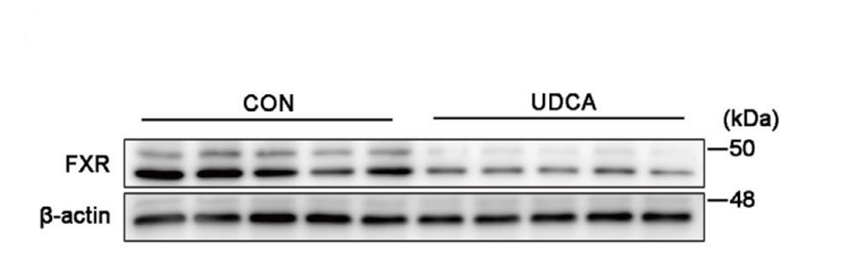
Protein immunoblotting analysis showed that Ursodeoxycholic acid (UDCA) (20 μM, 24 h) supplementation reduced the protein expression of the bile acids receptor FXR.
Ursodeoxycholic acid sodium purchased from MedChemExpress. Usage Cited in: Adv Sci (Weinh). 2025 Oct 27:e15370. [Abstract]
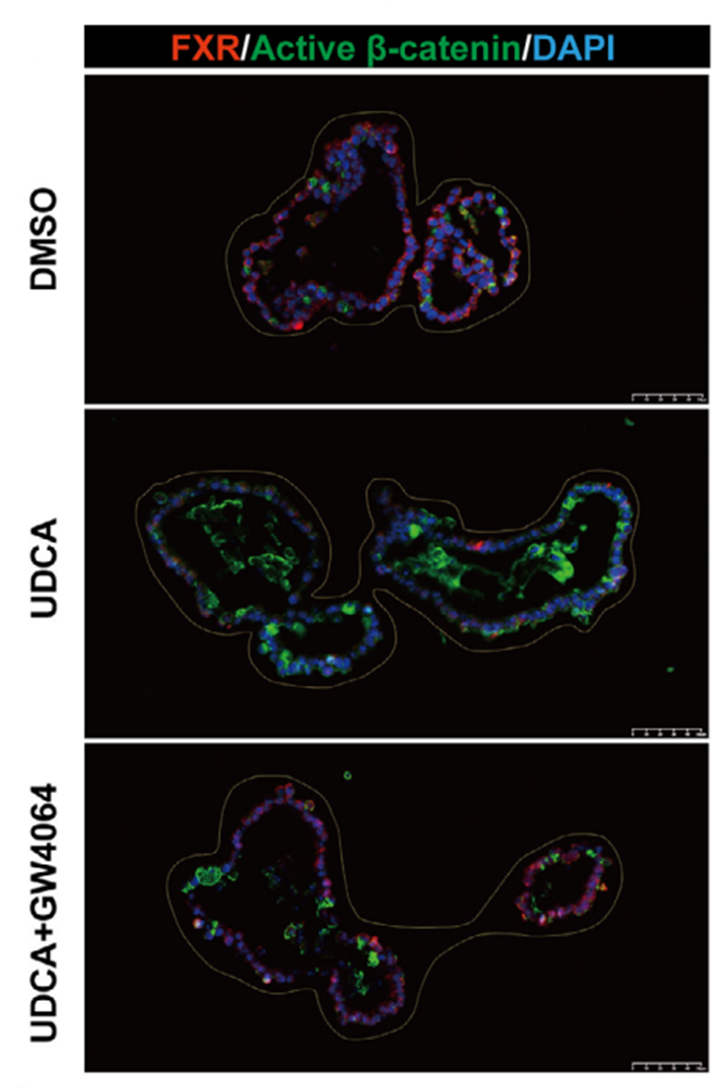
Ursodeoxycholic acid (UDCA) (20 μM, 7 days) treatment increased the protein levels of active β‐catenin in organoid cultures by immunofluorescence images.
-
Adv Sci (Weinh)
Targeting FDFT1 Reduces Cholesterol and Bile Acid Production and Delays Hepatocellular Carcinoma Progression Through the HNF4A/ALDOB/AKT1 Axis. [Abstract]2025 Mar;12(12):e2411719. PMID: 39899681
Ursodeoxycholic acid sodium purchased from MedChemExpress. Usage Cited in: Adv Sci (Weinh). 2025 Mar;12(12):e2411719. [Abstract]
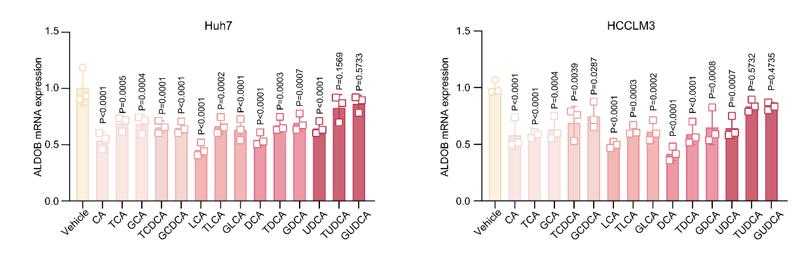
The mRNA levels of ALDOB in Huh7 or HCCLM3 cells treated with various bile acids (100 μM, 24 h). All data are presented as mean ± SD. Data were analyzed by one-way ANOVA with Bonferroni multiple-comparison correction. CA, cholic acid; TCA, taurocholic acid; GCA, glycocholic acid; TCDCA, taurochenodeoxycholic acid; GCDCA, glycochenodeoxycholic acid; LCA, lithocholic acid; TLCA, taurolithocholic acid; GLCA, glycolithocholic acid; DCA, deoxycholic acid; TDCA, taurodeoxycholic acid; GDCA, glycodeoxycholic acid; UDCA, ursodeoxycholic acid; TUDCA, tauroursodeoxycholic acid; GUDCA, glycoursodeoxycholic acid.
-
Phytomedicine
Yinzhihuang formula modulates the microbe‒gut‒liver axis and bile acid excretion to attenuate cholestatic liver injury. [Abstract]2025 Apr:139:156495. PMID: 39978276 -
Phytomedicine
Investigating the potential mechanism and therapeutic effects of SLXG for cholesterol gallstone treatment. [Abstract]2024 Sep:132:155886. PMID: 39059092 -
J Transl Med
Conjugated bile acids alleviate acute pancreatitis through inhibition of TGR5 and NLRP3 mediated inflammation. [Abstract]2024 Dec 20;22(1):1124. PMID: 39707318 -
-
-
Free Radic Biol Med
Ursodeoxycholic acid protects against cisplatin-induced acute kidney injury and mitochondrial dysfunction through acting on ALDH1L2. [Abstract]2020 May 20:152:821-837. PMID: 32004633 -
Cell Prolif
Suppression of the gut microbiota-bile acid-FGF19 axis in patients with atrial fibrillation. [Abstract]2023 Nov;56(11):e13488. PMID: 37186335 -
-
J Ethnopharmacol
Eupalinolide B ameliorates liver fibrosis by targeting PKCα to suppress the AKT/mTOR axis in hepatic stellate cells. [Abstract]2026 May 23:363:121421. PMID: 41759558 -
JCI Insight
FXR shapes an immunosuppressive microenvironment in PD-L1lo/- non-small cell lung cancer by upregulating HVEM. [Abstract]2025 Sep 23;10(18):e190716. PMID: 40985894 -
Cells
Cartilaginous Metabolomics Reveals the Biochemical-Niche Fate Control of Bone Marrow-Derived Stem Cells. [Abstract]2022 Sep 21;11(19):2951. PMID: 36230915 -
Commun Biol
Ursodeoxycholic acid alleviates aortic aneurysm and dissection through the intestinal farnesoid X receptor/ceramide synthase 2 axis. [Abstract]2025 Jul 5;8(1):1009. PMID: 40617906 -
Eur J Pharmacol
Integrative Mendelian randomization and experimental validation unveil novel druggable targets in primary biliary cholangitis. [Abstract]2026 Apr 10:1020:178775. PMID: 41819524 -
Eur J Pharmacol
Intestinal-restricted farnesoid X receptor agonist Fex3 alleviates cholestatic liver injury via FGF15-CYP7A1 axis. [Abstract]2026 Apr 29:178910. PMID: 42067015 -
-
Int Immunopharmacol
Pedunculoside ameliorates liver fibrosis by targeting c-Jun to inhibit hepatic stellate cell activation. [Abstract]2026 Jun 15:179:116602. PMID: 41936306 -
Int J Mol Sci
Establishment and Validation of Novel Prognostic Subtypes in Hepatocellular Carcinoma Based on Bile Acid Metabolism Gene Signatures Using Bulk and Single-Cell RNA-Seq Data. [Abstract]2024 Jan 11;25(2):919. PMID: 38255993 -
Biochim Biophys Acta Mol Basis Dis
2024 Mar;1870(3):167029. PMID: 38325224 -
-
Microbiol Spectr
Ursodeoxycholic acid inhibits feline infectious peritonitis virus infection through activating JAK-STAT signaling pathway-induced type I interferon. [Abstract]2026 Jun 2;14(6):e0363325. PMID: 42112801 -
Vet Microbiol
2026 May:316:110973. PMID: 41806593 -
Neurosci Lett
Ursodeoxycholic acid protects dopaminergic neurons from oxidative stress via regulating mitochondrial function, autophagy, and apoptosis in MPTP/MPP+-induced Parkinson's disease. [Abstract]2021 Jan 10:741:135493. PMID: 33181233 -
-
Clin Neuropharmacol
Protective Effects of Ursodeoxycholic Acid Against Oxidative Stress and Neuroinflammation Through Mitogen-Activated Protein Kinases Pathway in MPTP-Induced Parkinson Disease. [Abstract]2022 Nov-Dec;45(6):168-174. PMID: 36383915 -
-


Solvent & Solubility
In Vitro:
DMSO : 125 mg/mL (301.53 mM; ultrasonic and warming and heat to 60°C; Hygroscopic DMSO has a significant impact on the solubility of product, please use newly opened DMSO)
H2O : ≥ 100 mg/mL (241.23 mM)
* "≥" means soluble, but saturation unknown.
Please refer to the solubility information to select the appropriate solvent. Once prepared, please aliquot and store the solution to prevent product inactivation from repeated freeze-thaw cycles.
Storage method and period of stock solution: -80°C, 6 months; -20°C, 1 month (sealed storage, away from moisture). When stored at -80°C, please use it within 6 months. When stored at -20°C, please use it within 1 month.
* Note: If you choose water as the stock solution, please dilute it to the working solution, then filter and sterilize it with a 0.22 μm filter before use.
Please refer to the solubility information to select the appropriate solvent. Once prepared, please aliquot and store the solution to prevent product inactivation from repeated freeze-thaw cycles.
Storage method and period of stock solution: -80°C, 6 months; -20°C, 1 month (sealed storage, away from moisture). When stored at -80°C, please use it within 6 months. When stored at -20°C, please use it within 1 month.
* Note: If you choose water as the stock solution, please dilute it to the working solution, then filter and sterilize it with a 0.22 μm filter before use.
Concentration (start) × Volume (start) = Concentration (final) × Volume (final)
In Vivo:
Select the appropriate dissolution method based on your experimental animal and administration route.
- For the following dissolution methods, please ensure to first prepare a clear stock solution using an In Vitro approach and then sequentially add co-solvents:
- To ensure reliable experimental results, the clarified stock solution can be appropriately stored based on storage conditions. As for the working solution for In Vivo experiments, it is recommended to prepare freshly and use it on the same day.
- The percentages shown for the solvents indicate their volumetric ratio in the final prepared solution. If precipitation or phase separation occurs during preparation, heat and/or sonication can be used to aid dissolution.
Add each solvent one by one: 10% DMSO 40% PEG300 5% Tween-80 45% Saline
Solubility: ≥ 2.08 mg/mL (5.02 mM); Clear solution
This protocol yields a clear solution of ≥ 2.08 mg/mL (saturation unknown).
Taking 1 mL working solution as an example, add 100 μL DMSO stock solution (20.8 mg/mL) to 400 μL PEG300, and mix evenly; then add 50 μL Tween-80 and mix evenly; then add 450 μL Saline to adjust the volume to 1 mL.
Preparation of Saline: Dissolve 0.9 g sodium chloride in ddH₂O and dilute to 100 mL to obtain a clear Saline solution.
Add each solvent one by one: 10% DMSO 90% (20% SBE-β-CD in Saline)
Solubility: ≥ 2.08 mg/mL (5.02 mM); Clear solution
This protocol yields a clear solution of ≥ 2.08 mg/mL (saturation unknown).
Taking 1 mL working solution as an example, add 100 μL DMSO stock solution (20.8 mg/mL) to 900 μL 20% SBE-β-CD in Saline, and mix evenly.
Preparation of 20% SBE-β-CD in Saline (4°C, storage for one week): 2 g SBE-β-CD powder is dissolved in 10 mL Saline, completely dissolve until clear.
For the following dissolution methods, please prepare the working solution directly:
It is recommended to prepare fresh solutions and use them promptly within a short period of time.
The percentages shown for the solvents indicate their volumetric ratio in the final prepared solution. If precipitation or phase separation occurs during preparation, heat and/or sonication can be used to aid dissolution.
Add each solvent one by one: Saline
Solubility: 50 mg/mL (120.61 mM); Clear solution; Need ultrasonic
In Vivo Dissolution Calculator
Please enter the basic information of animal experiments:
-
-
-
-
Recommended: Prepare an additional quantity of animals to account for potential losses during experiments.
Working solution concentration: 0.22 mg/mL
This product has good water solubility, please refer to the measured solubility data in water/PBS/Saline for details.

Protocols
-
Transepithelial/transendothelial electrical resistance assay
TEER measures electrical resistance across epithelial or endothelial monolayers cultured on permeable supports, and the readout reflects ionic conductance through the cell barrier, especially the paracellular pathway regulated by junctional integrity. TEER can be measured without destroying the monolayer and is commonly used before or during transport, permeability, barrier-disruption, and barrier-maturation experiments. TEER values are influenced by biological maturation and technical conditions; reported factors include temperature, medium formulation, passage number, electrode geometry, membrane properties, and junctional length during early monolayer maturation. Therefore, TEER should be interpreted with blank-insert subtraction, area normalization, repeated readings, and, when possible, orthogonal barrier readouts such as FITC-dextran flux or tight-junction staining.


Purity & Documentation
-
Data Sheet (275 KB)
-
SDS (394 KB)
- English - EN (394 KB)
- Français - FR (394 KB)
- Deutsch - DE (394 KB)
- Norwegian - NO (394 KB)
- Español - ES (394 KB)
- Swedish - SV (394 KB)
- Italian - IT (394 KB)
- Korean - KR (394 KB)
- Portuguese - PT (394 KB)
-
Handling Instructions (2659 KB)
References
[1]. Winston JA, et al. Secondary bile acid ursodeoxycholic acid alters weight, the gut microbiota, and the bile acid pool in conventional mice. PLoS One. 2021;16(2):e0246161. Published 2021 Feb 18. [Content Brief]
[2]. Goossens JF, et al. Ursodeoxycholic acid and cancer: From chemoprevention to chemotherapy. Pharmacol Ther. 2019;203:107396. [Content Brief]


Complete Stock Solution Preparation Table
Please refer to the solubility information to select the appropriate solvent. Once prepared, please aliquot and store the solution to prevent product inactivation from repeated freeze-thaw cycles.
Storage method and period of stock solution: -80°C, 6 months; -20°C, 1 month (sealed storage, away from moisture). When stored at -80°C, please use it within 6 months. When stored at -20°C, please use it within 1 month.
| Optional Solvent | Concentration Solvent Mass | 1 mg | 5 mg | 10 mg | 25 mg |
|---|---|---|---|---|---|
| H2O / DMSO | 1 mM | 2.4123 mL | 12.0613 mL | 24.1225 mL | 60.3064 mL |
| 5 mM | 0.4825 mL | 2.4123 mL | 4.8245 mL | 12.0613 mL | |
| 10 mM | 0.2412 mL | 1.2061 mL | 2.4123 mL | 6.0306 mL | |
| 15 mM | 0.1608 mL | 0.8041 mL | 1.6082 mL | 4.0204 mL | |
| 20 mM | 0.1206 mL | 0.6031 mL | 1.2061 mL | 3.0153 mL | |
| 25 mM | 0.0965 mL | 0.4825 mL | 0.9649 mL | 2.4123 mL | |
| 30 mM | 0.0804 mL | 0.4020 mL | 0.8041 mL | 2.0102 mL | |
| 40 mM | 0.0603 mL | 0.3015 mL | 0.6031 mL | 1.5077 mL | |
| 50 mM | 0.0482 mL | 0.2412 mL | 0.4825 mL | 1.2061 mL | |
| 60 mM | 0.0402 mL | 0.2010 mL | 0.4020 mL | 1.0051 mL | |
| 80 mM | 0.0302 mL | 0.1508 mL | 0.3015 mL | 0.7538 mL | |
| 100 mM | 0.0241 mL | 0.1206 mL | 0.2412 mL | 0.6031 mL |
* Note: If you choose water as the stock solution, please dilute it to the working solution, then filter and sterilize it with a 0.22 μm filter before use.


Ursodeoxycholic acid sodium Related Classifications
HY-13771A Related Classifications
 Powered by Bioz