Search Result
Results for "
glycerol phospholipid
" in MedChemExpress (MCE) Product Catalog:
34
Biochemical Assay Reagents
1
Isotope-Labeled Compounds
| Cat. No. |
Product Name |
Target |
Research Areas |
Chemical Structure |
-
- HY-111346
-
-
-
- HY-134200
-
|
|
Endogenous Metabolite
|
Others
|
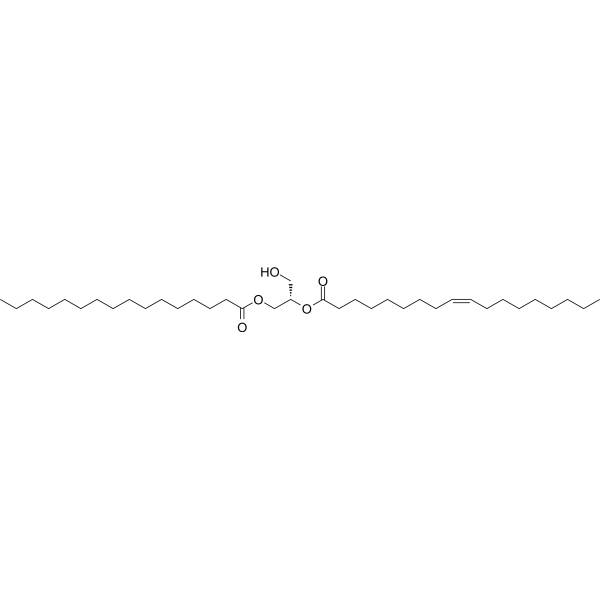
1-Palmitoyl-2-oleoyl-sn-glycerol is a diacylglycerol hormogonium inducer that can be isolated from the coralloid roots of Cycas revoluta. 1-Palmitoyl-2-oleoyl-sn-glycerol promotes the differentiation of filamentous Nostoc cell aggregates into motile hormogonia, and further induces the formation of dense bundle-like structures. 1-Palmitoyl-2-oleoyl-sn-glycerol is not only commonly used as a diacylglycerol standard, but also can effectively identify and separate glycerophosphate-containing phospholipid enantiomers after acetylation. 1-Palmitoyl-2-oleoyl-sn-glycerol is also used to study cyanobacterial developmental mechanisms and lipid analysis .
|
-
-
- HY-P2733
-
|
GPO
|
Endogenous Metabolite
Bacterial
|
Infection
Metabolic Disease
|
|
Glycerol-3-phosphate oxidase, E. coli (GPO) is a key intermediate in glycerol metabolism. Glycerol-3-phosphate oxidase, E. coli is the skeleton of phospholipids in membrane lipids, and also a substrate in the respiratory chain. Glycerol-3-phosphate oxidase, E. coli produces electrons through oxidation. Glycerol-3-phosphate oxidase, E. coli is an enzyme with important functions in the field of biochemistry, and is widely used in medical testing and scientific research .
|
-
-
- HY-148123
-
|
|
Biochemical Assay Reagents
|
Neurological Disease
|
|
Glycerophospholipids and cephalins are a class of phospholipid compounds and important components of neural membranes. Glycerophospholipids and cephalins are hydrolysis substrates of phospholipase (such as PLA2, PLC, and PLD). After complete hydrolysis, they produce 1 mol of glycerol, phosphate, ethanolamine, and 2 mol of fatty acids, respectively. Glycerophospholipids and cephalins can maintain membrane structure, fluidity, and ion permeability, and serve as precursors of second messengers such as arachidonic acid and diacylglycerol. Glycerophospholipids and cephalins can regulate signal transduction, cell apoptosis, and membrane transport, and are used in the study of neurodegenerative diseases (such as Alzheimer's disease) .
|
-
-
- HY-W337335
-
|
1-P-GPA sodium salt
|
Liposome
|
Metabolic Disease
Inflammation/Immunology
|
|
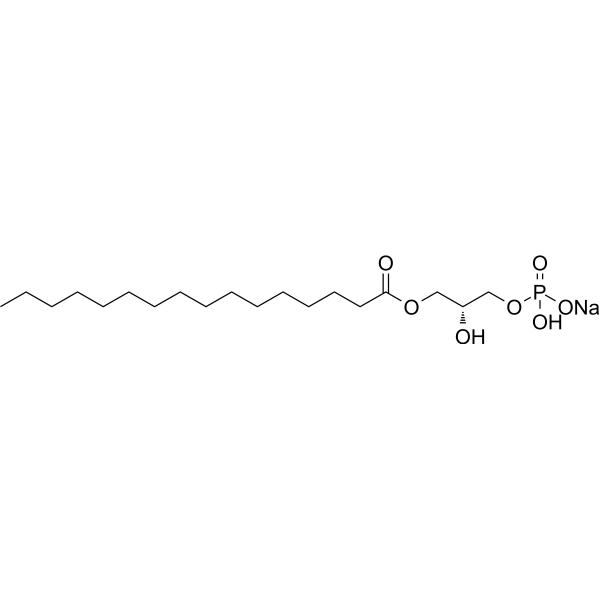
Palmitoyl-sn-glycerol 3-phosphate (1-P-GPA) sodium salt is a type of phospholipid and a precursor of lipid membranes. 1-Palmitoyl-sn-glycerol 3-phosphate sodium salt can be incorporated into POPC liposomes, resulting in significant changes in membrane curvature. 1-Palmitoyl-sn-glycerol 3-phosphate sodium salt can induce platelet aggregation, but its activity is 30 times lower than that of 1-hexadecyl-sn-glyceryl-3-phosphate .
|
-
-
- HY-112552
-
|
DSG; 1,2-Dioctadecanoyl-sn-glycerol
|
Endogenous Metabolite
Biochemical Assay Reagents
|
Others
|
|
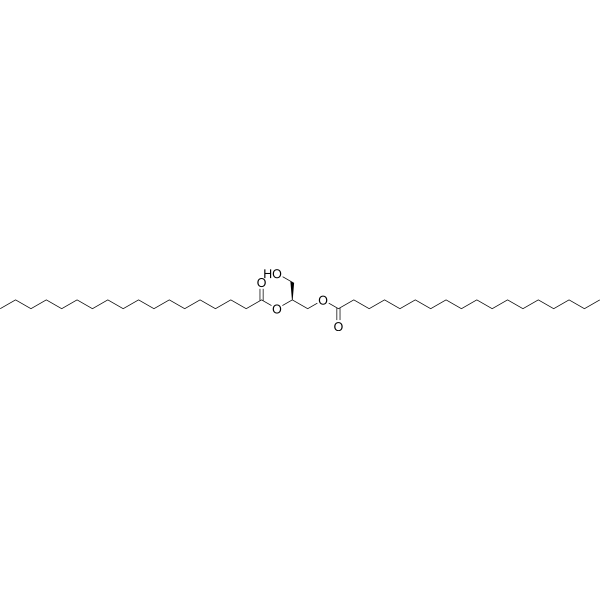
1,2-Distearoyl-sn-glycerol (DSG) is a glyceride compound. 1,2-Distearoyl-sn-glycerol can be used as an internal standard for the analysis of molecular species of diacylglycerol (DAG) and other phospholipids in rat brain .
|
-
-
- HY-W583869
-
|
1-Stearoyl-2-Oleoyl-sn-glycero-3-PE; 18:0-18:1 PE; PE(18:0/18:1)
|
Liposome
|
Metabolic Disease
|
|
1-Stearoyl-2-oleoyl-sn-glycerol-3-phosphoethanolamine is a phospholipids that contains stearic acid and oleic acid at the sn-1 and sn-2 positions, respectively. It has been used in the generation of lipid nanoparticles (LNPs) for in vitro delivery of mRNA or nuclear-targeted plasmid DNA.
|
-

-
- HY-126967A
-
|
1-P-GPA
|
Liposome
|
Cardiovascular Disease
|
|
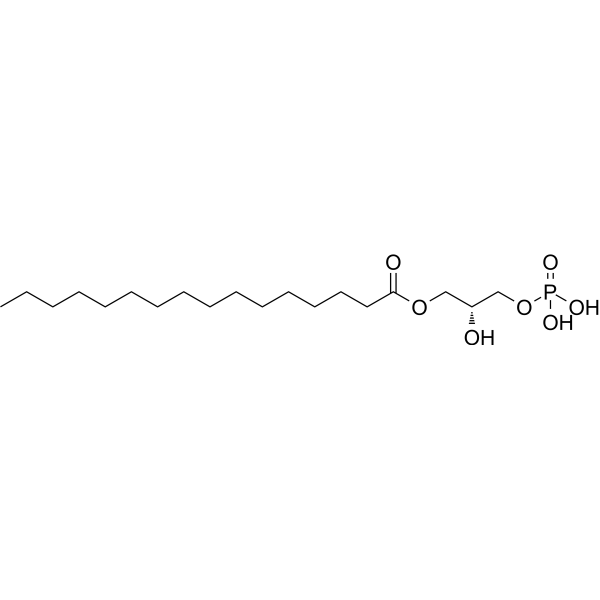
1-Palmitoyl-sn-glycerol 3-phosphate (1-P-GPA) is a phospholipid and lipid membrane precursor. 1-Palmitoyl-sn-glycerol 3-phosphate integrates into POPC liposomes, causing significant changes in membrane curvature. 1-Palmitoyl-sn-glycerol 3-phosphate induces platelet aggregation, but its activity is 30-fold lower than that of 1-hexadecyl-sn-glyceryl-3-phosphate .
|
-
-
- HY-P2817
-
|
PLCs
|
Phospholipase
|
Infection
Metabolic Disease
|
|
Phospholipase C (PLCs) is a class of phospholipases. Phospholipase C participates in cellular signaling and regulation by virtue of its ability to hydrolyze membrane phospholipids into di-acyl-glycerol (DAG) and inositol triphosphate (IP3), which further causes the activation of other signaling pathways involved in various processes, including immune response .
|
-
-
- HY-P2733B
-
|
GPO, Aerococcus viridans
|
Endogenous Metabolite
|
Metabolic Disease
|
|
Glycerol-3-phosphate oxidase, Aerococcus viridans (GPO, Aerococcus viridans) is a key intermediate in glycerol metabolism. Glycerol-3-phosphate oxidase is the skeleton of phospholipids in membrane lipids, and also a substrate of respiratory chain. Glycerol-3-phosphate oxidase produces electrons through oxidation .
|
-

-
- HY-P2733A
-
|
GPO, Pedio coccus sp.
|
Endogenous Metabolite
|
Metabolic Disease
|
|
Glycerol-3-phosphate oxidase, Pedio coccus sp. (GPO, Pedio coccus sp.) is a key intermediate in glycerol metabolism. Glycerol-3-phosphate oxidase is the skeleton of phospholipids in membrane lipids, and also a substrate in the respiratory chain. Glycerol-3-phosphate oxidase produces electrons through oxidation .
|
-

-
- HY-P2812B
-
|
|
Phospholipase
|
Cardiovascular Disease
Neurological Disease
Inflammation/Immunology
Cancer
|
|
Phospholipase D, cabbage is an enzyme of the phospholipase superfamily. Phospholipase D, cabbage is widely found in bacteria, yeast, plants, animals and viruses and is often used in biochemical research. Phospholipase D, cabbage can catalyze the hydrolysis of the phosphodiester bond of glycerophospholipids to produce phosphatidic acid and soluble choline. Phospholipase D, cabbage is involved in a variety of disease-related processes, including diabetes, atherosclerosis, obesity, tumorigenesis, immune response and neuroendocrine function .
|
-

-
- HY-167811
-
|
16:0 Lysyl PG hydrochloride
|
Biochemical Assay Reagents
|
|
|
1,2-Dipalmitoyl-sn-glycero-3-[phospho-rac-(3-lysyl(1-glycerol))] hydrochloride (16:0 Lysyl PG hydrochloride) is a synthetic phospholipid with the activity of promoting the preparation of artificial vesicles.
|
-
![1,2-Dipalmitoyl-sn-glycero-3-[phospho-rac-(3-lysyl(1-glycerol))] hydrochloride](//file.medchemexpress.com/product_pic/hy-167811.gif)
-
- HY-145486
-
|
20:4 Lyso PA
|
Liposome
|
Neurological Disease
|
|
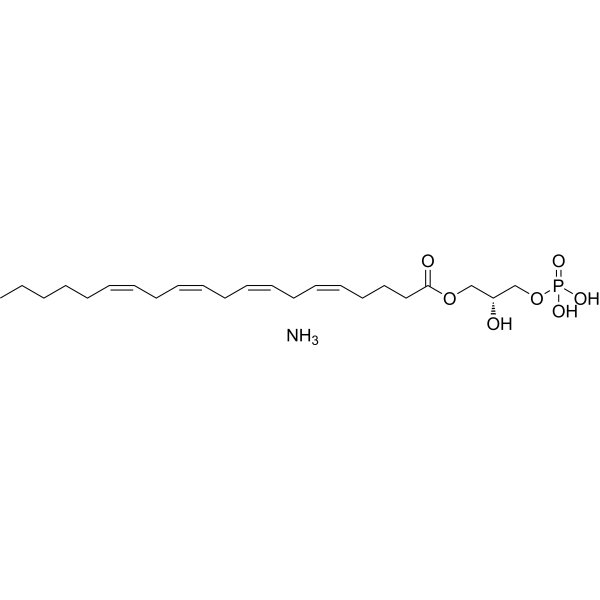
1-Arachidonoyl-sn-glycerol 3-phosphate ammonium (20:4 Lyso PA) is a phospholipid and an LPA derived from arachidonic acid. The concentration of 1-Arachidonoyl-sn-glycerol 3-phosphate ammonium in plasma is significantly correlated with the age of onset of cocaine use and the duration of abstinence. 1-Arachidonoyl-sn-glycerol 3-phosphate ammonium can be used in the research of biomarkers for cocaine use disorder (CUD) .
|
-
-
- HY-120987
-
|
|
Biochemical Assay Reagents
|
Others
|
|
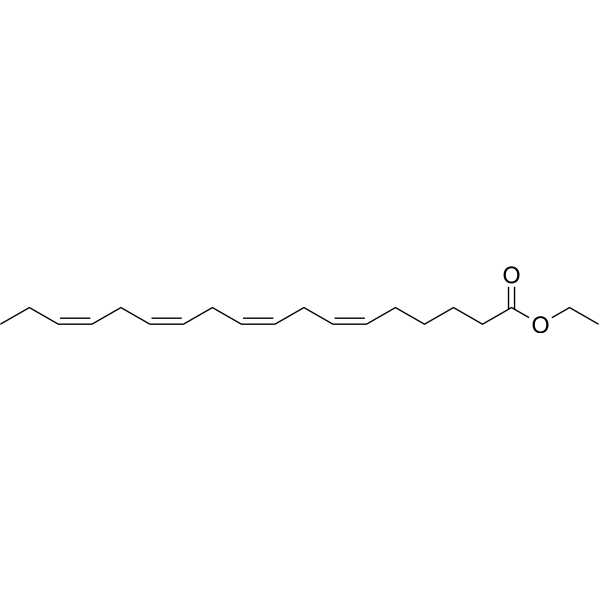
6,9,12,15-octadecatetraenoic acid (Glycerol α-monoelaidate) is a rare omega-3 series polyunsaturated fatty acid. In normal people, it accounts for less than 0.25% of serum phospholipid fatty acids. It is found in certain natural oils, such as echium and blackcurrant, and to the extent that these oils are incorporated into nutraceuticals, stearidonic acid can be an important polyunsaturated species in the human diet. Ethyl stearidonic acid, an ester of the free acid, is less water soluble but more suitable for formulating stearidonic acid-containing diets and dietary supplements.
|
-
-
- HY-W778692
-
|
1-Linoleoyl-rac-glycerol-d5; 1-Monolinolein-d5
|
Isotope-Labeled Compounds
Interleukin Related
Phospholipase
Apolipoprotein
|
Metabolic Disease
|
|
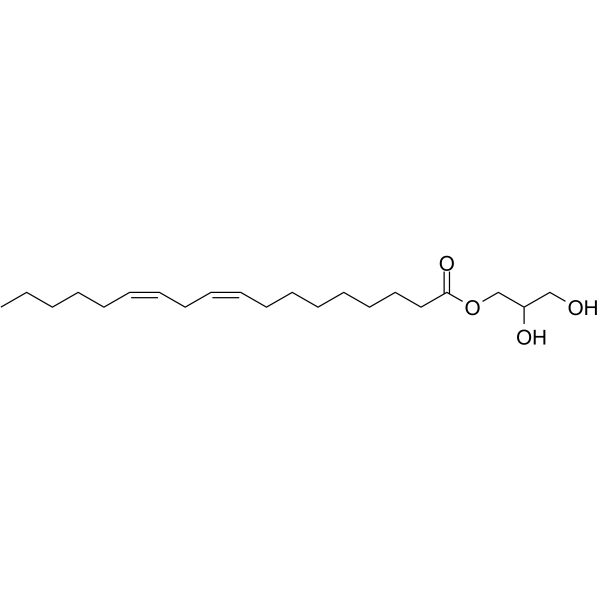
1-Linoleoyl Glycerol-d5 (1-Linoleoyl-rac-glycerol-d5; 1-Monolinolein-d5) is the deuterium labeled 1-Linoleoyl Glycerol (HY-111346). 1-Linoleoyl glycerol is a LpPLA2 inhibitor. 1-Linoleoyl glycerol acts as a precursor for synthesizing various functional lipids, such as phospholipids. 1-Linoleoyl glycerol mitigates inflammation induced by Apolipoprotein CIII (reduction of IL-6) .
|
-

-
- HY-W800733
-
|
1,2-Dilauroyl-sn-glycero-3-phosphorylglycerol; PG(12:0/12:0)
|
Liposome
|
Cancer
|
|
DLPG is a phospholipid containing lauric acid (12 chain fatty acid) inserted at the sn-1 and sn-2 positions. Its phosphate group is attached to glycerol. It is used in the generation of micelles, liposomes, and other artificial membranes.
|
-

-
- HY-154857
-
|
|
Scavenger Receptor Class B type I (SR-BI)
|
Cancer
|
|
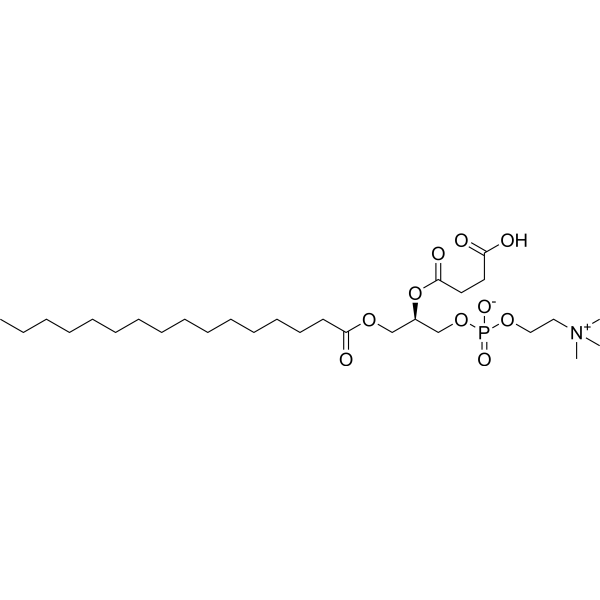
1-Palmitoyl-2-succinyl-sn-glycerophosphorylcholine is a glycerophosphorylcholine, consisting of glycerol phosphate, choline and palmitic acid. It accumulates in vivo at sites of oxidative stress. 1-Palmitoyl-2-succinyl-sn-glycerophosphorylcholine may be a ligand of scavenger receptors class B, while oxidized phospholipids oxPC(CD36) are potent ligands of scavenger receptors class B (CD36 and SR-BI). Oxidized phospholipids (oxPLs) also play an important role in tumor apoptosis, may be elevated in malignant biliary strictures .
|
-
-
- HY-171906A
-
|
1-Arachidonoyl-sn-glycerol 3-phosphate sodium; 1-Arachidonoyl LPA sodium; LPA (20:4) sodium
|
LPL Receptor
|
Cancer
|
|
1-Arachidonoyl-2-hydroxy-sn-glycero-3-PA (sodium) (1-Arachidonoyl-sn-glycerol 3-phosphate (sodium)) is a phospholipid with arachifonic acid at the sn-1 position. 1-Arachidonoyl-2-hydroxy-sn-glycero-3-PA (sodium) binds to the LPA2/EDG4 receptor (EC50 of 10 nM). 1-Arachidonoyl-2-hydroxy-sn-glycero-3-PA (sodium) can be found in rat brain as 37% of the arachidoinic acid-containing lysophosphatidic acid species. 1-Arachidonoyl-2-hydroxy-sn-glycero-3-PA (sodium) is the precursor to 1-arachidonoyl glycerol. 1-Arachidonoyl-2-hydroxy-sn-glycero-3-PA (sodium) can prevent TNF-α and IL-6 secretion in wild type LPS-stimulated dendritic cells. 1-Arachidonoyl-2-hydroxy-sn-glycero-3-PA (sodium) reduces differentiation of HT-29 colon carcinoma cells into goblet cells when sodium butyrate is present .
|
-

-
- HY-111346R
-
|
1-Linoleoyl-rac-glycerol (Standard); 1-Monolinolein (Standard)
|
Phospholipase
Apolipoprotein
Interleukin Related
Reference Standards
|
Metabolic Disease
Inflammation/Immunology
|
|
1-Linoleoyl Glycerol (Standard) is the analytical standard of 1-Linoleoyl Glycerol. This product is intended for research and analytical applications. 1-Linoleoyl glycerol is a LpPLA2 inhibitor. 1-Linoleoyl glycerol acts as a precursor for synthesizing various functional lipids, such as phospholipids. 1-Linoleoyl glycerol mitigates inflammation induced by Apolipoprotein CIII (reduction of IL-6) .
|
-

-
- HY-P2745
-
|
GPC-PDE
|
Biochemical Assay Reagents
|
Cancer
|
|
Glycerophosphocholine phosphodiesterase (GPC-PDE) catalyzes the degradation of low-glycerophosphocholine into free choline and glycerol-3-phosphate. Glycerophosphocholine phosphodiesterase participates in the regulation of choline phospholipid metabolism in breast cancer. Glycerophosphocholine phosphodiesterase can be used for research on diseases such as breast cancer .
|
-
-
- HY-W838254
-
|
|
PKC
Endogenous Metabolite
|
Others
|
|
1,2-Dipentadecanoyl-sn-glycero-3-phospho-(1'-rac-glycerol) sodium functions as an activator for the protein kinase C family and is an anionic phospholipid found in mitochondrial and microsomal membranes, playing a crucial role in the composition of lung surfactant, particularly within the membranes of lamellar bodies in the lungs.
|
-

-
- HY-W339206
-
|
|
Endogenous Metabolite
|
Others
|
|
1,2-Dinonanoyl-sn-glycero-3-phosphocholine, a specific phosphatidylcholine, features fatty acyl configurations that can influence the physical properties of membranes, making it a key component for generating eicosanoids. As a phospholipid abundant in membranes, it has fatty acids attached to glycerol at the sn-1 and sn-2 positions via ester bonds.
|
-

-
- HY-W339834
-
|
|
Acyltransferase
Endogenous Metabolite
Liposome
|
Others
|
|
1-Stearoyl-sn-glycerol 3-phosphate sodium is a bioactive phospholipid that plays a crucial role in modulating cellular processes such as motility, proliferation, invasion, survival, and growth factor production, primarily through its interaction with G protein-coupled receptors (GPCRs). Typically found at low concentrations in plasma (~100nM), this compound is synthesized during the formation of membrane phospholipids and is derived from various cell types, including activated platelets, epithelial cells, leukocytes, neuronal cells, and tumor cells. Its unique structure includes stearic acid at the sn-1 position alongside a hydroxyl group at the sn-2 position.
|
-

-
- HY-171906
-
|
1-Arachidonoyl-sn-glycerol 3-phosphate; 1-Arachidonoyl LPA; LPA (20:4)
|
LPL Receptor
|
Inflammation/Immunology
|
|
1-Arachidonoyl-2-hydroxy-sn-glycero-3-PA is a phospholipid containing arachidonic acid at the sn-1 position. It is a precursor to 1-arachidonoyl glycerol (1-Monoarachidin; HY-130567) . 1-Arachidonoyl-2-hydroxy-sn-glycero-3-PA binds to the LPA2/EDG4 receptor with an EC50 value of approximately 10 nM . It prevents TNF-α and IL-6 secretion in wild-type but not Lpa2-/- dendritic cells stimulated by LPS . It also decreases differentiation of HT-29 human colon carcinoma cells to goblet cells in the presence of sodium butyrate .
|
-

-
- HY-147076
-
|
1,2-Diarachidonoyl-sn-glycero-3-[phospho-rac-(1-glycerol)] sodium
|
Biochemical Assay Reagents
|
Others
|
|
20:4 PG (1,2-Diarachidonoyl-sn-glycero-3-[phospho-rac-(1-glycerol)]) sodium is a glycerophospholipid that can be used as an oxidized phospholipid .
|
-

-
- HY-W923355
-
|
EPA-TG; glycerol trieicosapentaenoate; TG(20:5/20:5/20:5)
|
Others
|
Others
|
|
1,2,3-Trieicosapentaenoyl glycerol (EPA-TG) is a glycerol ester that can be obtained by the reaction of polyunsaturated fatty acids or lower alkyl esters with glycerol catalyzed by alkoxide ions . After two intravenous injections of the EPA-TG emulsion into rabbits, the EPA content in plasma and platelet phospholipids increased markedly . In another study, by administering the EPA-TG emulsion, the production of leukotriene B4 by polymorphonuclear leukocytes in rabbits was reduced by 40% .
|
-

-
- HY-W339816
-
|
|
Lipocalin Family
Endogenous Metabolite
|
Others
|
|
(S,R)-Bis(monomyristoylglycero)phosphate ammonium actively contributes to cargo sorting by promoting the degradation and sorting of lipids, and it plays a critical role in the sorting of polyunsaturated fatty acids (PUFAs) within acidic organelles. This phospholipid features two phosphate-linked glycerol molecules arranged in a unique sn-1 glycerophospho-sn-1′ glycerol stereoconformation, with each glycerol molecule esterified to a myristic acid. Typically, it is found in the intraluminal vesicles (ILVs) of late endosomes and lysosomes.
|
-

-
- HY-183196
-
|
|
Biochemical Assay Reagents
|
Others
|
|
DMG-PEG1000-Galactose is a conjugate composed of dimyristic glycerol (DMG), a PEG chain, and terminal galactose. DMG-PEG1000-Galactose combines the membrane compatibility of phospholipids with the targeted recognition capabilities of galactose, making it suitable for research in biomaterial construction and drug delivery.
|
-

-
- HY-183196B
-
|
|
Biochemical Assay Reagents
|
Others
|
|
DMG-PEG3400-Galactose is a conjugate composed of dimyristic glycerol (DMG), a PEG chain, and terminal galactose. DMG-PEG3400-Galactose combines the membrane compatibility of phospholipids with the targeted recognition capabilities of galactose, making it suitable for research in biomaterial construction and drug delivery.
|
-

-
- HY-183196D
-
|
|
Biochemical Assay Reagents
|
Others
|
|
DMG-PEG10000-Galactose is a conjugate composed of dimyristic glycerol (DMG), a PEG chain, and terminal galactose. DMG-PEG10000-Galactose combines the membrane compatibility of phospholipids with the targeted recognition capabilities of galactose, making it suitable for research in biomaterial construction and drug delivery.
|
-

-
- HY-183196C
-
|
|
Biochemical Assay Reagents
|
Others
|
|
DMG-PEG5000-Galactose is a conjugate composed of dimyristic glycerol (DMG), a PEG chain, and terminal galactose. DMG-PEG5000-Galactose combines the membrane compatibility of phospholipids with the targeted recognition capabilities of galactose, making it suitable for research in biomaterial construction and drug delivery.
|
-

-
- HY-183196A
-
|
|
Biochemical Assay Reagents
|
Others
|
|
DMG-PEG2000-Galactose is a conjugate composed of dimyristic glycerol (DMG), a PEG chain, and terminal galactose. DMG-PEG2000-Galactose combines the membrane compatibility of phospholipids with the targeted recognition capabilities of galactose, making it suitable for research in biomaterial construction and drug delivery.
|
-

-
- HY-183398B
-
|
|
Biochemical Assay Reagents
|
Others
|
|
DMG-PEG3400-CHO is a conjugate composed of dimyristic glycerol (DMG), a PEG chain, and a terminal aldehyde group (-CHO). DMG-PEG3400-CHO combines the membrane compatibility of phospholipids with the flexibility of hydroxyl modification, making it suitable for research in biomaterial construction and drug delivery.
|
-

-
- HY-183132B
-
|
|
Biochemical Assay Reagents
|
Others
|
|
DSG-PEG3400-OH is a conjugate composed of dimyristic glycerol (DMG), a PEG chain, and terminal hydroxyl groups (-OH). DSG-PEG3400-OH combines the membrane compatibility of phospholipids with the flexibility of hydroxyl modification, making it suitable for research in biomaterial construction and drug delivery.
|
-

-
- HY-183132D
-
|
|
Biochemical Assay Reagents
|
Others
|
|
DSG-PEG10000-OH is a conjugate composed of dimyristic glycerol (DMG), a PEG chain, and terminal hydroxyl groups (-OH). DSG-PEG10000-OH combines the membrane compatibility of phospholipids with the flexibility of hydroxyl modification, making it suitable for research in biomaterial construction and drug delivery.
|
-

-
- HY-183398D
-
|
|
Biochemical Assay Reagents
|
Others
|
|
DMG-PEG10000-CHO is a conjugate composed of dimyristic glycerol (DMG), a PEG chain, and a terminal aldehyde group (-CHO). DMG-PEG10000-CHO combines the membrane compatibility of phospholipids with the flexibility of hydroxyl modification, making it suitable for research in biomaterial construction and drug delivery.
|
-

-
- HY-183398C
-
|
|
Biochemical Assay Reagents
|
Others
|
|
DMG-PEG5000-CHO is a conjugate composed of dimyristic glycerol (DMG), a PEG chain, and a terminal aldehyde group (-CHO). DMG-PEG5000-CHO combines the membrane compatibility of phospholipids with the flexibility of hydroxyl modification, making it suitable for research in biomaterial construction and drug delivery.
|
-

-
- HY-183132A
-
|
|
Biochemical Assay Reagents
|
Others
|
|
DSG-PEG2000-OH is a conjugate composed of dimyristic glycerol (DMG), a PEG chain, and terminal hydroxyl groups (-OH). DSG-PEG2000-OH combines the membrane compatibility of phospholipids with the flexibility of hydroxyl modification, making it suitable for research in biomaterial construction and drug delivery.
|
-

-
- HY-183398A
-
|
|
Biochemical Assay Reagents
|
Others
|
|
DMG-PEG2000-CHO is a conjugate composed of dimyristic glycerol (DMG), a PEG chain, and a terminal aldehyde group (-CHO). DMG-PEG2000-CHO combines the membrane compatibility of phospholipids with the flexibility of hydroxyl modification, making it suitable for research in biomaterial construction and drug delivery.
|
-

-
- HY-183398
-
|
|
Biochemical Assay Reagents
|
Others
|
|
DMG-PEG1000-CHO is a conjugate composed of dimyristic glycerol (DMG), a PEG chain, and a terminal aldehyde group (-CHO). DMG-PEG1000-CHO combines the membrane compatibility of phospholipids with the flexibility of hydroxyl modification, making it suitable for research in biomaterial construction and drug delivery.
|
-

-
- HY-183132
-
|
|
Biochemical Assay Reagents
|
Others
|
|
DSG-PEG1000-OH is a conjugate composed of dimyristic glycerol (DMG), a PEG chain, and terminal hydroxyl groups (-OH). DSG-PEG1000-OH combines the membrane compatibility of phospholipids with the flexibility of hydroxyl modification, making it suitable for research in biomaterial construction and drug delivery.
|
-

-
- HY-183132C
-
|
|
Biochemical Assay Reagents
|
Others
|
|
DSG-PEG1000-OH is a conjugate composed of dimyristic glycerol (DMG), a PEG chain, and terminal hydroxyl groups (-OH). DMG-PEG1000-Glucose combines the membrane compatibility of phospholipids with the flexibility of hydroxyl modification, making it suitable for research in biomaterial construction and drug delivery.
|
-

-
- HY-183191
-
|
|
Biochemical Assay Reagents
|
Others
|
|
DMG-PEG1000-Alkyne is a conjugate composed of dimyristic glycerol (DMG), a PEG chain, and a terminal alkyne group. DMG-PEG1000-Alkyne combines the membrane compatibility of phospholipids with the high reactivity of the alkyne group in click chemistry, making it suitable for research in biomaterial construction and drug delivery.
|
-

-
- HY-183191D
-
|
|
Biochemical Assay Reagents
|
Others
|
|
DMG-PEG10000-Alkyne is a conjugate composed of dimyristic glycerol (DMG), a PEG chain, and a terminal alkyne group. DMG-PEG10000-Alkyne combines the membrane compatibility of phospholipids with the high reactivity of the alkyne group in click chemistry, making it suitable for research in biomaterial construction and drug delivery.
|
-

-
- HY-183191B
-
|
|
Biochemical Assay Reagents
|
Others
|
|
DMG-PEG3400-Alkyne is a conjugate composed of dimyristic glycerol (DMG), a PEG chain, and a terminal alkyne group. DMG-PEG3400-Alkyne combines the membrane compatibility of phospholipids with the high reactivity of the alkyne group in click chemistry, making it suitable for research in biomaterial construction and drug delivery.
|
-

-
- HY-183191C
-
|
|
Biochemical Assay Reagents
|
Others
|
|
DMG-PEG5000-Alkyne is a conjugate composed of dimyristic glycerol (DMG), a PEG chain, and a terminal alkyne group. DMG-PEG5000-Alkyne combines the membrane compatibility of phospholipids with the high reactivity of the alkyne group in click chemistry, making it suitable for research in biomaterial construction and drug delivery.
|
-

-
- HY-183191A
-
|
|
Biochemical Assay Reagents
|
Others
|
|
DMG-PEG2000-Alkyne is a conjugate composed of dimyristic glycerol (DMG), a PEG chain, and a terminal alkyne group. DMG-PEG2000-Alkyne combines the membrane compatibility of phospholipids with the high reactivity of the alkyne group in click chemistry, making it suitable for research in biomaterial construction and drug delivery.
|
-

-
- HY-183195C
-
|
|
Biochemical Assay Reagents
|
Others
|
|
DMG-PEG5000-DBCO is a conjugate composed of dimyristic glycerol (DMG), a PEG chain, and a terminal dibenzocyclooctylene (DBCO). DMG-PEG5000-DBCO combines the membrane compatibility of phospholipids with the high reactivity of the DBCO group in copper-free click chemistry, making it suitable for research in biomaterial construction and drug delivery.
|
-

-
- HY-183195
-
|
|
Biochemical Assay Reagents
|
Others
|
|
DMG-PEG1000-DBCO is a conjugate composed of dimyristic glycerol (DMG), a PEG chain, and a terminal dibenzocyclooctylene (DBCO). DMG-PEG1000-DBCO combines the membrane compatibility of phospholipids with the high reactivity of the DBCO group in copper-free click chemistry, making it suitable for research in biomaterial construction and drug delivery.
|
-

- HY-183195B
-
|
|
Biochemical Assay Reagents
|
Others
|
|
DMG-PEG2000-DBCO is a conjugate composed of dimyristic glycerol (DMG), a PEG chain, and a terminal dibenzocyclooctylene (DBCO). DMG-PEG2000-DBCO combines the membrane compatibility of phospholipids with the high reactivity of the DBCO group in copper-free click chemistry, making it suitable for research in biomaterial construction and drug delivery.
|
-

- HY-183156D
-
|
|
Biochemical Assay Reagents
|
Others
|
|
DMG-PEG10000-Glucose is a conjugate composed of dimyristic glycerol (DMG), a PEG chain, and terminal glucose. DMG-PEG10000-Glucose combines the membrane compatibility of phospholipids with glucose as an active site for sugar recognition or subsequent coupling reactions, making it suitable for research in biomaterial construction and drug delivery.
|
-

- HY-183195D
-
|
|
Biochemical Assay Reagents
|
Others
|
|
DMG-PEG10000-DBCO is a conjugate composed of dimyristic glycerol (DMG), a PEG chain, and a terminal dibenzocyclooctylene (DBCO). DMG-PEG10000-DBCO combines the membrane compatibility of phospholipids with the high reactivity of the DBCO group in copper-free click chemistry, making it suitable for research in biomaterial construction and drug delivery.
|
-

- HY-183156B
-
|
|
Biochemical Assay Reagents
|
Others
|
|
DMG-PEG3400-Glucose is a conjugate composed of dimyristic glycerol (DMG), a PEG chain, and terminal glucose. DMG-PEG3400-Glucose combines the membrane compatibility of phospholipids with glucose as an active site for sugar recognition or subsequent coupling reactions, making it suitable for research in biomaterial construction and drug delivery.
|
-

- HY-183195A
-
|
|
Biochemical Assay Reagents
|
Others
|
|
DMG-PEG2000-DBCO is a conjugate composed of dimyristic glycerol (DMG), a PEG chain, and a terminal dibenzocyclooctylene (DBCO). DMG-PEG2000-DBCO combines the membrane compatibility of phospholipids with the high reactivity of the DBCO group in copper-free click chemistry, making it suitable for research in biomaterial construction and drug delivery.
|
-

- HY-183156A
-
|
|
Biochemical Assay Reagents
|
Others
|
|
DMG-PEG2000-Glucose is a conjugate composed of dimyristic glycerol (DMG), a PEG chain, and terminal glucose. DMG-PEG2000-Glucose combines the membrane compatibility of phospholipids with glucose as an active site for sugar recognition or subsequent coupling reactions, making it suitable for research in biomaterial construction and drug delivery.
|
-

- HY-183156
-
|
|
Biochemical Assay Reagents
|
Others
|
|
DMG-PEG1000-Glucose is a conjugate composed of dimyristic glycerol (DMG), a PEG chain, and terminal glucose. DMG-PEG1000-Glucose combines the membrane compatibility of phospholipids with glucose as an active site for sugar recognition or subsequent coupling reactions, making it suitable for research in biomaterial construction and drug delivery.
|
-

- HY-183156C
-
|
|
Biochemical Assay Reagents
|
Others
|
|
DMG-PEG5000-Glucose is a conjugate composed of dimyristic glycerol (DMG), a PEG chain, and terminal glucose. DMG-PEG5000-Glucose combines the membrane compatibility of phospholipids with glucose as an active site for sugar recognition or subsequent coupling reactions, making it suitable for research in biomaterial construction and drug delivery.
|
-

| Cat. No. |
Product Name |
Type |
-
- HY-148123
-
|
|
Biochemical Assay Reagents
|
|
Glycerophospholipids and cephalins are a class of phospholipid compounds and important components of neural membranes. Glycerophospholipids and cephalins are hydrolysis substrates of phospholipase (such as PLA2, PLC, and PLD). After complete hydrolysis, they produce 1 mol of glycerol, phosphate, ethanolamine, and 2 mol of fatty acids, respectively. Glycerophospholipids and cephalins can maintain membrane structure, fluidity, and ion permeability, and serve as precursors of second messengers such as arachidonic acid and diacylglycerol. Glycerophospholipids and cephalins can regulate signal transduction, cell apoptosis, and membrane transport, and are used in the study of neurodegenerative diseases (such as Alzheimer's disease) .
|
-
- HY-167811
-
|
16:0 Lysyl PG hydrochloride
|
Biochemical Assay Reagents
|
|
1,2-Dipalmitoyl-sn-glycero-3-[phospho-rac-(3-lysyl(1-glycerol))] hydrochloride (16:0 Lysyl PG hydrochloride) is a synthetic phospholipid with the activity of promoting the preparation of artificial vesicles.
|
-
- HY-120987
-
|
|
Biochemical Assay Reagents
|
|
6,9,12,15-octadecatetraenoic acid (Glycerol α-monoelaidate) is a rare omega-3 series polyunsaturated fatty acid. In normal people, it accounts for less than 0.25% of serum phospholipid fatty acids. It is found in certain natural oils, such as echium and blackcurrant, and to the extent that these oils are incorporated into nutraceuticals, stearidonic acid can be an important polyunsaturated species in the human diet. Ethyl stearidonic acid, an ester of the free acid, is less water soluble but more suitable for formulating stearidonic acid-containing diets and dietary supplements.
|
-
- HY-147076
-
|
1,2-Diarachidonoyl-sn-glycero-3-[phospho-rac-(1-glycerol)] sodium
|
Biochemical Assay Reagents
|
|
20:4 PG (1,2-Diarachidonoyl-sn-glycero-3-[phospho-rac-(1-glycerol)]) sodium is a glycerophospholipid that can be used as an oxidized phospholipid .
|
-
- HY-183196
-
|
|
Biochemical Assay Reagents
|
|
DMG-PEG1000-Galactose is a conjugate composed of dimyristic glycerol (DMG), a PEG chain, and terminal galactose. DMG-PEG1000-Galactose combines the membrane compatibility of phospholipids with the targeted recognition capabilities of galactose, making it suitable for research in biomaterial construction and drug delivery.
|
-
- HY-183196B
-
|
|
Biochemical Assay Reagents
|
|
DMG-PEG3400-Galactose is a conjugate composed of dimyristic glycerol (DMG), a PEG chain, and terminal galactose. DMG-PEG3400-Galactose combines the membrane compatibility of phospholipids with the targeted recognition capabilities of galactose, making it suitable for research in biomaterial construction and drug delivery.
|
-
- HY-183196D
-
|
|
Biochemical Assay Reagents
|
|
DMG-PEG10000-Galactose is a conjugate composed of dimyristic glycerol (DMG), a PEG chain, and terminal galactose. DMG-PEG10000-Galactose combines the membrane compatibility of phospholipids with the targeted recognition capabilities of galactose, making it suitable for research in biomaterial construction and drug delivery.
|
-
- HY-183196C
-
|
|
Biochemical Assay Reagents
|
|
DMG-PEG5000-Galactose is a conjugate composed of dimyristic glycerol (DMG), a PEG chain, and terminal galactose. DMG-PEG5000-Galactose combines the membrane compatibility of phospholipids with the targeted recognition capabilities of galactose, making it suitable for research in biomaterial construction and drug delivery.
|
-
- HY-183196A
-
|
|
Biochemical Assay Reagents
|
|
DMG-PEG2000-Galactose is a conjugate composed of dimyristic glycerol (DMG), a PEG chain, and terminal galactose. DMG-PEG2000-Galactose combines the membrane compatibility of phospholipids with the targeted recognition capabilities of galactose, making it suitable for research in biomaterial construction and drug delivery.
|
-
- HY-183398B
-
|
|
Biochemical Assay Reagents
|
|
DMG-PEG3400-CHO is a conjugate composed of dimyristic glycerol (DMG), a PEG chain, and a terminal aldehyde group (-CHO). DMG-PEG3400-CHO combines the membrane compatibility of phospholipids with the flexibility of hydroxyl modification, making it suitable for research in biomaterial construction and drug delivery.
|
-
- HY-183132B
-
|
|
Biochemical Assay Reagents
|
|
DSG-PEG3400-OH is a conjugate composed of dimyristic glycerol (DMG), a PEG chain, and terminal hydroxyl groups (-OH). DSG-PEG3400-OH combines the membrane compatibility of phospholipids with the flexibility of hydroxyl modification, making it suitable for research in biomaterial construction and drug delivery.
|
-
- HY-183132D
-
|
|
Biochemical Assay Reagents
|
|
DSG-PEG10000-OH is a conjugate composed of dimyristic glycerol (DMG), a PEG chain, and terminal hydroxyl groups (-OH). DSG-PEG10000-OH combines the membrane compatibility of phospholipids with the flexibility of hydroxyl modification, making it suitable for research in biomaterial construction and drug delivery.
|
-
- HY-183398D
-
|
|
Biochemical Assay Reagents
|
|
DMG-PEG10000-CHO is a conjugate composed of dimyristic glycerol (DMG), a PEG chain, and a terminal aldehyde group (-CHO). DMG-PEG10000-CHO combines the membrane compatibility of phospholipids with the flexibility of hydroxyl modification, making it suitable for research in biomaterial construction and drug delivery.
|
-
- HY-183398C
-
|
|
Biochemical Assay Reagents
|
|
DMG-PEG5000-CHO is a conjugate composed of dimyristic glycerol (DMG), a PEG chain, and a terminal aldehyde group (-CHO). DMG-PEG5000-CHO combines the membrane compatibility of phospholipids with the flexibility of hydroxyl modification, making it suitable for research in biomaterial construction and drug delivery.
|
-
- HY-183132A
-
|
|
Biochemical Assay Reagents
|
|
DSG-PEG2000-OH is a conjugate composed of dimyristic glycerol (DMG), a PEG chain, and terminal hydroxyl groups (-OH). DSG-PEG2000-OH combines the membrane compatibility of phospholipids with the flexibility of hydroxyl modification, making it suitable for research in biomaterial construction and drug delivery.
|
-
- HY-183398A
-
|
|
Biochemical Assay Reagents
|
|
DMG-PEG2000-CHO is a conjugate composed of dimyristic glycerol (DMG), a PEG chain, and a terminal aldehyde group (-CHO). DMG-PEG2000-CHO combines the membrane compatibility of phospholipids with the flexibility of hydroxyl modification, making it suitable for research in biomaterial construction and drug delivery.
|
-
- HY-183398
-
|
|
Biochemical Assay Reagents
|
|
DMG-PEG1000-CHO is a conjugate composed of dimyristic glycerol (DMG), a PEG chain, and a terminal aldehyde group (-CHO). DMG-PEG1000-CHO combines the membrane compatibility of phospholipids with the flexibility of hydroxyl modification, making it suitable for research in biomaterial construction and drug delivery.
|
-
- HY-183132
-
|
|
Biochemical Assay Reagents
|
|
DSG-PEG1000-OH is a conjugate composed of dimyristic glycerol (DMG), a PEG chain, and terminal hydroxyl groups (-OH). DSG-PEG1000-OH combines the membrane compatibility of phospholipids with the flexibility of hydroxyl modification, making it suitable for research in biomaterial construction and drug delivery.
|
-
- HY-183132C
-
|
|
Biochemical Assay Reagents
|
|
DSG-PEG1000-OH is a conjugate composed of dimyristic glycerol (DMG), a PEG chain, and terminal hydroxyl groups (-OH). DMG-PEG1000-Glucose combines the membrane compatibility of phospholipids with the flexibility of hydroxyl modification, making it suitable for research in biomaterial construction and drug delivery.
|
-
- HY-183191
-
|
|
Biochemical Assay Reagents
|
|
DMG-PEG1000-Alkyne is a conjugate composed of dimyristic glycerol (DMG), a PEG chain, and a terminal alkyne group. DMG-PEG1000-Alkyne combines the membrane compatibility of phospholipids with the high reactivity of the alkyne group in click chemistry, making it suitable for research in biomaterial construction and drug delivery.
|
-
- HY-183191D
-
|
|
Biochemical Assay Reagents
|
|
DMG-PEG10000-Alkyne is a conjugate composed of dimyristic glycerol (DMG), a PEG chain, and a terminal alkyne group. DMG-PEG10000-Alkyne combines the membrane compatibility of phospholipids with the high reactivity of the alkyne group in click chemistry, making it suitable for research in biomaterial construction and drug delivery.
|
-
- HY-183191B
-
|
|
Biochemical Assay Reagents
|
|
DMG-PEG3400-Alkyne is a conjugate composed of dimyristic glycerol (DMG), a PEG chain, and a terminal alkyne group. DMG-PEG3400-Alkyne combines the membrane compatibility of phospholipids with the high reactivity of the alkyne group in click chemistry, making it suitable for research in biomaterial construction and drug delivery.
|
-
- HY-183191C
-
|
|
Biochemical Assay Reagents
|
|
DMG-PEG5000-Alkyne is a conjugate composed of dimyristic glycerol (DMG), a PEG chain, and a terminal alkyne group. DMG-PEG5000-Alkyne combines the membrane compatibility of phospholipids with the high reactivity of the alkyne group in click chemistry, making it suitable for research in biomaterial construction and drug delivery.
|
-
- HY-183191A
-
|
|
Biochemical Assay Reagents
|
|
DMG-PEG2000-Alkyne is a conjugate composed of dimyristic glycerol (DMG), a PEG chain, and a terminal alkyne group. DMG-PEG2000-Alkyne combines the membrane compatibility of phospholipids with the high reactivity of the alkyne group in click chemistry, making it suitable for research in biomaterial construction and drug delivery.
|
-
- HY-183195C
-
|
|
Biochemical Assay Reagents
|
|
DMG-PEG5000-DBCO is a conjugate composed of dimyristic glycerol (DMG), a PEG chain, and a terminal dibenzocyclooctylene (DBCO). DMG-PEG5000-DBCO combines the membrane compatibility of phospholipids with the high reactivity of the DBCO group in copper-free click chemistry, making it suitable for research in biomaterial construction and drug delivery.
|
-
- HY-183195
-
|
|
Biochemical Assay Reagents
|
|
DMG-PEG1000-DBCO is a conjugate composed of dimyristic glycerol (DMG), a PEG chain, and a terminal dibenzocyclooctylene (DBCO). DMG-PEG1000-DBCO combines the membrane compatibility of phospholipids with the high reactivity of the DBCO group in copper-free click chemistry, making it suitable for research in biomaterial construction and drug delivery.
|
-
- HY-183195B
-
|
|
Biochemical Assay Reagents
|
|
DMG-PEG2000-DBCO is a conjugate composed of dimyristic glycerol (DMG), a PEG chain, and a terminal dibenzocyclooctylene (DBCO). DMG-PEG2000-DBCO combines the membrane compatibility of phospholipids with the high reactivity of the DBCO group in copper-free click chemistry, making it suitable for research in biomaterial construction and drug delivery.
|
-
- HY-183156D
-
|
|
Biochemical Assay Reagents
|
|
DMG-PEG10000-Glucose is a conjugate composed of dimyristic glycerol (DMG), a PEG chain, and terminal glucose. DMG-PEG10000-Glucose combines the membrane compatibility of phospholipids with glucose as an active site for sugar recognition or subsequent coupling reactions, making it suitable for research in biomaterial construction and drug delivery.
|
-
- HY-183195D
-
|
|
Biochemical Assay Reagents
|
|
DMG-PEG10000-DBCO is a conjugate composed of dimyristic glycerol (DMG), a PEG chain, and a terminal dibenzocyclooctylene (DBCO). DMG-PEG10000-DBCO combines the membrane compatibility of phospholipids with the high reactivity of the DBCO group in copper-free click chemistry, making it suitable for research in biomaterial construction and drug delivery.
|
-
- HY-183156B
-
|
|
Biochemical Assay Reagents
|
|
DMG-PEG3400-Glucose is a conjugate composed of dimyristic glycerol (DMG), a PEG chain, and terminal glucose. DMG-PEG3400-Glucose combines the membrane compatibility of phospholipids with glucose as an active site for sugar recognition or subsequent coupling reactions, making it suitable for research in biomaterial construction and drug delivery.
|
-
- HY-183195A
-
|
|
Biochemical Assay Reagents
|
|
DMG-PEG2000-DBCO is a conjugate composed of dimyristic glycerol (DMG), a PEG chain, and a terminal dibenzocyclooctylene (DBCO). DMG-PEG2000-DBCO combines the membrane compatibility of phospholipids with the high reactivity of the DBCO group in copper-free click chemistry, making it suitable for research in biomaterial construction and drug delivery.
|
-
- HY-183156A
-
|
|
Biochemical Assay Reagents
|
|
DMG-PEG2000-Glucose is a conjugate composed of dimyristic glycerol (DMG), a PEG chain, and terminal glucose. DMG-PEG2000-Glucose combines the membrane compatibility of phospholipids with glucose as an active site for sugar recognition or subsequent coupling reactions, making it suitable for research in biomaterial construction and drug delivery.
|
-
- HY-183156
-
|
|
Biochemical Assay Reagents
|
|
DMG-PEG1000-Glucose is a conjugate composed of dimyristic glycerol (DMG), a PEG chain, and terminal glucose. DMG-PEG1000-Glucose combines the membrane compatibility of phospholipids with glucose as an active site for sugar recognition or subsequent coupling reactions, making it suitable for research in biomaterial construction and drug delivery.
|
-
- HY-183156C
-
|
|
Biochemical Assay Reagents
|
|
DMG-PEG5000-Glucose is a conjugate composed of dimyristic glycerol (DMG), a PEG chain, and terminal glucose. DMG-PEG5000-Glucose combines the membrane compatibility of phospholipids with glucose as an active site for sugar recognition or subsequent coupling reactions, making it suitable for research in biomaterial construction and drug delivery.
|
| Cat. No. |
Product Name |
Category |
Target |
Chemical Structure |
| Cat. No. |
Product Name |
Chemical Structure |
-
- HY-W778692
-
|
|
|
1-Linoleoyl Glycerol-d5 (1-Linoleoyl-rac-glycerol-d5; 1-Monolinolein-d5) is the deuterium labeled 1-Linoleoyl Glycerol (HY-111346). 1-Linoleoyl glycerol is a LpPLA2 inhibitor. 1-Linoleoyl glycerol acts as a precursor for synthesizing various functional lipids, such as phospholipids. 1-Linoleoyl glycerol mitigates inflammation induced by Apolipoprotein CIII (reduction of IL-6) .
|
-
| Cat. No. |
Product Name |
|
Classification |
-
- HY-183191
-
|
|
|
Alkynes
|
|
DMG-PEG1000-Alkyne is a conjugate composed of dimyristic glycerol (DMG), a PEG chain, and a terminal alkyne group. DMG-PEG1000-Alkyne combines the membrane compatibility of phospholipids with the high reactivity of the alkyne group in click chemistry, making it suitable for research in biomaterial construction and drug delivery.
|
-
- HY-183191D
-
|
|
|
Alkynes
|
|
DMG-PEG10000-Alkyne is a conjugate composed of dimyristic glycerol (DMG), a PEG chain, and a terminal alkyne group. DMG-PEG10000-Alkyne combines the membrane compatibility of phospholipids with the high reactivity of the alkyne group in click chemistry, making it suitable for research in biomaterial construction and drug delivery.
|
-
- HY-183191B
-
|
|
|
Alkynes
|
|
DMG-PEG3400-Alkyne is a conjugate composed of dimyristic glycerol (DMG), a PEG chain, and a terminal alkyne group. DMG-PEG3400-Alkyne combines the membrane compatibility of phospholipids with the high reactivity of the alkyne group in click chemistry, making it suitable for research in biomaterial construction and drug delivery.
|
-
- HY-183191C
-
|
|
|
Alkynes
|
|
DMG-PEG5000-Alkyne is a conjugate composed of dimyristic glycerol (DMG), a PEG chain, and a terminal alkyne group. DMG-PEG5000-Alkyne combines the membrane compatibility of phospholipids with the high reactivity of the alkyne group in click chemistry, making it suitable for research in biomaterial construction and drug delivery.
|
-
- HY-183191A
-
|
|
|
Alkynes
|
|
DMG-PEG2000-Alkyne is a conjugate composed of dimyristic glycerol (DMG), a PEG chain, and a terminal alkyne group. DMG-PEG2000-Alkyne combines the membrane compatibility of phospholipids with the high reactivity of the alkyne group in click chemistry, making it suitable for research in biomaterial construction and drug delivery.
|
-
- HY-183195C
-
|
|
|
DBCO
|
|
DMG-PEG5000-DBCO is a conjugate composed of dimyristic glycerol (DMG), a PEG chain, and a terminal dibenzocyclooctylene (DBCO). DMG-PEG5000-DBCO combines the membrane compatibility of phospholipids with the high reactivity of the DBCO group in copper-free click chemistry, making it suitable for research in biomaterial construction and drug delivery.
|
-
- HY-183195
-
|
|
|
DBCO
|
|
DMG-PEG1000-DBCO is a conjugate composed of dimyristic glycerol (DMG), a PEG chain, and a terminal dibenzocyclooctylene (DBCO). DMG-PEG1000-DBCO combines the membrane compatibility of phospholipids with the high reactivity of the DBCO group in copper-free click chemistry, making it suitable for research in biomaterial construction and drug delivery.
|
-
- HY-183195B
-
|
|
|
DBCO
|
|
DMG-PEG2000-DBCO is a conjugate composed of dimyristic glycerol (DMG), a PEG chain, and a terminal dibenzocyclooctylene (DBCO). DMG-PEG2000-DBCO combines the membrane compatibility of phospholipids with the high reactivity of the DBCO group in copper-free click chemistry, making it suitable for research in biomaterial construction and drug delivery.
|
-
- HY-183195D
-
|
|
|
DBCO
|
|
DMG-PEG10000-DBCO is a conjugate composed of dimyristic glycerol (DMG), a PEG chain, and a terminal dibenzocyclooctylene (DBCO). DMG-PEG10000-DBCO combines the membrane compatibility of phospholipids with the high reactivity of the DBCO group in copper-free click chemistry, making it suitable for research in biomaterial construction and drug delivery.
|
-
- HY-183195A
-
|
|
|
DBCO
|
|
DMG-PEG2000-DBCO is a conjugate composed of dimyristic glycerol (DMG), a PEG chain, and a terminal dibenzocyclooctylene (DBCO). DMG-PEG2000-DBCO combines the membrane compatibility of phospholipids with the high reactivity of the DBCO group in copper-free click chemistry, making it suitable for research in biomaterial construction and drug delivery.
|
| Cat. No. |
Product Name |
|
Classification |
-
- HY-W583869
-
|
1-Stearoyl-2-Oleoyl-sn-glycero-3-PE; 18:0-18:1 PE; PE(18:0/18:1)
|
|
Phospholipids
|
|
1-Stearoyl-2-oleoyl-sn-glycerol-3-phosphoethanolamine is a phospholipids that contains stearic acid and oleic acid at the sn-1 and sn-2 positions, respectively. It has been used in the generation of lipid nanoparticles (LNPs) for in vitro delivery of mRNA or nuclear-targeted plasmid DNA.
|
-
- HY-167811
-
|
16:0 Lysyl PG hydrochloride
|
|
Phospholipids
|
|
1,2-Dipalmitoyl-sn-glycero-3-[phospho-rac-(3-lysyl(1-glycerol))] hydrochloride (16:0 Lysyl PG hydrochloride) is a synthetic phospholipid with the activity of promoting the preparation of artificial vesicles.
|
-
- HY-145486
-
|
20:4 Lyso PA
|
|
Phospholipids
|
|
1-Arachidonoyl-sn-glycerol 3-phosphate ammonium (20:4 Lyso PA) is a phospholipid and an LPA derived from arachidonic acid. The concentration of 1-Arachidonoyl-sn-glycerol 3-phosphate ammonium in plasma is significantly correlated with the age of onset of cocaine use and the duration of abstinence. 1-Arachidonoyl-sn-glycerol 3-phosphate ammonium can be used in the research of biomarkers for cocaine use disorder (CUD) .
|
-
- HY-W800733
-
|
1,2-Dilauroyl-sn-glycero-3-phosphorylglycerol; PG(12:0/12:0)
|
|
Phospholipids
|
|
DLPG is a phospholipid containing lauric acid (12 chain fatty acid) inserted at the sn-1 and sn-2 positions. Its phosphate group is attached to glycerol. It is used in the generation of micelles, liposomes, and other artificial membranes.
|
-
- HY-147076
-
|
1,2-Diarachidonoyl-sn-glycero-3-[phospho-rac-(1-glycerol)] sodium
|
|
Phospholipids
|
|
20:4 PG (1,2-Diarachidonoyl-sn-glycero-3-[phospho-rac-(1-glycerol)]) sodium is a glycerophospholipid that can be used as an oxidized phospholipid .
|
Your information is safe with us. * Required Fields.
Inquiry Information
- Product Name:
- Cat. No.:
- Quantity:
- MCE Japan Authorized Agent:





![1,2-Dipalmitoyl-sn-glycero-3-[phospho-rac-(3-lysyl(1-glycerol))] hydrochloride](http://file.medchemexpress.com/product_pic/hy-167811.gif)





