



1-Stearoyl-2-oleoyl-sn-glycerol-3-phosphoethanolamine

Based on 1 Customer Validation
1-Stearoyl-2-oleoyl-sn-glycerol-3-phosphoethanolamine is a phospholipids that contains stearic acid and oleic acid at the sn-1 and sn-2 positions, respectively. It has been used in the generation of lipid nanoparticles (LNPs) for in vitro delivery of mRNA or nuclear-targeted plasmid DNA.
For research use only. We do not sell to patients.
- Purity : 98.0%
- CAS No.: 6418-95-7
- Formula: C41H80NO8P
- Molecular Weight:746.05
-
Storage:Powder -20°C, 3 years ; In solvent -80°C, 6 months , -20°C, 1 month


To place orders, for customer services and technical support, please contact: MedChemExpress USA
Tel: 609-228-6898 E-mail: [email protected] [email protected]


-
 Biological Activity
-
Chemical Information
-
Solvent & Solubility
- Protocols
- Purity & Documentation
- References
-
 Help & FAQs


-
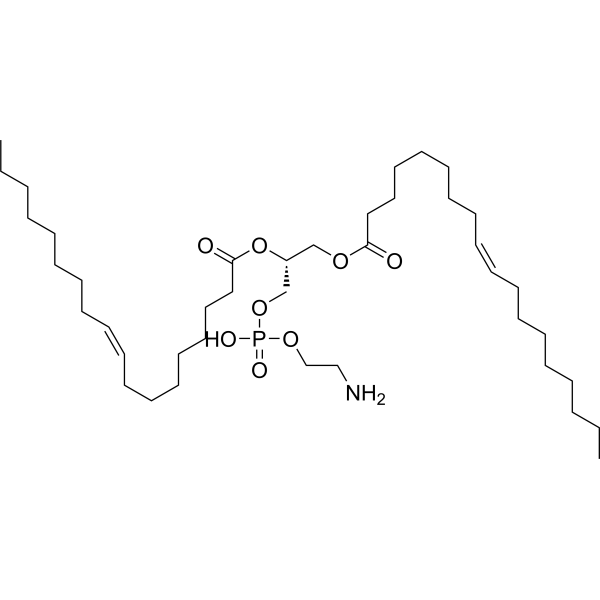
HY-112005
DOPEFerroptosis Inhibitor -
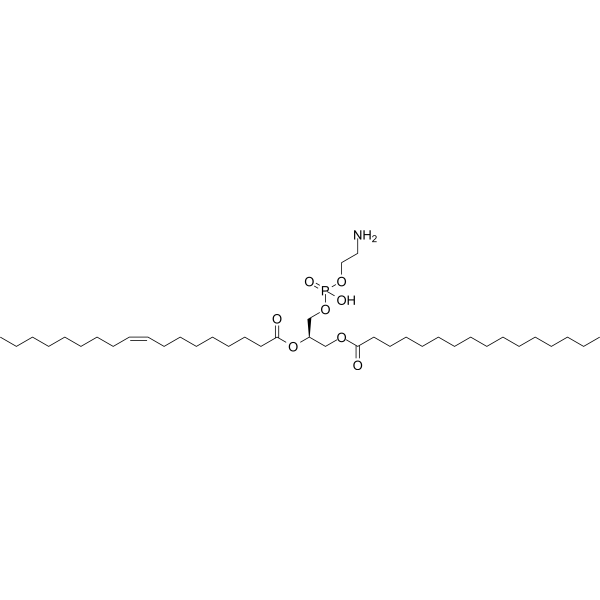
HY-W583868
1-Palmitoyl-2-oleoyl-sn-glycero-3-PEPhospholipid -
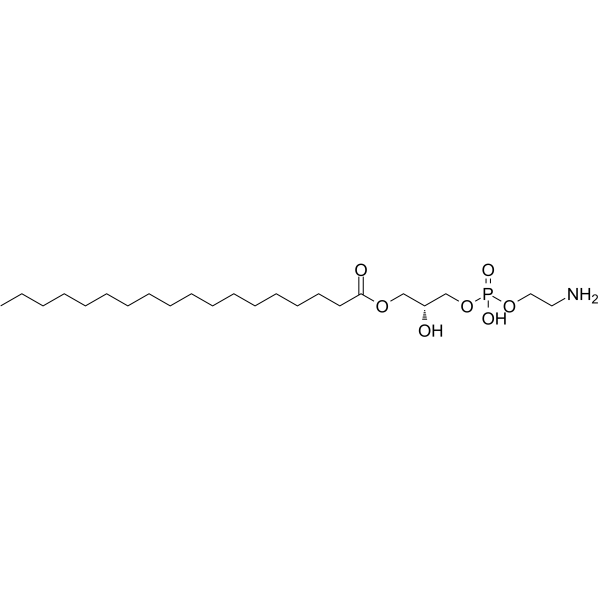
HY-103660
18:0 LYSO-PECa2+ Inducer -
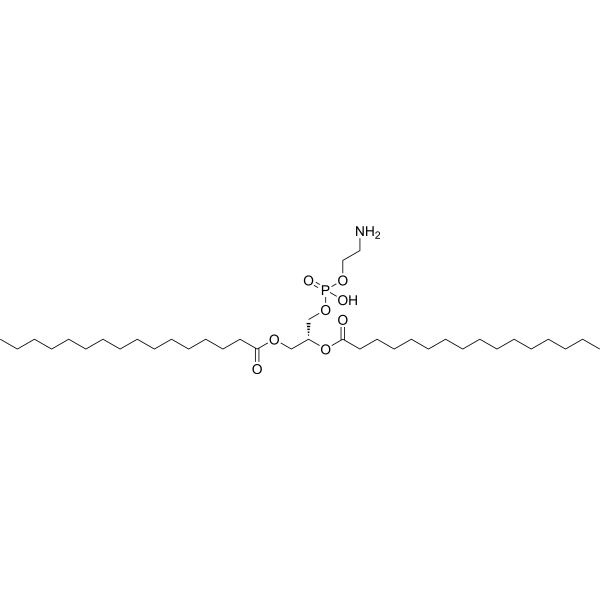
HY-W040268
1,2-Dipalmitoyl-sn-glycero-3-phosphoethanolamineBiochemical Assay Reagent -
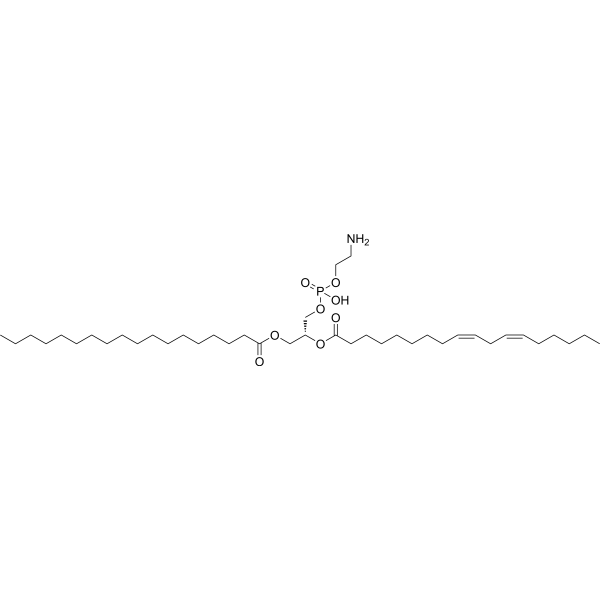
HY-143203
18:0-18:2 PEGlycerophospholipid -
HY-125853
Phosphatidylcholines,soyaPhosphatidylcholine -
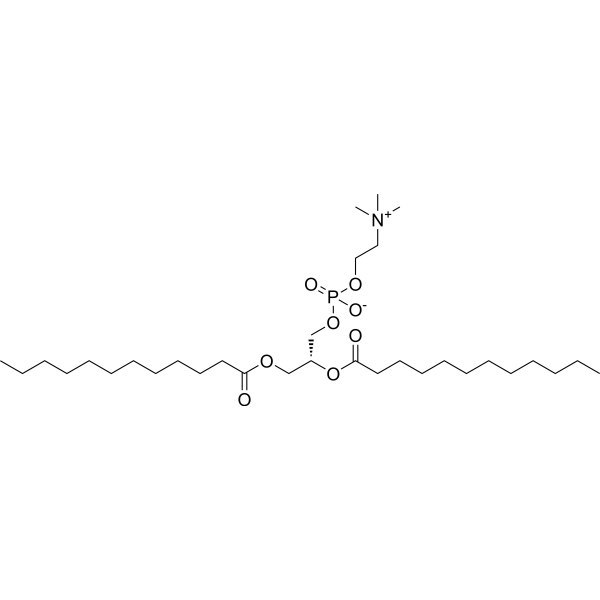
HY-107737
1,2-DLPCLRH-1 Agonist Ligand -
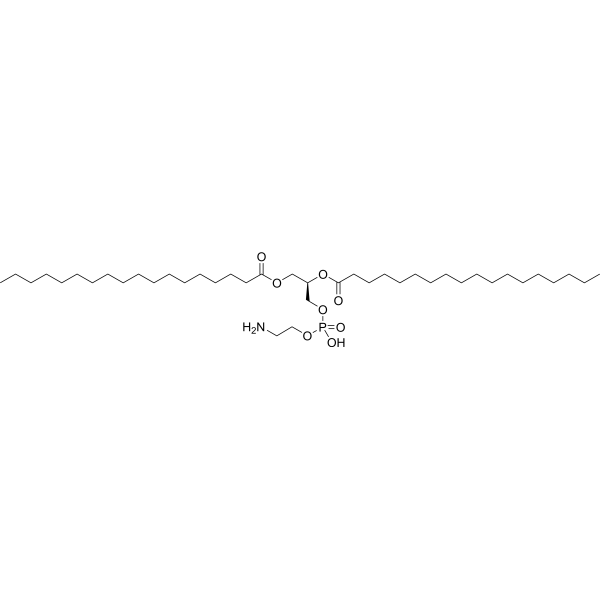
HY-112530
1,2-Distearoyl-sn-glycero-3-phosphorylethanolaminePhosphoethanolamine (PE) Lipid -
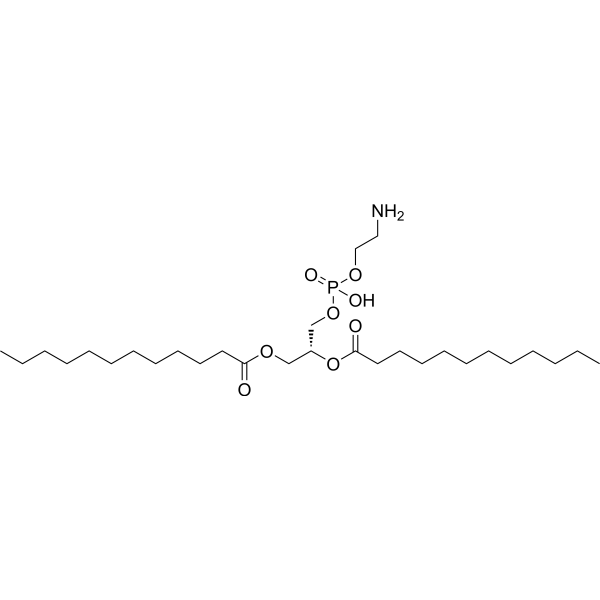
HY-W322225
1,2-Dilauroyl-sn-glycero-3-phosphoethanolamineAnionic Phospholipid -
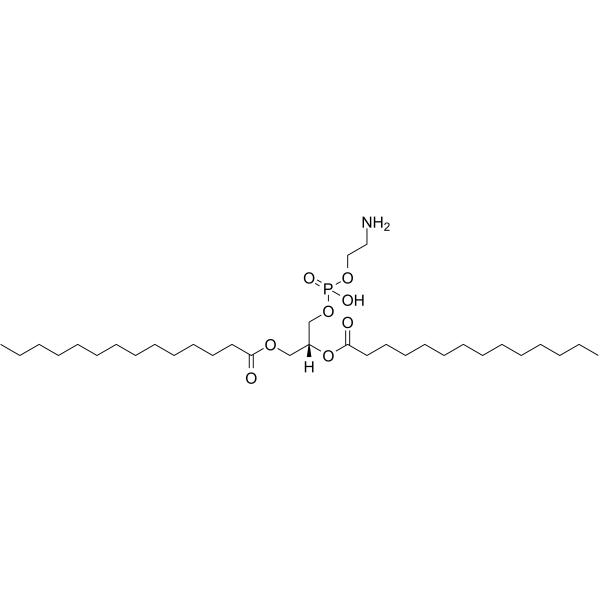
HY-W013078
1,2-Dimyristoyl-sn-glycero-3-phosphoethanolamineZwitterionic Saturated Phosphatidylethanolamine -
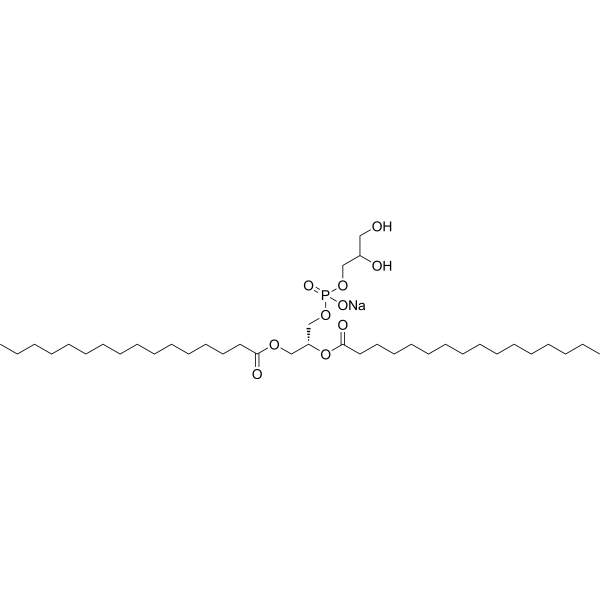
HY-125940
DPPGBiological Reagent -

HY-157661
14:0 Cardiolipin sodium


Biological Activity
Description


Chemical Information
-
CAS No. 6418-95-7
-
Appearance Solid
-
Molecular Weight 746.05
-
Formula C41H80NO8P
-
Color White to off-white
-
SMILES
CCCCCCCC/C=C\CCCCCCCC(O[C@@H](COP(O)(OCCN)=O)COC(CCCCCCCCCCCCCCCCC)=O)=O
-
Synonyms
1-Stearoyl-2-Oleoyl-sn-glycero-3-PE; 18:0-18:1 PE; PE(18:0/18:1)
-
Shipping
Room temperature in continental US; may vary elsewhere.
-
Storage
Powder -20°C 3 years In solvent -80°C 6 months -20°C 1 month


Solvent & Solubility
In Vitro:
Ethanol : 10 mg/mL (13.40 mM; Need ultrasonic)
Please refer to the solubility information to select the appropriate solvent. Once prepared, please aliquot and store the solution to prevent product inactivation from repeated freeze-thaw cycles.
Storage method and period of stock solution: -80°C, 6 months; -20°C, 1 month. When stored at -80°C, please use it within 6 months. When stored at -20°C, please use it within 1 month.
Please refer to the solubility information to select the appropriate solvent. Once prepared, please aliquot and store the solution to prevent product inactivation from repeated freeze-thaw cycles.
Storage method and period of stock solution: -80°C, 6 months; -20°C, 1 month. When stored at -80°C, please use it within 6 months. When stored at -20°C, please use it within 1 month.
Concentration (start) × Volume (start) = Concentration (final) × Volume (final)

Protocols
-
RNA extraction experimental
By lysing cells, releasing RNA, and removing impurities such as proteins and DNA, high-purity RNA products are finally obtained. The commonly used traditional method is the guanidine isothiocyanate/phenol/chloroform method (Trizol), which is suitable for a variety of animal materials including animal tissues, microorganisms, cultured cells, etc., and most plant materials.
-
Plasmid construction
Plasmid construction refers to the method of producing recombinant plasmid by connecting the target DNA molecule fragment with the DNA molecule of a specific carrier in Escherichia coli.


Purity & Documentation
-
Data Sheet (268 KB)
-
SDS (396 KB)
- English - EN (396 KB)
- Français - FR (396 KB)
- Deutsch - DE (396 KB)
- Norwegian - NO (396 KB)
- Español - ES (396 KB)
- Swedish - SV (396 KB)
- Italian - IT (396 KB)
- Korean - KR (396 KB)
- Portuguese - PT (396 KB)
-
Handling Instructions (2659 KB)
References
[1]. Álvarez-Benedicto, E., Farbiak, L., Ramírez, M.M., et al. Optimization of phospholipid chemistry for improved lipid nanoparticle (LNP) delivery of messenger RNA (mRNA). Biomater. Sci. 10(2), 549-559 (2022). [Content Brief]
[2]. Tanaka, H., Akita, H., Ishiba, R., et al. Neutral biodegradable lipid-envelope-type nanoparticle using vitamin A-Scaffold for nuclear targeting of plasmid DNA. Biomaterials 35(5), 1755-1761 (2014). [Content Brief]


Complete Stock Solution Preparation Table
Please refer to the solubility information to select the appropriate solvent. Once prepared, please aliquot and store the solution to prevent product inactivation from repeated freeze-thaw cycles.
Storage method and period of stock solution: -80°C, 6 months; -20°C, 1 month. When stored at -80°C, please use it within 6 months. When stored at -20°C, please use it within 1 month.
| Optional Solvent | Concentration Solvent Mass | 1 mg | 5 mg | 10 mg | 25 mg |
|---|---|---|---|---|---|
| Ethanol | 1 mM | 1.3404 mL | 6.7020 mL | 13.4039 mL | 33.5098 mL |
| 5 mM | 0.2681 mL | 1.3404 mL | 2.6808 mL | 6.7020 mL | |
| 10 mM | 0.1340 mL | 0.6702 mL | 1.3404 mL | 3.3510 mL |


1-Stearoyl-2-oleoyl-sn-glycerol-3-phosphoethanolamine Related Classifications
HY-W583869 Related Classifications
 Powered by Bioz