Search Result
Results for "
melanoma xenograft model
" in MedChemExpress (MCE) Product Catalog:
1
Isotope-Labeled Compounds
| Cat. No. |
Product Name |
Target |
Research Areas |
Chemical Structure |
-
- HY-N0421
-
|
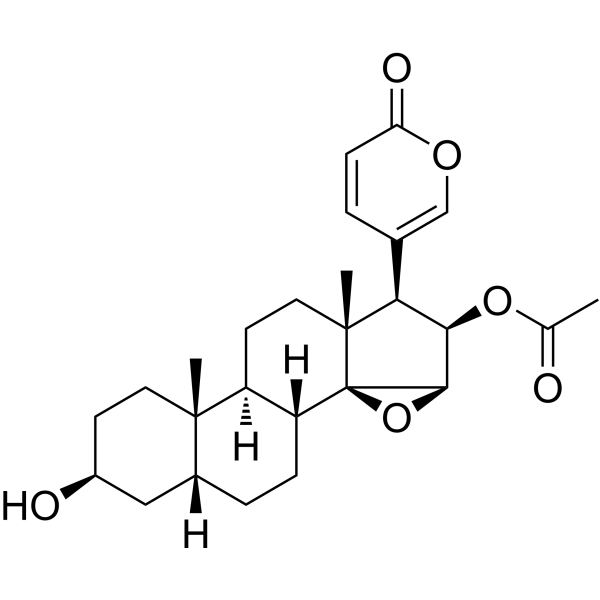
Cinobufagine
|
Apoptosis
|
Neurological Disease
Cancer
|
|
Cinobufagin is an anticancer agent that can be secreted by the Asiatic toad Bufo gargarizans. Cinobufagin induces the cell cycle arrests in the G1 phase or G2/M phase, leading to apoptosis in cancer cells. Cinobufagin inhibits tumor growth in melanoma and glioblastoma multiforme xenograft mouse models .
|
-
-
- HY-170451
-
|
KT-253
|
PROTACs
MDM-2/p53
Apoptosis
|
Cancer
|
|
Seldegamadlin (KT-253) is a selective p53 stabilizer and a MDM2 PROTAC degrader (DC50 = 0.4 nM). Seldegamadlin inhibits the proliferation of cancer cell RS4;11 with an IC50 of 0.3 nM, arrests the cell cycle at G2/M phase, and induces apoptosis. Seldegamadlin upregulates p53 activity and overcomes the p53-MDM2 feedback loop. Seldegamadlin can be used for the study of hematologic and solid tumors, such as acute myeloid leukemia (AML) and acute lymphoblastic leukemia (ALL). (Pink: ligand for target protein MDM2 ligand 4 (HY-170452); Black: linker (HY-W001478); Blue: ligand for E3 ligase cereblon (HY-163927)) .
|
-

-
- HY-P99364
-
|
Anti-VEGFR1/FLT1 Reference Antibody; IMC-18F1
|
VEGFR
Apoptosis
p38 MAPK
Akt
|
Endocrinology
Cancer
|
|
Icrucumab (Anti-VEGFR1/FLT1 Reference Antibody; IMC-18F1) is an IgG1 antibody inhibitor targeting VEGFR-1/FLT1 with anti-tumor activity. By blocking ligand-dependent phosphorylation and downstream signal transduction, Icrucumab reduces the activities of MAPK and Akt in breast cancer xenograft models, inhibits the proliferation and invasion of VEGFR-1-positive tumor cells, and reverses the conversion of M1 macrophages to the pro-tumor M2-like phenotype. Icrucumab also inhibits tumor cell proliferation, promotes apoptosis, and effectively suppresses tumor growth through direct targeting of tumors and host support mechanisms. In addition, Icrucumab exhibits a synergistic effect when combined with chemotherapeutic agents, and it is used in research related to various cancers including advanced solid malignancies, thyroid cancer, melanoma, and lung cancer .
|
-

-
- HY-156483
-
TT-012
2 Publications Verification
|
Microphthalmia Associated Transcription Factor (MITF)
|
Cancer
|
|
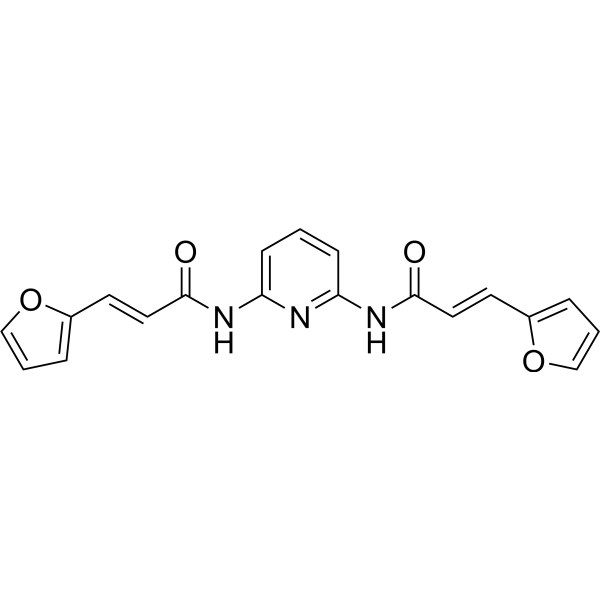
TT-012 is a MITF inhibitor with a human MITF IC50 of 13.1 nM and a human MITF Kd value of 15.5 nM. TT-012 reduces mRNA levels of MITF downstream genes linked to melanosome biogenesis, cell survival, and proliferation, and upregulates cell cycle-inhibiting genes. TT-012 can be used for the research of melanoma[1][2][3].
|
-
-
- HY-170935
-
|
|
SRPK
PARP
Caspase
Apoptosis
Autophagy
|
Cancer
|
|
SRSF1-IN-1 is a SRSF1 inhibitor. SRSF1-IN-1 inhibits SRSF1 expression, thereby modulating the splicing of Bcl-x pre-mRNA. SRSF1-IN-1 inhibits the proliferation of various cancer cells. SRSF1-IN-1 induces apoptosis in gastric cancer cells, reduces Bcl-xl expression, and upregulates cleaved PARP and caspase 3. SRSF1-IN-1 induces autophagy and promotes cell death. SRSF1-IN-1 exhibits anti-tumor activity in a mouse gastric cancer xenograft model. SRSF1-IN-1 can be used for the research of various cancers including liver cancer, gastric cancer, breast cancer, colon cancer, glioma, and melanoma .
|
-

-
- HY-170824
-
|
|
PROTACs
SWI/SNF Complex
Epigenetic Reader Domain
|
Cancer
|
|
SMD-3236 is a SMARCA2 PROTAC degrader with a DC50 of 0.5 nM, a Dmax of 98%, and an IC50 of 42.2 nM against human SMARCA2. SMD-3236 induces proteasome- and ubiquitin-like modification-dependent degradation of SMARCA2 protein by binding to SMARCA2 and VHL-1. SMD-3236 inhibits the growth of SMARCA4-deficient cancer cells. SMD-3236 induces significant and persistent depletion of SMARCA2 in tumor tissues. SMD-3236 suppresses tumor growth in SMARCA4-deficient human cancer xenograft models. SMD-3236 can be used in research related to SMARCA4-deficient cancers such as melanoma, non-small cell lung cancer, and acute myeloid leukemia .
|
-

-
- HY-142118A
-
|
AP 12009 sodium
|
TGF-beta/Smad
|
Cancer
|
|
Trabedersen (AP 12009) sodium is an orally active synthetic antisense phosphorothioate oligodeoxynucleotide that selectively targets human TGFβ2 mRNA. Trabedersen sodium blocks TGFβ2 protein production, enters the nucleus without a transfection vector, and exerts dose-dependent antitumor effects. By reversing TGFβ2-induced immunosuppression and enhancing immune cytotoxicity, Trabedersen sodium exhibits significant antiproliferative, antimigratory, and antimetastatic activities, with favorable safety profiles. Trabedersen sodium is widely used in research related to various solid tumors, including anaplastic astrocytoma, glioblastoma, colorectal tumor, and melanoma .
|
-

-
- HY-P991609
-
|
|
MMP
|
Cancer
|
|
ABX-MA1 is a humanized IgG2 monoclonal antibody inhibitor targeting MCAM/MUC18. ABX-MA1 significantly decreases homotypic aggregation and heterotypic adhesion to HUVECs, and the formation of experimental lung metastasis. ABX-MA1 potently inhibits tumor growth, angiogenesis, and MMP-2 expression in A375SM/WM2664 xenograft mice model, promising for melanoma research .
|
-

-
- HY-179505
-
|
|
YAP
|
Cancer
|
|
OPN-9652 is a potent, orally active, and covalent TEAD inhibitor (MSTO-211H TEAD IC50 = 0.005 µM) targeting the central palmitate binding pocket of TEADs. OPN-9652 reduces TEAD-dependent reporter activity and expression of TEAD targets (CTGF and CYR61). OPN-9652 resensitizes drug-tolerant SOX10 KO cells to BRAFi + MAPKi. OPN-9652 delays the onset of tumor resistance to BRAFi + MEKi from minimal residual disease (MRD) in a BRAF mutant A375 xenograft mouse model. OPN-9652 can be used for melanoma research .
|
-

-
- HY-139061
-
|
|
LPL Receptor
ROCK
|
Cancer
|
|
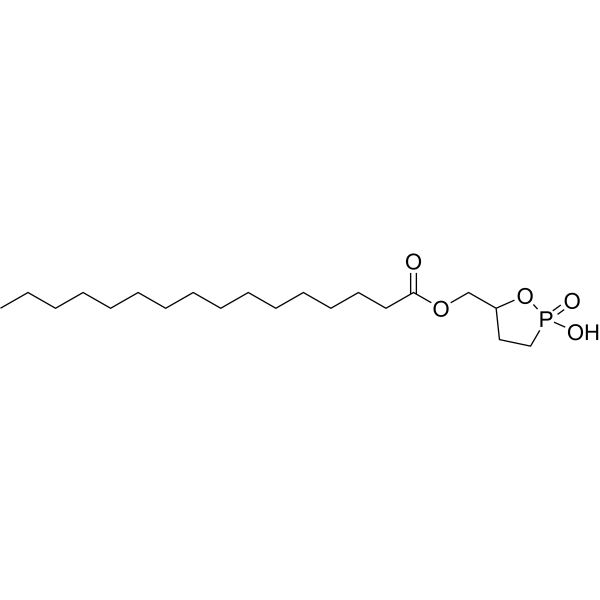
Palmitoyl 3-carbacyclic phosphatidic acid (HY-139061) is a palmitoylated Carba-like cyclophosphatidic acid and an analog of lysophosphatidic acid (LPA). Palmitoyl 3-carbacyclic phosphatidic acid has different functions from LPA and can inhibit the activation of RhoA and inhibit the migration of melanoma cells. Palmitoyl 3-carbacyclic phosphatidic acid effectively inhibited experimental lung metastasis and reduced the number of tumor nodules in a B16-F0 xenograft mouse model .
|
-
-
- HY-144898
-
|
|
Microtubule/Tubulin
Apoptosis
|
Cancer
|
|
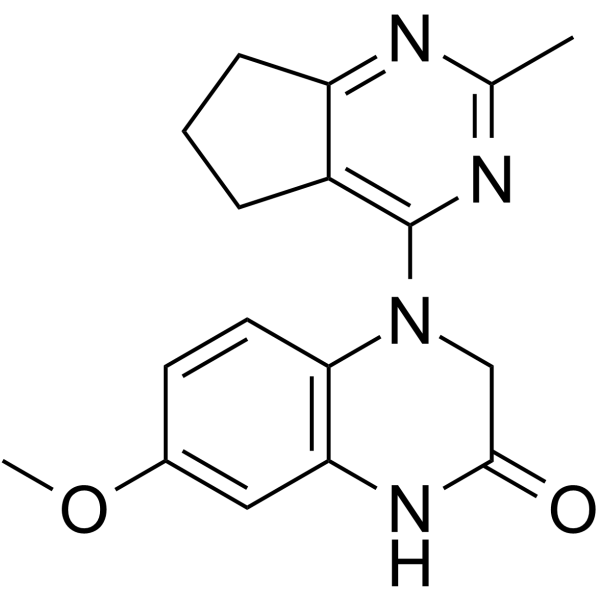
SB-216 is an BBB-penetrable tubulin polymerization inhibitor. SB-216 can inhibit the proliferation and migration, and induce apoptosis and cell cycle arrest of tumor cells. SB-216 has good in vivo metabolic stability and low toxicity, but its oral bioavailability is limited. SB-216 has antitumor activity and can be used in the research of tumors such as melanoma .
|
-
-
- HY-177914
-
|
|
MEK
|
Cancer
|
|
MEK-IN-7 (compound WX086) is potent, orally active and selective MEK inhibitor (MEK1 IC50 = 29.62 nM). MEK-IN-7 inhibits HT29 and A375 cell proliferation with IC50s of 0.62 and 0.40 nM. MEK-IN-7 inhibits tumor growth in a HL-29 xenograft mouse model. MEK-IN-7 can be used for melanoma and colon cancer research .
|
-

-
- HY-W654372
-
|
|
Endogenous Metabolite
|
Cancer
|
|
Tigloyl-L-carnitine (chloride) is a short-chain acylacarnitine containing tiglic acid and L-carnitine. Tigloyl-L-carnitine (chloride) is increased in plasma in certain melanoma xenograft murine models. Tigloyl-L-carnitine (chloride) can be studied in research on melanoma .
|
-

-
- HY-W674149
-
|
|
Microtubule/Tubulin
|
Cancer
|
|
ABI-274 is a tubulin and colchicine binding site inhibitor. ABI-274 significantly promotes cancer cell apoptosis in vitro when combined with vemurafenib (HY-12057). ABI-274 exhibits potent synergistic efficacy in the vemurafenib-resistant xenograft model in nude mice. ABI-274 can be studied in research on melanoma .
|
-

-
- HY-153858
-
|
|
Raf
Discoidin Domain Receptor
MEK
TNF Receptor
Interleukin Related
JAK
STAT
Ras
|
Cancer
|
|
PHI-501 is a dual inhibitor targeting RAF/DDR. PHI-501 exhibits significant anti-proliferative effects in melanoma cell lines and significantly inhibits the colony formation of drug-resistant cells. PHI-501 strongly inhibits ERK and AKT phosphorylation. PHI-501 downregulates the gene sets in drug-resistant cells of TNFA-NFKB, IL6-JAK-STAT3, and KRAS signaling pathways as well as the epithelial-mesenchymal transition (EMT) signaling pathways. PHI-501 demonstrates significant anti-tumor effects in the SK-MEL3DR xenograft model. PHI-501 can be used for research on the problem of drug resistance in melanoma .
|
-

-
- HY-P991243
-
|
|
EGFR
Akt
|
Cancer
|
|
MP-RM-1 is an antibody-based, non-competitive ErbB-3 inhibitor with a Kd value of 32.7 nM. MP-RM-1 inhibits both ligand-dependent and ligand-independent ErbB-3 activation, blocks ErbB-2/ErbB-3 heterodimerization, induces ErbB-3 internalization and degradation, and suppresses the phosphorylation of downstream Akt. MP-RM-1 exerts its antagonistic effect through a non-competitive mechanism. MP-RM-1 inhibits tumor growth in melanoma and prostate cancer xenograft models in nude mice and reduces the proliferative activity of tumor cells .
|
-

-
- HY-163076
-
|
|
Apoptosis
|
Others
|
|
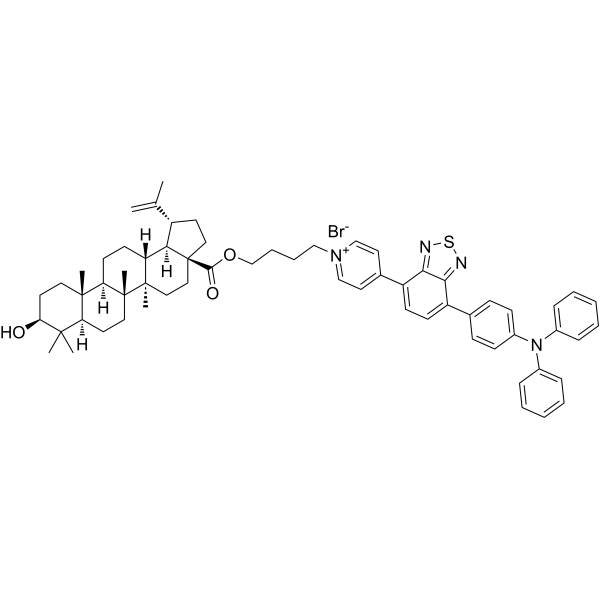
Anticancer agent 174 (BA-3) is an anticancer agent. Anticancer agent 174 induces tumor cell apoptosis through the mitochondrial pathway. Anticancer agent 174 inhibits cancer cell proliferation in melanoma mouse xenograft model .
|
-
-
- HY-162892
-
|
|
Epigenetic Reader Domain
|
Cancer
|
BRD4-IN-9 is an orally active BRD4 inhibitor with an IC50 value of 9.4 nM. BRD4-IN-9 can suppress tumor growth in a mouse melanoma xenograft model .
|
-

-
- HY-175828
-
|
|
DNA/RNA Synthesis
|
Cancer
|
|
DHPS-IN-2 is an allosteric deoxyhypusine synthase (DHPS) inhibitor with an IC50 of 70 nM and a Kd of 26.4 μM. DHPS-IN-2 significantly suppresses melanoma cell migration and invasiveness in vitro and exhibits potent anti-tumor efficacy in an A375 cell zebrafish xenograft model. DHPS-IN-2 can be used for the study of melanoma .
|
-

-
- HY-N0421R
-
|
Cinobufagine (Standard)
|
Reference Standards
Apoptosis
|
Neurological Disease
Cancer
|
|
Cinobufagin (Standard) is the analytical standard of Cinobufagin. This product is intended for research and analytical applications. Cinobufagin is an anticancer agent that can be secreted by the Asiatic toad Bufo gargarizans. Cinobufagin induces the cell cycle arrests in the G1 phase or G2/M phase, leading to apoptosis in cancer cells. Cinobufagin inhibits tumor growth in melanoma and glioblastoma multiforme xenograft mouse models .
|
-

-
- HY-W747797
-
|
|
Isotope-Labeled Compounds
Apoptosis
|
Cancer
|
|
Cinobufagine-d3 is the deuterium labeled Cinobufagin (HY-N0421). Cinobufagin is an anticancer agent that can be secreted by the Asiatic toad Bufo gargarizans. Cinobufagin induces the cell cycle arrests in the G1 phase or G2/M phase, leading to apoptosis in cancer cells. Cinobufagin inhibits tumor growth in melanoma and glioblastoma multiforme xenograft mouse models .
|
-

-
- HY-117707
-
|
|
Raf
|
Cancer
|
|
EBI-907 is an orally active and highly potent B-Raf V600E inhibitor. EBI-907 demonstrates excellent A375 and Colo-205 cellular antiproliferative activity with IC50 values of 13 nM and 14 nM, respectively. EBI-907 can also cause tumor regression in a B-Raf V600E-dependent Colo-205 tumor xenograft model of mice. EBI-907 is promising for research of melanoma and B-Raf V600E associated cancers .
|
-

-
- HY-117991
-
|
|
VEGFR
|
Cancer
|
|
DW10075 is a highly selective and orally active VEGFR inhibitor targeting the VEGF/VEGFR pathway. DW10075 selectively inhibits VEGFR-1, VEGFR-2, and VEGFR-3, but has no effect on FGFR and PDGFR. DW10075 inhibits VEGF-induced HUVEC proliferation, migration, and tube formation. And DW10075 inhibits angiogenesis in both the rat aortic ring model and the chick chorionic membrane model. DW10075 also exhibits antiproliferative activity against human cancer cell lines, with IC50s of 2.2 μM and 22.2 μM against U87-MG human glioblastoma cells and A375 melanoma cells, respectively. In the nude mouse U87-MG xenograft tumor model, DW10075 (po) significantly inhibits tumor growth and reduces the expression of CD31 and Ki67 in tumor tissues.
|
-

-
- HY-183790
-
|
|
Microtubule/Tubulin
Apoptosis
Caspase
|
Cancer
|
|
SMU-G4 is a Tubulin polymerization inhibitor. SMU-G4 induces G2/M phase cell cycle arrest, triggers Apoptosis, and upregulates the expression of Cleaved-Caspase 3. SMU-G4 exhibits in vivo anti-tumor activity in melanoma xenograft models. SMU-G4 can be used for research related to melanoma .
|
-

-
- HY-181529
-
|
|
VDAC
PERK
|
Cancer
|
|
NCATS-SM0225 is an endoplasmic reticulum-associated degradation (ERAD) inhibitor and a direct binder of VDAC1, VDAC2 and VDAC3. NCATS-SM0225 exhibits an IC50of 1.02 μM for ERAD and a Kd of 3.13 μM for human VDAC1 binding. NCATS-SM0225 disrupts cellular calcium homeostasis, enhances VDAC1-IP3R coupling and activating PERK. NCATS-SM0225 selectively kills cancer cells, exhibits tumor growth inhibitory effects in melanoma xenograft models. NCATS-SM0225 can be used for research on multiple cancers including melanoma, as well as the molecular mechanisms of ERAD and calcium homeostasis regulation .
|
-

-
- HY-182405
-
|
|
Apoptosis
YAP
ERK
|
Cancer
|
|
GQ127 is an orally active Gαq/11 inhibitor with an IC50 of 22.6 μM. GQ127 binds directly to Gαq/11 protein and inhibits its activity. GQ127 induces Apoptosis, suppresses viability, migration and invasion of uveal melanoma cells. GQ127 increases the phosphorylation level of YAP and decreases the phosphorylation level of ERK. GQ127 inhibits the growth of uveal melanoma xenografts in mouse models. GQ127 can be used for research related to uveal melanoma .
|
-

-
- HY-D3141
-
|
|
|
Cancer
|
|
DR probe is a "dual-key-and-lock" fluorescent probe designed based on the Resorufin (HY-123533) scaffold (Ex/Em = 647 nm/663-738 nm). DR probe can be sequentially activated by hydrogen peroxide to form the intermediate SR, which acts as a tyrosinase substrate to trigger a fluorescence turn-on signal. DR probe can distinguish normal melanocytes from melanoma cells. DR probe supports cell imaging and can be applied to mouse melanoma models to achieve melanoma diagnosis with higher accuracy and lower false-positive rates. DR probe is applicable to relevant research on melanoma .
|
-

-
- HY-159803
-
|
6-O-(3-Ethoxypropionyl)-3',4'-O-exo-benzylidenechartreusin
|
Endogenous Metabolite
|
Cancer
|
|
IST-622 (6-O-(3-Ethoxypropionyl)-3',4'-O-exo-benzylidenechartreusin) is an anti-tumor agent with significant growth inhibitory activity. IST-622 exhibits significant anti-tumor effects against a variety of mouse tumors such as P388 and L1210 leukemias, B16 melanoma, Lewis lung carcinoma, Colon 26 and Colon 38 adenocarcinomas, and M5076 reticulum cell sarcoma. IST-622 was orally administered and the results showed efficacy in different tumor types. In addition, IST-622 provided significant inhibitory effects against two human tumor xenograft models: large cell lung carcinoma (Lu-116) and gastric adenocarcinoma (St-4). IST-622 also exhibited significant growth inhibitory activity against P388 leukemia in vitro, with a half inhibitory concentration (IC50) more than 20 times lower than CT .
|
-

-
- HY-182624
-
|
|
Na+/H+ Exchanger (NHE)
Wnt
Apoptosis
|
Cancer
|
|
FJ9 is a NHERF1/PDZ inhibitor with human NHERF1 PDZ1 IC50 1540 μM, NHERF1 PDZ2 IC50 160 μM, and Frizzled-7-Dishevelled PDZ complex Ki 10 μM. FJ9 binds ligand-binding pockets of NHERF1 PDZ domains to block cognate ligand interactions, disrupts Frizzled-7-Dishevelled interactions, and down-regulates canonical Wnt signaling. FJ9 induces apoptosis in cancer cells with intact β-catenin signaling. FJ9 can be used for the research of non-small cell lung cancer, melanoma .
|
-

| Cat. No. |
Product Name |
Type |
-
- HY-D3141
-
|
|
Fluorescent Dyes
|
|
DR probe is a "dual-key-and-lock" fluorescent probe designed based on the Resorufin (HY-123533) scaffold (Ex/Em = 647 nm/663-738 nm). DR probe can be sequentially activated by hydrogen peroxide to form the intermediate SR, which acts as a tyrosinase substrate to trigger a fluorescence turn-on signal. DR probe can distinguish normal melanocytes from melanoma cells. DR probe supports cell imaging and can be applied to mouse melanoma models to achieve melanoma diagnosis with higher accuracy and lower false-positive rates. DR probe is applicable to relevant research on melanoma .
|
| Cat. No. |
Product Name |
Target |
Research Area |
Image |
-
- HY-P99364
-
|
Anti-VEGFR1/FLT1 Reference Antibody; IMC-18F1
|
VEGFR
Apoptosis
p38 MAPK
Akt
|
Endocrinology
Cancer
|
|
Icrucumab (Anti-VEGFR1/FLT1 Reference Antibody; IMC-18F1) is an IgG1 antibody inhibitor targeting VEGFR-1/FLT1 with anti-tumor activity. By blocking ligand-dependent phosphorylation and downstream signal transduction, Icrucumab reduces the activities of MAPK and Akt in breast cancer xenograft models, inhibits the proliferation and invasion of VEGFR-1-positive tumor cells, and reverses the conversion of M1 macrophages to the pro-tumor M2-like phenotype. Icrucumab also inhibits tumor cell proliferation, promotes apoptosis, and effectively suppresses tumor growth through direct targeting of tumors and host support mechanisms. In addition, Icrucumab exhibits a synergistic effect when combined with chemotherapeutic agents, and it is used in research related to various cancers including advanced solid malignancies, thyroid cancer, melanoma, and lung cancer .
|
-

(5)
-
- HY-P991609
-
|
|
MMP
|
Cancer
|
|
ABX-MA1 is a humanized IgG2 monoclonal antibody inhibitor targeting MCAM/MUC18. ABX-MA1 significantly decreases homotypic aggregation and heterotypic adhesion to HUVECs, and the formation of experimental lung metastasis. ABX-MA1 potently inhibits tumor growth, angiogenesis, and MMP-2 expression in A375SM/WM2664 xenograft mice model, promising for melanoma research .
|
-
(5)
-
- HY-P991243
-
|
|
EGFR
Akt
|
Cancer
|
|
MP-RM-1 is an antibody-based, non-competitive ErbB-3 inhibitor with a Kd value of 32.7 nM. MP-RM-1 inhibits both ligand-dependent and ligand-independent ErbB-3 activation, blocks ErbB-2/ErbB-3 heterodimerization, induces ErbB-3 internalization and degradation, and suppresses the phosphorylation of downstream Akt. MP-RM-1 exerts its antagonistic effect through a non-competitive mechanism. MP-RM-1 inhibits tumor growth in melanoma and prostate cancer xenograft models in nude mice and reduces the proliferative activity of tumor cells .
|
-
(5)
-
- HY-P991585
-
|
|
Inhibitory Antibodies
|
Cancer
|
|
MORAb-028 is a humanized IgG1 monoclonal antibody inhibitor targeting GD2. MORAb-028 has a potent antitumor activity and kills GD2-expressing target cells via complement-mediated cytotoxicity (CDC). MORAb-028 significantly inhibits tumor growth in EL-4-luc xenograft mice model. MORAb-028 can be used for melanoma cancer research .
|
-

(5)
| Cat. No. |
Product Name |
Category |
Target |
Chemical Structure |
-
- HY-N0421
-
-
-
- HY-N0421R
-
|
Cinobufagine (Standard)
|
Structural Classification
Animals
Steroids
Source Classification
|
Reference Standards
Apoptosis
|
|
Cinobufagin (Standard) is the analytical standard of Cinobufagin. This product is intended for research and analytical applications. Cinobufagin is an anticancer agent that can be secreted by the Asiatic toad Bufo gargarizans. Cinobufagin induces the cell cycle arrests in the G1 phase or G2/M phase, leading to apoptosis in cancer cells. Cinobufagin inhibits tumor growth in melanoma and glioblastoma multiforme xenograft mouse models .
|
-
| Cat. No. |
Product Name |
Chemical Structure |
-
- HY-W747797
-
|
|
|
Cinobufagine-d3 is the deuterium labeled Cinobufagin (HY-N0421). Cinobufagin is an anticancer agent that can be secreted by the Asiatic toad Bufo gargarizans. Cinobufagin induces the cell cycle arrests in the G1 phase or G2/M phase, leading to apoptosis in cancer cells. Cinobufagin inhibits tumor growth in melanoma and glioblastoma multiforme xenograft mouse models .
|
-
| Cat. No. |
Product Name |
|
Classification |
-
- HY-142118A
-
|
AP 12009 sodium
|
|
Antisense Oligonucleotides
|
|
Trabedersen (AP 12009) sodium is an orally active synthetic antisense phosphorothioate oligodeoxynucleotide that selectively targets human TGFβ2 mRNA. Trabedersen sodium blocks TGFβ2 protein production, enters the nucleus without a transfection vector, and exerts dose-dependent antitumor effects. By reversing TGFβ2-induced immunosuppression and enhancing immune cytotoxicity, Trabedersen sodium exhibits significant antiproliferative, antimigratory, and antimetastatic activities, with favorable safety profiles. Trabedersen sodium is widely used in research related to various solid tumors, including anaplastic astrocytoma, glioblastoma, colorectal tumor, and melanoma .
|
-
- HY-158830
-
|
|
|
Antisense Oligonucleotides
|
|
MDM4-targeting ASO sodium is a 25mer antisense oligonucleotide targeting MDM4. MDM4-targeting ASO sodium induced exon 6 skipping, leading to nonsense-mediated decay of the mRNA transcript that excludes exon-6. In multiple human melanoma cell lines and in melanoma patient-derived xenograft (PDX) mouse models, MDM4-targeting ASO-mediated skipping of exon 6 decreased MDM4 abundance, inhibited melanoma growth, and enhanced sensitivity to MAPK-targeting therapeutics.
|
Your information is safe with us. * Required Fields.
Inquiry Information
- Product Name:
- Cat. No.:
- Quantity:
- MCE Japan Authorized Agent:








