1. Search Result
Search Result
Results for "

ortho

" in MedChemExpress (MCE) Product Catalog:

25

Inhibitors & Agonists

2

Fluorescent Dyes

1

Biochemical Assay Reagents

1

Peptides

4

Natural
Products

4

Isotope-Labeled Compounds

Cat. No. Product Name Target Research Areas Chemical Structure
  • HY-W015600

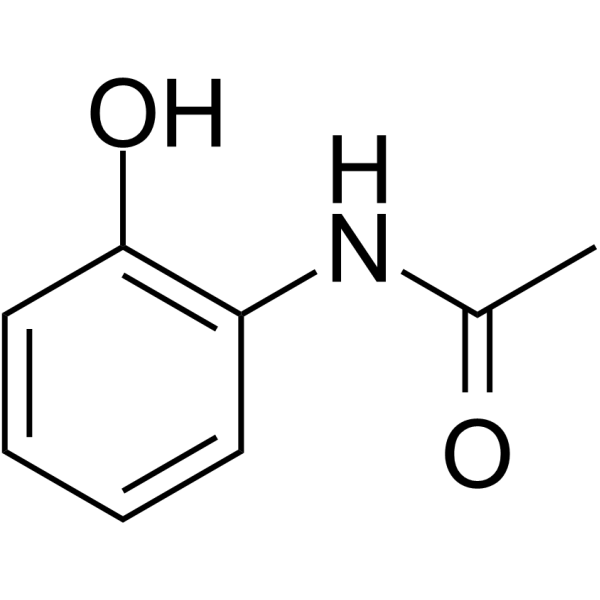
    orthocetamol

    Ferroptosis Glutathione Peroxidase Reactive Oxygen Species (ROS) LDLR Cardiovascular Disease Inflammation/Immunology
    2-Acetamidophenol (Orthocetamol) is a regulator that targets ferroptosis and glutathione metabolic pathways, is the ortho-regioisomer of Paracetamol (HY-66005). 2-Acetamidophenol has anti-atherosclerotic activity, and inhibiting total cholesterol (TC) and triglyceride (TG) in a zebrafish hyperlipidemia model with IC50s for 30 μM and 40 μM, respectively. 2-Acetamidophenol upregulates the expression of glutathione synthesis-related genes (such as GCLC, GCLM, GSS) and iron ion transport genes (such as FPN1, FTH), reduces the accumulation of intracellular reactive oxygen species (ROS) and ferrous ions (Fe 2+), and enhances the activity of glutathione peroxidase GPX4, thereby inhibiting macrophage phagocytosis of oxidized low-density lipoprotein (ox-LDL) and foam cell formation .
    2-Acetamidophenol
  • HY-W015302

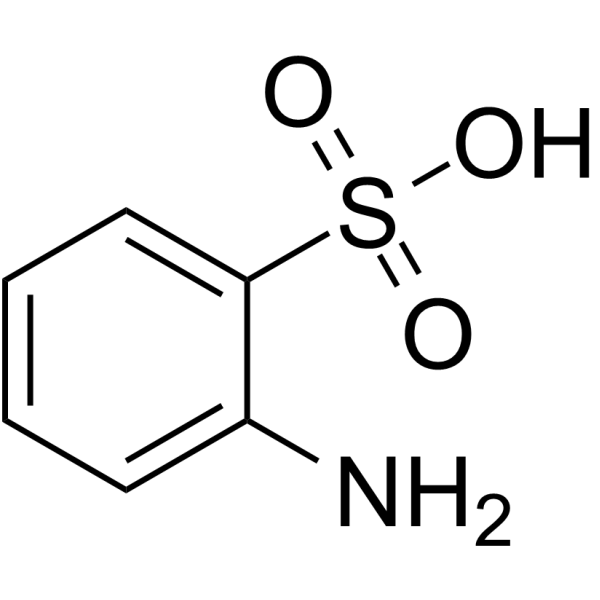
    Orthanilic acid; 2-Aminobenzenesulphonic acid

    Drug Intermediate Others
    2-Aminobenzenesulfonic acid is an anilinesulfonic acid and also the ortho-isomer of aminobenzenesulfonic acid. 2-Aminobenzenesulfonic acid can be used in the synthesis of other active compounds. 2-Aminobenzenesulfonic acid can coordinate via its -NH2 and -SO3 groups to form polymeric copper (II) complexes .
    2-Aminobenzenesulfonic acid
  • HY-124467

    Ro 07-4065

    GABA Receptor Neurological Disease
    Difludiazepam (Ro 07-4065), a benzodiazepine derivative, is a GABAA receptor ligand with an IC50 of 4.1 nM. Difludiazepam binds to an allosteric site on the GABAA receptor to potentiate the receptor's response to GABA, reducing neuron excitability. Difludiazepam contains halogenated groups at the ortho position of its phenyl ring .
    Difludiazepam
  • HY-107848

    NSC 72345; ortho-tyrosine; o-DL-Tyrosine; o-Tyrosine

    Amino Acid Derivatives Others
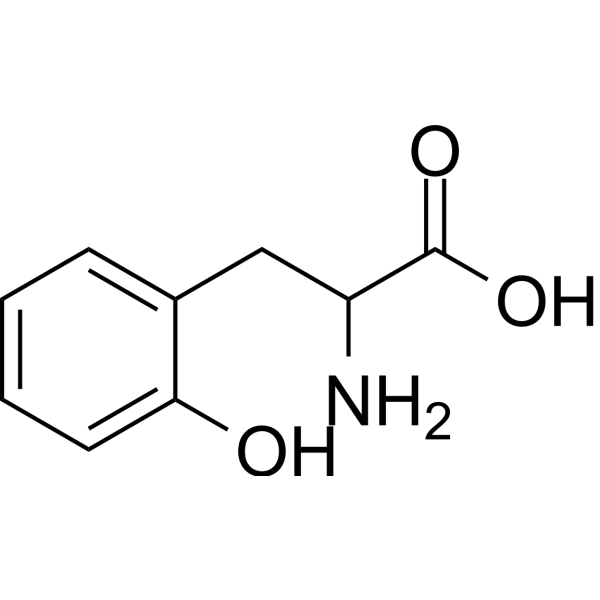
    DL-O-Tyrosine is a tyrosine derivative .
    DL-O-Tyrosine
  • HY-125372

    ABAO

    Biochemical Assay Reagents Others
    2-Amino benzamidoxime (ABAO) acts as a bioconjugation reagent precursor and a fluorescent probe precursor. 2-Amino benzamidoxime contains an aniline group for imine activation of aldehydes, as well as a nucleophilic group (Nu:) located at the ortho position of the amine, which is responsible for intramolecular cyclization. 2-Amino benzamidoxime reacts with glyoxal at the N-terminus of phage-displayed peptide libraries. Derivatives of 2-Amino benzamidoxime can be used for protein bioconjugation. Derivatives of 2-Amino benzamidoxime serve as fluorescent probes .\n


    2-Amino benzamidoxime
  • HY-148964

    HY366

    Insecticide Others
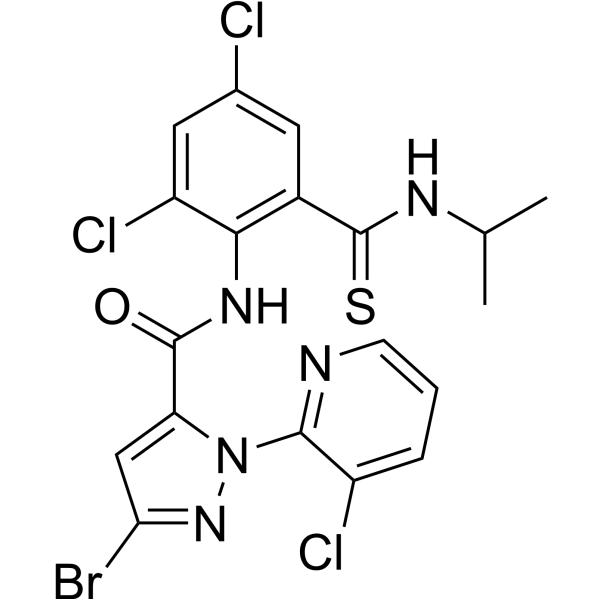
    Thiotraniliprole (HY366) is an ortho formamidobenzamide insecticide that can be used for the synthesis of insecticidal combinations. Thiotraniliprole has potential applications in the prevention of lepidoptera pests, coleoptera pests, ants, and termites .
    Thiotraniliprole
  • HY-W015600R

    orthocetamol (Standard)

    Reference Standards Ferroptosis Glutathione Peroxidase Reactive Oxygen Species (ROS) LDLR Cardiovascular Disease Inflammation/Immunology
    2-Acetamidophenol (Standard) is the analytical standard of 2-Acetamidophenol. This product is intended for research and analytical applications. 2-Acetamidophenol (Orthocetamol) is a regulator that targets ferroptosis and glutathione metabolic pathways, is the ortho-regioisomer of Paracetamol (HY-66005). 2-Acetamidophenol has anti-atherosclerotic activity, and inhibiting total cholesterol (TC) and triglyceride (TG) in a zebrafish hyperlipidemia model with IC50s for 30 μM and 40 μM, respectively. 2-Acetamidophenol upregulates the expression of glutathione synthesis-related genes (such as GCLC, GCLM, GSS) and iron ion transport genes (such as FPN1, FTH), reduces the accumulation of intracellular reactive oxygen species (ROS) and ferrous ions (Fe 2+), and enhances the activity of glutathione peroxidase GPX4, thereby inhibiting macrophage phagocytosis of oxidized low-density lipoprotein (ox-LDL) and foam cell formation .
    2-Acetamidophenol (Standard)
  • HY-146332

    P-selectin Cardiovascular Disease
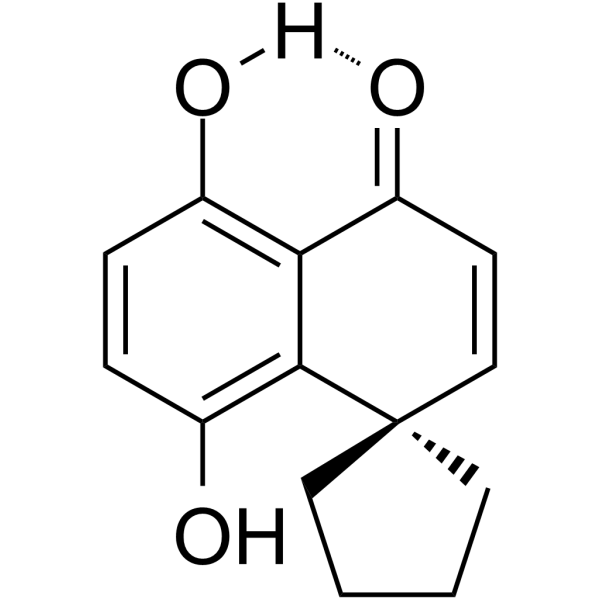
    Collagen-IN-1 (compound 3), an ortho-carbonyl hydroquinone derivative, is a selective inhibitor on collagen. Collagen-IN-1 inhibits agonist-induced platelet aggregation in a non-competitive manner with an IC50 value of 1.77 μM. Collagen-IN-1 reduces the expression of P-selectin, activation of glycoprotein IIb/IIIa, and release of adenosine triphosphate and CD63 from platelet. Collagen-IN-1 has the potential for platelet-related thrombosis diseases research .
    Collagen-IN-1
  • HY-W661499

    Phosphatase Apoptosis Reactive Oxygen Species (ROS) Caspase Cancer
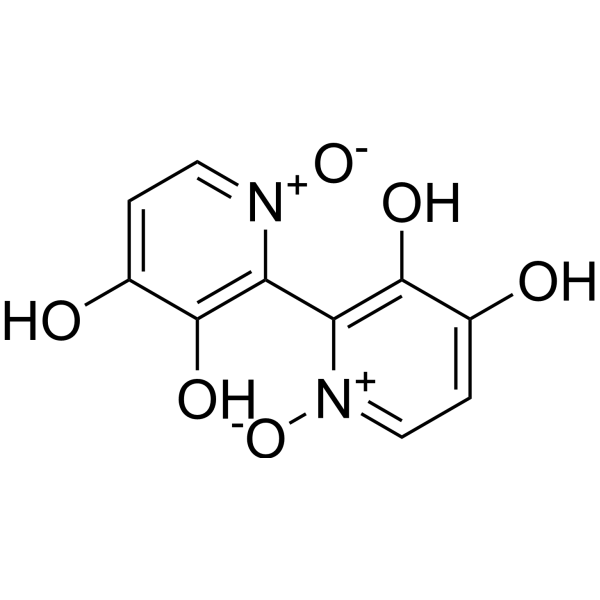
    Orellanine, a nephrotoxic alkaloid found in Cortinarius orellanus, is an orally active and selective non-competitive inhibitor of alkaline phosphatase. Orellanine chelates iron, generates reactive oxygen species (ROS), induces DNA scission, forms ortho-semiquinone radicals, downregulates antioxidant defenses, and inhibits mitochondrial function. Orellanine induces caspase 8/9-mediated apoptosis. Orellanine inhibits synthesis of proteins, RNA, DNA, and mitochondrial protein synthesis, with metabolic activation required for cell-free protein synthesis inhibition. Orellanine can be used for the research of metastatic clear cell renal cell carcinoma, acute renal failure, chronic renal insufficiency, and kidney damage .
    Orellanine
  • HY-W015600S

    orthocetamol-d3

    Isotope-Labeled Compounds Ferroptosis Glutathione Peroxidase Reactive Oxygen Species (ROS) LDLR Cardiovascular Disease Inflammation/Immunology
    2-Acetamidophenol-d3 (Orthocetamol-d3) is the deuterium labeled 2-Acetamidophenol (HY-W015600). 2-Acetamidophenol (Orthocetamol) is a regulator that targets ferroptosis and glutathione metabolic pathways, is the ortho-regioisomer of Paracetamol (HY-66005). 2-Acetamidophenol has anti-atherosclerotic activity, and inhibiting total cholesterol (TC) and triglyceride (TG) in a zebrafish hyperlipidemia model with IC50s for 30 μM and 40 μM, respectively. 2-Acetamidophenol upregulates the expression of glutathione synthesis-related genes (such as GCLC, GCLM, GSS) and iron ion transport genes (such as FPN1, FTH), reduces the accumulation of intracellular reactive oxygen species (ROS) and ferrous ions (Fe2+), and enhances the activity of glutathione peroxidase GPX4, thereby inhibiting macrophage phagocytosis of oxidized low-density lipoprotein (ox-LDL) and foam cell formation .
    2-Acetamidophenol-d3
  • HY-144577S

    Isotope-Labeled Compounds Others
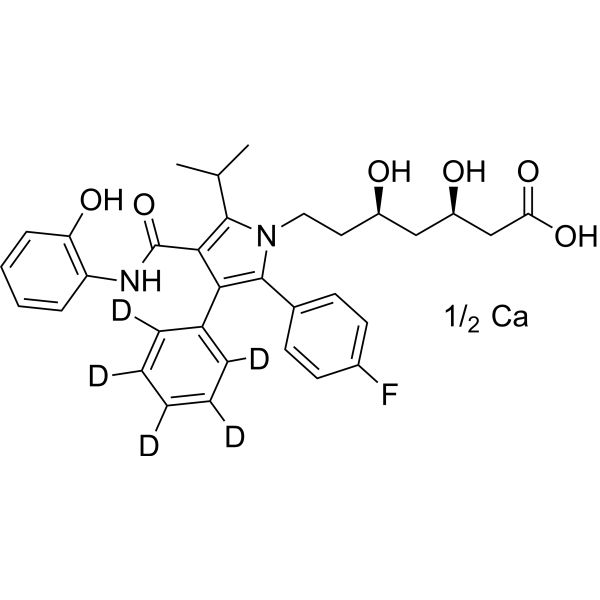
    Ortho-hydroxy atorvastatin-d5 calcium is the deuterium labeled Ortho-hydroxy atorvastatin (HY-144577) . Ortho-hydroxy atorvastatin is the metabolic of Atorvastatin (HY-B0589) .
    Ortho-hydroxy atorvastatin-d5 calcium
  • HY-15626
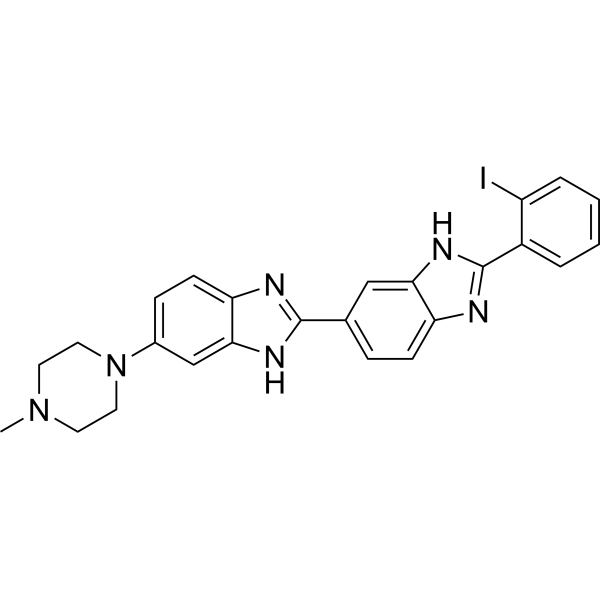
    ortho-iodoHoechst 33258
    3 Publications Verification

    Fluorescent Dye Others
    ortho-iodoHoechst 33258 is a marker dye in Hoechst series. Hoechst is A live nuclear marker dye. Hoechst binds to the grooves in the DNA double strand, which tends to be A/ T-rich DNA strand. Although it binds to all nucleic acids, the A/ T-rich double strand DNA significantly enhances fluorescence intensity Therefore,Hoechst dye can be used for living cell labeling. The fluorescence intensity of Hoechst dye increases with the increase of pH of solution .
    ortho-iodoHoechst 33258
  • HY-D0234

    ortho-Cresolphthalein

    Endogenous Metabolite Others
    o-Cresolphthalein (ortho-Cresolphthalein) is a biocatalyst and a key enzyme in new biocatalyst technology. Enzyme engineering focuses on enhancing enzyme reaction kinetics, substrate selectivity, and activity under harsh conditions such as low or high pH. By introducing stimulus responsiveness to these enzyme modifications, dynamic control of activity is also possible .
    o-Cresolphthalein
  • HY-158857

    o-Cannabinolquinone; ortho-Cannabinolquinone; o-CBNQ

    Cannabinoid Receptor Neurological Disease
    ortho-CBNQ (o-Cannabinolquinone) is an oxidative byproduct of Cannabidiol.
    ortho-CBNQ
  • HY-150341

    Opioid Receptor Neurological Disease
    Ortho-methyl 4-anilino-1-boc-piperidine is a precursor in the synthesis of a compound.
    Ortho-methyl 4-anilino-1-boc-piperidine
  • HY-136346S

    Drug Metabolite Cardiovascular Disease
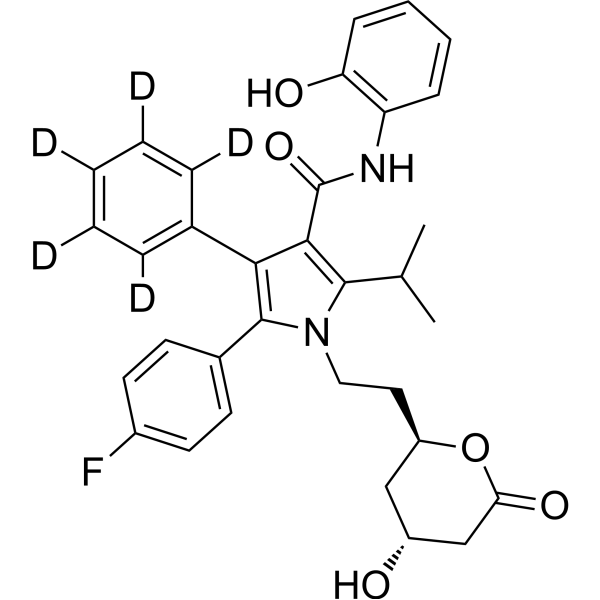
    Ortho-hydroxy atorvastatin lactone-d5 is deuterium labeled 2-Hydroxy atorvastatin lactone. 2-Hydroxy atorvastatin lactone is a metabolite of Atorvastatin. Atorvastatin is an orally active HMG-CoA reductase inhibitor, has the ability to effectively decrease blood lipids .
    Ortho-hydroxy atorvastatin lactone-d5
  • HY-D2286

    Fluorescent Dye Others
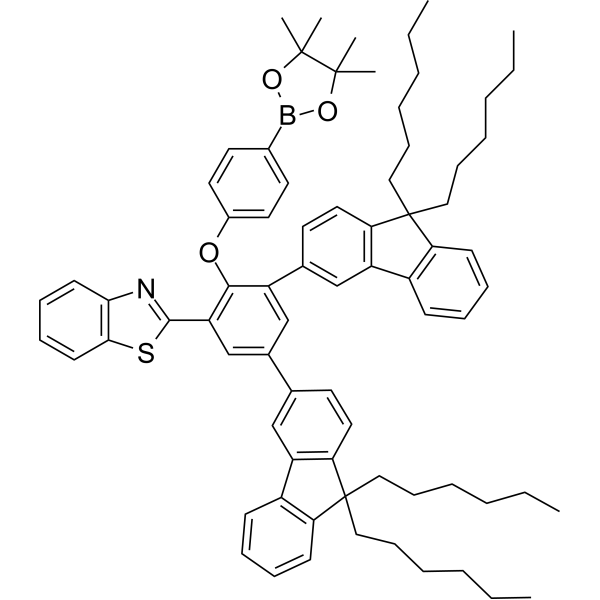
    HBT-Fl-BnB is a fluorescent probe for the ratiometric detection of ONOO - in vitro and in vivo. HBT-Fl-BnB consists of an HBT core with Fl groups at the ortho and para positions responding to the zwitterionic excited-state intramolecular proton-transfer (zwitterionic ESIPT) process and a boronic acid pinacol ester with dual roles that block the zwitterionic ESIPT and recognize ONOO - .
    HBT-Fl-BnB
  • HY-CE01896

    ortho-coumaroyl-coenzyme A

    Biochemical Assay Reagents Metabolic Disease
    Ortho-coumaroyl-CoA (Ortho-coumaroyl-coenzyme A) is a coenzyme A derivative .
    Ortho-coumaroyl-CoA
  • HY-175108

    2'-Fluoro ortho fluoro ANPP; Despropionyl 2'-fluoro o-FF; Despropionyl 2'-fluoro ortho-FF

    Drug Derivative Neurological Disease
    Despropionyl 2'-fluoro ortho-Fluorofentanyl (2'-Fluoro ortho fluoro ANPP; Despropionyl 2'-fluoro o-FF; Despropionyl 2'-fluoro ortho-FF) is opioid compound and can be used for the research of neurological disease.
    Despropionyl 2'-fluoro ortho-fluorofentanyl
  • HY-W753779

    8-OHG

    Reactive Oxygen Species (ROS) NO Synthase Others
    8-Hydroxygenistein (8-OHG) is an antioxidant that can effectively scavenge nitric oxide (NO) and superoxide anion (O₂⁻). 8-Hydroxygenistein belongs to ortho-dihydroxy isoflavones (ODI) and is abundantly present in dark soy sauce and light soy sauce. Its antioxidant activity is stronger than that of its parent compound genistein (HY-14596). The content of 8-Hydroxygenistein is positively correlated with the antioxidant capacity of soy sauce (r = 0.959), and it remains highly stable even after being heated in boiling water for 60 minutes. During the brewing and storage of soy sauce, 8-Hydroxygenistein effectively prevents oxidative damage, making it promising for use in food antioxidant research.
    8-Hydroxygenistein
  • HY-131496S

    Isotope-Labeled Compounds Others
    ortho-Topolin riboside-d4 is deuterium labeled ortho-Topolin riboside .
    ortho-Topolin riboside-d4
  • HY-131496

    STAT Cancer
    ortho-Topolin riboside is a naturally occurring cytokinin secreted from Populus x robusta leaves after sunrise. ortho-Topolin riboside has shown unique cytotoxic activity against NCI60 cell lines compared with the activity of other cytokinins.ortho-Topolin riboside induced differentiation through inhibition of STAT3 signaling in acute myeloid leukemia HL-60 cells.
    ortho-Topolin riboside
  • HY-W101542

    ortho-Metoprolol

    Drug Intermediate Others
    Metoprolol impurity 1 (ortho-Metoprolol) is an impurity of Metoprolol (HY-17503).
    Metoprolol impurity 1
  • HY-W101542R

    ortho-Metoprolol (Standard)

    Reference Standards
    1-(Isopropylamino)-3-(2-(2-methoxyethyl)phenoxy)propan-2-ol (Standard) is the analytical standard of 1-(Isopropylamino)-3-(2-(2-methoxyethyl)phenoxy)propan-2-ol. This product is intended for research and analytical applications.
    Metoprolol impurity 1 (Standard)
  • HY-179654

    HDAC Apoptosis Cancer
    ST13, an ortho-hydroxyanilide, is a selective, slow- and tight-binding HDAC1 and HDAC2 inhibitor with IC50s of 23 nM and 49 nM, respectively. ST13 shows a weak inhibition of HDAC3 (IC50 = 4.30 μM) and HDAC6 (IC50 > 10 μM). The induced fit mechanism of ST13 proceeds through a two-step process: first, the enzyme and inhibitor rapidly form a collision complex (EI), which then slowly transforms into the stable complex E*I. ST13 induces apoptosis in cancer cells. ST13 can be used for the study of melanoma and triple-negative breast .
    ST13

Inquiry Online

Your information is safe with us. * Required Fields.

Salutation


Country or Region *

Applicant Name *


Organization Name *

Department *


Email Address *


Product Name *

Cat. No.


Requested quantity *

Phone Number *


Remarks

Inquiry Online

Inquiry Information

Product Name:
Cat. No.:
Quantity:
MCE Japan Authorized Agent:

