



2-Acetamidophenol

Based on 1 Customer Validation
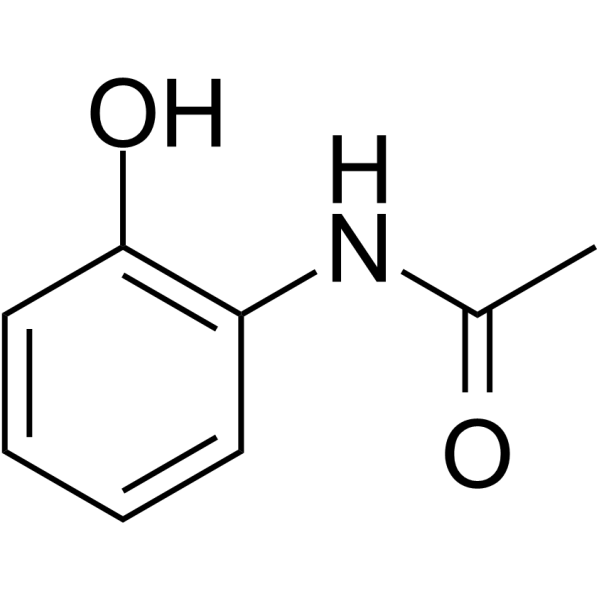
2-Acetamidophenol (Orthocetamol) is a regulator that targets ferroptosis and glutathione metabolic pathways, is the ortho-regioisomer of Paracetamol (HY-66005). 2-Acetamidophenol has anti-atherosclerotic activity, and inhibiting total cholesterol (TC) and triglyceride (TG) in a zebrafish hyperlipidemia model with IC50s for 30 μM and 40 μM, respectively. 2-Acetamidophenol upregulates the expression of glutathione synthesis-related genes (such as GCLC, GCLM, GSS) and iron ion transport genes (such as FPN1, FTH), reduces the accumulation of intracellular reactive oxygen species (ROS) and ferrous ions (Fe2+), and enhances the activity of glutathione peroxidase GPX4, thereby inhibiting macrophage phagocytosis of oxidized low-density lipoprotein (ox-LDL) and foam cell formation.
Nos produits utilisent uniquement pour la recherche. Nous ne vendons pas aux patients.
- Pureté : 99.73%
- CAS No.: 614-80-2
- Formule: C8H9NO2
- Masse moléculaire:151.16
-
Stockage:Powder -20°C, 3 years , 4°C, 2 years ; In solvent -80°C, 6 months , -20°C, 1 month

To place orders, for customer services and technical support, please contact: MedChemExpress USA
Tel: 609-228-6898 E-mail: [email protected] [email protected]


-
 Activité biologique
-
Chemical Information
-
Solvant et solubilité
- Protocole
- Pureté et documentation
- Références
-
 Help & FAQs


-
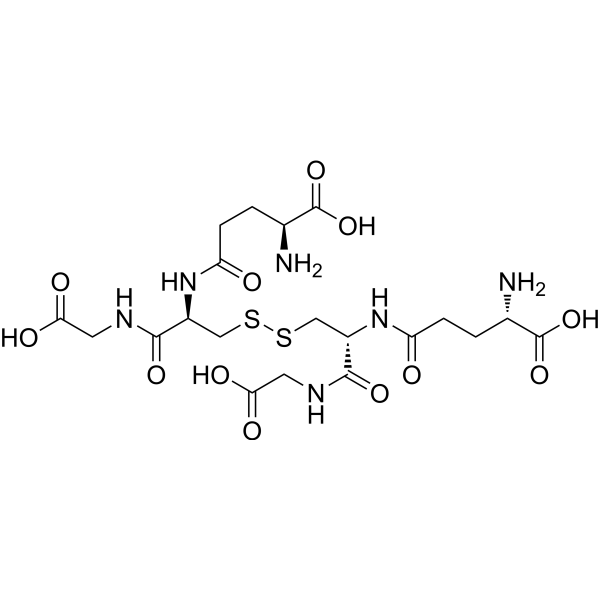
HY-D0844
Glutathione oxidizedAntioxidant -

HY-W015600R
2-Acetamidophenol (Standard)Anti-inflammatory Agent -

HY-10201
SorafenibMultikinase Inhibitor -
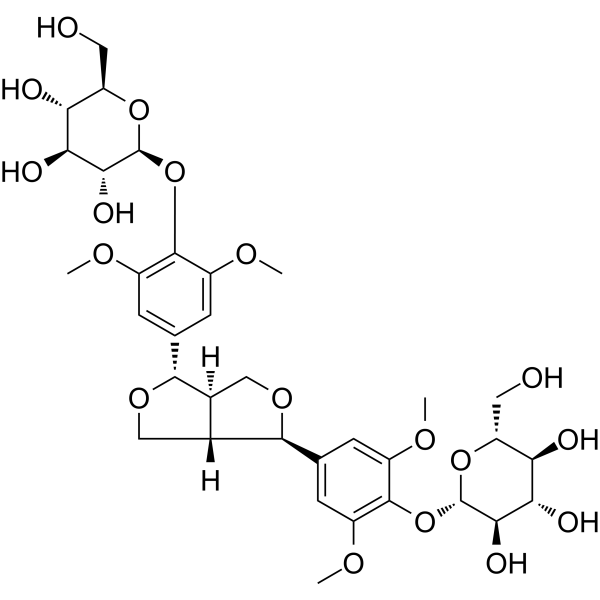
HY-N0272
Eleutheroside EAnti-Inflammatory Agent -

HY-10201A
Sorafenib tosylateMultikinase Inhibitor -

HY-10201R
Sorafenib (Standard)Reference Standard -
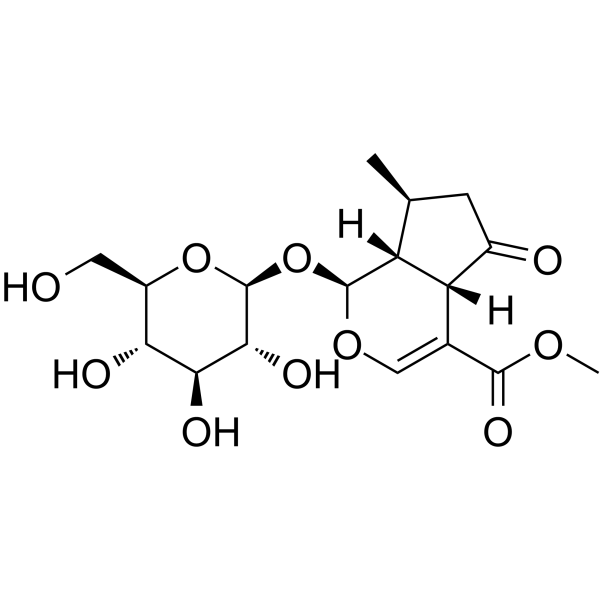
HY-N2014
VerbenalinGlycoside -
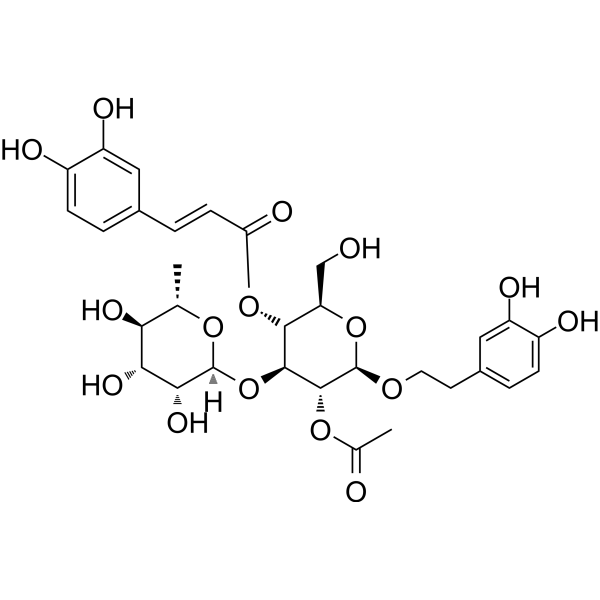
HY-N0026
2'-AcetylacteosideNatural Compound -
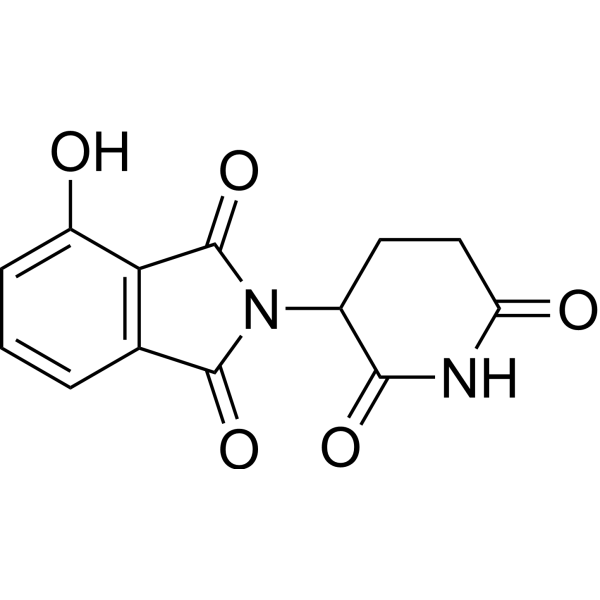
HY-103596
Thalidomide-4-OHCereblon Ligand -

HY-N0272R
Eleutheroside E (Standard)Anti-Inflammatory Agent -

HY-103596R
Thalidomide-4-OH (Standard)Reference Standard -

HY-N0026R
2'-Acetylacteoside (Standard)Natural Product


Activité biologique
Description
IC50 & Target
|
GPX4 |
Cellular Effect
|
Cell Line

|
Type | Value | Description | References |
|---|---|---|---|---|
| RAW264.7 | GI50 |
4204 μM
Compound: 6c
|
Cytotoxicity against mouse RAW264.7 cells assessed as growth inhibition after 48 hrs by trypan blue assay
Cytotoxicity against mouse RAW264.7 cells assessed as growth inhibition after 48 hrs by trypan blue assay
|
10.1039/C3MD00251A |
In Vitro
In zebrafish hyperlipidemia model experiments, 2-Acetamidophenol (20-80 μM; 48 h) significantly improves lipid metabolism, reducing total cholesterol (TC), triglyceride (TG), low-density lipoprotein cholesterol (LDL-C), and malondialdehyde (MDA) levels, increasing high-density lipoprotein cholesterol (HDL-C) and superoxide dismutase (T-SOD) activity, reducing intravascular macrophage aggregation, and enhancing blood flow velocity[1]. In RAW264.7 macrophage foam cell model experiments, 2-Acetamidophenol (10-40 μM; 24 h) inhibits oxidized low-density lipoprotein (ox-LDL)-induced lipid phagocytosis, reduces intracellular TC, TG, free cholesterol (FC), cholesterol ester (CE) contents, and the CE/TC ratio, decreases reactive oxygen species (ROS) and ferrous ion Fe2+ accumulation, and enhances glutathione peroxidase 4 (GPX4) activity[1].
MedChemExpress (MCE) has not independently confirmed the accuracy of these methods. They are for reference only.
-
Cell Line:Mouse macrophage RAW264.7 cells
-
Concentration:10 μM, 20 μM, 40 μM
-
Incubation Time:24 h
-
Result:Dose-dependently decreased Oil Red O staining intensity in ox-LDL-treated cells, indicating reduced lipid phagocytosis.
Significantly lowered intracellular TC, TG, FC, and CE contents than the model group, with the CE/TC ratio decreasing by 25-40%.
Fluorescent probe assays revealed a 30-50% reduction in ROS (DCFH-DA staining) and Fe2+ (FerroOrange staining). GPX4 activity, measured by ELISA, increased by 20-30% in treated cells.
qPCR analysis showed upregulation of glutathione synthesis-related genes (gclc, gclm, gss, 1.5-2.0-fold) and iron ion transport genes (fpn1, fth, 1.2-1.8-fold), while pro-inflammatory gene expression (IL-1β, IL-6) downregulated.
No significant changes in cell viability were observed at tested concentrations.
In Vivo
MedChemExpress (MCE) has not independently confirmed the accuracy of these methods. They are for reference only.
-
Animal Model:Zebrafish (AB strain, 5 days post-fertilization, unsexed, 2-3 mm body length) hyperlipidemia model induced by egg yolk powder feeding[1]
-
Dosage:20 μM, 40 μM, 80 μM (dissolved in zebrafish culture water, final DMSO concentration <0.05%)
-
Administration:Immersion administration by adding to culture water, medium replaced daily, treatment for 48 h starting at 5 days post-fertilization
-
Result:Dose-dependently reduced lipid deposition in caudal vasculature as assessed by Oil Red O staining, with integrated optical density (IOD) decreasing by 30-55% compared to the model group (egg yolk powder-fed zebrafish).
Biochemical assays showed significant reductions in TC, TG, and LDL-C, while HDL-C levels increased by 25-40%.
Blood flow velocity in caudal arteries increased by 1.3-fold at 80 μM, correlating with improved vascular stability.
Intravascular macrophage density, visualized in Tg(lyz:EGFP) zebrafish, decreased by 46% in the highest dose group, indicating reduced inflammatory cell accumulation.
Antioxidant parameters T-SOD and CAT activity were elevated by 20-30%, and MDA levels were reduced by 28% compared to the model, demonstrating enhanced antioxidant capacity.


Chemical Information
-
CAS No. 614-80-2
-
Appearance Solid
-
Masse moléculaire 151.16
-
Formule C8H9NO2
-
Color Off-white to light brown
-
SMILES
OC1=C(NC(C)=O)C=CC=C1
-
Synonyms
Orthocetamol
-
Livraison
Room temperature in continental US; may vary elsewhere.
-
Stockage
Powder -20°C 3 years 4°C 2 years In solvent -80°C 6 months -20°C 1 month


Solvant et solubilité
In Vitro:
DMSO : 50 mg/mL (330.78 mM; Need ultrasonic; Hygroscopic DMSO has a significant impact on the solubility of product, please use newly opened DMSO)
Please refer to the solubility information to select the appropriate solvent. Once prepared, please aliquot and store the solution to prevent product inactivation from repeated freeze-thaw cycles.
Storage method and period of stock solution: -80°C, 6 months; -20°C, 1 month. When stored at -80°C, please use it within 6 months. When stored at -20°C, please use it within 1 month.
Please refer to the solubility information to select the appropriate solvent. Once prepared, please aliquot and store the solution to prevent product inactivation from repeated freeze-thaw cycles.
Storage method and period of stock solution: -80°C, 6 months; -20°C, 1 month. When stored at -80°C, please use it within 6 months. When stored at -20°C, please use it within 1 month.
Concentration (start) × Volume (start) = Concentration (final) × Volume (final)
In Vivo:
Select the appropriate dissolution method based on your experimental animal and administration route.
- For the following dissolution methods, please ensure to first prepare a clear stock solution using an In Vitro approach and then sequentially add co-solvents:
- To ensure reliable experimental results, the clarified stock solution can be appropriately stored based on storage conditions. As for the working solution for In Vivo experiments, it is recommended to prepare freshly and use it on the same day.
- The percentages shown for the solvents indicate their volumetric ratio in the final prepared solution. If precipitation or phase separation occurs during preparation, heat and/or sonication can be used to aid dissolution.
Add each solvent one by one: 10% DMSO 40% PEG300 5% Tween-80 45% Saline
Solubility: ≥ 2.5 mg/mL (16.54 mM); Clear solution
This protocol yields a clear solution of ≥ 2.5 mg/mL (saturation unknown).
Taking 1 mL working solution as an example, add 100 μL DMSO stock solution (25.0 mg/mL) to 400 μL PEG300, and mix evenly; then add 50 μL Tween-80 and mix evenly; then add 450 μL Saline to adjust the volume to 1 mL.
Preparation of Saline: Dissolve 0.9 g sodium chloride in ddH₂O and dilute to 100 mL to obtain a clear Saline solution.
Add each solvent one by one: 10% DMSO 90% (20% SBE-β-CD in Saline)
Solubility: ≥ 2.5 mg/mL (16.54 mM); Clear solution
This protocol yields a clear solution of ≥ 2.5 mg/mL (saturation unknown).
Taking 1 mL working solution as an example, add 100 μL DMSO stock solution (25.0 mg/mL) to 900 μL 20% SBE-β-CD in Saline, and mix evenly.
Preparation of 20% SBE-β-CD in Saline (4°C, storage for one week): 2 g SBE-β-CD powder is dissolved in 10 mL Saline, completely dissolve until clear.
In Vivo Dissolution Calculator
Please enter the basic information of animal experiments:
-
-
-
-
Recommended: Prepare an additional quantity of animals to account for potential losses during experiments.
Please enter your animal formula composition:
-
%DMSO +
Recommended: Keep the proportion of DMSO in working solution below 2% if your animal is weak.
-
%+
-
+%Tween-80 + +
-
%Saline +
The co-solvents required include: DMSO, . All of co-solvents are available by MedChemExpress (MCE). , Tween 80. All of co-solvents are available by MedChemExpress (MCE).
Working solution concentration: 0.22 mg/mL
Method for preparing stock solution: mg drug dissolved in μL DMSO. Stock solution concentration: mg/mL.
1. Take μL DMSO stock solution;
2. Add μL .
μL , mix evenly;
3. Then add μL Tween 80, mix evenly;
4. Then add μL
Please ensure that the stock solution in the first step is dissolved to a clear state, and add co-solvents in sequence. You can use ultrasonic heating (ultrasonic cleaner, recommended frequency 20-40 kHz), vortexing, etc. to assist dissolution.


Pureté et documentation
-
Fiche technique (280 KB)
-
SDS (396 KB)
- English - EN (396 KB)
- Français - FR (396 KB)
- Deutsch - DE (396 KB)
- Norwegian - NO (396 KB)
- Español - ES (396 KB)
- Swedish - SV (396 KB)
- Italian - IT (396 KB)
- Korean - KR (396 KB)
- Portuguese - PT (396 KB)
-
Instruction de manipulation (2659 KB)
Références
[1]. Zang X, et al. 2-Acetamidophenol (2-AAP) Suppresses the Progression of Atherosclerosis by Alleviating Hyperlipidemia and Attenuating the Ferroptosis Pathway. Mar Drugs. 2024 Nov 13;22(11):513. [Content Brief]
[2]. Andrusenko I, et al. The Crystal Structure of Orthocetamol Solved by 3D Electron Diffraction. Angew Chem Int Ed Engl. 2019 Aug 5;58(32):10919-10922. [Content Brief]


Complete Stock Solution Preparation Table
Please refer to the solubility information to select the appropriate solvent. Once prepared, please aliquot and store the solution to prevent product inactivation from repeated freeze-thaw cycles.
Storage method and period of stock solution: -80°C, 6 months; -20°C, 1 month. When stored at -80°C, please use it within 6 months. When stored at -20°C, please use it within 1 month.
| Optional Solvent | Concentration Solvent Mass | 1 mg | 5 mg | 10 mg | 25 mg |
|---|---|---|---|---|---|
| DMSO | 1 mM | 6.6155 mL | 33.0775 mL | 66.1551 mL | 165.3877 mL |
| 5 mM | 1.3231 mL | 6.6155 mL | 13.2310 mL | 33.0775 mL | |
| 10 mM | 0.6616 mL | 3.3078 mL | 6.6155 mL | 16.5388 mL | |
| 15 mM | 0.4410 mL | 2.2052 mL | 4.4103 mL | 11.0258 mL | |
| 20 mM | 0.3308 mL | 1.6539 mL | 3.3078 mL | 8.2694 mL | |
| 25 mM | 0.2646 mL | 1.3231 mL | 2.6462 mL | 6.6155 mL | |
| 30 mM | 0.2205 mL | 1.1026 mL | 2.2052 mL | 5.5129 mL | |
| 40 mM | 0.1654 mL | 0.8269 mL | 1.6539 mL | 4.1347 mL | |
| 50 mM | 0.1323 mL | 0.6616 mL | 1.3231 mL | 3.3078 mL | |
| 60 mM | 0.1103 mL | 0.5513 mL | 1.1026 mL | 2.7565 mL | |
| 80 mM | 0.0827 mL | 0.4135 mL | 0.8269 mL | 2.0673 mL | |
| 100 mM | 0.0662 mL | 0.3308 mL | 0.6616 mL | 1.6539 mL |


2-Acetamidophenol Related Classifications
HY-W015600 Related Classifications
 Powered by Bioz