1. Search Result
Search Result
Results for "

papillary muscle

" in MedChemExpress (MCE) Product Catalog:

17

Inhibitors & Agonists

1

Peptides

2

Natural
Products

Cat. No. Product Name Target Research Areas Chemical Structure
  • HY-18740A

    HL 725

    Phosphodiesterase (PDE) Neurological Disease Metabolic Disease Cancer
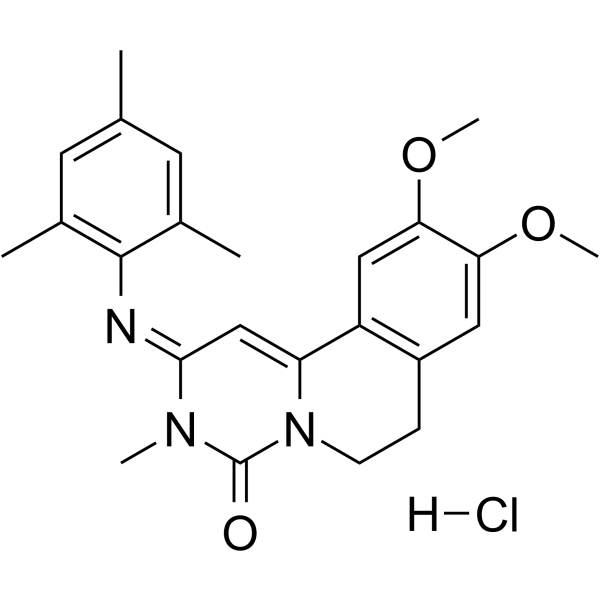
    Trequinsin hydrochloride (HL 725) is a PDE inhibitor, CatSper channel activator, and sperm potassium channel modulator. Trequinsin hydrochloride targets PDE3 with an IC50 of <1 nM. Trequinsin hydrochloride enhances currents and elevates intracellular calcium and cGMP levels via direct activation of the CatSper channel, while inhibiting the outward current conductance of sperm potassium channels. Without inducing premature acrosome reaction, Trequinsin hydrochloride significantly enhances sperm hyperactivated motility, forward motility, and the ability to penetrate viscous media. Trequinsin hydrochloride exerts age-specific positive inotropic and positive lusitropic effects on rabbit ventricular papillary muscles. Trequinsin hydrochloride has been used in studies on the mechanisms underlying male infertility (e.g., asthenozoospermia) .
    Trequinsin hydrochloride
  • HY-19664

    OPC-13340

    Calcium Channel NO Synthase Cardiovascular Disease
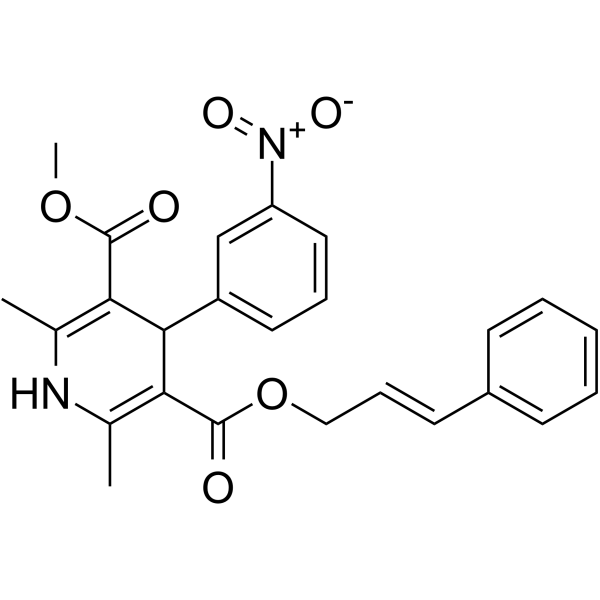
    Pranidipine (OPC-13340) is an orally active L-type voltage-dependent calcium channel (L-VDCC) blocker with a Ki value of 0.16 nM. Pranidipine inhibits calcium-induced contraction, suppresses slow-response action potentials, shortens action potential duration, reduces systolic and diastolic blood pressure, and exerts vasodilatory effects. Pranidipine enhances its vasodilatory effect by blocking NO decomposition. Pranidipine can be used in research related to essential hypertension, angina pectoris, myocardial infarction, and dilated cardiomyopathy .
    Pranidipine
  • HY-N3198A
    Sophoramine
    1 Publications Verification

    (-)-Sophoramine

    Adrenergic Receptor Cardiovascular Disease
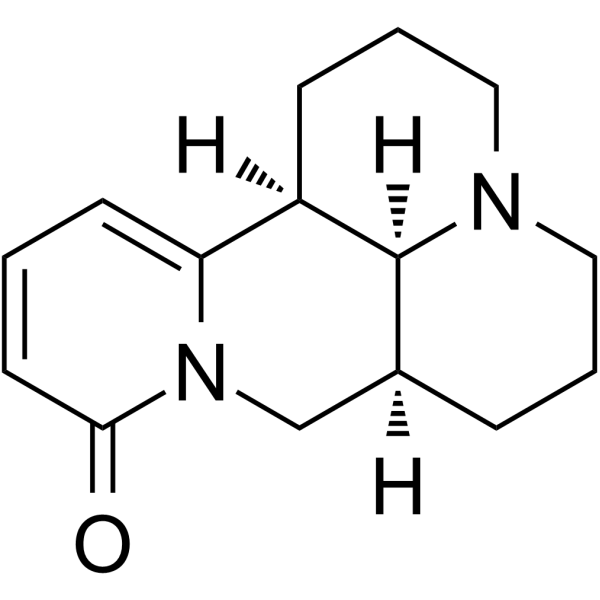
    Sophoramine ((-)-Sophoramine) is a prejunctional α2-adrenoceptor inhibitor that can be found in the seeds of Sophora alopecuroides. Sophoramine inhibits prejunctional α2-adrenoceptors to facilitate norepinephrine release from adrenergic nerves. Sophoramine shows cytotoxic activity against human cancer cells, positive inotropic activity, and activity in rodent arrhythmia models. Sophoramine can be used for the research of arrhythmias .
    Sophoramine
  • HY-106831

    Calcium Channel Cardiovascular Disease
    R 56865 is a cardiomyocyte protective agent that protects against digitoxin (Ouabain)-induced myocardial calcium overload. R 56865 has a protective effect against digitoxin-induced intoxication in guinea pig papillary muscle .
    R 56865
  • HY-P11313

    Rat chromogranin A367–387

    nAChR Akt Cardiovascular Disease
    Catestatin (rat) (Rat chromogranin A367–387) is a potent, reversible, noncompetitive, and noncooperative nicotinic cholinergic antagonist derived from chromogranin A (A367-387). Catestatin (rat) inhibits norepinephrine release in rat PC12 pheochromocytoma cells (IC50 = 1.2 μM), and blocks desensitization of norepinephrine release (IC50 = 0.62 μM). Catestatin (rat) exerts antiadrenergic effects through the endothelial PI3K-AKT-eNOS pathway in rat papillary muscles and isolated cardiomyocytes. Catestatin (rat) maintains mitochondrial membrane potential in I/R cardiomyocytes and increases phosphorylation of AKT at S473, GSK3β at S9, PLB at T17, and eNOS at S1179. Catestatin (rat) reverses desensitization of 22Na + uptake. Catestatin (rat) can be used for the study of nicotinic cholinergic receptor regulation and catecholamine release control mechanisms .
    Catestatin (rat)
  • HY-106819A

    Sodium Channel Cardiovascular Disease
    AN-132 phosphate is an antiarrhythmic agent. AN-132 phosphate can inhibit Sodium Channel. AN-132 phosphate can prolong atrioventricular conduction time, decrease sinus rate and reduce the force of papillary muscle contraction. AN-132 phosphate can be used for the research of cardiovascular disease .
    AN-132 phosphate
  • HY-123449A

    Adrenergic Receptor Cardiovascular Disease Neurological Disease
    MK-761 TFA is an orally effective β2-adrenergic receptor antagonist. MK-761 TFA attenuates positive inotropic effects, reduces arterial pressure, enhances the contractility of papillary muscles in cat hearts, and exerts effects mediated by catecholamine release. MK-761 TFA can be used in the research of hypertension .
    MK-761 TFA
  • HY-123449

    Adrenergic Receptor Cardiovascular Disease
    MK-761 free base is an orally effective β2-adrenergic receptor antagonist. MK-761 free base attenuates positive inotropic effects, reduces arterial pressure, enhances the contractility of papillary muscles in cat hearts, and exerts effects mediated by catecholamine release. MK-761 free base can be used in the research of hypertension .
    MK-761 free base
  • HY-W722221

    Adrenergic Receptor Cardiovascular Disease
    Colterol acetate is a selective inhibitor of β-adrenergic receptors. Colterol acetate can relax tracheal smooth muscle (primarily acting on β2 receptors), reduce subspastic contractions of tricholoma (acting on β2), and increase contractility of left ventricular papillary muscles (acting on β1) .
    Colterol acetate
  • HY-136677

    Calcium Channel Cardiovascular Disease
    LND 796 is an aminosteroidal derivative with positive inotropic effects similar to those of digitalis. It exhibits electrophysiological, toxic, and inotropic effects in normal and partially potassium-depolarized ventricular muscles. LND 796 requires higher concentrations than digoxin to induce the same toxic symptoms. It exhibits a concentration-dependent positive inotropic effect on guinea pig papillary muscles in normal potassium solution. In partially potassium-depolarized papillary muscles, LND 796 enhances both components of contraction and increases the amplitude of slow action potentials. The mechanism of positive inotropic action of LND 796 involves enhanced calcium entry in calcium channels and inhibition of sodium-potassium ATPase. Due to its expanded positive inotropic range, LND 796 may have potential application in the treatment of congestive heart failure.
    Lnd 796
  • HY-114920

    Calcium Channel Cardiovascular Disease
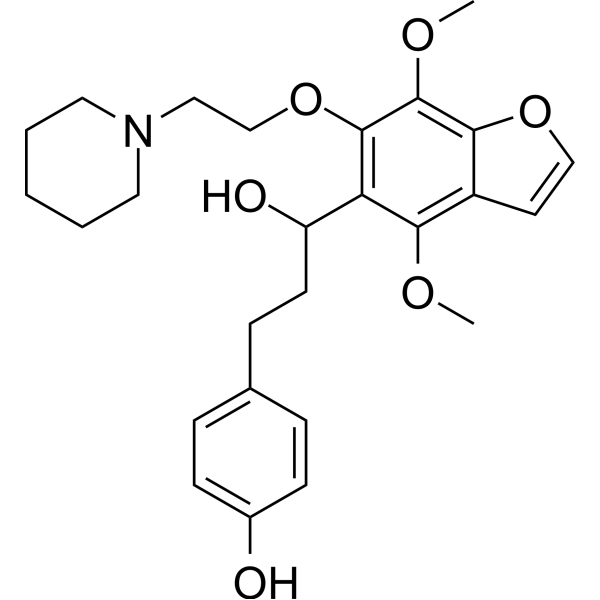
    Piprofurol is a calcium channel inhibitor. Piprofurol inhibits the calcium-induced contractions in isolated potassium depolarized preparations of rat aorta in a concentration-dependent manner and relaxes the K +-induced contraction of the dog coronary artery and the rabbit basilar artery. Piprofurol exerts a negative inotropic effect on guinea-pig papillary muscle, with the EC50 of 5 μM .
    Piprofurol
  • HY-W748419

    Others Cardiovascular Disease
    Acetylstrophanthidin is a cardiac glycoside compound and a positive inotropic agent. Acetylstrophanthidin increases myocardial oxygen consumption in cat papillary muscles under constant load or tension, as well as under afterload (isotonic) and isometric contraction conditions .
    Acetylstrophanthidin
  • HY-183138

    Drug Metabolite Cardiovascular Disease
    N-Demethyldiltiazem is a metabolite of Diltiazem (HY-B0632). N-Demethyldiltiazem increases coronary blood flow, modulates cardiac function, decreases systemic blood pressure and heart rate, and alters papillary muscle developed tension .
    N-Demethyldiltiazem
  • HY-18740

    HL 725 free base

    Phosphodiesterase (PDE) Endocrinology
    Trequinsin (HL 725 free base) is a PDE inhibitor, CatSper channel activator, and sperm potassium channel modulator. Trequinsin targets PDE3 with an IC50 of <1 nM. Trequinsin enhances currents and elevates intracellular calcium and cGMP levels via direct activation of the CatSper channel, while inhibiting the outward current conductance of sperm potassium channels. Without inducing premature acrosome reaction, Trequinsin significantly enhances sperm hyperactivated motility, forward motility, and the ability to penetrate viscous media. Trequinsin exerts age-specific positive inotropic and positive lusitropic effects on rabbit ventricular papillary muscles. Trequinsin has been used in studies on the mechanisms underlying male infertility (e.g., asthenozoospermia) .
    Trequinsin
  • HY-165397

    PKC Cardiovascular Disease
    NA 0345 is a PKC inhibitor with IC50 values of 70 nM and 110 nM in the presence and absence of 12-O-tetradecanoyl-13-acetate, respectively. NA 0345 inhibits PKC and selectively suppresses the positive inotropic effect mediated by α1-adrenergic receptors .
    NA 0345
  • HY-183206

    Potassium Channel Calcium Channel Cardiovascular Disease Inflammation/Immunology
    UR 8225 is an orally active ATP-sensitive K + channel activator with vasodilator, smooth muscle relaxant, antihypertensive, and bronchodilator activities. UR 8225 induces membrane hyperpolarization by increasing outward K + conductance and reduces Ca 2+ influx through voltage-gated L-type Ca 2+ channels. UR 8225 reduces total peripheral vascular resistance, shortens cardiac action potential duration, inhibits agonist-induced Ca 2+ influx, and stimulates renin release. UR 8225 induces reflex tachycardia but lacks β-adrenergic receptor blocking activity. UR 8225 is widely applicable to research in fields related to hypertension, myocardial ischemia, ventricular fibrillation, and other conditions .
    UR 8225
  • HY-106501A

    Goe 4704 hydrochloride

    Potassium Channel Cardiovascular Disease
    Asocainol hydrochloride (Goe 4704 hydrochloride) is an antiarrhythmic agent. Asocainol hydrochloride reduces the maximum rate of action potential rise and action potential amplitude. Asocainol hydrochloride is applicable for the research of arrhythmias .
    Asocainol hydrochloride

Inquiry Online

Your information is safe with us. * Required Fields.

Salutation


Country or Region *

Applicant Name *


Organization Name *

Department *


Email Address *


Product Name *

Cat. No.


Requested quantity *

Phone Number *


Remarks

Inquiry Online

Inquiry Information

Product Name:
Cat. No.:
Quantity:
MCE Japan Authorized Agent:

