Search Result
Results for "
red+dye
" in MedChemExpress (MCE) Product Catalog:
3
Biochemical Assay Reagents
2
Isotope-Labeled Compounds
| Cat. No. |
Product Name |
Target |
Research Areas |
Chemical Structure |
-
- HY-D1783
-
|
MTDR FM
|
Fluorescent Dye
|
Others
|
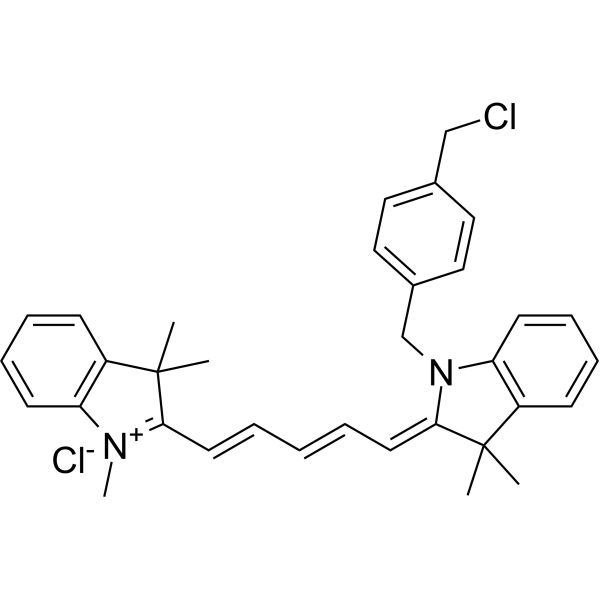
MitoTracker Deep Red (MTDR) FM fluorescent dye that selectively accumulates in the mitochondrial matrix. MitoTracker Deep Red FM covalently binds mitochondrial proteins by reacting with free mercaptan of cysteine residues, allowing staining of mitochondrial membrane potential independent of membrane potential. Excitation/emission wavelength 644/665 nm . MitoTracker Deep Red dyes have an excitation/emission wavelength of 633/650-750 nm .
The Ex/Em of MitoTracker Deep Red (MTDR) FM is 644/665 nm.
|
-
-
- HY-D0214
-
|
|
Influenza Virus
Photosensitizer
Amyloid-β
|
Infection
Neurological Disease
Cancer
|
|
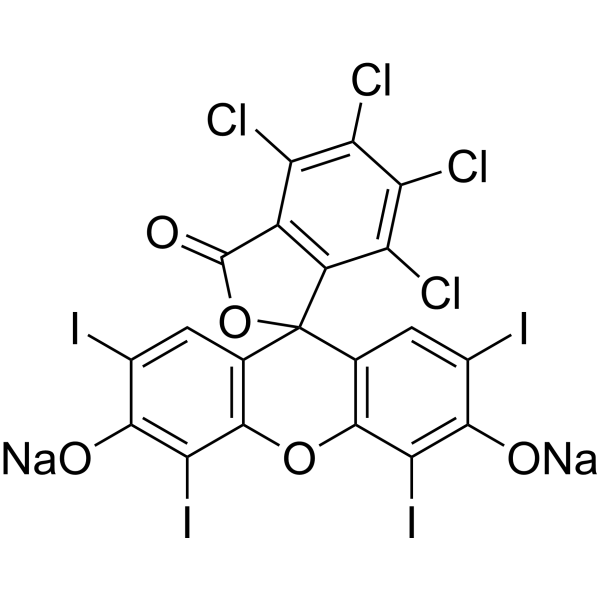
Acid Red 94 sodium, a synthetic fluorescein derivative, is a deep red dye primarily composed of 4,5,6,7-tetrachloro-2,4,5,7-tetraiodo fluorescein. It is widely used as an ophthalmic diagnostic agent to detect dry or damaged cells on the ocular surface. Acid Red 94 sodium exhibits antitumor activity and can inhibit Friend Leukemia Virus (FLV) infection through photodynamic action. Additionally, Acid Red 94 sodium can inhibit Aβ aggregation through light irradiation. Acid Red 94 sodium holds potential for use in cancer, viral infections, and neurodegenerative disease research .
|
-
-
- HY-N1389
-
|
Carmine red
|
Fluorescent Dye
|
Inflammation/Immunology
Cancer
|
|
Carmine (Carmine red), a natural red dye extracted from the dried females of the insect Dactylopius coccus var. Costa (cochineal). Carmine is a widely used food additive. Carmine provokes both an immediate hypersensitivity and a delayed systemic response with cutaneous expression .
|
-

-
- HY-D0505
-
Eosin Y
3 Publications Verification
Acid Red 87 free base
|
Fluorescent Dye
|
Others
|
|
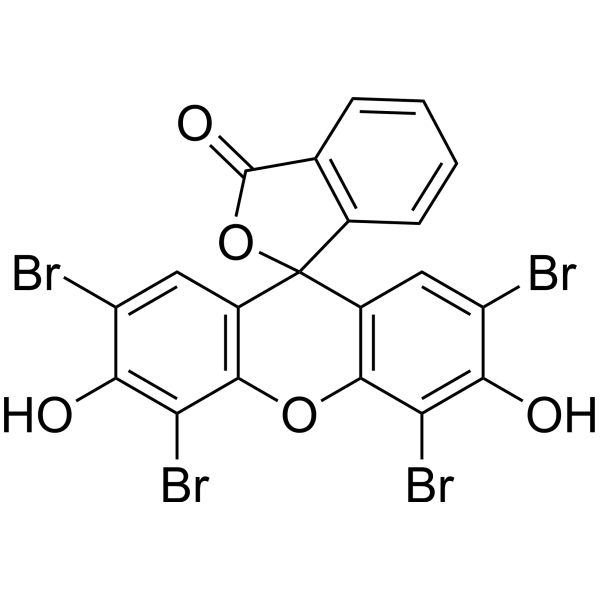
Eosin Y (Acid Red 87 free base) is a soluble acid red dye molecule. Eosin Y has a wide application in organic synthesis as a photoredox catalyst .
|
-
-
- HY-N0072
-
|
|
Apoptosis
Autophagy
|
Inflammation/Immunology
Cancer
|
|
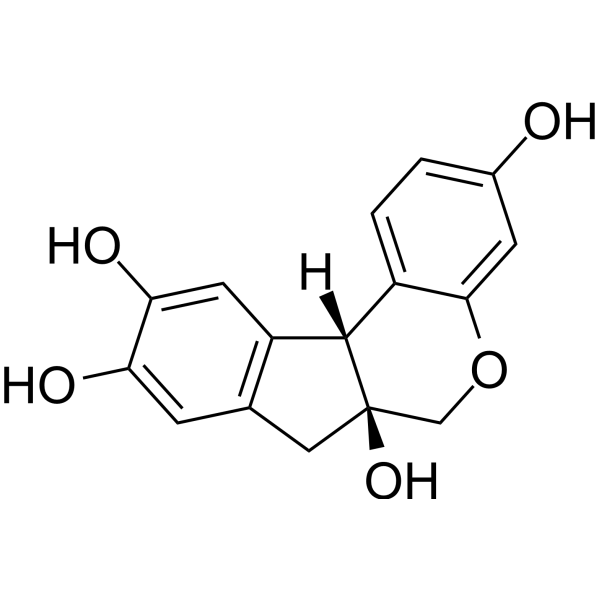
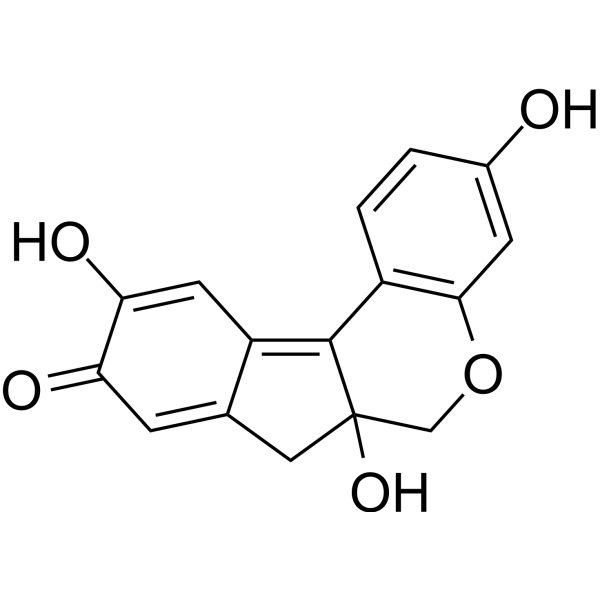
Brazilin is a red dye precursor obtained from the heartwood of several species of tropical hardwoods. Brazilin inhibits the cells proliferation, promotes apoptosis, and induces autophagy through the AMPK/mTOR pathway. Brazilin shows chondroprotective and anti-inflammatory activities .
|
-
-
- HY-D0307A
-
-
-
- HY-D0505A
-
|
Acid Red 87
|
Fluorescent Dye
|
Others
|
|
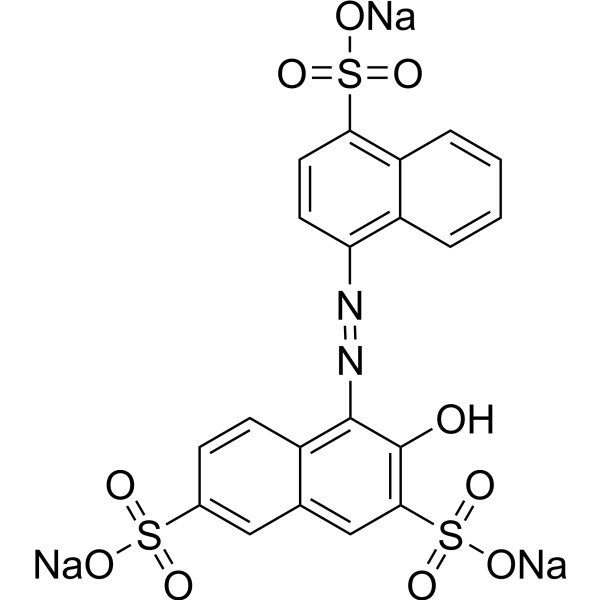
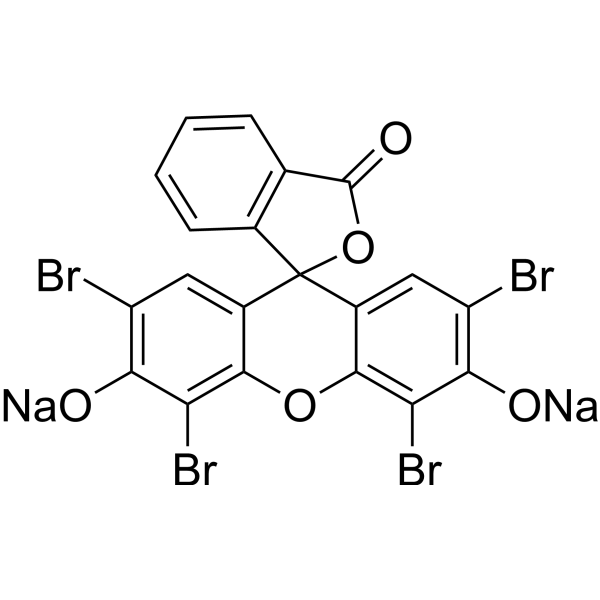
Eosin Y disodium (Acid Red 87) is a soluble acid red dye molecule. Eosin Y disodium has a wide application in organic synthesis as a photoredox catalyst .
|
-
-
- HY-12489A
-
|
Acid Red 112, BS
|
Biochemical Assay Reagents
|
Others
|
|
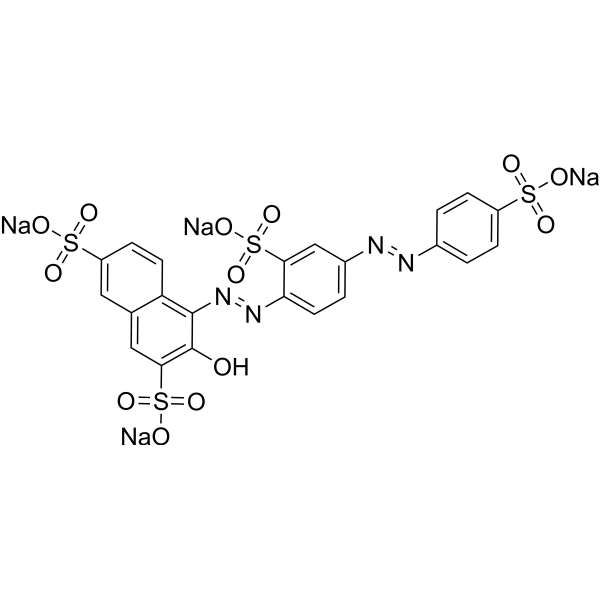
Both Ponceau S and Ponceau BS are synthetic dyes commonly used in biological research. They are commonly used as protein stains to visualize proteins in western blots and other protein detection analyses. Ponceau S is a red dye, while Ponceau BS is a blue shade of the same dye. Both dyes bind to positively charged amino acid residues in proteins for easy visualization. However, Ponceau S is more commonly used due to its higher sensitivity.
|
-
-
- HY-D0024
-
|
Solvent Yellow 14
|
Environmental Pollutants
Bacterial
|
Others
|
|
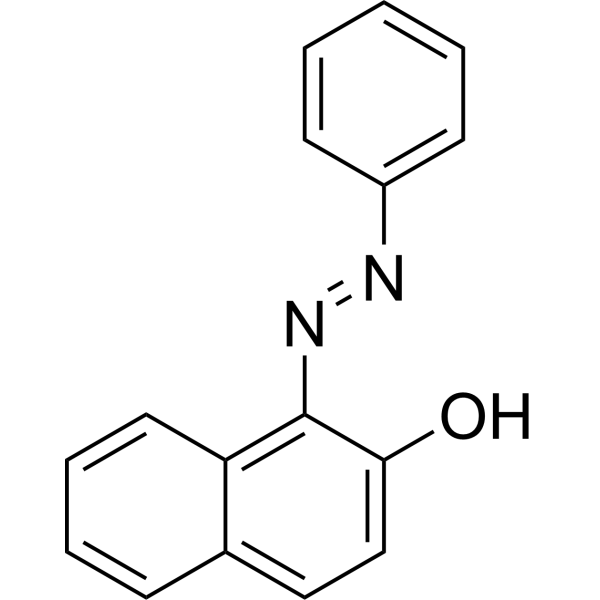
Sudan I (Solvent Yellow 14) is a diazo-conjugate red dye and can be used as an additive to products such as oils, solvents or polishes. Sudan I inhibits growth of bacterial strains Clostridium perfringens and L. rhamnosus .
|
-
-
- HY-N10424
-
|
|
Na+/K+ ATPase
Apoptosis
Interleukin Related
NO Synthase
Bacterial
Parasite
|
Cardiovascular Disease
Infection
Neurological Disease
Inflammation/Immunology
|
|
Brazilein is a compound with anti-inflammatory and neuroprotective activities, with an IC50 of 500 μM against guinea pig Na +,K +-ATPase. Brazilein reduces iNOS mRNA expression, thereby inhibiting nitric oxide production in immune cells. Brazilein suppresses inflammatory responses by reducing the mRNA expression of TNF-α and IL-6, but has no effect on IL-1β expression. Brazilein reduces the cerebral infarction volume and improves the neurological function scores of rats with cerebral ischemia-reperfusion injury. Brazilein induces apoptosis of splenic lymphocytes in mice. Brazilein inhibits humoral immune responses in mice, and causes thymus and spleen atrophy as well as body weight loss in mice. Brazilein also possesses antimalarial and antibacterial activities. Brazilein is also a red dye. Brazilein can be used in studies related to the infection, nervous system, cardiovascular system and inflammatory diseases .
|
-
-
- HY-D0854
-
|
Acid Violet 19; Acid fuchsin sodium
|
Environmental Pollutants
Biochemical Assay Reagents
|
Others
|
|
Acid Red is a class of synthetic dyes commonly used in the textile, paper and ink industries. They are in the category of acid dyes, which means they are water soluble and have acidic properties. Acid Red dye produces bright, vibrant colors that don't fade easily, but are not as durable as some other dyes. They can be used to dye a wide variety of fibers including wool, silk and nylon, as well as paper and leather.
|
-

-
- HY-107864
-
|
Tetraiodofluorescein
|
Fluorescent Dye
|
Infection
|
|
Erythrosine B free acid is a visibly red dye with colorimetric and fluorescent properties that serves as an important dye for many Gram-positive and -negative bacteria. Erythrosine B free acid can be used for live/dead determination in both colorimetric and fluorescence-based assays for low, medium and high-throughput experimentation .
|
-

-
- HY-D0702
-
|
|
Fluorescent Dye
|
|
|
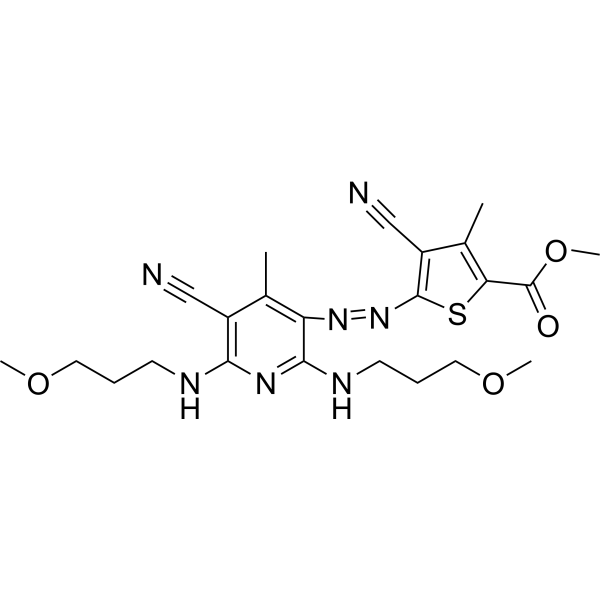
Solvent red 195 is a red dye. Its series of products, such as Solvent orange 60 (HY-D1177), has been used in dyeing applications of plastic materials.
|
-
-
- HY-D0307AR
-
|
Acid Red 27 (Standard); Azorubin S (Standard); FD & C Red Dye No. 2 (Standard)
|
Fluorescent Dye
Reference Standards
|
Others
|
|
Amaranth (Standard) is the analytical standard of Amaranth. This product is intended for research and analytical applications. Amaranth is a dark red to purple azo dye used as a food dye and cosmetics. Amaranth is an anionic dye that can be applied to natural and synthetic fibers, leather, paper, and phenol-formaldehyde resins.
|
-

-
- HY-D0242
-
-
-
- HY-D0322
-
-
-
- HY-D0508
-
|
|
Fluorescent Dye
|
|
|
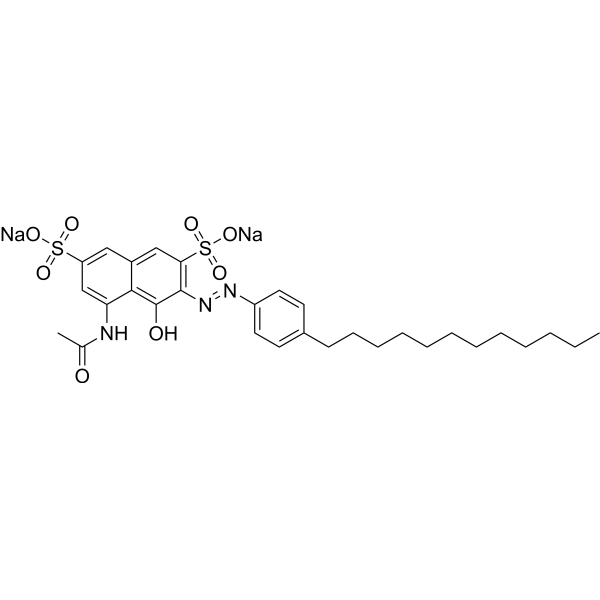
C.I. Acid red 138 is an acid red dye that can be adsorbed and removed by bentone clay.
|
-
-
- HY-D0269
-
|
|
Fluorescent Dye
|
|
|
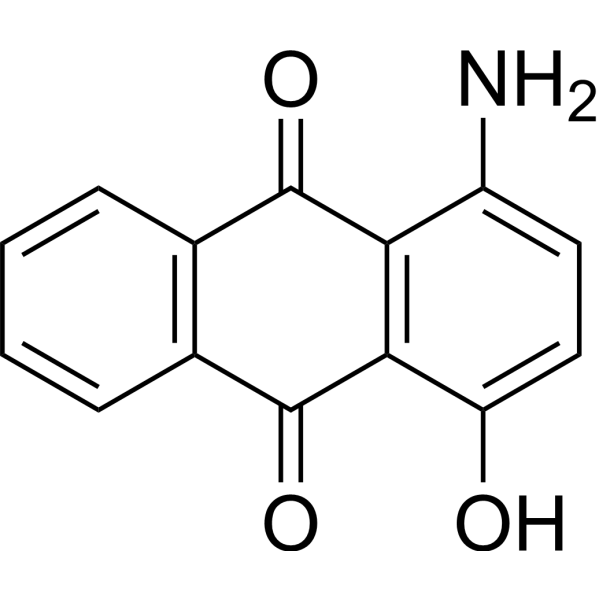
1-Amino-4-hydroxyanthraquinone is a red dye used as a fluorescent indicator.
|
-
-
- HY-D0341
-
|
Solvent Violet 26
|
Fluorescent Dye
|
|
|
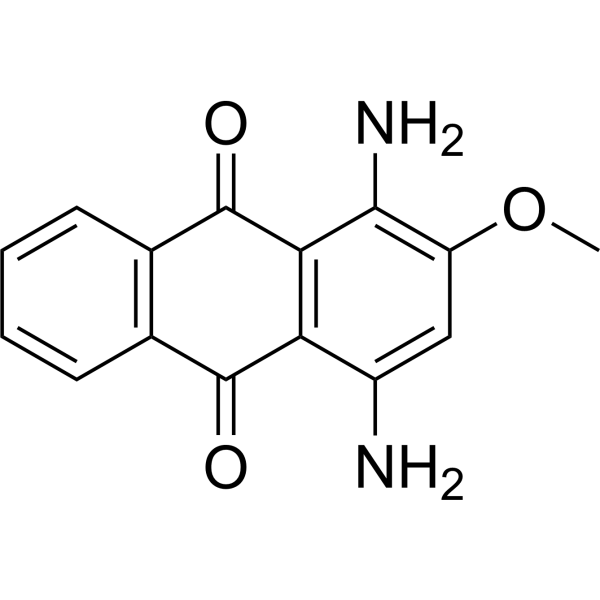
Disperse Red 11 is a red dye derived from anthraquinone. It is used in plastics, textiles and cosmetics.
|
-
-
- HY-D0545
-
|
|
Fluorescent Dye
|
Others
|
|
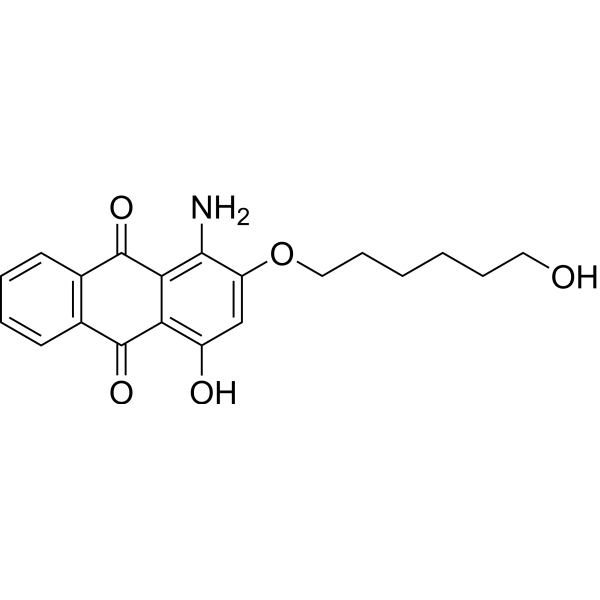
Disperse red 91 is a red dye derived from anthraquinone. It is used in plastics, textiles and cosmetics.
|
-
-
- HY-D0687
-
|
|
Fluorescent Dye
|
|
|
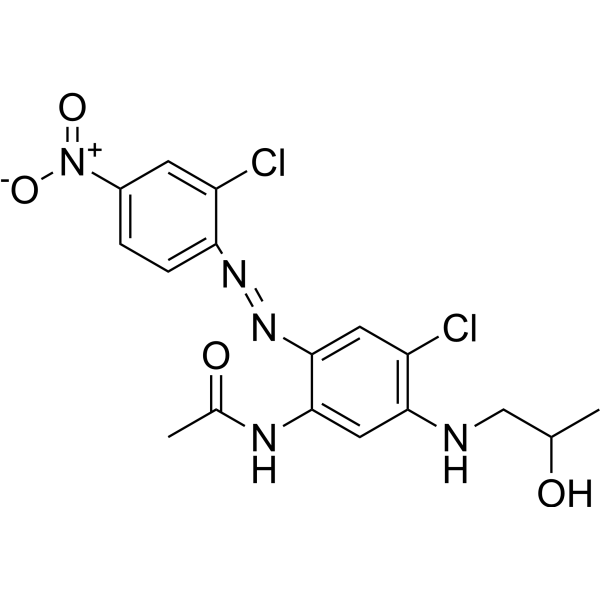
Disperse red 324 is a red dye derived from anthraquinone. It is used in plastics, textiles and cosmetics.
|
-
-
- HY-D0673
-
|
|
Fluorescent Dye
|
|
|
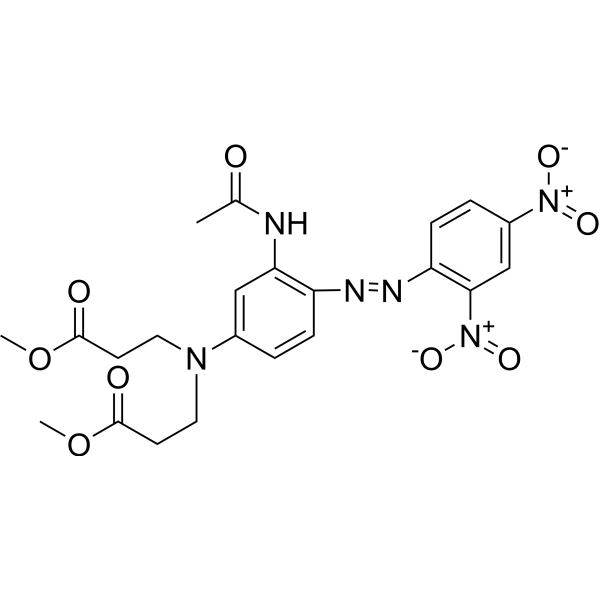
Disperse red 311 is a red dye derived from anthraquinone. It is used in plastics, textiles and cosmetics.
|
-
-
- HY-D0316
-
|
DR 167:1
|
Fluorescent Dye
|
|
|
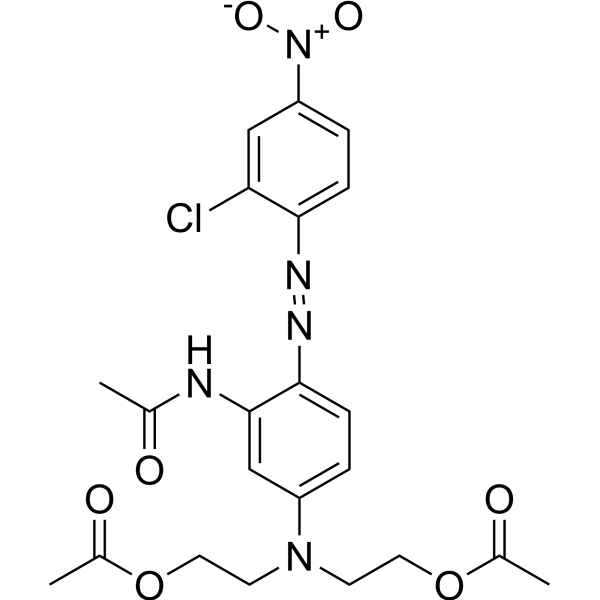
Disperse red 167:1 is a red dye derived from anthraquinone. It is used in plastics, textiles and cosmetics.
|
-
-
- HY-D0651
-
|
|
Fluorescent Dye
|
|
|
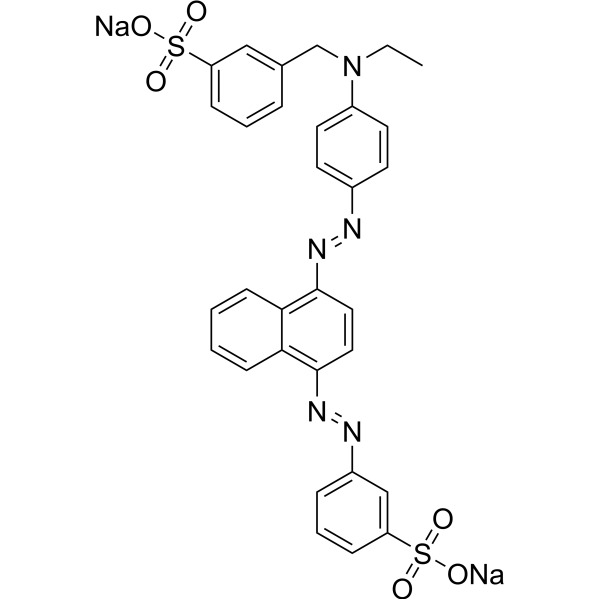
Acid red 119 is an acid red dye that can be removed from aqueous solutions when polyaluminum chloride (PAC) and polyaluminum chloride sludge (PACS) are used as coagulants.
|
-
-
- HY-D0287
-
|
Fluorescent red H5B
|
Fluorescent Dye
|
|
|
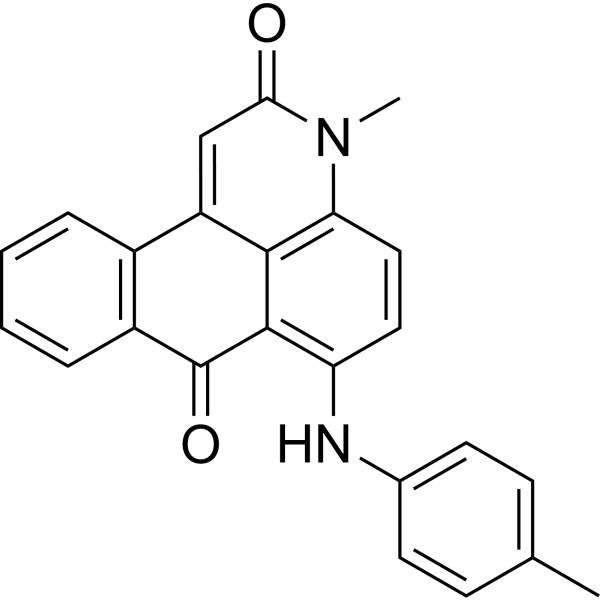
Solvent red 52 is a red dye. Its series of products, such as Solvent orange 60 (HY-D1177), has been used in dyeing applications of plastic materials.
|
-
-
- HY-D0314
-
|
Sudan R
|
Fluorescent Dye
|
|
|
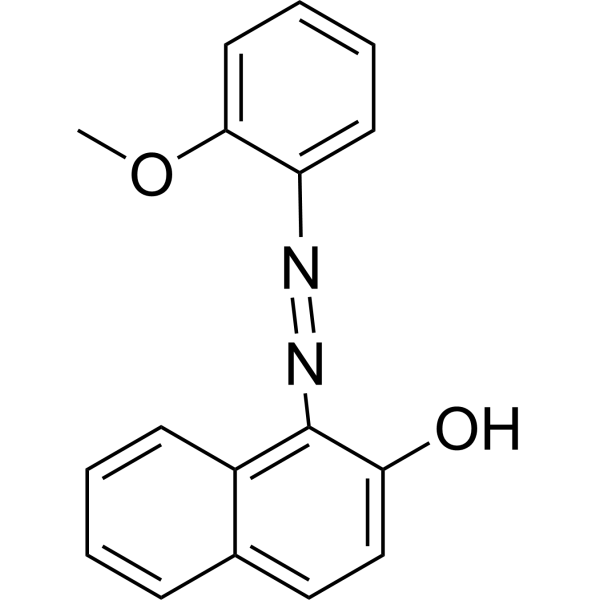
Solvent Red 1 (C.I.) is a red dye. Its series of products, such as Solvent orange 60 (HY-D1177), has been used in dyeing applications of plastic materials.
|
-
-
- HY-N0072R
-
|
|
Reference Standards
Apoptosis
Autophagy
|
Inflammation/Immunology
Cancer
|
|
Brazilin (Standard) is the analytical standard of Brazilin. This product is intended for research and analytical applications. Brazilin is a red dye precursor obtained from the heartwood of several species of tropical hardwoods. Brazilin inhibits the cells proliferation, promotes apoptosis, and induces autophagy through the AMPK/mTOR pathway. Brazilin shows chondroprotective and anti-inflammatory activities .
|
-

-
- HY-D0307
-
|
Acid Red 27 free acid; Azorubin S free acid; FD & C Red Dye No. 2 free acid
|
Fluorescent Dye
|
Others
|
|
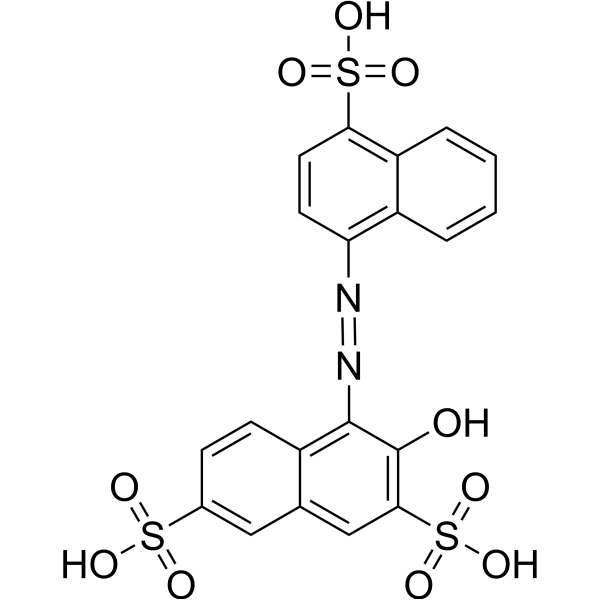
Amaranth free acid (Acid Red 27 free acid; Azorubin S free acid; FD & C Red Dye No. 2 free acid) is a multifunctional dye. Dyes are important tools in biological experiments. They can help researchers observe and analyze cell structures, track biomolecules, evaluate cell functions, distinguish cell types, detect biomolecules, study tissue pathology and monitor microorganisms. Their applications range from basic scientific research to clinical A wide range of diagnostics. Dyes are also widely used in traditional fields such as textile dyeing, as well as in emerging fields such as functional textile processing, food pigments and dye-sensitized solar cells.
|
-
-
- HY-D0438
-
|
|
Fluorescent Dye
|
|
|
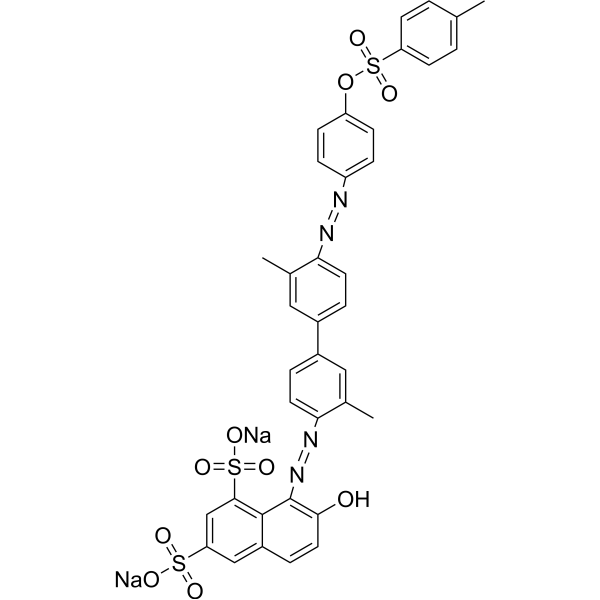
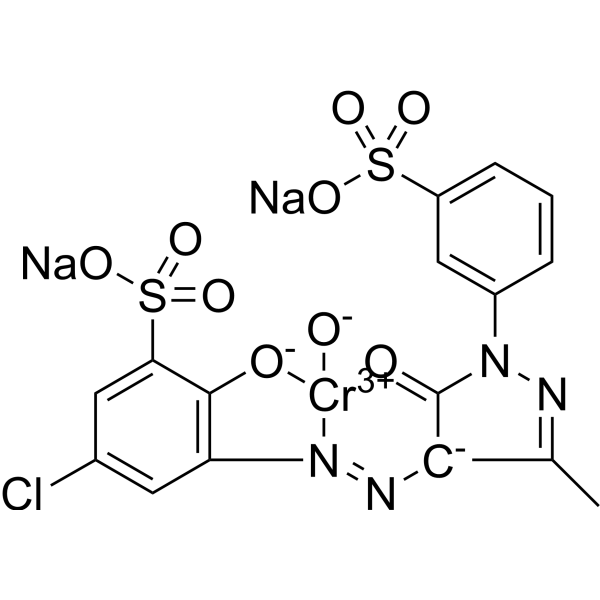
C.I. Acid red 114 is an acid red dye that can be adsorbed and removed by bentone clay.
|
-
-
- HY-D0422
-
|
|
Fluorescent Dye
|
|
|
C.I. Acid red 183 is an acid red dye that can be adsorbed and removed by bentone clay.
|
-
-
- HY-D0447
-
|
|
Fluorescent Dye
|
|
|
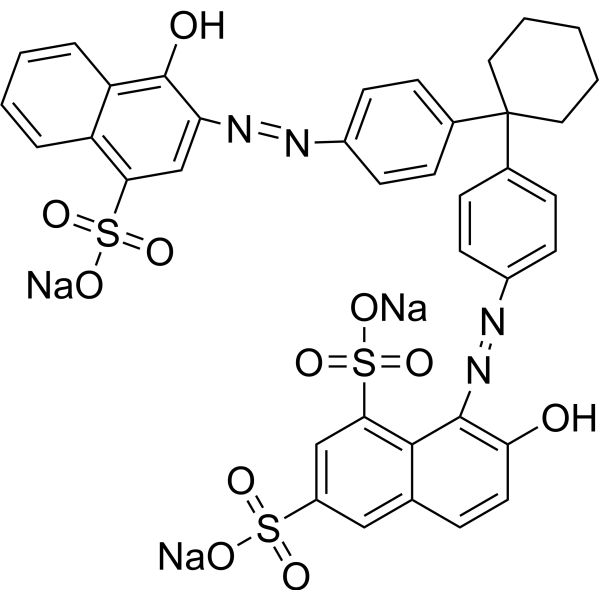
C.I. Acid red 374 is an acid red dye that can be adsorbed and removed by bentone clay.
|
-
-
- HY-D0454
-
|
|
Fluorescent Dye
|
|
|
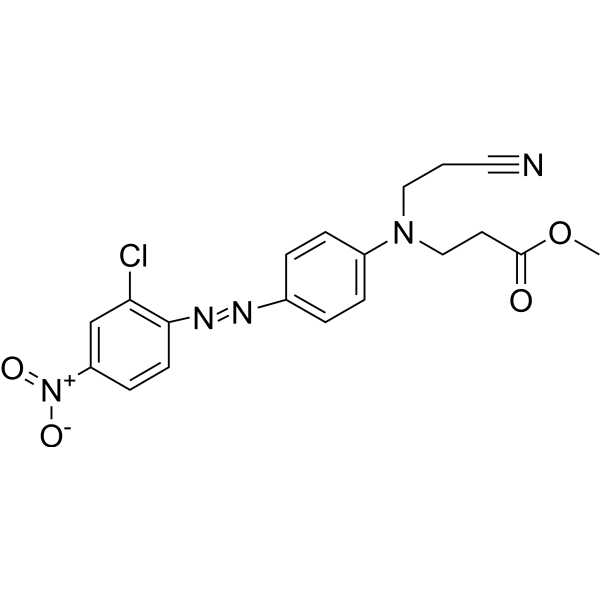
C.I. Disperse red 54 is a red dye commonly used for fiber dyeing.
|
-
-
- HY-D0413
-
|
|
Fluorescent Dye
|
|
|
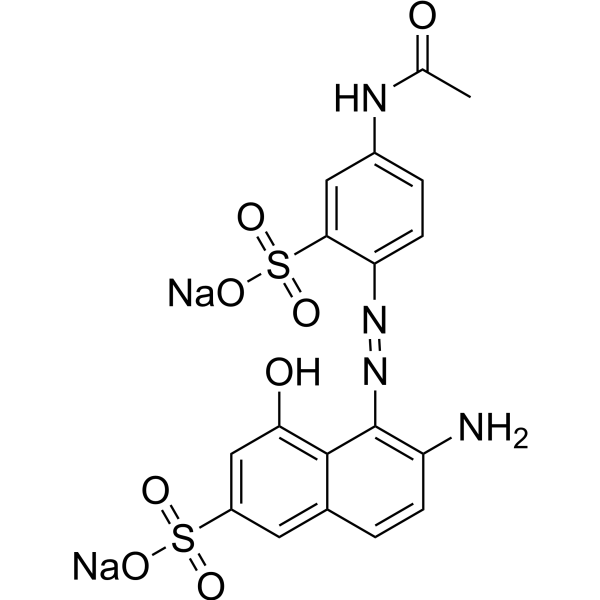
C.I. Acid red 37 is an acid red dye that can be adsorbed and removed by bentone clay.
|
-
-
- HY-D0477
-
|
|
Fluorescent Dye
|
|
|
C.I. Acid red 57 is an acid red dye that can be adsorbed and removed by bentone clay.
|
-
-
- HY-D0448
-
|
|
Fluorescent Dye
|
|
|
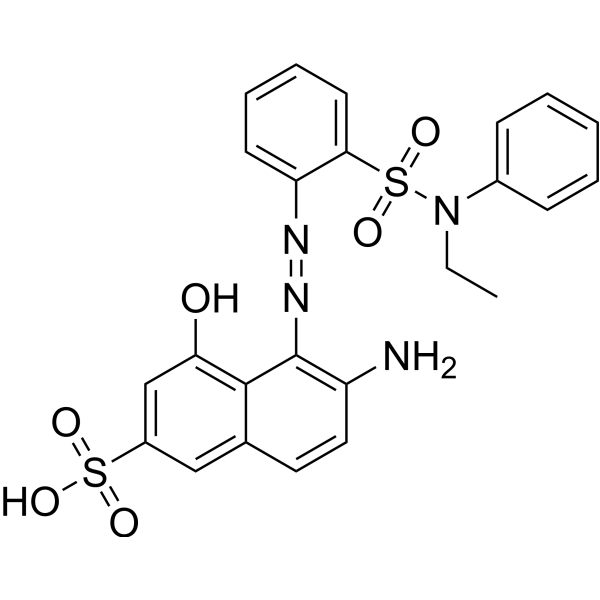
C.I. Acid red 154 is an acid red dye that can be adsorbed and removed by bentone clay.
|
-
-
- HY-D1170
-
|
|
Fluorescent Dye
|
|
|
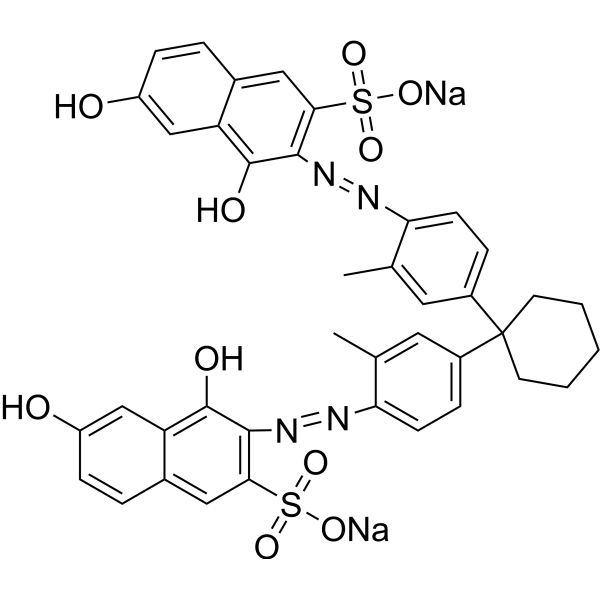
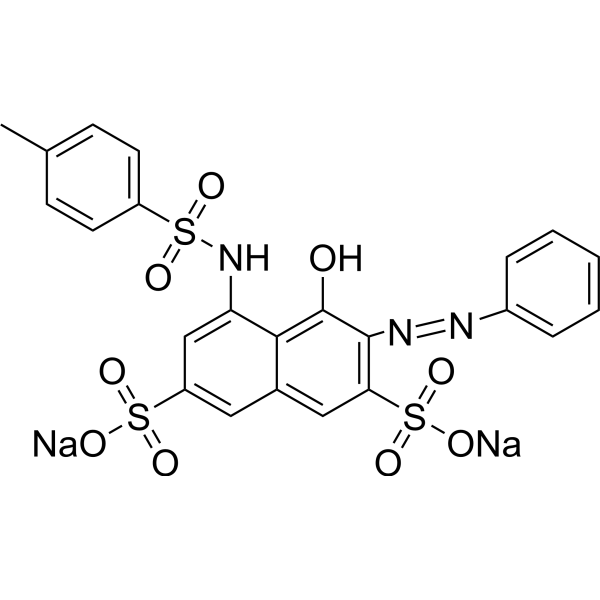
Acid alizarin red B is a bright, scarlet, translucent red dye used for calcium determination.
|
-
-
- HY-D0420
-
|
|
Fluorescent Dye
|
Others
|
|
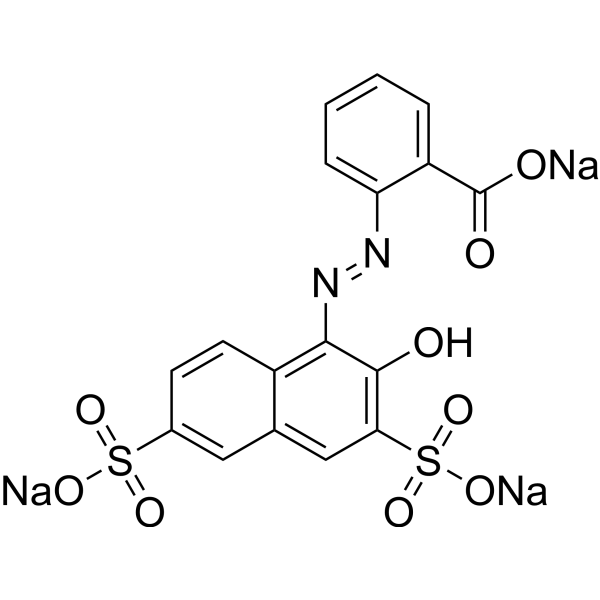
C.I. Acid red 151 is an acid red dye that can be adsorbed and removed by bentone clay.
|
-
-
- HY-D0458
-
|
|
Fluorescent Dye
|
|
|
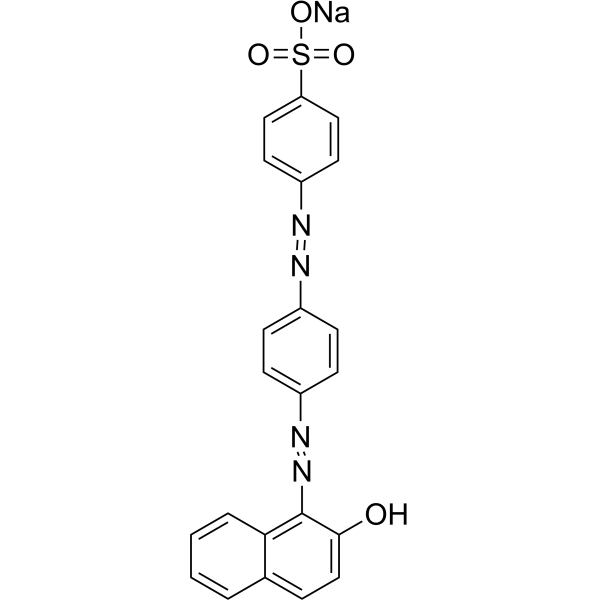
C.I. Acid red 106 is an acid red dye that can be adsorbed and removed by bentone clay.
|
-
-
- HY-D0349
-
|
|
Fluorescent Dye
|
|
|
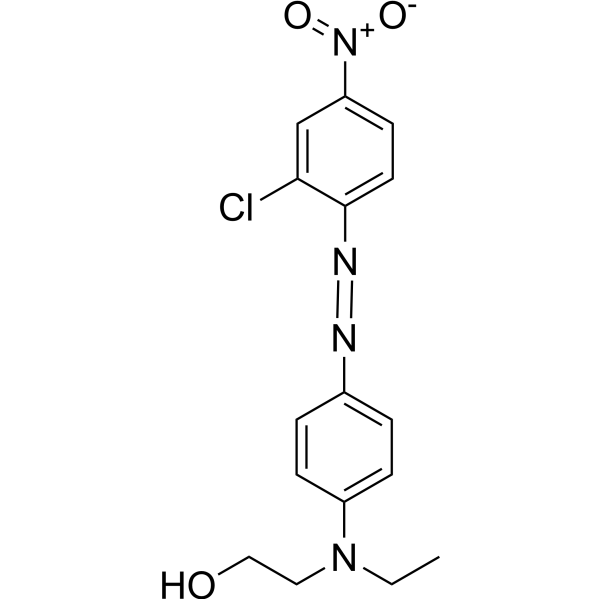
Disperse Red 13 is a red dye derived from anthraquinone. It is used in plastics, textiles and cosmetics.
|
-
-
- HY-D0315
-
|
|
Fluorescent Dye
|
|
|
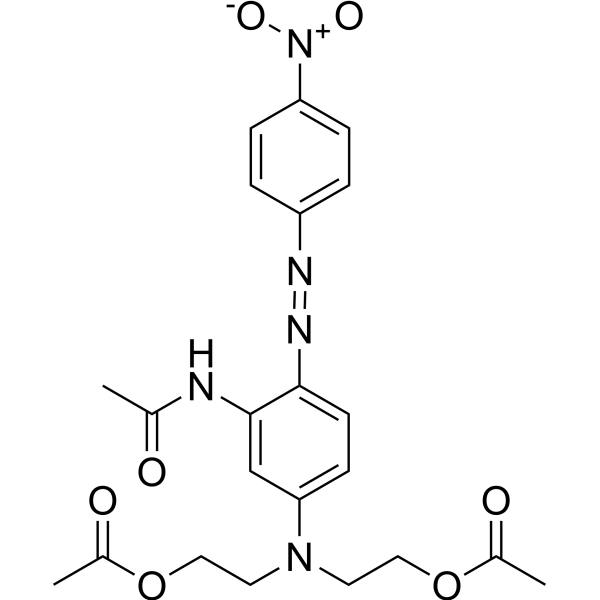
Disperse red 74 is a red dye derived from anthraquinone. It is used in plastics, textiles and cosmetics.
|
-
-
- HY-D0513
-
|
|
Fluorescent Dye
|
|
|
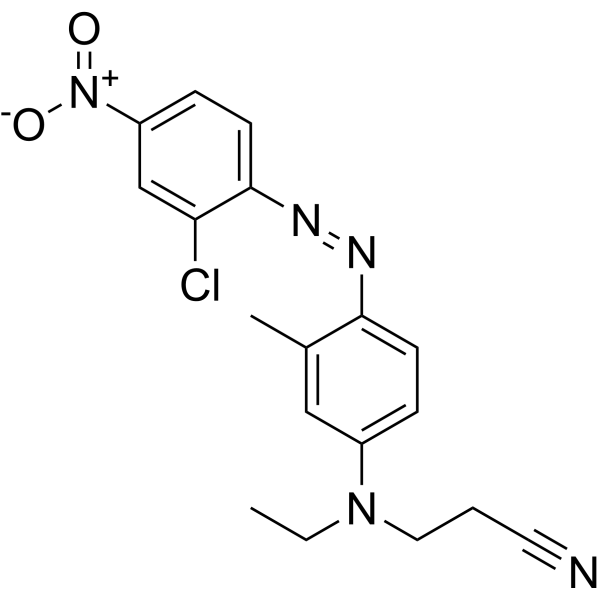
Disperse red 65 is a red dye derived from anthraquinone. It is used in plastics, textiles and cosmetics.
|
-
-
- HY-D1037
-
|
|
Fluorescent Dye
|
|
|
Disperse red 50 is a red dye derived from anthraquinone. It is used in plastics, textiles and cosmetics.
|
-
-
- HY-D0594
-
|
|
Fluorescent Dye
|
|
|
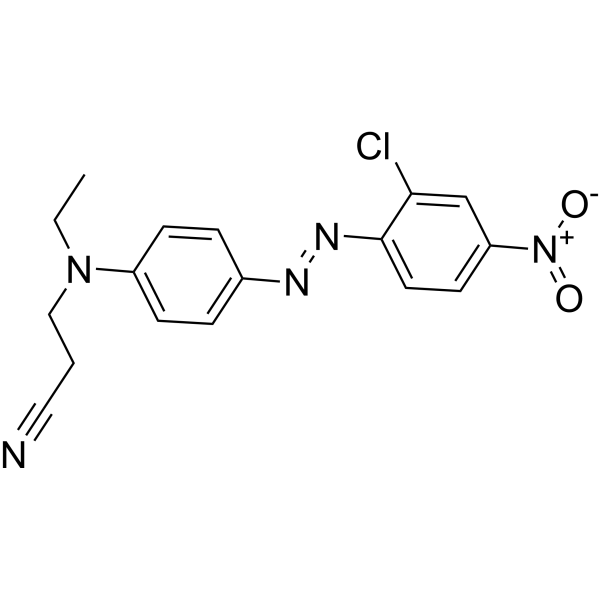
Disperse Red 278 is a red dye derived from anthraquinone. It is used in plastics, textiles and cosmetics.
|
-
-
- HY-D0288
-
|
|
Fluorescent Dye
|
|
|
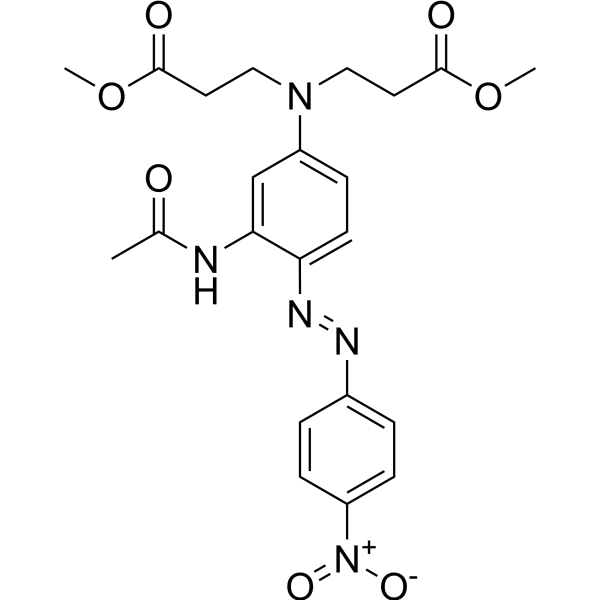
Disperse red 86 is a red dye derived from anthraquinone. It is used in plastics, textiles and cosmetics.
|
-
-
- HY-D0347
-
|
|
Fluorescent Dye
|
|
|
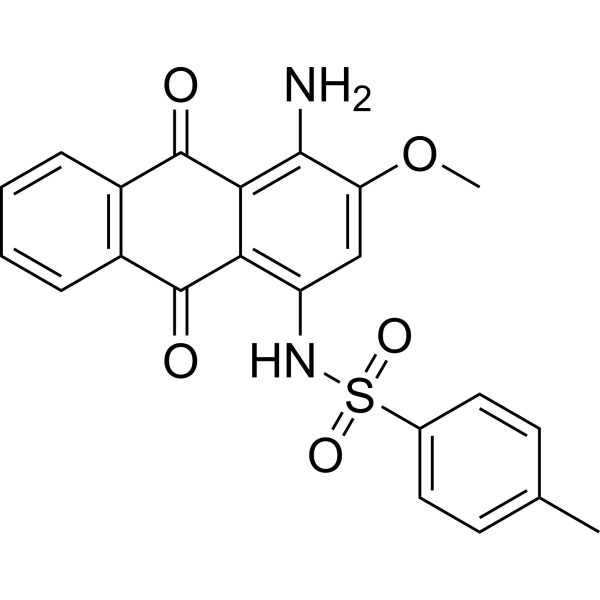
Disperse Red 17 is a red dye derived from anthraquinone. It is used in plastics, textiles and cosmetics.
|
-
-
- HY-D0393
-
|
|
Fluorescent Dye
|
|
|
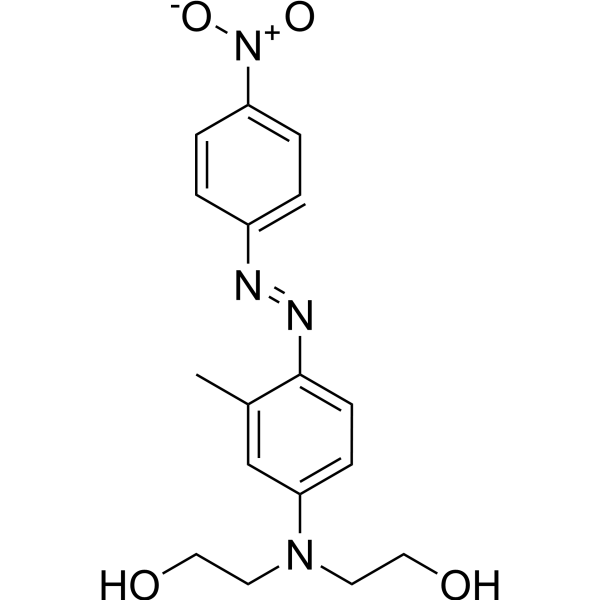
Disperse red 54 is a red dye derived from anthraquinone. It is used in plastics, textiles and cosmetics.
|
-
-
- HY-D0625
-
|
|
Fluorescent Dye
|
|
|
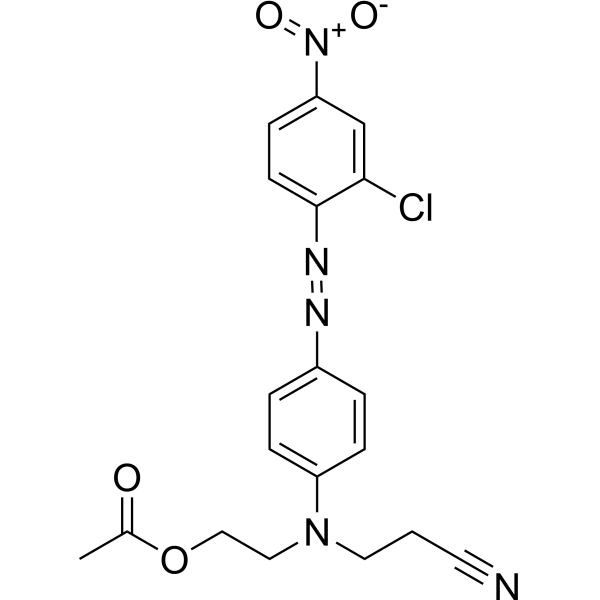
Disperse Red 177 is a red dye derived from anthraquinone. It is used in plastics, textiles and cosmetics.
|
-
-
- HY-D0515
-
|
|
Fluorescent Dye
|
|
|
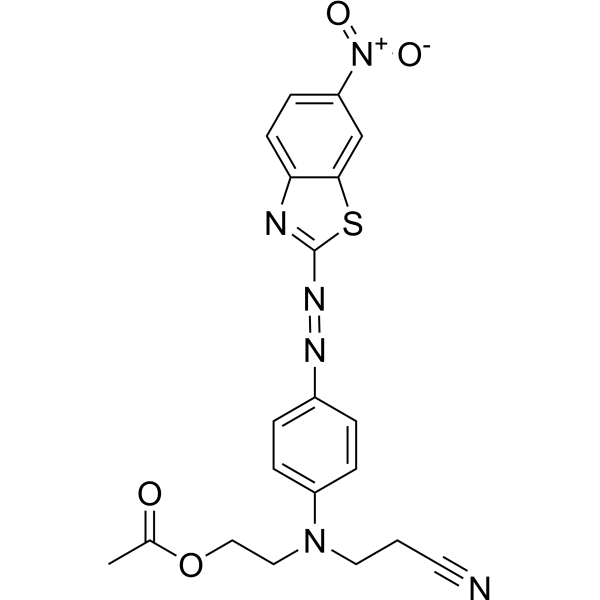
Disperse red 73 is a red dye derived from anthraquinone. It is used in plastics, textiles and cosmetics.
|
-
-
- HY-D1128
-
|
|
Fluorescent Dye
|
|
|
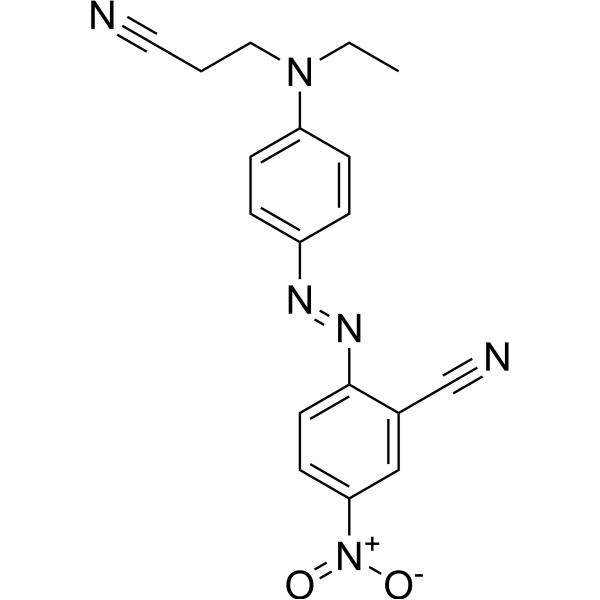
Disperse red 151 is a red dye derived from anthraquinone. It is used in plastics, textiles and cosmetics.
|
-
-
- HY-D1036A
-
|
|
Fluorescent Dye
|
|
|
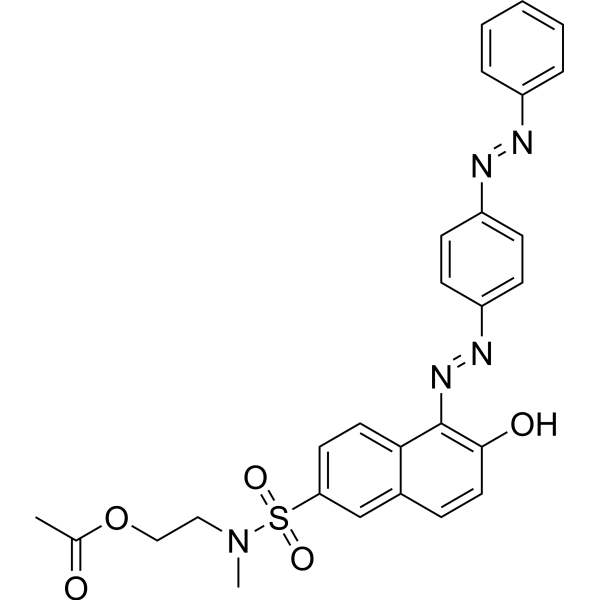
Basic red 18 is a basic red dye whose dyeing effect can be removed by nanoclay adsorbent.
|
-
- HY-W019776
-
|
Solvent Yellow 14-d5
|
Bacterial
|
Infection
|
|
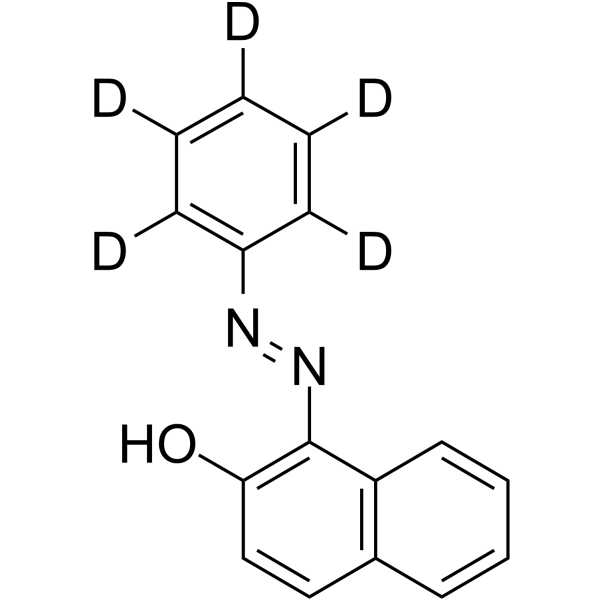
Sudan I-d5 is a the deuterated Sudan I. Sudan I is a diazo-conjugate red dye and can be used as an additive to products such as oils, solvents or polishes. Sudan I inhibits growth of bacterial strains Clostridium perfringens and L. rhamnosus .
|
-
- HY-D0024R
-
|
Solvent Yellow 14 (Standard)
|
Reference Standards
Bacterial
|
Others
|
|
Sudan I (Standard) is the analytical standard of Sudan I. This product is intended for research and analytical applications. Sudan I (Solvent Yellow 14) is a diazo-conjugate red dye and can be used as an additive to products such as oils, solvents or polishes. Sudan I inhibits growth of bacterial strains Clostridium perfringens and L. rhamnosus .
|
-

- HY-D2579
-
|
|
Biochemical Assay Reagents
|
Others
|
|
Sulfo DBCO-UBQ-2 is a click chemistry reagent combining a dark quencher, UBQ-2, with a polyaromatic-azo backbone, offering no native emission. UBQ-2 effectively quenches fluorescence in the 560-670 nm range, ideal for qPCR probes and FRET applications with orange to far-red dyes .
|
-

- HY-W440936
-
|
|
Liposome
|
Others
|
|
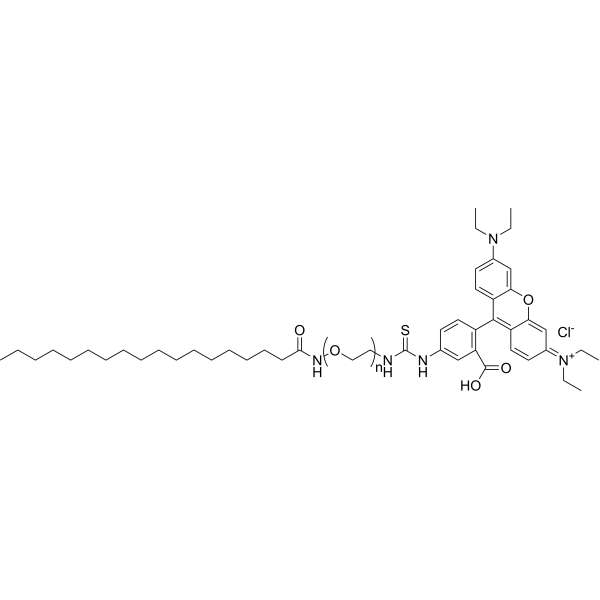
Stearic acid-PEG5000-Rhodamine is a fatty acid containing PEG polymer which can self assemble in an aqueous solution to form micelles. The polymer can be used to prepare nanoparticles for drug encapsulation. The red dye rhodamine can be easily traced by fluorescence microscopy. Rhodamine has maximum absorption at 570 nm and emission around 595 nm.
|
-
- HY-D0314R
-
|
Sudan R (Standard)
|
Fluorescent Dye
Reference Standards
|
Others
|
|
Solvent Red 1 (C.I.) (Standard) is the analytical standard of Solvent Red 1 (C.I.). This product is intended for research and analytical applications. Solvent Red 1 (C.I.) is a red dye. Its series of products, such as Solvent orange 60 (HY-D1177), has been used in dyeing applications of plastic materials.
|
-

- HY-W440935
-
|
|
Liposome
|
Others
|
|
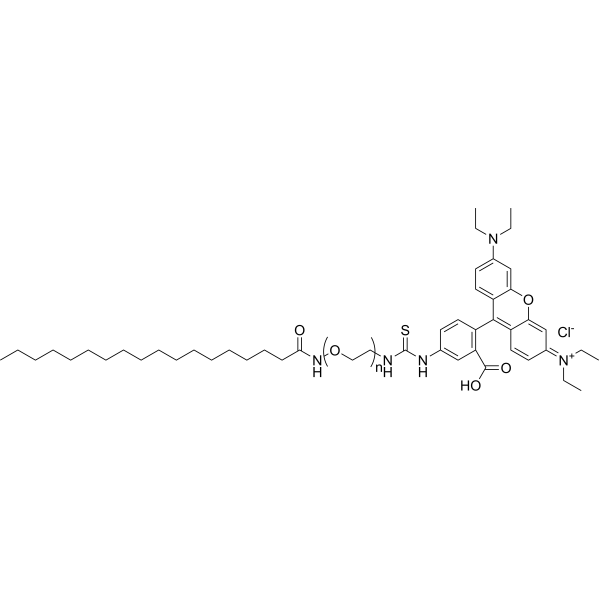
Stearic acid-PEG3400-Rhodamine is a fatty acid containing PEG polymer which can self assemble in an aqueous solution to form micelles. The polymer can be used to prepare nanoparticles for drug encapsulation. The red dye rhodamine can be easily traced by fluorescence microscopy. Rhodamine has maximum absorption at 570 nm and emission around 595 nm.
|
-
- HY-W800832
-
|
|
Fluorescent Dye
|
Others
|
|
MB 660R DBCO is a bright and photostable far-red dye that emits fluorescence at about 685 nm in the borderline spectral region between far-red and near-IR. Although the absorption maximum is at around 665 nm, this dye can be sufficiently excited by the 633 or 635 nm laser. MB 660R DBCO is water soluble and pH-insensitive from pH 4 to pH 10. MB 660R DBCO is a rhodamine-based dye, and like rhodamine dyes in general, it is very bright and exceptionally photostable.
|
-

- HY-D0347R
-
|
|
Fluorescent Dye
Reference Standards
|
Others
|
|
Disperse Red 17 (Standard) is the analytical standard of Disperse Red 17. This product is intended for research and analytical applications. Disperse Red 17 is a red dye derived from anthraquinone. It is used in plastics, textiles and cosmetics.
|
-

- HY-107864A
-
|
Tetraiodofluorescein aluminum
|
Fluorescent Dye
|
Infection
|
|
Erythrosine B aluminum is a visibly red dye with colorimetric and fluorescent properties that serves as an important dye for many Gram-positive and -negative bacteria. Erythrosine B aluminum can be used for live/dead determination in both colorimetric and fluorescence-based assays for low, medium and high-throughput experimentation .
|
-

- HY-D0024S1
-
|
|
Isotope-Labeled Compounds
Bacterial
|
Infection
|
|
Sudan I-d6 is the deuterium labeled Sudan I (HY-D0024). Sudan I (Solvent Yellow 14) is a diazo-conjugate red dye and can be used as an additive to products such as oils, solvents or polishes. Sudan I inhibits growth of bacterial strains Clostridium perfringens and L. rhamnosus.
|
-

- HY-107864R
-
|
Tetraiodofluorescein (Standard)
|
Reference Standards
Fluorescent Dye
|
Infection
|
|
Erythrosine B free acid (Standard) is the analytical standard of Erythrosine B (free acid) (HY-107864). This product is intended for research and analytical applications. Erythrosine B free acid is a visibly red dye with colorimetric and fluorescent properties that serves as an important dye for many Gram-positive and -negative bacteria. Erythrosine B free acid can be used for live/dead determination in both colorimetric and fluorescence-based assays for low, medium and high-throughput experimentation .
|
-

- HY-D0214E
-
|
|
Influenza Virus
Photosensitizer
Amyloid-β
|
Infection
Neurological Disease
Cancer
|
|
Acid Red 94 sodium (80%), a synthetic fluorescein derivative, is a deep red dye primarily composed of 4,5,6,7-tetrachloro-2,4,5,7-tetraiodo fluorescein. Acid Red 94 sodium (80%) is widely used as an ophthalmic diagnostic agent to detect dry or damaged cells on the ocular surface. Acid Red 94 sodium (80%) exhibits antitumor activity and can inhibit Friend Leukemia Virus (FLV) infection through photodynamic action. Additionally, Acid Red 94 sodium (80%) can inhibit Aβ aggregation through light irradiation. Acid Red 94 sodium (80%) holds potential for use in cancer, viral infections, and neurodegenerative disease research .
|
-

| Cat. No. |
Product Name |
Type |
-
- HY-D0214
-
|
|
Fluorescent Dye
|
|
Acid Red 94 sodium, a synthetic fluorescein derivative, is a deep red dye primarily composed of 4,5,6,7-tetrachloro-2,4,5,7-tetraiodo fluorescein. It is widely used as an ophthalmic diagnostic agent to detect dry or damaged cells on the ocular surface. Acid Red 94 sodium exhibits antitumor activity and can inhibit Friend Leukemia Virus (FLV) infection through photodynamic action. Additionally, Acid Red 94 sodium can inhibit Aβ aggregation through light irradiation. Acid Red 94 sodium holds potential for use in cancer, viral infections, and neurodegenerative disease research .
|
-
- HY-D0307A
-
|
Acid Red 27; Azorubin S; FD & C Red Dye No. 2
|
Fluorescent Dye
|
|
Amaranth is an organic azo dye. Amaranth inhibits cellular immune response. Amaranth can be used as a food additive .
|
-
- HY-12489A
-
|
Acid Red 112, BS
|
Fluorescent Dye
|
|
Both Ponceau S and Ponceau BS are synthetic dyes commonly used in biological research. They are commonly used as protein stains to visualize proteins in western blots and other protein detection analyses. Ponceau S is a red dye, while Ponceau BS is a blue shade of the same dye. Both dyes bind to positively charged amino acid residues in proteins for easy visualization. However, Ponceau S is more commonly used due to its higher sensitivity.
|
-
- HY-D0024
-
|
Solvent Yellow 14
|
Fluorescent Dye
|
|
Sudan I (Solvent Yellow 14) is a diazo-conjugate red dye and can be used as an additive to products such as oils, solvents or polishes. Sudan I inhibits growth of bacterial strains Clostridium perfringens and L. rhamnosus .
|
-
- HY-107864
-
|
Tetraiodofluorescein
|
Fluorescent Dye
|
|
Erythrosine B free acid is a visibly red dye with colorimetric and fluorescent properties that serves as an important dye for many Gram-positive and -negative bacteria. Erythrosine B free acid can be used for live/dead determination in both colorimetric and fluorescence-based assays for low, medium and high-throughput experimentation .
|
-
- HY-D0702
-
|
|
Fluorescent Dye
|
|
Solvent red 195 is a red dye. Its series of products, such as Solvent orange 60 (HY-D1177), has been used in dyeing applications of plastic materials.
|
-
- HY-D0307AR
-
|
Acid Red 27 (Standard); Azorubin S (Standard); FD & C Red Dye No. 2 (Standard)
|
Fluorescent Dye
|
|
Amaranth (Standard) is the analytical standard of Amaranth. This product is intended for research and analytical applications. Amaranth is a dark red to purple azo dye used as a food dye and cosmetics. Amaranth is an anionic dye that can be applied to natural and synthetic fibers, leather, paper, and phenol-formaldehyde resins.
|
-
- HY-D0242
-
-
- HY-D0322
-
-
- HY-D0508
-
|
|
Fluorescent Dye
|
|
C.I. Acid red 138 is an acid red dye that can be adsorbed and removed by bentone clay.
|
-
- HY-D0269
-
|
|
Fluorescent Dye
|
|
1-Amino-4-hydroxyanthraquinone is a red dye used as a fluorescent indicator.
|
-
- HY-D0341
-
|
Solvent Violet 26
|
Fluorescent Dye
|
|
Disperse Red 11 is a red dye derived from anthraquinone. It is used in plastics, textiles and cosmetics.
|
-
- HY-D0545
-
|
|
Fluorescent Dye
|
|
Disperse red 91 is a red dye derived from anthraquinone. It is used in plastics, textiles and cosmetics.
|
-
- HY-D0687
-
|
|
Fluorescent Dye
|
|
Disperse red 324 is a red dye derived from anthraquinone. It is used in plastics, textiles and cosmetics.
|
-
- HY-D0673
-
|
|
Fluorescent Dye
|
|
Disperse red 311 is a red dye derived from anthraquinone. It is used in plastics, textiles and cosmetics.
|
-
- HY-D0316
-
|
DR 167:1
|
Fluorescent Dye
|
|
Disperse red 167:1 is a red dye derived from anthraquinone. It is used in plastics, textiles and cosmetics.
|
-
- HY-D0651
-
|
|
Fluorescent Dye
|
|
Acid red 119 is an acid red dye that can be removed from aqueous solutions when polyaluminum chloride (PAC) and polyaluminum chloride sludge (PACS) are used as coagulants.
|
-
- HY-D0287
-
|
Fluorescent red H5B
|
Fluorescent Dye
|
|
Solvent red 52 is a red dye. Its series of products, such as Solvent orange 60 (HY-D1177), has been used in dyeing applications of plastic materials.
|
-
- HY-D0314
-
|
Sudan R
|
Fluorescent Dye
|
|
Solvent Red 1 (C.I.) is a red dye. Its series of products, such as Solvent orange 60 (HY-D1177), has been used in dyeing applications of plastic materials.
|
-
- HY-D0307
-
|
Acid Red 27 free acid; Azorubin S free acid; FD & C Red Dye No. 2 free acid
|
Fluorescent Dye
|
|
Amaranth free acid (Acid Red 27 free acid; Azorubin S free acid; FD & C Red Dye No. 2 free acid) is a multifunctional dye. Dyes are important tools in biological experiments. They can help researchers observe and analyze cell structures, track biomolecules, evaluate cell functions, distinguish cell types, detect biomolecules, study tissue pathology and monitor microorganisms. Their applications range from basic scientific research to clinical A wide range of diagnostics. Dyes are also widely used in traditional fields such as textile dyeing, as well as in emerging fields such as functional textile processing, food pigments and dye-sensitized solar cells.
|
-
- HY-D0438
-
|
|
Fluorescent Dye
|
|
C.I. Acid red 114 is an acid red dye that can be adsorbed and removed by bentone clay.
|
-
- HY-D0422
-
|
|
Fluorescent Dye
|
|
C.I. Acid red 183 is an acid red dye that can be adsorbed and removed by bentone clay.
|
-
- HY-D0447
-
|
|
Fluorescent Dye
|
|
C.I. Acid red 374 is an acid red dye that can be adsorbed and removed by bentone clay.
|
-
- HY-D0454
-
|
|
Fluorescent Dye
|
|
C.I. Disperse red 54 is a red dye commonly used for fiber dyeing.
|
-
- HY-D0413
-
|
|
Fluorescent Dye
|
|
C.I. Acid red 37 is an acid red dye that can be adsorbed and removed by bentone clay.
|
-
- HY-D0477
-
|
|
Fluorescent Dye
|
|
C.I. Acid red 57 is an acid red dye that can be adsorbed and removed by bentone clay.
|
-
- HY-D0448
-
|
|
Fluorescent Dye
|
|
C.I. Acid red 154 is an acid red dye that can be adsorbed and removed by bentone clay.
|
-
- HY-D1170
-
|
|
Fluorescent Dye
|
|
Acid alizarin red B is a bright, scarlet, translucent red dye used for calcium determination.
|
-
- HY-D0420
-
|
|
Fluorescent Dye
|
|
C.I. Acid red 151 is an acid red dye that can be adsorbed and removed by bentone clay.
|
-
- HY-D0458
-
|
|
Fluorescent Dye
|
|
C.I. Acid red 106 is an acid red dye that can be adsorbed and removed by bentone clay.
|
-
- HY-D0349
-
|
|
Fluorescent Dye
|
|
Disperse Red 13 is a red dye derived from anthraquinone. It is used in plastics, textiles and cosmetics.
|
-
- HY-D0315
-
|
|
Fluorescent Dye
|
|
Disperse red 74 is a red dye derived from anthraquinone. It is used in plastics, textiles and cosmetics.
|
-
- HY-D0513
-
|
|
Fluorescent Dye
|
|
Disperse red 65 is a red dye derived from anthraquinone. It is used in plastics, textiles and cosmetics.
|
-
- HY-D1037
-
|
|
Fluorescent Dye
|
|
Disperse red 50 is a red dye derived from anthraquinone. It is used in plastics, textiles and cosmetics.
|
-
- HY-D0594
-
|
|
Fluorescent Dye
|
|
Disperse Red 278 is a red dye derived from anthraquinone. It is used in plastics, textiles and cosmetics.
|
-
- HY-D0288
-
|
|
Fluorescent Dye
|
|
Disperse red 86 is a red dye derived from anthraquinone. It is used in plastics, textiles and cosmetics.
|
-
- HY-D0347
-
|
|
Fluorescent Dye
|
|
Disperse Red 17 is a red dye derived from anthraquinone. It is used in plastics, textiles and cosmetics.
|
-
- HY-D0393
-
|
|
Fluorescent Dye
|
|
Disperse red 54 is a red dye derived from anthraquinone. It is used in plastics, textiles and cosmetics.
|
-
- HY-D0625
-
|
|
Fluorescent Dye
|
|
Disperse Red 177 is a red dye derived from anthraquinone. It is used in plastics, textiles and cosmetics.
|
-
- HY-D0515
-
|
|
Fluorescent Dye
|
|
Disperse red 73 is a red dye derived from anthraquinone. It is used in plastics, textiles and cosmetics.
|
-
- HY-D1128
-
|
|
Fluorescent Dye
|
|
Disperse red 151 is a red dye derived from anthraquinone. It is used in plastics, textiles and cosmetics.
|
-
- HY-D1036A
-
|
|
Fluorescent Dye
|
|
Basic red 18 is a basic red dye whose dyeing effect can be removed by nanoclay adsorbent.
|
-
- HY-D0024R
-
|
Solvent Yellow 14 (Standard)
|
Fluorescent Dye
|
|
Sudan I (Standard) is the analytical standard of Sudan I. This product is intended for research and analytical applications. Sudan I (Solvent Yellow 14) is a diazo-conjugate red dye and can be used as an additive to products such as oils, solvents or polishes. Sudan I inhibits growth of bacterial strains Clostridium perfringens and L. rhamnosus .
|
-
- HY-D2579
-
|
|
Fluorescent Dye
|
|
Sulfo DBCO-UBQ-2 is a click chemistry reagent combining a dark quencher, UBQ-2, with a polyaromatic-azo backbone, offering no native emission. UBQ-2 effectively quenches fluorescence in the 560-670 nm range, ideal for qPCR probes and FRET applications with orange to far-red dyes .
|
-
- HY-D0314R
-
|
Sudan R (Standard)
|
Fluorescent Dye
|
|
Solvent Red 1 (C.I.) (Standard) is the analytical standard of Solvent Red 1 (C.I.). This product is intended for research and analytical applications. Solvent Red 1 (C.I.) is a red dye. Its series of products, such as Solvent orange 60 (HY-D1177), has been used in dyeing applications of plastic materials.
|
-
- HY-D0347R
-
|
|
Fluorescent Dye
|
|
Disperse Red 17 (Standard) is the analytical standard of Disperse Red 17. This product is intended for research and analytical applications. Disperse Red 17 is a red dye derived from anthraquinone. It is used in plastics, textiles and cosmetics.
|
-
- HY-107864R
-
|
Tetraiodofluorescein (Standard)
|
Fluorescent Dye
|
|
Erythrosine B free acid (Standard) is the analytical standard of Erythrosine B (free acid) (HY-107864). This product is intended for research and analytical applications. Erythrosine B free acid is a visibly red dye with colorimetric and fluorescent properties that serves as an important dye for many Gram-positive and -negative bacteria. Erythrosine B free acid can be used for live/dead determination in both colorimetric and fluorescence-based assays for low, medium and high-throughput experimentation .
|
-
- HY-D0214E
-
|
|
Fluorescent Dye
|
|
Acid Red 94 sodium (80%), a synthetic fluorescein derivative, is a deep red dye primarily composed of 4,5,6,7-tetrachloro-2,4,5,7-tetraiodo fluorescein. Acid Red 94 sodium (80%) is widely used as an ophthalmic diagnostic agent to detect dry or damaged cells on the ocular surface. Acid Red 94 sodium (80%) exhibits antitumor activity and can inhibit Friend Leukemia Virus (FLV) infection through photodynamic action. Additionally, Acid Red 94 sodium (80%) can inhibit Aβ aggregation through light irradiation. Acid Red 94 sodium (80%) holds potential for use in cancer, viral infections, and neurodegenerative disease research .
|
| Cat. No. |
Product Name |
Type |
-
- HY-D0854
-
|
Acid Violet 19; Acid fuchsin sodium
|
Biochemical Assay Reagents
|
|
Acid Red is a class of synthetic dyes commonly used in the textile, paper and ink industries. They are in the category of acid dyes, which means they are water soluble and have acidic properties. Acid Red dye produces bright, vibrant colors that don't fade easily, but are not as durable as some other dyes. They can be used to dye a wide variety of fibers including wool, silk and nylon, as well as paper and leather.
|
-
- HY-W440936
-
|
|
Biochemical Assay Reagents
|
|
Stearic acid-PEG5000-Rhodamine is a fatty acid containing PEG polymer which can self assemble in an aqueous solution to form micelles. The polymer can be used to prepare nanoparticles for drug encapsulation. The red dye rhodamine can be easily traced by fluorescence microscopy. Rhodamine has maximum absorption at 570 nm and emission around 595 nm.
|
-
- HY-W440935
-
|
|
Biochemical Assay Reagents
|
|
Stearic acid-PEG3400-Rhodamine is a fatty acid containing PEG polymer which can self assemble in an aqueous solution to form micelles. The polymer can be used to prepare nanoparticles for drug encapsulation. The red dye rhodamine can be easily traced by fluorescence microscopy. Rhodamine has maximum absorption at 570 nm and emission around 595 nm.
|
| Cat. No. |
Product Name |
Category |
Target |
Chemical Structure |
| Cat. No. |
Product Name |
Chemical Structure |
-
- HY-W019776
-
|
|
|
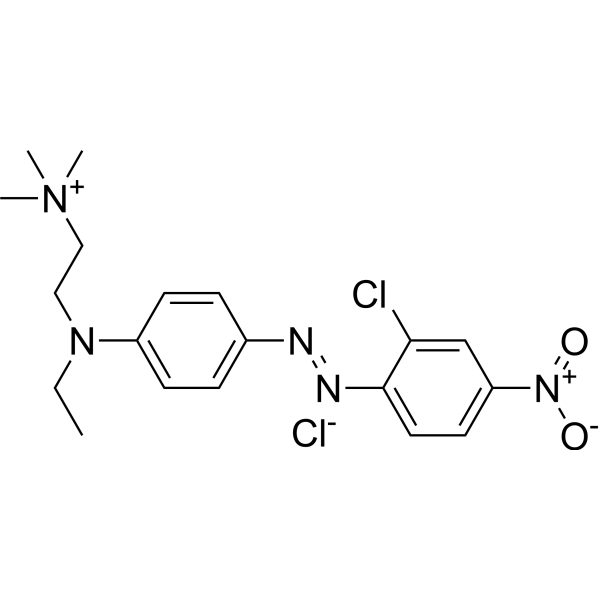
Sudan I-d5 is a the deuterated Sudan I. Sudan I is a diazo-conjugate red dye and can be used as an additive to products such as oils, solvents or polishes. Sudan I inhibits growth of bacterial strains Clostridium perfringens and L. rhamnosus .
|
-
-
- HY-D0024S1
-
|
|
|
Sudan I-d6 is the deuterium labeled Sudan I (HY-D0024). Sudan I (Solvent Yellow 14) is a diazo-conjugate red dye and can be used as an additive to products such as oils, solvents or polishes. Sudan I inhibits growth of bacterial strains Clostridium perfringens and L. rhamnosus.
|
-
| Cat. No. |
Product Name |
|
Classification |
-
- HY-D2579
-
|
|
|
DBCO
|
|
Sulfo DBCO-UBQ-2 is a click chemistry reagent combining a dark quencher, UBQ-2, with a polyaromatic-azo backbone, offering no native emission. UBQ-2 effectively quenches fluorescence in the 560-670 nm range, ideal for qPCR probes and FRET applications with orange to far-red dyes .
|
| Cat. No. |
Product Name |
|
Classification |
-
- HY-W440936
-
|
|
|
Pegylated Lipids
Fluorescent Lipids
|
|
Stearic acid-PEG5000-Rhodamine is a fatty acid containing PEG polymer which can self assemble in an aqueous solution to form micelles. The polymer can be used to prepare nanoparticles for drug encapsulation. The red dye rhodamine can be easily traced by fluorescence microscopy. Rhodamine has maximum absorption at 570 nm and emission around 595 nm.
|
-
- HY-W440935
-
|
|
|
Pegylated Lipids
Fluorescent Lipids
|
|
Stearic acid-PEG3400-Rhodamine is a fatty acid containing PEG polymer which can self assemble in an aqueous solution to form micelles. The polymer can be used to prepare nanoparticles for drug encapsulation. The red dye rhodamine can be easily traced by fluorescence microscopy. Rhodamine has maximum absorption at 570 nm and emission around 595 nm.
|
Your information is safe with us. * Required Fields.
Inquiry Information
- Product Name:
- Cat. No.:
- Quantity:
- MCE Japan Authorized Agent:








