
1. Search Result
Search Result
Results for "

signature

" in MedChemExpress (MCE) Product Catalog:

24

Inhibitors & Agonists

2

Screening Libraries

9

Peptides

3

Inhibitory Antibodies

1

Natural
Products

4

Isotope-Labeled Compounds

Cat. No. Product Name Target Research Areas Chemical Structure
  • HY-126855
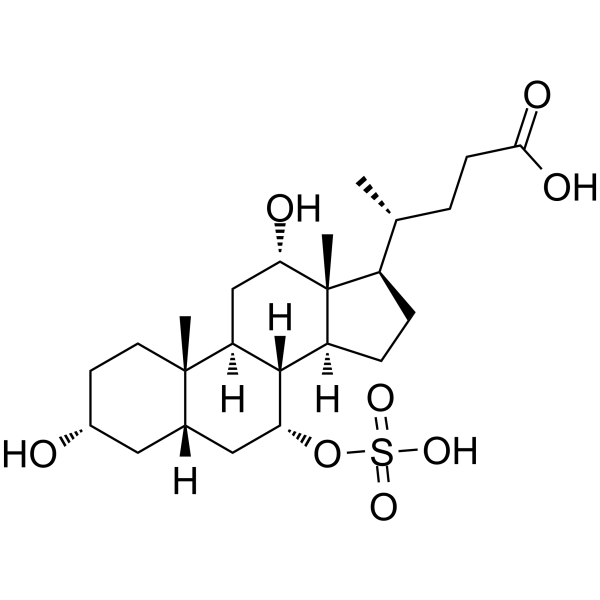
    Cholic acid 7-sulfate
    1 Publications Verification

    7-Sulfocholic acid

    G protein-coupled Bile Acid Receptor 1 MHC Metabolic Disease
    Cholic acid 7-sulfate (7-Sulfocholic acid) is a selective agonist targeting TGR5 (EC50=0.17 μM) and a ligand for MHC class I-related protein (MR1). As a gut-restricted TGR5 agonist, cholic acid 7-sulfate binds to TGR5 on enteroendocrine L cells, induces GLP-1 secretion, and improves glucose tolerance in a TGR5-dependent manner. Cholic acid 7-sulfate also acts as an endogenous ligand for MR1, promoting the survival of mucosal-associated invariant T cells MAIT and the expression of homeostatic gene signatures, affecting MAIT cell development and function. Cholic acid 7-sulfate is mainly used in the research of diabetes and MAIT cell-related immune regulation .
    Cholic acid 7-sulfate
  • HY-138280
    DTHIB
    Maximum Cited Publications
    6 Publications Verification

    HSP Cancer
    DTHIB is a direct and selective heat shock factor 1 (HSF1) inhibitor with a Kd of 160 nM for DTHIB binding to the HSF1 DNA binding domain (DBD). DTHIB inhibits HSF1 cancer gene signature (HSF1 CaSig) and selectively stimulates degradation of nuclear HSF1. DTHIB has potently anticancer activities and can be used for prostate cancer research .
    DTHIB
  • HY-137438

    TG-1701

    Btk Cancer
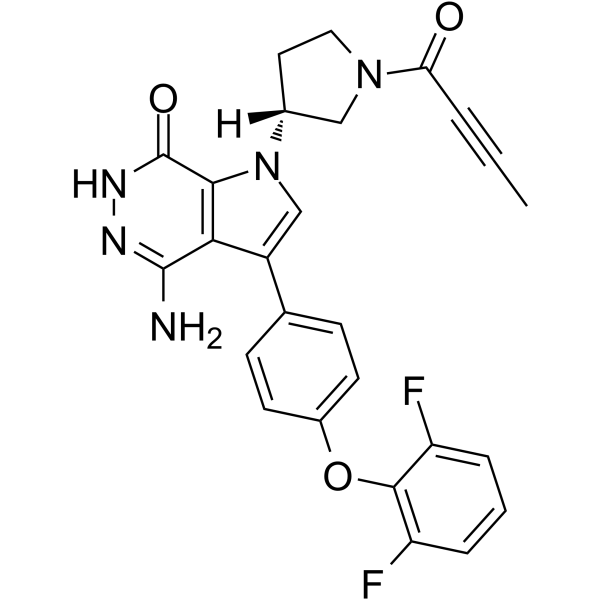
    Edralbrutinib (TG-1701) is a highly selective, orally available irreversible BTK inhibitor, with an EC50 of 6.70 nM and a Kd of 3 nM against human BTK. Edralbrutinib inhibits downstream signaling of the B cell receptor, induces dephosphorylation of Ikaros Ser442/445, promotes nuclear exclusion of Ikaros, attenuates Ikaros gene signatures, and exerts anti-tumor activity. Edralbrutinib can be used in research related to B-cell non-Hodgkin lymphoma, chronic lymphocytic leukemia, mantle cell lymphoma, follicular lymphoma, and diffuse large B-cell lymphoma .
    Edralbrutinib
  • HY-P99459
    Baminercept
    2 Publications Verification

    BG 9924; TT-47

    TNF Receptor CXCR Inflammation/Immunology
    Baminercept (BG 9924; TT-47) is an Ig fusion protein targeting the lymphotoxin β receptor (LTβR). Baminercept effectively regulates subsets of circulating immune cells by inhibiting LIGHT, LT-α1β2 and their receptors. Baminercept also increases blood lymphocyte counts and reduces plasma CXCL13 levels. Baminercept carries a high risk of hepatotoxicity. Baminercept can be used in research on rheumatoid arthritis and primary Sjögren's syndrome .
    Baminercept
  • HY-15241

    LCQ-195; AT9311

    CDK Cancer
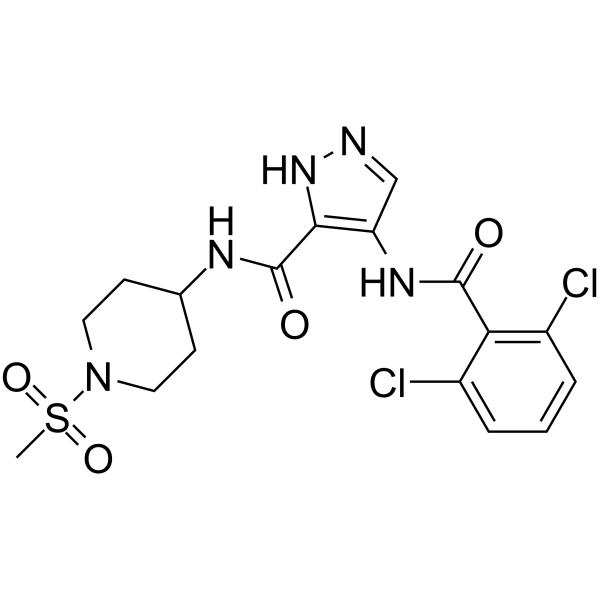
    NVP-LCQ195 (LCQ-195) is an inhibitor of CDK1/2/3/5/9. NVP-LCQ195 induces cell cycle arrest and eventual apoptotic cell death of multiple myeloma (MM) cells. NVP-LCQ195 triggers decreased amplitude of transcriptional signatures related to oncogenesis, drug resistance and stem cell renewal in MM cell lines .
    NVP-LCQ195
  • HY-139621

    DNA Alkylator/Crosslinker Cancer
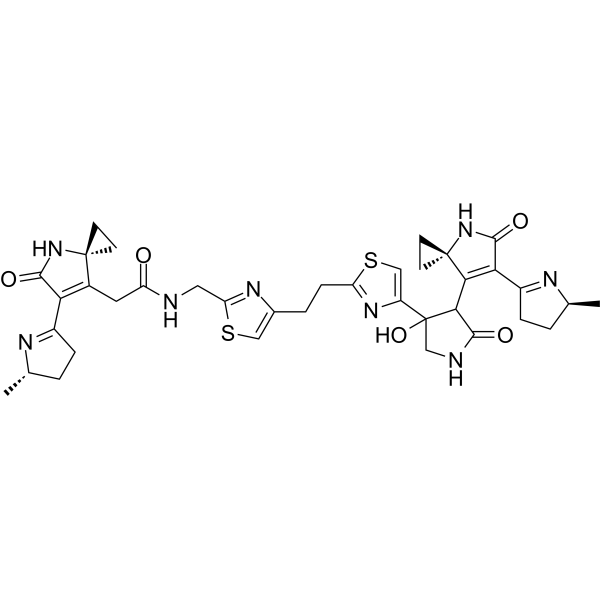
    Colibactin 742 is a covalently binding DNA-damaging agent targeting DNA, with an IC50 of 5.2 μM against human cervical cancer cells (HeLa). Colibactin 742 covalently binds to DNA, forming interstrand crosslinks (ICLs), activating the Fanconi anemia DNA repair pathway, inducing γH2AX and FANCD2 foci formation and cell cycle arrest, while exacerbating mismatch repair deficiency (MMRd)-related mutations. Colibactin 742 can mimic the genotoxicity of natural Colibactin while avoiding its instability, and is mainly used in colorectal cancer (CRC) related research, including microbial tumorigenesis mechanisms, DNA damage repair pathways, and mutation signature analysis .
    Colibactin 742
  • HY-123820
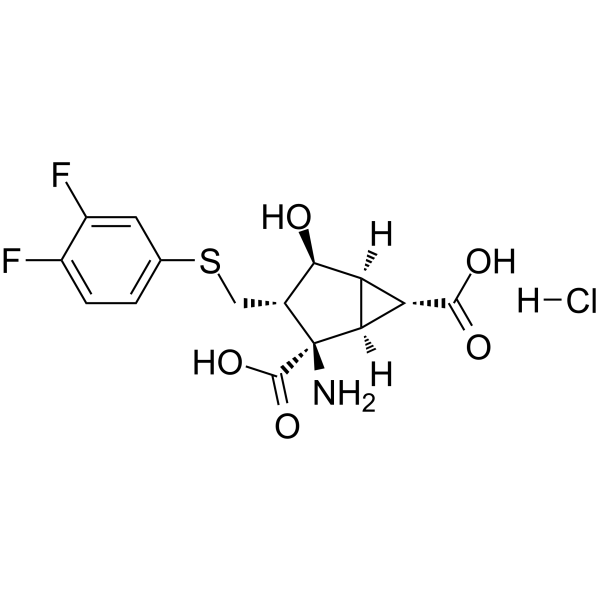
    LY3020371 hydrochloride
    1 Publications Verification

    mGluR Neurological Disease
    LY3020371 hydrochloride is a potent, selective metabotropic glutamate 2/3 receptor (mGlu2/3) antagonist with Ki of 5.3 and 2.5 nM, potently blocks cAMP formation with IC50 of 16.2 nM . LY3020371 hydrochloride exerts an antidepressant-like signature in vivo .
    LY3020371 hydrochloride
  • HY-P3146A

    Drug Metabolite Cancer
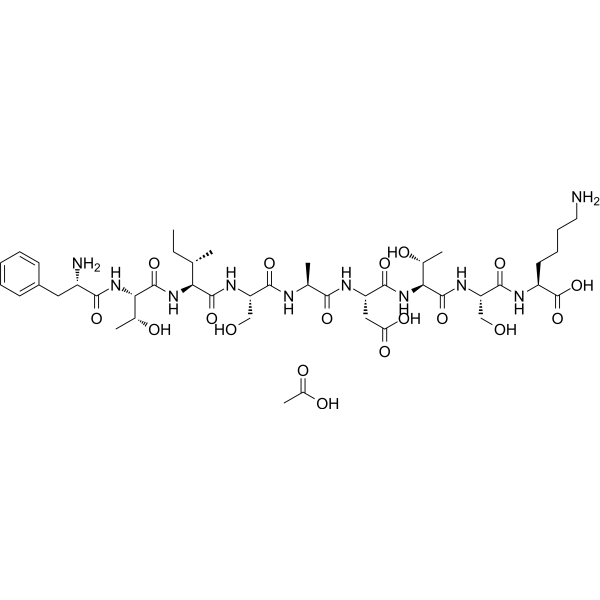
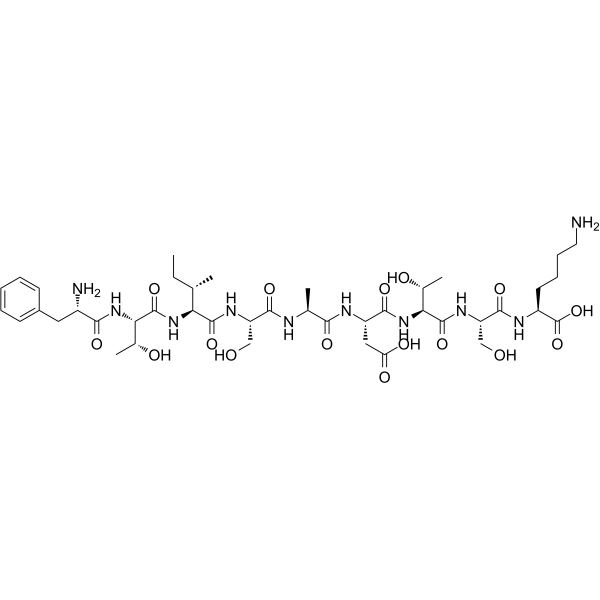
    FTISADTSK acetate is an endogenous stable signature peptide from Trastuzumab monitored by selected reaction monitoring (SRM) .
    FTISADTSK acetate
  • HY-P3146S

    Isotope-Labeled Compounds Cancer
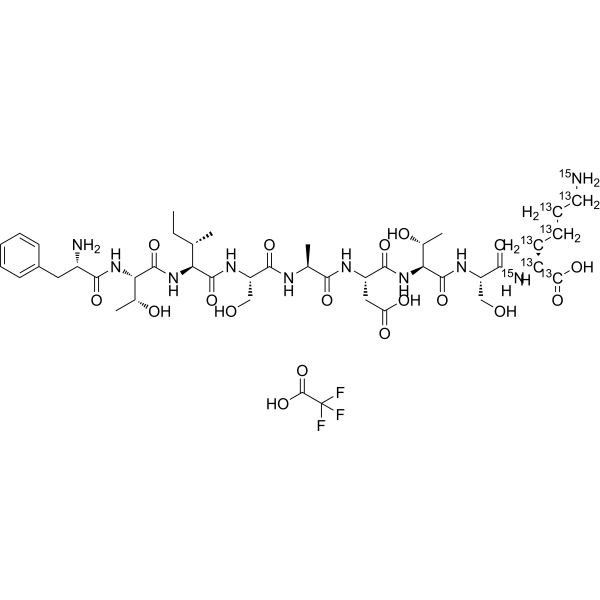
    FTISADTSK- 13C6, 15N2 TFA is 13C- and 15N-labeled FTISADTSK (HY-P3146). FTISADTSK is an endogenous stable signature peptide from Trastuzumab monitored by selected reaction monitoring (SRM) .
    FTISADTSK-13C6,15N2 TFA
  • HY-146052
    Autophagy inducer 3
    1 Publications Verification

    Atg8/LC3 Autophagy Cancer
    Autophagy inducer 3 has autophagy induced activity. Autophagy inducer 3 possesses robust autophagic cell death in diverse cancer cells sparing normal counterpart. Autophagy inducer 3 induces lethal autophagy by formation of characteristic autophagic vacuoles, LC3 puncta formation, upregulation of signature autophagy markers like Beclin and Atg family proteins .
    Autophagy inducer 3
  • HY-P3147A

    Drug Metabolite Others
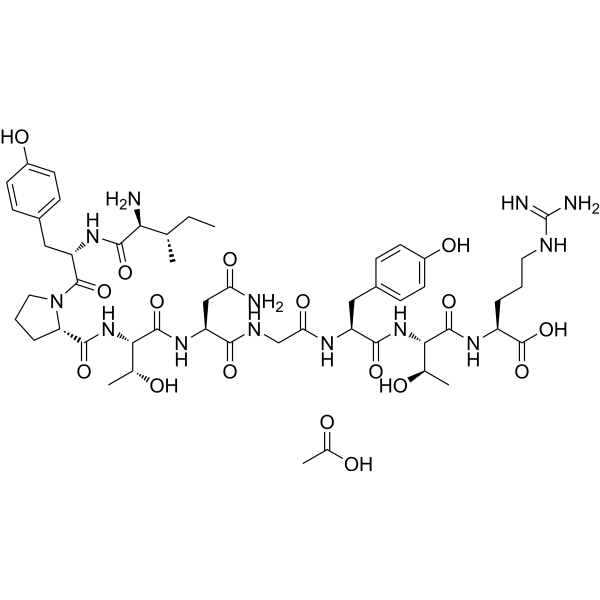
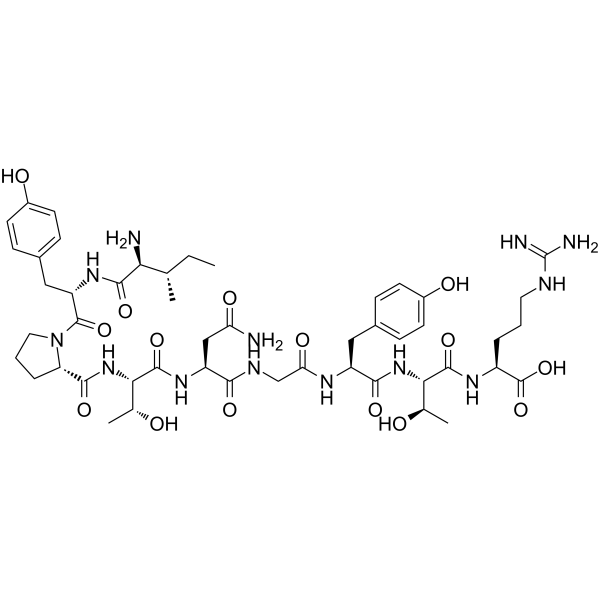
    IYPTNGYTR acetate, a deamidation-sensitive signature peptide, is a deamidation product of Trastuzumab. IYPTNGYTR acetate can be used to monitor in vivo Trastuzumab metabolism .
    IYPTNGYTR acetate
  • HY-P3146

    Drug Metabolite Cancer
    FTISADTSK is an endogenous stable signature peptide from Trastuzumab monitored by selected reaction monitoring (SRM) .
    FTISADTSK
  • HY-P5168S

    Isotope-Labeled Compounds SARS-CoV Infection
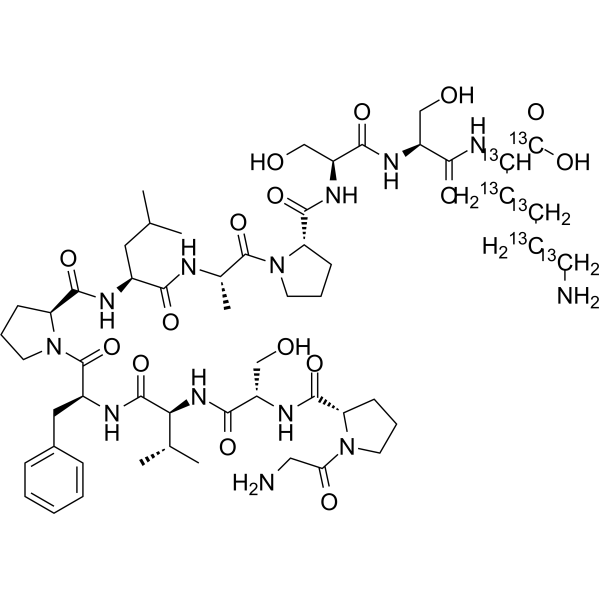
    GPSVFPLAPSSK- 13C6, 15N2 is the 13C- and 15N-labeled GPSVFPLAPSSK. GPSVFPLAPSSK is an IgG1 signature peptide of anti-SARS-CoV-2 antibodies. GPSVFPLAPSSK can be used for the quantification of the specific isolation of anti-SARS-CoV-2 antibodies .
    GPSVFPLAPSSK-13C6,15N2
  • HY-P3147

    Drug Metabolite Others
    IYPTNGYTR, a deamidation-sensitive signature peptide, is a deamidation product of Trastuzumab. IYPTNGYTR can be used to monitor in vivo Trastuzumab metabolism .
    IYPTNGYTR
  • HY-P5168AS

    Isotope-Labeled Compounds SARS-CoV Infection
    GPSVFPLAPSSK- 13C6, 15N2 TFA is the 13C- and 15N-labeled GPSVFPLAPSSK. GPSVFPLAPSSK is an IgG1 signature peptide of anti-SARS-CoV-2 antibodies. GPSVFPLAPSSK can be used for the quantification of the specific isolation of anti-SARS-CoV-2 antibodies .
    GPSVFPLAPSSK-13C6,15N2 TFA
  • HY-162910

    Xanthine Oxidase HDAC Autophagy Apoptosis Metabolic Disease Inflammation/Immunology Cancer
    HDAC-IN-79 (compound 4) is an orally active dual xanthine oxidase-HDAC inhibitor (Xanthine oxidase: IC50=6.6 nM; HDAC1: IC50=134 nM; HDAC2: IC50=284 nM; HDAC3: IC50=173 nM; HDAC6: IC50=1.32 nM;), with significant in vivo anti-hyperuricemia and anti-tumor activities. HDAC-IN-79 is the most potent cell growth inhibitor (IC50=0.706 μM) of leukemia HL60 cells, induces apoptosis and autophagy, and can regulate the expression levels of signature biomarkers associated with intracellular HDAC inhibition .
    HDAC-IN-79
  • HY-126855S

    7-Sulfocholic acid-d4

    Isotope-Labeled Compounds G protein-coupled Bile Acid Receptor 1 MHC Metabolic Disease
    Cholic acid 7-sulfate-d4 (7-Sulfocholic acid-d4) is the deuterium labeled Cholic acid 7-sulfate (HY-126855). Cholic acid 7-sulfate is a selective agonist targeting TGR5 (EC50=0.17 μM) and a ligand for MHC class I-related protein (MR1). As a gut-restricted TGR5 agonist, cholic acid 7-sulfate binds to TGR5 on enteroendocrine L cells, induces GLP-1 secretion, and improves glucose tolerance in a TGR5-dependent manner. Cholic acid 7-sulfate also acts as an endogenous ligand for MR1, promoting the survival of mucosal-associated invariant T cells MAIT and the expression of homeostatic gene signatures, affecting MAIT cell development and function. Cholic acid 7-sulfate is mainly used in the research of diabetes and MAIT cell-related immune regulation .
    Cholic acid 7-sulfate-d4
  • HY-15313B

    Histone Demethylase Metabolic Disease Cancer
    CBB1007 hydrochloride is a reversible and selective LSD1 inhibitor with an IC50 of 5.27 µM for human LSD1. CBB1007 hydrochloride significantly blocks the demethylase activity of LSD1 on H3K4Me2 and H3K4Me. CBB1007 hydrochloride shows selectivity for LSD1 over LSD2 or JARID1A, and induces differentiation-related genes in pluripotent cells. CBB1007 hydrochloride is studied in  non-pluripotent cancer research, targeting teratocarcinoma, embryonic carcinoma, and seminoma .
    CBB1007 hydrochloride
  • HY-P11556

    Biochemical Assay Reagents Others
    LR-13 is a signature peptide identified from the egg white allergen ovalbumin (OVA). LR-13 can be used as a marker peptide for the detection of OVA allergens using UHPLC-MS/MS .
    LR-13
  • HY-P11575

    Biochemical Assay Reagents Others
    LSFNPTQLEEQCHI is a signature peptide that can be isolated from β-lactoglobulin in cow milk. LSFNPTQLEEQCHI can be used as a maker peptide in a proteomics-based method for quantifying the percentage of cow milk in raw materials for dairy products .
    LSFNPTQLEEQCHI
  • HY-180590

    Nucleoside Antimetabolite/Analog Cardiovascular Disease
    3α,7α,12α,26-Tetrahydroxy-5β-cholestane is an important key metabolic signature of Quercetin (HY-18085) in primary bile acid biosynthesis. 3α,7α,12α,26-Tetrahydroxy-5β-cholestane can be used for the study of atherosclerosis .
    3α,7α,12α,26-Tetrahydroxy-5β-cholestane
  • HY-P992454

    Tim3 Cancer
    S095018 (Sym023) is a human IgG2-type inhibitor targeting T cell immunoglobulin and TIM-3. S095018 competitively blocks the binding of multiple ligands such as Gal-9 and phosphatidylserine to TIM-3. S095018 stimulates the anti-tumor activity of T cells, dendritic cells and macrophages, and exhibits good safety both as a monotherapy and in combination with the anti-PD-1 antibody Sym021. S095018 also induces an increase in the density of CD8 + T cells in the tumor microenvironment, and upregulates gene signatures associated with IFN-γ signaling, antigen presentation and T cell activation. S095018 can be used for the research of advanced/metastatic recurrent biliary tract cancer .
    S095018
  • HY-P992394

    CNTO-6358

    IFNAR Inflammation/Immunology
    JNJ-55920839 (CNTO-6358) is a fully human immunoglobulin G1κ monoclonal antibody and a selective Interferon α/ω neutralizer, with a Kd value of 0.9-10.7 pM against hIFNα and a Kd of 1.44 pM against IFNω. JNJ-55920839 can be used in research related to systemic lupus erythematosus .
    JNJ-55920839
  • HY-180331

    MDM-2/p53 Cancer
    NVP-CFC218 is a selective TP53-MDM2 inhibitor with a structure and biochemical profile similar to NVP-CGM097 (HY-15954) (IC50 of 1.6 nM: displacing the p53 peptide from the surface of HDM2). It is used to analyze pharmacological sensitivity in cell lines and is also applicable in cancer research [1] .
    NVP-CFC218

Inquiry Online

Your information is safe with us. * Required Fields.

Salutation


Country or Region *

Applicant Name *


Organization Name *

Department *


Email Address *


Product Name *

Cat. No.


Requested quantity *

Phone Number *


Remarks

Inquiry Online

Inquiry Information

Product Name:
Cat. No.:
Quantity:
MCE Japan Authorized Agent:

