



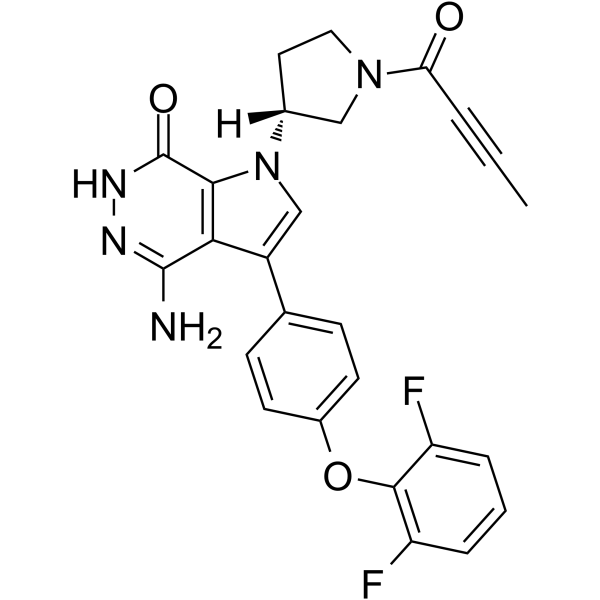
Edralbrutinib

Based on 1 Customer Validation
Edralbrutinib (TG-1701) is a highly selective, orally available irreversible BTK inhibitor, with an EC50 of 6.70 nM and a Kd of 3 nM against human BTK. Edralbrutinib inhibits downstream signaling of the B cell receptor, induces dephosphorylation of Ikaros Ser442/445, promotes nuclear exclusion of Ikaros, attenuates Ikaros gene signatures, and exerts anti-tumor activity. Edralbrutinib can be used in research related to B-cell non-Hodgkin lymphoma, chronic lymphocytic leukemia, mantle cell lymphoma, follicular lymphoma, and diffuse large B-cell lymphoma.
For research use only. We do not sell to patients.
- Purity : 99.75%
- CAS No.: 1858206-58-2
- Formula: C26H21F2N5O3
- Molecular Weight:489.47
-
Storage:
4°C, protect from light
* In solvent : -80°C, 6 months; -20°C, 1 month (protect from light)

To place orders, for customer services and technical support, please contact: MedChemExpress USA
Tel: 609-228-6898 E-mail: [email protected] [email protected]


-
 Biological Activity
-
Chemical Information
-
Solvent & Solubility
- Purity & Documentation
- References
-
 Help & FAQs


-
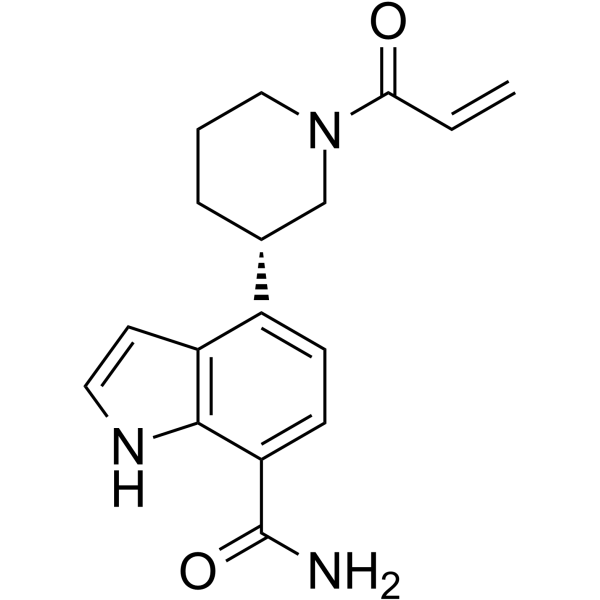
HY-109143
ElsubrutinibBTK Inhibitor -
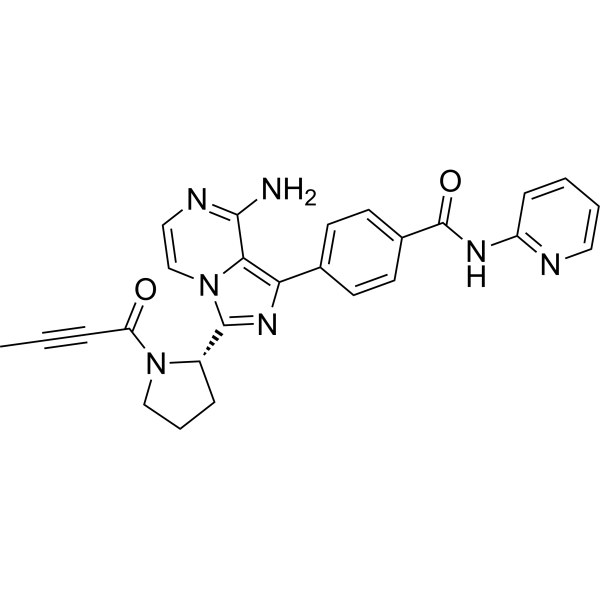
HY-17600
AcalabrutinibBTK Inhibitor -
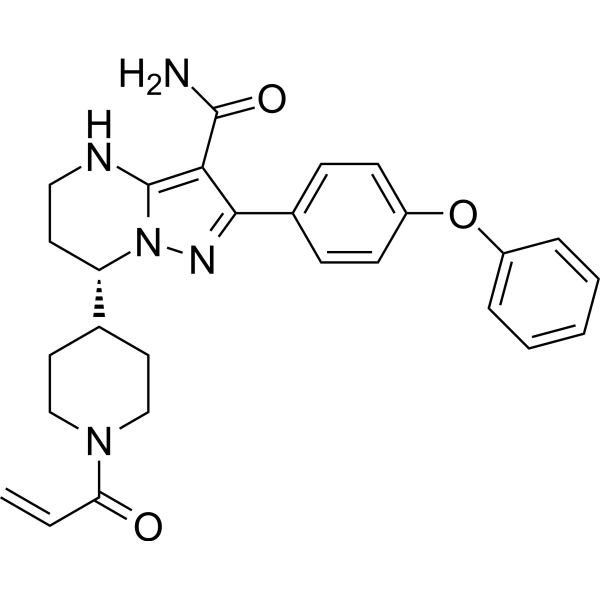
HY-101474A
ZanubrutinibBtk Inhibitor -
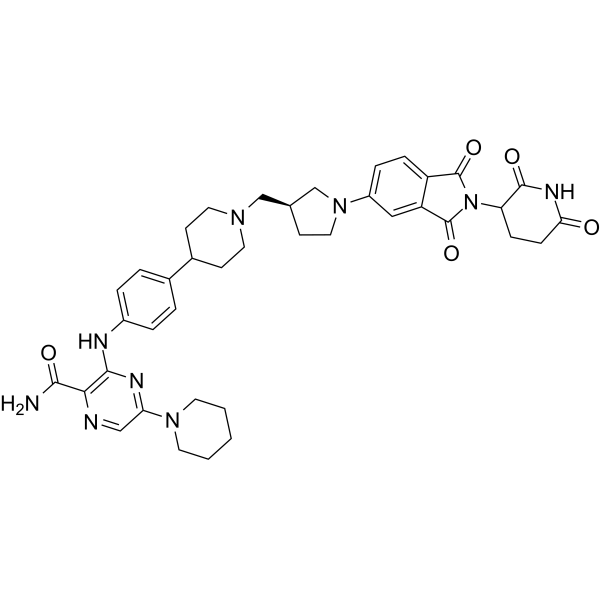
HY-153220
ZelebrudomideBTK PROTAC Degrader -
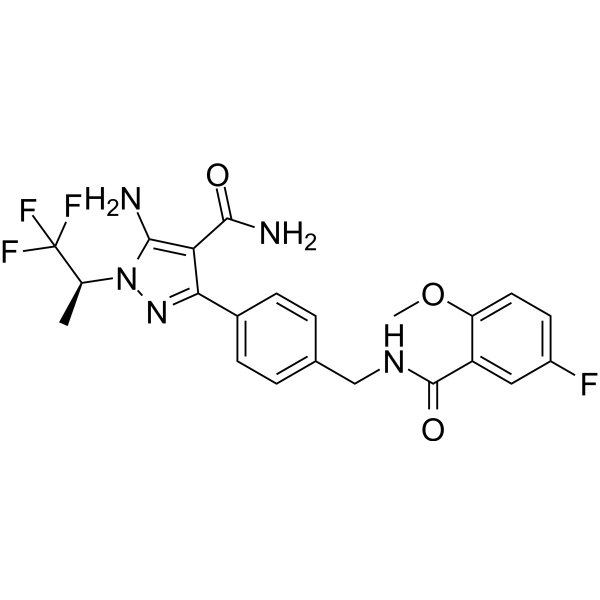
HY-131328
PirtobrutinibBTK Inhibitor -
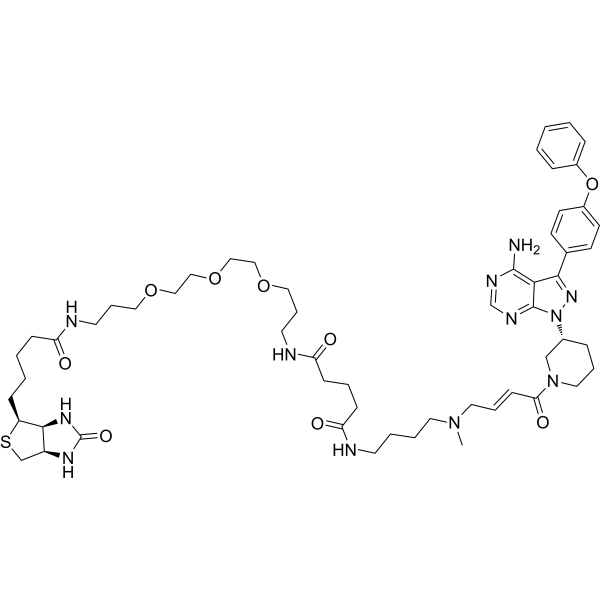
HY-100342
Ibrutinib-biotinProbe -
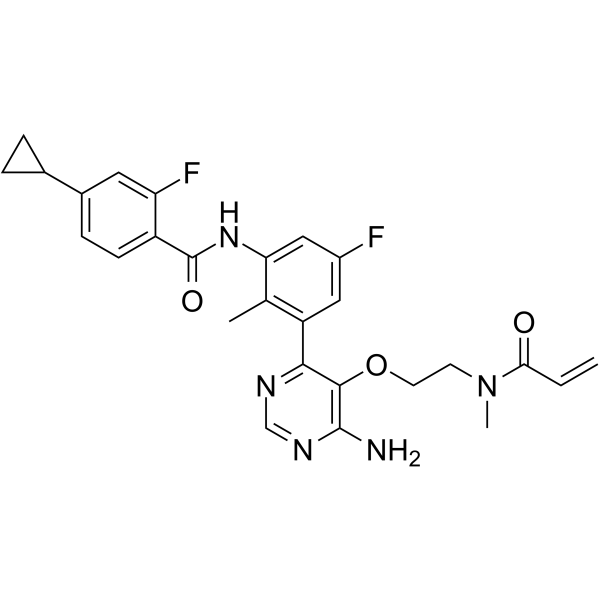
HY-128757
RemibrutinibBTK Inhibitor -
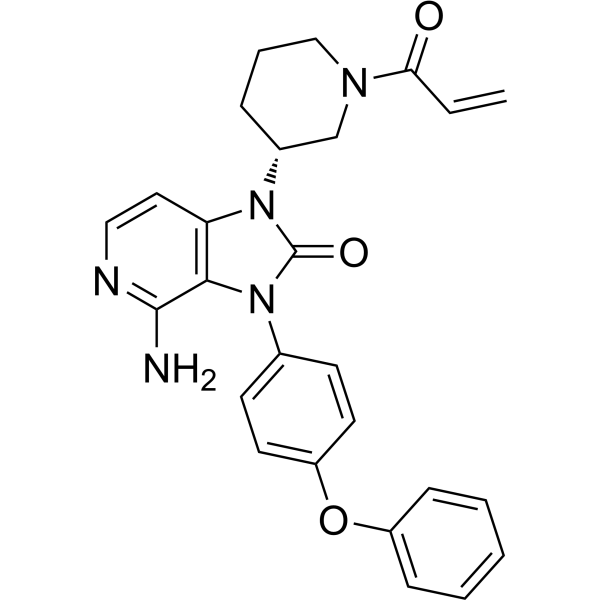
HY-109192
TolebrutinibBTK Inhibitor -
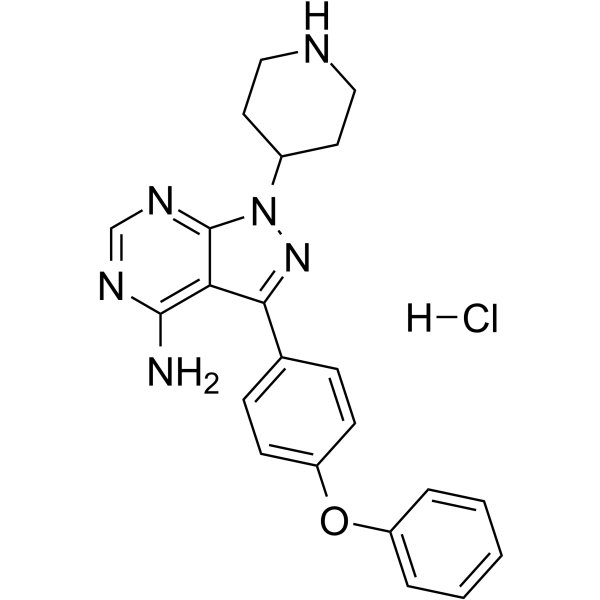
HY-130983
N-piperidine Ibrutinib hydrochlorideBTK Inhibitor -
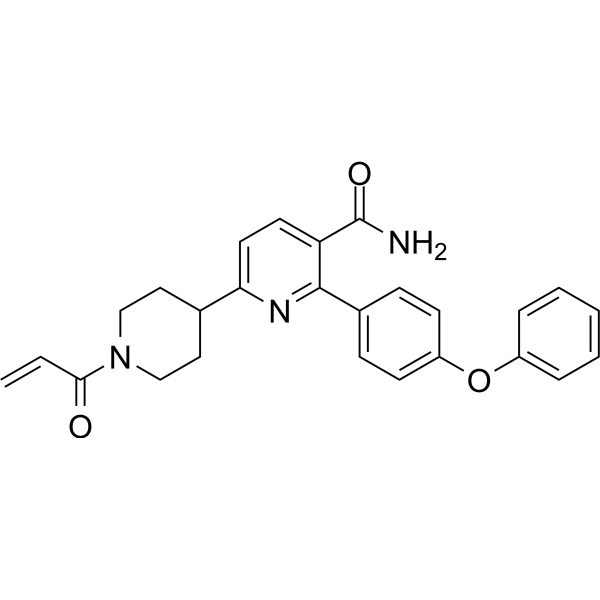
HY-129390
OrelabrutinibBTK Inhibitor -
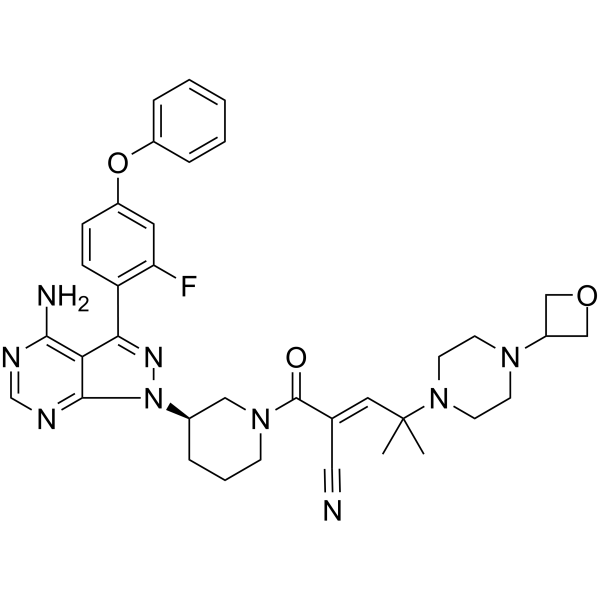
HY-112166
RilzabrutinibBTK Inhibitor -
HY-112215
NemtabrutinibBTK Inhibitor


Biological Activity
Description
In Vitro
Edralbrutinib (TG-1701) (1 μM) exhibits high selectivity for BTK over 440 other human kinases, with a BTK Kd of 3 nM when tested at 1 μM[1].
Edralbrutinib (TG-1701) inhibits wild-type BTK enzymatic activity with an EC50 of 6.70 nM in a cell-free kinase activity assay[1].
Edralbrutinib (TG-1701) (0.1-100 nM) achieves full BTK occupancy in BTK-sensitive DoHH-2 follicular lymphoma cells at a concentration of 30 nM[1].
Edralbrutinib (TG-1701) (72 h) inhibits viability of 10 parental B-NHL cell lines with a mean GI50 of 6.4 μM after 72-hour incubation, including a mean GI50 of 4.3 μM in MCL cell lines and a GI50 of 3.83 μM in REC-1 MCL cells[1].
Edralbrutinib (TG-1701) (1 μM; 24 h) at 1 μM for 24 hours impairs Ikaros signaling in BTK-sensitive REC-1 MCL cells by downregulating pBTK and MYC, upregulating YES1 (to a greater extent than ibrutinib), and inducing nuclear exclusion of Ikaros[1].
Edralbrutinib (TG-1701) (1 μM; 24 h) at 1 μmol/L for 24 hours induces nuclear exclusion of Ikaros in BTK-sensitive JEKO-1 MCL cells, reducing nuclear Ikaros levels by 50% to 70%[1].
MedChemExpress (MCE) has not independently confirmed the accuracy of these methods. They are for reference only.
In Vivo
Edralbrutinib (25 mg/kg; p.o.; once daily; 17 days) inhibits BTK-sensitive REC-1 MCL xenograft growth by 53% over 17 days and modulates the Ikaros signaling pathway, including reduced MYC expression and increased YES1 expression[1].
Edralbrutinib (25 mg/kg; p.o.; once daily; 17 days) does not significantly inhibit tumor growth in the noncanonical NF-κB-driven BTK inhibitor-resistant UPN-IbruR MCL xenograft model, with no associated modulation of Ikaros signaling pathway components[1].
MedChemExpress (MCE) has not independently confirmed the accuracy of these methods. They are for reference only.
-
Animal Model:Nude mice (6-7 weeks old; subcutaneous inoculation of MINO MCL cells)[1]
-
Dosage:25 mg/kg (TGI); 50 mg/kg (TGI; BCR pathway suppression); 100 mg/kg (TGI)
-
Administration:p.o.; twice a day; 21 days; p.o.; single dose
-
Result:Achieved 56% tumor growth inhibition (TGI).
Achieved 72% tumor growth inhibition (TGI).
Achieved 78% tumor growth inhibition (TGI).
Caused rapid dephosphorylation of pBTK within 2 hours and dephosphorylation of pAKT within 4 hours, with both effects maintained for at least 24 hours.
-
Animal Model:CB17-SCID mice (subcutaneous inoculation of REC-1GFP+LUC+ BTK-sensitive MCL cells)[1]
-
Dosage:25 mg/kg
-
Administration:p.o.; once daily; 17 days
-
Result:Achieved 53% tumor growth inhibition (TGI) compared to vehicle control.
Reduced pBTK levels by 70% relative to vehicle controls.
Increased YES1 protein levels by 2.25-fold relative to vehicle controls.
Reduced MYC protein levels by 79% relative to vehicle controls.
Reduced Ikaros protein levels by 23% relative to vehicle controls.
Significantly upregulated YES1 mRNA compared to vehicle controls.
Significantly downregulated MYC mRNA compared to vehicle controls.
Showed reduced CD20 expression and nuclear exclusion of Ikaros in treated tumors.
-
Animal Model:CB17-SCID mice (subcutaneous inoculation of UPN-IbruR noncanonical NF-κB-driven BTK inhibitor-resistant MCL cells)[1]
-
Dosage:25 mg/kg
-
Administration:p.o.; once daily; 17 days
-
Result:Did not significantly reduce UPN-IbruR tumor volume compared to vehicle control.
Showed no reduction in pBTK levels relative to vehicle controls.
Showed no significant change in YES1 or MYC protein levels relative to vehicle controls.
Showed no significant modulation of YES1 or MYC mRNA levels relative to vehicle controls.
Showed no change in CD20 expression or Ikaros nuclear localization in treated tumors.
Clinical Trial
| NCT Number | Sponsor | Condition | Start Date |
Phase

|
|---|---|---|---|---|
| NCT01329991 | Plexxikon| | 2011-05 | PHASE1 |


Chemical Information
-
CAS No. 1858206-58-2
-
Appearance Solid
-
Molecular Weight 489.47
-
Formula C26H21F2N5O3
-
Color White to off-white
-
SMILES
O=C1C2=C(C(N)=NN1)C(C(C=C3)=CC=C3OC(C(F)=CC=C4)=C4F)=CN2[C@@](CC5)([H])CN5C(C#CC)=O
-
Synonyms
TG-1701
-
Shipping
Room temperature in continental US; may vary elsewhere.
-
Storage
4°C, protect from light
* In solvent : -80°C, 6 months; -20°C, 1 month (protect from light)


Solvent & Solubility
In Vitro:
DMSO : 12.5 mg/mL (25.54 mM; ultrasonic and warming and heat to 60°C; Hygroscopic DMSO has a significant impact on the solubility of product, please use newly opened DMSO)
Please refer to the solubility information to select the appropriate solvent. Once prepared, please aliquot and store the solution to prevent product inactivation from repeated freeze-thaw cycles.
Storage method and period of stock solution: -80°C, 6 months; -20°C, 1 month (protect from light). When stored at -80°C, please use it within 6 months. When stored at -20°C, please use it within 1 month.
Please refer to the solubility information to select the appropriate solvent. Once prepared, please aliquot and store the solution to prevent product inactivation from repeated freeze-thaw cycles.
Storage method and period of stock solution: -80°C, 6 months; -20°C, 1 month (protect from light). When stored at -80°C, please use it within 6 months. When stored at -20°C, please use it within 1 month.
Concentration (start) × Volume (start) = Concentration (final) × Volume (final)
In Vivo:
Select the appropriate dissolution method based on your experimental animal and administration route.
- For the following dissolution methods, please ensure to first prepare a clear stock solution using an In Vitro approach and then sequentially add co-solvents:
- To ensure reliable experimental results, the clarified stock solution can be appropriately stored based on storage conditions. As for the working solution for In Vivo experiments, it is recommended to prepare freshly and use it on the same day.
- The percentages shown for the solvents indicate their volumetric ratio in the final prepared solution. If precipitation or phase separation occurs during preparation, heat and/or sonication can be used to aid dissolution.
Add each solvent one by one: 10% DMSO 40% PEG300 5% Tween-80 45% Saline
Solubility: ≥ 1.25 mg/mL (2.55 mM); Clear solution
This protocol yields a clear solution of ≥ 1.25 mg/mL (saturation unknown).
Taking 1 mL working solution as an example, add 100 μL DMSO stock solution (12.5 mg/mL) to 400 μL PEG300, and mix evenly; then add 50 μL Tween-80 and mix evenly; then add 450 μL Saline to adjust the volume to 1 mL.
Preparation of Saline: Dissolve 0.9 g sodium chloride in ddH₂O and dilute to 100 mL to obtain a clear Saline solution.
Add each solvent one by one: 10% DMSO 90% (20% SBE-β-CD in Saline)
Solubility: ≥ 1.25 mg/mL (2.55 mM); Clear solution
This protocol yields a clear solution of ≥ 1.25 mg/mL (saturation unknown).
Taking 1 mL working solution as an example, add 100 μL DMSO stock solution (12.5 mg/mL) to 900 μL 20% SBE-β-CD in Saline, and mix evenly.
Preparation of 20% SBE-β-CD in Saline (4°C, storage for one week): 2 g SBE-β-CD powder is dissolved in 10 mL Saline, completely dissolve until clear.
In Vivo Dissolution Calculator
Please enter the basic information of animal experiments:
-
-
-
-
Recommended: Prepare an additional quantity of animals to account for potential losses during experiments.
Please enter your animal formula composition:
-
%DMSO +
Recommended: Keep the proportion of DMSO in working solution below 2% if your animal is weak.
-
%+
-
+%Tween-80 + +
-
%Saline +
The co-solvents required include: DMSO, . All of co-solvents are available by MedChemExpress (MCE). , Tween 80. All of co-solvents are available by MedChemExpress (MCE).
Working solution concentration: 0.22 mg/mL
Method for preparing stock solution: mg drug dissolved in μL DMSO. Stock solution concentration: mg/mL. * In solvent : -80°C, 6 months; -20°C, 1 month (protect from light)
1. Take μL DMSO stock solution;
2. Add μL .
μL , mix evenly;
3. Then add μL Tween 80, mix evenly;
4. Then add μL
Please ensure that the stock solution in the first step is dissolved to a clear state, and add co-solvents in sequence. You can use ultrasonic heating (ultrasonic cleaner, recommended frequency 20-40 kHz), vortexing, etc. to assist dissolution.


Purity & Documentation
-
Data Sheet (285 KB)
-
SDS (393 KB)
- English - EN (393 KB)
- Français - FR (393 KB)
- Deutsch - DE (393 KB)
- Norwegian - NO (393 KB)
- Español - ES (393 KB)
- Swedish - SV (393 KB)
- Italian - IT (393 KB)
- Korean - KR (393 KB)
- Portuguese - PT (393 KB)
-
Handling Instructions (2659 KB)
References


Complete Stock Solution Preparation Table
Please refer to the solubility information to select the appropriate solvent. Once prepared, please aliquot and store the solution to prevent product inactivation from repeated freeze-thaw cycles.
Storage method and period of stock solution: -80°C, 6 months; -20°C, 1 month (protect from light). When stored at -80°C, please use it within 6 months. When stored at -20°C, please use it within 1 month.
| Optional Solvent | Concentration Solvent Mass | 1 mg | 5 mg | 10 mg | 25 mg |
|---|---|---|---|---|---|
| DMSO | 1 mM | 2.0430 mL | 10.2151 mL | 20.4303 mL | 51.0757 mL |
| 5 mM | 0.4086 mL | 2.0430 mL | 4.0861 mL | 10.2151 mL | |
| 10 mM | 0.2043 mL | 1.0215 mL | 2.0430 mL | 5.1076 mL | |
| 15 mM | 0.1362 mL | 0.6810 mL | 1.3620 mL | 3.4050 mL | |
| 20 mM | 0.1022 mL | 0.5108 mL | 1.0215 mL | 2.5538 mL | |
| 25 mM | 0.0817 mL | 0.4086 mL | 0.8172 mL | 2.0430 mL |


Edralbrutinib Related Classifications
HY-137438 Related Classifications
 Powered by Bioz