



DTHIB
Based on 8 publication(s) in Google Scholar
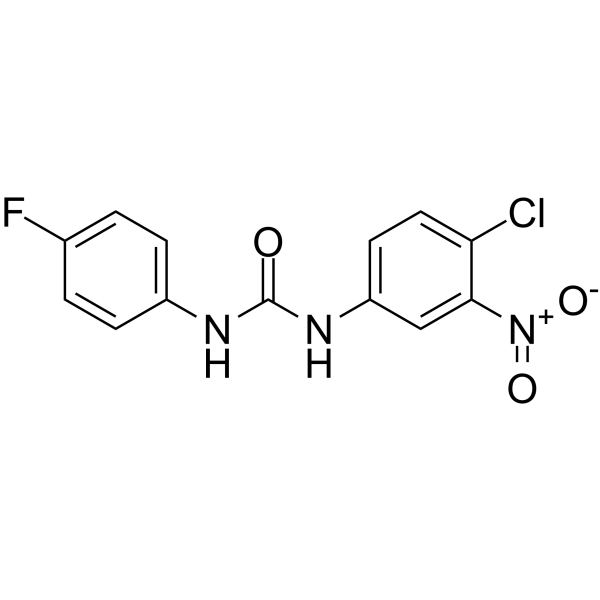
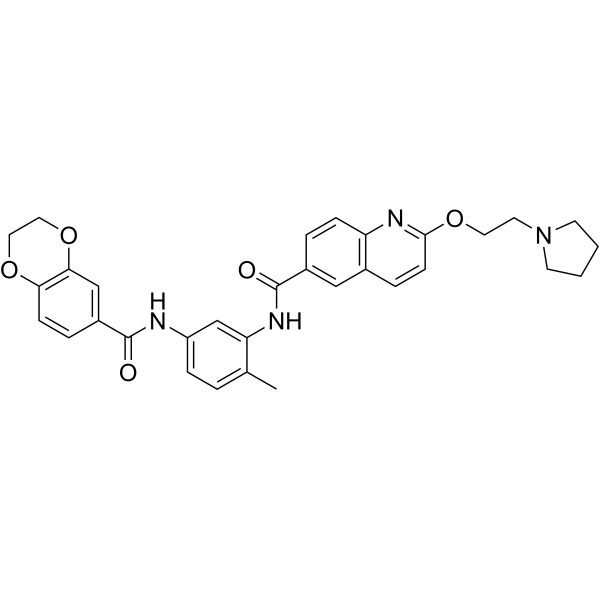
DTHIB is a direct and selective heat shock factor 1 (HSF1) inhibitor with a Kd of 160 nM for DTHIB binding to the HSF1 DNA binding domain (DBD). DTHIB inhibits HSF1 cancer gene signature (HSF1 CaSig) and selectively stimulates degradation of nuclear HSF1. DTHIB has potently anticancer activities and can be used for prostate cancer research.
Nur für Forschungszwecke. Wir verkaufen nicht an Patienten.
- Reinheit : 99.82%
- CAS. Nr.: 897326-30-6
- Formel: C13H9ClFN3O3
- Molecular Weight:309.68
-
Speicherung:Powder -20°C, 3 years , 4°C, 2 years ; In solvent -80°C, 2 years , -20°C, 1 year

To place orders, for customer services and technical support, please contact: MedChemExpress USA
Tel: 609-228-6898 E-mail: [email protected] [email protected]


-
 Biologische Aktivität
-
Chemical Information
-
Lösungsmittel & Löslichkeit
- Protokoll
- Reinheit & Dokumentation
- Verweise
-
 Help & FAQs


-
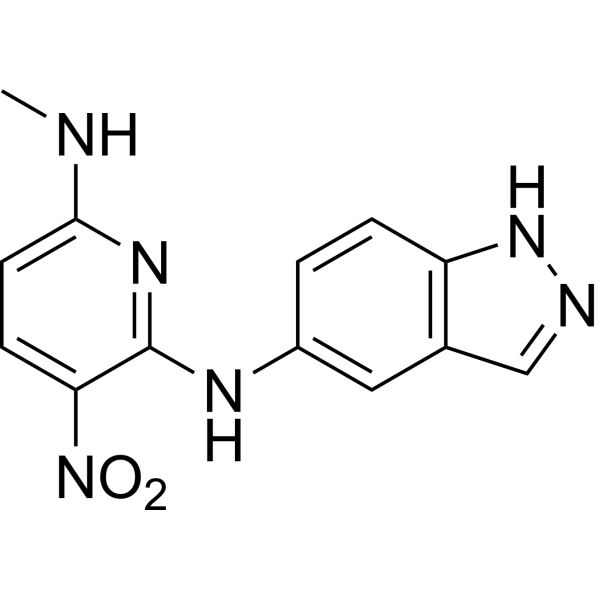
HY-100872
KRIBB11HSF1 Inhibitor -
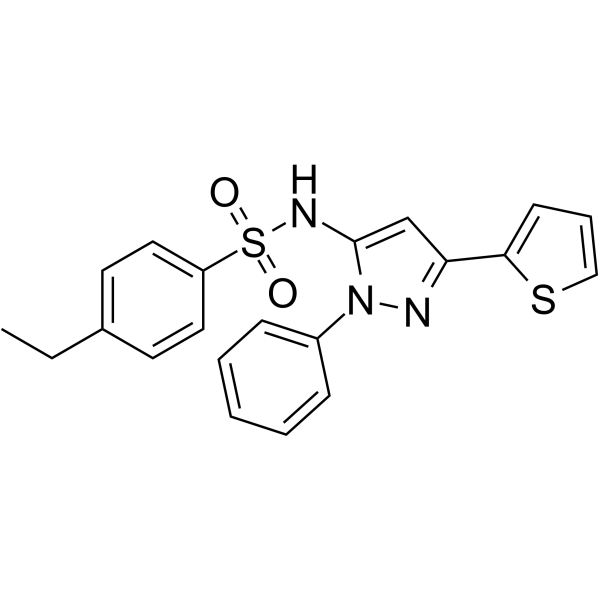
HY-103000
HSF1AHSF1 Activator -
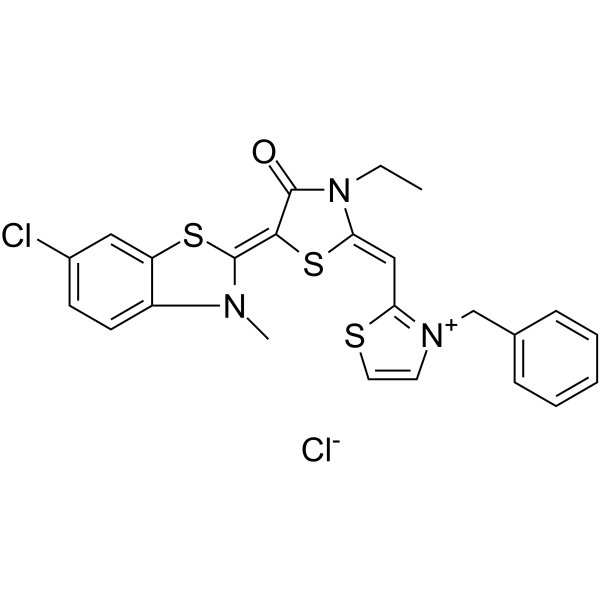
HY-117282
JG-98Hsp70 Inhibitor -
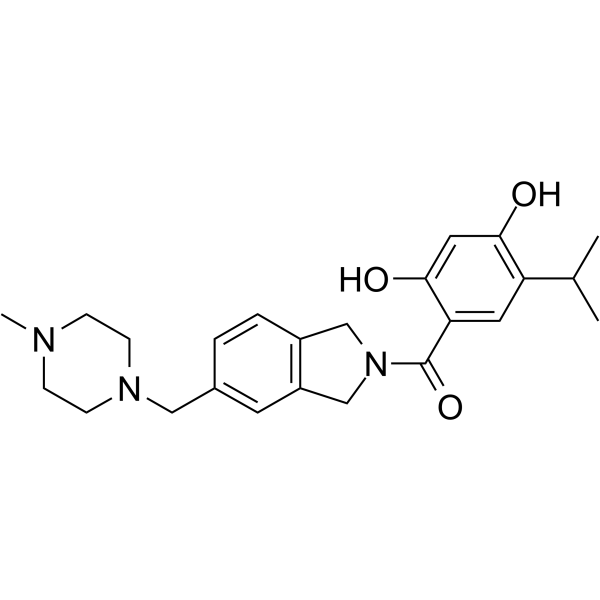
HY-14463
OnalespibHsp90 Inhibitor -
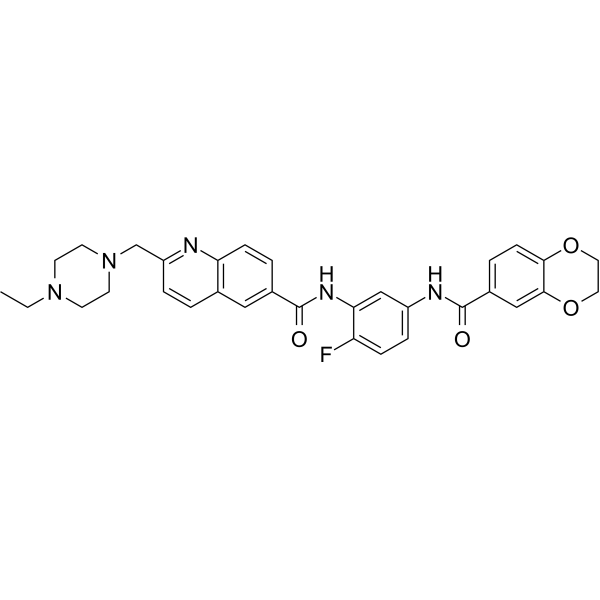
HY-145927
NXP800HSF1 pathway Inhibitor -
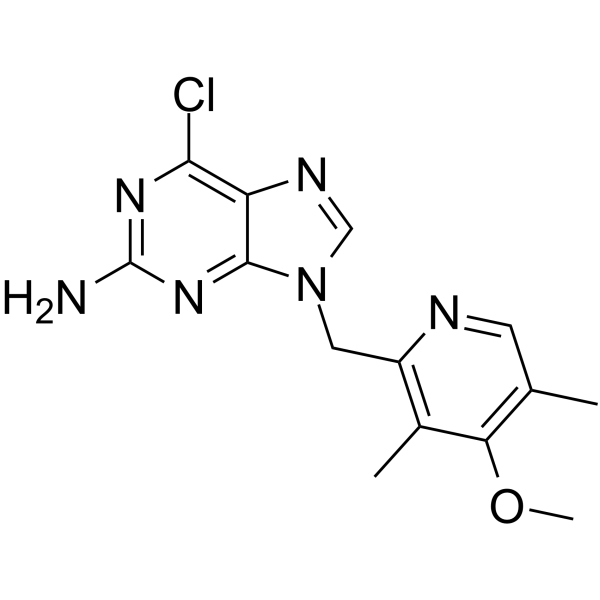
HY-10212
BIIB021HSP90 Inhibitor -
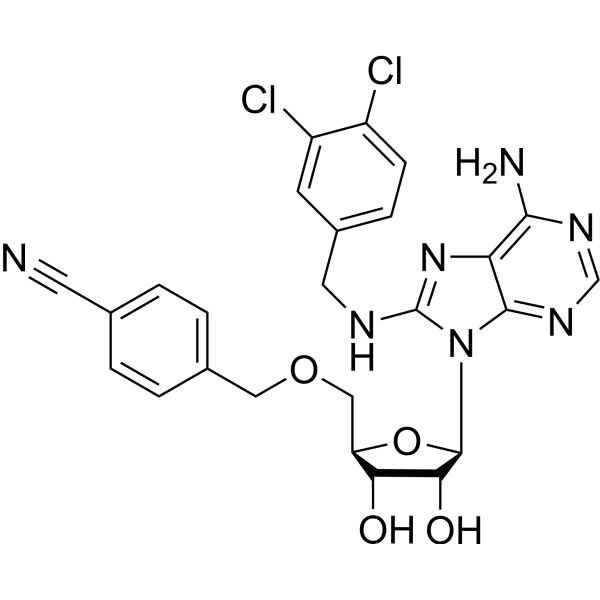
HY-10941
VER-155008Hsp70 Inhibitor -
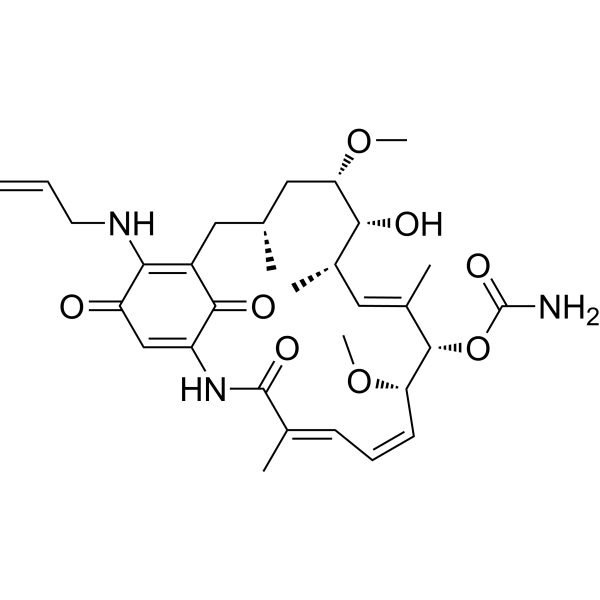
HY-10211
TanespimycinHSP90 Inhibitor -
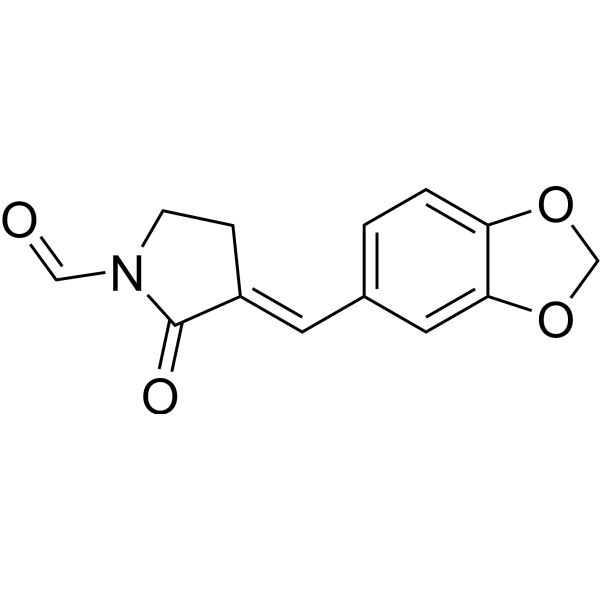
HY-100110
KNK437HSP Inhibitor -
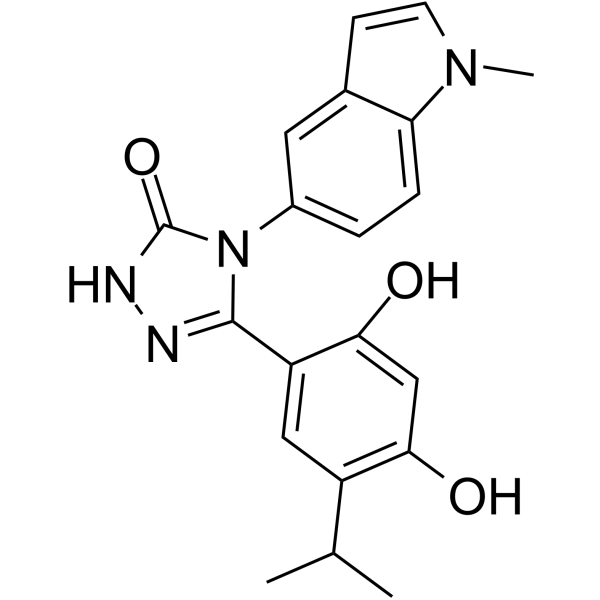
HY-15205
GanetespibHSP90 Inhibitor -
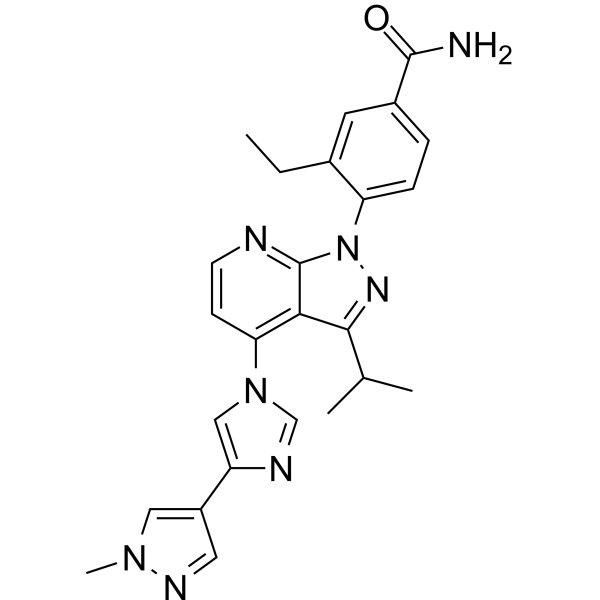
HY-15785
PimitespibHSP90α/HSP90β Inhibitor -
HY-101026
CCT251236PROTAC Ligand
Publications Citing Use of MedChemExpress (MCE) DTHIB
More- Nat Immunol. 2025 Oct 29. [Abstract]
- Mol Cell. 2026 Jun 2:S1097-2765(26)00320-5. [Abstract]
- Chem Eng J. 2024 May 1, 487, 150501.
- Cell Death Dis. 2023 Aug 19;14(8):535. [Abstract]
- Virulence. 2026 Dec;17(1):2707775.
- Mol Cell Biochem. 2026 Jan 29. [Abstract]
- Virology. 2024 Dec:600:110214. [Abstract]
- biorxiv. 2024 May 27.
 Customer Validation & Images

-
WB
-
Flow Cytometry
-
Microbiological Assay
-
Cell Proliferation/Viability Assay
-
RT-PCR


Biologische Aktivität
Beschreibung
IC50 & Target
Kd: 160 nM (DTHIB binding to the HSF1 DNA binding domain)[1]
In Vitro
DTHIB (5 μM; 48 hours) treatment of C4-2 cells induces cell cycle arrest, with accumulation in the G1 phase. DTHIB stimulates C4-2 PCa cell entry into senescence[1].
DTHIB (0.5-5 μM; 48 hours; C4-2 prostate cancer) treatment reduces steady-state protein abundance of the molecular chaperones P23, HSP27, HSP70, and HSP90-all bona fide HSF1 targets in C4-2 cells[1].
DTHIB dose-dependently reduces the clonal expansion of both C4-2 and PC-3 PCa cells with EC50 values of 1.2 μM and 3.0 μM, respectively[1].
In mouse embryonic fibroblasts (MEFs), DTHIB (0.5-10 μM) attenuates the robust acute heat shock induction of the HSP70 and HSP25 molecular chaperones in a dose-dependent manner. DTHIB attenuates the heat shock response by reducing the steady-state transcript abundance of multiple molecular chaperones[1].
MedChemExpress (MCE) has not independently confirmed the accuracy of these methods. They are for reference only.
-
Cell Line:C4-2 cells
-
Concentration:5 μM
-
Incubation Time:48 hours
-
Result:Induced cell cycle arrest.
-
Cell Line:C4-2 prostate cancer (PCa) cells
-
Concentration:0.5 μM, 1 μM, 2.5 μM, 5 μM
-
Incubation Time:48 hours
-
Result:Dose-dependently inhibited expression of molecular chaperones in C4-2 PCa cells.
In Vivo
MedChemExpress (MCE) has not independently confirmed the accuracy of these methods. They are for reference only.
-
Animal Model:Nude mice (6 weeks of age) injected with C4-2 cells[1]
-
Dosage:5 mg/kg
-
Administration:Intraperitoneal injection; daily; for 3 weeks
-
Result:Showed no visible tumor growth over a 3-week period and a 40% reduction in median tumor volume.


Chemical Information
-
CAS. Nr. 897326-30-6
-
Appearance Solid
-
Molecular Weight 309.68
-
Formel C13H9ClFN3O3
-
Color Light yellow to yellow
-
SMILES
O=C(NC1=CC=C(F)C=C1)NC2=CC=C(Cl)C([N+]([O-])=O)=C2
-
Versand
Room temperature in continental US; may vary elsewhere.
-
Speicherung
Powder -20°C 3 years 4°C 2 years In solvent -80°C 2 years -20°C 1 year


Publications (8)
-
Journal Impact Factor
-
Most Recent
-
Nat Immunol
Cancer suppresses mitochondrial chaperone activity in macrophages to drive immune evasion. [Abstract]2025 Oct 29. PMID: 41162642
DTHIB purchased from MedChemExpress. Usage Cited in: Nat Immunol. 2025 Oct 29. [Abstract]
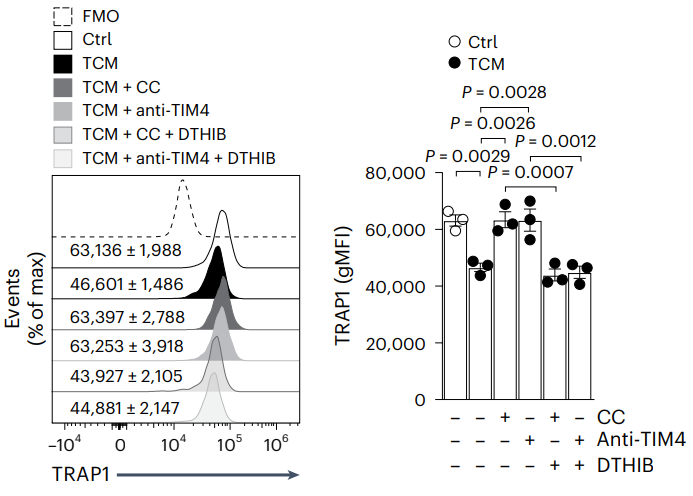
Representative histogram (left) and quantitative analysis (right) of TRAP1 in BMDMs treated with YUMM1.7 TCM for 24 h in the presence or absence of CC, anti-TIM4 or DTHIB (5 μM) (n = 3). The results showed that DTHIB (a selective HSF1 inhibitor) abrogated the restoration of TRAP1 expression mediated by AMPK inhibition or TIM4 pathway blockade.
-
Mol Cell
The heat shock transcription factor, HSF1, stimulates the catalytic engagement of topoisomerase IIβ over topoisomerase IIα. [Abstract]2026 Jun 2:S1097-2765(26)00320-5. PMID: 42229414 -
-
Cell Death Dis
HSF-1/miR-145-5p transcriptional axis enhances hyperthermic intraperitoneal chemotherapy efficacy on peritoneal ovarian carcinosis. [Abstract]2023 Aug 19;14(8):535. PMID: 37598177
DTHIB purchased from MedChemExpress. Usage Cited in: Cell Death Dis. 2023 Aug 19;14(8):535. [Abstract]
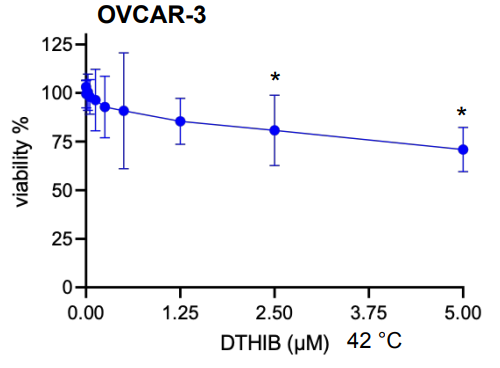
Label-free assay (ATPlite) in OVCAR-3 cells treated for 72h with increasing amount of DTHIB (1.25-5 μM). ATP amount was expressed as percentage of viability.
DTHIB purchased from MedChemExpress. Usage Cited in: Cell Death Dis. 2023 Aug 19;14(8):535. [Abstract]
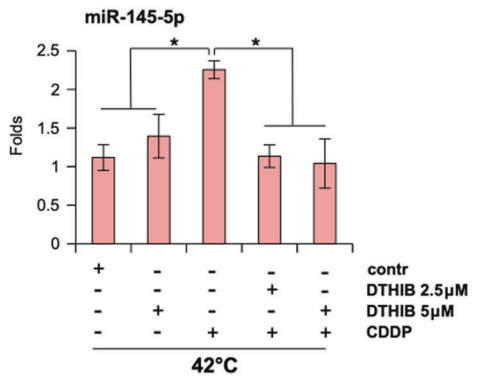
RT-qPCR was performed to evaluate the expression of miR-145-5p in OVCAR-3 cells pre-treated with DTHIB (an HSF-1 inhibitor) for 72 h and incubated with CDDP for the last 24 h. The experiment was conducted at 42 °C. The DTHIB pretreatment of OVCAR-3 cells prevented the rescue of miR-145-5p expression achieved by CDDP at 42 °C, as previously documented.
-
-
Mol Cell Biochem
Stress-specific expression of HSPA and DNAJ chaperones regulated by NRF2/HSF1 in neurodegenerative conditions. [Abstract]2026 Jan 29. PMID: 41609899
DTHIB purchased from MedChemExpress. Usage Cited in: Mol Cell Biochem. 2026 Jan 29. [Abstract]
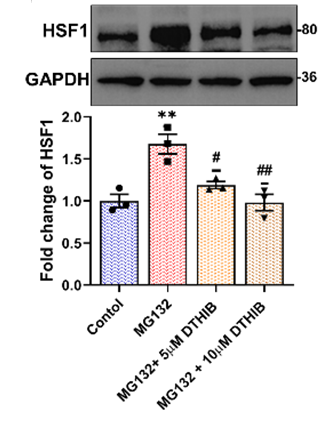
DTHIB (5 and 10 µM; 24 h) reduced the expression of HSF1 protein in SH-SY5Y cells in a concentration-dependent manner.
-
Virology
Pseudorabies virus UL13 primes inflammatory response through downregulating heat shock factor 1. [Abstract]2024 Dec:600:110214. PMID: 39243656
DTHIB purchased from MedChemExpress. Usage Cited in: Virology. 2024 Dec:600:110214. [Abstract]
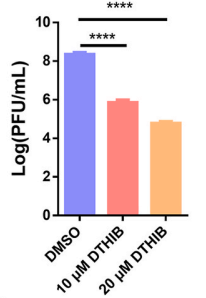
PK-15 cells were mock infected or infected with 0.1 MOI of PRV Ea, PRV UL13-amber, or PRV UL13-K96A in the presence of DMSO or DTHIB (10-20 μM), and virus yield was quantified by plaque assay at 48 hpi. The results showed that DTHIB significantly reduced PRV titers.
-


Lösungsmittel & Löslichkeit
In Vitro:
DMSO : 100 mg/mL (322.91 mM; Need ultrasonic; Hygroscopic DMSO has a significant impact on the solubility of product, please use newly opened DMSO)
Please refer to the solubility information to select the appropriate solvent. Once prepared, please aliquot and store the solution to prevent product inactivation from repeated freeze-thaw cycles.
Storage method and period of stock solution: -80°C, 2 years; -20°C, 1 year. When stored at -80°C, please use it within 2 years. When stored at -20°C, please use it within 1 year.
Please refer to the solubility information to select the appropriate solvent. Once prepared, please aliquot and store the solution to prevent product inactivation from repeated freeze-thaw cycles.
Storage method and period of stock solution: -80°C, 2 years; -20°C, 1 year. When stored at -80°C, please use it within 2 years. When stored at -20°C, please use it within 1 year.
Konzentration (Stammlösung) × Volumen (Stammlösung) = Konzentration (Ziellösung) × Volumen (Ziellösung)
In Vivo:
Select the appropriate dissolution method based on your experimental animal and administration route.
- For the following dissolution methods, please ensure to first prepare a clear stock solution using an In Vitro approach and then sequentially add co-solvents:
- To ensure reliable experimental results, the clarified stock solution can be appropriately stored based on storage conditions. As for the working solution for In Vivo experiments, it is recommended to prepare freshly and use it on the same day.
- The percentages shown for the solvents indicate their volumetric ratio in the final prepared solution. If precipitation or phase separation occurs during preparation, heat and/or sonication can be used to aid dissolution.
Add each solvent one by one: 10% DMSO 90% (20% SBE-β-CD in Saline)
Solubility: 2.08 mg/mL (6.72 mM); Clear solution; Need ultrasonic
This protocol yields a clear solution of 2.08 mg/mL.
Taking 1 mL working solution as an example, add 100 μL DMSO stock solution (20.8 mg/mL) to 900 μL 20% SBE-β-CD in Saline, and mix evenly.
Preparation of 20% SBE-β-CD in Saline (4°C, storage for one week): 2 g SBE-β-CD powder is dissolved in 10 mL Saline, completely dissolve until clear.
In Vivo Dissolution Calculator
Please enter the basic information of animal experiments:
-
-
-
-
Recommended: Prepare an additional quantity of animals to account for potential losses during experiments.
Please enter your animal formula composition:
-
%DMSO +
Recommended: Keep the proportion of DMSO in working solution below 2% if your animal is weak.
-
%+
-
+%Tween-80 + +
-
%Saline +
The co-solvents required include: DMSO, . All of co-solvents are available by MedChemExpress (MCE). , Tween 80. All of co-solvents are available by MedChemExpress (MCE).
Working solution concentration: 0.22 mg/mL
Method for preparing stock solution: mg drug dissolved in μL DMSO. Stock solution concentration: mg/mL.
1. Take μL DMSO stock solution;
2. Add μL .
μL , mix evenly;
3. Then add μL Tween 80, mix evenly;
4. Then add μL
Please ensure that the stock solution in the first step is dissolved to a clear state, and add co-solvents in sequence. You can use ultrasonic heating (ultrasonic cleaner, recommended frequency 20-40 kHz), vortexing, etc. to assist dissolution.


Reinheit & Dokumentation
-
Data Sheet (276 KB)
-
SDS (396 KB)
- English - EN (396 KB)
- Français - FR (396 KB)
- Deutsch - DE (396 KB)
- Norwegian - NO (396 KB)
- Español - ES (396 KB)
- Swedish - SV (396 KB)
- Italian - IT (396 KB)
- Korean - KR (396 KB)
- Portuguese - PT (396 KB)
-
Handling Instructions (2659 KB)
Verweise


Complete Stock Solution Preparation Table
Please refer to the solubility information to select the appropriate solvent. Once prepared, please aliquot and store the solution to prevent product inactivation from repeated freeze-thaw cycles.
Storage method and period of stock solution: -80°C, 2 years; -20°C, 1 year. When stored at -80°C, please use it within 2 years. When stored at -20°C, please use it within 1 year.
| Optional Solvent | Concentration Solvent Mass | 1 mg | 5 mg | 10 mg | 25 mg |
|---|---|---|---|---|---|
| DMSO | 1 mM | 3.2291 mL | 16.1457 mL | 32.2914 mL | 80.7285 mL |
| 5 mM | 0.6458 mL | 3.2291 mL | 6.4583 mL | 16.1457 mL | |
| 10 mM | 0.3229 mL | 1.6146 mL | 3.2291 mL | 8.0728 mL | |
| 15 mM | 0.2153 mL | 1.0764 mL | 2.1528 mL | 5.3819 mL | |
| 20 mM | 0.1615 mL | 0.8073 mL | 1.6146 mL | 4.0364 mL | |
| 25 mM | 0.1292 mL | 0.6458 mL | 1.2917 mL | 3.2291 mL | |
| 30 mM | 0.1076 mL | 0.5382 mL | 1.0764 mL | 2.6909 mL | |
| 40 mM | 0.0807 mL | 0.4036 mL | 0.8073 mL | 2.0182 mL | |
| 50 mM | 0.0646 mL | 0.3229 mL | 0.6458 mL | 1.6146 mL | |
| 60 mM | 0.0538 mL | 0.2691 mL | 0.5382 mL | 1.3455 mL | |
| 80 mM | 0.0404 mL | 0.2018 mL | 0.4036 mL | 1.0091 mL | |
| 100 mM | 0.0323 mL | 0.1615 mL | 0.3229 mL | 0.8073 mL |


DTHIB Related Classifications
HY-138280 Related Classifications
 Powered by Bioz