1. Search Result
Search Result
Results for "

tribbles pseudokinase 1 (TRIB1)

" in MedChemExpress (MCE) Product Catalog:

23

Inhibitors & Agonists

4

Recombinant Proteins

1

Isotope-Labeled Compounds

3

Antibodies

3

Oligonucleotides

Cat. No. Product Name Target Research Areas Chemical Structure
  • HY-112292
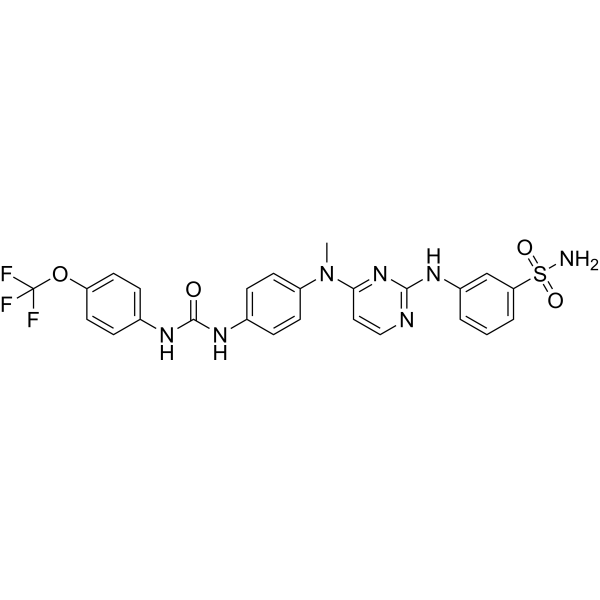
    GW806742X
    20+ Cited Publications

    Mixed Lineage Kinase VEGFR Others
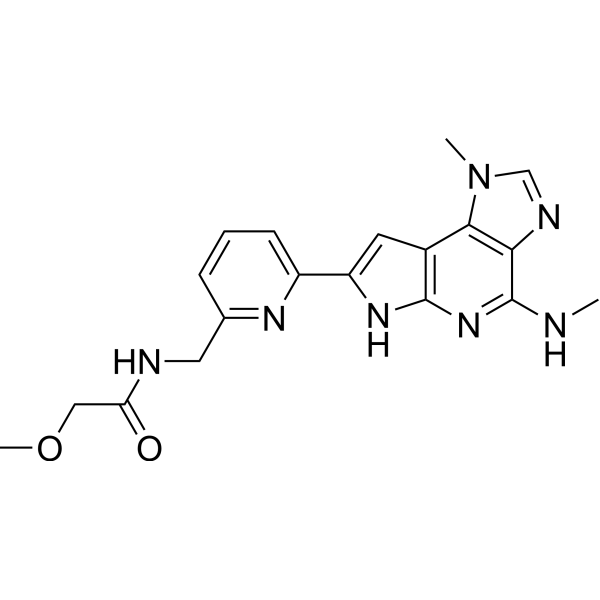
    GW806742X, an ATP mimetic and a potent MLKL (Mixed Lineage Kinase Domain-Like protein) inhibitor, binds the MLKL pseudokinase domain with a Kd of 9.3 μM. GW806742X has activity against VEGFR2 (IC50=2 nM). GW806742X retards MLKL membrane translocation and inhibits necroptosis [1] .
    GW806742X
  • HY-141676

    EGFR Others
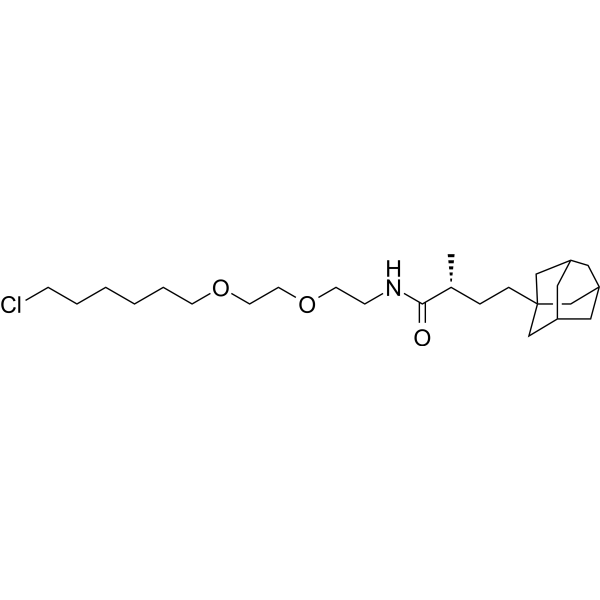
    HyT36 is a low molecular weight hydrophobic tag that promotes the degradation of fusion protein and pseudokinase Her3 [1] .
    HyT36
  • HY-115719

    Ser/Thr Kinase Neurological Disease
    NR162 is a selective CASK (Ca 2+/calmodulin-dependent Ser/Thr kinase) inhibitor with an IC50 of 80 nM and a Kd of 22 nM. NR162 shows about 50-fold selectivity for CASK than TYRO3. NR162 targets the unique GFG motif of CASK and has excellent shape complementarity to the CASK ATP binding pocket. NR162 can be used for the research of neurological diseases [1].
    NR162
  • HY-123494

    CaMK Cardiovascular Disease Neurological Disease
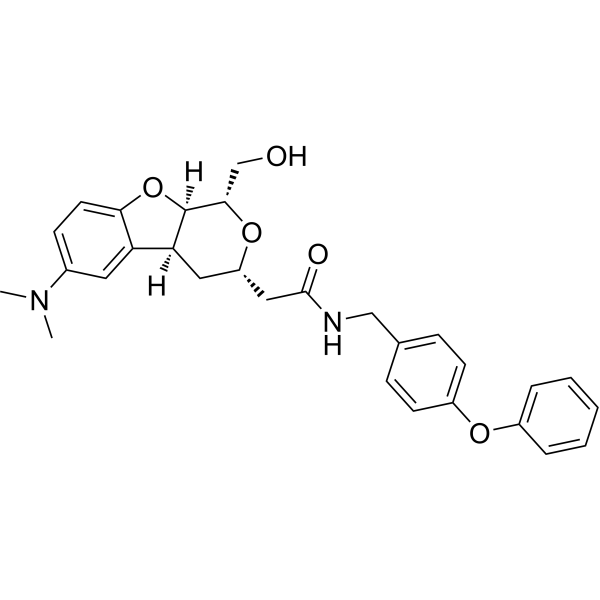
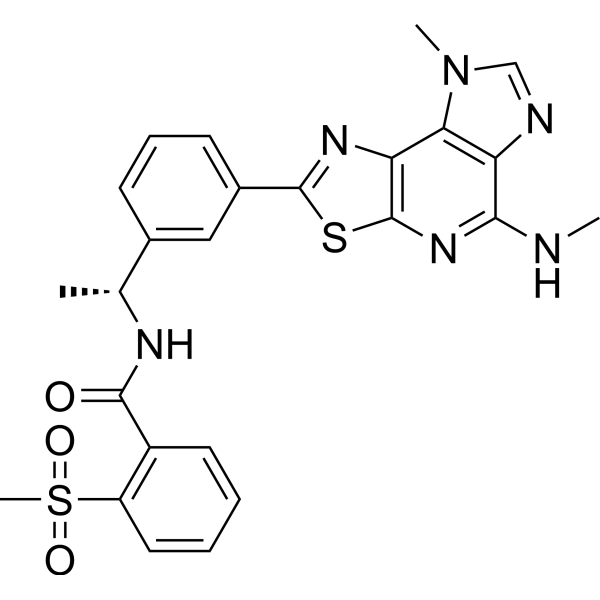
    BRD0418 is a diversity-oriented synthesis (DOS) molecule that regulates the expression of tribbles pseudokinase 1. BRD0418 has the effect of causing hot lipoprotein metabolism from fat production to clearance. BRD0418 can be used in the study of coronary artery disease (CAD) [1].
    BRD0418
  • HY-156466

    STAT Interleukin Related IFNAR Inflammation/Immunology
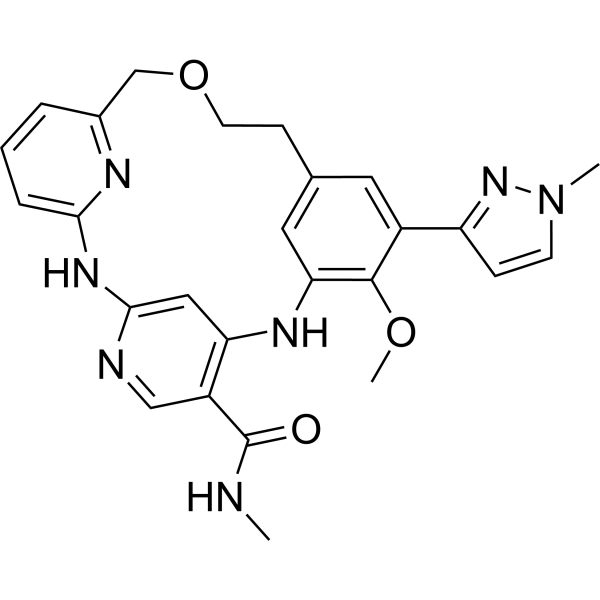
    QL-1200186 is a selective, orally active, allosteric inhibitor targeting the tyrosine kinase TYK2 pseudokinase domain JH2 (IC50=0.06 nM, TYK2 JH2), with 164-fold selectivity over TYK1 JH2 (IC50=9.85 nM,TYK1 JH2). QL-1200186 first stabilizes the TYK2 JH2 conformation, inhibits the activity of the JH1 catalytic domain, and blocks the IFNα, IL-12/IL-23-mediated JAK-STAT signaling pathway. QL-1200186 can inhibit the production of Th1/Th17 cell-related cytokines (such as IFNγ, IL-23), reduce immune cell activation, and has no significant effect on JAK1/2/3 kinase activity. QL-1200186 can significantly improve skin inflammation in the Imiquimod (HY-B0180)-induced psoriasis mouse model and reduce the Psoriasis Area and Severity Index (PASI) score. QL-1200186 can be used in the study of autoimmune diseases such as psoriasis and systemic lupus erythematosus (SLE) [1].
    QL-1200186
  • HY-112292A
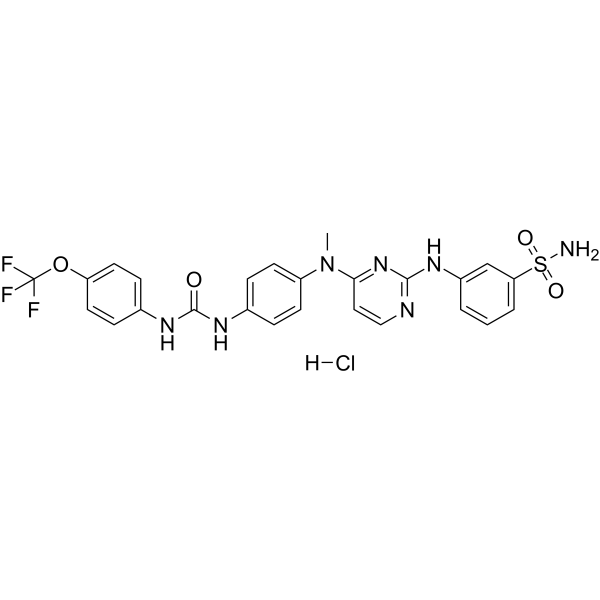
    GW806742X hydrochloride
    20+ Cited Publications

    Mixed Lineage Kinase VEGFR Cancer
    GW806742X hydrochloride, an ATP mimetic and a potent MLKL (Mixed Lineage Kinase Domain-Like protein) inhibitor, binds the MLKL pseudokinase domain with a Kd of 9.3 μM. GW806742X hydrochloride has activity against VEGFR2 (IC50=2 nM). GW806742X hydrochloride retards MLKL membrane translocation and inhibits necroptosis [1] .
    GW806742X hydrochloride
  • HY-148366

    Mixed Lineage Kinase RIP kinase CDK Cancer
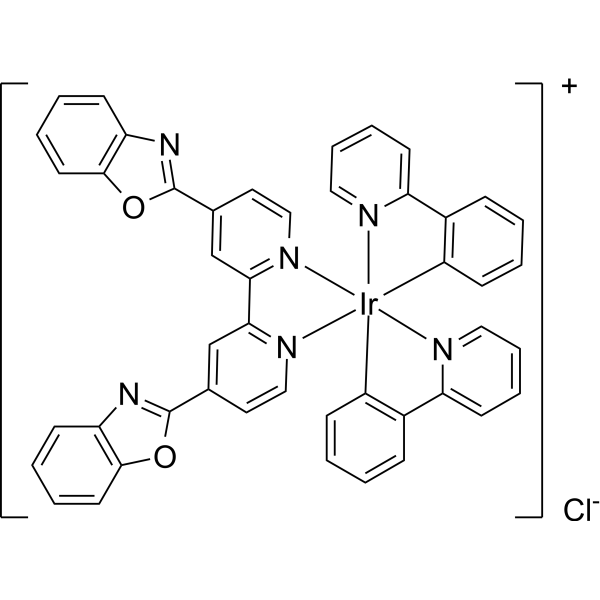
    NecroIr2 is an iridium(III) complex, serves as necroptosis inducers in Cisplatin (HY-17394)-resistant lung cancer cells (A549R). NecroIr2 selectively accumulates in mitochondria, leading to oxidative stress and loss of mitochondrial membrane potential (MMP). NecroIr2 activates receptor-interacting serine-threonine kinase 3 (RIPK3) and mixed lineage kinase domain-like pseudokinase (MLKL), and regulates CDK4 expression [1].
    NecroIr2
  • HY-RS15015

    Small Interfering RNA (siRNA) Others

    TRIB1 Human Pre-designed siRNA Set A contains three designed siRNAs for TRIB1 gene (Human), as well as a negative control, a positive control, and a FAM-labeled negative control.

    TRIB1 Human Pre-designed siRNA Set A
    TRIB1 Human Pre-designed siRNA Set A
  • HY-179428

    JAK Cancer
    JAK2-IN-17 (compound 20) is a potent JAK2 allosteric inhibitor. JAK2-IN-17 inhibits full-length JAK2 and JAK2 V617F with IC50s of 160 and 130 nM, respectively. JAK2-IN-17 covalently modifies Lys677 in the pseudokinase domain [1].
    JAK2-IN-17
  • HY-E70873

    JAK Cancer
    TYK2 is a member of the JAK family of non-receptor tyrosine kinases that act together with signal transducer and activator of transcription (STAT) factors in mediating intracellular signal transduction. JAKs are characterized by dual kinase domain: a tyrosine kinase domain (JH1) that is preceded by a pseudokinase domain (JH2). Tyk2(JH1/JH2) Recombinant Human Active Protein Kinase is a recombinant Tyk2(JH1/JH2) protein that can be used to study Tyk2(JH1/JH2)-related functions [1].
    Tyk2(JH1/JH2) Recombinant Human Active Protein Kinase
  • HY-RS29392

    Small Interfering RNA (siRNA) Others
    Trib1 Rat Pre-designed siRNA Set A contains three designed siRNAs for Trib1 gene (Rat), as well as a negative control, a positive control, and a FAM-labeled negative control.
    Trib1 Rat Pre-designed siRNA Set A
    Trib1 Rat Pre-designed siRNA Set A
  • HY-RS22878

    Small Interfering RNA (siRNA) Others

    Trib1 Mouse Pre-designed siRNA Set A contains three designed siRNAs for Trib1 gene (Mouse), as well as a negative control, a positive control, and a FAM-labeled negative control.

    Trib1 Mouse Pre-designed siRNA Set A
    Trib1 Mouse Pre-designed siRNA Set A
  • HY-18709

    JAK Inflammation/Immunology
    Tyk2-IN-3 is a Tyk2 pseudokinase inhibitor, with an IC50 of 485 nM.
    Tyk2-IN-3
  • HY-18710

    IKK JAK Inflammation/Immunology
    BMS-066 is an IKKβ/Tyk2 pseudokinase inhibitor, with IC50s of 9 nM and 72 nM, respectively.
    BMS-066
  • HY-178464

    RIP kinase Mixed Lineage Kinase Necroptosis Neurological Disease Inflammation/Immunology
    RIPK1-IN-34 is a selective, brain-penetrant RIPK1 inhibitor (IC50 = 126.70 nM) with almost no inhibitory effect on RIPK3 (IC50 > 10, 000 nM). RIPK1-IN-34 offers substantial neuroprotection by inhibiting the phosphorylation of RIPK1, RIPK3, and mixed lineage kinase domain-like pseudokinase (MLKL) within the necroptosis pathway. RIPK1-IN-34 shows the neuroprotective effect in a rat middle cerebral artery occlusion (MCAO) model. RIPK1-IN-34 can be used for the study of anti-acute ischemic stroke (AIS) [1].
    RIPK1-IN-34
  • HY-E70872

    JAK Cancer
    TYK2 is a member of the JAK family of non-receptor tyrosine kinases that act together with signal transducer and activator of transcription (STAT) factors in mediating intracellular signal transduction. JAKs are characterized by dual kinase domain: a tyrosine kinase domain (JH1) that is preceded by a pseudokinase domain (JH2). TYK2(JH1) Recombinant Human Active Protein Kinase is a recombinant TYK2(JH1) protein that can be used to study TYK2(JH1)-related functions [1].
    TYK2(JH1) Recombinant Human Active Protein Kinase
  • HY-E70874

    JAK Cancer
    TYK2 is a member of the JAK family of non-receptor tyrosine kinases that act together with signal transducer and activator of transcription (STAT) factors in mediating intracellular signal transduction. JAKs are characterized by dual kinase domain: a tyrosine kinase domain (JH1) that is preceded by a pseudokinase domain (JH2). TYK2(JH2) Recombinant Human Active Protein Kinase is a recombinant TYK2(JH2) protein that can be used to study TYK2(JH2)-related functions [1].
    TYK2(JH2) Recombinant Human Active Protein Kinase
  • HY-112783

    JAK Inflammation/Immunology
    TYK2 ligand 4 (Compound 2) is a TYK2 ligand. TYK2 ligand 4 binds to both the kinase domain and pseudokinase domain, and induces an inactive conformation of the kinase domain, thereby preventing ATP binding. TYK2 ligand 4 serves as a tool compound for the development of Deucravacitinib (HY-117287) [1].
    TYK2 ligand 4
  • HY-182344

    Ligands for Target Protein for PROTAC Mixed Lineage Kinase Cancer
    MLKL ligand-2 is a mixed lineage kinase domain-like pseudokinase (MLKL) PROTAC ligand with a KD of 9.408 μM. MLKL ligand-2 forms hydrogen bond networks and hydrophobic interactions with specific MLKL residues, and stabilizes MLKL in hepatic cells. MLKL ligand-2 can be used to synthesize PROTAC MLKL Degrader-3 (HY-182343) [1].
    MLKL ligand-2
  • HY-184178A

    Apoptosis Cancer
    HF-125 is an orally active, highly selective small-molecule inhibitor of Tribbles 2 (TRIB2). HF-125 promotes the destabilization and degradation of TRIB2 protein via the proteasome pathway. HF-125 downregulates neuroendocrine markers, induces cell cycle arrest and apoptosis, inhibits tumor cell colony formation and invasion, and reverses tumor cell resistance to Enzalutamide (HY-70002). HF-125 significantly inhibits tumor growth in SCID mouse xenograft models, and exerts synergistic inhibitory effects when combined with Enzalutamide. HF-125 can be used in research related to prostate cancer [1].
    HF-125
  • HY-E70835

    JAK Cancer
    Janus kinase 2 (JAK2) initiates signaling from several cytokine receptors and is required for biological responses such as erythropoiesis. JAK2 contains the kinase (JH1) and pseudokinase domains (JH2). JAK2(JH1/JH2) Recombinant Human Active Protein Kinase is a recombinant JAK2(JH1/JH2) protein that can be used to study JAK2(JH1/JH2)-related functions [1].
    JAK2(JH1/JH2) Recombinant Human Active Protein Kinase
  • HY-166594S

    Isotope-Labeled Compounds IFNAR Interleukin Related JAK Inflammation/Immunology
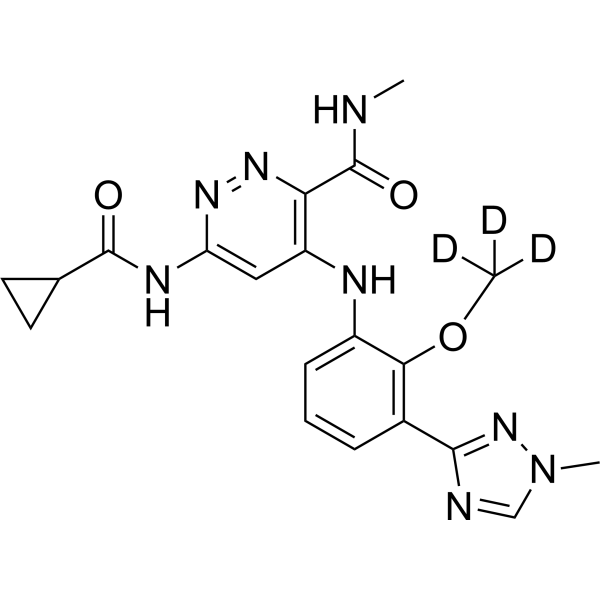
    Deucravacitinib- 13C,d3 is the 13C- and deuterium labeled Deucravacitinib. Deucravacitinib (BMS-986165) is a highly selective, orally bioavailable allosteric TYK2 inhibitor for the treatment of autoimmune diseases, which selectively binds to TYK2 pseudokinase (JH2) domain (IC50=1.0 nM) and blocks receptor-mediated Tyk2 activation by stabilizing the regulatory JH2 domain. Deucravacitinib inhibits IL-12/23 and type I IFN pathways. Deucravacitinib, the FDA's world first de novo deuterium, is available for study in moderate to severe plaque psoriasis [1] .
    Deucravacitinib-13C,d3
  • HY-182343

    PROTACs Mixed Lineage Kinase PARP Cancer
    PROTAC MLKL Degrader-3 is a MLKL PROTAC degrader with DC50 values of 248.9 nM (Hepa1-6) and 271.3 nM (HepG2), respectively. PROTAC MLKL Degrader-3 induces proteasome- and cereblon-dependent MLKL degradation via ubiquitination. PROTAC MLKL Degrader-3 reduces intratumoral MLKL levels and inhibits tumor growth in mice. PROTAC MLKL Degrader-3 can be used in the research of hepatocellular carcinoma [1].
    PROTAC MLKL Degrader-3

Inquiry Online

Your information is safe with us. * Required Fields.

Salutation


Country or Region *

Applicant Name *


Organization Name *

Department *


Email Address *


Product Name *

Cat. No.


Requested quantity *

Phone Number *


Remarks

Inquiry Online

Inquiry Information

Product Name:
Cat. No.:
Quantity:
MCE Japan Authorized Agent:

