1. Cell Cycle/DNA Damage TGF-beta/Smad Stem Cell/Wnt Cytoskeleton
  2. ROCK
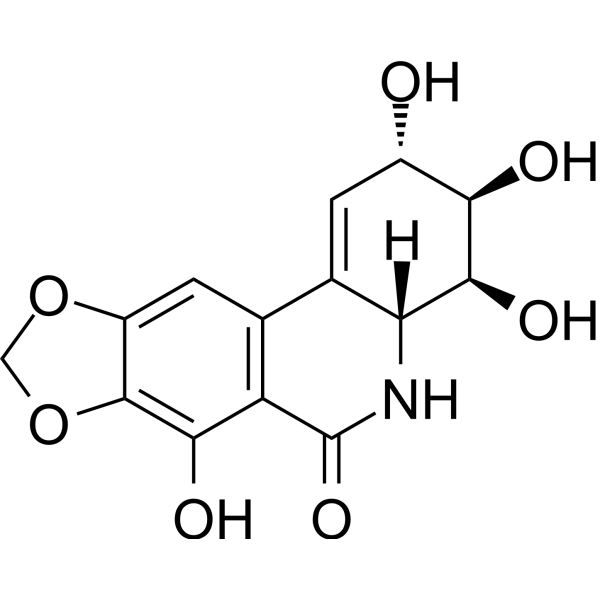
  3. Narciclasine

Narciclasine  (Synonyms: Lycoricidinol)

Cat. No.: HY-16563 Purity: 99.67%
Handling Instructions Technical Support

Narciclasine is a plant growth modulator. Narciclasine modulates the Rho/Rho kinase/LIM kinase/cofilin signaling pathway, greatly increasing GTPase RhoA activity as well as inducing actin stress fiber formation in a RhoA-dependent manner.

For research use only. We do not sell to patients.

CAS No. : 29477-83-6

Size Price Stock Quantity
Solid + Solvent (Highly Recommended)
10 mM * 1 mL in DMSO
ready for reconstitution
In-stock
Solution
10 mM * 1 mL in DMSO In-stock
Solid
1 mg In-stock
5 mg In-stock
10 mg In-stock
50 mg   Get quote  
100 mg   Get quote  

* Please select Quantity before adding items.

This product is a controlled substance and not for sale in your territory.

Customer Review

Based on 22 publication(s) in Google Scholar

Other Forms of Narciclasine:

Top Publications Citing Use of Products

    Narciclasine purchased from MedChemExpress. Usage Cited in: Cell Mol Biol Lett. 2025 May 14;30(1):59.  [Abstract]

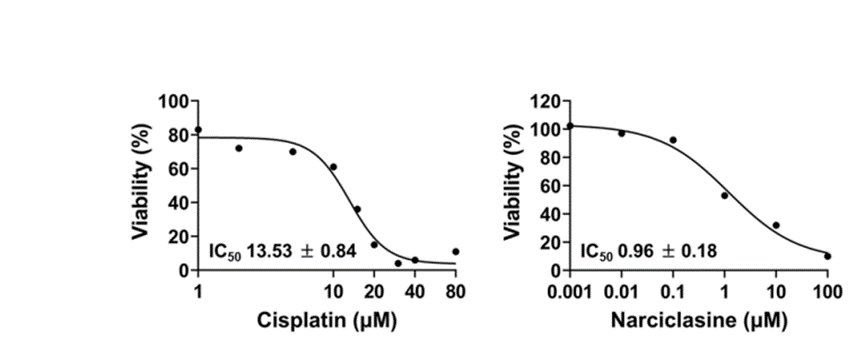
    A549 tumor spheroids were treated with various concentrations of Cisplatin or Narciclasine (0.001, 0.01, 0.1, 1, 10, 100 μM) for 72 h, and cell viability was determined by measuring cellular adenosine triphosphate (ATP) content.

    Narciclasine purchased from MedChemExpress. Usage Cited in: Cell Mol Biol Lett. 2025 May 14;30(1):59.  [Abstract]

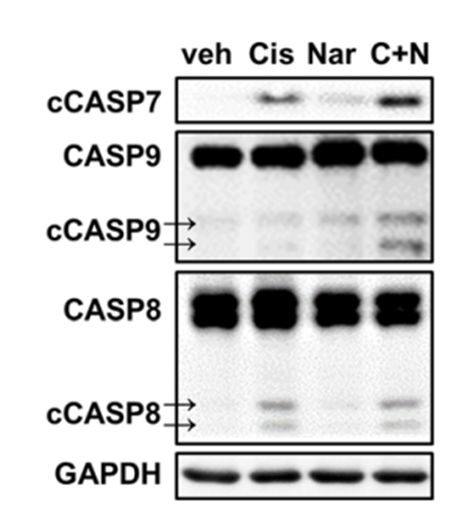
    Whole-cell lysates were prepared from A549 tumor spheroids 48 h after treatment with Cisplatin, Narciclasine (0.3 μM), or the combination. The levels of cleaved caspases were analyzed by western blotting.

    Narciclasine purchased from MedChemExpress. Usage Cited in: Cell Mol Biol Lett. 2025 May 14;30(1):59.  [Abstract]

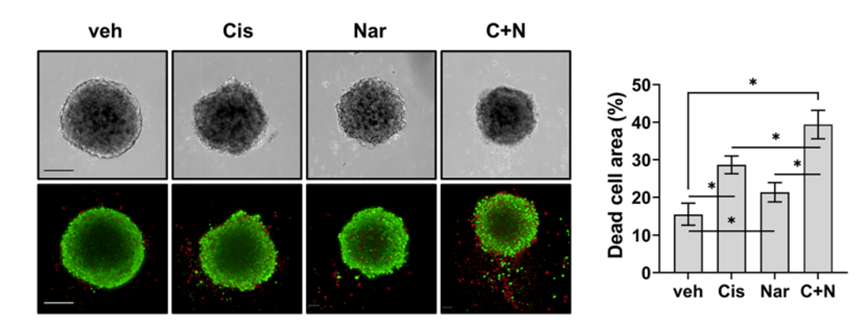
    Tumor spheroids were treated with Cisplatin, Narciclasine (0.3 μM), or the combination for 48 h. Live cells were stained green with calcein-acetoxymethyl ester, whereas dead cells were stained red with ethidium homodimer-1.

    Narciclasine purchased from MedChemExpress. Usage Cited in: Cell Mol Biol Lett. 2025 May 14;30(1):59.  [Abstract]

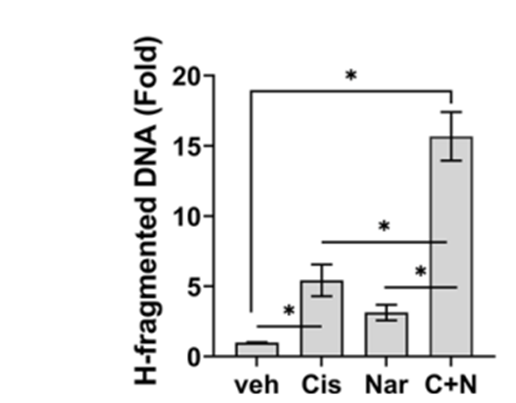
    A549 tumor spheroids were treated with Cisplatin, Narciclasine (0.3 μM), or the combination for 48 h, and apoptosis was analyzed using a Cell Death Detection ELISA kit capable of detecting mono-and oligonucleosomes.

    Narciclasine purchased from MedChemExpress. Usage Cited in: Cell Mol Biol Lett. 2025 May 14;30(1):59.  [Abstract]

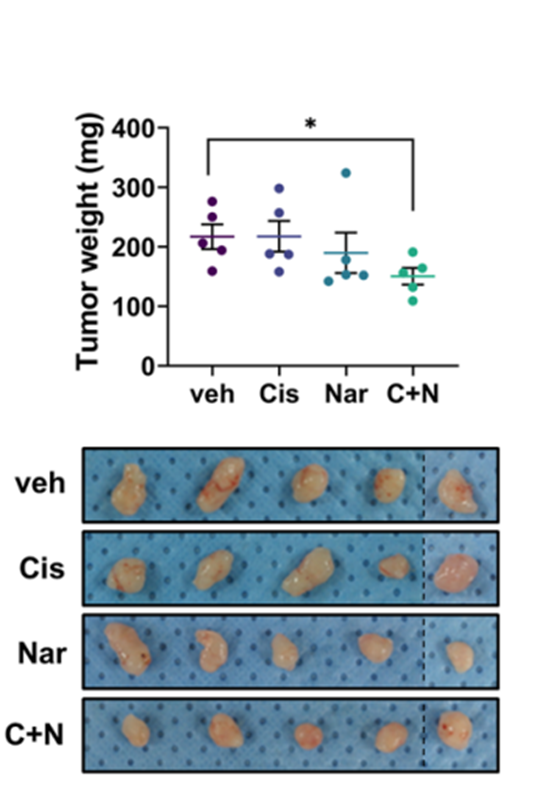
    The weight of the excised tumors was measured 25 days after Cisplatin, Narciclasine (1 mg/kg, i.p.), or the combination.

    View All ROCK Isoform Specific Products:

    • Biological Activity

    • Protocol

    • Purity & Documentation

    • References

    • Customer Review

    Description

    Narciclasine is a plant growth modulator. Narciclasine modulates the Rho/Rho kinase/LIM kinase/cofilin signaling pathway, greatly increasing GTPase RhoA activity as well as inducing actin stress fiber formation in a RhoA-dependent manner.

    IC50 & Target[1]

    ROCK


    Cellular Effect
    Cell Line Type Value Description References
    9L IC50
    32 nM
    Compound: 1
    Antiproliferative activity against rat 9L cells
    Antiproliferative activity against rat 9L cells
    [PMID: 19199649]
    A549 IC50
    0.03 μM
    Compound: 1
    Cytotoxicity against human A549 cells after 3 days by MTT assay
    Cytotoxicity against human A549 cells after 3 days by MTT assay
    [PMID: 19199649]
    A549 IC50
    0.05 μM
    Compound: narciclasine
    Growth inhibition of apoptosis-resistant human A549 cells after 72 hrs by MTT assay
    Growth inhibition of apoptosis-resistant human A549 cells after 72 hrs by MTT assay
    [PMID: 20415482]
    A549 IC50
    29 nM
    Compound: 1
    Antiproliferative activity against human A549 cells by MTT assay
    Antiproliferative activity against human A549 cells by MTT assay
    [PMID: 19199649]
    B16-F10 IC50
    0.05 μM
    Compound: narciclasine
    Growth inhibition of apoptosis-sensitive mouse B16F10 cells after 72 hrs by MTT assay
    Growth inhibition of apoptosis-sensitive mouse B16F10 cells after 72 hrs by MTT assay
    [PMID: 20415482]
    B16-F10 IC50
    35 nM
    Compound: 1
    Antiproliferative activity against mouse B16F10 cells
    Antiproliferative activity against mouse B16F10 cells
    [PMID: 19199649]
    BXPC-3 ED50
    0.0035 μg/mL
    Compound: 2a
    Growth inhibition of human BXPC3 cells after 48 hrs
    Growth inhibition of human BXPC3 cells after 48 hrs
    [PMID: 17346078]
    BXPC-3 ED50
    0.024 μg/mL
    Compound: 2
    Cytotoxicity against human BxPC3 cells after 48 hrs by SRB assay
    Cytotoxicity against human BxPC3 cells after 48 hrs by SRB assay
    [PMID: 16124772]
    BXPC-3 GI50
    0.0035 μg/mL
    Compound: 2a
    Cytotoxicity against human BxPC3 cells
    Cytotoxicity against human BxPC3 cells
    [PMID: 15043403]
    BXPC-3 IC50
    0.03 μM
    Compound: 1
    Cytotoxicity against human BxPC3 cells after 3 days by MTT assay
    Cytotoxicity against human BxPC3 cells after 3 days by MTT assay
    [PMID: 19199649]
    BXPC-3 IC50
    0.05 μM
    Compound: 2a
    Antiproliferative activity against human BxPC3 cells assessed as viable cells after 48 hrs by MTT assay
    Antiproliferative activity against human BxPC3 cells assessed as viable cells after 48 hrs by MTT assay
    [PMID: 21757350]
    BXPC-3 IC50
    0.05 μM
    Compound: 3
    Cytotoxicity against human BxPC3 cells
    Cytotoxicity against human BxPC3 cells
    [PMID: 25108300]
    BXPC-3 IC50
    28 nM
    Compound: 1
    Antiproliferative activity against human BxPC3 cells by MTT assay
    Antiproliferative activity against human BxPC3 cells by MTT assay
    [PMID: 19199649]
    C32 IC50
    25 nM
    Compound: 1
    Antiproliferative activity against human C32 cells by MTT assay
    Antiproliferative activity against human C32 cells by MTT assay
    [PMID: 19199649]
    C6 IC50
    28 nM
    Compound: 1
    Antiproliferative activity against rat C6 cells
    Antiproliferative activity against rat C6 cells
    [PMID: 19199649]
    DU-145 ED50
    0.012 μg/mL
    Compound: 2
    Cytotoxicity against human DU145 cells after 48 hrs by SRB assay
    Cytotoxicity against human DU145 cells after 48 hrs by SRB assay
    [PMID: 16124772]
    DU-145 GI50
    0.0032 μg/mL
    Compound: 2a
    Cytotoxicity against human DU145 cells
    Cytotoxicity against human DU145 cells
    [PMID: 15043403]
    DU-145 GI50
    0.0032 μg/mL
    Compound: 2a
    Growth inhibition of human DU145 cells after 48 hrs
    Growth inhibition of human DU145 cells after 48 hrs
    [PMID: 17346078]
    DU-145 GI50
    0.011 μg/mL
    Compound: 2a
    Growth inhibition of human DU145 cells
    Growth inhibition of human DU145 cells
    [PMID: 16441059]
    DU-145 IC50
    0.03 μM
    Compound: 3
    Cytotoxicity against human DU145 cells
    Cytotoxicity against human DU145 cells
    [PMID: 25108300]
    DU-145 IC50
    0.05 μM
    Compound: 2a
    Antiproliferative activity against human DU145 cells assessed as viable cells after 48 hrs by MTT assay
    Antiproliferative activity against human DU145 cells assessed as viable cells after 48 hrs by MTT assay
    [PMID: 21757350]
    Daoy IC50
    22 nM
    Compound: 1
    Antiproliferative activity against human DaOY cells by MTT assay
    Antiproliferative activity against human DaOY cells by MTT assay
    [PMID: 19199649]
    Detroit 562 IC50
    6 nM
    Compound: 1
    Antiproliferative activity against human Detroit 562 cells by MTT assay
    Antiproliferative activity against human Detroit 562 cells by MTT assay
    [PMID: 19199649]
    FaDu IC50
    8 nM
    Compound: 1
    Antiproliferative activity against human FADU cells by MTT assay
    Antiproliferative activity against human FADU cells by MTT assay
    [PMID: 19199649]
    G-361 IC50
    99 nM
    Compound: 1
    Antiproliferative activity against human G361 cells by MTT assay
    Antiproliferative activity against human G361 cells by MTT assay
    [PMID: 19199649]
    HCT-15 IC50
    32 nM
    Compound: 1
    Antiproliferative activity against human HCT15 by MTT assay
    Antiproliferative activity against human HCT15 by MTT assay
    [PMID: 19199649]
    HT-144 IC50
    38 nM
    Compound: 1
    Antiproliferative activity against human HT144 cells by MTT assay
    Antiproliferative activity against human HT144 cells by MTT assay
    [PMID: 19199649]
    HUVEC IC50
    87 nM
    Compound: 1
    Antiproliferative activity against human HUVEC (HTG04) cells
    Antiproliferative activity against human HUVEC (HTG04) cells
    [PMID: 19199649]
    HUVEC IC50
    94 nM
    Compound: 1
    Antiproliferative activity against human HUVEC (HTG07) cells
    Antiproliferative activity against human HUVEC (HTG07) cells
    [PMID: 19199649]
    HUVEC IC50
    97 nM
    Compound: 1
    Antiproliferative activity against human HUVEC (HTG06) cells
    Antiproliferative activity against human HUVEC (HTG06) cells
    [PMID: 19199649]
    Hs 683 GI50
    0.04 μM
    Compound: Narciclasine
    Growth inhibition of human Hs683 cells assessed as reduction in cell viability incubated for 72 hrs by MTT assay
    Growth inhibition of human Hs683 cells assessed as reduction in cell viability incubated for 72 hrs by MTT assay
    [PMID: 27157005]
    Hs 683 IC50
    0.05 μM
    Compound: narciclasine
    Growth inhibition of apoptosis-sensitive human Hs 683 cells after 72 hrs by MTT assay
    Growth inhibition of apoptosis-sensitive human Hs 683 cells after 72 hrs by MTT assay
    [PMID: 20415482]
    Hs 683 IC50
    40 nM
    Compound: 1
    Antiproliferative activity against human Hs 683 cells by MTT assay
    Antiproliferative activity against human Hs 683 cells by MTT assay
    [PMID: 19199649]
    KM-20L2 ED50
    0.023 μg/mL
    Compound: 2
    Cytotoxicity against human KM20L2 cells after 48 hrs by SRB assay
    Cytotoxicity against human KM20L2 cells after 48 hrs by SRB assay
    [PMID: 16124772]
    KM-20L2 GI50
    0.0032 μg/mL
    Compound: 2a
    Cytotoxicity against human KM20L2 cells
    Cytotoxicity against human KM20L2 cells
    [PMID: 15043403]
    KM-20L2 GI50
    0.0032 μg/mL
    Compound: 2a
    Growth inhibition of human KM20L2 cells after 48 hrs
    Growth inhibition of human KM20L2 cells after 48 hrs
    [PMID: 17346078]
    KM-20L2 GI50
    0.21 μg/mL
    Compound: 2a
    Growth inhibition of human KM20L2 cells
    Growth inhibition of human KM20L2 cells
    [PMID: 16441059]
    LoVo IC50
    0.09 μM
    Compound: 1
    Cytotoxicity against human LoVo cells after 3 days by MTT assay
    Cytotoxicity against human LoVo cells after 3 days by MTT assay
    [PMID: 19199649]
    LoVo IC50
    94 nM
    Compound: 1
    Antiproliferative activity against human LoVo cells by MTT assay
    Antiproliferative activity against human LoVo cells by MTT assay
    [PMID: 19199649]
    MCF7 ED50
    0.0032 μg/mL
    Compound: 2a
    Growth inhibition of human MCF7 cells after 48 hrs
    Growth inhibition of human MCF7 cells after 48 hrs
    [PMID: 17346078]
    MCF7 ED50
    0.014 μg/mL
    Compound: 2
    Cytotoxicity against human MCF7 cells after 48 hrs by SRB assay
    Cytotoxicity against human MCF7 cells after 48 hrs by SRB assay
    [PMID: 16124772]
    MCF7 GI50
    0.0032 μg/mL
    Compound: 2a
    Cytotoxicity against human MCF7 cells
    Cytotoxicity against human MCF7 cells
    [PMID: 15043403]
    MCF7 GI50
    0.019 μg/mL
    Compound: 2a
    Growth inhibition of human MCF7 cells
    Growth inhibition of human MCF7 cells
    [PMID: 16441059]
    MCF7 IC50
    0.01 μM
    Compound: 4
    Cytotoxicity against human MCF7 cells
    Cytotoxicity against human MCF7 cells
    [PMID: 22921081]
    MCF7 IC50
    0.04 μM
    Compound: 2a
    Antiproliferative activity against human MCF7 cells assessed as viable cells after 48 hrs by MTT assay
    Antiproliferative activity against human MCF7 cells assessed as viable cells after 48 hrs by MTT assay
    [PMID: 21757350]
    MCF7 IC50
    0.05 μM
    Compound: 1
    Cytotoxicity against human MCF7 cells after 3 days by MTT assay
    Cytotoxicity against human MCF7 cells after 3 days by MTT assay
    [PMID: 19199649]
    MCF7 IC50
    45 nM
    Compound: 1
    Antiproliferative activity against human MCF7 cells by MTT assay
    Antiproliferative activity against human MCF7 cells by MTT assay
    [PMID: 19199649]
    MDA-MB-231 IC50
    5 nM
    Compound: 1
    Antiproliferative activity against human MDA-MB-231 cells by MTT assay
    Antiproliferative activity against human MDA-MB-231 cells by MTT assay
    [PMID: 19199649]
    NCI-H460 ED50
    0.014 μg/mL
    Compound: 2
    Cytotoxicity against human NCI-H460 cells after 48 hrs by SRB assay
    Cytotoxicity against human NCI-H460 cells after 48 hrs by SRB assay
    [PMID: 16124772]
    NCI-H460 GI50
    0.0084 μg/mL
    Compound: 2a
    Cytotoxicity against human NCI-H460 cells
    Cytotoxicity against human NCI-H460 cells
    [PMID: 15043403]
    NCI-H460 GI50
    0.0084 μg/mL
    Compound: 2a
    Growth inhibition of human NCI-H460 cells after 48 hrs
    Growth inhibition of human NCI-H460 cells after 48 hrs
    [PMID: 17346078]
    NCI-H460 GI50
    0.032 μg/mL
    Compound: 2a
    Growth inhibition of human NCI-H460 cells
    Growth inhibition of human NCI-H460 cells
    [PMID: 16441059]
    NCI-H460 IC50
    0.04 μM
    Compound: 2a
    Antiproliferative activity against human NCI-H460 cells assessed as viable cells after 48 hrs by MTT assay
    Antiproliferative activity against human NCI-H460 cells assessed as viable cells after 48 hrs by MTT assay
    [PMID: 21757350]
    NCI-H460 IC50
    0.05 μM
    Compound: 3
    Cytotoxicity against human NCI-H460 cells
    Cytotoxicity against human NCI-H460 cells
    [PMID: 25108300]
    P388 ED50
    0.0012 μg/mL
    Compound: 2a
    Growth inhibition of murine P388 cells after 48 hrs
    Growth inhibition of murine P388 cells after 48 hrs
    [PMID: 17346078]
    P388 ED50
    0.002 μg/mL
    Compound: 2a
    Growth inhibition of mouse P388 cells
    Growth inhibition of mouse P388 cells
    [PMID: 16441059]
    P388 ED50
    0.013 μg/mL
    Compound: 2a
    Cytotoxicity against mouse P388 cells
    Cytotoxicity against mouse P388 cells
    [PMID: 15043403]
    P388 ED50
    0.018 μg/mL
    Compound: 2
    Cytotoxicity against mouse P388 cells
    Cytotoxicity against mouse P388 cells
    [PMID: 16124772]
    P388 ED50
    0.018 μg/mL
    Compound: 2
    Cytotoxicity against mouse P388 cells after 48 hrs by cell counting
    Cytotoxicity against mouse P388 cells after 48 hrs by cell counting
    [PMID: 22413911]
    PC-3 IC50
    0.03 μM
    Compound: 1
    Cytotoxicity against human PC3 cells after 3 days by MTT assay
    Cytotoxicity against human PC3 cells after 3 days by MTT assay
    [PMID: 19199649]
    PC-3 IC50
    28 nM
    Compound: 1
    Antiproliferative activity against human PC3 cells by MTT assay
    Antiproliferative activity against human PC3 cells by MTT assay
    [PMID: 19199649]
    Panel NCI-60 (60 carcinoma cell lines) GI50
    45 nM
    Compound: Narciclasine
    Growth inhibitory activity against human cancer cell line in the NCI's anticancer drug screening program
    Growth inhibitory activity against human cancer cell line in the NCI's anticancer drug screening program
    [PMID: 15743190]
    RPMI-2650 IC50
    14 nM
    Compound: 1
    Antiproliferative activity against human RPMI 2650 cells by MTT assay
    Antiproliferative activity against human RPMI 2650 cells by MTT assay
    [PMID: 19199649]
    SF-268 ED50
    0.018 μg/mL
    Compound: 2
    Cytotoxicity against human SF268 cells after 48 hrs by SRB assay
    Cytotoxicity against human SF268 cells after 48 hrs by SRB assay
    [PMID: 16124772]
    SF-268 GI50
    0.0031 μg/mL
    Compound: 2a
    Cytotoxicity against human SF268 cells
    Cytotoxicity against human SF268 cells
    [PMID: 15043403]
    SF-268 GI50
    0.0031 μg/mL
    Compound: 2a
    Growth inhibition of human SF268 cells after 48 hrs
    Growth inhibition of human SF268 cells after 48 hrs
    [PMID: 17346078]
    SK-MEL-28 IC50
    0.05 μM
    Compound: narciclasine
    Growth inhibition of apoptosis-resistant human SK-MEL-28 cells after 72 hrs by MTT assay
    Growth inhibition of apoptosis-resistant human SK-MEL-28 cells after 72 hrs by MTT assay
    [PMID: 20415482]
    SK-MEL-28 IC50
    37 nM
    Compound: 1
    Antiproliferative activity against human SK-MEL-28 cells by MTT assay
    Antiproliferative activity against human SK-MEL-28 cells by MTT assay
    [PMID: 19199649]
    T98G IC50
    48 nM
    Compound: 1
    Antiproliferative activity against human T98G cells by MTT assay
    Antiproliferative activity against human T98G cells by MTT assay
    [PMID: 19199649]
    U-373MG ATCC GI50
    0.029 μM
    Compound: Narciclasine
    Growth inhibition of human U373 cells assessed as reduction in cell viability incubated for 72 hrs by MTT assay
    Growth inhibition of human U373 cells assessed as reduction in cell viability incubated for 72 hrs by MTT assay
    [PMID: 27157005]
    U-373MG ATCC IC50
    0.03 μM
    Compound: 1
    Cytotoxicity against human U373 cells after 3 days by MTT assay
    Cytotoxicity against human U373 cells after 3 days by MTT assay
    [PMID: 19199649]
    U-373MG ATCC IC50
    0.05 μM
    Compound: narciclasine
    Growth inhibition of apoptosis-resistant human U373 cells after 72 hrs by MTT assay
    Growth inhibition of apoptosis-resistant human U373 cells after 72 hrs by MTT assay
    [PMID: 20415482]
    U-373MG ATCC IC50
    29 nM
    Compound: 1
    Antiproliferative activity against human U373 cells by MTT assay
    Antiproliferative activity against human U373 cells by MTT assay
    [PMID: 19199649]
    U-87MG ATCC IC50
    98 nM
    Compound: 1
    Antiproliferative activity against human U87 cells by MTT assay
    Antiproliferative activity against human U87 cells by MTT assay
    [PMID: 19199649]
    Vero IC50
    0.006 μg/mL
    Compound: 1
    Antiviral activity against Yellow fever virus Ashibi infected in african green monkey Vero cells assessed as inhibition of virus-induced cytopathic effect by MTT assay
    Antiviral activity against Yellow fever virus Ashibi infected in african green monkey Vero cells assessed as inhibition of virus-induced cytopathic effect by MTT assay
    [PMID: 1336040]
    Vero IC50
    0.0074 μg/mL
    Compound: 1
    Antiviral activity against Punta Toro virus Adames infected in african green monkey Vero cells assessed as inhibition of virus-induced cytopathic effect by MTT assay
    Antiviral activity against Punta Toro virus Adames infected in african green monkey Vero cells assessed as inhibition of virus-induced cytopathic effect by MTT assay
    [PMID: 1336040]
    Vero IC50
    0.008 μg/mL
    Compound: 1
    Antiviral activity against Japanese encephalitis virus Nakayama infected in african green monkey Vero cells assessed as inhibition of virus-induced cytopathic effect by MTT assay
    Antiviral activity against Japanese encephalitis virus Nakayama infected in african green monkey Vero cells assessed as inhibition of virus-induced cytopathic effect by MTT assay
    [PMID: 1336040]
    Vero IC50
    0.015 μg/mL
    Compound: 1
    Antiviral activity against Dengue virus type 4 infected in african green monkey Vero cells after 6 days by plaque reduction assay
    Antiviral activity against Dengue virus type 4 infected in african green monkey Vero cells after 6 days by plaque reduction assay
    [PMID: 1336040]
    WI-38 IC50
    317 nM
    Compound: 1
    Antiproliferative activity against human WI38 cells
    Antiproliferative activity against human WI38 cells
    [PMID: 19199649]
    In Vitro

    Narciclasine activates Rho and stress fibers in glioblastoma multiforme cells. The mean IC50 of ~50 nM calculated on the 6 human glioblastoma multiforme (U373, Hs683, GL19, GL5, GL16, GL17), The mean IC50 value of 47 nM for Narciclasine across a panel of 60 cancer cell lines[1]. Bioassay-guided fractionation of the A. belladonna extract resulted in the identification of lycorine as the bio-active compound. The IC50 measured for radicle growth inhibition is 0.1 μM for Narciclasine[2].

    MedChemExpress (MCE) has not independently confirmed the accuracy of these methods. They are for reference only.

    In Vivo

    The i.v. regimen of Narciclasine at 1 mg/kg significantly (P=0.02) increases the survival of GL19 glioblastoma multiforme-bearing mice. Narciclasine when given orally at the same dose five times a week for 5 consecutive weeks also significantly increases animal survival in this model (P=0.008). Oral treatment with Narciclasine at 1 mg/kg significantly increases the survival (P=0.004) of Hs683 glioblastoma multiforme-bearing mice. Increasing the number of doses administered per week does not increase the survival of these Hs683 glioblastoma multiforme-bearing mice. Narciclasine appears to show similar increased survival in these models to temozolomide but at appreciable lower doses and following both oral and i.v. administration[1].

    MedChemExpress (MCE) has not independently confirmed the accuracy of these methods. They are for reference only.

    Molecular Weight

    307.26

    Formula

    C14H13NO7

    CAS No.
    Appearance

    Solid

    Color

    White to yellow

    SMILES

    O=C1N[C@@]2([H])[C@H](O)[C@H](O)[C@@H](O)C=C2C3=C1C(O)=C4C(OCO4)=C3

    Structure Classification
    Initial Source
    Shipping

    Room temperature in continental US; may vary elsewhere.

    Storage
    Powder -20°C 3 years
    4°C 2 years
    In solvent -80°C 2 years
    -20°C 1 year
    Solvent & Solubility
    In Vitro: 

    DMSO : 200 mg/mL (650.91 mM; Need ultrasonic; Hygroscopic DMSO has a significant impact on the solubility of product, please use newly opened DMSO)

    Preparing
    Stock Solutions
    Concentration Solvent Mass 1 mg 5 mg 10 mg
    1 mM 3.2546 mL 16.2729 mL 32.5457 mL
    5 mM 0.6509 mL 3.2546 mL 6.5091 mL
    View the Complete Stock Solution Preparation Table

    * Please refer to the solubility information to select the appropriate solvent. Once prepared, please aliquot and store the solution to prevent product inactivation from repeated freeze-thaw cycles.
    Storage method and period of stock solution: -80°C, 2 years; -20°C, 1 year. When stored at -80°C, please use it within 2 years. When stored at -20°C, please use it within 1 year.

    • Molarity Calculator

    • Dilution Calculator

    Mass (g) = Concentration (mol/L) × Volume (L) × Molecular Weight (g/mol)

    Mass
    =
    Concentration
    ×
    Volume
    ×
    Molecular Weight *

    Concentration (start) × Volume (start) = Concentration (final) × Volume (final)

    This equation is commonly abbreviated as: C1V1 = C2V2

    Concentration (start)

    C1

    ×
    Volume (start)

    V1

    =
    Concentration (final)

    C2

    ×
    Volume (final)

    V2

    In Vivo:

    Select the appropriate dissolution method based on your experimental animal and administration route.

    For the following dissolution methods, please ensure to first prepare a clear stock solution using an In Vitro approach and then sequentially add co-solvents:
    To ensure reliable experimental results, the clarified stock solution can be appropriately stored based on storage conditions. As for the working solution for in vivo experiments, it is recommended to prepare freshly and use it on the same day.
    The percentages shown for the solvents indicate their volumetric ratio in the final prepared solution. If precipitation or phase separation occurs during preparation, heat and/or sonication can be used to aid dissolution.

    • Protocol 1

      Add each solvent one by one:  10% DMSO    40% PEG300    5% Tween-80    45% Saline

      Solubility: ≥ 1.67 mg/mL (5.44 mM); Clear solution

      This protocol yields a clear solution of ≥ 1.67 mg/mL (saturation unknown).

      Taking 1 mL working solution as an example, add 100 μL DMSO stock solution (16.7 mg/mL) to 400 μL PEG300, and mix evenly; then add 50 μL Tween-80 and mix evenly; then add 450 μL Saline to adjust the volume to 1 mL.

      Preparation of Saline: Dissolve 0.9 g sodium chloride in ddH₂O and dilute to 100 mL to obtain a clear Saline solution.
    • Protocol 2

      Add each solvent one by one:  10% DMSO    90% (20% SBE-β-CD in Saline)

      Solubility: ≥ 1.67 mg/mL (5.44 mM); Clear solution

      This protocol yields a clear solution of ≥ 1.67 mg/mL (saturation unknown).

      Taking 1 mL working solution as an example, add 100 μL DMSO stock solution (16.7 mg/mL) to 900 μL 20% SBE-β-CD in Saline, and mix evenly.

      Preparation of 20% SBE-β-CD in Saline (4°C, storage for one week): 2 g SBE-β-CD powder is dissolved in 10 mL Saline, completely dissolve until clear.
    In Vivo Dissolution Calculator
    Please enter the basic information of animal experiments:

    Dosage

    mg/kg

    Animal weight
    (per animal)

    g

    Dosing volume
    (per animal)

    μL

    Number of animals

    Recommended: Prepare an additional quantity of animals to account for potential losses during experiments.
    Please enter your animal formula composition:
    %
    DMSO +
    +
    %
    Tween-80 +
    %
    Saline
    Recommended: Keep the proportion of DMSO in working solution below 2% if your animal is weak.
    The co-solvents required include: DMSO, . All of co-solvents are available by MedChemExpress (MCE). , Tween 80. All of co-solvents are available by MedChemExpress (MCE).
    Calculation results:
    Working solution concentration: mg/mL
    Method for preparing stock solution: mg drug dissolved in μL  DMSO (Stock solution concentration: mg/mL).
    The concentration of the stock solution you require exceeds the measured solubility. The following solution is for reference only. If necessary, please contact MedChemExpress (MCE).
    Method for preparing in vivo working solution for animal experiments: Take μL DMSO stock solution, add μL . μL , mix evenly, next add μL Tween 80, mix evenly, then add μL Saline.
     If the continuous dosing period exceeds half a month, please choose this protocol carefully.
    Please ensure that the stock solution in the first step is dissolved to a clear state, and add co-solvents in sequence. You can use ultrasonic heating (ultrasonic cleaner, recommended frequency 20-40 kHz), vortexing, etc. to assist dissolution.
    Purity & Documentation

    Purity: 99.88%

    References
    Kinase Assay
    [1]

    The RhoA G-LISA assay is used. The assay uses a 96-well plate coated with the Rho binding domain of Rho family effector proteins. The active GTP-bound form of the Rho family protein but not the inactive GDP-bound form from biological samples will bind to the plate. Bound active Rho family protein is then detected by incubation with a specific primary antibody followed by a secondary antibody conjugated to horseradish peroxidase. The signal is then developed using OPD. U373 and GL19 glioblastoma multiforme cells are serum starved for 24 h and left untreated or treated with Narciclasine (100 nM) for 3 min, 5 min, 30 min, 1 h, and 2 h or treated with 2.0 μg/mL of the cell-permeable Rho inhibitor for 4 h in serum-free medium at 37°C with and without subsequent Narciclasine treatment. This product consists of highly purified C3 transferase covalently linked to a proprietary cell-penetrating moiety via a disulfide bond. The cell-penetrating moiety allows rapid and efficient transport through the plasma membrane. Once in the cytosol, the cell-penetrating moiety is released, thereby allowing C3 transferase to freely diffuse intracellularly and inactive RhoA, RhoB, and RhoC but not related GTPases such as Cdc42 or Rac1. C3 transferase inhibits Rho proteins by ADP ribosylation on Asn41 in the effector binding domain of the GTPase. Cells are then lysed and RhoA activity is measured by the RhoA G-LISA Activation Assay or alternatively cells are stained for F-actin[1].

    MCE has not independently confirmed the accuracy of these methods. They are for reference only.

    Cell Assay

    Cell[1]The Narciclasine IC50 concentration, the Narciclasine concentration that decreased by 50% the global growth rate of a given cell population, is assessed with the MTT assay. The cells are incubated for 72 h in the presence and absence of the Narciclasine (with concentrations ranging between 10-9 and 10-5 M concentrate) for the determination of Narciclasine IC50 values[1].

    MCE has not independently confirmed the accuracy of these methods. They are for reference only.

    Animal Administration
    [1]

    Mice[1]
    The Hs683 cell line and GL19 primoculture grafted into the brains of nude immunodeficient mice both produced invasive brain tumors. Xenograft-bearing mice receive vehicle alone, oral temozolomide at 40 mg/kg (5 administrations per week for 5 consecutive weeks), or Narciclasine at 1 mg/kg either oral (once per week for 5 weeks) or i.v. (twice per week for 5 weeks). Drug administration is initiated respectively on days 5 and 7 post-tumor grafting for the Hs683 and GL19 models. The temozolomide dose and treatment schedule are selected based on previous optimized regimens. Narciclasine dose and treatment schedule are selected based on Narciclasine toxicity study in rats after oral administration and pharmacokinetic study that we have recently published. In toxicity study, Narciclasine (25, 10, or 1 mg/kg) is administered five times a week for 3 weeks and the no adverse effect level dose is defined to be 1 mg/kg/d p.o., with minimal acanthosis reactive changes and minor variations in some biochemistry parameters observed at this dose level considered to be nonadverse.

    MCE has not independently confirmed the accuracy of these methods. They are for reference only.

    References

    Complete Stock Solution Preparation Table

    * Please refer to the solubility information to select the appropriate solvent. Once prepared, please aliquot and store the solution to prevent product inactivation from repeated freeze-thaw cycles.
    Storage method and period of stock solution: -80°C, 2 years; -20°C, 1 year. When stored at -80°C, please use it within 2 years. When stored at -20°C, please use it within 1 year.

    Optional Solvent Concentration Solvent Mass 1 mg 5 mg 10 mg 25 mg
    DMSO 1 mM 3.2546 mL 16.2729 mL 32.5457 mL 81.3643 mL
    5 mM 0.6509 mL 3.2546 mL 6.5091 mL 16.2729 mL
    10 mM 0.3255 mL 1.6273 mL 3.2546 mL 8.1364 mL
    15 mM 0.2170 mL 1.0849 mL 2.1697 mL 5.4243 mL
    20 mM 0.1627 mL 0.8136 mL 1.6273 mL 4.0682 mL
    25 mM 0.1302 mL 0.6509 mL 1.3018 mL 3.2546 mL
    30 mM 0.1085 mL 0.5424 mL 1.0849 mL 2.7121 mL
    40 mM 0.0814 mL 0.4068 mL 0.8136 mL 2.0341 mL
    50 mM 0.0651 mL 0.3255 mL 0.6509 mL 1.6273 mL
    60 mM 0.0542 mL 0.2712 mL 0.5424 mL 1.3561 mL
    80 mM 0.0407 mL 0.2034 mL 0.4068 mL 1.0171 mL
    100 mM 0.0325 mL 0.1627 mL 0.3255 mL 0.8136 mL
    • No file chosen (Maximum size is: 1024 Kb)
    • If you have published this work, please enter the PubMed ID.
    • Your name will appear on the site.
    Help & FAQs
    • Do most proteins show cross-species activity?

      Species cross-reactivity must be investigated individually for each product. Many human cytokines will produce a nice response in mouse cell lines, and many mouse proteins will show activity on human cells. Other proteins may have a lower specific activity when used in the opposite species.

    Your Recently Viewed Products:

    Inquiry Online

    Your information is safe with us. * Required Fields.

    Product Name


    Requested Quantity *

    Applicant Name *


    Salutation

    Email Address *


    Phone Number *

    Department


    Organization Name *

    City

    State

    Country or Region *


    Remarks

    Bulk Inquiry

    Inquiry Information

    Product Name:
    Narciclasine
    Cat. No.:
    HY-16563
    Quantity:
    MCE Japan Authorized Agent: