1. Immunology/Inflammation NF-κB Metabolic Enzyme/Protease
  2. Reactive Oxygen Species (ROS)
  3. Procyanidin B2

Procyanidin B2  (Synonyms: Proanthocyanidin B2)

Cat. No.: HY-N0796 Purity: 99.89%
Handling Instructions Technical Support

Procyanidin B2 is a natural flavonoid, with anti-cancer, antioxidant activities.

For research use only. We do not sell to patients.

CAS No. : 29106-49-8

Size Price Stock Quantity
Solid + Solvent (Highly Recommended)
10 mM * 1 mL in DMSO
ready for reconstitution
In-stock
Solution
10 mM * 1 mL in DMSO In-stock
Solid
1 mg In-stock
5 mg In-stock
10 mg In-stock
25 mg In-stock
50 mg In-stock
100 mg In-stock
200 mg   Get quote  
500 mg   Get quote  

* Please select Quantity before adding items.

This product is a controlled substance and not for sale in your territory.

Customer Review

Based on 17 publication(s) in Google Scholar

Other Forms of Procyanidin B2:

Top Publications Citing Use of Products

    Procyanidin B2 purchased from MedChemExpress. Usage Cited in: Cell Death Dis. 2022 Jul 11;13(7):594.  [Abstract]

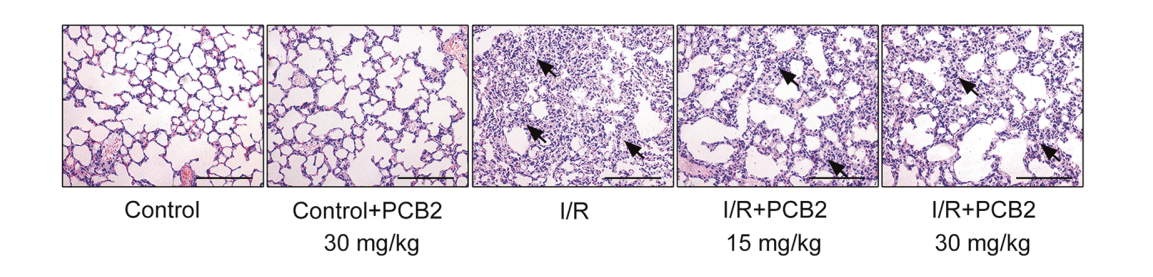
    The indicated dosages of PCB2 (Procyanidin B2) were injected intraperitoneally for three consecutive days before the operation. Representative images of the H&E-stained lung tissue.

    Procyanidin B2 purchased from MedChemExpress. Usage Cited in: Cell Death Dis. 2022 Jul 11;13(7):594.  [Abstract]

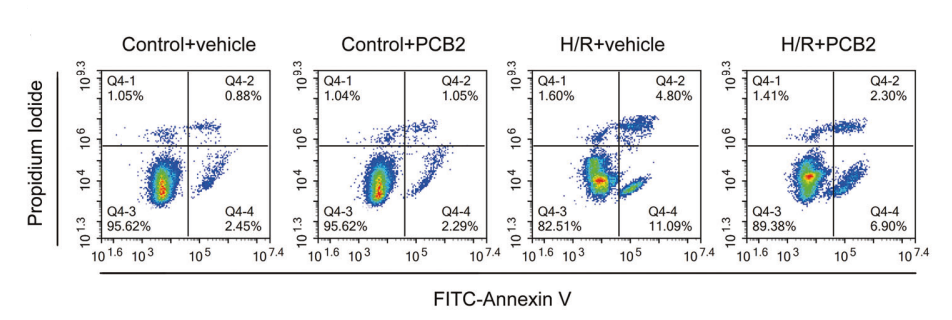
    A549 cells were treated with 20 μM PCB2 (Procyanidin B2) for 24 hours, followed by 6 hours of hypoxia and then 2 hours of reoxygenation to establish a hypoxia/reoxygenation injury model. A representative FACS scatter plot of Annexin V and propidium iodide dual labeling is shown.

    Procyanidin B2 purchased from MedChemExpress. Usage Cited in: Cell Death Dis. 2022 Jul 11;13(7):594.  [Abstract]

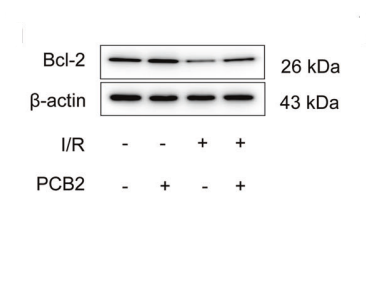
    A549 cells were treated with 20 μM PCB2 (Procyanidin B2) for 24 hours, followed by 6 hours of hypoxia and then 2 hours of reoxygenation to establish a hypoxia/reoxygenation injury model. The expression of Bcl-2 protein in lung tissue was investigated.

    Procyanidin B2 purchased from MedChemExpress. Usage Cited in: Cell Death Dis. 2022 Jul 11;13(7):594.  [Abstract]

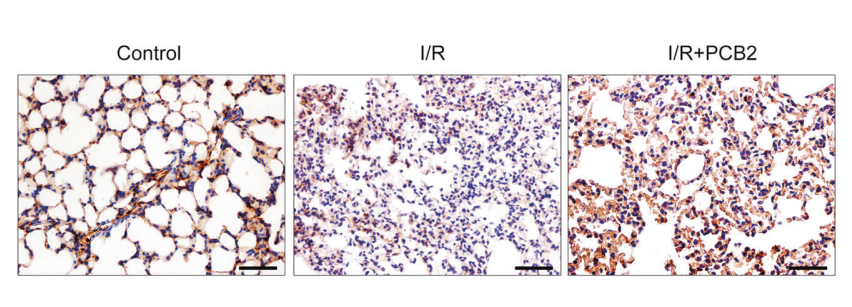
    C57BL/6 mice were intraperitoneally injected with 30 mg/kg PCB2 (Procyanidin B2) for three consecutive days. SIRT3 immunohistochemical staining was performed.

    Procyanidin B2 purchased from MedChemExpress. Usage Cited in: Cell Death Dis. 2022 Jul 11;13(7):594.  [Abstract]

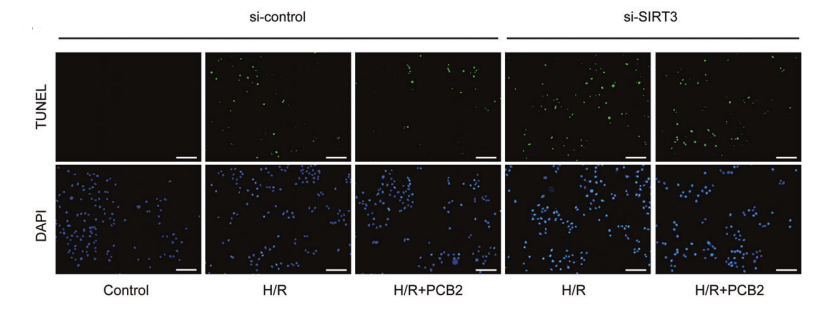
    I/R mice were subjected to 1 hour of ischemia and 2 hours of reperfusion to induce lung I/R injury. Control mice underwent sham surgery. Preoperative intraperitoneal injections of PCB2 (Procyanidin B2: 30 mg/kg) were administered for three consecutive days prior to surgery. Representative images of A549 cells stained with TUNEL; cell nuclei were stained with DAPI.
    • Biological Activity

    • Protocol

    • Purity & Documentation

    • References

    • Customer Review

    Description

    Procyanidin B2 is a natural flavonoid, with anti-cancer, antioxidant activities.

    Cellular Effect
    Cell Line Type Value Description References
    A549 ED50
    > 10 μg/mL
    Compound: 48
    Cytotoxicity against human A549 cells by tetrazolium salt-based colorimetric assay
    Cytotoxicity against human A549 cells by tetrazolium salt-based colorimetric assay
    [PMID: 1431932]
    HCT-8 ED50
    > 10 μg/mL
    Compound: 48
    Cytotoxicity against human HCT8 cells by tetrazolium salt-based colorimetric assay
    Cytotoxicity against human HCT8 cells by tetrazolium salt-based colorimetric assay
    [PMID: 1431932]
    HUVEC IC50
    3.8 μM
    Compound: 44
    Inhibition of NADPH oxidase in Homo sapiens (human) HUVEC cells
    Inhibition of NADPH oxidase in Homo sapiens (human) HUVEC cells
    10.1007/s00044-012-0353-y
    KB ED50
    > 10 μg/mL
    Compound: 48
    Cytotoxicity against human KB cells by tetrazolium salt-based colorimetric assay
    Cytotoxicity against human KB cells by tetrazolium salt-based colorimetric assay
    [PMID: 1431932]
    MT4 CC50
    135.1 μg/mL
    Compound: 2, procyanidin B2
    Cytotoxicity against human MT4 cells by MTT assay
    Cytotoxicity against human MT4 cells by MTT assay
    [PMID: 10425115]
    MT4 IC50
    17.2 μg/mL
    Compound: 2, procyanidin B2
    Antiviral activity against HIV infected in human MT4 cells assessed as inhibition of virus-induced cytopathic effect by MTT assay
    Antiviral activity against HIV infected in human MT4 cells assessed as inhibition of virus-induced cytopathic effect by MTT assay
    [PMID: 10425115]
    TE-671 ED50
    > 10 μg/mL
    Compound: 48
    Cytotoxicity against human TE671 cells by tetrazolium salt-based colorimetric assay
    Cytotoxicity against human TE671 cells by tetrazolium salt-based colorimetric assay
    [PMID: 1431932]
    In Vitro

    Procyanidin B2 shows antiproliferative activity to MCF-7 cells, with an IC50 of 19.21 μM. However, Procyanidin B2 exhibits no effect on DNA-ladder formation[1]. Procyanidin B2 (0.1, 1, 2 μM) inhibits the activation of pyrin domain containing 3 (NLRP3) inflammasome in human umbilical vein ECs (HUVECs), and the inhibition is via suppression of AP-1 activity, and such effect can be abolished by overexpression of c-Jun. Procyanidin B2 (2 μM for 12 h) also reduces ROS in HUVECs[2].

    MedChemExpress (MCE) has not independently confirmed the accuracy of these methods. They are for reference only.

    In Vivo

    Procyanidin B2 (40, 20, and 10 mg/kg, p.o.) protects against cerebral ischemia-induced infarct volume and brain edema in rats. Procyanidin B2 (40 mg/kg, p.o) also improves functional outcomes, regulates blood-brain barrier (BBB) permeability after cerebral ischemia. Moreover, Procyanidin B2 attenuates cerebral ischemia-induced tight junction degradation, mitochondrial depolarization and intracellular oxidative stress. Procyanidin B2 (40 mg/kg, p.o) increases Nrf2 activation and HO-1, GSTα, and NQO1 protein expression in normal brains in vivo[3].

    MedChemExpress (MCE) has not independently confirmed the accuracy of these methods. They are for reference only.

    Clinical Trial
    Molecular Weight

    578.52

    Formula

    C30H26O12

    CAS No.
    Appearance

    Solid

    Color

    Light yellow to light brown

    SMILES

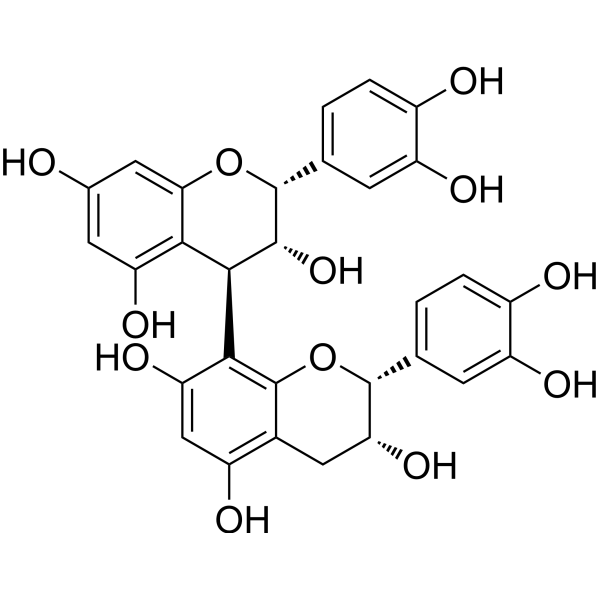
    O[C@H]1[C@@H](C2=CC=C(O)C(O)=C2)OC3=CC(O)=CC(O)=C3[C@@H]1C4=C5C(C[C@@H](O)[C@@H](C6=CC=C(O)C(O)=C6)O5)=C(O)C=C4O

    Structure Classification
    Initial Source
    Shipping

    Room temperature in continental US; may vary elsewhere.

    Storage
    Powder -20°C 3 years
    4°C 2 years
    In solvent -80°C 6 months
    -20°C 1 month
    Solvent & Solubility
    In Vitro: 

    H2O : 66.67 mg/mL (115.24 mM; Need ultrasonic)

    DMSO : ≥ 50 mg/mL (86.43 mM; Hygroscopic DMSO has a significant impact on the solubility of product, please use newly opened DMSO)

    *"≥" means soluble, but saturation unknown.

    Preparing
    Stock Solutions
    Concentration Solvent Mass 1 mg 5 mg 10 mg
    1 mM 1.7285 mL 8.6427 mL 17.2855 mL
    5 mM 0.3457 mL 1.7285 mL 3.4571 mL
    View the Complete Stock Solution Preparation Table

    * Please refer to the solubility information to select the appropriate solvent. Once prepared, please aliquot and store the solution to prevent product inactivation from repeated freeze-thaw cycles.
    Storage method and period of stock solution: -80°C, 6 months; -20°C, 1 month. When stored at -80°C, please use it within 6 months. When stored at -20°C, please use it within 1 month.

    * Note: If you choose water as the stock solution, please dilute it to the working solution, then filter and sterilize it with a 0.22 μm filter before use.

    • Molarity Calculator

    • Dilution Calculator

    Mass (g) = Concentration (mol/L) × Volume (L) × Molecular Weight (g/mol)

    Mass
    =
    Concentration
    ×
    Volume
    ×
    Molecular Weight *

    Concentration (start) × Volume (start) = Concentration (final) × Volume (final)

    This equation is commonly abbreviated as: C1V1 = C2V2

    Concentration (start)

    C1

    ×
    Volume (start)

    V1

    =
    Concentration (final)

    C2

    ×
    Volume (final)

    V2

    In Vivo:

    Select the appropriate dissolution method based on your experimental animal and administration route.

    For the following dissolution methods, please ensure to first prepare a clear stock solution using an In Vitro approach and then sequentially add co-solvents:
    To ensure reliable experimental results, the clarified stock solution can be appropriately stored based on storage conditions. As for the working solution for in vivo experiments, it is recommended to prepare freshly and use it on the same day.
    The percentages shown for the solvents indicate their volumetric ratio in the final prepared solution. If precipitation or phase separation occurs during preparation, heat and/or sonication can be used to aid dissolution.

    • Protocol 1

      Add each solvent one by one:  10% DMSO    40% PEG300    5% Tween-80    45% Saline

      Solubility: ≥ 2.5 mg/mL (4.32 mM); Clear solution

      This protocol yields a clear solution of ≥ 2.5 mg/mL (saturation unknown).

      Taking 1 mL working solution as an example, add 100 μL DMSO stock solution (25.0 mg/mL) to 400 μL PEG300, and mix evenly; then add 50 μL Tween-80 and mix evenly; then add 450 μL Saline to adjust the volume to 1 mL.

      Preparation of Saline: Dissolve 0.9 g sodium chloride in ddH₂O and dilute to 100 mL to obtain a clear Saline solution.
    • Protocol 2

      Add each solvent one by one:  10% DMSO    90% (20% SBE-β-CD in Saline)

      Solubility: ≥ 2.5 mg/mL (4.32 mM); Clear solution

      This protocol yields a clear solution of ≥ 2.5 mg/mL (saturation unknown).

      Taking 1 mL working solution as an example, add 100 μL DMSO stock solution (25.0 mg/mL) to 900 μL 20% SBE-β-CD in Saline, and mix evenly.

      Preparation of 20% SBE-β-CD in Saline (4°C, storage for one week): 2 g SBE-β-CD powder is dissolved in 10 mL Saline, completely dissolve until clear.

    For the following dissolution methods, please prepare the working solution directly. It is recommended to prepare fresh solutions and use them promptly within a short period of time.
    The percentages shown for the solvents indicate their volumetric ratio in the final prepared solution. If precipitation or phase separation occurs during preparation, heat and/or sonication can be used to aid dissolution.

    • Protocol 1

      Add each solvent one by one:  PBS

      Solubility: 50 mg/mL (86.43 mM); Clear solution; Need ultrasonic

    In Vivo Dissolution Calculator
    Please enter the basic information of animal experiments:

    Dosage

    mg/kg

    Animal weight
    (per animal)

    g

    Dosing volume
    (per animal)

    μL

    Number of animals

    Recommended: Prepare an additional quantity of animals to account for potential losses during experiments.
    Calculation results:
    Working solution concentration: mg/mL
    This product has good water solubility, please refer to the measured solubility data in water/PBS/Saline for details.
    The concentration of the stock solution you require exceeds the measured solubility. The following solution is for reference only.If necessary, please contact MedChemExpress (MCE).
    Purity & Documentation

    Purity: 99.89%

    References
    Cell Assay
    [1]

    MCF-7 cells are grown in 5 mL of RPMI 1640 medium supplemented with 20% fetal bovine serum, penicillin (100 U/mL) and streptomycin (100 μg/mL). Cells are maintained at 37°C in a humidified atmosphere of 5% CO2 in air and subcultured every 3 days. Exponentially growing cells are plated at a seeding density of 2×10⁴ cells/mL, in 96-well plates or in dishes. After overnight incubation to allow for attachment, the cells are exposed for 24 or 48 h to various concentrations of Procyanidin B2 (0.5; 1.0; 5.0; 10.0; 25.0 and 50.0 μM) diluted in distilled water. Two millimolar cyclophosphamide (CP) is used as the positive control and solutions are sterilised by filtration[1].

    MCE has not independently confirmed the accuracy of these methods. They are for reference only.

    Animal Administration
    [3]

    To observe the effect of Procyanidin B2 on infarct size or brain edema, 40 rats are randomLy separated into five groups, and each group is administered with vehicle (equivalent dose of 0.9% saline administered via gavage) or 40, 20, or 10 mg/kg of Procyanidin B2, respectively. To elucidate the effect of Procyanidin B2 on blood-brain barrier (BBB) permeability, the rats (n = 6 per group for Evans blue extravasation and n = 4 per group for IgG leakage) are randomLy separated into two groups: vehicle and Procyanidin B2 (40 mg/kg). Procyanidin B2 (40 mg/kg) is administered intragastrically once a day starting at 3 h after middle cerebral artery occlusion (MCAO). For other observations, including immunohistological staining and western blot analysis, rats are randomLy separated into three groups: sham-operated, vehicle, and Procyanidin B2 (n = 4 per group). Procyanidin B2 (40 mg/kg) is administered intragastrically once a day starting at 3 h after MCAO. To elucidate the improvement in neurological function after ischemic stroke in rats, the rats (n = 8 per group) undergo neurobehavioral assays to evaluate the functional outcome after administration of Procyanidin B2 (40 mg/kg) once a day starting at 24 h after MCAO. The neurological deficits are assessed at 1, 3, 7, 11, and 14 days after MCAO[3].

    MCE has not independently confirmed the accuracy of these methods. They are for reference only.

    References

    Complete Stock Solution Preparation Table

    * Please refer to the solubility information to select the appropriate solvent. Once prepared, please aliquot and store the solution to prevent product inactivation from repeated freeze-thaw cycles.
    Storage method and period of stock solution: -80°C, 6 months; -20°C, 1 month. When stored at -80°C, please use it within 6 months. When stored at -20°C, please use it within 1 month.

    Optional Solvent Concentration Solvent Mass 1 mg 5 mg 10 mg 25 mg
    DMSO / H2O 1 mM 1.7285 mL 8.6427 mL 17.2855 mL 43.2137 mL
    5 mM 0.3457 mL 1.7285 mL 3.4571 mL 8.6427 mL
    10 mM 0.1729 mL 0.8643 mL 1.7285 mL 4.3214 mL
    15 mM 0.1152 mL 0.5762 mL 1.1524 mL 2.8809 mL
    20 mM 0.0864 mL 0.4321 mL 0.8643 mL 2.1607 mL
    25 mM 0.0691 mL 0.3457 mL 0.6914 mL 1.7285 mL
    30 mM 0.0576 mL 0.2881 mL 0.5762 mL 1.4405 mL
    40 mM 0.0432 mL 0.2161 mL 0.4321 mL 1.0803 mL
    50 mM 0.0346 mL 0.1729 mL 0.3457 mL 0.8643 mL
    60 mM 0.0288 mL 0.1440 mL 0.2881 mL 0.7202 mL
    80 mM 0.0216 mL 0.1080 mL 0.2161 mL 0.5402 mL
    H2O 100 mM 0.0173 mL 0.0864 mL 0.1729 mL 0.4321 mL

    * Note: If you choose water as the stock solution, please dilute it to the working solution, then filter and sterilize it with a 0.22 μm filter before use.

    • No file chosen (Maximum size is: 1024 Kb)
    • If you have published this work, please enter the PubMed ID.
    • Your name will appear on the site.
    Help & FAQs
    • Do most proteins show cross-species activity?

      Species cross-reactivity must be investigated individually for each product. Many human cytokines will produce a nice response in mouse cell lines, and many mouse proteins will show activity on human cells. Other proteins may have a lower specific activity when used in the opposite species.

    Your Recently Viewed Products:

    Inquiry Online

    Your information is safe with us. * Required Fields.

    Product Name


    Requested Quantity *

    Applicant Name *


    Salutation

    Email Address *


    Phone Number *

    Department


    Organization Name *

    City

    State

    Country or Region *


    Remarks

    Bulk Inquiry

    Inquiry Information

    Product Name:
    Procyanidin B2
    Cat. No.:
    HY-N0796
    Quantity:
    MCE Japan Authorized Agent: