



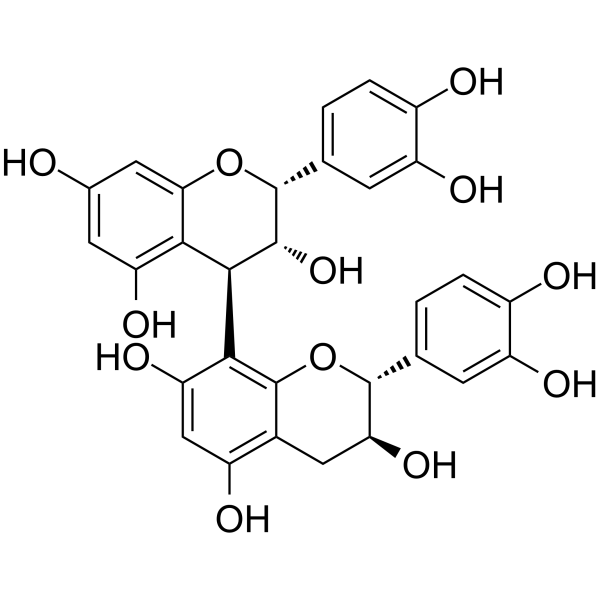
Procyanidin B1
Based on 9 publication(s) in Google Scholar
Procyanidin B1 is a polyphenolic flavonoid isolated from commonly eaten fruits, binds to TLR4/MD-2 complex, and has anti-inflammatory activity.
Nur für Forschungszwecke. Wir verkaufen nicht an Patienten.
- Reinheit : 99.56%
- CAS. Nr.: 20315-25-7
- Formel: C30H26O12
- Molecular Weight:578.52
-
Speicherung:Powder -20°C, 3 years , 4°C, 2 years ; In solvent -80°C, 6 months , -20°C, 1 month

To place orders, for customer services and technical support, please contact: MedChemExpress USA
Tel: 609-228-6898 E-mail: [email protected] [email protected]


-
 Biologische Aktivität
-
Chemical Information
-
Lösungsmittel & Löslichkeit
- Protokoll
- Reinheit & Dokumentation
- Verweise
-
 Help & FAQs


-
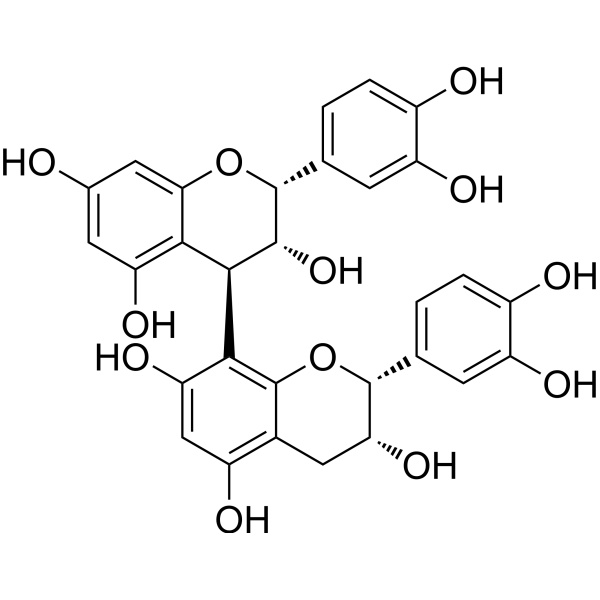
HY-N0796
Procyanidin B2Anticancer Agent -
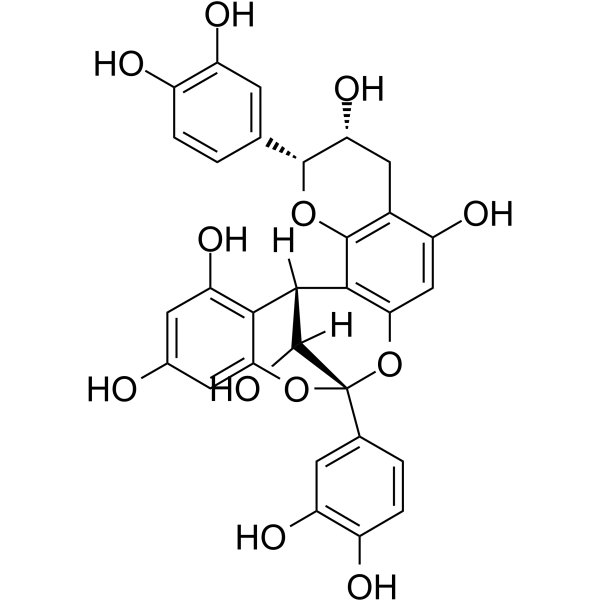
HY-N2343
Procyanidin A2Bacterial Inhibitor -
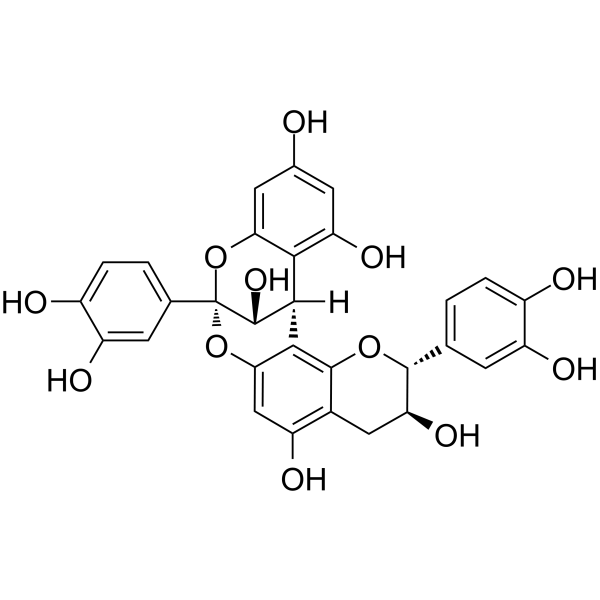
HY-N2344
Procyanidin A1PKC Inhibitor -
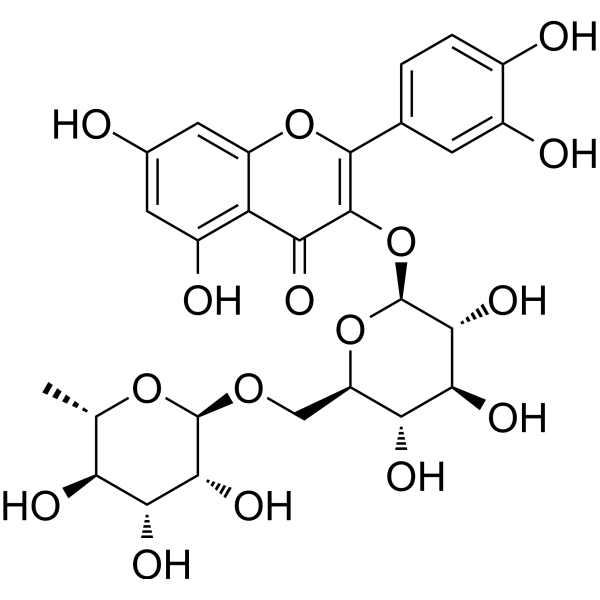
HY-N0148
RutinCBR1 Inhibitor -
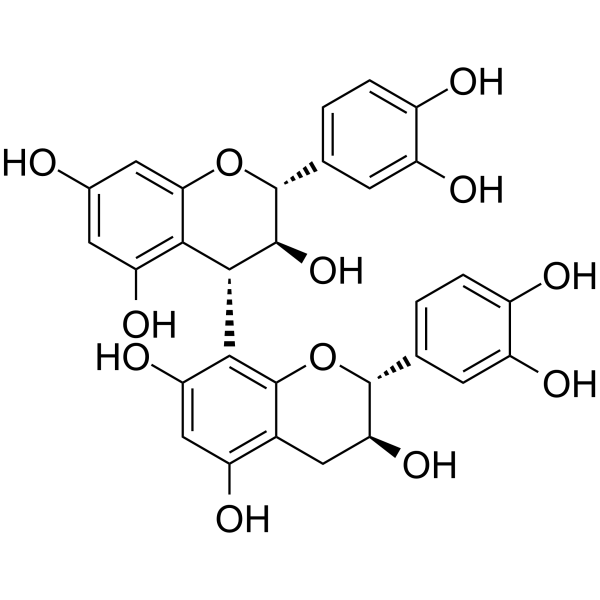
HY-N2345
Procyanidin B3Histone Acetyltransferase Inhibitor -
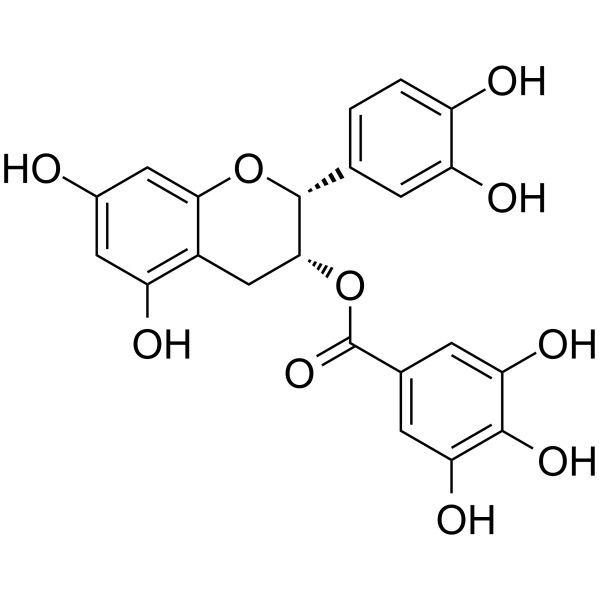
HY-N0002
(-)-Epicatechin gallateCOX-1 Inhibitor -
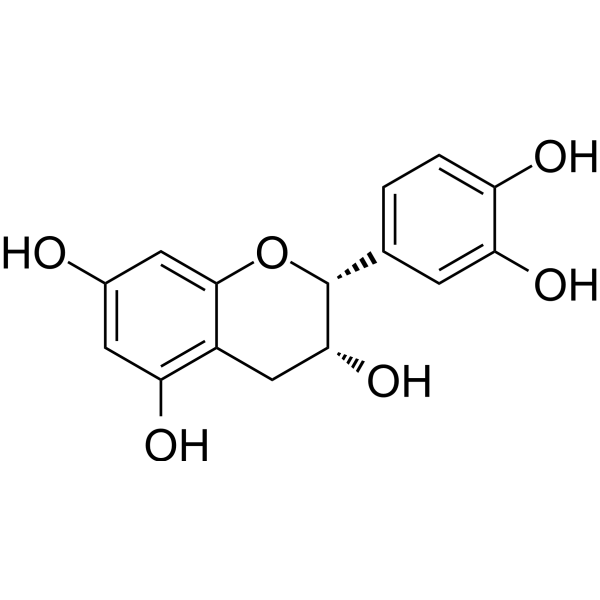
HY-N0001
(-)-EpicatechinCOX Inhibitor -
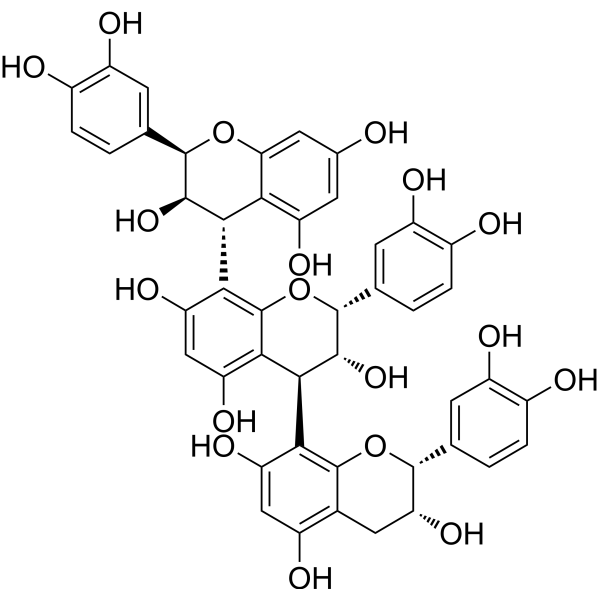
HY-N2342
Procyanidin C1Apoptosis Inducer -
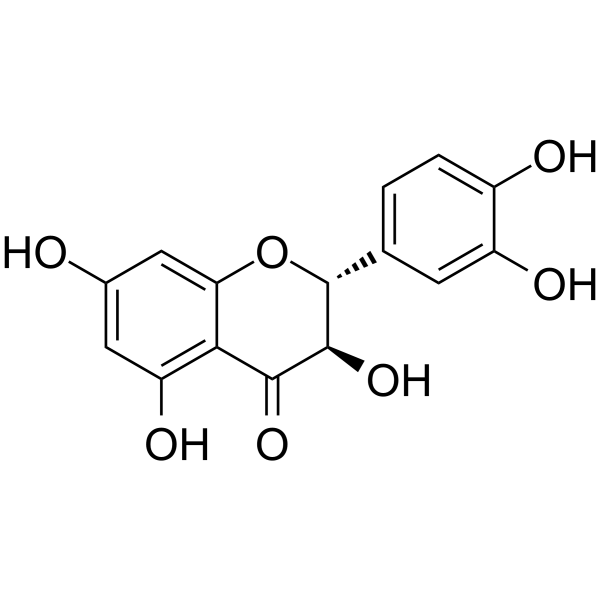
HY-N0136
TaxifolinAntifibrotic Agent -
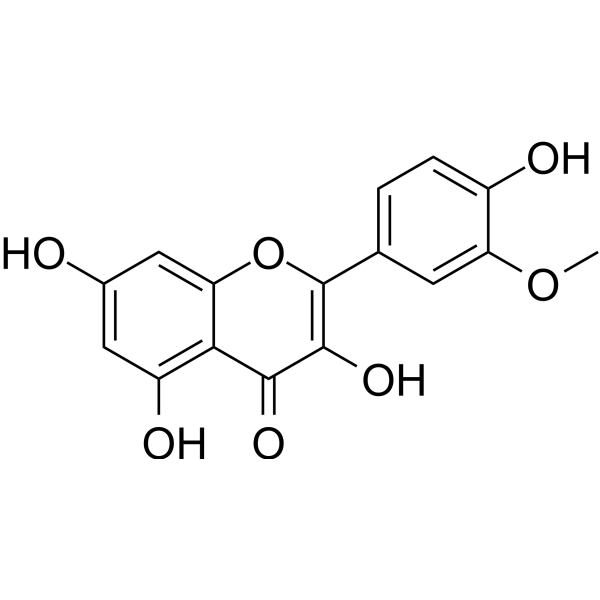
HY-N0776
IsorhamnetinEndogenous Metabolite -
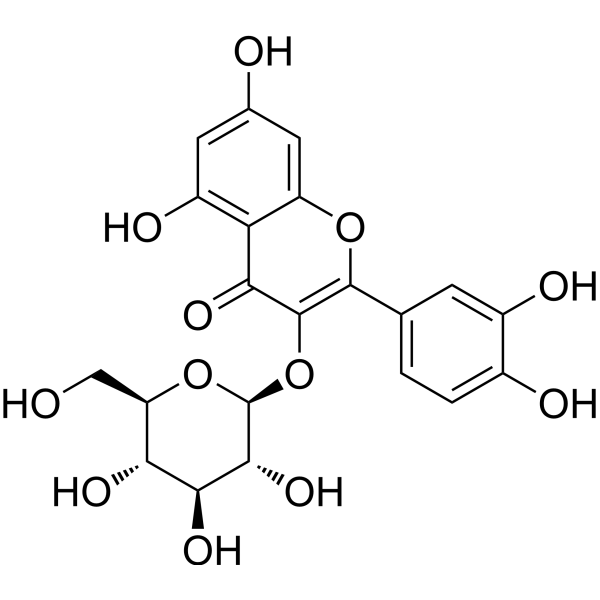
HY-N1445
IsoquercitrinNO Synthase Inhibitor -
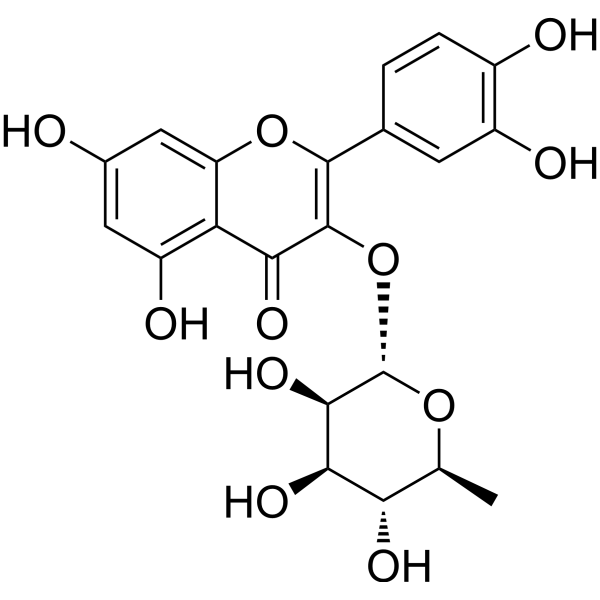
HY-N0418
QuercitrinAnti-inflammatory Agent
Publications Citing Use of MedChemExpress (MCE) Procyanidin B1
More- Acta Pharm Sin B. 2021 Jan;11(1):143-155. [Abstract]
- Adv Sci (Weinh). 2026 Aug 24:e77269.
- Adv Sci (Weinh). 2025 Oct 27:e13775. [Abstract]
- Phytomedicine. 2025 May:140:156549. [Abstract]
- Food Chem. 2025 Oct 15:489:144992. [Abstract]
- Food Chem. 2023 Mar 30;405(Pt A):134807. [Abstract]
- Plant Cell Physiol. 2020 Feb 1;61(2):318-330. [Abstract]
- Viruses. 2026 Jul 10;18(7):758.
- Res Sq. 2025 Jul 17.


Biologische Aktivität
Beschreibung
In Vitro
Procyanidin B1 is a polyphenolic flavonoid isolated from fruits and fruit juices, binds to TLR4/MD-2 complex, and has anti-inflammatory activity. Procyanidin B1 causes cellular toxicity at concentrations >100 μg/mL. Procyanidin B1 (100 μg/mL) inhibits LPS-induced TNF-α production, and expression of MD-2, TRAF6, NF-κB mRNA, phosphorylated p38 MAPK and NF-κB protein in THP1 cells[1]. Procyanidin B1 (50-100 μM) protects against Aβ oligomer-induced neuronal death. Procyanidin B1 potently inhibits the activation of caspase-3 at 100 μM, caspase-8 at concentrations of 30, 50, and 100 μM and caspase-9 at concentrations of 10, 30, 50, and 100 μM[2]. Procyanidin B1 (10, 20, 30 μM) significantly and dose-dependently induces expression of ACO and CPT1, with no obvious effect on mRNA expression of PPARα[3].
MedChemExpress (MCE) has not independently confirmed the accuracy of these methods. They are for reference only.


Chemical Information
-
CAS. Nr. 20315-25-7
-
Appearance Solid
-
Molecular Weight 578.52
-
Formel C30H26O12
-
Color Light yellow to yellow
-
SMILES
O[C@H]1[C@@H](C2=CC=C(O)C(O)=C2)OC3=CC(O)=CC(O)=C3[C@@H]1C4=C5C(C[C@H](O)[C@@H](C6=CC=C(O)C(O)=C6)O5)=C(O)C=C4O
-
Structure Classification
-
Initial Source
-
Versand
Room temperature in continental US; may vary elsewhere.
-
Speicherung
Powder -20°C 3 years 4°C 2 years In solvent -80°C 6 months -20°C 1 month


Publications (9)
-
Journal Impact Factor
-
Most Recent
-
Acta Pharm Sin B
Chrysin serves as a novel inhibitor of DGK α/FAK interaction to suppress the malignancy of esophageal squamous cell carcinoma (ESCC). [Abstract]2021 Jan;11(1):143-155. PMID: 33532186 -
-
Adv Sci (Weinh)
VDLIN: A Deep Learning-Based Platform for Methylcobalamin-Inspired Immunomodulatory Compound Screening. [Abstract]2025 Oct 27:e13775. PMID: 41144841 -
Phytomedicine
2025 May:140:156549. PMID: 40023969 -
Food Chem
Flavonoid-mediated metabolic underpinning quality variation in red bud-sport pear mutants. [Abstract]2025 Oct 15:489:144992. PMID: 40466530 -
Food Chem
Discovery of novel ascorbic acid derivatives and other metabolites in fruit of Rosa roxburghii Tratt through untargeted metabolomics and feature-based molecular networking. [Abstract]2023 Mar 30;405(Pt A):134807. PMID: 36370576 -
Plant Cell Physiol
CsMYB3 and CsRuby1 form an 'Activator-and-Repressor' Loop for the Regulation of Anthocyanin Biosynthesis in Citrus. [Abstract]2020 Feb 1;61(2):318-330. PMID: 31642503 -
-


Lösungsmittel & Löslichkeit
In Vitro:
DMSO : 25 mg/mL (43.21 mM; Need ultrasonic; Hygroscopic DMSO has a significant impact on the solubility of product, please use newly opened DMSO)
Please refer to the solubility information to select the appropriate solvent. Once prepared, please aliquot and store the solution to prevent product inactivation from repeated freeze-thaw cycles.
Storage method and period of stock solution: -80°C, 6 months; -20°C, 1 month. When stored at -80°C, please use it within 6 months. When stored at -20°C, please use it within 1 month.
Please refer to the solubility information to select the appropriate solvent. Once prepared, please aliquot and store the solution to prevent product inactivation from repeated freeze-thaw cycles.
Storage method and period of stock solution: -80°C, 6 months; -20°C, 1 month. When stored at -80°C, please use it within 6 months. When stored at -20°C, please use it within 1 month.
Konzentration (Stammlösung) × Volumen (Stammlösung) = Konzentration (Ziellösung) × Volumen (Ziellösung)
In Vivo:
Select the appropriate dissolution method based on your experimental animal and administration route.
- For the following dissolution methods, please ensure to first prepare a clear stock solution using an In Vitro approach and then sequentially add co-solvents:
- To ensure reliable experimental results, the clarified stock solution can be appropriately stored based on storage conditions. As for the working solution for In Vivo experiments, it is recommended to prepare freshly and use it on the same day.
- The percentages shown for the solvents indicate their volumetric ratio in the final prepared solution. If precipitation or phase separation occurs during preparation, heat and/or sonication can be used to aid dissolution.
Add each solvent one by one: 10% DMSO 40% PEG300 5% Tween-80 45% Saline
Solubility: ≥ 2.5 mg/mL (4.32 mM); Clear solution
This protocol yields a clear solution of ≥ 2.5 mg/mL (saturation unknown).
Taking 1 mL working solution as an example, add 100 μL DMSO stock solution (25.0 mg/mL) to 400 μL PEG300, and mix evenly; then add 50 μL Tween-80 and mix evenly; then add 450 μL Saline to adjust the volume to 1 mL.
Preparation of Saline: Dissolve 0.9 g sodium chloride in ddH₂O and dilute to 100 mL to obtain a clear Saline solution.
Add each solvent one by one: 10% DMSO 90% (20% SBE-β-CD in Saline)
Solubility: ≥ 2.5 mg/mL (4.32 mM); Clear solution
This protocol yields a clear solution of ≥ 2.5 mg/mL (saturation unknown).
Taking 1 mL working solution as an example, add 100 μL DMSO stock solution (25.0 mg/mL) to 900 μL 20% SBE-β-CD in Saline, and mix evenly.
Preparation of 20% SBE-β-CD in Saline (4°C, storage for one week): 2 g SBE-β-CD powder is dissolved in 10 mL Saline, completely dissolve until clear.
In Vivo Dissolution Calculator
Please enter the basic information of animal experiments:
-
-
-
-
Recommended: Prepare an additional quantity of animals to account for potential losses during experiments.
Please enter your animal formula composition:
-
%DMSO +
Recommended: Keep the proportion of DMSO in working solution below 2% if your animal is weak.
-
%+
-
+%Tween-80 + +
-
%Saline +
The co-solvents required include: DMSO, . All of co-solvents are available by MedChemExpress (MCE). , Tween 80. All of co-solvents are available by MedChemExpress (MCE).
Working solution concentration: 0.22 mg/mL
Method for preparing stock solution: mg drug dissolved in μL DMSO. Stock solution concentration: mg/mL.
1. Take μL DMSO stock solution;
2. Add μL .
μL , mix evenly;
3. Then add μL Tween 80, mix evenly;
4. Then add μL
Please ensure that the stock solution in the first step is dissolved to a clear state, and add co-solvents in sequence. You can use ultrasonic heating (ultrasonic cleaner, recommended frequency 20-40 kHz), vortexing, etc. to assist dissolution.


Reinheit & Dokumentation
-
Data Sheet (283 KB)
-
SDS (396 KB)
- English - EN (396 KB)
- Français - FR (396 KB)
- Deutsch - DE (396 KB)
- Norwegian - NO (396 KB)
- Español - ES (396 KB)
- Swedish - SV (396 KB)
- Italian - IT (396 KB)
- Korean - KR (396 KB)
- Portuguese - PT (396 KB)
-
Handling Instructions (2659 KB)
Verweise
[1]. Xing J, et al. Anti-inflammatory effect of procyanidin B1 on LPS-treated THP1 cells via interaction with the TLR4-MD-2 heterodimer and p38 MAPK and NF-κB signaling. Mol Cell Biochem. 2015 Sep;407(1-2):89-95. [Content Brief]
[2]. Kanno H, et al. Protective effects of glycycoumarin and procyanidin B1, active components of traditional Japanese medicine yokukansan, on amyloid β oligomer-induced neuronal death. J Ethnopharmacol. 2015 Jan 15;159:122-8. [Content Brief]
[3]. Shimada T, et al. Flavangenol (pine bark extract) and its major component procyanidin B1 enhance fatty acid oxidation in fat-loaded models. Eur J Pharmacol. 2012 Feb 29;677(1-3):147-53. [Content Brief]


Complete Stock Solution Preparation Table
Please refer to the solubility information to select the appropriate solvent. Once prepared, please aliquot and store the solution to prevent product inactivation from repeated freeze-thaw cycles.
Storage method and period of stock solution: -80°C, 6 months; -20°C, 1 month. When stored at -80°C, please use it within 6 months. When stored at -20°C, please use it within 1 month.
| Optional Solvent | Concentration Solvent Mass | 1 mg | 5 mg | 10 mg | 25 mg |
|---|---|---|---|---|---|
| DMSO | 1 mM | 1.7285 mL | 8.6427 mL | 17.2855 mL | 43.2137 mL |
| 5 mM | 0.3457 mL | 1.7285 mL | 3.4571 mL | 8.6427 mL | |
| 10 mM | 0.1729 mL | 0.8643 mL | 1.7285 mL | 4.3214 mL | |
| 15 mM | 0.1152 mL | 0.5762 mL | 1.1524 mL | 2.8809 mL | |
| 20 mM | 0.0864 mL | 0.4321 mL | 0.8643 mL | 2.1607 mL | |
| 25 mM | 0.0691 mL | 0.3457 mL | 0.6914 mL | 1.7285 mL | |
| 30 mM | 0.0576 mL | 0.2881 mL | 0.5762 mL | 1.4405 mL | |
| 40 mM | 0.0432 mL | 0.2161 mL | 0.4321 mL | 1.0803 mL |


Procyanidin B1 Related Classifications
HY-N0795 Related Classifications
 Powered by Bioz