Inflammation/Immunology
-
Inflammation/Immunology Related Products (20711)
Related Products (20711)

-
Antibodies (115)
-
Related Compound Screening Libraries (4)
-
Sodium bicarbonate, meets analytical specification of Ph. Eur., BP, USP, FCC, E500
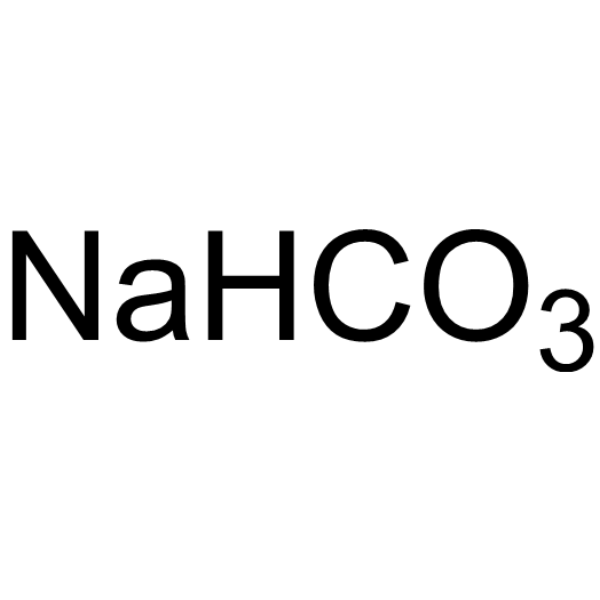 0 ImagesCat. No.: HY-W251598ICAS No.: 144-55-8Synonyms: Sodium hydrogen carbonate, meets analytical specification of Ph. Eur., BP, USP, FCC, E500
Sodium bicarbonate, meets analytical specification of Ph. Eur., BP, USP, FCC, E500 is an inorganic salt that is neutral to slightly alkaline and easily decomposes when exposed to moisture in the air. Sodium bicarbonate can maintain the pH of the culture medium, thereby affecting the expression of inducible nitric oxide synthase (iNOS) and nitric oxide (NO) production in macrophages and reversing the acidosis of the tumor microenvironment. Sodium bicarbonate is widely used in the fields of food, medicine, cosmetics, etc. Its main uses include buffers, flavoring agents, disinfectants, pharmaceuticals, and proton gradient regulators. Sodium bicarbonate is also commonly used as an antacid to inhibit gastrointestinal diseases, neutralize gastric acid, and reduce gastric discomfort.
-
Ozanimod-d6
 0 ImagesCat. No.: HY-12288SSynonyms: RPC-1063-d6
Ozanimod-d6 (RPC-1063-d6) is the deuterium labeled Ozanimod (HY-12288). Ozanimod (RPC-1063) is a CNS-penetrant sphingosine 1-phosphate (S1P) receptor modulator that binds with high affinity selectively to S1P receptor subtypes 1 (S1P1) and 5 (S1P5). Ozanimod has modulate effect for hS1P1 and hS1P5 receptor with EC50s of 1.03 nM and 8.6 nM, respectively. Ozanimod can be used for the research of relapsing multiple sclerosis (MS).
-
LEI-101 free base
 0 ImagesCat. No.: HY-124283CAS No.: 1228660-00-1
LEI-101 free base is a selective and orally bioavailable CB2 receptor agonist with the potential to inhibit diseases associated with inflammation and/or oxidative stress. LEI-101 free base has a binding potency to CB2 receptors that is approximately 100 times higher than that to CB1 receptors. Its pEC50 value on CB2 receptors is 8, while its pKi value on hERG is less than 4. LEI-101 may have an inhibitory effect on conditions such as kidney disease.
-
PDE4B-IN-6
 0 ImagesCat. No.: HY-179504
PDE4B-IN-6 (compound 4i) is a potent and selective PDE4B inhibitor with an IC50 of 7.42 nM. PDE4B-IN-6 shows ~195- and ~169-fold selectivity for PDE4B over PDE4A (IC50 = 1540 nM) and PDE4C (IC50 = 1260 nM), respectively. PDE4B-IN-6 increases cAMP level and suppresses TNF-α expression. PDE4B-IN-6 shows favorable antioxidant profiles and low cytotoxicity. PDE4B-IN-6 can be used for chronic obstructive pulmonary disease (COPD) research.
-
Anti-CD86 Antibody (3D1)
 0 ImagesCat. No.: HY-P991908
-
Nemonoxacin-13C,d3
 0 ImagesCat. No.: HY-14956S3Synonyms: TG-873870-13C,d3
Nemonoxacin-13C,d3 (TG-873870-13C,d3) is the deuterium and 13C-labeled Nemonoxacin (HY-14956). Nemonoxacin (TG-873870) is an orally active and potent broad-spectrum antibiotic. Nemonoxacin shows good inhibitory activity against different species of staphylococci, streptococci, and enterococci, Neisseria gonorrhoeae, and Haemophilus influenza. Nemonoxacin can be used in the study of bacterial infections and community-acquired pneumonia.
-
PROTAC sEH degrader-2
 0 ImagesCat. No.: HY-174443
PROTAC sEH degrader-2 is a soluble epoxide hydrolase (sEH) PROTAC degrader, with pIC50 values of 8.37 and 7.12 against hsEH-H and msEH-H, respectively. PROTAC sEH degrader-2 induces targeted degradation of sEH via the ubiquitin-proteasome system, thereby completely blocking its dual functions as an epoxide hydrolase and a lipid phosphatase by bridging the short-branch exit of sEH with the CRBN E3 ubiquitin ligase. PROTAC sEH degrader-2 can be used in the research of neuroinflammation and Alzheimer's disease.

-
Naringenin-4'-O-β-D-glucuronide
 0 ImagesCat. No.: HY-135621CAS No.: 158196-35-1
Naringenin-4'-O-β-D-glucuronide is a metabolite of Naringenin chalcone (HY-N3007). Naringenin-4'-O-β-D-glucuronide inhibits histamine release.

-
FITC-labeled ODN TTAGGG sodium
 0 ImagesCat. No.: HY-150751B
-
SAP-04
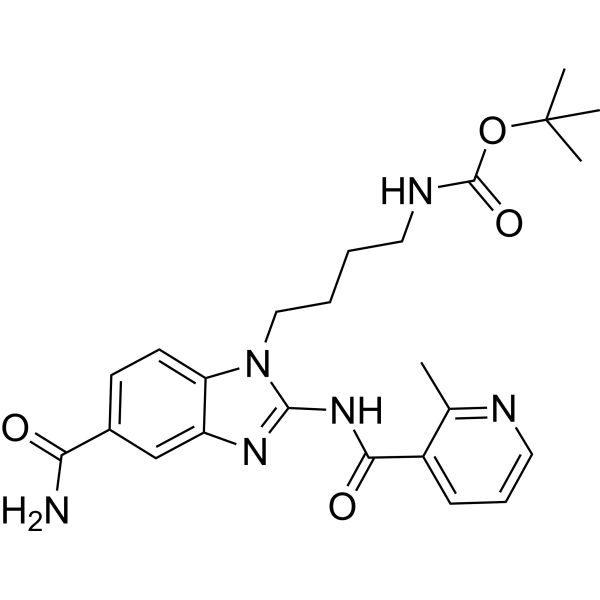 0 ImagesCat. No.: HY-156290CAS No.: 3053678-30-8

-
Anti-MSR1 Antibody
 0 ImagesCat. No.: HY-P992269
-
KRFK
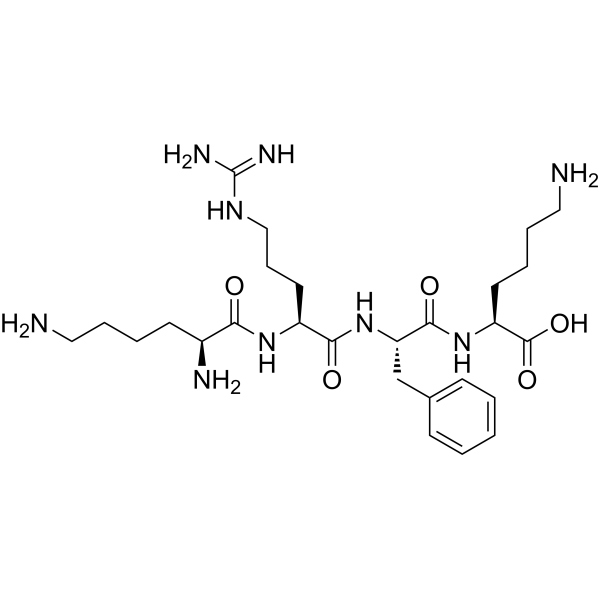 0 ImagesCat. No.: HY-P3970CAS No.: 162290-78-0
-
Chitin, from shrimp shells (powder)
 0 ImagesCat. No.: HY-126389ACAS No.: 1398-61-4
Chitin, from shrimp shells (powder) is a long-chain polymer of N-acetylglucosamine with β-(1-4) linkages. Chitin, from shrimp shells (powder) is found in the exoskeleton of crabs. Chitin, from shrimp shells (powder) inhibits the activation of NF-κB p65, alters the translocation of NF-κB p65 to the nucleus, and interacts with the cell wall of Candida species. Chitin, from shrimp shells (powder) exerts antifungal and anti-inflammatory effects. Chitin, from shrimp shells (powder) can be used in the research of gastric ulcer and candidiasis.
-
Jolkinolide B (Standard)
 0 ImagesCat. No.: HY-N0732RCAS No.: 37905-08-1
Jolkinolide B (Standard) is the analytical standard of Jolkinolide B (HY-N0732). This product is intended for research and analytical applications. Jolkinolide B is a bioactive diterpene isolated from the roots of Euphorbia fischeriana Steud with oral activity. Jolkinolide B downregulates XIAP, cIAP1, cIAP2, and phosphorylated Akt, upregulates Smac, activates caspase-3 and caspase-9, and inhibits NF-κB, TGFβ/smad3 and JAK/STAT3 pathways. Jolkinolide B exerts comprehensive biological effects including inducing cancer cell apoptosis, suppressing inflammatory responses, improving lung function, alleviating hepatic steatosis and eliminating intracellular Mycobacterium tuberculosis. Jolkinolide B can be used for the research of leukemia, histiocytic lymphoma, asthma, metabolic dysfunction-associated steatotic liver disease and tuberculosis.
-
4'',5''-Dehydroisopsoralidin
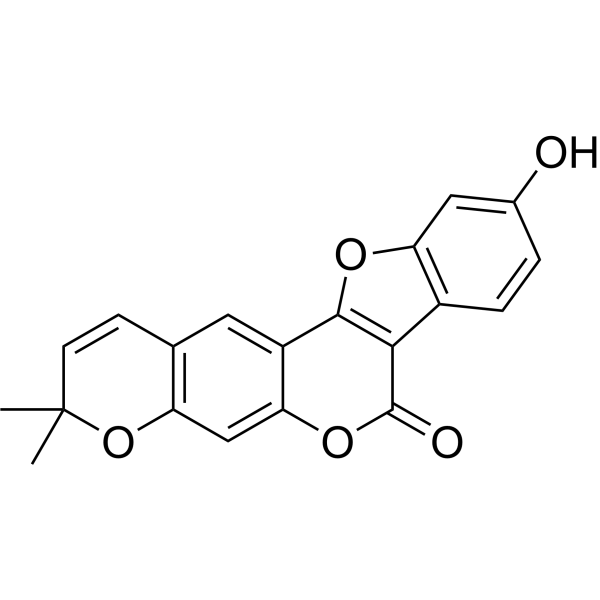 0 Images
4'',5''-Dehydroisopsoralidin is a β-glucuronidase inhibitor (IC50: 6.3 μM). 4'',5''-Dehydroisopsoralidin has anti-inflammatory and anti-oxidative effects. 4'',5''-Dehydroisopsoralidin can be used in the research of inflammation and cancners.
-
IBI-325
 0 ImagesCat. No.: HY-P991634
IBI-325 is a humanized monoclonal antibody inhibitor targeting CD73. IBI-325 completely inhibits CD73 enzymatic activity without hook effect. IBI-325 reverses Adenosine monophosphate (HY-A0181)-mediated immune suppression and significantly inhibits T cell proliferation and cytokines (IL-2, IFN-γ and TNF-α) release. IBI-325 has potent antitumor activities in hPBMC-reconstituted mice model and hCD73 knock-in mice model. IBI-325 can be used for cancer immunotherapy research.
-
ARC5690 sodium
 0 ImagesCat. No.: HY-177800
ARC5690 sodium is an anti-mouse P-selectin aptamer. ARC5690 bound to recombinant mouse P-selectin with a KD of approximately 15pM in vitro. ARC5690 showed a significant anti-inflammatory effect