



Cholinesterase (ChE)
Cholinesterase (ChE) is a family of enzymes present in the central nervous system, particularly in nervous tissue, muscle and red cells, which catalyze the hydrolysis of the neurotransmitter acetylcholine into choline and acetic acid, a reaction necessary to allow a cholinergic neuron to return to its resting state after activation. It is one of many important enzymes needed for the proper functioning of the nervous systems of humans.
There are two types: acetylcholinesterase (AChE, acetylcholine hydrolase) and butyrylcholinesterase (BChE, acylcholine acylhydrolase), also known as nonspecific cholinesterase or pseudocholinesterase. AChE is primarily found in the blood on red blood cell membranes, in neuromuscular junctions, and in neural synapses, while BChE is produced in the liver and found primarily in plasma. The difference between the two types of cholinesterase is their relative preferences for substrates: AChE hydrolyzes acetylcholine faster while BChE hydrolyzes butyrylcholine faster.
Cholinesterase (ChE) Isoform Specific Products
All Product Categories
-
Cholinesterase (ChE) Inhibitors
(946)
View all products
-
Cholinesterase (ChE) Agonists
(5)
View all products
-
Cholinesterase (ChE) Antagonists
(10)
View all products
-
Cholinesterase (ChE) Activators
(34)
View all products
-
Cholinesterase (ChE) Modulators
(11)
View all products
-
Cholinesterase (ChE) Chemical
(1)
View all products
-
Cholinesterase (ChE) Inducer
(1)
View all products
-
Cholinesterase (ChE) Controls
(6)
View all products
-
Cholinesterase (ChE) Substrates
(3)
View all products
-
Cholinesterase (ChE) Related Products (1095)
Related Products (1095)

-
Antibodies (2)
-
Cholinesterase (ChE) Isoform Comparison
-
S27-1047
 0 ImagesCat. No.: HY-184583CAS No.: 3121876-09-0S27-1047 is a brain-penetrant, potent and selective BChE (eqBChE IC50 = 7.16 nM; hBChE IC50 = 296.10 nM) inhibitor and Nrf2 activator. S27-1047 can directly bind Keap1, disrupt Keap1-Nrf2 interaction (FP IC50 = 36.87 nM), enhance antioxidant enzyme expression and activate the GSH-GPX4 axis to inhibit Aβ-induced ferroptosis. S27-1047 can protect against oxidative stress and neuroinflammation. S27-1047 can be used in Alzheimer's disease research.
-
eeAChE/eqBuChE-IN-1
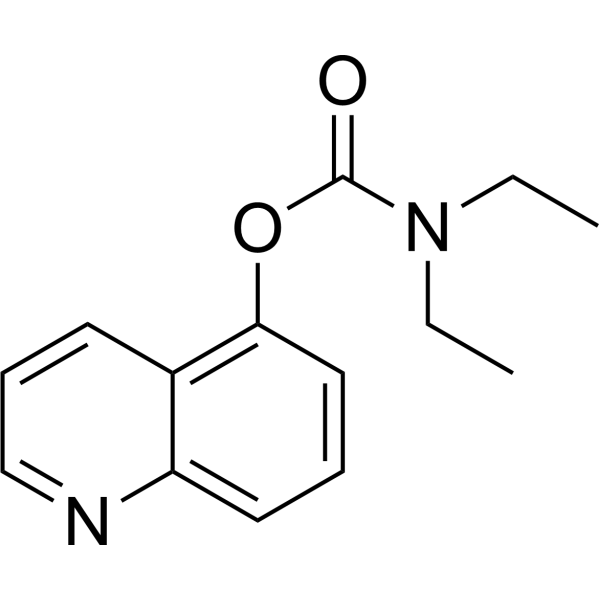 0 ImagesCat. No.: HY-157394CAS No.: 2921654-26-2eeAChE/eqBuChE-IN-1 (compound 3F) is a reversible dual eeAChE/eqBuChE inhibitor with IC50s of 1.3?μM and 0.81?μM, respectively. eeAChE/eqBuChE-IN-1 exhibits anti-inflammatory activity. eeAChE/eqBuChE-IN-1 also shows neuroprotective effect on Aβ25-35-induced PC12 cell injury.
-
CL-13
 0 ImagesCat. No.: HY-168301CL-13 is a butyrylcholinesterase (BChE) inhibitor, with an IC50 of 1.15 μM, and a selectivity index (SI) of 9.2 for acetylcholinesterase. CL-13 shows antioxidant activity in SH-SY5Y cells (DPPH EC50 = 47.01 μM) and has the ability to chelate metals involved in Aβ aggregation and/or oxidative stress, showing no neurotoxicity at 50 μM. CL-13 can reverse cognitive impairment caused by scopolamine (HY-N0296) without affecting the mice's motor skills.
-
AChE-IN-31
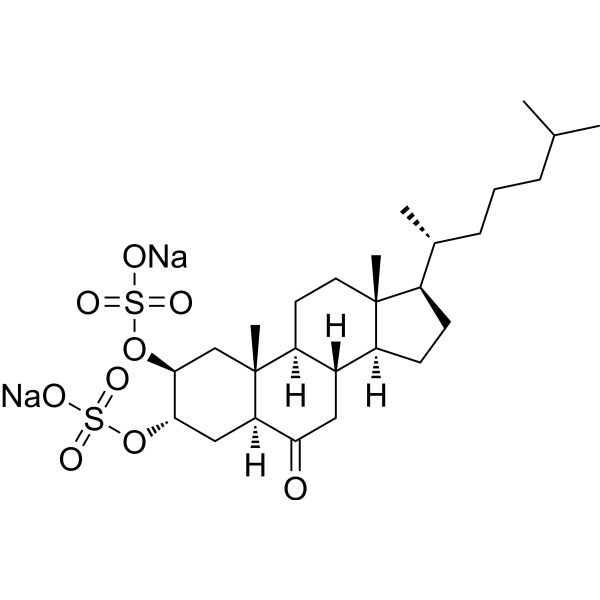 0 ImagesCat. No.: HY-149888CAS No.: 1325209-07-1AChE-IN-31 (compound 1) is a non-competitive AChE inhibitor with potential for the study of Alzheimer's disease.
-
AChE-IN-71
 0 ImagesCat. No.: HY-159173CAS No.: 1708114-58-2AChE-IN-71 (compound 12A) is a AChE inhibitor. AChE-IN-71 can be used in the study of Alzheimer’s disease.
-
Trimethylammonium chloride-13C3
 0 ImagesCat. No.: HY-W585905CAS No.: 286013-00-1Trimethylammonium chloride-13C3 is the 13C-labeled Trimethylammonium chloride (HY-Y0504). Trimethylammonium chloride (Hegzadesil) is a non-competitive Acetylcholinesterase inhibitor. Trimethylammonium chloride reversibly blocks the deacetylation of acetylcholinesterase.
-
Monarsen
 0 ImagesCat. No.: HY-148412CAS No.: 864021-55-6Synonyms: EN101; ODN 7040; BL 7040Monarsen (EN101) is a synthetic 20-base antisense oligodeoxynucleotide directed against the human AChE gene. Monarsen is used in the study of Autoimmune myasthenia gravis (MG), a neuromuscular disorder caused by autoantibodies directed against the acetylcholine receptor (AChR).
-
AChE-IN-12
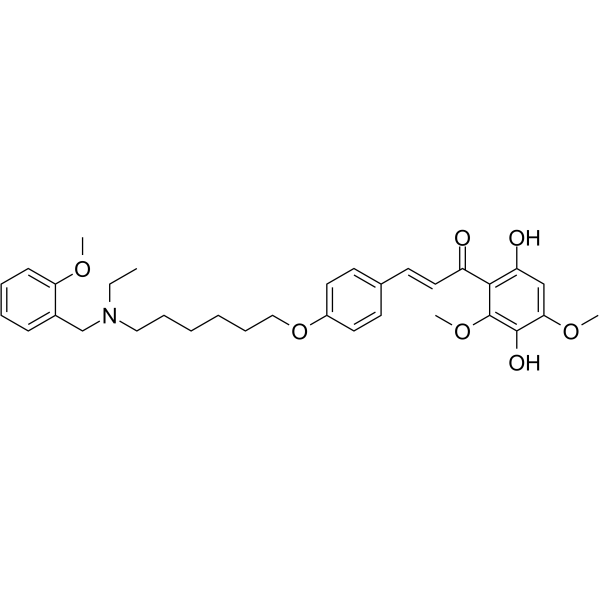 0 ImagesCat. No.: HY-144790CAS No.: 2764664-52-8AChE-IN-12 is a potent and blood-brain barrier (BBB) penetrant acetylcholinesterase (AChE) with IC50s of 0.41 μM and 1.88 μM for rat AChE and electric eel AChE. AChE-IN-12 is also a good antioxidant (ORAC = 3.3 eq), selective metal chelator and huMAO-B inhibitor (IC50 = 8.8 μM). AChE-IN-12 has remarkable inhibition of self- and Cu2+-induced Aβ1-42 aggregation, as well as exhibits a good neuroprotective effect. AChE-IN-12 can be used for researching Alzheimer’s disease.
-
BChE/HDAC6-IN-2
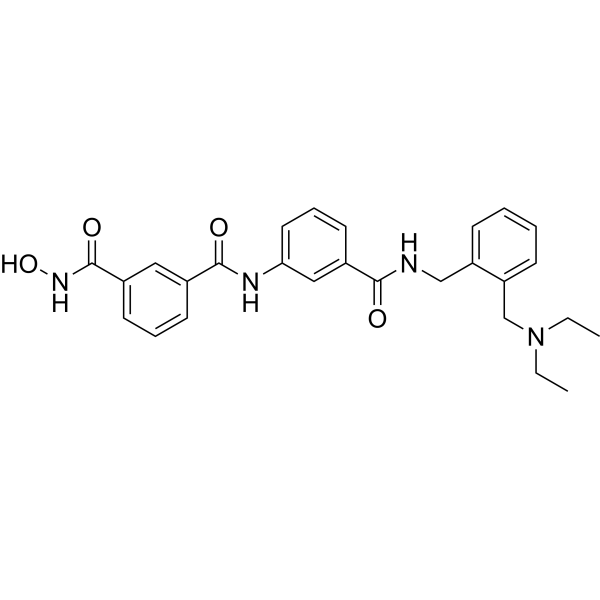 0 ImagesCat. No.: HY-149418CAS No.: 2925457-33-4BChE/HDAC6-IN-2 (compound 29a) is a dual inhibitor of BChE and HDAC6 with IC50s of 1.8 nM and 71.0 nM, respectively. BChE/HDAC6-IN-2 has prominently neuroprotective effects and reactive oxygen species (ROS) scavenging activity. BChE/HDAC6-IN-2 is also an effective chelator of metal ion (Fe2+ and Cu2+). BChE/HDAC6-IN-2 inhibits phosphorylation of tau, and exhibits moderate immunomodulatory effect.
-
Feralolide
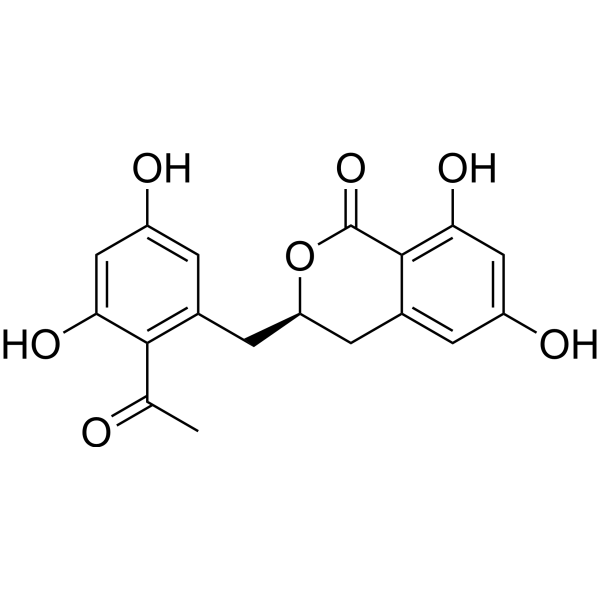 0 ImagesCat. No.: HY-N11997CAS No.: 149418-38-2Feralolide is a dihydroisocoumarin isolated from the methanolic extract of aloe vera resin. Feralolide is also a dual inhibitor of AChE and BuChE, with IC50s of 55 μg/mL and 52 μg/mL respectively. Feralolide has antioxidant activity and inhibits 2,2-diphenyl-1-picrylhydrazyl (DPPH) and 2, 2′-azinobis-3-ethylbenzothiazoline-6-sulfonic acid (ABTS). Feralolide could be used in research into cognitive disorders such as Alzheimer's disease, potentially restoring and enhancing memory.
-
Echothiopate chloride
 0 ImagesCat. No.: HY-16183ACAS No.: 120087-68-5Synonyms: Echothiophate chlorideEchothiopate chloride (Echothiophate chloride) is an acetylcholinesterase (AChE) inhibitor. Echothiopate chloride irreversibly inhibits acetylcholinesterase, prevents the enzymatic hydrolysis of acetylcholine, and increases the local acetylcholine concentration in the ciliary muscle, thereby driving muscarinic receptor downregulation and regulatory hyposensitivity to Pilocarpine Hydrochloride. Echothiopate chloride can be used in the study of glaucoma.
-
Lycoramine
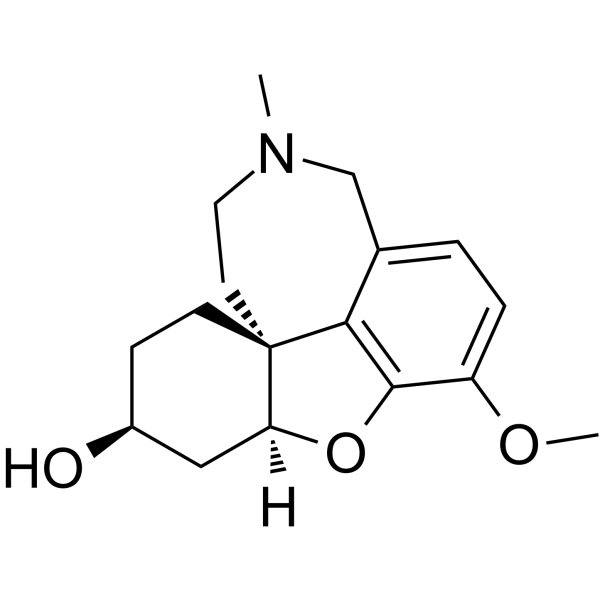 0 ImagesLycoramine is a blood-brain barrier-penetrating Acetylcholinesterase inhibitor and Galanthamine (HY-76299) derivative. Lycoramine induces Amyloid-beta plaque clearance. Lycoramine induces reversal of cognitive decline and memory improvement. Lycoramine can be used for research on Alzheimer's disease and myasthenia gravis.
-
AChE/BuChE-IN-3
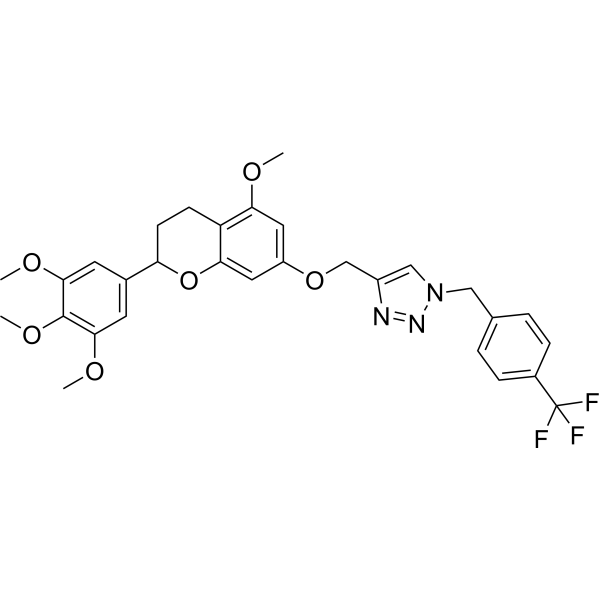 0 ImagesCat. No.: HY-147939CAS No.: 2742707-47-5AChE/BuChE-IN-3 is a potent and blood-brain barrier (BBB) penetrant AChE and BuChE dual inhibitor with IC50s of 0.65 μM and 5.77 μM for AChE and BuChE. AChE/BuChE-IN-3 also inhibits Aβ1-42 aggregation. AChE/BuChE-IN-3 has effectively neuroprotective activities and nearly no toxicity on SH-SY5Y cells. AChE/BuChE-IN-3 can be used for researching Alzheimer's disease.
-
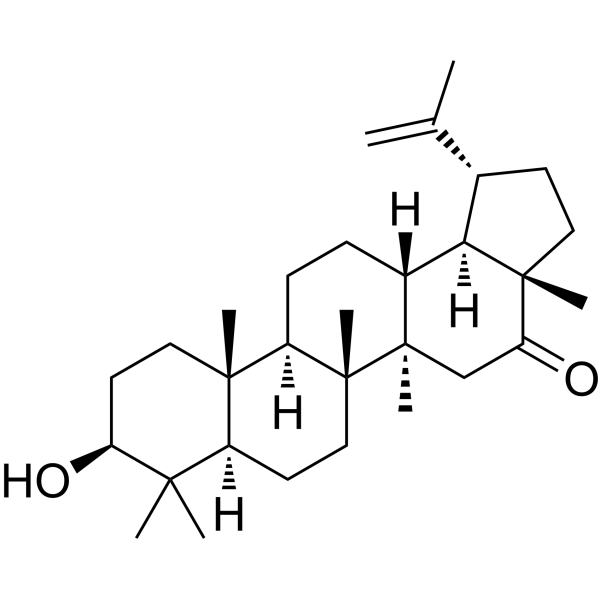
AChE/BChE-IN-31
 0 ImagesCat. No.: HY-W272207CAS No.: 6338-81-4AChE/BChE-IN-31 (Compound 3c) is a cholinesterase inhibitor. AChE/BChE-IN-31 exhibits certain inhibitory activity against hAChE and eqBChE. AChE/BChE-IN-31 also possesses antioxidant properties with an IC50 value of 105.04 μM against DPPH. AChE/BChE-IN-31 can be used in the research of diseases such as Alzheimer’s disease.
-
AChE/BChE-IN-24
 0 ImagesCat. No.: HY-159880CAS No.: 3053509-06-8AChE/BChE-IN-24 (compound 5k) is a neuroprotective agent through cholinesterase inhibition. AChE/BChE-IN-24 inhibits AChE and BChE with IC50 values of 16.38 μM and 10.44 μM, respectively.
-
AChE/BChE/MAO-B-IN-4
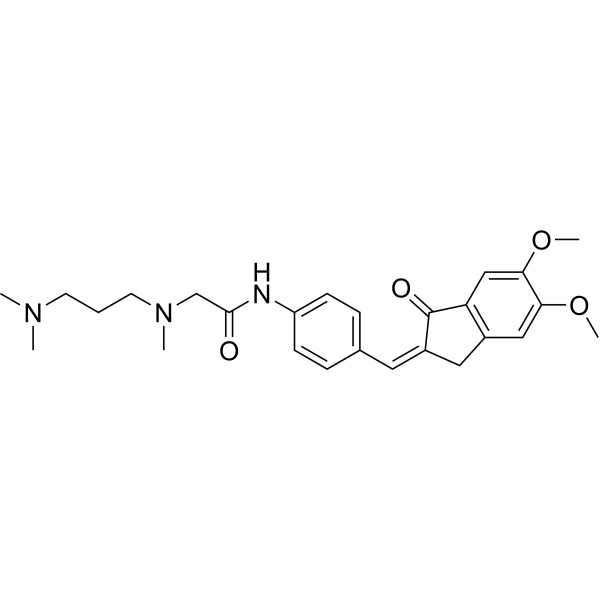 0 ImagesCat. No.: HY-152114AChE/BChE/MAO-B-IN-4, an indan-1-one derivative, is a potent MAO-B inhibitor with an IC50 of 0.0393 μM for human MAO-B. AChE/BChE/MAO-B-IN-4 is a potent AChE and BChE enzyme inhibitor, with IC50s of 0.0458 μM and 0.075 μM for human AChE and BChE enzyme, respectively. AChE/BChE/MAO-B-IN-4 shows significant antioxidant activity and prevent β-amyloid plaque aggregation. AChE/BChE/MAO-B-IN-4 has the potential for Alzheimer's disease (AD) research.
-
hAChE-IN-8
 0 ImagesCat. No.: HY-163514hAChE-IN-8 (Compound S-12) is a orally effective and selective inhibitor of hAChE (IC50=0.486 μM). hAChE-IN-8 also inhibits BACE-1 (IC50=0.542 μM), and does not inhibit Dyrk1A (IC50>10 μM). hAChE-IN-8 can reduce Aβ aggregation, has good blood-brain barrier penetration. hAChE-IN-8 is mainly used in Alzheimer's disease research.
-
Lakoochin C
 0 ImagesCat. No.: HY-N17425CAS No.: 2170152-91-5Lakoochin C is an inhibitor of acetylcholinesterase (AChE) (IC50 = 61.86 μM) and butyrylcholinesterase (BChE) (IC50 = 47.21 μM). Lakoochin C may be used in research related to Alzheimer's disease.
-
hAChE-IN-5
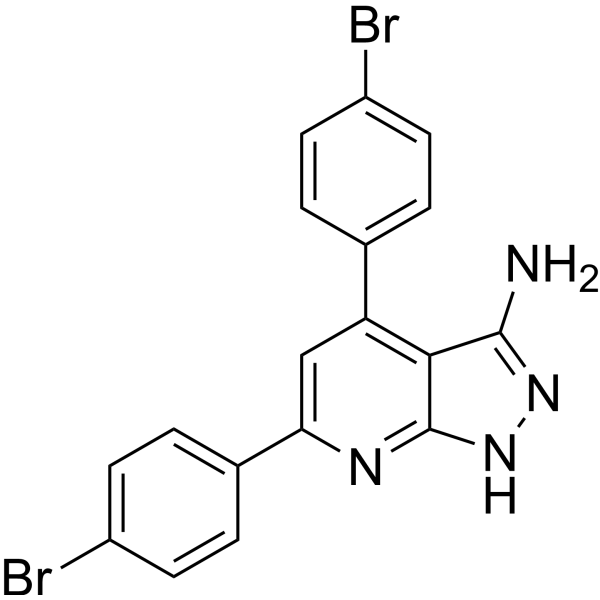 0 ImagesCat. No.: HY-155365CAS No.: 3007667-15-1hAChE-IN-5 (compound 49) is a potent hAChE and hBuChE inhibitor with IC50 values of 0.17 μM and 0.17 μM, respectively. hAChE-IN-5 shows potent GSK3β inhibition with an IC50 value of 0.21 μM. hAChE-IN-5 is used as tau protein aggregation and Aβ1-42 self-aggregation inhibitor. hAChE-IN-5 can bind virtually with the PAS affecting Aβ aggregation, thus preventing Aβ-dependent neurotoxicity. hAChE-IN-5 can penetrate BBB and has the potential for multi-targeted anti-Alzheimer's agents research.




