



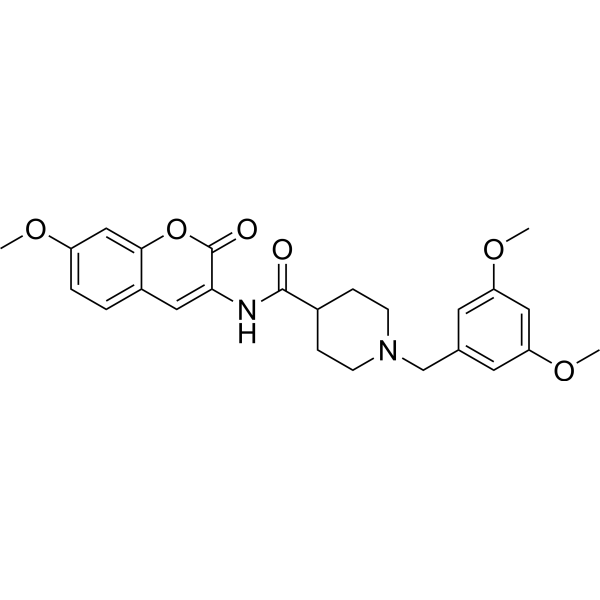
AChE-IN-59
AChE-IN-59 (compounds 3b) is an AChE inhibitor, with an IC50 value of 0.05 μM. AChE-IN-59 can inhibit the aggregation of Aβ1-42, protect nerve cells and penetrate the blood-brain barrier well. AChE-IN-59 can be used for the research of Alzheimer's disease (AD).
For research use only. We do not sell to patients.
- CAS No.: 2957916-86-6
- Formula: C25H28N2O6
- Molecular Weight:452.50
-
Storage:
Please store the product under the recommended conditions in the Certificate of Analysis.

To place orders, for customer services and technical support, please contact: MedChemExpress USA
Tel: 609-228-6898 E-mail: [email protected] [email protected]


-
 Biological Activity
-
Chemical Information
- Protocols
- Purity & Documentation
- References
-
 Help & FAQs




Biological Activity
Description
IC50 & Target
|
AChE 0.05 μM (IC50) |
BChE 4.68 μM (IC50) |
Aβ 1-42 |
In Vitro
AChE-IN-59 (compounds 3b) (50/100/500/1000 μg/ mL, 5 min) can inhibit the activity of ChEs, with the IC50 values for AChE and BuChE of 0.05 μM and 4.68 μM, respectively, indicating that AChE-IN-59 is selective for AChE subtype[1].
AChE-IN-59 (50/100/500/1000 μg/ mL, 5 min) shows well antioxidant activity in vitro in tests of Ferric ion reducing antioxidant power (FRAP) and DPPH free radical scavenging capacity[1].
AChE-IN-59 (25 µM, 5 min) has no cytotoxic effect on SH‐SY5Y cells[1].
MedChemExpress (MCE) has not independently confirmed the accuracy of these methods. They are for reference only.
-
Cell Line:SH‐SY5Y
-
Concentration:0/6.25/12.5/25/50/100 µM
-
Incubation Time:5 h
-
Result:Showed a good neuroprotective effect in the range of 6.25-25 µM and did not affect SH‐SY5Y cell viability below 25 µM.
In Vivo
MedChemExpress (MCE) has not independently confirmed the accuracy of these methods. They are for reference only.
-
Animal Model:zebrafish juveniles with 5 mg/L AlCl3 model[1]
-
Dosage:5/10/25/50/100 μg/mL,
-
Administration:Soak drug administration
-
Result:Had certain therapeutic effect on AlCl3-induced zebrafish behavior inhibition, which was concentration-dependent. With the increase of compound concentration, the total distance of zebrafish larvae increased gradually.


Chemical Information
-
CAS No. 2957916-86-6
-
Molecular Weight 452.50
-
Formula C25H28N2O6
-
SMILES
COC1=CC=C2C=C(C(OC2=C1)=O)NC(C3CCN(CC3)CC4=CC(OC)=CC(OC)=C4)=O
-
Shipping
Room temperature in continental US; may vary elsewhere.
-
Storage
Please store the product under the recommended conditions in the Certificate of Analysis.


Purity & Documentation
References

Calculators
Concentration (start) × Volume (start) = Concentration (final) × Volume (final)


AChE-IN-59 Related Classifications
HY-157978 Related Classifications
 Powered by Bioz