



Akt
PKB; Protein kinase B
Akt/PKB (Protein kinase B), a serine/threonine protein kinase with antiapoptotic activity, is one of the major downstream targets of PtdIns(3,4,5)P3 signaling pathway. It contains a pleckstrin homology domain (PH domain) that specifically binds PtdIns(3,4,5)P3 on the plasma membrane. Akt phosphorylation and activation are directly determined by the level of PtdIns(3,4,5)P3 on the plasma membrane, which is regulated by PI3K.
Akt consists of three isoforms: PKBα/Akt1, PKBβ/Akt2 and PKBγ/Akt3. Akt isoforms have an N-terminal PH (pleckstrin homology) domain and a kinase domain, which are separated by a 39-amino-acid hinge region. Catalytically active Akt regulates the function of numerous substrates involved in cell survival, growth, proliferation, metabolism and protein synthesis.
Akt is a crucial mediator of cell survival and its deactivation is implicated in various stress-induced pathological cell death and degenerative diseases.
Akt Isoform Specific Products
All Product Categories
-
Akt Inhibitors
(983)
View all products
-
Akt Agonists
(7)
View all products
-
Akt Activators
(296)
View all products
-
Akt Modulators
(25)
View all products
-
Akt Chemical
(1)
View all products
-
Akt Inducers
(9)
View all products
-
Akt Degraders
(11)
View all products
-
Akt Control
(1)
View all products
-
Akt Substrate
(1)
View all products
-
Akt Ligands
(6)
View all products
-
AKT Serine/Threonine Kinase 2 (AKT2) Proteins
(5)
View all products
-
AKT Serine/Threonine Kinase 3 (AKT3) Proteins
(6)
View all products
-
Akt Related Products (1449)
Related Products (1449)

-
Recombinant Proteins (11)
-
Antibodies (11)
-
Akt Isoform Comparison
-
AT7867 hydrochloride
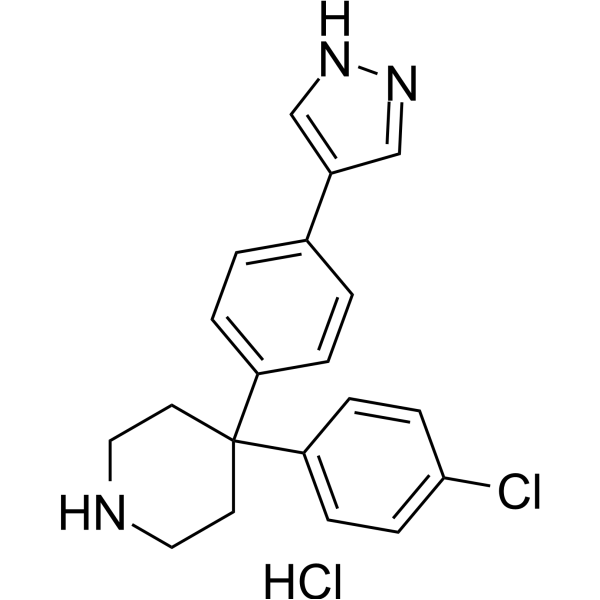 0 ImagesCat. No.: HY-12059BCAS No.: 2624336-89-4AT7867 hydrochloride is a potent and orally active inhibitor of AKT and p70 S6 kinase. AT7867 hydrochloride has anticancer effect.
-
AKT ligand-3
 0 ImagesCat. No.: HY-184958CAS No.: 2376136-15-9
-
Mito-Esculetin
 0 ImagesCat. No.: HY-184265CAS No.: 1993461-76-9Synonyms: Mito-EscMito-Esculetin (Mito-Esc) is an orally active mitochondria-targeted derivative of Esculetin (HY-N0284). Mito-Esculetin inhibits LPS-induced phosphorylation of STAT3 Tyr-705, partially reverses LPS-mediated depletion of SIRT3, and enhances the AMPK-SIRT1 signaling axis. Mito-Esculetin inhibits PAI-1 activity, regulates miRNA, and induces phosphorylation of IRS and AKT. Mito-Esculetin suppresses oxidant-induced endothelial dysfunction, Ang-II (HY-13948)- and high glucose-induced atherosclerotic plaque formation, Palmitate (HY-N0830)-induced insulin resistance, as well as high glucose-mediated endothelial cell senescence and inflammatory responses. Mito-Esculetin reduces body weight and non-esterified fatty acid (NEFA) levels. Mito-Esculetin can be used in research related to acute coronary syndrome, type 2 diabetes, and hyperglycemia-induced atherosclerosis.
-
Zinilisib
 0 ImagesCat. No.: HY-184099CAS No.: 3031974-57-6Synonyms: zinilisibum
-
PI3K-IN-63
 0 ImagesCat. No.: HY-100424CAS No.: 1202041-71-1PI3K-IN-63 is a selective PI3Kα inhibitor with a Ki of 0.35 nM against human targets. PI3K-IN-63 inhibits the phosphorylation of AKT at the S473 site in cellular assays. PI3K-IN-63 reduces the viability of non-small cell lung cancer cell lines carrying PIK3CA mutations. PI3K-IN-63 can be used in studies related to non-small cell lung cancer.
-
AKT-IN-2
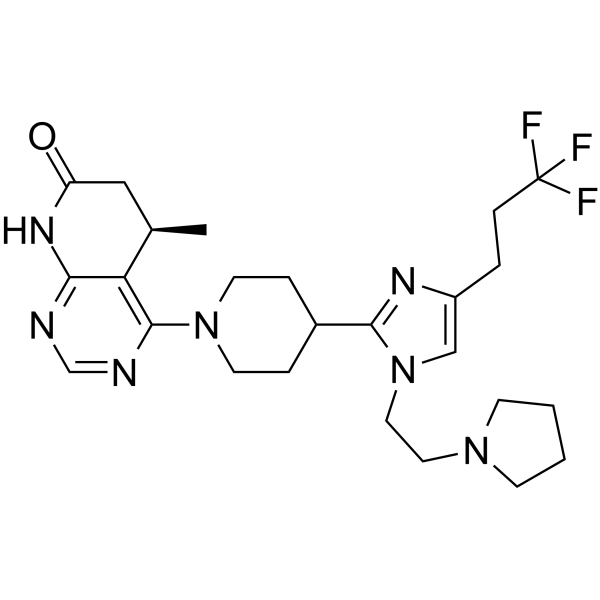 0 ImagesCat. No.: HY-112148CAS No.: 1295514-91-8
-
Recilisib sodium
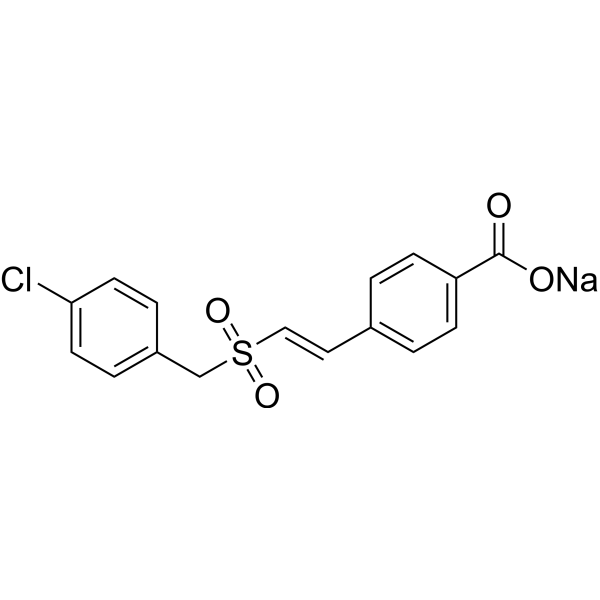 0 ImagesCat. No.: HY-101625ACAS No.: 922139-31-9Synonyms: ON 01210 sodium
-
MK-2206 free base
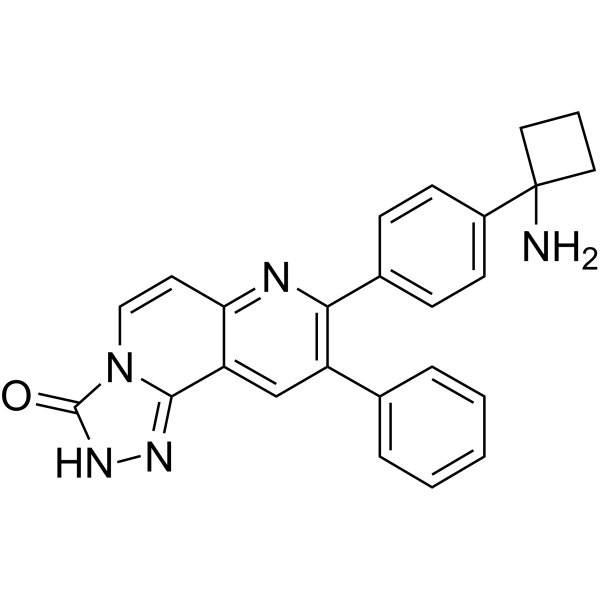 0 ImagesCat. No.: HY-10357CAS No.: 1032349-93-1MK-2206 free base is an orally active pan-AKT inhibitor, with IC50 values of 8 nM, 12 nM and 65 nM against AKT1, AKT2 and AKT3, respectively. MK-2206 free base inhibits the Akt/mTOR signaling pathway and reduces the levels of downstream GSK3β and Mcl-1 via proteasomal degradation. MK-2206 free base induces G1-phase cell cycle arrest, apoptosis, epithelial-mesenchymal transition, fibroblast activation and extracellular matrix deposition. MK-2206 free base causes transient hyperglycemia and hyperinsulinemia in animals. MK-2206 free base can be used in research related to solid tumors, renal fibrosis and hypercholesterolemia.
-
Doxepin-d3
 0 ImagesCat. No.: HY-139521SCAS No.: 138387-16-3Doxepin-d3 is the deuterated-labeled Doxepin (HY-B0725A). Doxepin is an orally active, blood-brain barrier penetrant tricyclic antidepressant with multiple activities including hypnosis, sedation, analgesia and vasodilation. Doxepin enhances the expression of PSD-95 and synapsin 1 via the PI3K/AKT/mTOR signaling pathway, and is metabolized to Desmethyldoxepin in vivo. Doxepin can be used in research related to various diseases such as depression, anxiety, obesity and atopic dermatitis.
-
Hypoglycemic agent 3
 0 ImagesCat. No.: HY-170692Hypoglycemic agent 3 (Compound H26), a derivative of corosolic acid, exhibits lipid-lowering and significant hypoglycemic effects and can be used as a hypoglycemic agent. Hypoglycemic agent 3 inhibits insulin resistance by targeting MCCC1 and can be used in the study of type 2 diabetes.
-
Anticancer agent 273
 0 ImagesCat. No.: HY-172784Anticancer agent 273 (Compound 9q) is a potent anticancer agent found in matrine. Anticancer agent 273 inhibits the proliferation of cancer cells (e.g., HeLa cells with an IC50 value of 4.48 μM). Anticancer agent 273 exerts anticancer effects by modulating the expression of PI3K/AKT and activating transcription factor 4 (ATF4), which promotes endoplasmic reticulum stress and induces apoptosis. Anticancer agent 273 is promising for research of cancers, such as cervical cancer.
-
MP-RM-1
 0 ImagesCat. No.: HY-P991243MP-RM-1 is an antibody-based, non-competitive ErbB-3 inhibitor with a Kd value of 32.7 nM. MP-RM-1 inhibits both ligand-dependent and ligand-independent ErbB-3 activation, blocks ErbB-2/ErbB-3 heterodimerization, induces ErbB-3 internalization and degradation, and suppresses the phosphorylation of downstream Akt. MP-RM-1 exerts its antagonistic effect through a non-competitive mechanism. MP-RM-1 inhibits tumor growth in melanoma and prostate cancer xenograft models in nude mice and reduces the proliferative activity of tumor cells.
-
Avenanthramide B
 0 ImagesCat. No.: HY-W795967CAS No.: 108605-69-2Avenanthramide B is an oat phytoalexin, a porcine liver esterase inhibitor, and an amyloglucosidase inhibitor, with an IC50 of 4.4 mg/mL against Aspergillus niger amyloglucosidase. Avenanthramide B increases the activation status of Akt1 and the expression level of eNOS, elevates the levels of NO and cGMP, and reduces the level of superoxide anions. Avenanthramide B acts on amyloglucosidase via a competitive mixed mechanism, functions as a fluorescence quencher, and exerts bidirectional regulatory effects on protein thermal stability. Avenanthramide B serves as a substrate for oat leaf peroxidase. Avenanthramide B can be used in research related to type 2 diabetes.
-
Isomaltulose monohydrate
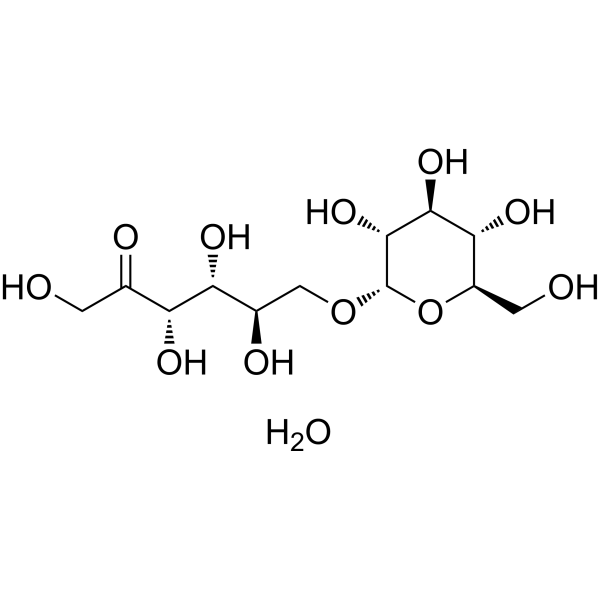 0 ImagesCat. No.: HY-W745090CAS No.: 58024-13-8Isomaltulose monohydrate is a fMLP inhibitor and also inhibits Src kinase, ERK1/2, p38 and AKT phosphorylation signals in immune regulation. Isomaltulose monohydrate can interfere with the interaction between the βγ subunit of the fMLP receptor Gi protein and its downstream molecules, thereby inhibiting fMLP-induced respiratory burst. Isomaltulose monohydrate inhibits fMLP (0.1 μM)-induced superoxide anion production (IC50: 1.98 μM) , cathepsin G release (IC< sub>50: 2.76 μM) and chemotaxis. Isomaltulose monohydrate can improve excessive activation of neutrophils and reduce inflammation or tissue damage. A series of derivatives of Isomaltulose monohydrate are found to have inhibitory effects on FSGS-related TRPC6 functional mutants.
-
Miransertib mesylate
 0 ImagesCat. No.: HY-19719BCAS No.: 1817727-88-0Synonyms: ARQ-092 mesylateMiransertib (ARQ-092) mesylate is a potent, orally active, selective and allosteric Akt inhibitor with IC50s of 2.7 nM, 14 nM and 8.1 nM for Akt1, Akt2, Akt3, respectively. Miransertib mesylate is also a potent the AKT1-E17K mutant protein inhibitor and has the potential for PI3K/AKT-driven tumors and Proteus syndrome research. Miransertib mesylate is effective against Leishmania.
-
AKT-IN-28
 0 ImagesCat. No.: HY-174254CAS No.: 3099809-16-9AKT-IN-28 is an Akt allosteric inhibitor, a derivative of Shikonin (HY-N0822). AKT-IN-28 effectively binds to the allosteric site of Akt through hydrophobic and hydrogen interactions with Kd of 2.07 μM. AKT-IN-28 significantly inhibits Akt activity, induces cell apoptosis, arrests cell cycle in G2/M phase, and suppresses proliferation, migration and metabolism of KRAS mutant colorectal cancer cells.
-
L-Valine-15N,d8
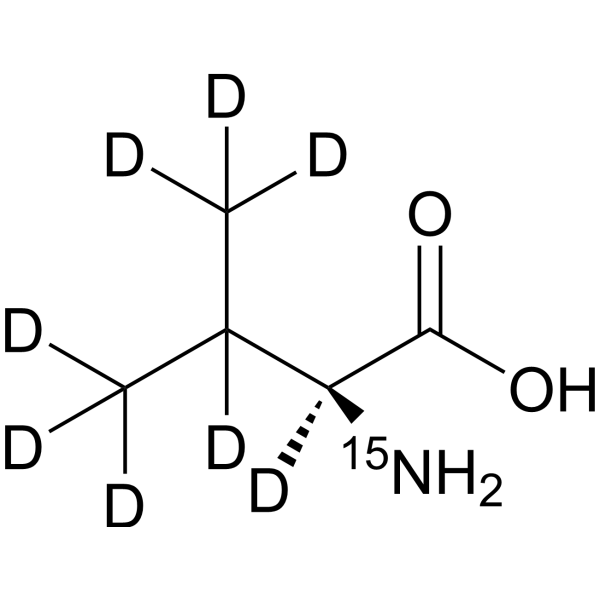 0 ImagesCat. No.: HY-N0717S9Synonyms: (S)-Valine-15N,d8L-Valine-15N,d8 ((S)-Valine-15N,d8) is the deuterium and 15N labeled L-Valine (HY-N0717). L-Valine ((S)-Valine) is a nonlinear semiorganic material. L-Valine causes lipid peroxidation and accumulation of malondialdehyde (MDA), exhibits inhibitory activity against cyanobacteria. L-Valine inhibits multidrug-resistant bacteria through activation of PI3K/Akt signaling pathway and inhibition of arginase.
-
Moracin G
 0 ImagesCat. No.: HY-N17632CAS No.: 73338-86-0Moracin G is a plant-derived kinase modulator and receptor ligand that forms stable bindings with multiple key proteins (AKT1, COX2 and Estrogen receptor 1) and competitively inhibits the activity of specific kinases. By binding to MELK to disrupt cell cycle regulation, Moracin G impairs the survival and proliferation of cancer cells, induces cancer cell apoptosis, and thereby exerts anti-tumor potential. Moracin G can be used in research related to periodontitis and breast cancer.
-
FKL-137
 0 ImagesCat. No.: HY-183069FKL-137 is a GLUT1 and PI3K/AKT signaling pathway inhibitor. FKL-137 binds to GLUT1, reduces glucose uptake and lactate secretion, downregulates glucose metabolism-related proteins, and inhibits erythroleukemia cell proliferation. FKL-137 downregulates PI3K, p-PI3K, AKT, p-AKT levels, disrupts the PI3K/AKT-GLUT1 positive feedback loop, and suppresses erythroleukemia cell proliferation. FKL-137 induces apoptosis via upregulated Bax, Cleaved-PARP and downregulated Bcl-2, PARP. FKL-137 can be used for the research of erythroleukemia.
-
CZY43
 0 ImagesCat. No.: HY-172091CZY43 is a HER3 degrader with a DC50 of 559 nM. CZY43 induces HER3 degradation via autophagy, inhibits HER3-dependent signaling pathways, suppresses downstream PI3K/Akt signaling, and thereby inhibits tumor cell proliferation and cell adhesion. CZY43 can be used in studies of breast cancer and non-small cell lung cancer.




