



Akt Degrader
- 1
-
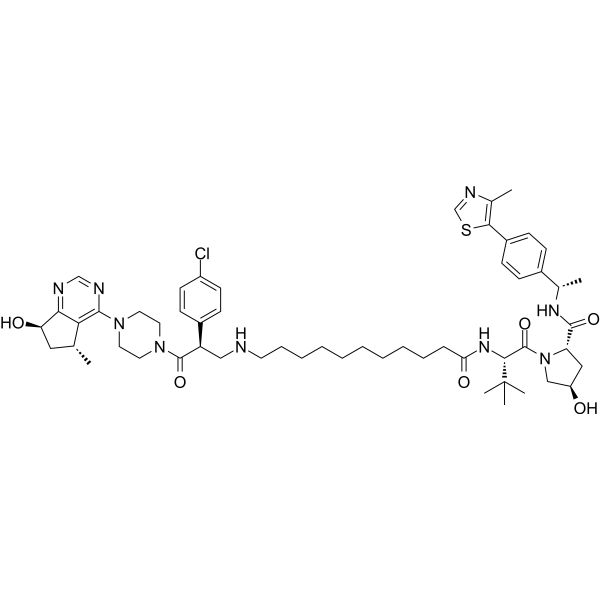
INY-05-040
 0 Images
INY-05-040 is an AKT degrader that can selectively and quickly degrade all three AKT isoforms. INY-05-040 exhibits anti-cancer activity. INY-05-040 can inhibit downstream signaling and cell proliferation in 288 cancer cell lines. INY-05-040 can suppress AKT signaling and induces the stress mitogen-activated protein kinase (MAPK) c-Jun N-terminal kinase (JNK). INY-05-040 is effective for breast cancer lines with a low-baseline activation of stress MAPK pathway. INY-05-040 can be studied for anti-cancer research.
-
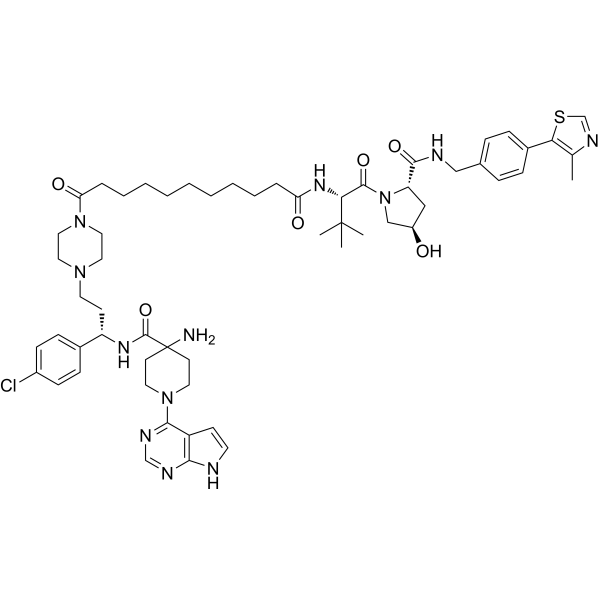
MS21
 0 Images
MS21 is an effective AKT PROTAC degrader. MS21 can inhibit mutations in the PI3K/PTEN pathway, suppress the proliferation and induce cell cycle arrest of tumor cells. MS21 has anti-tumor activity. (Pink: AKT ligand-2 (HY-48682); Black: Linker (HY-W014125); Blue: (S,R,S)-AHPC (HY-125845)).
-
MS15 TFA
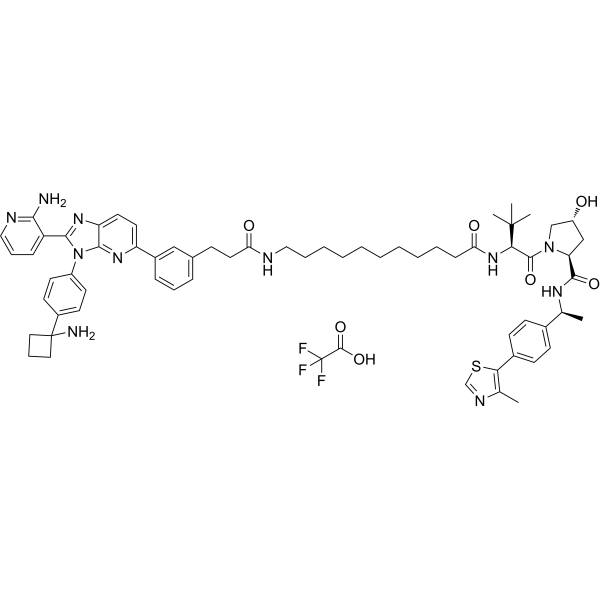 0 ImagesCat. No.: HY-151613APurity: 99.82%
-
Akt3 degrader 1
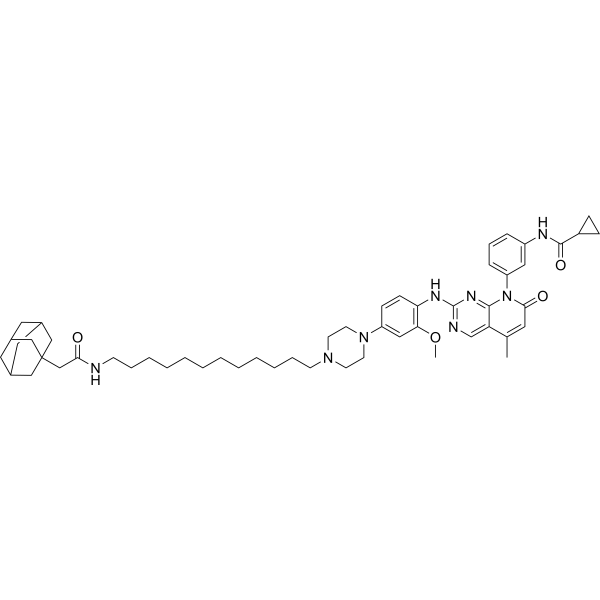 0 ImagesCat. No.: HY-151606CAS No.: 2836342-69-7
Akt3 degrader 1 is an orally active selective Akt3 degrader with a DC50 of 13 nM. Akt3 degrader 1 binds to the PH domain of Akt3 to trigger proteasome-mediated degradation, with minimal effects on Akt1/Akt2. Akt3 degrader 1 inhibits cancer cell growth. Akt3 degrader 1 can be used for the research of non-small cell lung cancer.
-
MS143
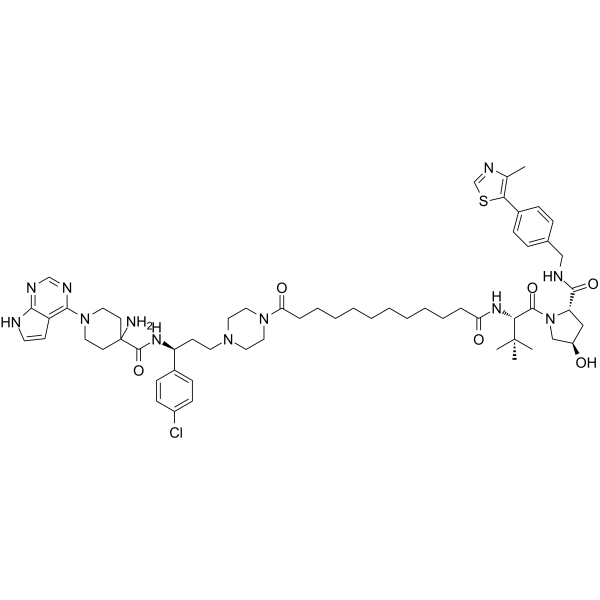 0 ImagesCat. No.: HY-143883CAS No.: 2376137-41-4
MS143 is a VHL-recruiting AKT protein PROTAC degrader with a DC50 of 46 nM in PC3 prostate cancer cells. MS143 preferentially binds to AKT1 and AKT3, with weaker binding activity towards AKT2. MS143 degrades AKT and blocks the phosphorylation of downstream signaling molecules in the PI3K/AKT/mTOR pathway. MS143 inhibits cancer cell growth and xenograft tumor growth. MS143 can be used for research on prostate cancer, triple-negative breast cancer, and breast cancer.
-
HSP90-IN-11
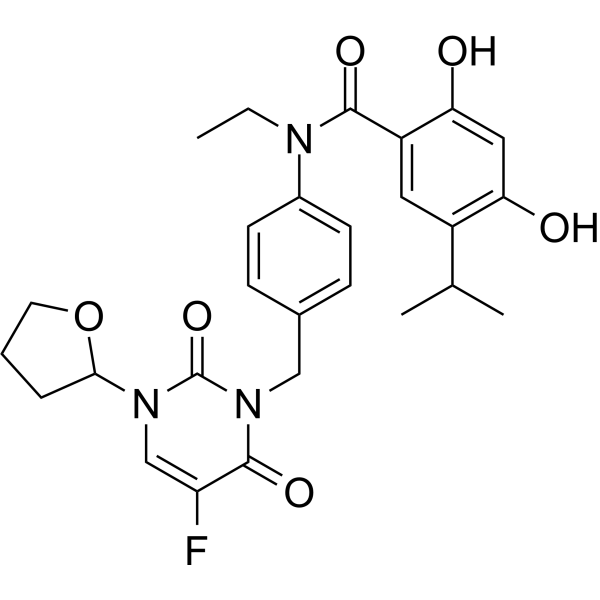 0 ImagesCat. No.: HY-146325CAS No.: 2986564-20-7
HSP90-IN-11 is a HSP90 inhibitor with an IC50 of 27.8 nM. HSP90-IN-11 inhibits the activity of HSP90, which in turn induces rapid degradation of EGFR and Akt proteins in non-small cell lung cancer (NSCLC) cells. HSP90-IN-11 induces accumulation of the G1 subphase cell population in NSCLC cells, activates caspase-3, caspase-8, caspase-9 and PARP, thereby triggering apoptosis. HSP90-IN-11 exhibits antiproliferative activity in colorectal cancer and NSCLC cells. HSP90-IN-11 can be used for the research of colorectal cancer and non-small cell lung cancer.
-
PROTAC Akt3 Degrader-1
 0 ImagesCat. No.: HY-175975CAS No.: 3048204-93-6
-
Akt RIMTAC-1
 0 ImagesCat. No.: HY-187500
Akt RIMTAC-1 is a Akt RIMTAC degrader (a PROTAC-like agent) with a DC50 of 3.52 μM. Akt RIMTAC-1 forms a ternary complex with AKT and RIPK1, and recruits the VHL E3 ligase complex to mediate ubiquitination and proteasomal degradation. Akt RIMTAC-1 does not alter AKT1 mRNA levels (pink: AKT ligand-5 (HY-187501); blue: RIPK1-ligand-4 (HY-187391); black: Linker (HY-23166)).
-
PROTAC PI3Kδ degrader-1
 0 ImagesCat. No.: HY-176239
PROTAC PI3Kδ degrader-1 is a Lysine-targeted covalent PI3Kδ PROTAC degrader with a DC50 of 3.98 nM. PROTAC PI3Kδ degrader-1 has a potent antiproliferative activity and selective PI3Kδ inhibition (IC50: 8 nM). PROTAC PI3Kδ degrader-1 also significantly degrades p-AKT, induces cell cycle arrest in G1 phase and prompts cell apoptosis and autophagy. PROTAC PI3Kδ degrader-1 effectively inhibits the tumor growth in SU-DHL-6 xenograft mice model.
-
SST0116CL1
 0 ImagesCat. No.: HY-164399CAS No.: 1799802-29-1
SST0116CL1 is a HSP90 inhibitor (IC50: 0.21 μM). SST0116CL1 binds to the ATP binding pocket of Hsp90, and interferes with Hsp90 chaperone function thus resulting in client protein (EGFR, CDK4 and AKT) degradation. SST0116CL1 induces degradation of Her2 in BT-474 cell (IC50: 0.2 μM). SST0116CL1 has antiproliferative activity and inhibits tumor growth. SST0116CL1 can be used for the study of leukemia, gastric and ovarian carcinoma.
-
MS5033
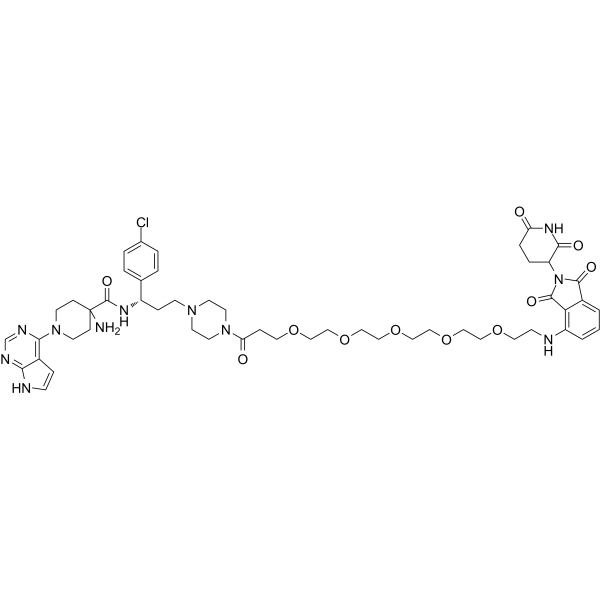 0 ImagesCat. No.: HY-143882CAS No.: 2376137-29-8
MS5033 is a CRBN-recruiting PROTAC degrader that targets AKT1. The IC50 values of MS5033 against human AKT range from 1.3 nM to 798 nM, with Kd values ranging from 4.8 nM to 160 nM. MS5033 inhibits downstream AKT signaling pathways, including the phosphorylation of PRAS40, thereby suppressing cancer cell proliferation and colony formation and inducing cancer cell apoptosis. MS5033 can be used in research on glioma, prostate cancer, triple-negative breast cancer, breast cancer and solid tumors.
- 1



