



Akt
PKB; Protein kinase B
Akt/PKB (Protein kinase B), a serine/threonine protein kinase with antiapoptotic activity, is one of the major downstream targets of PtdIns(3,4,5)P3 signaling pathway. It contains a pleckstrin homology domain (PH domain) that specifically binds PtdIns(3,4,5)P3 on the plasma membrane. Akt phosphorylation and activation are directly determined by the level of PtdIns(3,4,5)P3 on the plasma membrane, which is regulated by PI3K.
Akt consists of three isoforms: PKBα/Akt1, PKBβ/Akt2 and PKBγ/Akt3. Akt isoforms have an N-terminal PH (pleckstrin homology) domain and a kinase domain, which are separated by a 39-amino-acid hinge region. Catalytically active Akt regulates the function of numerous substrates involved in cell survival, growth, proliferation, metabolism and protein synthesis.
Akt is a crucial mediator of cell survival and its deactivation is implicated in various stress-induced pathological cell death and degenerative diseases.
Akt Isoform Specific Products
All Product Categories
-
Akt Inhibitors
(959)
View all products
-
Akt Agonists
(7)
View all products
-
Akt Activators
(283)
View all products
-
Akt Modulators
(23)
View all products
-
Akt Chemical
(1)
View all products
-
Akt Inducers
(9)
View all products
-
Akt Degraders
(9)
View all products
-
Akt Control
(1)
View all products
-
Akt Ligands
(6)
View all products
-
AKT Serine/Threonine Kinase 2 (AKT2) Proteins
(5)
View all products
-
AKT Serine/Threonine Kinase 3 (AKT3) Proteins
(6)
View all products
-
Akt Related Products (1407)
Related Products (1407)

-
Recombinant Proteins (11)
-
Antibodies (11)
-
Akt Isoform Comparison
-
Dehydrocostus Lactone (Standard)
 0 ImagesSynonyms: (-)-Dehydrocostus lactone (Standard); Epiligulyl oxide (Standard)Dehydrocostus Lactone (Standard) ((-)-Dehydrocostus lactone (Standard)) is the analytical standard of Dehydrocostus Lactone (HY-N0591). This product is intended for research and analytical applications. Dehydrocostus Lactone is a natural sesquiterpene that can be isolated from Saussurea lappa. Dehydrocostus Lactone has multiple activities such as anti-inflammatory, antibacterial, anti-tumor, and immunomodulatory effects. Dehydrocostus Lactone has an MIC of 2 µg/mL against Mycobacterium tuberculosis. Dehydrocostus Lactone can also inhibit the killing activity of cytotoxic T lymphocytes and induce apoptosis in tumor cells.
-
D-Allose-13C-2
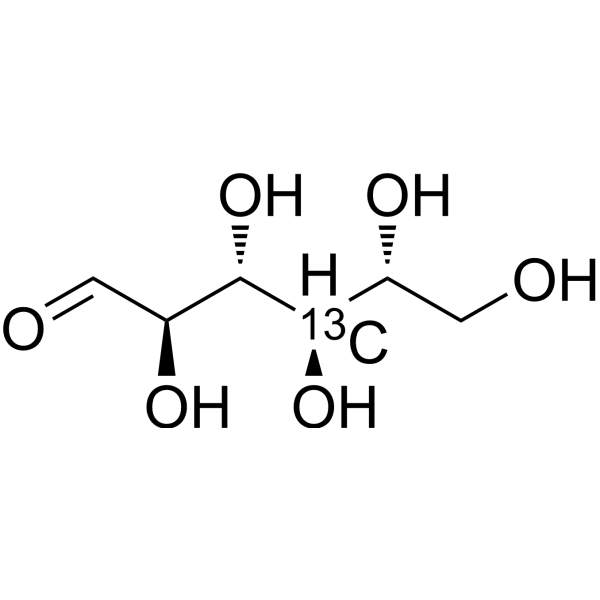 0 ImagesCat. No.: HY-128741S2D-Allose-13C-2 is the 13C labeled D-Allose (HY-128741). D-Allose exhibits antitumor activity against various cancer cells. D-Allose scavenges reactive oxygen species (ROS) and reduces oxidative stress damage. D-Allose exhibits anti-inflammatory and neuroprotective through inhibition of TLR4/PI3K/AKT signaling pathway. D-Allose exhibits antihypertensive, cryoprotective, and anti-osteoporotic activities.
-
Lumichrome-d8
 0 ImagesCat. No.: HY-W708917Lumichrome-d8 is the deuterium labeled Lumichrome (HY-115385). Lumichrome, a photodegradation product of Riboflavin, is an endogenous compound in humans. Lumichrome inhibits human lung cancer cell growth and induces apoptosis via a p53-dependent mechanism. Lumichrom is the inhibitor for AKT/β-catenin signaling pathway.
-
Delphinidin 3-glucoside chloride (Standard)
 0 ImagesCat. No.: HY-108052RCAS No.: 6906-38-3Synonyms: Delphinidin 3-O-glucoside chloride (Standard); Delphinidin 3-O-β-glucoside chloride (Standard)Delphinidin 3-glucoside (chloride) (Standard) is the analytical standard of Delphinidin 3-glucoside (chloride). This product is intended for research and analytical applications. Delphinidin 3-glucoside chloride (Delphinidin 3-O-glucoside chloride) is an active anthocyanin found in Hibiscus sabdariffa extract. Delphinidin 3-glucoside chloride induces a pro-apoptotic effect in B cell chronic lymphocytic leukaemia (B CLL). Delphinidin 3-glucoside chloride exerts phytoestrogen activity by binding to ERβ, with an IC50 of 9.7 μM. Delphinidin-3-O-glucoside chloride inhibits EGFR with an IC50 of 2.37 µM. Delphinidin 3-glucoside chloride exhibits antitumor effects through pAKT/IRF1/HOTAIR pathway. Delphinidin 3-glucoside chloride exhibits efficacy against oxidative stress, inhibits platelet activation and endothelial dysfunction.
-
Dihydrocapsaicin (Standard)
 0 ImagesDihydrocapsaicin (Standard) is the analytical standard of Dihydrocapsaicin. This product is intended for research and analytical applications. Dihydrocapsaicin, a capsaicin, is a potent and selective TRPV1 (transient receptor potential vanilloid channel 1) agonist. Dihydrocapsaicin reduces AIF, Bax, and Caspase-3 expressions, and increased Bcl-2, Bcl-xL and p-Akt levels. Dihydrocapsaicin enhances the hypothermia-induced neuroprotection following ischemic stroke via PI3K/Akt regulation in rat.
-
Akt/SKG Substrate Peptide
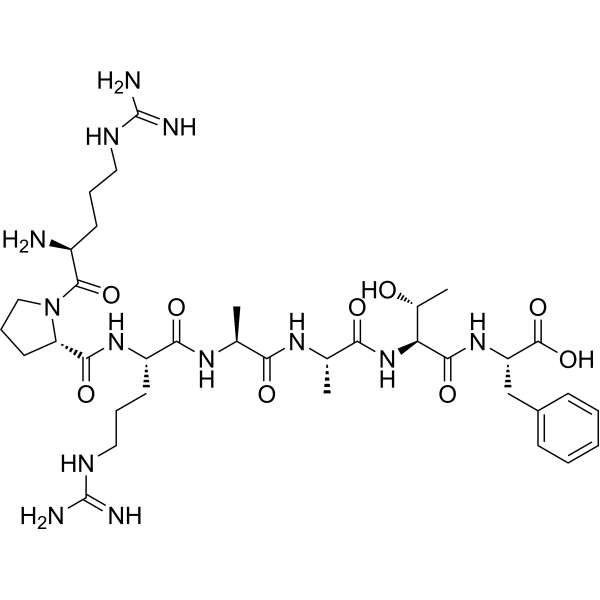 0 ImagesCat. No.: HY-P0141CAS No.: 276680-69-4Akt/SKG Substrate Peptide is a synthetic peptide suitable as a substrate for Akt/PKB, which is not phosphorylated by p70S6K or MAPK1.
-
Nastorazepide hemicalcium
 0 ImagesCat. No.: HY-14575CAS No.: 343326-69-2Synonyms: Z-360 hemicalciumNastorazepide (Z-360) hemicalcium is an orally active 1,5-benzodiazepine derivative and gastrin/CCK-2 receptor antagonist. Nastorazepide hemicalcium inhibits the specific binding of [3H]CCK-8 to the human CCK-2 receptor with a Ki value of 0.47 nM. Nastorazepide hemicalcium inhibits IL-1β, ephrin B1, VEGF, and HIF-1alpha, reduces Akt and NR2B phosphorylation. Nastorazepide hemicalcium has antitumor activity against pancreatic cancer. Nastorazepide hemicalcium inhibits colorectal cancer liver metastasis and relieves pain.
-
Ciprofloxacin (GMP)
 0 ImagesCat. No.: HY-B0356GCAS No.: 85721-33-1Synonyms: Bay-09867 (GMP)Ciprofloxacin GMP is Ciprofloxacin (HY-B0356) produced by using GMP guidelines. GMP small molecules works appropriately as an auxiliary reagent for cell therapy manufacture. Ciprofloxacin (Bay-09867) is an orally active, blood-brain barrier permeable fluoroquinolone antibacterial agent. Ciprofloxacin exerts bactericidal effects primarily by inhibiting topoisomerase II and IV. Ciprofloxacin inhibits the proliferation of human dental pulp stem cells and chondrocytes from young rats, and also activates the Akt signaling pathway and upregulates markers such as β-catenin and Nanog to maintain the morphological characteristics of stem cells. Ciprofloxacin induces significant neurotoxicity and tissue damage, including reducing serotonin and glutathione levels in the brain, inducing oxidative stress and depression-like behaviors, and causing articular cartilage damage. Ciprofloxacin can be applied to research related to infections of necrotic young permanent teeth and neurotoxicity.
-
Calebin A
 0 ImagesCalebin A is a PI3K/Akt/mTOR, MAPK, and NF-κB inhibitor with oral effectiveness. Calebin A can block the autophagy-repressive, inhibiting apoptosis. Calebin A has anti-tumor activity by epigenetic regulation. Calebin A suppresses adipogenesis, modulates thermogenesis, and enriches gut probiotics. Calebin A can be used in research on osteoarthritis, Alzheimer's disease, type 2 diabetes, malignant peripheral nerve sheath tumors, and colorectal cancer.
-
Tubulin-IN-64
 0 ImagesCat. No.: HY-181491Tubulin-IN-64 is a sulfonated styrylquinazoline derivative with high selectivity antitumor activity. Tubulin-IN-64 targets tubulin, inhibits the EGFR/Akt/mTOR and EGFR/Ras signaling pathways, induces cell cycle arrest, apoptosis and autophagy. Tubulin-IN-64 exhibits significant antitumor efficacy in the zebrafish GBM xenograft model. Tubulin-IN-64 can be used for the research on glioblastoma and leukemia.
-
STA-1474
 0 ImagesCat. No.: HY-13752CAS No.: 1118915-78-8STA-1474 is an orally active and highly selective HSP90 inhibitor, as well as a phosphate prodrug of the HSP90 inhibitor STA-9090 (HY-15205). STA-1474 disrupts the chaperone function of HSP90 and promotes the degradation of client proteins. STA-1474 inhibits the phosphorylation of Met, Akt and STAT3, thereby blocking related signaling pathways. STA-1474 induces apoptosis and inhibits proliferation of osteosarcoma cells, and triggers the up-regulation of HSP70 and HSP90. STA-1474 induces tumor regression and caspase-3 activation in mouse osteosarcoma xenograft models. STA-1474 can be used in the research of osteosarcoma.
-
ACT001 hydrochloride
 0 ImagesCat. No.: HY-128861BCAS No.: 1403357-80-1Synonyms: Dimethylaminomicheliolide hydrochloride; DMAMCL hydrochlorideACT001 (Dimethylaminomicheliolide; DMAMCL) hydrochloride is an orally active, blood-brain barrier-permeable anti-inflammatory and anti-tumor agent. ACT001 hydrochloride exerts microglia-mediated neuroanti-inflammatory effects by inhibiting the AKT/NF-κB/NLRP3 axis and suppressing apoptosis (apoptosis). ACT001 hydrochloride inhibits tumor proliferation by upregulating NKTR and inhibiting AKT. ACT001 hydrochloride alleviates metabolic-associated fatty liver disease by regulating gut microbiota and inhibiting ileal FXR. ACT001 hydrochloride inhibits pyroptosis (pyroptosis) and pro-inflammatory cytokine release by activating PPAR-γ and inhibiting NF-κB/NLRP3.
-
Ack1 inhibitor 1
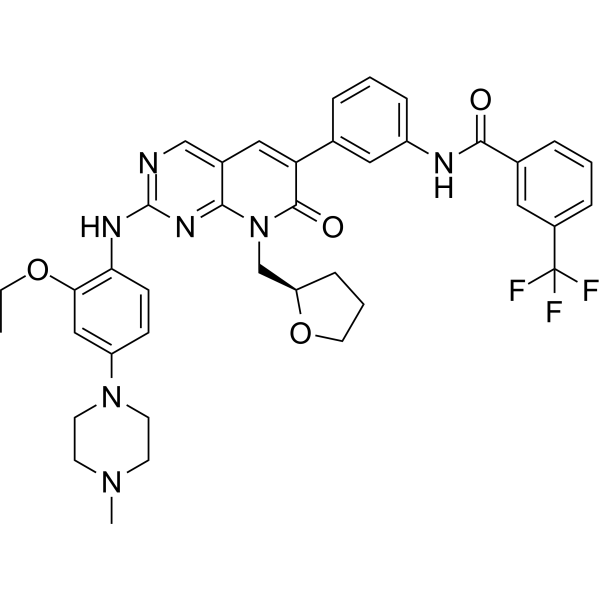 0 ImagesCat. No.: HY-149989CAS No.: 2924415-92-7Ack1 inhibitor 1 is a potent, selective, and orally active inhibitor of ACK1 kinase with an IC50 value of 2.1 nM. Ack1 inhibitor 1 inhibits the phosphorylation of ACK1 and activation of downstream AKT. Ack1 inhibitor 1 has anti-tumor activity.
-
SIBP-03
 0 ImagesCat. No.: HY-P991984SIBP-03 is a specifical anti-HER3 antibody. SIBP-03 binds strongly and specifically to recombinant HER3 protein. SIBP-03 inhibits HER3 activation, as well as the downstream PI3K/AKT signaling pathway. SIBP-03 exhibits anticancer activity against squamous cell carcinoma, non-small cell lung cancer, gastric cancer, and breast cancer. SIBP-03 synergistically enhances the antitumor activity of DS-8201 (HY-138298A) and Cetuximab (HY-P9905).
-
FLT3-IN-41
 0 ImagesCat. No.: HY-182281FLT3-IN-41 is a highly potent FLT3 inhibitor. The IC50 values of FLT3-IN-41 against human FLT3-ITD and FLT3-WT are 3.16 nM and 294.7 nM, respectively. By binding to the ATP-binding pockets of FLT3-ITD and FLT3-WT and forming hydrogen bonds with hinge region residues and Phe830, FLT3-IN-41 inhibits the STAT5, Akt and Erk signaling pathways. FLT3-IN-41 induces G2/M phase arrest and promotes apoptosis in FLT3-ITD-positive acute myeloid leukemia cells, exhibiting significant antiproliferative activity. FLT3-IN-41 serves as a valuable tool for the study of acute myeloid leukemia.
-
Polygalasaponin F (Standard)
 0 ImagesCat. No.: HY-N0392RCAS No.: 882664-74-6Polygalasaponin F (Standard) is the analytical standard of Polygalasaponin F. This product is intended for research and analytical applications. Polygalasaponin F is an orally active triterpenoid saponin monomer. Polygalasaponin F downregulates the expression of Bax, p53, caspase-3, NF-κB p65 and MEK1; restores and upregulates the expression of Bcl-2; activates the PI3K/Akt signaling pathway; inhibits the phosphorylation of p38 MAPK, nuclear translocation of NF-κB, TLR4-mediated signaling pathway, mitophagy (Mitophagy) and ROS production; enhances cell viability and suppresses apoptosis (Apoptosis). Polygalasaponin F maintains mitochondrial function, alleviates Ca2+ overload, upregulates pCREB and BDNF, preserves cell viability and inhibits the release of inflammatory cytokines. Polygalasaponin F alleviates lung injury induced by influenza A H1N1 and cerebral ischemia-reperfusion injury. Polygalasaponin F is applicable to researches related to Parkinson's disease, cerebral ischemia, pneumonia induced by influenza A H1N1, stroke and Alzheimer's disease.
-
A2073
 0 ImagesCat. No.: HY-174321CAS No.: 2834742-70-8A2073 is a flavagline derivative that potently inhibits the proliferation of erythroleukemia cells by causing cell cycle arrest and suppressing the MAPK, NF-κB, and PI3K signaling pathways. A2073 formes stable interactions with cell cycle-related proteins (CDK1, CCNA2, PRIM1). A2073 exhibits significant anti-proliferative activity against tumor cells while maintaining a favorable toxicity profile in a zebrafish xenograft tumor model. A2073 can be used for the study of acute erythroleukemia.
-
AS-605240 potassium
 0 ImagesCat. No.: HY-10109AAS-605240 (potassium) is an orally active PI3Kγ inhibitor (IC50: 8 nM; Ki: 7.8 nM). AS-605240 (potassium) inhibits MCP-1- and CSF1-induced PKB phosphorylation (IC50 values are 0.181 and 0.550 µM, respectively). AS-605240 (potassium) reduces neutrophil recruitment in RANTES (CCL5)- and thioglycolate-induced peritonitis mouse models (EC50 values are 9.1 and 10 mg/kg, respectively). AS-605240 (potassium) ameliorates αCII-IA-induced arthritis in mice.
-
SHR-A1403 Antibody
 0 ImagesCat. No.: HY-P992464SHR-A1403 Antibody is an anti-c-Met monoclonal antibody. SHR-A1403 Antibody down-regulates phosphorylated c-Met, Akt, ERK, weakens intracellular signal cascades, and mediates antibody-c-Met complex endocytosis. SHR-A1403 Antibody can be used for the research of c-met-overexpressing cancers and pancreatic ductal adenocarcinoma.
-
SHP2-IN-8
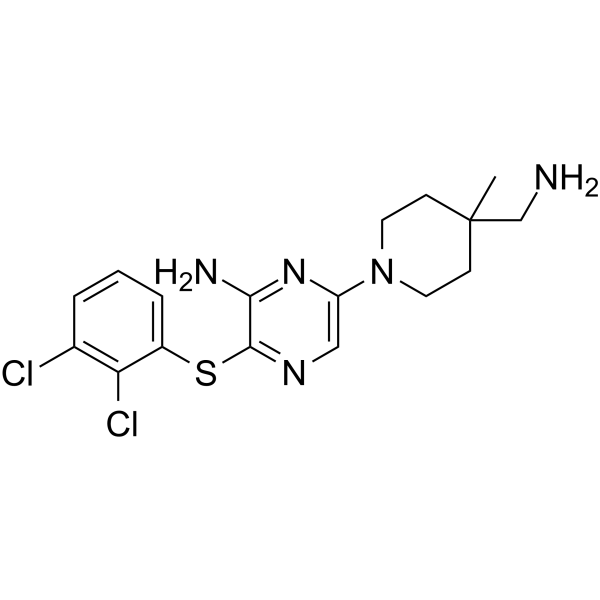 0 ImagesCat. No.: HY-144396CAS No.: 1801692-60-3SHP2-IN-8 is a highly potent, selective, and cellularly active allosteric SHP2 inhibitor with IC50 value of 23 nM and Ki of 22 nM. SHP2-IN-8 is reversible and noncompetitive. SHP2-IN-8 causes a significant thermal shift with the ΔTm of 7.01 °C. SHP2-IN-8 induces the apoptosis and inhibits the phosphorylation of AKT in Hela cells.




