



Apoptosis
Apoptosis
Apoptosis is a distinctive form of cell death exhibiting specific morphological and biochemical characteristics, including cell membrane blebbing, chromatin condensation, genomic DNA fragmentation, and exposure of specific phagocytosis signaling molecules on the cell surface. Cells undergoing apoptosis differ from those dying through necrosis. Necrotic cells are usually recognized by the immune system as a danger signal and, thus, resulting in inflammation; in contrast, apoptotic death is quiet and orderly.
There are two major pathways of apoptotic cell death induction: The intrinsic pathway, also called the Bcl-2-regulated or mitochondrial pathway, is activated by various developmental cues or cytotoxic insults, such as viral infection, DNA damage and growth-factor deprivation, and is strictly controlled by the BCL-2 family of proteins. The extrinsic or death-receptor pathway is triggered by ligation of death receptors (members of the tumor necrosis factor (TNF) receptor family, such as Fas or TNF receptor-1 (TNFR1)) that contain an intracellular death domain, which can recruit and activate caspase-8 through the adaptor protein Fas-associated death domain (FADD; also known as MORT1) at the cell surface. This recruitment causes subsequent activation of downstream (effector) caspases, such as caspase-3, -6 or -7, without any involvement of the BCL-2 family.
Studies suggest that alterations in cell survival contribute to the pathogenesis of a number of human diseases, including cancer, viral infections, autoimmune diseases, neurodegenerative disorders, and AIDS (acquired immunodeficiency syndrome). Treatments designed to specifically alter the apoptotic threshold may have the potential to change the natural progression of some of these diseases.
All Product Categories
-
Apoptosis Inhibitors
(904)
View all products
-
Apoptosis Agonists
(7)
View all products
-
Apoptosis Antagonists
(9)
View all products
-
Apoptosis Activators
(363)
View all products
-
Apoptosis Modulators
(60)
View all products
-
Apoptosis Inducers
(7944)
View all products
-
Apoptosis Degrader
(1)
View all products
-
Apoptosis Controls
(33)
View all products
-
Apoptosis Related Products (9888)
Related Products (9888)

-
Antibodies (120)
-
EGFR-IN-178
 0 ImagesCat. No.: HY-178448EGFR-IN-178 is an orally active EGFR mutant inhibitor, exhibits highly selective inhibitory activity against mutants of the EGFR enzyme, including Del19 (IC50 = 3.4 nM), L858R/T790 M (IC50 = 2.9 nM), and Del19/T790 M (IC50 = 2.5 nM). EGFR-IN-178 has good activity against JAK2 (IC50 = 55.6 nM) and JAK3 (IC50 = 46.1 nM) kinases. EGFR-IN-178 can increase cellular lipid oxide MDA, meanwhile decrease GSH content, causing ferroptosis in cancer cells. EGFR-IN-178 promotes apoptosis by increasing cleaved caspase-3 expression. EGFR-IN-178 can inhibit the phosphorylation of EGFR protein and decrease the active form p-JAK2 for JAK2, induce an increase in intracellular ROS. EGFR-IN-178 can be used for the study of non-small cell lung cancer (NSCLC).
-
Rohitukine
 0 ImagesCat. No.: HY-119831CAS No.: 71294-60-5Rohitukine is an orally active CDK9/T1 inhibitor with an IC50 of 0.3 μM. Rohitukine blocks ATP binding sites of CDK2/A and CDK9/T1, suppresses PPARγ, AKT, mTOR, C/EBPα, SREBP-2, and NF-κB signaling, and increases hepatic LXRα expression. Rohitukine induces S-phase cell cycle arrest, ROS generation, apoptosis, and exhibits anti-inflammatory activity. Rohitukine can be used for the research of leukemia, pancreatic cancer, prostate cancer, breast cancer, CNS cancer, ovarian cancer, lung cancer, dyslipidemia, inflammatory diseases, inflammatory bowel disease, and arthritis.
-
Anticancer agent 110
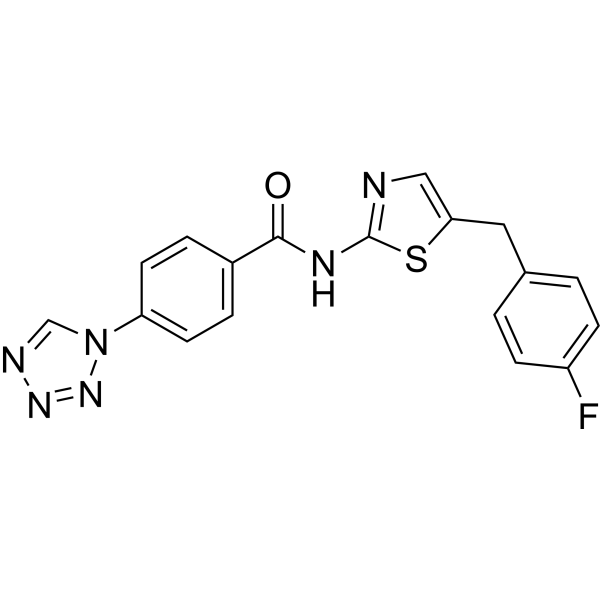 0 ImagesCat. No.: HY-149805CAS No.: 887349-03-3Anticancer agent 110 is an anticancer agent with in vitro anticancer activity and excellent anti-leukemia potency. Anticancer agent 110 is highly cytotoxic to K-562 lineage chronic myelogenous leukemia cells at nanomolar concentrations. Anticancer agent 110 causes DNA damage and leads to apoptosis.
-
EGFR/Akt/STAT3-IN-1
 0 ImagesCat. No.: HY-189464EGFR/Akt/STAT3-IN-1 is an EGFR/Akt/STAT3 inhibitor (IC50 values of 9.79 μM, 17.80 μM, and 8.30 μM, respectively) that induces apoptosis and G0/G1 cell cycle arrest by inhibiting EGFR tyrosine kinase, Akt kinase, and STAT3 transcriptional activity, and exhibits selective cytotoxicity against cancer cells. EGFR/Akt/STAT3-IN-1 can be used for research on non-small cell lung cancer.
-
VSW1198
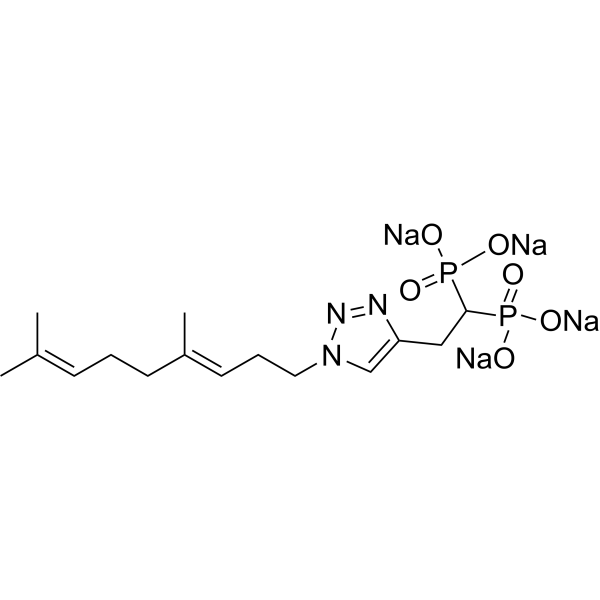 0 ImagesCat. No.: HY-111636VSW1198 is an inhibitor for geranylgeranyl diphosphate synthase (GGDPS) with an IC50 of 45 nM. VSW1198 reveals antitumor activity in myeloma- and prostate cancer with liver toxicity.
-
HDAC8-IN-3
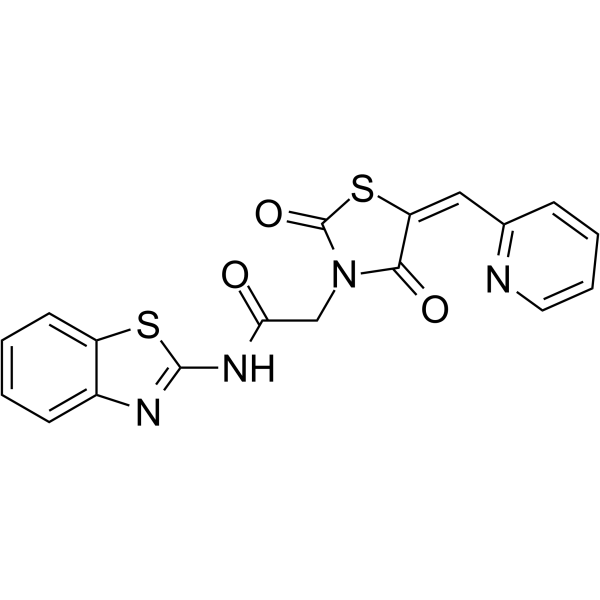 0 ImagesCat. No.: HY-147934CAS No.: 2432825-93-7
-
Apoptosis inducer 24
 0 ImagesCat. No.: HY-163923CAS No.: 2763063-09-6Apoptosis inducer 24 (Compound 4) inhibits the proliferation of gastric cancer cells with IC50 of 1.2-4.8 μM. Apoptosis inducer 24 arrests cell cycle at G2/M phase, induces apoptosis in cell BGC-823, and causes mitochondrial dysfunction. Apoptosis inducer 24 exhibits antitumor efficacy in mice, without significant toxicity (LD50 is 91.2 mg/kg).

-
EGFR-IN-156
 0 ImagesCat. No.: HY-173492EGFR-IN-156 (Compound 7f) is an EGFR inhibitor that also has inhibitory activity against mutations EGFRL858R and EGFRT790M (IC50 values are 0.186, 0.131, and 0.107 μM, respectively). EGFR-IN-156 has significant anticancer activity against human cancer cell lines HepG-29 (liver cancer), MCF-7 (breast cancer), and HCT-116 (colon cancer) (IC50 values are 1.67, 5.32, and 6.56 μM, respectively). EGFR-IN-156 inhibits cancer cell proliferation by inducing cell cycle arrest at the G/G1 phase and triggering apoptosis. EGFR-IN-156 shows promise in EGFR-related cancers.
-
Thalidomide-NH-amido-PEG1-C2-NH2 hydrochloride
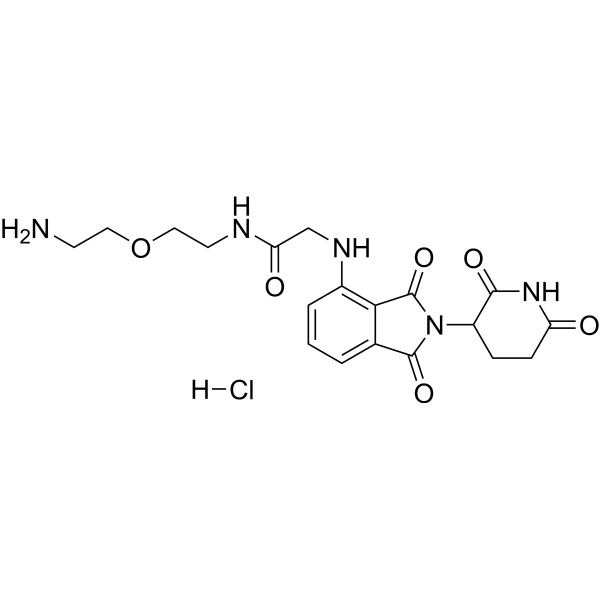 0 ImagesCat. No.: HY-138854ACAS No.: 2983036-29-7Thalidomide-NH-amido-PEG1-C2-NH2 hydrochloride is a synthesized E3 ligase ligand-linker conjugate that incorporates the Thalidomide based cereblon ligand and a linker used in PROTAC technology.
-
HDACs/EZH2-IN-1
 0 ImagesCat. No.: HY-169400HDACs/EZH2-IN-1 (Compound 22a) is a HDACs/EZH2 inhibitor (EZH2 Y641N inhibition rate at 50 nM: 98%), with selective inhibition against HDAC1 and HDAC6 (IC50: 0.23 μM and 0.07 μM, respectively). HDACs/EZH2-IN-1 exerts a antiproliferative effect on diffuse large B-cell lymphoma cells harboring an EZH2 mutation and on various acute myeloid leukemia cells. HDACs/EZH2-IN-1 has the ability to induce cell differentiation and Apoptosis.
-
FGFR-IN-27
 0 ImagesCat. No.: HY-183780FGFR-IN-27 is an orally active, broad-spectrum FGFR inhibitor, with an IC50 of 0.24 nM against human FGFR1, 0.71 nM against FGFR2, 0.87 nM against FGFR3, and 6.50 nM against FGFR4. FGFR-IN-27 inhibits cancer cell proliferation and blocks tumor growth. FGFR-IN-27 reduces the phosphorylation levels of AKT and ERK, induces apoptosis and ferroptosis, increases ROS levels, and decreases GSH levels. FGFR-IN-27 can be used in the research of hepatocellular carcinoma.
-
EGFR-IN-62
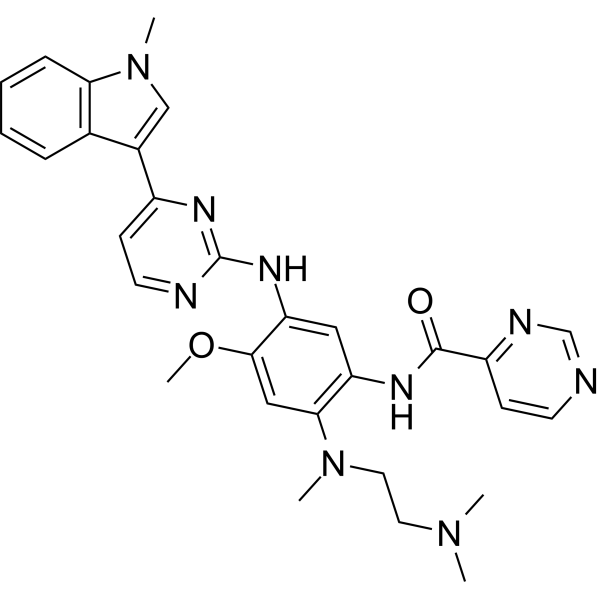 0 ImagesCat. No.: HY-147862CAS No.: 2890261-65-9EGFR-IN-62 (compound 9h) is a potent and reversible EGFR kinase inhibitor, with IC50 values of 10 nM (L858R/T790 M), 29 nM (WT), and 242 nM (L858R/T790 M/C797S), respectively. EGFR-IN-62 shows antiproliferative activity against A549 and H1975 cell lines, with IC50 values of 2.53 and 1.56 μM, respectively. EGFR-IN-62 induces dose-dependent apoptosis process, G1/G0-phase arrestation, and the inhibition of motility on A549 and/or H1975 cell lines.
-
YN11
 0 ImagesCat. No.: HY-182288CAS No.: 3118507-43-7YN11 is a STAT3 inhibitor (Kd=11.9 μM). YN11 directly binds to the SH2 domain of STAT3, inhibits the phosphorylation of STAT3, and reduces the expression of downstream target proteins. YN11 induces cell cycle arrest, promotes apoptosis, and inhibits cell invasion and migration in prostate cancer cells. YN11 suppresses tumor growth in a prostate cancer xenograft mouse model. YN11 does not cause significant body weight loss or obvious histopathological changes in major organs in xenograft mice. YN11 is applicable to relevant research on prostate cancer.
-
Periplanetasin-4
 0 ImagesCat. No.: HY-P11114CAS No.: 2206807-06-7Periplanetasin-4 is an antimicrobial peptide that can be derived from the American cockroach (Periplaneta americana). Periplanetasin-4 reduces cell rounding and apoptosis. Periplanetasin-4 blocks Clostridium difficile toxin A-induced ROS production and the activation of downstream p38 MAPK and p21. Periplanetasin-4 significantly increases mitochondrial calcium level, reduces DPH fluorescence intensity and vacuolar dysfunction in Candida albicans ATCC 90028 cells. Periplanetasin-4 significantly ameliorates toxin A-induced mucosal damage in the mouse gut. Periplanetasin-4 can be used for the study of colitis.
-
R-Phycoerythrin (concentrated solution)
 0 ImagesCat. No.: HY-D0988ACAS No.: 11016-17-4Synonyms: R-PE (concentrated solution)R-Phycoerythrin (R-PE) (concentrated solution) is found in Heterosiphonia japonica. R-Phycoerythrin (concentrated solution) is an orange-red fluorescent probe with α, β, and γ subunits. R-Phycoerythrin (concentrated solution) can be used in photodynamic therapy (PDT) to induce apoptosis in tumor cells. R-Phycoerythrin (concentrated solution) can be used in fluorescence microscopy, flow cytometry, and immunofluorescence analysis (Ex/Em = 496/578 nm).
-
KW-2450 tosylate
 0 ImagesCat. No.: HY-19565CAS No.: 1360433-93-7KW-2450 tosylate is an orally active Aurora A and B kinases, IGF-1R, and IR tyrosine kinases inhibitor. KW-2450 tosylate induces Apoptosis. KW-2450 tosylate also exhibits anticancer activity against triple-negative breast cancer.
-
BWA-6047
 0 ImagesCat. No.: HY-176128BWA-6047 is an oral active PROTAC degrader targeting AR/AR-V7 and GSPT1 with DC50 values of 3.7, 3.0 and 1.2 nM in 22Rv1 cells. BWA-6047 suppresses the expression of AR downstream target genes and and transcriptional activity. BWA-6047 inhibits cancer cells proliferation, causes G1 phase cell cycle arrest and induces apoptosis. BWA-6047 increases cleaved-PARP-1 and cleaved-caspase-3 levels. BWA-6047 reduces growth of LNCaP xenograft tumors in mice models without obvious toxicity. BWA-6047 can be used for the research of prostate cancer.
-
XL413 hydrochloride
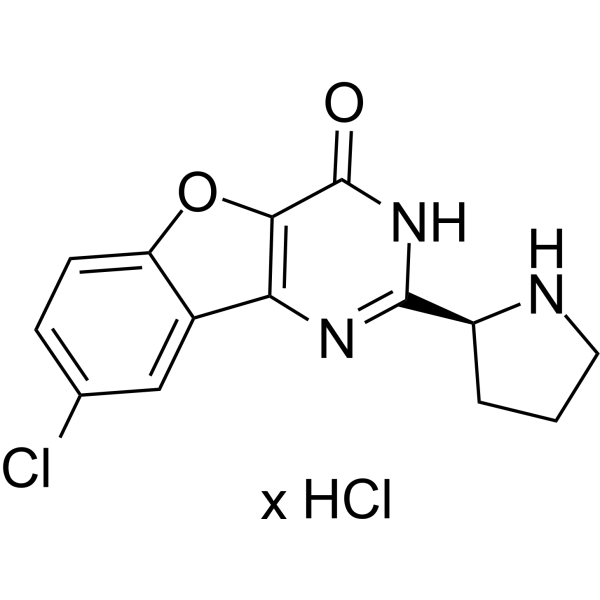 0 ImagesCat. No.: HY-15260CCAS No.: 1169562-71-3Synonyms: BMS-863233 hydrochlorideXL413 hydrochloride (BMS-863233 hydrochloride) is an orally active, ATP-competitive, selective CDC7 kinase inhibitor. XL413 hydrochloride reduces MCM2 phosphorylation levels, decreases DNA replication origin activation, and inhibits CD69 upregulation in stimulated lymphocytes. XL-413 possesses cell-dependent antiproliferative and pro-apoptotic activities. XL413 hydrochloride attenuates ATR inhibitor-induced excessive origin activation, altered replication fork speed, and antiproliferative effects in sensitive cancer cells. XL413 hydrochloride inhibits SARS-CoV-2 infection. XL413 hydrochloride can be used for research related to cancer and SARS-CoV-2 infection.




