



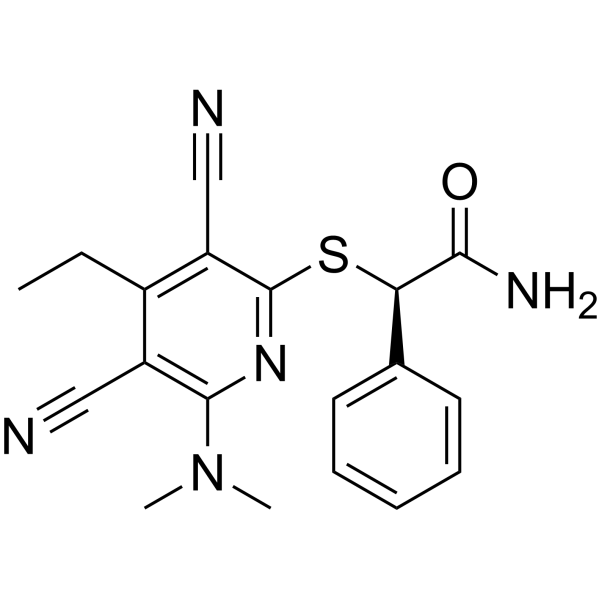
GSK-3484862 GMP is GSK-3484862 (HY-135146) produced by using GMP guidelines. GMP small molecules works appropriately as an auxiliary reagent for cell therapy manufacture. GSK-3484862 is a highly potent non-covalent inhibitor and demethylating agent of DNMT1. GSK-3484862 induces genome-wide DNA demethylation, including the regulatory elements of DNMT3B and the promoter region of TERT, and significantly inhibits cell viability, growth, proliferation and self-renewal. GSK-3484862 blocks the transformation of young AT2 cells, induces apoptosis, and generates transcriptomic features similar to those of senescent cells. GSK-3484862 is widely used in studies related to lung cancer, oral squamous cell carcinoma and lung adenocarcinoma.
For research use only. We do not sell to patients.
- CAS No.: 2170136-65-7
- Formula: C19H19N5OS
- Molecular Weight:365.45
-
Storage:
Please store the product under the recommended conditions in the Certificate of Analysis.


To place orders, for customer services and technical support, please contact: MedChemExpress USA
Tel: 609-228-6898 E-mail: [email protected] [email protected]


-
 Biological Activity
-
Chemical Information
- Purity & Documentation
- References
-
 Help & FAQs


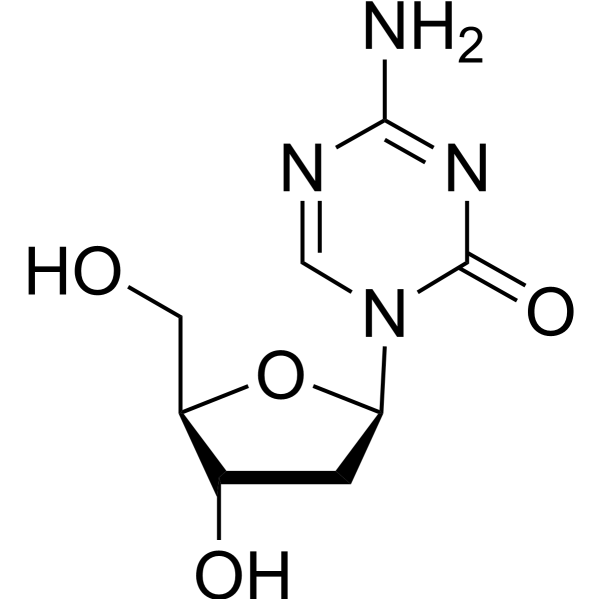
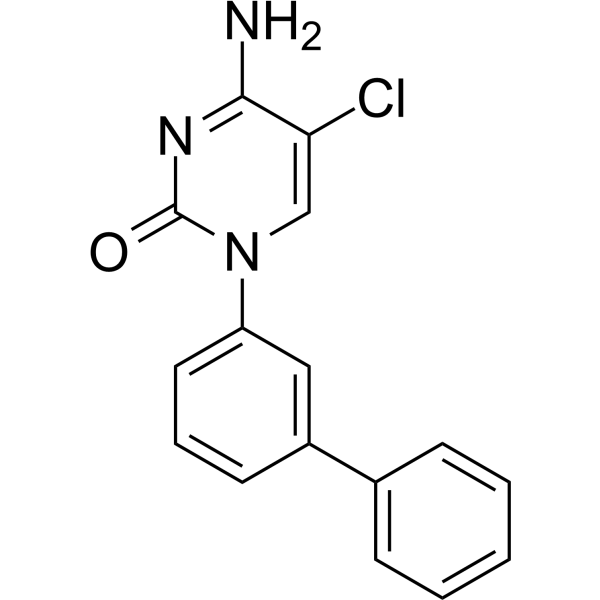
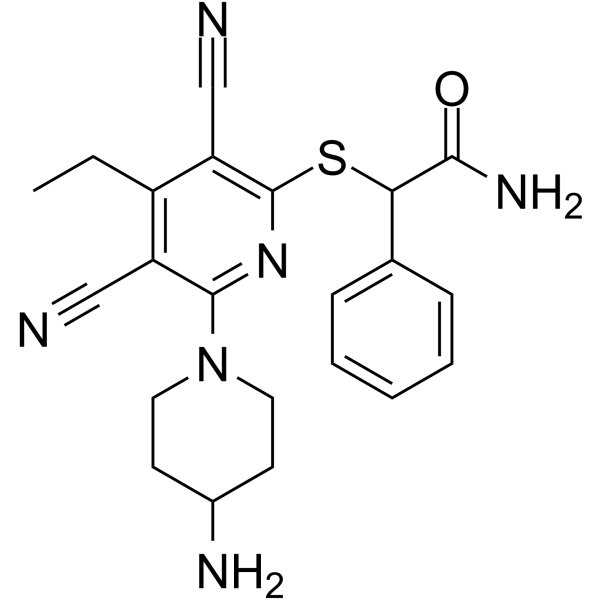
All DNA Methyltransferase Isoforms
More

Biological Activity
Description
IC50 & Target
|
DNMT1 |
In Vitro
GSK-3484862 GMP (2 μM, 10 μM; 6 days) induces global DNA demethylation in mouse embryonic stem cells, reducing the global CpG methylation level of the cells from nearly 70% to less than 18%, and the methylation pattern after induction is similar to that of Dnmt1-/- deficient mouse embryonic stem cells[1].
GSK-3484862 GMP (1-10 μM; 1 week) inhibits proliferation, promotes apoptosis, and reduces the self-renewal capacity of Cal27 and FaDu oral squamous cell carcinoma (OSCC) cells by downregulating the expression of DNMT1[2].
GSK-3484862 GMP inhibits the in vitro transformation of primary alveolar type 2 cells isolated from young KP-Cas9 mice, but has no effect on alveolar type 2 cells from aged KP-Cas9 mice, and induces the expression of Nupr1 and Lcn2 in this system[3].
GSK-3484862 GMP induces hypomethylation at specific CpG sites in Nupr1 enhancers (E1, E7, E8), which correlates with upregulated Nupr1 gene expression[3].
MedChemExpress (MCE) has not independently confirmed the accuracy of these methods. They are for reference only.
-
Cell Line:Cal27 and FaDu oral squamous cell carcinoma (OSCC) cells
-
Concentration:1-10 μM
-
Incubation Time:1 week
-
Result:Inhibited proliferation, promoted apoptosis, and reduced the self-renewal of OSCC cells by downregulating the expression of DNMT1.
In Vivo
Systemic administration of GSK-3484862 GMP inhibits the transformation of AT2 cells in young mice, but has no such effect on AT2 cells in aged mice, while it induces the expression of Nupr1 and Lcn2 in cells from both age groups[3].
GSK-3484862 GMP induces pyroptosis of tumor cells in the mouse 4T1 breast cancer model[4].
MedChemExpress (MCE) has not independently confirmed the accuracy of these methods. They are for reference only.


Chemical Information
-
CAS No. 2170136-65-7
-
Molecular Weight 365.45
-
Formula C19H19N5OS
-
SMILES
O=C(N)[C@H](SC1=NC(N(C)C)=C(C#N)C(CC)=C1C#N)C2=CC=CC=C2
-
Synonyms
(R)-GSK3482364 (GMP)
-
Shipping
Room temperature in continental US; may vary elsewhere.
-
Storage
Please store the product under the recommended conditions in the Certificate of Analysis.


Purity & Documentation
References
[1]. Azevedo Portilho N, et al. The DNMT1 inhibitor GSK-3484862 mediates global demethylation in murine embryonic stem cells. Epigenetics Chromatin. 2021;14(1):56. Published 2021 Dec 15. [Content Brief]
[2]. Liu Y, et al. DNMT1-targeting remodeling global DNA hypomethylation for enhanced tumor suppression and circumvented toxicity in oral squamous cell carcinoma. Mol Cancer. 2024;23(1):104. Published 2024 May 16. [Content Brief]
[4]. Chen Q, et al. GSK-3484862, a DNMT1 degrader, promotes DNMT3B expression in lung cancer cells. NAR Cancer. 2025;7(2):zcaf018. Published 2025 May 27. [Content Brief]

Calculators
Concentration (start) × Volume (start) = Concentration (final) × Volume (final)


GSK-3484862 (GMP) Related Classifications
HY-135146G Related Classifications
 Powered by Bioz