



Apoptosis
Apoptosis
Apoptosis is a distinctive form of cell death exhibiting specific morphological and biochemical characteristics, including cell membrane blebbing, chromatin condensation, genomic DNA fragmentation, and exposure of specific phagocytosis signaling molecules on the cell surface. Cells undergoing apoptosis differ from those dying through necrosis. Necrotic cells are usually recognized by the immune system as a danger signal and, thus, resulting in inflammation; in contrast, apoptotic death is quiet and orderly.
There are two major pathways of apoptotic cell death induction: The intrinsic pathway, also called the Bcl-2-regulated or mitochondrial pathway, is activated by various developmental cues or cytotoxic insults, such as viral infection, DNA damage and growth-factor deprivation, and is strictly controlled by the BCL-2 family of proteins. The extrinsic or death-receptor pathway is triggered by ligation of death receptors (members of the tumor necrosis factor (TNF) receptor family, such as Fas or TNF receptor-1 (TNFR1)) that contain an intracellular death domain, which can recruit and activate caspase-8 through the adaptor protein Fas-associated death domain (FADD; also known as MORT1) at the cell surface. This recruitment causes subsequent activation of downstream (effector) caspases, such as caspase-3, -6 or -7, without any involvement of the BCL-2 family.
Studies suggest that alterations in cell survival contribute to the pathogenesis of a number of human diseases, including cancer, viral infections, autoimmune diseases, neurodegenerative disorders, and AIDS (acquired immunodeficiency syndrome). Treatments designed to specifically alter the apoptotic threshold may have the potential to change the natural progression of some of these diseases.
All Product Categories
-
Apoptosis Inhibitors
(901)
View all products
-
Apoptosis Agonists
(7)
View all products
-
Apoptosis Antagonists
(9)
View all products
-
Apoptosis Activators
(362)
View all products
-
Apoptosis Modulators
(60)
View all products
-
Apoptosis Inducers
(7887)
View all products
-
Apoptosis Degrader
(1)
View all products
-
Apoptosis Controls
(33)
View all products
-
Apoptosis Related Products (9821)
Related Products (9821)

-
Antibodies (120)
-
FD2024
 0 ImagesCat. No.: HY-181925FD2024 is a pan-PIM kinase inhibitor with IC50 values of 0.17 nM, 1.86 nM, and 0.38 nM against PIM-1, PIM-2, and PIM-3, respectively. FD2024 induces cell apoptosis. FD2024 inhibits the phosphorylation of mTOR, p70S6K, S6, 4EBP1, and BAD proteins. FD2024 exhibits anti-acute myeloid leukemia activity. FD2024 can be used in studies related to acute myeloid leukemia.
-
Ac-DEVD-CHO TFA
 0 ImagesCat. No.: HY-P1001AAc-DEVD-CHO TFA is a peptide inhibitor of caspase-3 (Ki=230 pM) and caspase-7. Ac-DEVD-CHO TFA reduces caspase-3 activity and apoptosis induced by Prostaglandin E2 (HY-101952) in rat cortical neurons. Ac-DEVD-CHO TFA is promising for research of neurodegenerative diseases and cancers.
-
MRK 003
 0 ImagesCat. No.: HY-15211CAS No.: 623165-93-5MRK 003 is an orally active γ-secretase inhibitor. MRK 003 targets the Notch signaling pathway by blocking the proteolytic cleavage of Notch receptors. MRK 003 inhibits tumor cell proliferation, induces apoptosis, downregulates anti-apoptotic proteins, upregulates phosphorylated Akt, suppresses angiogenesis, and overcomes microenvironment-mediated proliferative protection. MRK 003 can be used in research related to lung cancer, multiple myeloma, non-Hodgkin's lymphoma, pancreatic ductal adenocarcinoma, glioblastoma, and breast cancer.
-
Citreoviridin-13C23
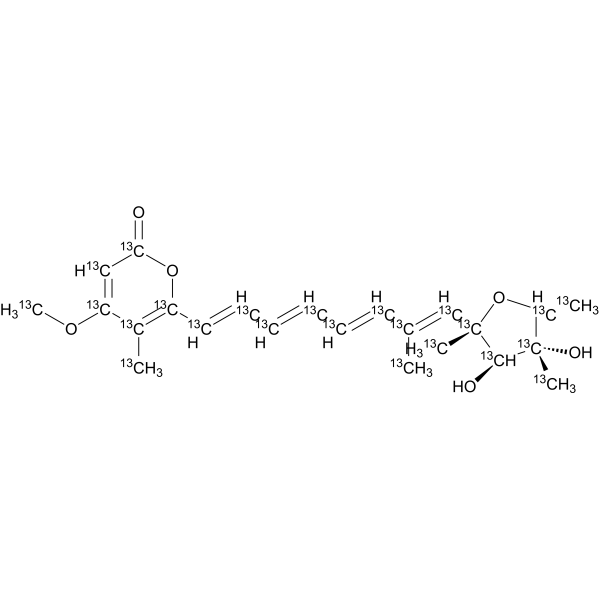 0 ImagesCat. No.: HY-N6745SCitreoviridin-13C23 is 13C labeled 2,3-Pentanedione (HY-W012998). 2,3-Pentanedione is a common constituent of synthetic flavorings and is used to impart a butter, strawberry, caramel, fruit, rum, or cheese flavor in beverages, ice cream, candy, baked goods, gelatins, and puddings. 2,3-Pentanedione also occurs naturally as a fermentation product in beer, wine, and yogurt and is releasedduring roasting of coffee beans.
-
2'-Deoxyadenosine monohydrate-1′-13C
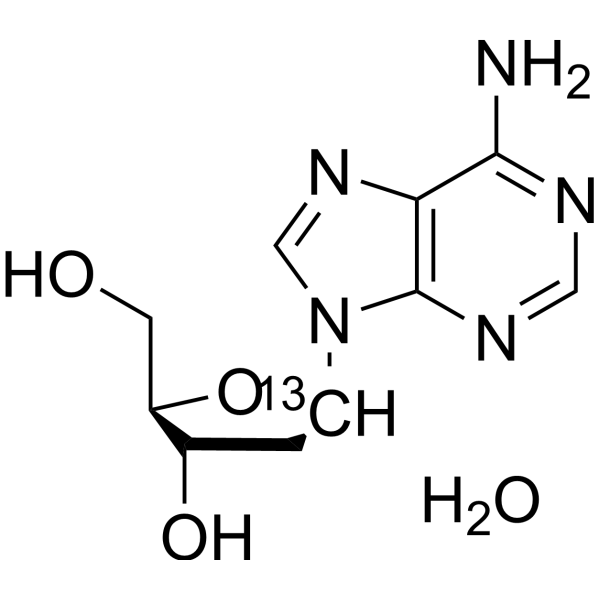 0 ImagesCat. No.: HY-W011683SCAS No.: 446276-63-72'-Deoxyadenosine monohydrate-1′-13C is the 13C labeled 2'-Deoxyadenosine monohydrate (HY-W011683). 2′-Deoxyadenosine monohydrate is an adenine nucleoside that inhibits glucose-stimulated insulin release. 2′-Deoxyadenosine monohydrate inhibits glucose-stimulated increases seen in islet cyclic AMP (cAMP) accumulation. 2'-Deoxyadenosine monohydrate activates caspase-3 and promotes apoptosis. 2'-Deoxyadenosine monohydrate inhibits the activity of S-adenosyl-L-homocysteine hydrolase (SAHH). 2'-Deoxyadenosine monohydrate inhibits the growth of various cells. 2'-Deoxyadenosine monohydrate has an anticancer effect on colon cancer.
-
SYK-IN-15
 0 ImagesCat. No.: HY-184306SYK-IN-15 is an orally active spleen tyrosine kinase (SYK) inhibitor with an IC50 of 10.9 nM. SYK-IN-15 induces cell cycle S-phase arrest and cell apoptosis. SYK-IN-15 inhibits cancer cell colony formation and exerts antiproliferative effects on cancer cells. SYK-IN-15 can be used for the research of solid tumors (ovarian cancer, breast cancer, liver cancer).
-
Bavachalcone (Standard)
 0 ImagesCat. No.: HY-N0231RCAS No.: 28448-85-3Synonyms: Broussochalcone B (Standard)Bavachalcone (Standard) is the analytical standard of Bavachalcone. This product is intended for research and analytical applications. Bavachalcone is a potent inducer of apoptosis. Bavachalcone exerts anticancer activity by promoting autophagy and apoptosis in HepG2 cells. Bavachalcone acts as an anti-neuroinflammatory and antidepressant through the NF-κB pathway. Bavachalcone inhibits osteoclasts by interfering with ERK and Akt signaling pathways and the expression of c-Fos and NFATc1. Bavachalcone exhibits a significant inhibitory effect on baculovirus-expressed BACE-1 in vitro.
-
ISS610
 0 ImagesCat. No.: HY-113810CAS No.: 725233-55-6ISS610 is a selective Stat3 inhibitor with an IC50 of 42 μM. ISS610 induces Apoptosis. ISS610 can be used in research related to breast cancer and non-small cell lung cancer.
-
15-Deoxy-Δ12,14-prostaglandin A1
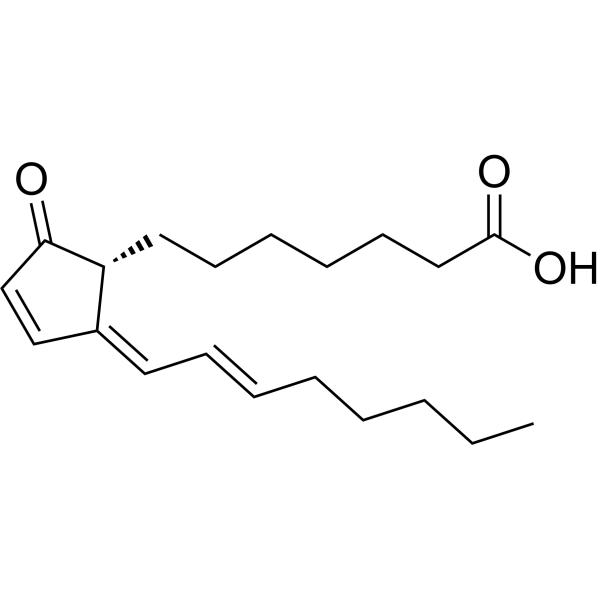 0 ImagesCat. No.: HY-118101CAS No.: 573951-20-915-Deoxy-Δ12,14-prostaglandin A1 is a deoxyanalog of prostaglandins that inhibits NF-κB signaling and induces apoptosis. 15-Deoxy-Δ12,14-prostaglandin A1 inhibits TNF-α-induced upregulation of inflammatory endothelial cell adhesion molecule (CAM) and avoids monocyte arrest.
-
Picroside II (Standard)
 0 ImagesPicroside II (Standard) is the analytical standard of Picroside II. This product is intended for research and analytical applications. Picroside II, an iridoid compound extracted from Picrorhiza, exhibits anti-inflammatory and anti-apoptotic activities. picroside II alleviates the inflammatory response in sepsis and enhances immune function by inhibiting the activation of NLRP3 inflammasome and NF-κB pathways. Picroside II is an antioxidant, exhibits a significant neuroprotective effect through reducing ROS production and protects the blood-brain barrier (BBB) after cerebral ischemia-reperfusion (CI/R) injury. Picroside II has antioxidant, anti-inflammatory, immune regulatory, anti-virus and other pharmacological activities.
-
Microtubulin-IN-1
 0 ImagesCat. No.: HY-173074CAS No.: 3025180-14-4Microtubulin-IN-1 (Compound 8g) is the inhibitor for microtubulin that targets colchicine-binding site, disrupts the microtubulin integrity, and induces the upregulation of p53. Microtubulin-IN-1 exhibits antiproliferative activity in a variety of cancer cell lines (IC50 for NCI-H460, BxPC-3 and HT-29 is 2.4, 1.6 and 2.07 nM, respectively), arrests the cell cycle at G2/M phase, and induces apoptosis in NCI-H460.
-
Griseofulvin-13C,d3
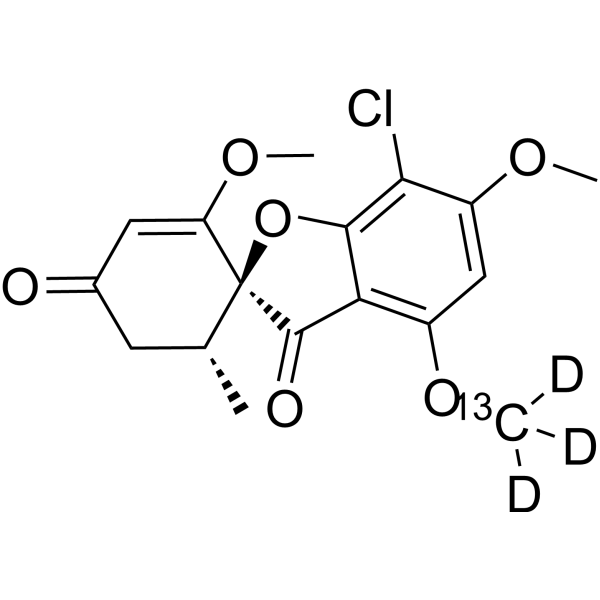 0 ImagesCat. No.: HY-17583S1CAS No.: 1329612-29-4Griseofulvin-13C,d3 is the 13C- and deuterium labeled Griseofulvin.
-
Oxaprozin (Standard)
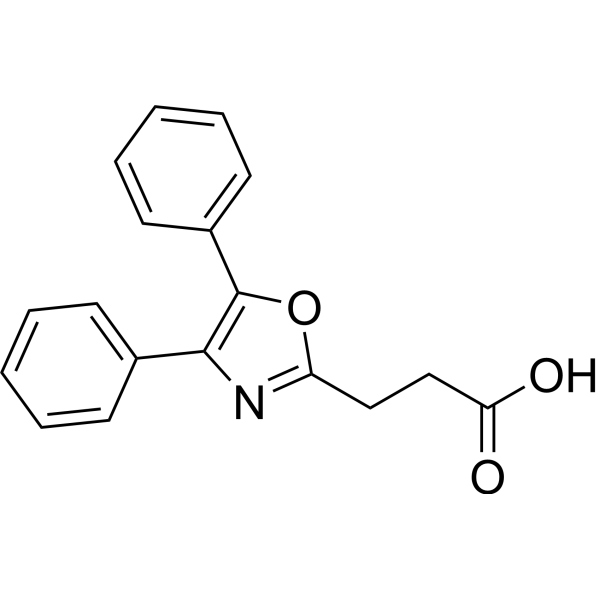 0 ImagesSynonyms: Oxaprozinum (Standard); Wy21743 (Standard)Oxaprozin (Standard) is the analytical standard of Oxaprozin. This product is intended for research and analytical applications. Oxaprozin is an orally active and potent COX inhibitor, with IC50 values of 2.2 μM for human platelet COX-1 and and 36 μM for IL-1-stimulated human synovial cell COX-2, respectively. Oxaprozin also inhibits the activation of NF-κB. Oxaprozin induces cell apoptosis. Oxaprozin shows anti-inflammatory activity. Oxaprozin-mediated inhibition of the Akt/IKK/NF-κB pathway contributes to its anti-inflammatory properties.
-
SQS-IN-1
 0 ImagesCat. No.: HY-178158CAS No.: 2306302-57-6SQS-IN-1 is a squalene synthase (SQS) inhibitor. SQS-IN-1 exhibits potent and broad-spectrum anti-proliferative effects on both mouse and human lung cancer cell lines. SQS-IN-1 inhibits DNA replication and the cell cycle, causing mitochondrial hyperpolarization and inducing cell apoptosis. SQS-IN-1 inhibits cell migration and invasion. SQS-IN-1 can be used to the study of lung cancer.
-
SB-590885 (GMP)
 0 ImagesCat. No.: HY-10966GCAS No.: 405554-55-4SB-590885 GMP is SB-590885 (HY-10966) produced by using GMP guidelines. GMP small molecules works appropriately as an auxiliary reagent for cell therapy manufacture. SB-590885 is a BRAF/c-Raf kinase inhibitor that selectively targets B-Raf, and it amplifies the ERK/MAPK signaling pathway in RAS-activated cells. SB-590885 effectively inhibits the malignant proliferation, transformation and tumorigenicity of oncogenic B-Raf cells; it also induces the proliferation of erythroid progenitor cells, delays their differentiation and promotes hemoglobin synthesis, thereby improving ineffective erythropoiesis and reducing apoptosis. SB-590885 exerts a synergistic effect with TGF-β inhibitors and glucocorticoids, significantly promoting the formation of erythroid colonies in cells from patients with Diamond-Blackfan anemia (DBA). SB-590885 is mainly used in relevant studies on DBA, cisplatin-induced myelosuppression-related anemia, and pan-cancers such as melanoma and colorectal cancer.
-
Procaspase-3 activator 1
 0 ImagesCat. No.: HY-179699Procaspase-3 activator 1 is a potent procaspase-3 activator. Procaspase-3 activator directly activates procaspase-3 through zinc chelation, thereby inducing apoptosis and inhibiting cancer cell proliferation. Procaspase-3 activator 1 can be used for the research of non-small cell lung cancer (NSCLC) and melanoma.
-
Thalidomide-NH-amido-C3-NH2
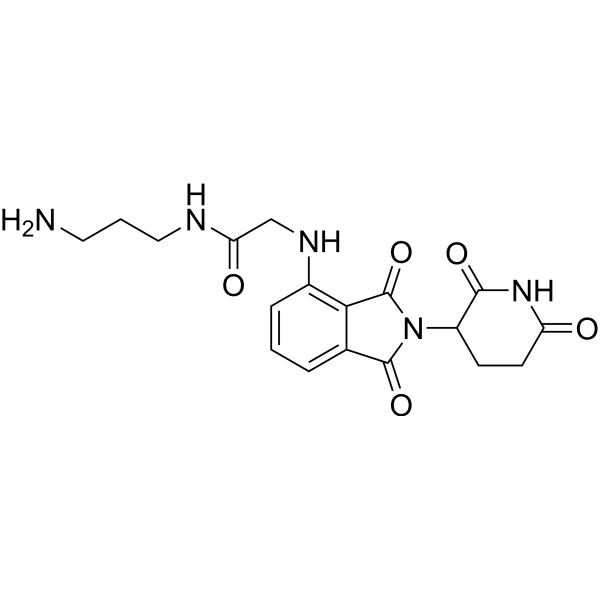 0 ImagesCat. No.: HY-138850CAS No.: 2763827-11-6Thalidomide-NH-amido-C3-NH2 is a synthesized E3 ligase ligand-linker conjugate that incorporates the Thalidomide based cereblon ligand and a linker used in PROTAC technology.
-
Kukoamine B-d5 dihydrochloride
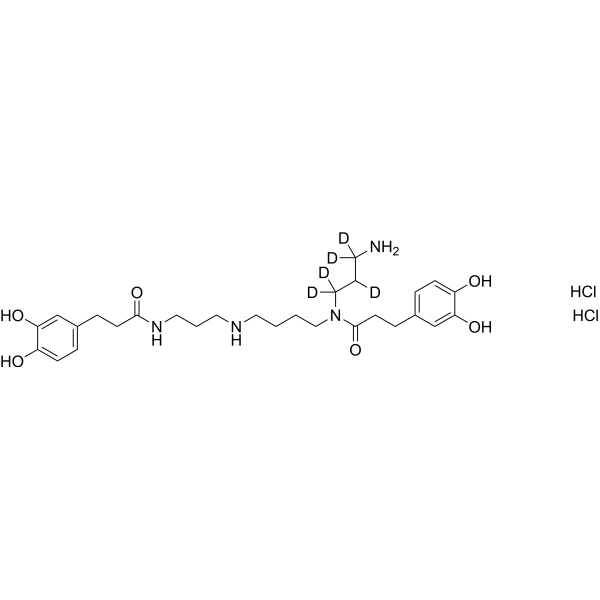 0 ImagesCat. No.: HY-N2393SKukoamine B, a spermine alkaloid, is a potent dual LPS and CpG DNA inhibitor with Kd values of 1.23 µM and 0.66 µM, respectively. Kukoamine B exerts anti-inflammatory, anti-diabetic, anti-oxidant, anti-osteoporotic and neuroprotective effects. Kukoamine B has the potential for the study of sepsis. .
-
Sophoridine (Standard)
 0 ImagesSophoridine (Standard) is the analytical standard of Sophoridine. This product is intended for research and analytical applications. Sophoridine is a quinolizidine alkaloid isolated from Leguminous plant Sophora flavescens. Sophoridine induces apoptosis. Sophoridine has the potential to be a novel, potent and selective antitumor agent candidate for pancreatic cancer with well-tolerated toxicity.
-
IDN-1965
 0 ImagesCat. No.: HY-120257CAS No.: 204919-14-2IDN-1965 is an irreversible, broad-spectrum caspase inhibitor. IDN-1965 prevents downstream apoptotic events (such as DNase activation) and significantly delays cytochrome c release by inhibiting caspase activity. IDN-1965 significantly delayed death in mice with cardiomyocyte apoptosis. IDN-1965 completely prevents left ventricular dilation, systolic dysfunction, and fibrosis in mice with dilated cardiomyopathy. IDN-1965 can be used to study apoptosis-related diseases such as heart failure and the mechanisms of apoptosis initiation.




