



Apoptosis
Apoptosis
Apoptosis is a distinctive form of cell death exhibiting specific morphological and biochemical characteristics, including cell membrane blebbing, chromatin condensation, genomic DNA fragmentation, and exposure of specific phagocytosis signaling molecules on the cell surface. Cells undergoing apoptosis differ from those dying through necrosis. Necrotic cells are usually recognized by the immune system as a danger signal and, thus, resulting in inflammation; in contrast, apoptotic death is quiet and orderly.
There are two major pathways of apoptotic cell death induction: The intrinsic pathway, also called the Bcl-2-regulated or mitochondrial pathway, is activated by various developmental cues or cytotoxic insults, such as viral infection, DNA damage and growth-factor deprivation, and is strictly controlled by the BCL-2 family of proteins. The extrinsic or death-receptor pathway is triggered by ligation of death receptors (members of the tumor necrosis factor (TNF) receptor family, such as Fas or TNF receptor-1 (TNFR1)) that contain an intracellular death domain, which can recruit and activate caspase-8 through the adaptor protein Fas-associated death domain (FADD; also known as MORT1) at the cell surface. This recruitment causes subsequent activation of downstream (effector) caspases, such as caspase-3, -6 or -7, without any involvement of the BCL-2 family.
Studies suggest that alterations in cell survival contribute to the pathogenesis of a number of human diseases, including cancer, viral infections, autoimmune diseases, neurodegenerative disorders, and AIDS (acquired immunodeficiency syndrome). Treatments designed to specifically alter the apoptotic threshold may have the potential to change the natural progression of some of these diseases.
All Product Categories
-
Apoptosis Inhibitors
(884)
View all products
-
Apoptosis Agonists
(7)
View all products
-
Apoptosis Antagonists
(9)
View all products
-
Apoptosis Activators
(360)
View all products
-
Apoptosis Modulators
(59)
View all products
-
Apoptosis Inducers
(7783)
View all products
-
Apoptosis Degrader
(1)
View all products
-
Apoptosis Controls
(33)
View all products
-
Apoptosis Related Products (9696)
Related Products (9696)

-
Antibodies (120)

-
Avenanthramide A-d4
 0 ImagesCat. No.: HY-114977SAvenanthramide A-d4 is the deuterium labeled Avenanthramide A (HY-114977). Avenanthramide A is an orally active phytoalexin that targets the RNA helicase DDX3 with a KD of 8.8 μM. Avenanthramide A induces mitochondrial swelling and increased ROS production, and triggers apoptosis in CRC cells. Avenanthramide A inhibits smooth muscle cell proliferation and enhances nitric oxide production. Avenanthramide A can be used in research on colorectal cancer and atherosclerosis.
-
5-Aminolevulinic acid-15N hydrochloride
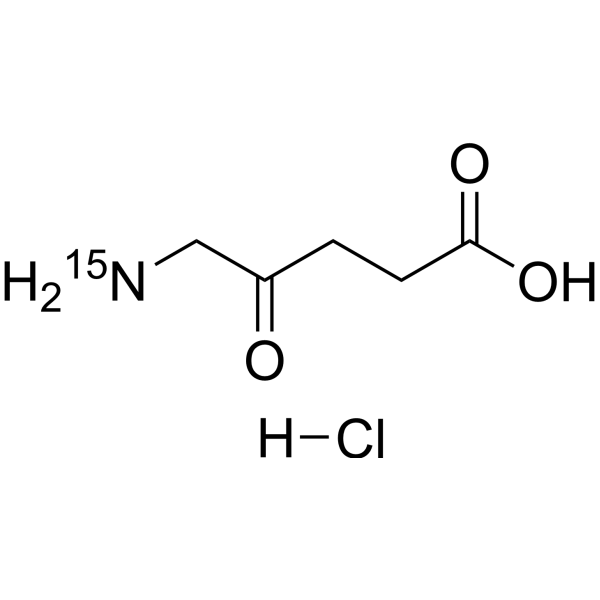 0 ImagesCat. No.: HY-N0305SCAS No.: 116571-80-3Synonyms: 5-ALA-15N hydrochloride; δ-Aminolevulinic acid-15N hydrochloride; 5-Amino-4-oxopentanoic acid-15N hydrochloride5-Aminolevulinic acid-15N (hydrochloride) is the 15N-labeled 5-Aminolevulinic acid (hydrochloride). 5-Aminolevulinic acid hydrochloride (5-ALA hydrochloride) is an intermediate in heme biosynthesis in the body and the universal precursor of tetrapyrroles.
-
PM54-1
 0 ImagesCat. No.: HY-183631CAS No.: 2248127-86-6PM54 is an antitumor agent with activity across multiple cancer types. PM54 acts as a transcription and WNT/β-catenin signaling pathway inhibitor. PM54 suppresses oncogenic transcriptional programs, and key malignant pathways, while inducing DNA double-strand breaks, S-phase cell cycle arrest and apoptosis. PM54 enhances innate immune recognition, remodels the tumor microenvironment. PM54 exhibits antitumor activity as monotherapy or in combination in xenograft models. PM54 is applicable to research on various cancers and advanced solid tumors.

-
XmAb5485
 0 ImagesCat. No.: HY-P991555XmAb5485 is an Fc-engineered humanized anti-CD40 monoclonal antibody with high affinity to Fc-γ receptors. XmAb5485 induces potent antibody-dependent cell-mediated cytotoxicity (ADCC) and antibody-dependent cellular phagocytosis (ADCP) against tumor cells. XmAb5485 inhibits proliferation and induces apoptosis of tumor cells. XmAb5485 shows highly cytotoxic against lymphoma, leukemia and multiple myeloma cell lines as well as primary cancer cells.


-
LASSBio-2052
 0 ImagesCat. No.: HY-161617CAS No.: 2549160-15-6LASSBio-2052 is a derivative of N-acylhydrazone with antitumor activity against hepatocellular carcinoma (HCC). LASSBio-2052 inhibits HCC cells HepG2 and Hep3B, with IC50 of 18 and 41 μM. LASSBio-2052 arrests the cell cycle at G2/M phase, through downregulation of FOXM1. LASSBio-2052 induces apoptosis in HCC cells.
-
CENP-E-IN-1
 0 ImagesCat. No.: HY-125106CAS No.: 1446399-26-3CENP-E-IN-1 is a CENP-E inhibitor. CENP-E-IN-1 acts as a Mitotic arrest inducer and Apoptosis inducer, which causes abnormal alignment of chromosomes on the metaphase plate, activates the spindle assembly checkpoint and triggers apoptosis. CENP-E-IN-1 exhibits anti-tumor activity in colorectal adenocarcinoma xenograft models. CENP-E-IN-1 can be used in cancer-related research.
-
Topoisomerase ll/ME-1-IN-1
 0 ImagesCat. No.: HY-182054Topoisomerase ll/ME-1-IN-1 (Compound 7a) is a Topoisomerase ll and ME-1 inhibitor with an IC50 of 5.03 μM against Topoisomerase ll. Topoisomerase ll/ME-1-IN-1 functionally inhibits the activity of Topoisomerase II and functionally blocks the activity of ME-1. Topoisomerase ll/ME-1-IN-1 induces Autophagy by upregulating the expression of Beclin-1 and LC3-II. Topoisomerase ll/ME-1-IN-1 promotes Apoptosis. Topoisomerase ll/ME-1-IN-1 exhibits antiproliferative activity against breast cancer cells and shows no toxicity to normal mammary epithelial cells. Topoisomerase ll/ME-1-IN-1 can be used in studies related to breast cancer (including triple-negative breast cancer).
-
LG308
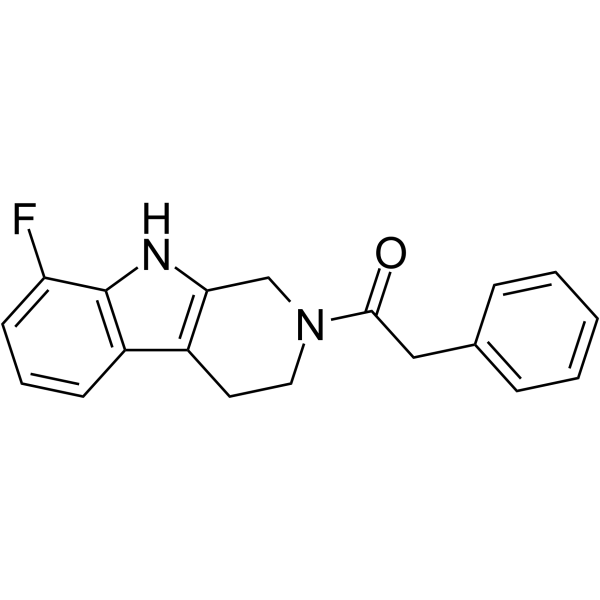 0 ImagesCat. No.: HY-143660CAS No.: 1428341-65-4LG308 is a novel synthetic compound with antimicrotubule activity. LG308 induces mitotic phase arrest and inhibits G2/M progression significantly which is associated with the upregulation of cyclin B1 and mitotic marker MPM-2 and the dephosphorylation of cdc2. LG308 also induces apoptosis and cell death. LG308 significantly suppresses tumor growth. LG308 with antimitotic activity has the potential for the research of prostate cancer.
-
Neotame (Standard)
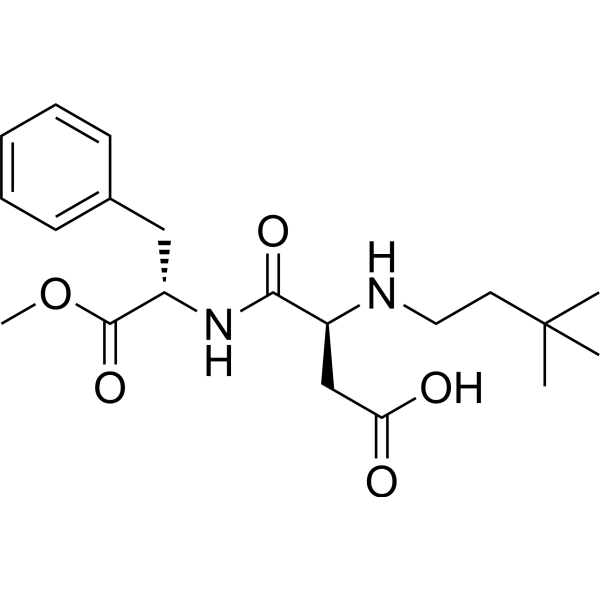 0 ImagesCat. No.: HY-W011053RCAS No.: 165450-17-9Neotame (Standard) is the analytical standard of Neotame (HY-W011053). This product is intended for research and analytical applications. Neotame is a derivative of Aspartame (HY-B0361) and is a flavor enhancer and low-caloric, non-nutritive, high-intensity artificial sweetener that is 7000-13,000 times sweeter than sugar. Neotame causes intestinal epithelial cell death at high concentrations. Neotame induces Apoptosis of Caco-2 cells.
-
Antitumor agent-56
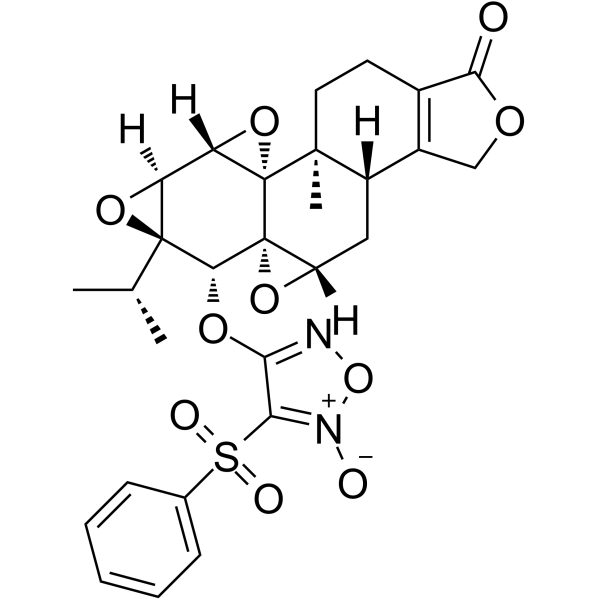 0 ImagesCat. No.: HY-146046CAS No.: 2411579-53-6Antitumor agent-56 (Compound 33) is a triptolide derivative with antitumor, anti-inflammatory and NO release activities. Antitumor agent-56 significantly inhibits the growth of melanoma. Antitumor agent-56 is orally active.
-
Iotrolan
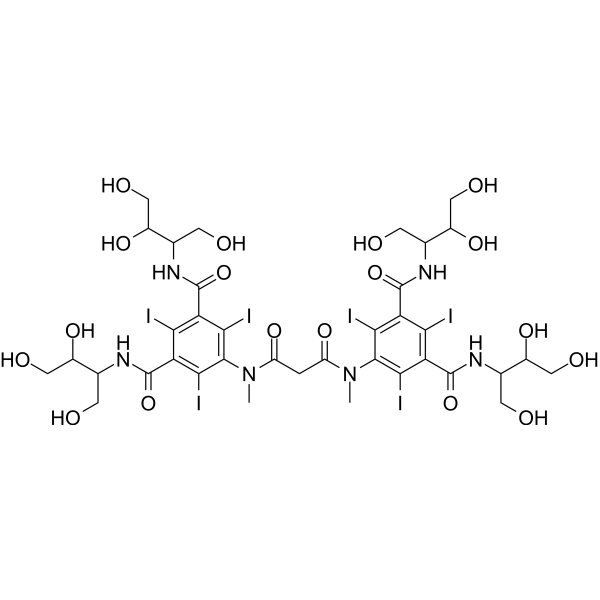 0 ImagesCat. No.: HY-107992CAS No.: 79770-24-4Iotrolan is a tradiocontrast agent. Iotrolan has no effect on NP cell viability or induce apoptosis.
-
WK500B
 0 ImagesCat. No.: HY-148640CAS No.: 2253985-29-2WK500B is a potent and orally active BCL6 inhibitor with a KD of 1.61 μM. WK500B engages intracellular BCL6 and disrupts BCL6‑corepressor interactions to reactivate BCL6 target genes. WK500B exerts cytotoxicity against diffuse large B‑cell lymphoma cells and induces apoptosis and cell cycle arrest. WK500B suppresses germinal center formation in C57BL/6 mice and DLBCL tumor growth in SCID xenograft models without observable toxicity. WK500B can be used for the study of diffuse large B‑cell lymphoma (DLBCL).
-
Geranyl isovalerate
 0 ImagesCat. No.: HY-W800105CAS No.: 109-20-6Geranyl isovalerate is a chemical component that can be extracted from Argyreia Nervosa. Geranyl isovalerate inhibits cancer cell proliferation in a dose-dependent and time-dependent manner. Geranyl isovalerate activates the apoptotic pathway by inducing mitochondrial membrane potential loss and ROS accumulation. Geranyl isovalerate can be used for cancer research.
-
Nevadensin (Standard)
 0 ImagesSynonyms: Lysionotin (Standard)Nevadensin (Standard) (Lysionotin (Standard)) is the analytical standard of Nevadensin (HY-N1377). This product is intended for research and analytical applications. Nevadensin, a natural flavonoid, is a selective human carboxylesterase 1 (hCE1) inhibitor with an IC50 of 2.64 μM. Nevadensin is more selective for hCE1 than hCE2 (IC50 of 132.8 μM). Nevadensin can induce apoptosis and DNA damage in cancer cells. Nevadensin has a variety of pharmacological effects such as anti-inflammatory, anti-tumour, anti-hypertensive, anti-tubercular, antitussive, antioxidant and anti-microbial activities.
-
ar-Turmerone-d3
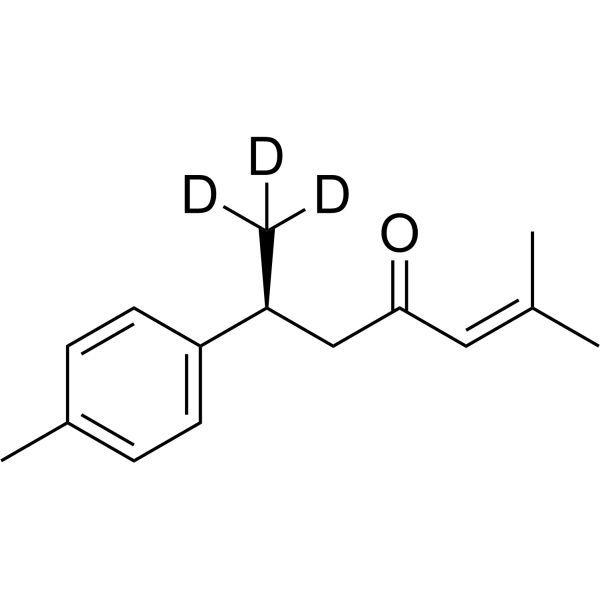 0 ImagesCat. No.: HY-N6703SSynonyms: (+)-ar-Turmerone-d3ar-Turmerone-d3 is the deuterium labeled ar-Turmerone. ar-Turmerone ((+)-ar-Turmerone) is an orally active and major bioactive compound of the herb Curcuma longa with anti-tumorigenesis and anti-inflammatory activities. ar-Turmerone induces apoptosis in U937 cells. ar-Turmerone exerts positive modulation on murine DCs. ar-Turmerone induces NSC proliferation in vitro and in vivo, and can be used for various neurologic disorders study.
-
SB-1295
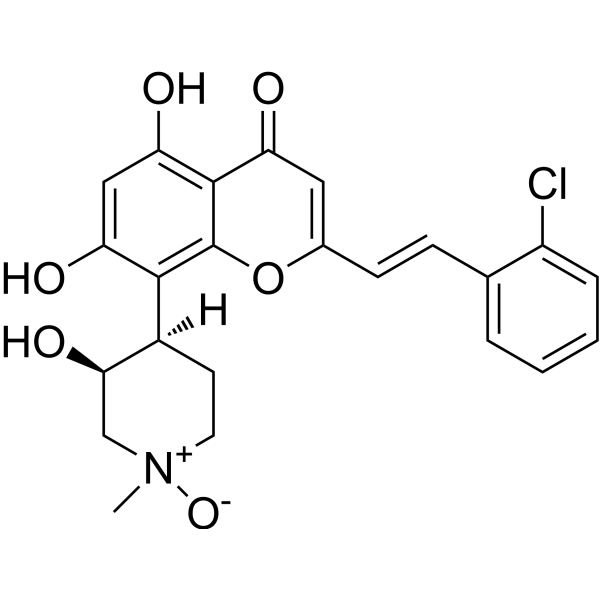 0 ImagesCat. No.: HY-155065SB-1295 is an orally active CDK9/T1 inhibitor (IC50=0.17 μM). SB-1295 shows antiproliferative activity in HCT 116 and MIA PaCa-2 cells. SB-1295 also induces MIA PaCa-2 cell death by inducing intracellular ROS production, reducing mitochondrial membrane potential and inducing apoptosis. SB-1295 has the potential to study cancer.




