



Autophagy
Autophagy is a conserved cellular degradation and recycling process in the lysosome. In mammalian cells, there are three primary types of autophagy: microautophagy, macroautophagy, and chaperone-mediated autophagy (CMA). Microphagy captures cargoes by means of invaginations or protrusions of the lysosomal membrane directly, CMA uses chaperones to identify cargo proteins and then unfolds and transfers them into the lysosomal, while macroautophagy sequesters cargo by autophagosomes-de novo synthesized of double-membrane vesicles-and subsequently transport it to the lysosome.
Macroautophagy is the best studied and it occurs at a low level constitutively and can also be further induced under stress conditions, such as nutrient or energy starvation with a salient feature of autophagy protein degradation. Stress-induced macrophagy plays an important role in protein catabolism with another key protein degradation pathway, the ubiquitin–proteasome system (UPS).
As the study progressed, autophagy gains its importance under basal, nutrient-rich conditions, and is now recognized as a critical housekeeping pathway in catabolism of diverse cellular constituents, such as protein aggregates (aggrephagy), lipid droplets (lipophagy), iron complex (Ferritinophagy) and carbohydrate. Except for macromolecules, autophagy can also target several organelles and structures, such as mitochondria (mitophagy), peroxisome (pexophagy), endoplasmic reticulum (reticulophagy or ER-phagy), ribosome (ribophagy), spermatozoon-inherited organelles following fertilization (allophagy), secretory granules within pancreatic cells (zymophagy) and intracellular pathogens (xenophagy).
Autophagy and its dysfunction are associated with a variety of human pathologies, including ageing, cancer, neurodegenerative disease, heart disease and metabolic diseases, such as diabetes. Plenty of drugs and natural products are involved in autophagy modulation through multiple signaling pathways. Small molecules that can regulate autophagy seem to have great potential to intervene such diseases in animal models or clinical courses.
All Product Categories
-
Autophagy Inhibitors
(470)
View all products
-
Autophagy Agonists
(6)
View all products
-
Autophagy Activators
(119)
View all products
-
Autophagy Modulators
(59)
View all products
-
Autophagy Chemicals
(2)
View all products
-
Autophagy Inducers
(2163)
View all products
-
Autophagy Controls
(5)
View all products
-
Autophagy Ligand
(1)
View all products
-
Autophagy Related Products (3358)
Related Products (3358)

-
Antibodies (31)
-
Autophagy Signaling Pathway
-
PPM-18
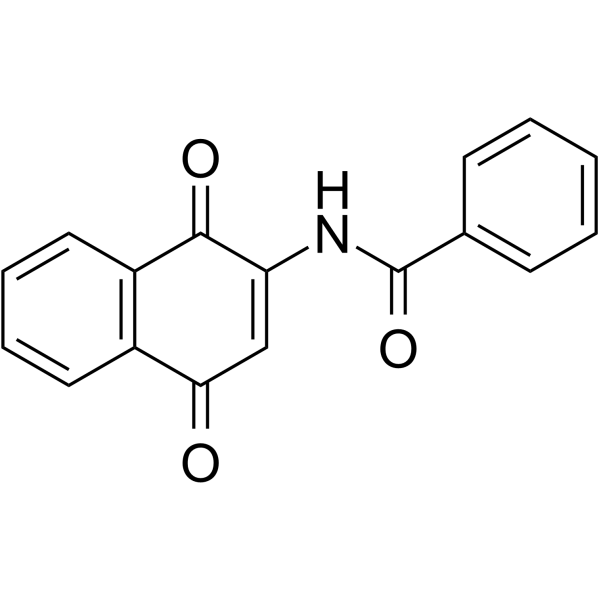 0 ImagesSynonyms: NSC 73233PPM-18 (NSC 73233) is a Vitamin K (HY-B2172) analog. PPM-18 prevents LPS-induced IκBα degradation, thereby inhibiting NF-κB activation and nuclear translocation of NF-κB. PPM-18 inhibits LPS-induced nitrite production and iNOS expression. PPM-18 inhibits HDAC6. PPM-18 induces ROS accumulation, activates AMPK, inhibits the mTORC1 and PI3K/AKT pathways, initiates Autophagy, and induces Apoptosis. PPM-18 suppresses seizures in zebrafish and mouse epilepsy models. PPM-18 prevents LPS-induced lethal toxicity and delayed hypotension. PPM-18 exhibits anticancer activity against leukemia and bladder cancer. PPM-18 can be used in research related to septic shock, bladder cancer and atherosclerosis.
-
(1r,4r)-Thalidomide-piperidine-N(Me)-CH-cyclohexane-NH-Boc
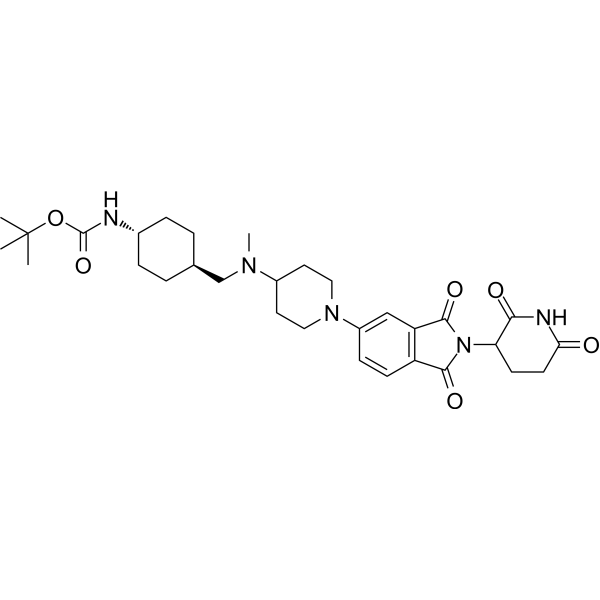 0 ImagesCat. No.: HY-163229(1r,4r)-Thalidomide-piperidine-N(Me)-CH-cyclohexane-NH-Boc is a conjugate of E3 ligase ligand and linker, consisting of Thalidomide (HY-14658) and the corresponding Linker. (1r,4r)-Thalidomide-piperidine-N(Me)-CH-cyclohexane-NH-Boc can serve as a Cereblon ligand to recruit CRBN protein and serve as a key intermediate for the synthesis of complete PROTAC molecules.
-
Thalidomide-NH-amido-C2-NH2 hydrochloride
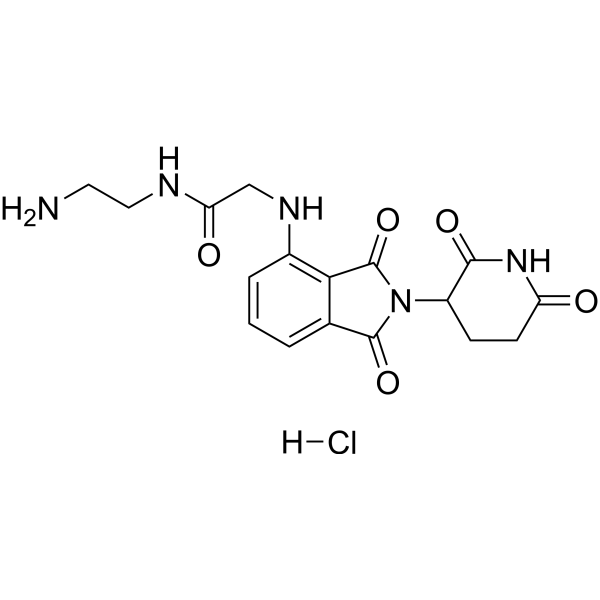 0 ImagesCat. No.: HY-138849ACAS No.: 2983057-90-3Thalidomide-NH-amido-C2-NH2 hydrochloride is a synthesized E3 ligase ligand-linker conjugate that incorporates the Thalidomide based cereblon ligand and a linker used in PROTAC technology.
-
(S)-Thalidomide-piperazine-(1S,4r)-cyclohexane-N(Me)-Boc
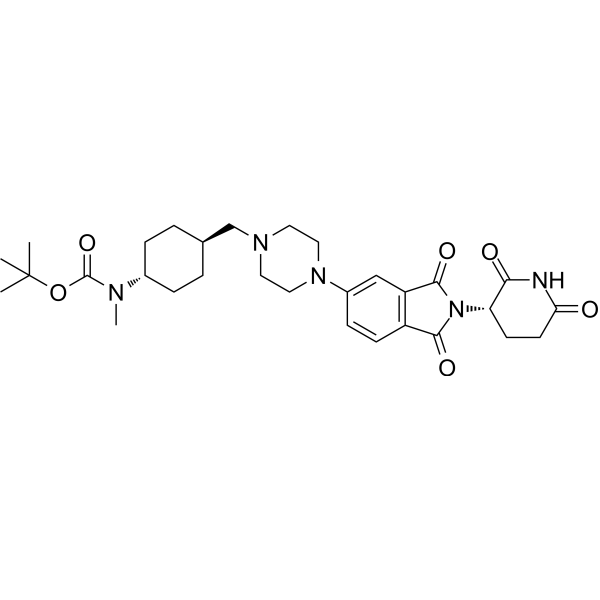 0 ImagesCat. No.: HY-163221(S)-Thalidomide-piperazine-(1S,4r)-cyclohexane-N(Me)-Boc is a conjugate of E3 ligase ligand and linker, consisting of Thalidomide (HY-14658) and the corresponding Linker. (S)-Thalidomide-piperazine-(1S,4r)-cyclohexane-N(Me)-Boc can serve as Cereblon ligand to recruit CRBN protein and serve as a key intermediate for the synthesis of complete PROTAC molecules.
-
Cabergoline diphosphate
 0 ImagesCat. No.: HY-15296ACAS No.: 85329-89-1Synonyms: FCE-21336 diphosphateCabergoline diphosphate is an ergot derived-dopamine D2-like receptor agonist that has high affinity for D2, D3, and 5-HT2B receptors (Ki=0.7, 1.5, and 1.2, respectively).
-
Antitumor agent-201
 0 ImagesCat. No.: HY-173331Antitumor agent-201 (Compound 10) is a chloride transport activator that targets the Golgi apparatus. Its EC50 for promoting the transmembrane transport of chloride ions is 1.53 mol%, and its IC50 against HepG2 cells is 7.13 μM. Antitumor agent-201 exerts its anti-cancer activity by selectively acting on the Golgi apparatus, disrupting the chloride ion homeostasis within it, reducing the expression of key proteins such as GM130 and GRASP55, altering the structure and function of the Golgi apparatus, triggering Autophagy of the Golgi apparatus, and further inducing Apoptosis of cancer cells and arresting cancer cells in the G2/M phase. Antitumor agent-201 can be used in the research field of cancer diseases.
-
Thalidomide-4-NH-PEG2-COO(t-Bu)
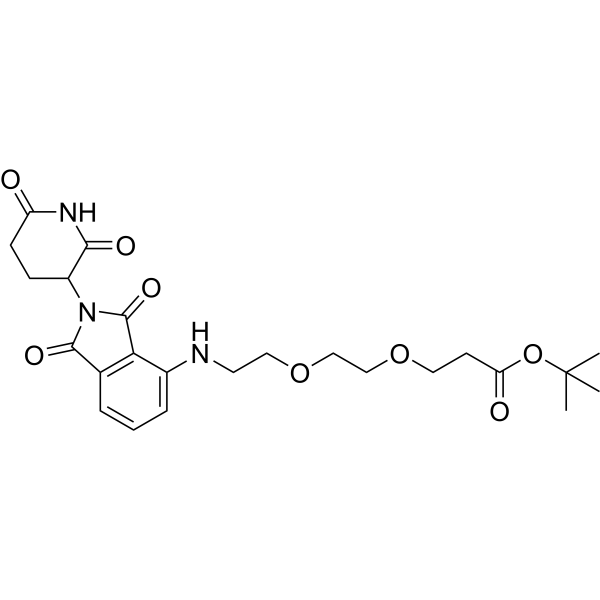 0 ImagesCat. No.: HY-W584524CAS No.: 2140807-16-3Thalidomide-4-NH-PEG2-COO(t-Bu) is a t-Bu modified Thalidomide (HY-14658), which acts as a Cereblon ligand to recruit CRBN protein. The t-Bu protecting group at the end of Thalidomide-4-NH-PEG2-COO(t-Bu) can be removed under acidic conditions to participate in the synthesis of PROTAC molecules. Thalidomide-4-NH-PEG2-COO(t-Bu) is a key intermediate in the synthesis of CRBN-based PROTAC molecules.
-
HUP-46
 0 ImagesCat. No.: HY-176749CAS No.: 3007689-83-7
-
Levomepromazine-d6 hydrochloride
 0 ImagesCat. No.: HY-166562SSynonyms: Methotrimeprazine-d6 hydrochlorideLevomepromazine-d6 hydrochloride (Methotrimeprazine-d6 hydrochloride) is the deuterium labeled Levomepromazine hydrochloride. Levomepromazine (Methotrimeprazine) hydrochloride is an orally active antipsychotic compound and Ca2+ release inducer. Levomepromazine inhibits SERCA pump and induces an increase in cytoplasmic Ca2+ levels. Levomepromazine hydrochloride has antagonistic effects on a variety of neurotransmitter receptors, including dopamine, cholinergic, serotonin, and histamine receptors. Levomepromazine hydrochloride can induce adaptive ER stress and autophagy. In addition, Levomepromazine hydrochloride has antiviral, anti-inflammatory, neuroprotective and analgesic, sedative and anti-injurious activities. Levomepromazine hydrochloride can be used in the study psychiatric disorders and relieving nausea and vomiting.
-
Oxybenzone-d3
 0 ImagesCat. No.: HY-W653958Synonyms: Benzophenone 3-d3Oxybenzone-d3 (Benzophenone 3-d3) is a deuterium labeled Oxybenzone (HY-A0067). Oxybenzone (Benzophenone 3) is a commonly used UV filter in sun tans and skin protectants. Oxybenzone act as endocrine disrupting chemicals (EDCs) and can pass through the placental and blood-brain barriers. Benzophenone-3 impairs autophagy, alters epigenetic status, and disrupts retinoid X receptor signaling in apoptotic neuronal cells.
-
C6 Urea Ceramide
 0 ImagesCat. No.: HY-139062CAS No.: 486991-52-0Synonyms: C6 Ceramide (d18:1/6:0) Urea; Cer(d18:1/6:0) Urea; D-erythro-Urea-C6-CeramideC6 Urea Ceramide (Cer(d18:1/6:0) Urea) is an inhibitor of neutral ceramidase. C6 Urea Ceramide increases total ceramide levels in wild-type mouse embryonic fibroblasts (MEFs) and HT-29 colon cancer cells. C6 Urea Ceramide (5-10 μM) inhibits proliferation of HT-29 cells and induces apoptosis and autophagy, but is not toxic to non-cancerous cells. C6 Urea Ceramide decreases total and phosphorylated β-catenin levels in HT-29 and HCT116 cells, and induces colocalization of β-catenin with the 20S proteasome. C6 Urea Ceramide (1.25, 2.5, and 5 mg/kg) reduced tumor growth and increased C16, C18, C20, and C24 ceramide levels in tumor tissues in the HT-29 mouse xenograft model.
-
Verteporfin (Standard)
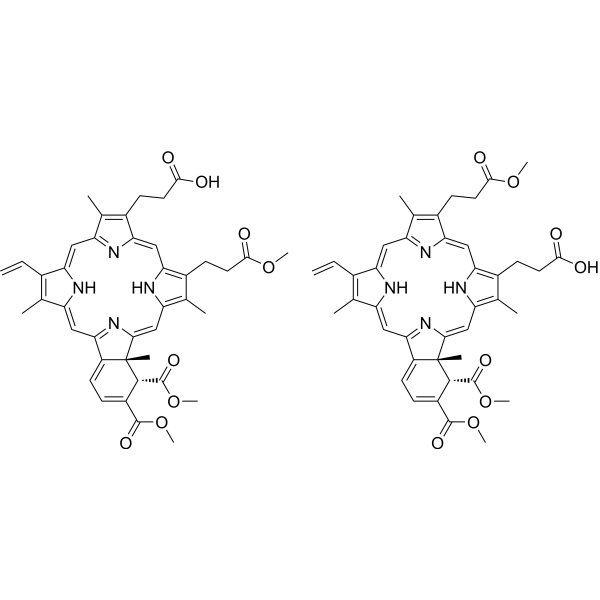 0 ImagesSynonyms: CL 318952 (Standard)Verteporfin (Standard) is the analytical standard of Verteporfin. This product is intended for research and analytical applications. Verteporfin (CL 318952) is a photosensitizer for photodynamic therapy to eliminate the abnormal blood vessels in the eye associated with conditions such as age-related macular degeneration. Verteporfin is a YAP inhibitor which disrupts YAP-TEAD interactions. Verteporfin induces cell apoptosis. Verteporfinis an autophagy inhibitor that blocks autophagy at an early stage by inhibiting autophagosome formation.
-
Lovastatin-d9 (epimer mixture)
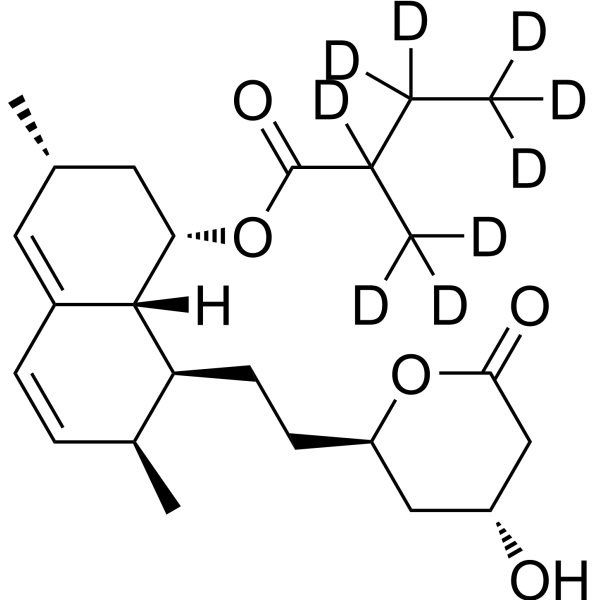 0 ImagesCat. No.: HY-N0504S1CAS No.: 2508138-69-8Synonyms: Mevinolin-d9 (epimer mixture)Lovastatin-d9 is the deuterium labeled Lovastatin. Lovastatin is a cell-permeable HMG-CoA reductase inhibitor used to lower cholesterol.
-
Panobinostat-d4
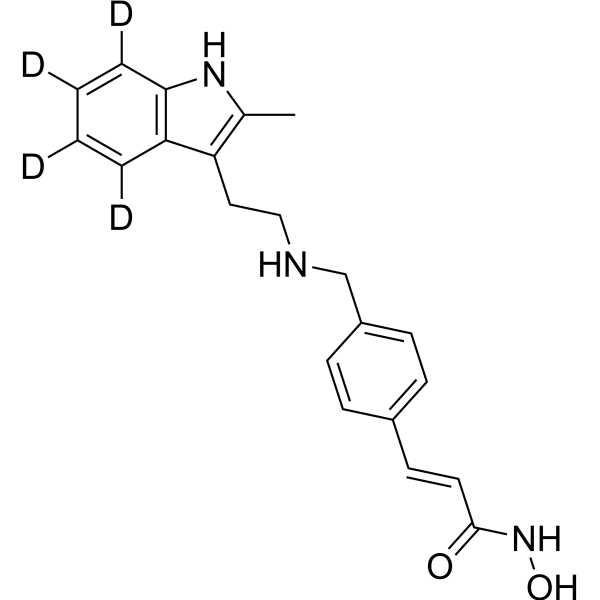 0 ImagesCat. No.: HY-10224SCAS No.: 1185237-51-7Synonyms: LBH589-d4; NVP-LBH589-d4Panobinostat-d4 is the deuterium labeled Panobinostat. Panobinostat (LBH589; NVP-LBH589) is a potent and orally active non-selective HDAC inhibitor, and has antineoplastic activities[1][2]. Panobinostat induces HIV-1 virus production even at low concentration range 8-31 nM, stimulates HIV-1 expression in latently infected cells[4]. Panobinostat induces cell apoptosis and autophagy. Panobinostat can be used for the study of refractory or relapsed multiple myeloma[3].
-
DHMPA
 0 ImagesCat. No.: HY-120325CAS No.: 18684-28-1DHMPA is an effective depletor of norepinephrine content of the heart, brain and spleen in mouse and rat. DHMPA has antihypertensive effects.
-
NpCy-4
 0 ImagesCat. No.: HY-D3005NpCy-4 is a reliable reporter for monitoring lysosomal pH and viscosity changes in real time during Autophagy (λex = 650 nm; λem = 660-740 nm). NpCy-4 demonstrates a superior signal-to-background ratio (SBR) for cellular imaging. NpCy-4 facilitates real-time, noninvasive diagnostic imaging of acute gastritis model with high contrast.
-
Thalidomide-5-NH-PEG6-NH2 hydrochloride
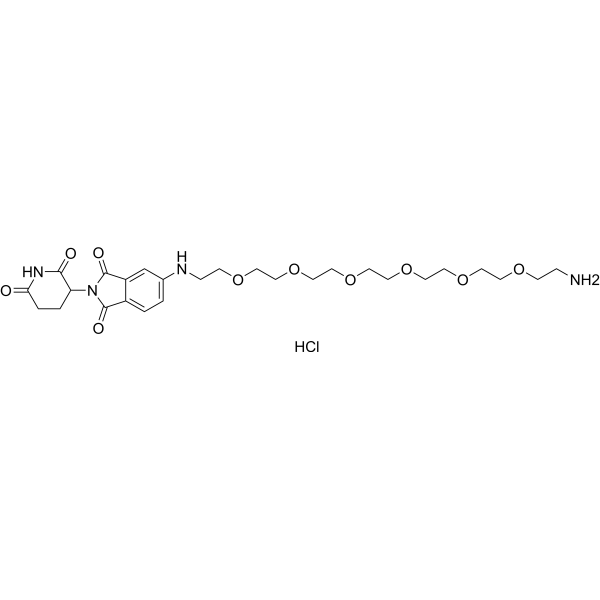 0 ImagesCat. No.: HY-156171Thalidomide-5-NH-PEG6-NH2 hydrochloride is the Thalidomide (HY-10984)-based cereblon ligand used in the recruitment of CRBN protein.Thalidomide-5-NH-PEG6-NH2 hydrochloride can be connected to the ligand for protein by a linker to form PROTACs.
-
Pravastatin-13C,d3 sodium
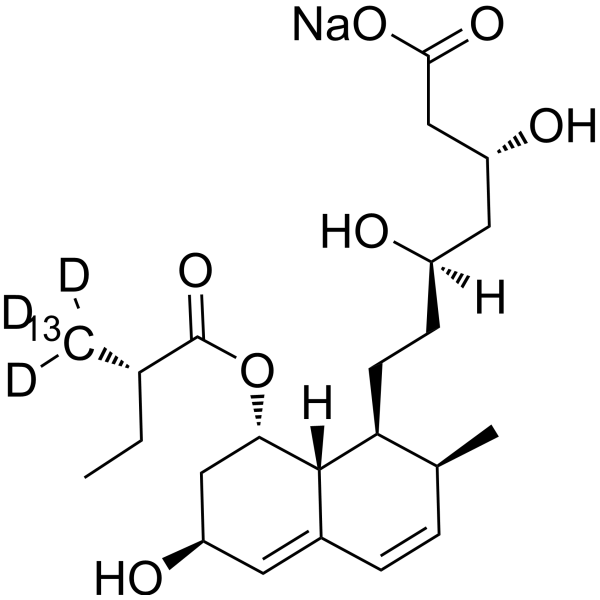 0 ImagesCat. No.: HY-B0165ASSynonyms: CS-514-13C,d3 sodiumPravastatin-13C,d3 (sodium) is the 13C- and deuterium labeled Pravastatin (sodium). Pravastatin sodium (CS-514 sodium) is an HMG-CoA reductase inhibitor against sterol synthesis with IC50 of 5.6 μM.
-
Thalidomide-azetidine-pyrrolidine-C-piperidine-C-boc
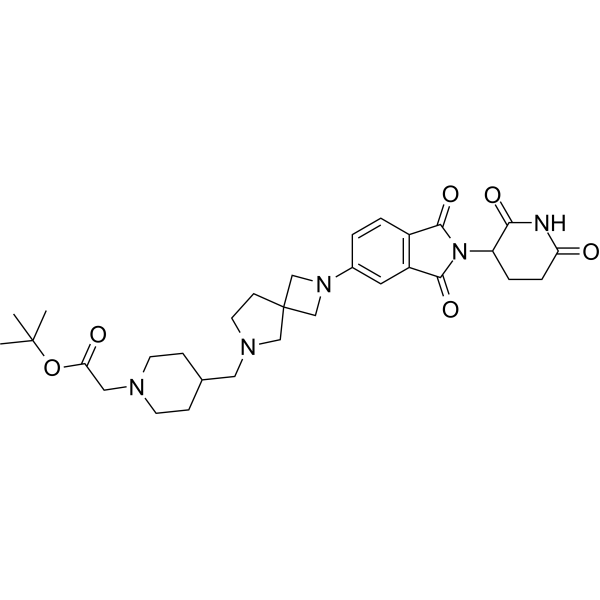 0 ImagesCat. No.: HY-161198Thalidomide-azetidine-pyrrolidine-C-piperidine-C-boc is a conjugate of E3 ligase ligand and linker, consisting of Thalidomide (HY-14658) and the corresponding Linker. Thalidomide-azetidine-pyrrolidine-C-piperidine-C-boc can serve as a Cereblon ligand to recruit CRBN protein and serve as a key intermediate for the synthesis of complete PROTAC molecules.
-
(3S,5R)-Rosuvastatin
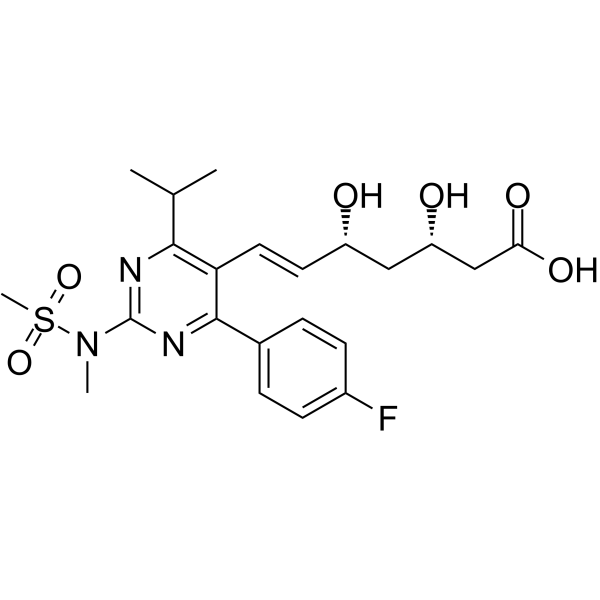 0 ImagesCat. No.: HY-17504DCAS No.: 1242184-42-4(3S,5R)-Rosuvastatin is the (3S,5R)-enantiomer of Rosuvastatin. Rosuvastatin is a competitive HMG-CoA reductase inhibitor with an IC50 of 11 nM. Rosuvastatin potently blocks human ether-a-go-go related gene (hERG) current with an IC50 of 195 nM. Rosuvastatin reduces the expression of the mature hERG and the interaction of heat shock protein 70 (Hsp70) with the hERG protein. Rosuvastatin is very effective in lowering low-density lipoprotein (LDL) cholesterol, triglycerides, and C-reactive protein levels.




