



Cathepsin L
Cathepsin L (CTSL) is a ubiquitously expressed lysosomal cysteine proteinase involved in lysosomal proteolysis, MHC class II antigen presentation, prohormone processing, and extracellular matrix remodeling[1]. Mechanistically, CTSL supports invariant chain degradation in cortical thymic epithelial cells and contributes to CD4+ T-cell selection in the thymus[2]. It also regulates positively selecting peptide ligands independently of invariant chain degradation, showing that CTSL affects thymic MHC class II presentation through more than one mechanism[3]. In skin models, CTSL deficiency causes periodic hair loss, epidermal hyperplasia, altered hair follicle morphogenesis, and disturbed hair follicle cycling[1]. Keratinocyte hyperproliferation in CTSL-knockout mice results from enhanced recycling of growth factors and receptors from endosomes to the plasma membrane[4]. Compared with related isoforms, human cathepsin V is highly homologous to cathepsin L, is expressed in human thymus and testis, and lacks a mouse orthologue[5]. In SARS-CoV-2 models, CTSL cleaves spike protein and enhances viral entry, while CTSL inhibition reduces pseudovirus infection in vitro and in vivo[6]. For experimental applications, small-molecule inhibitors and functional probes help define human CTSL mechanisms in specific cellular contexts[7].
References:
- [1]. Roth W, et al. Cathepsin L deficiency as molecular defect of furless: hyperproliferation of keratinocytes and pertubation of hair follicle cycling. FASEB J. 2000 Oct;14(13):2075-86. [Content Brief]
- [2]. Nakagawa T, et al. Cathepsin L: critical role in Ii degradation and CD4 T cell selection in the thymus. Science. 1998 Apr 17;280(5362):450-3. [Content Brief]
- [3]. Honey K, et al. Cathepsin L regulates CD4+ T cell selection independently of its effect on invariant chain: a role in the generation of positively selecting peptide ligands. J Exp Med. 2002 May 20;195(10):1349-58. [Content Brief]
- [4]. Reinheckel T, et al. The lysosomal cysteine protease cathepsin L regulates keratinocyte proliferation by control of growth factor recycling. J Cell Sci. 2005 Aug 1;118(Pt 15):3387-95. [Content Brief]
- [5]. Tolosa E, et al. Cathepsin V is involved in the degradation of invariant chain in human thymus and is overexpressed in myasthenia gravis. J Clin Invest. 2003 Aug;112(4):517-26. [Content Brief]
- [6]. Zhao MM, et al. Cathepsin L plays a key role in SARS-CoV-2 infection in humans and humanized mice and is a promising target for new drug development. Signal Transduct Target Ther. 2021 Mar 27;6(1):134. [Content Brief]
- [7]. Dana D, et al. A Review of Small Molecule Inhibitors and Functional Probes of Human Cathepsin L. Molecules. 2020 Feb 6;25(3):698. [Content Brief]
-
Cathepsin L Related Products (45)
Related Products (45)

-
Recombinant Proteins (4)
-
E-64
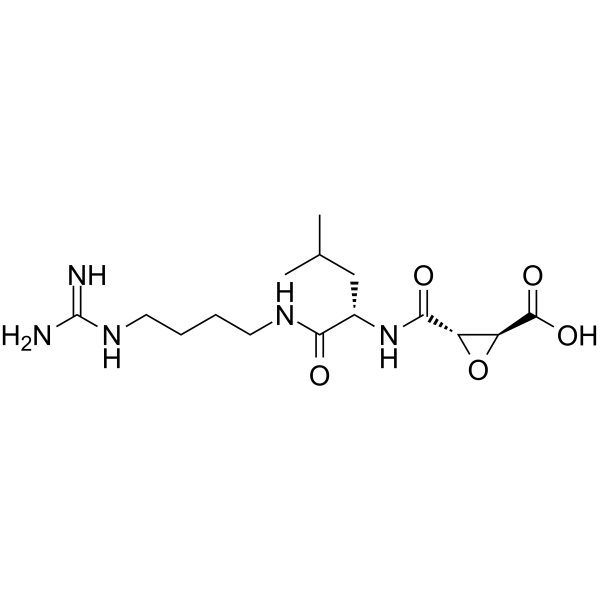 0 ImagesSynonyms: Proteinase inhibitor E 64E-64 (Proteinase inhibitor E 64) is a potent irreversible inhibitor against general cysteine proteases with IC50 of 9 nM for papain.
-
Z-FY-CHO
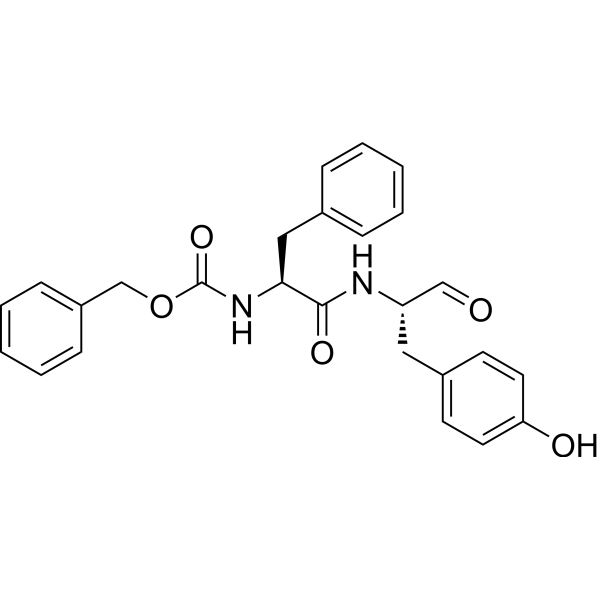 0 ImagesCat. No.: HY-128140CAS No.: 167498-29-5Synonyms: Z-Phe-Tyr-CHOZ-FY-CHO (Z-Phe-Tyr-CHO) is a potent and specific cathepsin L (CTSL) inhibitor.
-
SID 26681509
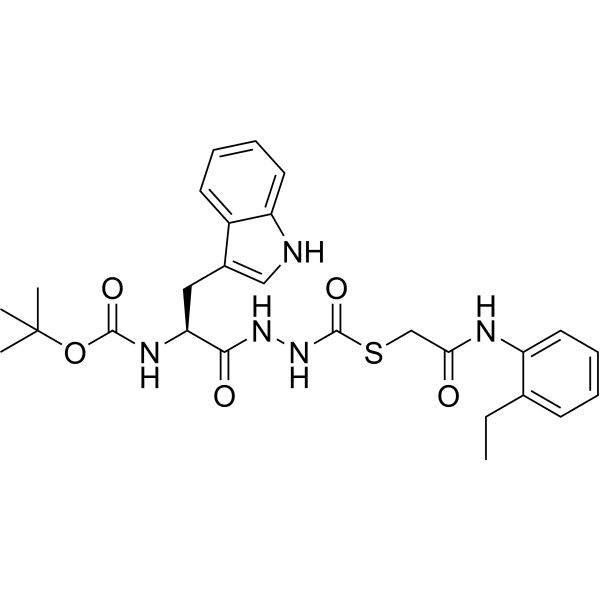 0 ImagesSID 26681509 is a potent, reversible, competitive, and selective inhibitor of human cathepsin L with an IC50 of 56 nM. SID 26681509 inhibits in vitro propagation of malaria parasite Plasmodium falciparum and inhibits Leishmania major with IC50s of 15.4 μM and 12.5 μM, respectively. SID 26681509 shows no inhibitory activity against cathepsin G.
-
Z-Leu-Arg-AMC
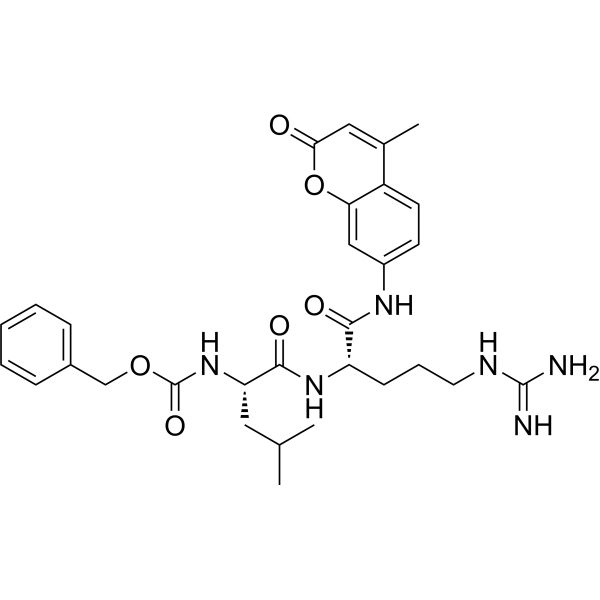 0 ImagesZ-Leu-Arg-AMC is a fluorogenic peptide substrate for cysteine proteases (e.g., Cathepsin) (Ex=350 nm,Em=460 nm). Z-Leu-Arg-AMC is preferentially cleaved by Cathepsin K and S under weakly acidic conditions, while its hydrolysis relies on residual Cathepsin S activity at neutral pH. Z-Leu-Arg-AMC serves as a substrate for recombinant Sphenophorus levis Cathepsin L, falcipain-2, falcipain-3, berghepain-2, knowlepain-2, vivapain-2, as well as falcipain-2 chimeras and constructs. It enables quantitative detection of cysteine protease activity in human inflammatory bronchoalveolar lavage fluid via fluorescence generation. Z-Leu-Arg-AMC can be used in research related to pulmonary inflammatory diseases and malaria.
-
3-Epiursolic Acid
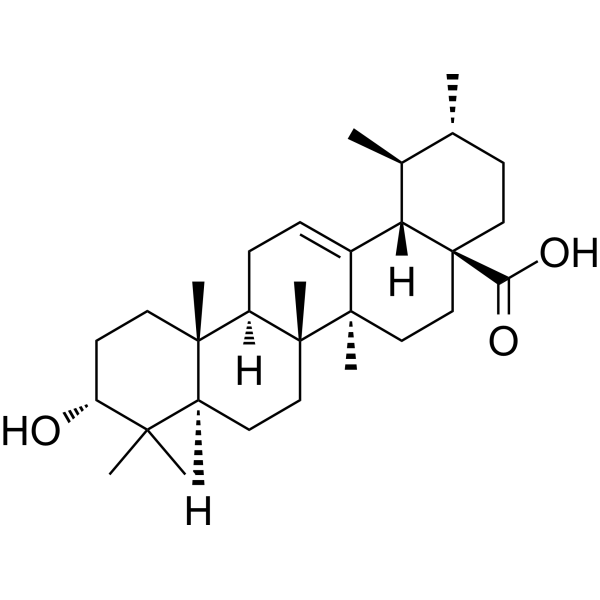 0 Images3-Epiursolic Acid is a natural triterpenoid and a competitive inhibitor of Cathepsin L, with an IC50 of 6.5 μM and a Ki of 19.5 μM. 3-Epiursolic Acid acts through competitive inhibition of Cathepsin L. 3-Epiursolic Acid can be used in research on Cathepsin L inhibitors and tumor-associated proteases.
-
SNJ-1945
 0 ImagesSNJ-1945 is an orally active, blood-brain barrier-penetrant Calpain inhibitor. SNJ-1945 inhibits Cathepsin L, Cathepsin B, and Ca2+ -independent proteases. SNJ-1945 suppresses ROS production and downregulates Cyclooxygenase-2 and Caspase-1. SNJ-1945 alleviates left ventricular systolic dysfunction, reduces cerebral ischemia-induced injury, and decreases the score of experimental autoimmune encephalomyelitis in mouse models. SNJ-1945 can be used in research related to post-cardiac arrest reperfusion injury, Parkinson's disease, multiple sclerosis, and proliferative retinopathy.
-
3-Epiursolic Acid (Standard)
 0 Images3-Epiursolic Acid (Standard) is the analytical standard of 3-Epiursolic Acid (HY-N4289). This product is intended for research and analytical applications. 3-Epiursolic Acid is a natural triterpenoid and a competitive inhibitor of Cathepsin L, with an IC50 of 6.5 μM and a Ki of 19.5 μM. 3-Epiursolic Acid acts through competitive inhibition of Cathepsin L. 3-Epiursolic Acid can be used in research on Cathepsin L inhibitors and tumor-associated proteases.
-
Balicatib
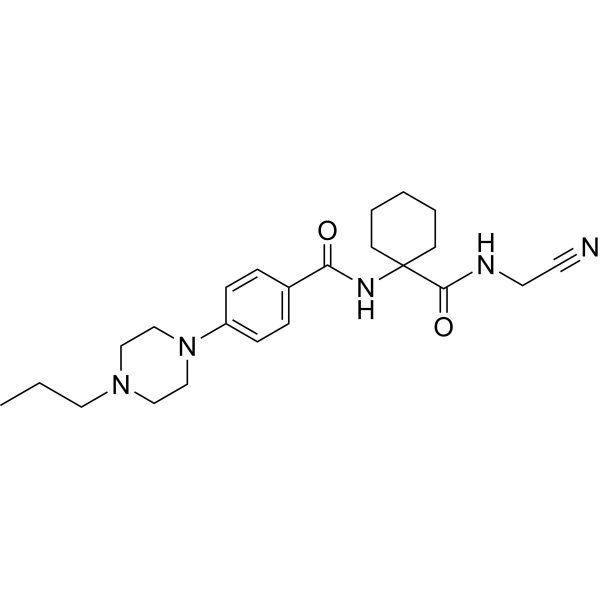 0 ImagesSynonyms: AAE581Balicatib (AAE581) is a potent, orally active and selective cathepsin K inhibitor with IC50 values of 22, 61, 48, 2900 nM for cathepsin K, cathepsin B, cathepsin L, cathepsin S, respectively. Balicatib inhibits bone turnover, decreases bone formation rates. Balicatib has the potential for the research of osteoporosis.
-
Z-FA-FMK
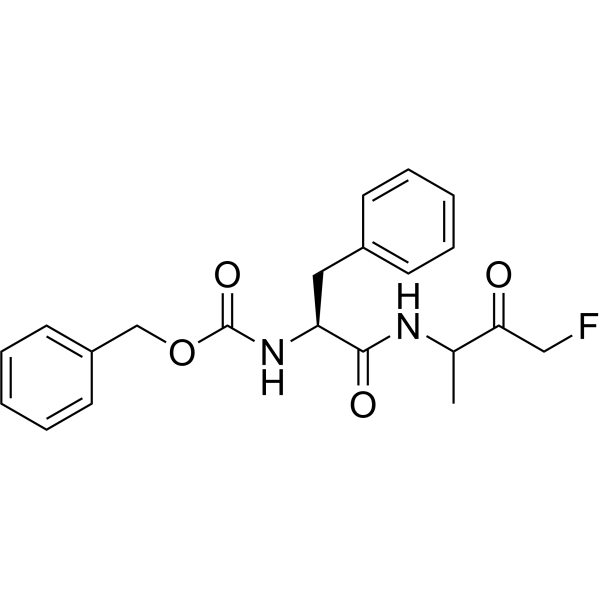 0 ImagesSynonyms: (1S)-Z-FA-FMKZ-FA-FMK ((1S)-Z-FA-FMK) is a potent Cathepsin B and L inhibitor. Z-FA-FMK blocks the induction of DEVDase activity, DNA fragmentation, and externalization of phosphatidylserine by selective synthetic retinoid-related molecules (RRMs). Z-FA-FMK inhibits apoptosis. Z-FA-FMK inhibits caspase activity and selectively inhibits recombinant effector caspases 2, -3, -6, and -7. Z-FA-FMK is a viral inhibitor. Z-FA-FMK inhibits reovirus replication in a susceptible host.
-
Cathepsin L-IN-2
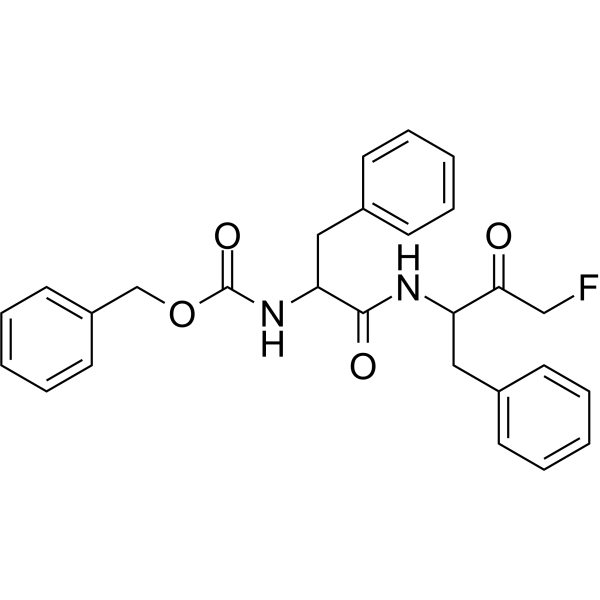 0 ImagesSynonyms: (Rac)-Z-Phe-Phe-FMKCathepsin L-IN-2 ((Rac)-Z-Phe-Phe-FMK) is an isomer of the Cathepsin L inhibitor Z-Phe-Phe-FMK (HY-141867), with an IC50 of 15 μM for cathepsin L. Z-Phe-Phe-FMK irreversibly blocks the proteolytic function of cathepsins by covalently binding to the cysteine residues in the active center of the enzyme. Cathepsin L-IN-2 and Z-Phe-Phe-FMK can be used to study neurodegenerative diseases (such as GRN-related frontotemporal dementia) and cancer invasion and metastasis.
-
Z-FF-FMK
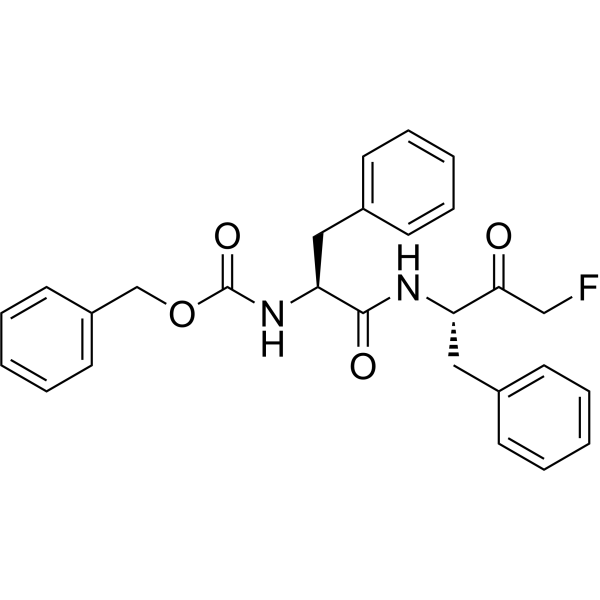 0 ImagesCat. No.: HY-141867CAS No.: 105608-85-3Synonyms: Z-Phe-Phe-FMKZ-FF-FMK (Z-Phe-Phe-FMK) is a cell-permeable, irreversible, and cysteine protease inhibitor targeting cathepsin-L. Z-FF-FMK inhibits angiotensin II-induced MEK activation in vascular walls, aortic medial remodeling, blood pressure elevation, and upregulation of cystatin C in aortic walls. Z-FF-FMK prevents β-amyloid-mediated caspase-3 activation, poly (ADP-ribose) polymerase cleavage, DNA fragmentation, and apoptosis of cortical neurons (apoptosis). Z-FF-FMK can be used in research related to hypertension and Alzheimer's disease.
-
Relacatib
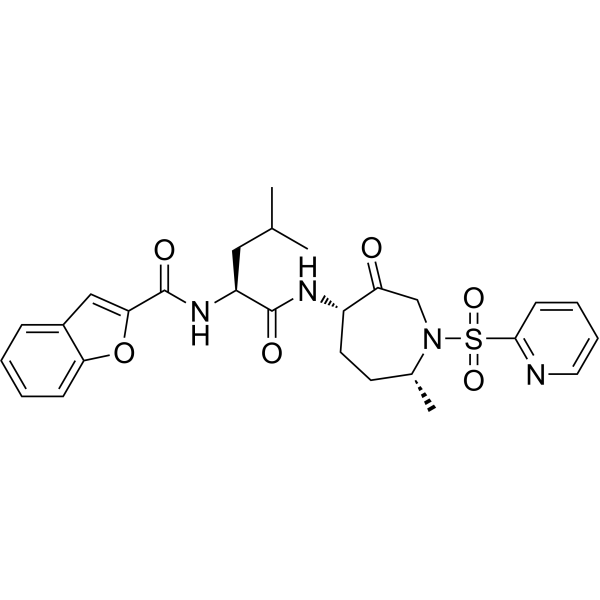 0 ImagesSynonyms: SB-462795Relacatib (SB-462795) is a novel, potent, and orally active inhibitor of human cathepsins K, L, and V with Ki values of 41 pM, 68 pM, and 53 pM, respectively. Relacatib inhibits endogenous cathepsin K in situ in human osteoclasts and human osteoclast-mediated bone resorption with IC50 values of 45 nM and 70 nM, respectively. Relacatib inhibits bone resorption in vitro in human tissue as well as in cynomolgus monkeys in vivo.
-
Cathepsin L/S-IN-1
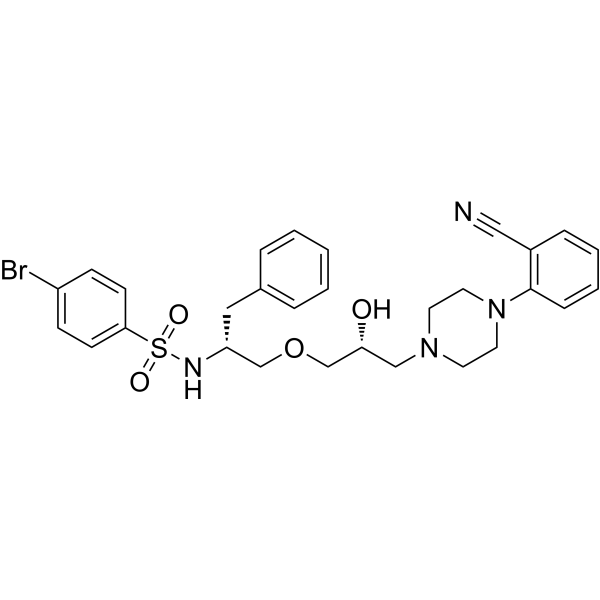 0 ImagesCathepsin L/S-IN-1 is a dual inhibitor of Cathepsin L and Cathepsin S with IC50s of 4.10 μM and 1.79 μM, respectively. Cathepsin L/S-IN-1 shows a significant antimetastatic and invasive effects on pancreatic cancer BxPC-3 and PANC-1 cells.
-
Cathepsin L-IN-3 TFA
 0 ImagesCat. No.: HY-P10118APurity: 98.18%Cathepsin L-IN-3 (Compound cat L inh. 7) TFA is selective a noncovalent cathepsin L inhibitor with a Ki of 4.3 nM.
-
Z-Phe-Tyr(tBu)-diazomethylketone
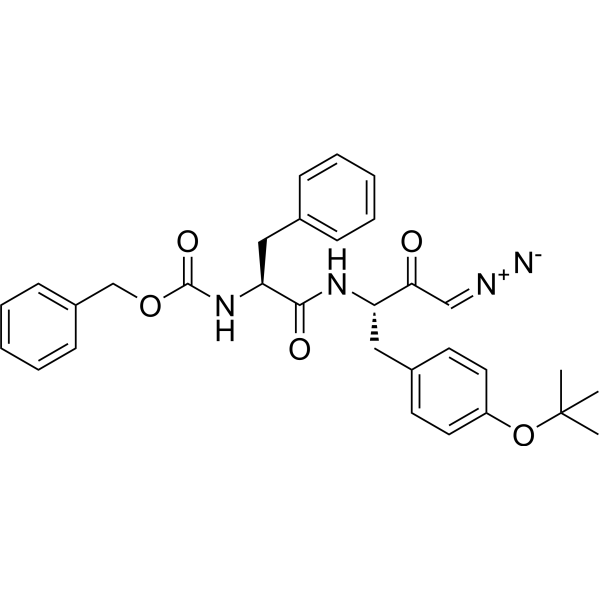 0 ImagesZ-Phe-Tyr(tBu)-diazomethylketone is a potent cathepsin L inhibitor. Z-Phe-Tyr(tBu)-diazomethylketone mediates reovirus disassembly. Z-Phe-Tyr(tBu)-diazomethylketone decreases viral detection.
-
Diazepinomicin
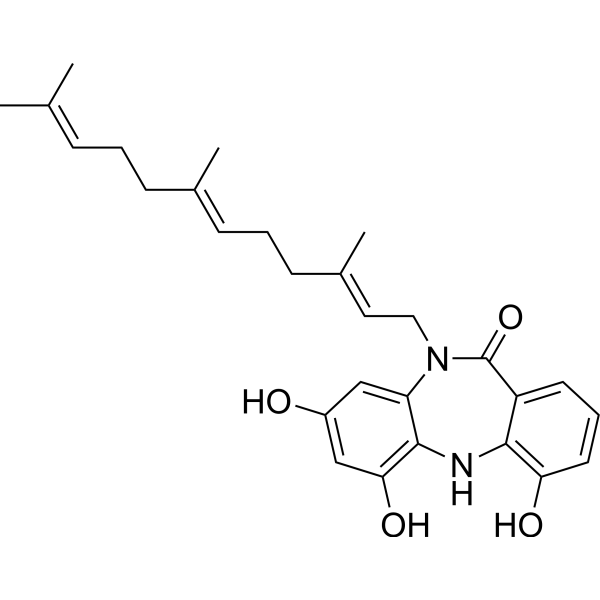 0 ImagesCat. No.: HY-N6674CAS No.: 733035-26-2Synonyms: ECO-4601; TLN-4601; BU 4664LDiazepinomicin (ECO-4601) is an anticancer and antibacterial agent. Diazepinomicin can be produced by a Micromonospora strain. Diazepinomicin induces Apoptosis. Diazepinomicin inhibits the proteases Rhodesain and Cathepsin L at an IC50 of 70-90 μM. Diazepinomicin possesses anti-inflammatory and anti-tumor activity. Diazepinomicin has demonstrated activity against hepatocellular carcinoma. Diazepinomicin shows antiparasitic activity against trypomastigote forms of Trypanosoma brucei with an IC50 of 13.5 μM. Diazepinomicin exhibits moderate antibacterial activity against specific Gram-positive bacteria, with an MIC of approximately 32 μg/mL.
-
Ac-FR-AFC TFA
 0 ImagesCat. No.: HY-P11326Purity: 99.51%Ac-FR-AFC TFA is a fluorometric substrate for cathepsin L. Ac-FR-AFC TFA can be used for the research of glioblastoma.




