



Epigenetic Reader Domain
Epigenetic regulators of gene expression and chromatin state include so-called writers, erasers, and readers of chromatin modifications.Well-characterized examples of reader domains include bromodomains typically binding acetyllysine and chromatin organization modifier (chromo), malignant brain tumor (MBT), plant homeodomain (PHD), and Tudor domains generally associating with methyllysine. Research on epigenetic readers has been tremendously influenced by the discovery of selective inhibitors targeting the bromodomain and extraterminal motif (BET) family of acetyl-lysine readers. The human genome encodes 46 proteins containing 61 bromodomains clustered into eight families. Distinct experimental approaches are used to identify the first BET inhibitors, GSK 525762A and (+)-JQ-1.
The Polycomb group (PcG) protein, enhancer of zeste homologue 2 (EZH2), has an essential role in promoting histone H3 lysine 27 trimethylation (H3K27me3) and epigenetic gene silencing. This function of EZH2 is important for cell proliferation and inhibition of cell differentiation, and is implicated in cancer progression. Cyclin-dependent kinases regulate epigenetic gene silencing through phosphorylation of EZH2. In many types of cancers including lymphomas and leukemia, EZH2 is postulated to exert its oncogenic effects via aberrant histone and DNA methylation, causing silencing of tumor suppressor genes.
p300/CBP is not only a transcriptional adaptor but also a histone acetyltransferase.
Epigenetic Reader Domain Isoform Specific Products
-
Epigenetic Reader Domain
(442)
View all products
-
Brd
(3)
View all products
-
BRPF1
(9)
View all products
-
BRPF2
(5)
View all products
-
BRPF3
(2)
View all products
-
BRD2
(61)
View all products
-
BRD3
(57)
View all products
-
BRD4
(285)
View all products
-
BRDT
(26)
View all products
-
CECR2
(4)
View all products
-
BD1
(9)
View all products
-
BD2
(9)
View all products
-
BRD7
(9)
View all products
-
BRD9
(54)
View all products
-
BET
(21)
View all products
-
BAZ
(1)
View all products
All Product Categories
-
Epigenetic Reader Domain Inhibitors
(590)
View all products
-
Epigenetic Reader Domain Agonists
(3)
View all products
-
Epigenetic Reader Domain Antagonists
(2)
View all products
-
Epigenetic Reader Domain Activators
(10)
View all products
-
Epigenetic Reader Domain Modulators
(3)
View all products
-
Epigenetic Reader Domain Chemicals
(2)
View all products
-
Epigenetic Reader Domain Inducer
(1)
View all products
-
Epigenetic Reader Domain Degraders
(157)
View all products
-
Epigenetic Reader Domain Controls
(12)
View all products
-
Epigenetic Reader Domain Substrate
(1)
View all products
-
Epigenetic Reader Domain Ligands
(26)
View all products
-
Epigenetic Reader Domain Produits associés (884)
Produits associés (884)

-
Anticorps (109)
-
Epigenetic Reader Domain Isoform Comparison
-
3-Methylcarbostyril
 0 ImagesCat. No.: HY-W265951CAS No.: 2721-59-73-Methylcarbostyril (compound 5) is a BRD4 BD1 inhibitor with a pIC50 of 4.4.
-
Y16524
 0 ImagesCat. No.: HY-168463CAS No.: 3109988-90-8Y16524 is a potent inhibitor of CBP/p300 bromodomain , with the IC50 of 0.01 μM. Y16524 has the potential for the research of acute myeloid leukemia (AML).
-
ZL0516
 0 ImagesCat. No.: HY-173450CAS No.: 2230496-93-0ZL0516 is a potent, selective, and orally active BRD4 BD1 inhibitor. ZL0516 suppresses inflammatory bowel disease (IBD) by inhibiting BRD4/NF-κB signaling.
-
CDD-1132
 0 ImagesCat. No.: HY-177145CAS No.: 2757619-83-1CDD-1132 (Compound 8) is a potent inhibitor of BRDT-BD2. CDD-1132 has an IC50 of 13 nM against BRDT-BD2. CDD-1132 can be studied in research on nonhormonal contraceptive agent.
-
BRD4 degrader-4
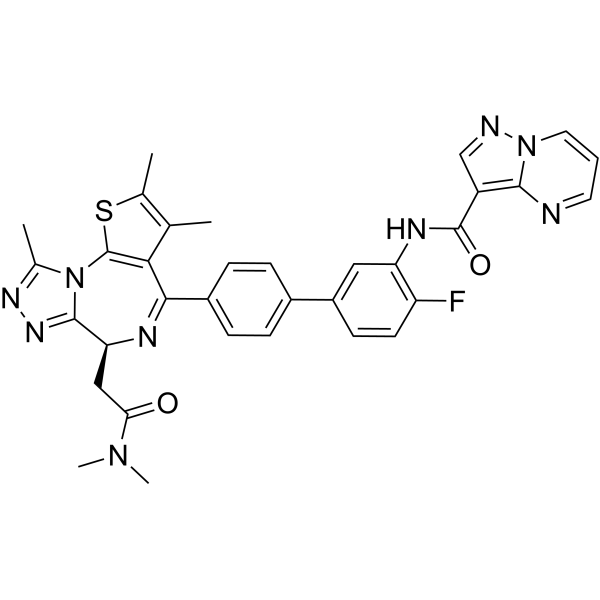 0 ImagesCat. No.: HY-160527CAS No.: 2851986-83-7
-
SGC-BRDVIII-NC
 0 ImagesCat. No.: HY-176822CAS No.: 2650530-02-0SGC-BRDVIII-NC (Compound 35) is a negative control compound of SMARCA2/4 and PB1 bromodomain (BRD) inhibitor. SGC-BRDVIII-NC completely abolishes protein-ligand binding capacity with the methylation of the phenolic hydroxyl moiety. SGC-BRDVIII-NC can be used for adipogenesis research.
-
BET-IN-29
 0 ImagesCat. No.: HY-176929CAS No.: 1776060-36-6BET-IN-29 (Compound 1) is a bromodomain and the terminal motif (BET) inhibitor. BET-IN-29 can be used for the study of cancer, inflammation, metabolism, neurological diseases, and infectious diseases.
-
BRD4-BD1/2-IN-1
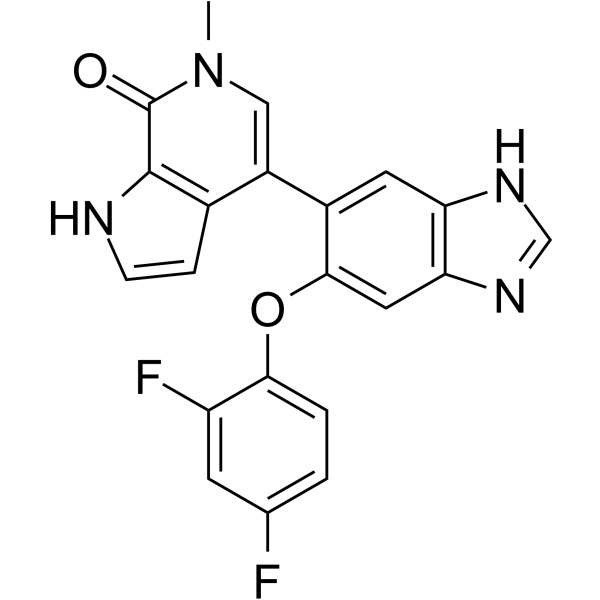 0 ImagesCat. No.: HY-142674CAS No.: 1781219-19-9BRD4-BD1/2-IN-1 is a potent BRD4 inhibitor with IC50s of <100 nM for BRD4 BD-1 and BRD4 BD-2, respectively (US20150148375A1, compound 5).
-
Menin-MLL inhibitor MI-2 dihydrochloride
 0 ImagesCat. No.: HY-15222AMenin-MLL inhibitor MI-2 dihydrochloride is a competitive and selective Menin-MLL interaction inhibitor with an IC50 value of 446 nM and a Ki value of 158 nM. Menin-MLL inhibitor MI-2 dihydrochloride downregulates the expression of target genes such as HOXA9 and MEIS1, inhibits proliferation of leukemia cells and induces apoptosis and differentiation. Menin-MLL inhibitor MI-2 dihydrochloride is proming for rasearch of MLL-rearranged acute leukemias (e.g., AML, ALL).
-
BET-IN-15
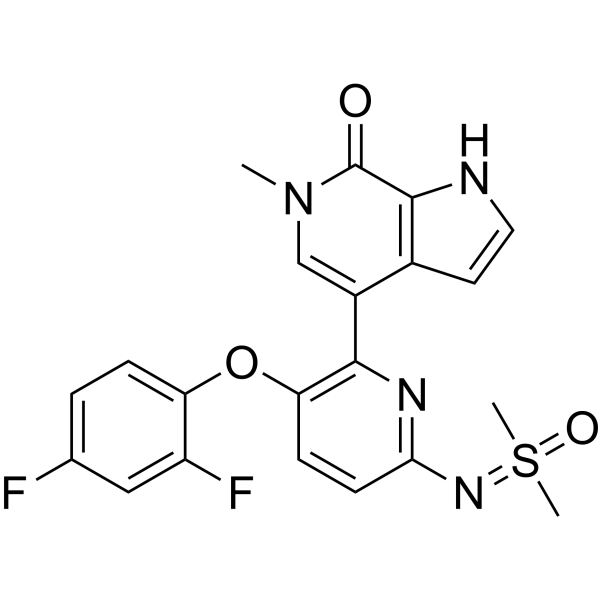 0 ImagesCat. No.: HY-153945CAS No.: 2408994-22-7BET-IN-15 (compound 1) is a potent and orally active BET inhibitor with IC50 values of 0.64,0.25 nM for BRD4-BD1,BRD4-BD2,respectively. BET-IN-15 shows antiproliferative activity.
-
SJ46420
 0 ImagesCat. No.: HY-168635SJ46420 is a BRD3 PROTAC degrader with a DC50 of 224 nM in U2OS cells. SJ46420 selectively mediates BRD3 degradation, exerts only partial effects on BRD2 and BRD4, and its activity is dependent on KLHDC2. SJ46420 is a prodrug variant of SJ46421 (HY-168634). SJ46420 can be used in the research of prostate cancer.
-
Bromodomain IN-2
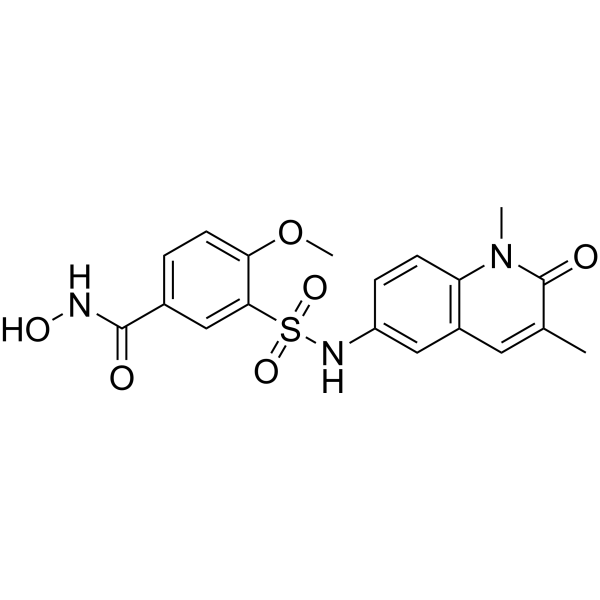
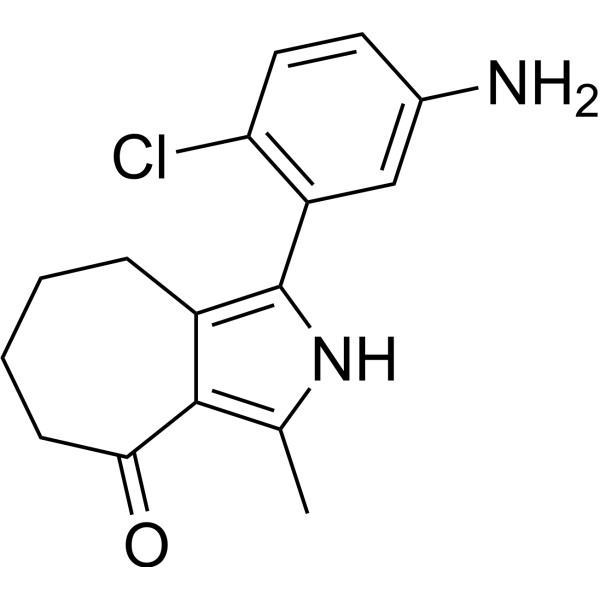 0 ImagesCat. No.: HY-149806CAS No.: 2445335-77-1BD-IN-1 is a pan bromodomain (BD) inhibitor with KD values of 250, 420, 130, 430, 67, 240, 970 nM for BRD4(1), CBP, BRPF1B, BRD7, BRD9, BRDT(1), CECR2 respectively. BD-IN-1 shows antiproliferative activity.
-
SRG-II-19F
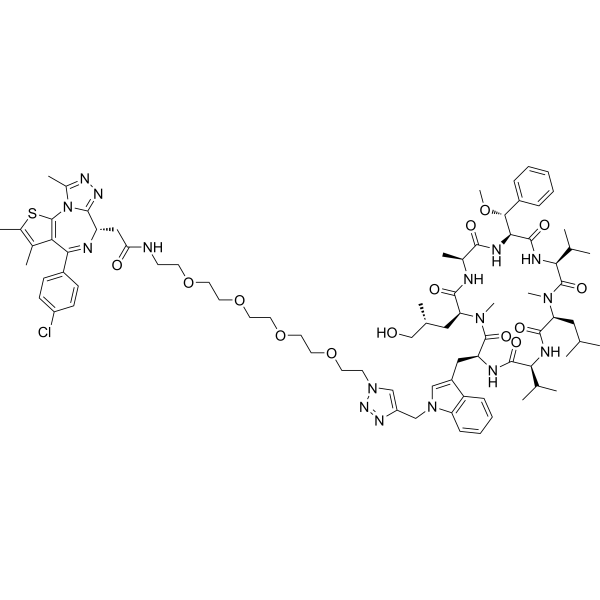 0 ImagesCat. No.: HY-153573Synonyms: dCym-JQ1SRG-II-19F (dCym-JQ1) is a BRDTBD1 PROTAC degrader. Its dCym moiety at one end binds to the N-terminal domain of ClpC1 (ClpC1NTD), while its JQ1 moiety at the other end binds to bromodomain 1 of BRDT (BRDTBD1). This molecule induces the degradation of BRDTBD1 by recruiting the BRDTBD1 substrate to the ClpC1P1P2 protease complex. SRG-II-19F serves as a research tool for studies related to mycobacterial protein degradation.

-
GW 841819X
 0 ImagesCat. No.: HY-13031CAS No.: 146135-18-4GW 841819X is a benzodiazepine inhibitor of bromodomains of the BET family (BRD2, BRD3, BRD4) that inhibits the binding of Diazepam to central GABA receptors. GW 841819X can be used in the research of BET bromodomain-related diseases, such as cancer.
-
ZNL-02-096
 0 ImagesCat. No.: HY-208742CAS No.: 2414418-56-5ZNL-02-096 is a selective Wee1 PROTAC degrader. ZNL-02-096 binds to CRBN and Wee1 to form a ternary complex, inducing CRBN- and proteasome-dependent ubiquitination and proteasomal degradation of Wee1. ZNL-02-096 inhibits recombinant PLK1 with an IC50 of 102 nM, but does not induce its degradation in cells. ZNL-02-096 induces G2/M phase arrest, Apoptosis, transient integrated stress response, upregulation of ATF4, and phosphorylation of GCN2. ZNL-02-096 reduces Tyr15 phosphorylation of CDK1. ZNL-02-096 can be used in research related to ovarian cancer, acute lymphoblastic leukemia, triple-negative breast cancer, multiple myeloma, and pancreatic ductal adenocarcinoma.

-
BRD4 Inhibitor-17
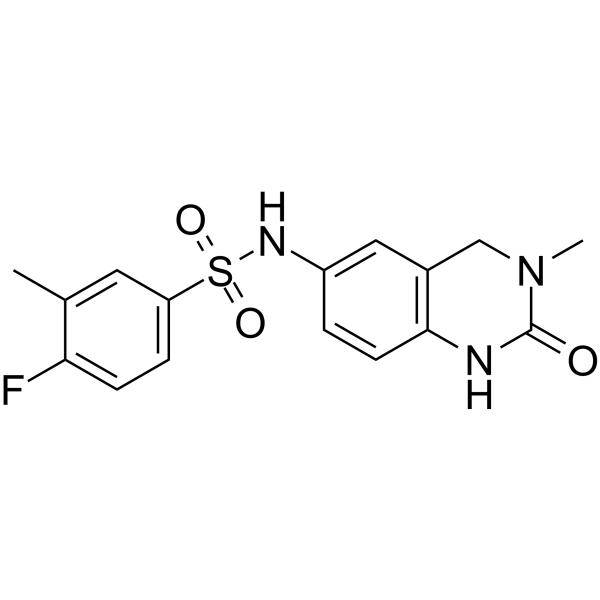 0 ImagesCat. No.: HY-145909CAS No.: 2835555-10-5BRD4 Inhibitor-17 (Compound 5i) is a potent inhibitor of BRD4 with an IC50 of 0.33 μM. BRD4 Inhibitor-17 plays crucial role in regulating transcription of inflammatory, proliferation and cell cycle genes. BRD4 Inhibitor-17 serves as potential antidotes for arsenicals.
-
PROTAC BRD4 ligand-1-NH-PEG-phenol-PEG-COOtBu
 0 ImagesCat. No.: HY-176369CAS No.: 2973054-19-0




