



MDM-2/p53
The p53 tumor suppressor is a principal mediator of growth arrest, senescence, and apoptosis in response to a broad array of cellular damage. p53 is a short-lived protein that is maintained at low, often undetectable, levels in normal cells. Under stress conditions, the p53 protein accumulates in the cell, binds in its tetrameric form to p53-response elements and induces the transcription of various genes.
MDM-2 is transcriptionally activated by p53 and MDM-2, in turn, inhibits p53 activity in several ways. MDM-2 binds to the p53 transactivation domain and thereby inhibits p53-mediated transactivation. MDM-2 also contains a signal sequence that is similar to the nuclear export signal of various viral proteins and, after binding to p53, it induces its nuclear export. As p53 is a transcription factor, it needs to be in the nucleus to be able to access the DNA; its transport to the cytoplasm by MDM-2 prevents this. Finally, MDM-2 is a ubiquitin ligase, so is able to target p53 for degradation by the proteasome.
In many tumors p53 is inactivated by the overexpression of the negative regulators MDM2 and MDM4 or by the loss of activity of the MDM2 inhibitor ARF. The pathway can be reactivated in these tumors by small molecules that inhibit the interaction of MDM2 and/or MDM4 with p53. Such molecules are now in clinical trials.
All Product Categories
-
MDM-2/p53 Inhibitors
(114)
View all products
-
MDM-2/p53 Agonists
(8)
View all products
-
MDM-2/p53 Antagonists
(4)
View all products
-
MDM-2/p53 Activators
(166)
View all products
-
MDM-2/p53 Modulators
(29)
View all products
-
MDM-2/p53 MDM2 Inhibitors
(65)
View all products
-
MDM-2/p53 p53 Activators
(115)
View all products
-
MDM-2/p53 p53 Inhibitors
(16)
View all products
-
MDM-2/p53 Inducers
(17)
View all products
-
MDM-2/p53 Degraders
(8)
View all products
-
MDM-2/p53 Controls
(6)
View all products
-
MDM-2/p53 Ligands
(9)
View all products
-
MDM-2/p53 Related Products (637)
Related Products (637)

-
Antibodies (17)
-
MDM-2/p53 Signaling Pathway
-
RDR03871
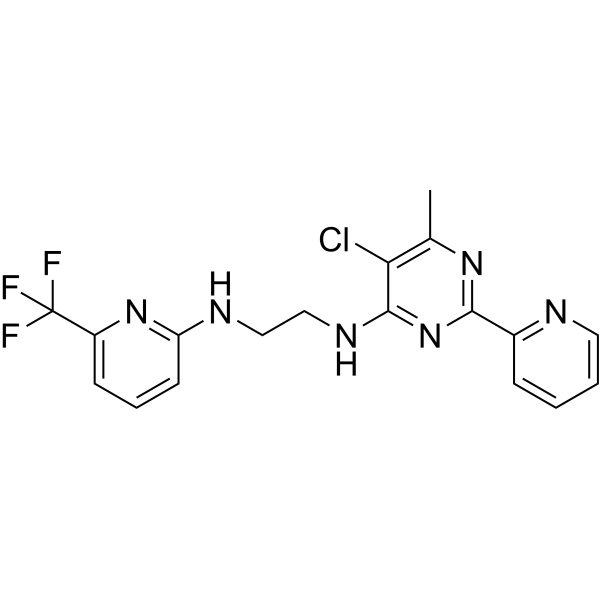 0 ImagesRDR03871 (compound 2) is a potent dual MDM2/MDM4 inhibitor with IC50 values of 35.4 nM and 10.4 nM for MDM2-p53 and MDM4-p53, respectively.
-
SN-28049
 0 ImagesSN-28049 is a new DNA-binding topoisomerase II-directed antitumor agent. SN-28049 activates the p53 pathway. SN-28049 exhibits anticancer activity against colorectal cancer.
-
MI-888 TFA
 0 ImagesCat. No.: HY-16634CAS No.: 1303609-30-4MI-888 (TFA) is an orally active MDM2-p53 interaction inhibitor with a Ki of 0.44 nM. MI-888 (TFA) can achieve rapid, complete, and sustained tumor regression in a xenograft mouse model of cancer.
-
SJ44236
 0 ImagesCat. No.: HY-170900SJ44236 is a BET PROTAC degrader with activity against BRD2, BRD3 and BRD4 (DC50 = 127 pM). SJ44236 induces ubiquitination and proteasomal degradation by forming a ternary complex with BET proteins and CRBN-DDB1. SJ44236 downregulates c-Myc, upregulates p53 and reduces cancer cell viability. SJ44236 can be used for the research of leukemia and medulloblastoma.
-
p53 Activator 10
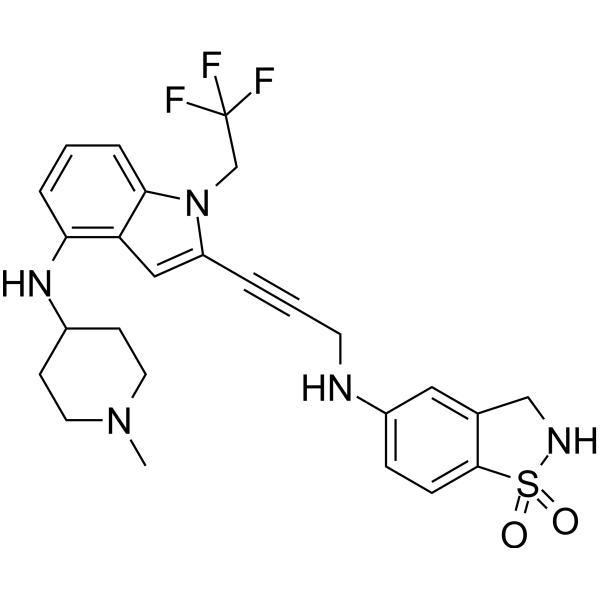 0 ImagesCat. No.: HY-160449CAS No.: 2849484-29-1p53 Activator 10 (Example C-2) is a compound that targets the y220c mutant of p53. p53 Activator 10 activation is involved in the downstream effects of tumor suppression.
-
UNP-6457
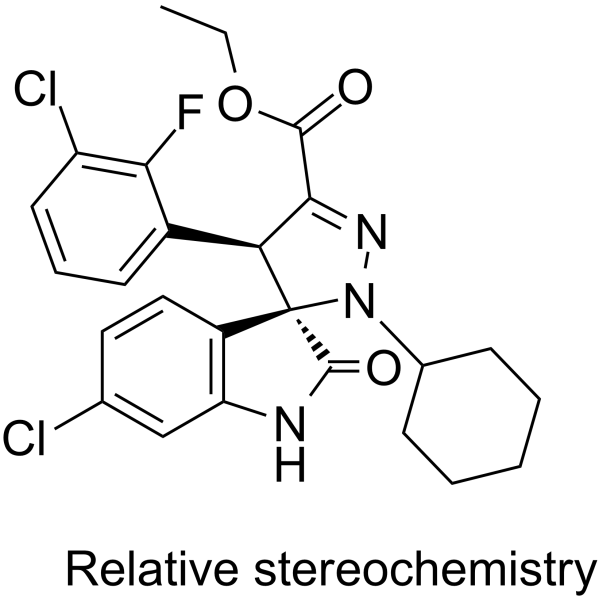
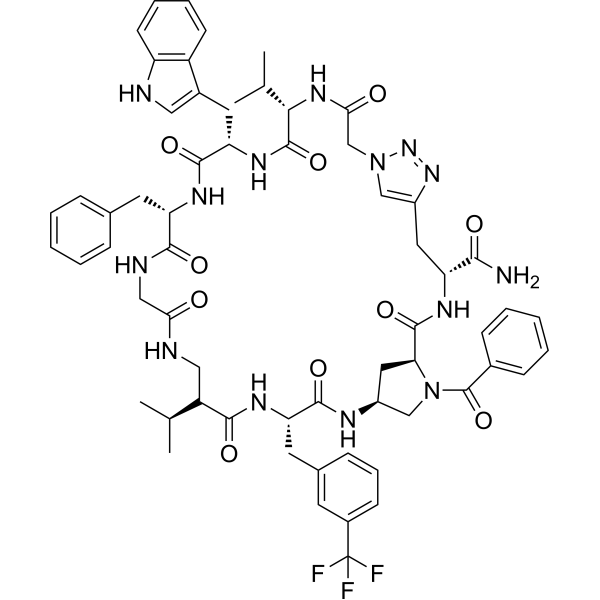 0 ImagesCat. No.: HY-149988CAS No.: 3072696-60-4UNP-6457 is a potent active MDM2-p53 interaction inhibitor with an IC50 values of 8.9 nM.

-
VEGFR-2-IN-23
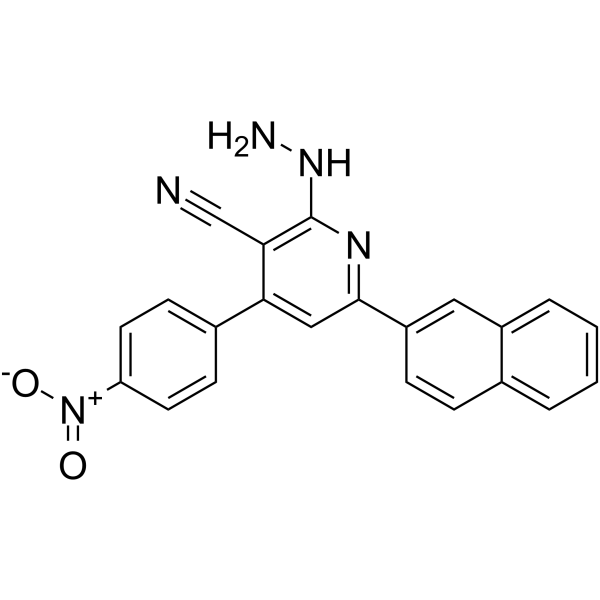 0 ImagesCat. No.: HY-149024CAS No.: 2411174-53-1VEGFR-2-IN-23 (compound 11b) is a potent and selective VEGFR-2 inhibitor with an IC50 value of 0.34 nM. VEGFR-2-IN-23 shows antitumor activity. VEGFR-2-IN-23 induces apoptosis and cell cycle arrest at G1 phase.
-
Diuron (Standard)
 0 ImagesDiuron (Standard) is the analytical standard of Diuron (HY-B0860). This product is intended for research and analytical applications. Diuron is an orally active phenylurea herbicide. Diuron inhibits photosynthesis in plants by blocking the formation of ATP and NADH. Diuron increases the production of ROS. Diuron increases expression of p53 in certain cell lines. Diuron has herbicidal activity against annual and perennial broadleaf weeds and grass weeds. Diuron promotes DMBA/BBN-induced bladder cancer. Diuron can be used in breast cancer research.
-
p53 Bipartite NLS
 0 ImagesCat. No.: HY-P11947CAS No.: 254103-71-4p53 Bipartite NLS is a bipartite nuclear localization signal derived from p53. When p53 Bipartite NLS is fused to the N-terminus of p65 and the single-component nuclear localization signal of p65 itself is mutated, it alters the nuclear import pathway of p65. p53 Bipartite NLS renders p65 resistant to TTP (HY-P60128)-mediated inhibition of NF-κB transcriptional activity and nuclear import.
-
Teprasiran sodium scrambled negative control
 0 ImagesCat. No.: HY-132595CTeprasiran sodium scrambled negative control is the sequence scrambled negative control of Teprasiran sodium.
-
X15695
 0 ImagesX15695 is selective and orally active estrogen receptor (ERα) degrader. X15695 is an aryl hydrocarbon receptor (AHR) ligand. X15695 enables AHR to form a complex with the ERα, promoting its proteasomal degradation. X15695 inhibits the breast cancer cells proliferation, promotes cell cycle block and induces apoptosis. X15695 can be used for the study of breast cancer.
-
ZMC2
 0 ImagesCat. No.: HY-165381CAS No.: 71555-14-1ZMC2 is a thiosemicarbazone-class metal ion chelator and zinc ionophore with a human mutant p53R175H binding Ka of 27.4 nM.ZMC2 binds Fe, Cu, Mn, Zn, and other transition metals.ZMC2 facilitates zinc transport across membranes.ZMC2 restores zinc binding to zinc-deficient p53 mutants, restoring wild-type structure and function, including site-specific DNA binding.ZMC2 generates reactive oxygen species (ROS).ZMC2 can be used for the research of cancer.
-
MDM2-IN-24
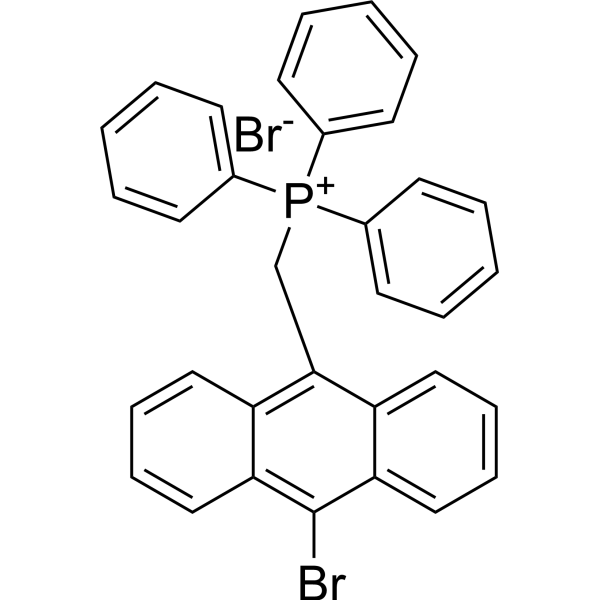 0 ImagesCat. No.: HY-163275MDM2-IN-24 (compound A3f) exhibits MDM2-inhibiting and MDMX-activating properties in triple-negative breast cancer (TNBC) cells, with apoptotic and anti-proliferative activities.
-
HLI373
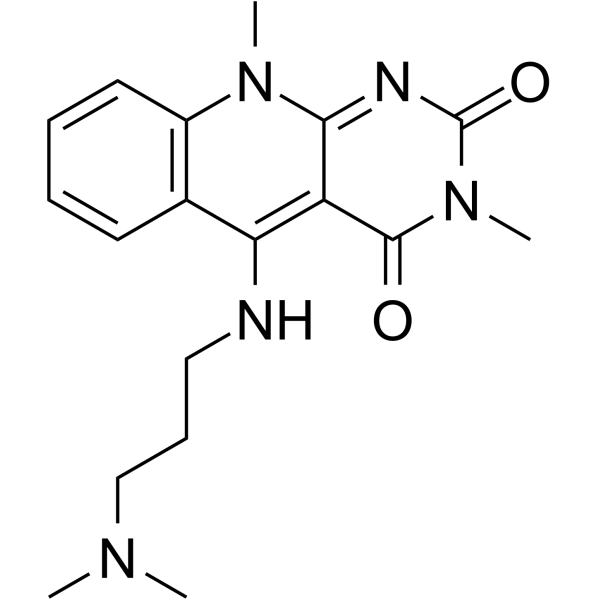 0 ImagesCat. No.: HY-108640CAS No.: 502137-98-6
-
BI-0282
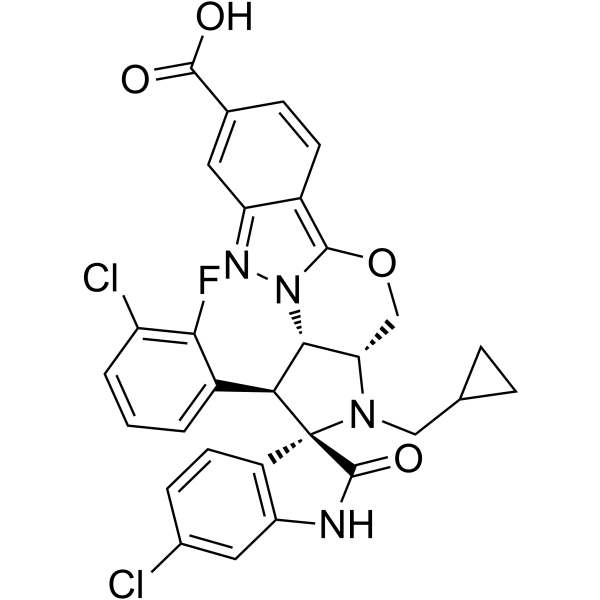 0 ImagesCat. No.: HY-150620CAS No.: 1883383-48-9BI-0282 (Compound 1) is a potent MDM2-p53 interaction inhibitor.
-
p53-Y220C/PLK1 modulator-1
 0 ImagesCat. No.: HY-181616CAS No.: 3114732-99-6
-
Wnt/β-catenin-IN-3
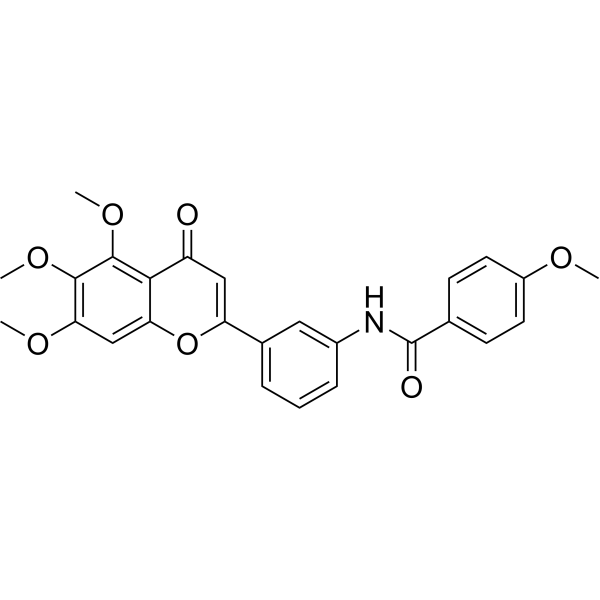 0 ImagesCat. No.: HY-158210CAS No.: 1809413-98-6
-
Syringolin A
 0 ImagesCat. No.: HY-N15314CAS No.: 212115-96-3Syringolin A is a plant elicitor that can be produced by the plant pathogen Pseudomonas syringae pv. syringae. Syringolin A exhibits anti-proliferative activity against a variety of cancer cells (IC50 for SK-N-SH, LAN-1, SKOV3 is 20-25 µM), induces apoptosis in SK-N-SH through upregulation of p53 expression and downregulation of Akt/PKB proteins.




