



Microtubule/Tubulin
Microtubules are a component of the cytoskeleton, found throughout the cytoplasm. These tubular polymers of tubulin can grow as long as 50 micrometres, with an average length of 25 µm, and are highly dynamic. The outer diameter of a microtubule is about 24 nm while the inner diameter is about 12 nm. Microtubules are found in eukaryotic cells and are formed by the polymerization of a dimer of two globular proteins, alpha and beta tubulin. Tubulin is one of several members of a small family of globular proteins. The tubulin superfamily includes five distinct families, the alpha-, beta-, gamma-, delta-, and epsilon-tubulins and a sixth family which is present only in kinetoplastid protozoa. The most common members of the tubulin family are α-tubulin and β-tubulin, the proteins that make up microtubules. Microtubules are very important in a number of cellular processes. They are involved in maintaining the structure of the cell.
All Product Categories
-
Microtubule/Tubulin Inhibitors
(812)
View all products
-
Microtubule/Tubulin Agonists
(2)
View all products
-
Microtubule/Tubulin Antagonist
(1)
View all products
-
Microtubule/Tubulin Activators
(21)
View all products
-
Microtubule/Tubulin Modulators
(20)
View all products
-
Microtubule/Tubulin Inducers
(5)
View all products
-
Microtubule/Tubulin Degraders
(3)
View all products
-
Microtubule/Tubulin Controls
(19)
View all products
-
Microtubule/Tubulin Ligands
(5)
View all products
-
Microtubule/Tubulin Related Products (1003)
Related Products (1003)

-
Antibodies (69)
-
20-O-Demethyl-AP3
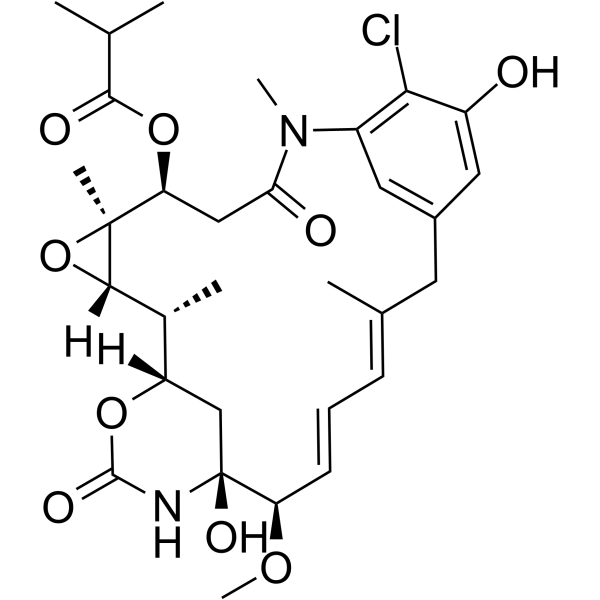 0 ImagesCat. No.: HY-139105CAS No.: 72902-38-620-O-Demethyl-AP3 is a minor metabolite of Ansamitocin P-3. Ansamitocin P-3, a microtubule inhibitor, is a macrocyclic antitumor antibiotic.
-
Tubulozole
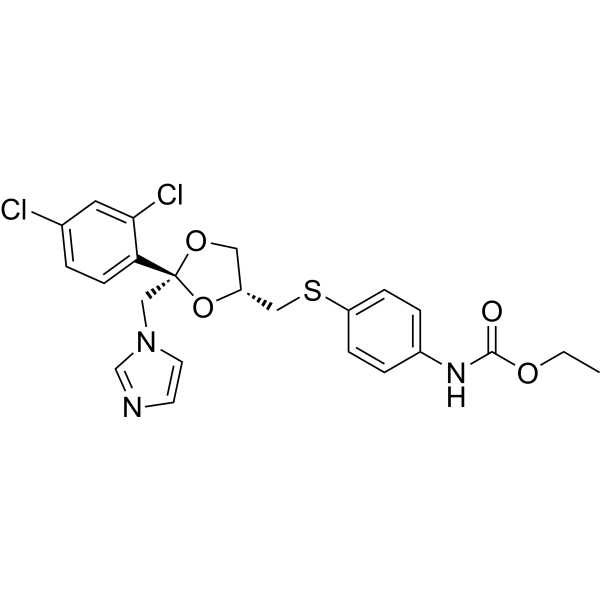 0 ImagesCat. No.: HY-119169CAS No.: 84697-22-3Synonyms: R 46846Tubulozole (R 46846) is an orally active inhibitor of tubulin polymerization with an ID50 of 0.34 μM. Tubulozole induces activation of the Chk1 kinase and phosphorylation of ERK1/2, which is required for microtubule formation. Tubulozole arrests Mitosis at the metaphase stage. Tubulozole causes cells to accumulate in the radiosensitive mitotic phase of the cell cycle. Tubulozole exerts anticancer activity against colon cancer. Tubulozole produces a radiosensitizing effect in mouse tumor models and enhances the tumor growth delay effect when combined with γ-ray irradiation. Tubulozole is used in studies related to colon cancer, fascioliasis, MO4 fibrosarcoma, and Lewis lung carcinoma.
-
Ortataxel
 0 ImagesCat. No.: HY-16371CAS No.: 186348-23-2Synonyms: IDN 5109; BAY 59-8862Ortataxel (IDN 5109; BAY 59-8862) is a derivative of Paclitaxel (HY-B0015). Ortataxel exhibits activity against multiple drug-sensitive and resistant cancer cell lines.
-
Bruceoside D
 0 ImagesCat. No.: HY-N16507CAS No.: 167782-22-1Bruceoside D is a cytotoxic quassinoid glucoside found in Brucea javanica. Bruceoside D is a microtubule polymerization inhibitor. Bruceoside D demonstrates inhibitory activity against leukemia (CCRF-CEM), non-small cell lung cancer (A549), and ovarian cancer (OVCAR-3) cell lines. Bruceoside D is promising for research of cancers.
-
ER-67880
 0 ImagesCat. No.: HY-118385CAS No.: 247186-96-5ER-67880 is a potent microtubule inhibitor with an IC50 of 9.5 μM. ER-67880 exhibits anti-proliferative activity against KB, Colon 38 and P338 cells with IC50s of 0.55, 0.2 and 0.76 μg/mL. ER-67880 causes G2/M phase arrest and is accompanied by abnormal DNA replication. ER-67880 exhibits a down-regulation pattern of G1 phase-related genes. ER-67880 can be used in various cancer studies, including those of nasopharyngeal carcinoma and murine adenocarcinoma.
-
BP-M345
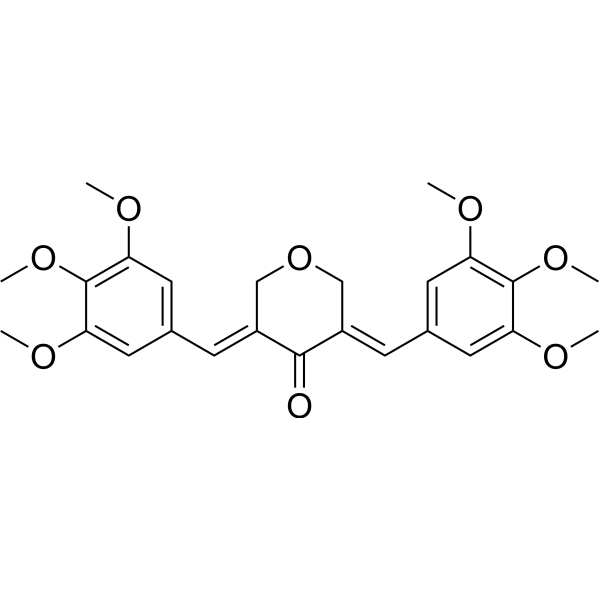 0 ImagesCat. No.: HY-157850CAS No.: 1360119-00-1
-
Tubulin polymerization-IN-80
 0 ImagesCat. No.: HY-176201Tubulin polymerization-IN-80 (Compound 32) is a potent tubulin polymerization inhibitor with antiproliferative activity. Tubulin polymerization-IN-80 disrupts microtubule formation and leads to cell cycle arrest and apoptosis. Tubulin polymerization-IN-80 is promising for research of cancers.
-
Tubulin inhibitor 18
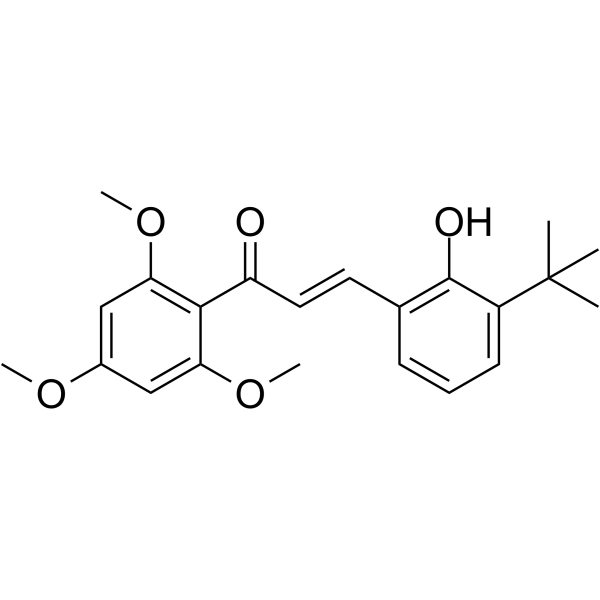 0 ImagesCat. No.: HY-115956CAS No.: 2762382-51-2Tubulin inhibitor 18 (compound 5j) is a potent inhibitor of tubulin. Tubulin inhibitor 18 is a chalcone compound. Tubulin inhibitor 18 has the potential for the research of cancer diseases.
-
Tubulin-IN-64
 0 ImagesCat. No.: HY-181491Tubulin-IN-64 is a sulfonated styrylquinazoline derivative with high selectivity antitumor activity. Tubulin-IN-64 targets tubulin, inhibits the EGFR/Akt/mTOR and EGFR/Ras signaling pathways, induces cell cycle arrest, apoptosis and autophagy. Tubulin-IN-64 exhibits significant antitumor efficacy in the zebrafish GBM xenograft model. Tubulin-IN-64 can be used for the research on glioblastoma and leukemia.
-
Tubulin polymerization-IN-53
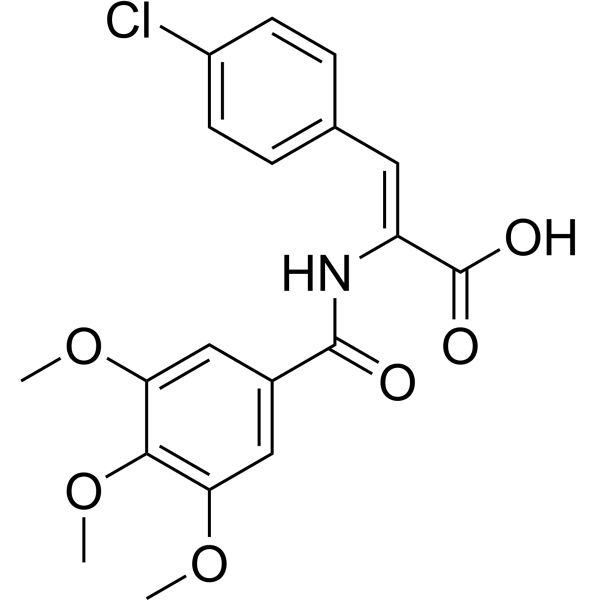 0 ImagesCat. No.: HY-155350Tubulin polymerization-IN-53 (compound 4b) is an inhibitor of β-tubulin polymerization. Tubulin polymerization-IN-53 can arrest the cell cycle at the G2/M stage. Tubulin polymerization-IN-53 has antiproliferative efficacy against the MDA-MB-231 cell line with an IC50 value of 3.24 μM.
-
Anti-CCL2 (Carlumab)-SPDB-DM4
 0 ImagesCat. No.: HY-171681Anti-CCL2 (Carlumab)-SPDB-DM4 is an antibody-drug conjugate (ADC) consisting of the humanized anti-CCL2 (chemokine ligand 2) antibody Carlumab (HY-P99188) conjugated with the linker SPDB (HY-12448) and the tubulin inhibitor DM4 (HY-12454). The ADC toxic molecule and linker part are sulfo-SPDB-DM4 (HY-101141). Anti-CCL2 (Carlumab)-SPDB-DM4 can be used in cancer research.

-
AKT1-IN-11
 0 ImagesCat. No.: HY-179516CAS No.: 3087064-94-3AKT1-IN-11, a Podophyllotoxin (HY-15552) derivative, is a AKT1/tubulin dual inhibitor. AKT1-IN-11 down-regulates the phosphorylation level of AKT kinase in tumor cells, disrupting cell proliferation, causeing G2/M phase arrest and inducing apoptosis. AKT1-IN-11 also promotes tubulin depolymerization. AKT1-IN-11 can be used for the research of colorectal cancer.
-
Tubulin-IN-60
 0 ImagesCat. No.: HY-179159Tubulin-IN-60 (Compound 4) is a tubulin polymerization inhibitor, with an IC50 of 0.19 μM. Tubulin-IN-60 has anti-cancer activity against colorectal, pancreatic, T-cell acute lymphoblastic leukemia cancer.
-
KGP591
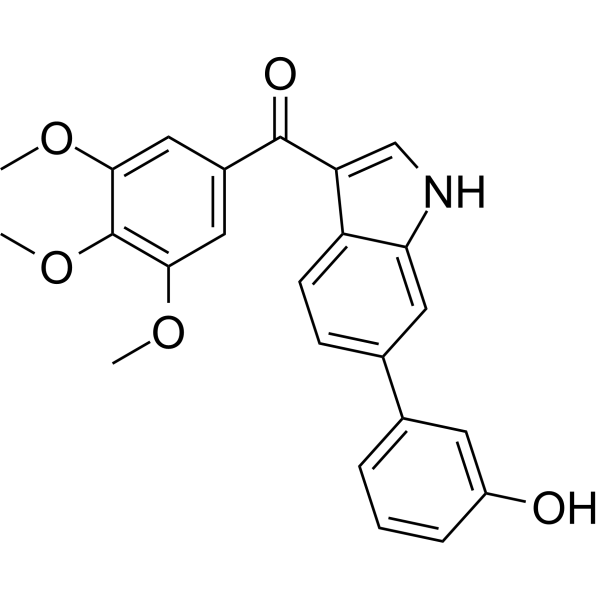 0 ImagesCat. No.: HY-155249CAS No.: 3018962-69-8KGP591 is a tubulin polymerization inhibitor (IC50 0.57 µM). KGP591 induces significant G2/M stagnation, inhibits cell migration, disrupts microtubule structure and cell morphology in MDA-MB-231 cells. KGP591 shows antitumor activity in orthotopic model of kidney cancer (RENCA).
-
DPP-21
 0 ImagesCat. No.: HY-169096CAS No.: 2924883-83-8DPP-21 is an inhibitor of tubulin polymerization (IC50: 2.4 μM). DPP-21 shows anti-proliferative activity against cancer cell lines, with IC50s of 0.38 nM (HCT116), 11.69 nM (B16), 5.37 nM (HeLa), 9.53 nM (MCF7), 8.94 nM (H23) and 9.37 nM (HepG2) respectively. DPP-21 arrests the cell cycle in the G2/M phase of mitosis, subsequently inducing tumor cell apoptosis (decreases Bcl-2 but upregulates the pro-apoptotic protein Bax).
-
Tubulin degrader 2
 0 ImagesCat. No.: HY-161641Tubulin degrader 2 is a tubulin HyT degrader and tubulin polymerization inhibitor, with a DC50 of 4.9 μM against α-tubulin in MCF-7 cells and an IC50 of 7.5 μM for the polymerization of purified recombinant tubulin. Tubulin degrader 2 binds to the colchicine-binding site of tubulin, induces proteasome-dependent degradation of α-tubulin and β-tubulin, inhibits the polymerization of purified recombinant tubulin, and triggers microtubule disruption and cell cycle arrest in cancer cells. Tubulin degrader 2 exhibits antitumor activity in a breast cancer allograft mouse model. Tubulin degrader 2 can be applied in the research of breast cancer, lung cancer, and colorectal cancer.
-
STX140
 0 ImagesCat. No.: HY-133222CAS No.: 401600-86-0STX140 is an orally active microtubule disruptor. STX140 induces apoptosis in the hormone-independent PC-3 prostate cell lines. STX140 has anti-angiogenic and anti-tumour activities.
-
Docetaxel Trihydrate (Standard)
 0 ImagesSynonyms: RP-56976 Trihydrate (Standard)Docetaxel (Trihydrate) (Standard) is the analytical standard of Docetaxel (Trihydrate). This product is intended for research and analytical applications. Docetaxel Trihydrate (RP-56976 Trihydrate) is an antineoplastic agent and inhibits microtubule?depolymerization with an IC50 value of 0.2 μM. Docetaxel Trihydrate is a semisynthetic analog of taxol and attenuates the effects of?bcl-2?and?bcl-xL?gene expression. Docetaxel Trihydrate arrests the cell cycle at G2/M and leads to cell apoptosis.




