



Microtubule/Tubulin
Microtubules are a component of the cytoskeleton, found throughout the cytoplasm. These tubular polymers of tubulin can grow as long as 50 micrometres, with an average length of 25 µm, and are highly dynamic. The outer diameter of a microtubule is about 24 nm while the inner diameter is about 12 nm. Microtubules are found in eukaryotic cells and are formed by the polymerization of a dimer of two globular proteins, alpha and beta tubulin. Tubulin is one of several members of a small family of globular proteins. The tubulin superfamily includes five distinct families, the alpha-, beta-, gamma-, delta-, and epsilon-tubulins and a sixth family which is present only in kinetoplastid protozoa. The most common members of the tubulin family are α-tubulin and β-tubulin, the proteins that make up microtubules. Microtubules are very important in a number of cellular processes. They are involved in maintaining the structure of the cell.
All Product Categories
-
Microtubule/Tubulin Inhibitors
(807)
View all products
-
Microtubule/Tubulin Agonists
(2)
View all products
-
Microtubule/Tubulin Activators
(19)
View all products
-
Microtubule/Tubulin Modulators
(19)
View all products
-
Microtubule/Tubulin Inducers
(5)
View all products
-
Microtubule/Tubulin Degraders
(3)
View all products
-
Microtubule/Tubulin Controls
(19)
View all products
-
Microtubule/Tubulin Ligands
(5)
View all products
-
Microtubule/Tubulin Related Products (991)
Related Products (991)

-
Antibodies (69)
-
Bavarostat
 0 ImagesSynonyms: EKZ-001Bavarostat (EKZ-001) is a blood-brain barrier-permeable, potent HDAC6 inhibitor and PET radiotracer, with an IC50 as low as 17 nM against human HDAC6. Bavarostat can be labeled with 18F and used as a probe to map HDAC6 distribution and measure target occupancy in the brains of non-human primates. Bavarostat also selectively modulates tubulin acetylation, but not histone acetylation. Bavarostat is applicable for research on Alzheimer's disease, other neurodegenerative disorders, and cancers.
-
Ozuriftamab vedotin
 0 ImagesSynonyms: BA3021; Anti-ROR2 ADC; CAB-ROR2-ADCOzuriftamab vedotin (BA3021), an antibody-drug conjugate (ADC), is a conditionally active biologic (CAB) anti-receptor tyrosine kinase orphan receptor 2 (ROR2) humanized monoclonal antibody Ozuriftamab (HY-145626) conjugated to VcMMAE (HY-15575). Ozuriftamab vedotin has antitumor activities.
-
Cantuzumab ravtansine
 0 ImagesSynonyms: IMGN242; huC242-DM4
-
Ombrabulin
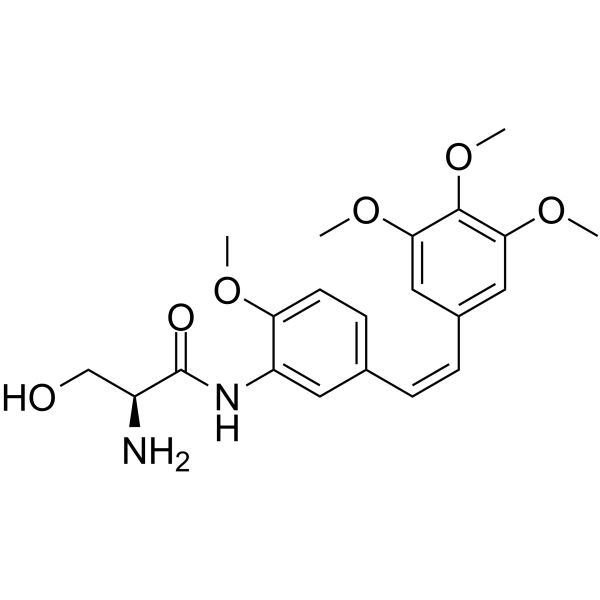 0 ImagesSynonyms: AVE8062; AC7700Ombrabulin (AVE8062) is a derivative of CA-4 phosphate, which is known to exhibit antivascular effects through selective disruption of the tubulin cytoskeleton of endothelial cells.
-
2-Methoxyestradiol-d5
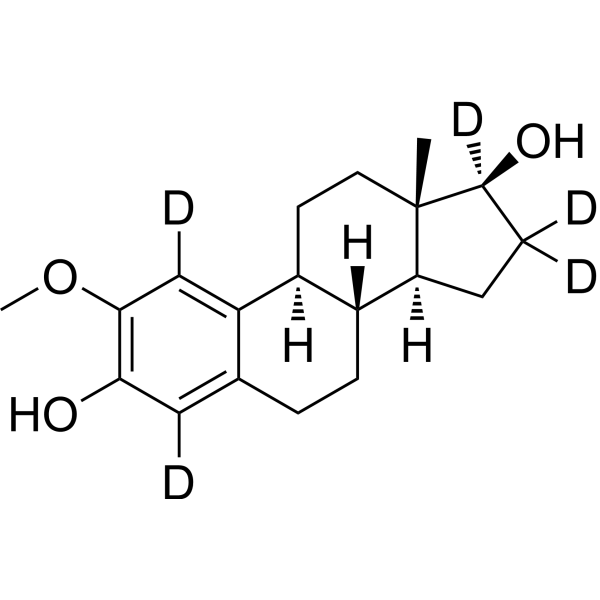 0 ImagesSynonyms: 2-ME2-d5; NSC-659853-d52-Methoxyestradiol-d5 is the deuterium labeled 2-Methoxyestradiol. 2-Methoxyestradiol (2-ME2), an orally active endogenous metabolite of 17β-estradiol (E2), is an apoptosis inducer and an angiogenesis inhibitor with potent antineoplastic activity. 2-Methoxyestradiol also destablize microtubules. 2-Methoxyestradio, also a potent superoxide dismutase (SOD) inhibitor and a ROS-generating agent, induces autophagy in the transformed cell line HEK293 and the cancer cell lines U87 and HeLa.
-
Tubulysin
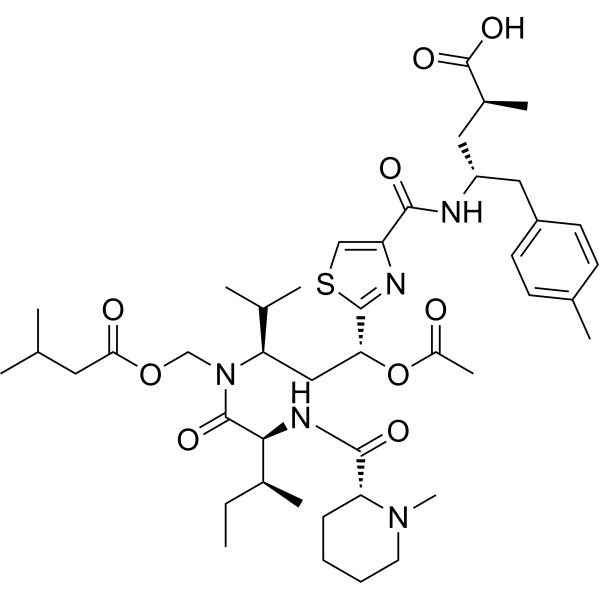 0 ImagesTubulysin is a microtubule destabilizer that binds to the β-tubulin peptide site adjacent to the vinca alkaloid binding site and inhibits tubulin polymerization. Tubulysin induces apoptosis and exhibits antiproliferative activity against a variety of human cancer cells, including multidrug-resistant strains. Tubulysin can be conjugated to antibodies via a disulfide-containing quaternary ammonium linker for ADC synthesis. Tubulysin is applicable to tumor-related research.
-
AcLys-PABC-VC-Aur0101
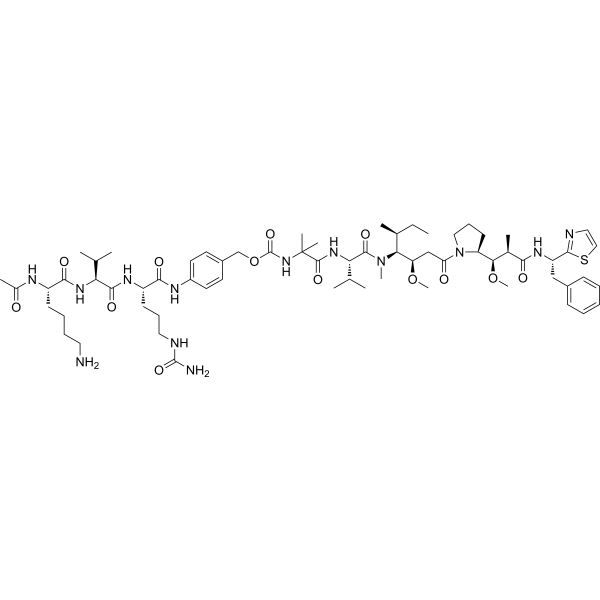 0 ImagesCat. No.: HY-111554CAS No.: 1438851-17-2AcLys-PABC-VC-Aur0101 is a agent-linker conjugate for ADC (anti-CXCR4 ADC) with potent antitumor activity by using Aur0101 (an auristatin microtubule inhibitor), linked via the cleavable linker AcLys-PABC-VC.
-
Batabulin
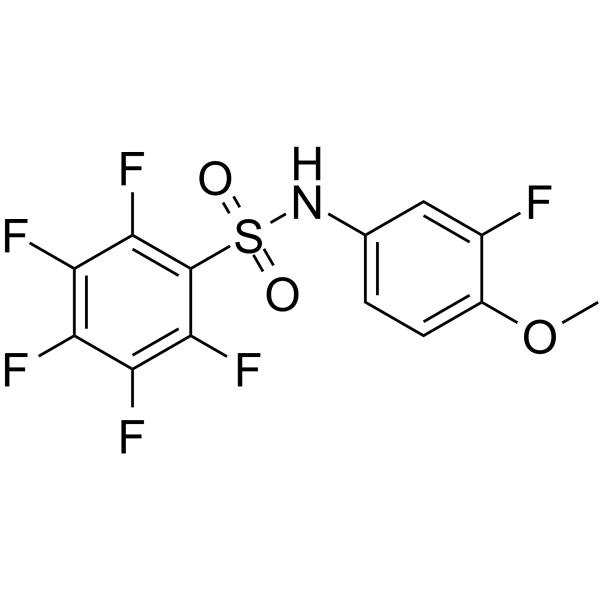 0 ImagesSynonyms: T138067Batabulin (T138067) is an antitumor agent, which binds covalently and selectively to a subset of the β-tubulin isotypes, thereby disrupting microtubule polymerization. Batabulin affects cell morphology and leads to cell-cycle arrest ultimately induces apoptotic cell death.
-
Cabazitaxel-d9
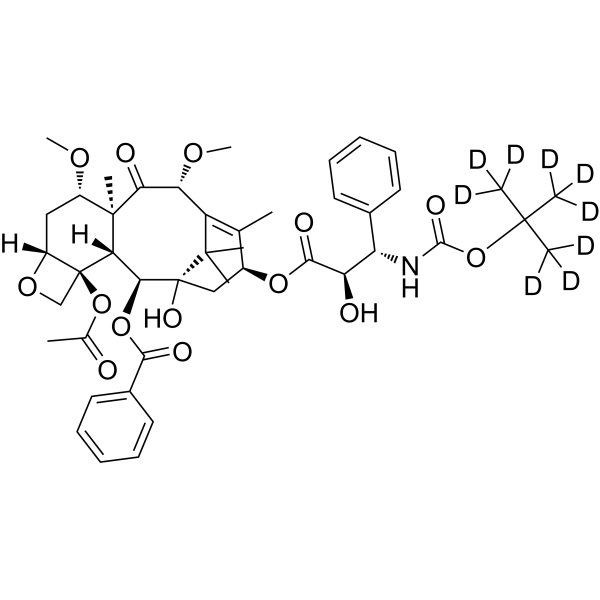 0 ImagesSynonyms: XRP6258-d9; RPR-116258A-d9; taxoid XRP6258-d9Cabazitaxel-d9 is deuterium labeled Cabazitaxel. Cabazitaxel is a semi-synthetic derivative of the natural taxoid 10-deacetylbaccatin III with potential antineoplastic activity.
-
ON 108600
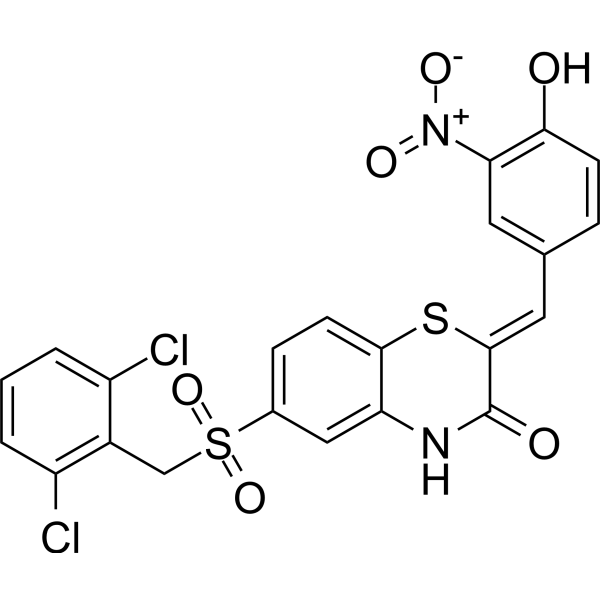 0 ImagesSynonyms: 108600ON 108600 (108600) is a CK2 (CK2α1: IC50 = 50 nM; CK2α2 = 5 nM), TNIK (IC50 = 5 nM) and DYRK (DYRK1A: IC50 = 16 nM; DYRK1B = 7 nM; DYRK2: = 28 nM). ON 108600 suppresses the growth of CD44high/CD24low breast cancer stem cell (BCSC) populations, induces G2/M arrest and apoptosis in triple negative breast cancer (TNBC) cells, and inhibits tubulin polymerization. ON 108600 can be used for the study of chemotherapy-resistant and metastatic TNBC.
-
3-Bromocarbazole
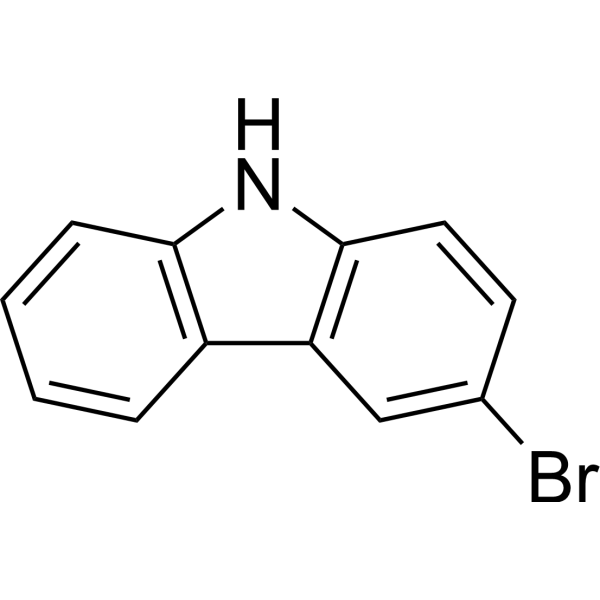 0 Images3-Bromocarbazole is an inhibitor of the aryl hydrocarbon receptor (AHR). 3-Bromocarbazole induces the mRNA expression of CYP1A1 and CYP1B1, with EC50 values of 2500 nM and 1100 nM, respectively. 3-Bromocarbazole inhibits motor neuron axon length by downregulating the mRNA transcription levels of α1-tubulin, Gap43, Syn2a and shha in zebrafish larvae. 3-Bromocarbazole reduces central nervous system neurogenesis by downregulating the mRNA transcription levels of elavl3, nrd, mbp and gfap in zebrafish larvae. 3-Bromocarbazole induces developmental neurotoxicity and decreases body length in zebrafish larvae or embryos; at high concentrations, it also reduces hatching rate, and increases mortality and malformation rate. 3-Bromocarbazole can be used in studies related to developmental neurotoxicity and breast cancer.
-
MMAD
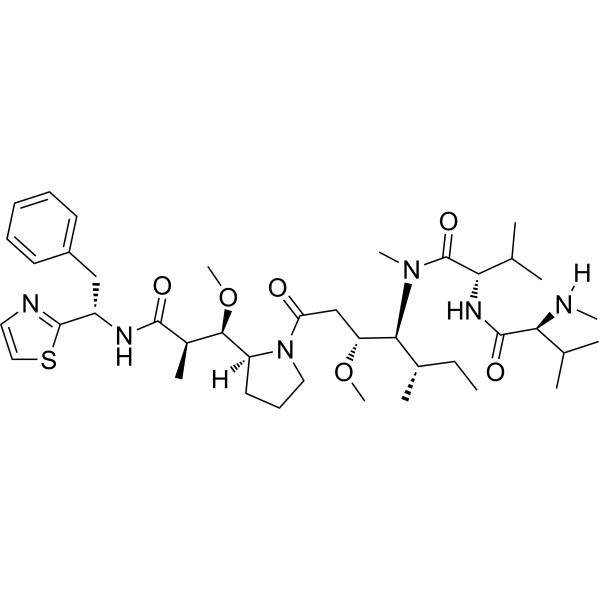 0 ImagesSynonyms: Demethyldolastatin 10; Monomethylauristatin D; Monomethyl Dolastatin 10MMAD is a potent tubulin inhibitor, is a toxin payload in antibody agent conjugates (ADCs).
-
N-Boc-dolaproine dicyclohexylamine
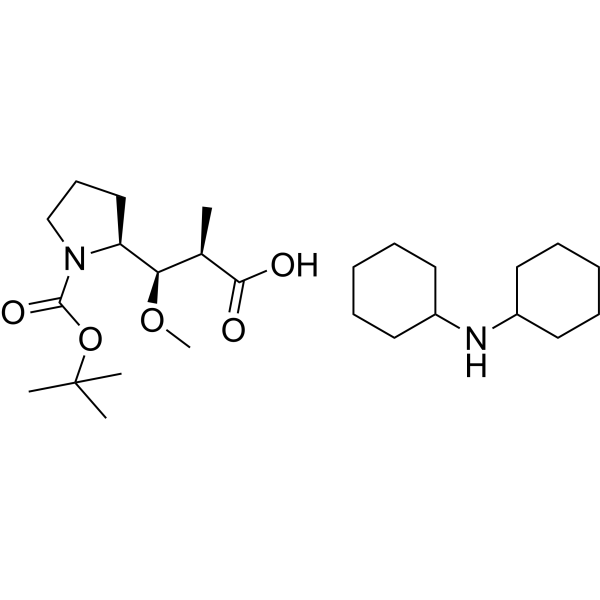 0 ImagesSynonyms: (2R,3R)-BOC-dolaproine dicyclohexylamineN-Boc-dolaproine dicyclohexylamine is an amino acid residue of the pentapeptide Dolastatin 10 (HY-15580). Dolastatin 10 inhibits tubulin polymerization and mitosis and has anticancer activity. And contains dicyclohexylamine.
-
MMAF sodium
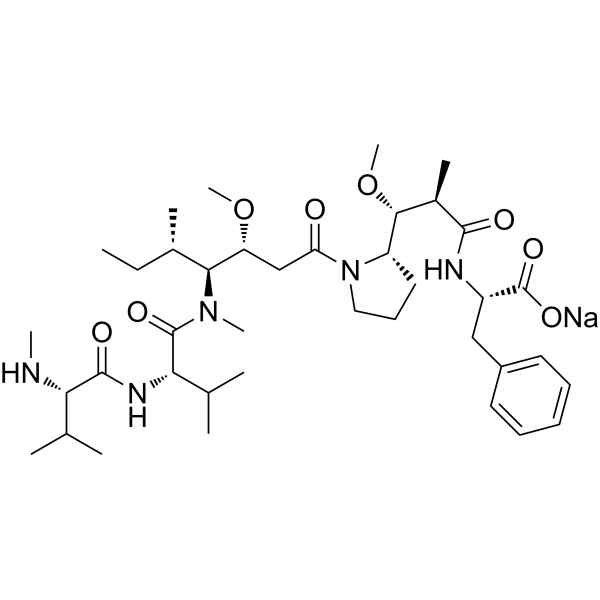 0 ImagesSynonyms: Monomethylauristatin F sodiumMMAF sodium (Monomethylauristatin F sodium) is a potent tubulin polymerization inhibitor and is used as a antitumor agent. MMAF sodium (Monomethylauristatin F sodium) is widely used as a cytotoxic component of antibody-drug conjugates (ADCs) such as Vorsetuzumab mafodotin and SGN-CD19A.
-
Ombrabulin hydrochloride
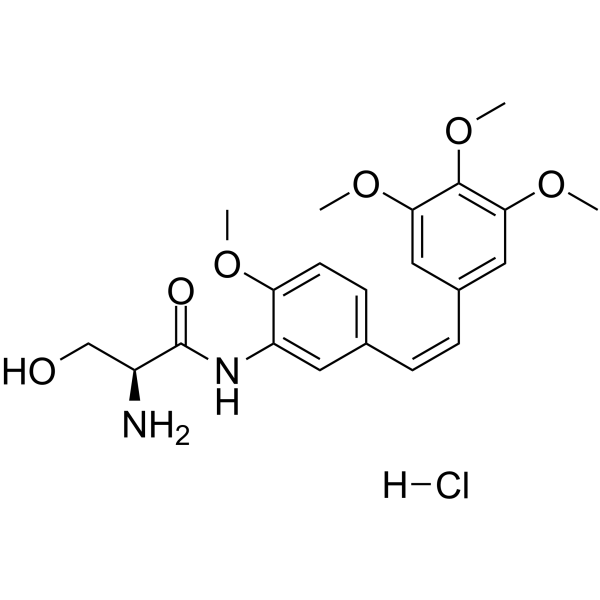 0 ImagesSynonyms: AVE8062 hydrochloride; AC7700 hydrochlorideOmbrabulin hydrochloride is a derivative of CA-4 phosphate, which is known to exhibit antivascular effects through selective disruption of the tubulin cytoskeleton of endothelial cells.
-
Aprutumab ixadotin
 0 ImagesCat. No.: HY-141600CAS No.: 1708947-48-1Synonyms: BAY 1187982Aprutumab ixadotin (BAY 1187982) is the first antibody-drug conjugate (ADC) to target FGFR2 and the first to use Auristatin-based payload. Aprutumab ixadotin contains a fully human anti-FGFR2 monoclonal antibody (Aprutumab) (HY-P99007) conjugated by lysine side chains to a non-cleavable linker and via this an innovative Auristatin W derivative. Aprutumab ixadotin can be used for the study of advanced solid tumors, such as FGFR2-positive gastric cancer and triple-negative breast cancer.
-
CCB02
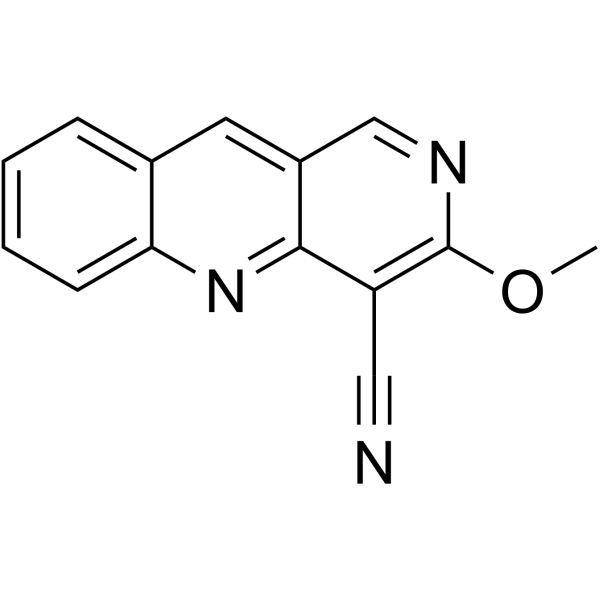 0 ImagesCCB02 is a selective CPAP-tubulin interaction inhibitor, binding to tubulin and competing for the CPAP binding site of β-tubulin, with an IC50 of 689 nM, and shows potent anti-tumor activity. CCB02 shows no inhibition on the cell cycle- and centrosome-related kinases, or the phosphorylation status of Aurora A, Plk1, Plk2, CDK2, and CHK1.
-
Docetaxel-d9
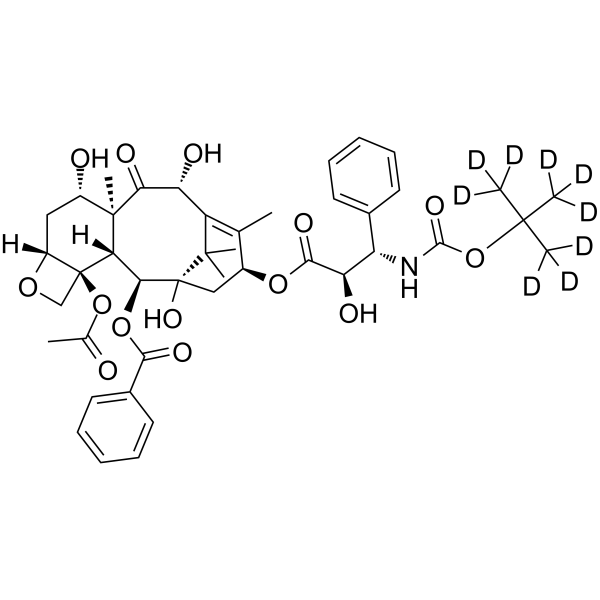 0 ImagesSynonyms: RP-56976-d9Docetaxel-d9 is the deuterium labeled Docetaxel. Docetaxel (RP-56976) is a microtubule?depolymerization inhibitor, with an IC50 of 0.2 μM. Docetaxel attenuates the effects of?bcl-2 and bcl-xL gene expression. Docetaxel arrests the cell cycle at G2/M and leads to cell apoptosis. Docetaxel has anti-cancer activity.
-
Taccalonolide A
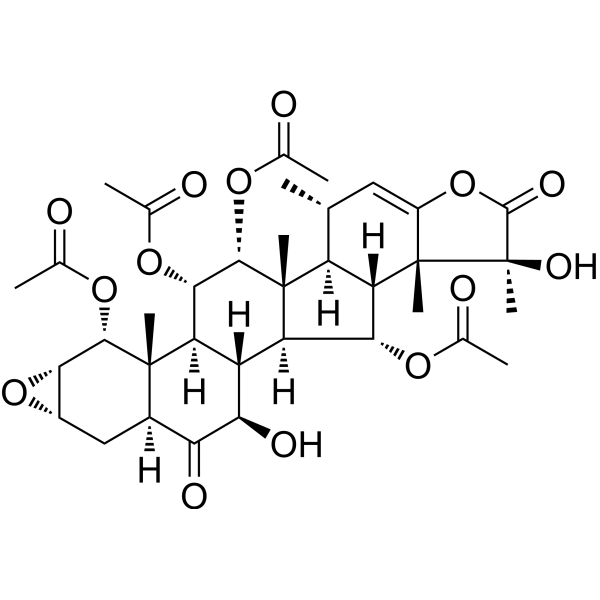 0 ImagesTaccalonolide A is a microtubule stabilizer, which is a steroid isolated from Tacca chantrieri, with cytotoxic and antimalarial activities. Taccalonolide A causes G2-M accumulation, Bcl-2 phosphorylation and initiation of apoptosis. Taccalonolide A is effective in vitro against cell lines that overexpress P-glycoprotein (Pgp) and multidrug resistance protein 7 (MRP7), with an IC50 of 622 nM for SK-OV-3 cells.
-
Paclitaxel-2′-succinate NHS ester
 0 ImagesPaclitaxel-2′-succinate NHS ester is a paclitaxel derivative with a succinic acid linker, in which the carboxyl group is activated by the NHS ester. The NHS ester group is highly reactive toward amino or hydroxyl groups and can be used to conjugate with other molecules such as peptides, proteins, antibodies, enzymes or polymers. Paclitaxel-2′-succinate NHS ester can be used in the development of nanomedicines and in the study of cancer therapy.




