



Microtubule/Tubulin
Microtubules are a component of the cytoskeleton, found throughout the cytoplasm. These tubular polymers of tubulin can grow as long as 50 micrometres, with an average length of 25 µm, and are highly dynamic. The outer diameter of a microtubule is about 24 nm while the inner diameter is about 12 nm. Microtubules are found in eukaryotic cells and are formed by the polymerization of a dimer of two globular proteins, alpha and beta tubulin. Tubulin is one of several members of a small family of globular proteins. The tubulin superfamily includes five distinct families, the alpha-, beta-, gamma-, delta-, and epsilon-tubulins and a sixth family which is present only in kinetoplastid protozoa. The most common members of the tubulin family are α-tubulin and β-tubulin, the proteins that make up microtubules. Microtubules are very important in a number of cellular processes. They are involved in maintaining the structure of the cell.
All Product Categories
-
Microtubule/Tubulin Inhibitors
(812)
View all products
-
Microtubule/Tubulin Agonists
(2)
View all products
-
Microtubule/Tubulin Antagonist
(1)
View all products
-
Microtubule/Tubulin Activators
(21)
View all products
-
Microtubule/Tubulin Modulators
(20)
View all products
-
Microtubule/Tubulin Inducers
(5)
View all products
-
Microtubule/Tubulin Degraders
(3)
View all products
-
Microtubule/Tubulin Controls
(19)
View all products
-
Microtubule/Tubulin Ligands
(5)
View all products
-
Microtubule/Tubulin Related Products (1003)
Related Products (1003)

-
Antibodies (69)
-
Tubulin inhibitor 49
 0 ImagesCat. No.: HY-169882CAS No.: 1023875-75-3Tubulin inhibitor 49 (Compound 18) is an inhibitor for tubulin polymerization with an IC50 of 48 μM. Tubulin inhibitor 49 disrupts the cell microtubule network, arrests the cell cycle at G2 phase, and exhibits cytotoxicity (IC50=8.8 μM in HeLa cell). Tubulin inhibitor 49 can be used in the research of cervical cancer.
-
Tubulin polymerization-IN-48
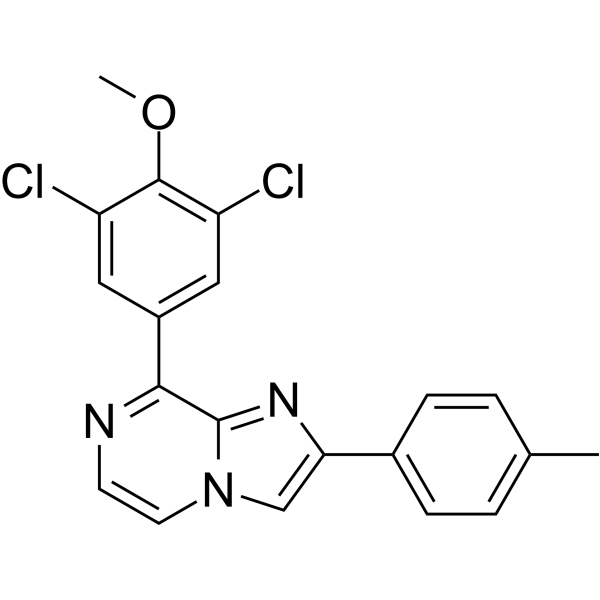 0 ImagesCat. No.: HY-155963CAS No.: 2982893-22-9Tubulin polymerization-IN-48 (Compound 4k) is a tubulin polymerization inhibitor. Tubulin polymerization-IN-48 has a moderate effect on disruption of the microtubule network. Tubulin polymerization-IN-48 inhibits neuroblastoma cancer cell proliferation, with IC50s of 79 and 165 nM for Chp-134 and Kelly cell line.
-
TCS 2210
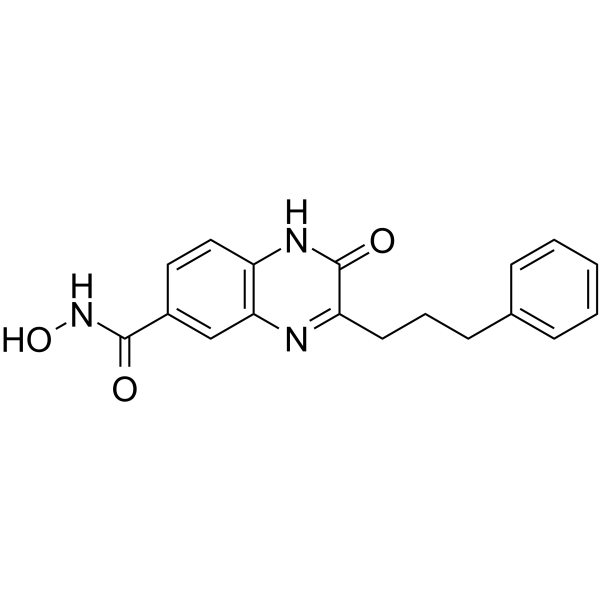 0 ImagesCat. No.: HY-108438CAS No.: 1201916-31-5TCS 2210 (compound 1) is a neuronal differentiation inducer in mesenchymal stem cells (MSCs). TCS 2210 increases expression of the neuronal markers β-III tubulin and neuron-specific enolase (NSE).
-
Tubulin polymerization-IN-6
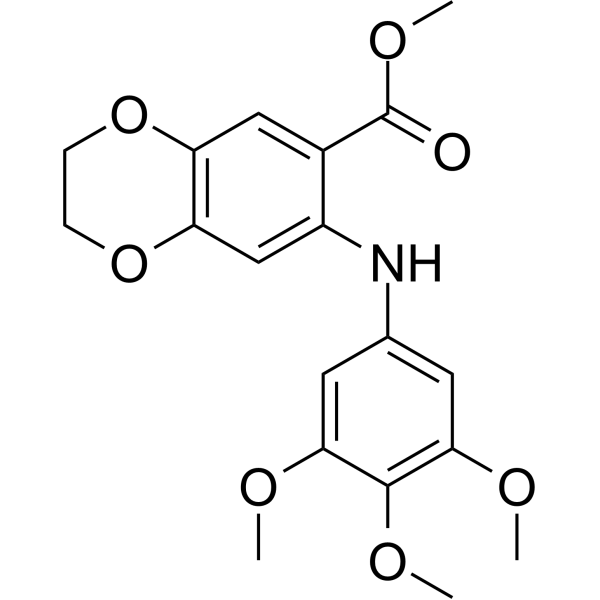 0 ImagesCat. No.: HY-146505CAS No.: 2768613-52-9Tubulin polymerization-IN-6 (compound 5f) is a potent tubulin polymerization inhibitor, with an IC50 of 1.09 μM. Tubulin polymerization-IN-6 inhibits cell migration and tube formation and contributes to the anti-angiogenesis. Tubulin polymerization-IN-6 can greatly inhibit tumor growth on HT29 xenograft Balb/c nude mice.


-
ABJ-879
 0 ImagesCat. No.: HY-107090CAS No.: 252981-48-9
-
Tubulin polymerization-IN-58
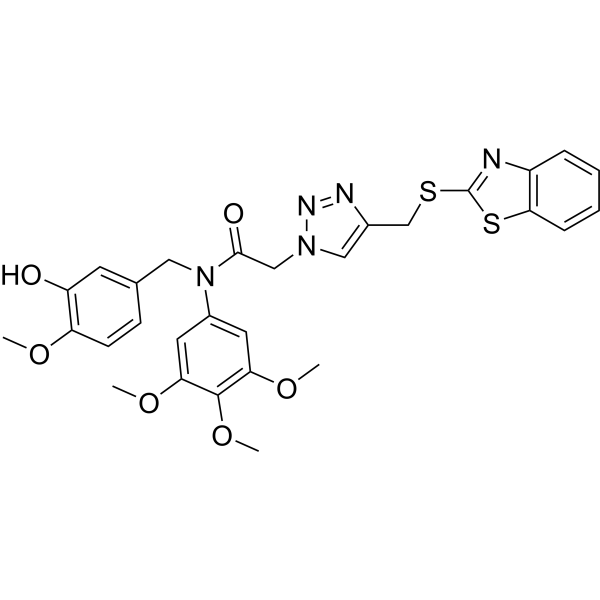 0 ImagesCat. No.: HY-162126CAS No.: 3027015-30-8
-
Acodazole
 0 ImagesCat. No.: HY-106399CAS No.: 79152-85-5Acodazole is an anticancer agent that exerts its anticancer activity by inhibiting microtubule polymerization.
-
LG308
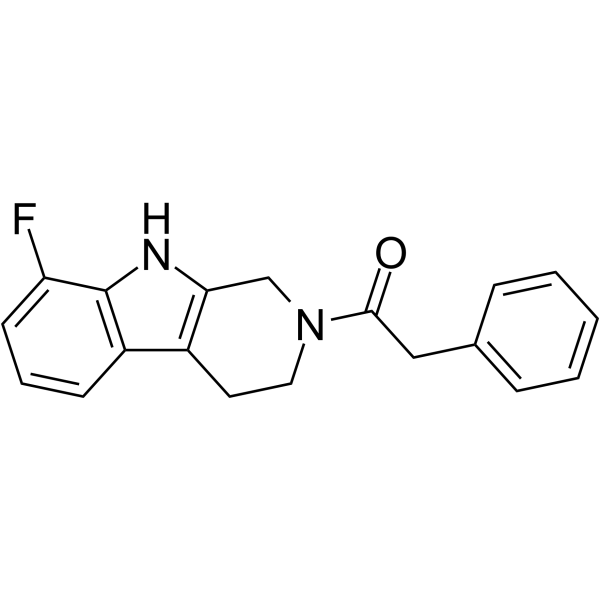 0 ImagesCat. No.: HY-143660CAS No.: 1428341-65-4LG308 is a novel synthetic compound with antimicrotubule activity. LG308 induces mitotic phase arrest and inhibits G2/M progression significantly which is associated with the upregulation of cyclin B1 and mitotic marker MPM-2 and the dephosphorylation of cdc2. LG308 also induces apoptosis and cell death. LG308 significantly suppresses tumor growth. LG308 with antimitotic activity has the potential for the research of prostate cancer.
-
CP 461
 0 ImagesCat. No.: HY-16372CAS No.: 227619-96-7Synonyms: OSI-461CP-461 (OSI-461) is a selective apoptotic antineoplastic drug (SAAND) by engaging tubulin on colchicine site
-
VEGFR-2-IN-22
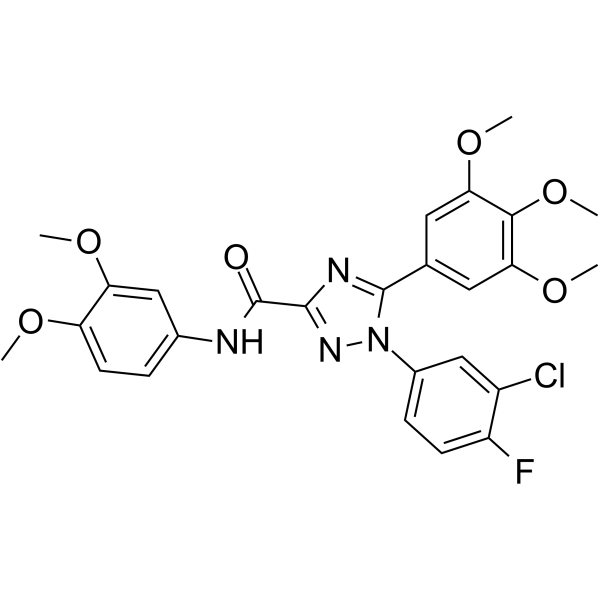 0 ImagesCat. No.: HY-147872CAS No.: 2447587-73-5VEGFR-2-IN-22 (Compound 25) is a dual VEGFR-2 and β-tubulin polymerization inhibitor with an IC50 of 19.82 nM against VEGFR-2. VEGFR-2-IN-22 induces apoptosis.
-
Spindlactone B
 0 ImagesCat. No.: HY-112500CAS No.: 1465248-60-5Synonyms: SPL-BSpindlactone B (SPL-B) is a TACC3 inhibitor. Spindlactone B reduces the level of acetylated Microtubules. Spindlactone B can be used in the research of neurological diseases.
-
PROTAC HDAC6 degrader 10
 0 ImagesCat. No.: HY-184389PROTAC HDAC6 degrader 10 is a highly efficient, safe and selective HDAC6 PROTAC degrader with a pIC50 of 8.75 and a pDC50 of 9.2 in BEAS-2B cells. PROTAC HDAC6 degrader 10 recruits cereblon to form a ternary complex with HDAC6, thereby achieving the degradation of HDAC6. PROTAC HDAC6 degrader 10 significantly induces hyperacetylation of α-tubulin without affecting the acetylation of H3, and achieves sustained HDAC6 knockdown in mouse lung tissues. PROTAC HDAC6 degrader 10 exhibits high bioavailability after subcutaneous administration in mice. PROTAC HDAC6 degrader 10 enables the study of HDAC6 pharmacology via chemical knockdown of HDAC6 in vitro and in vivo, and can be used for research on pulmonary diseases.

-
N-(Amino-PEG4)-N-(PEG4-Val-Cit-PAB-MMAE)-N-(PEG4-Val-Cit-PAB-Exatecan)
 0 ImagesCat. No.: HY-177679N-(Amino-PEG4)-N-(PEG4-Val-Cit-PAB-MMAE)-N-(PEG4-Val-Cit-PAB-Exatecan) is a drug-linker conjugate for ADC (Drug-Linker Conjugate for ADC), consisting of a tubulin polymerization inhibitor MMAE (HY-15162) and a DNA topoisomerase I inhibitor Exatecan (HY-13631), and an ADC linker composition. N-(Amino-PEG4)-N-(PEG4-Val-Cit-PAB-MMAE)-N-(PEG4-Val-Cit-PAB-Exatecan) can be used for synthesis of ADCs and for cancer research.
-
Tubulin polymerization-IN-36
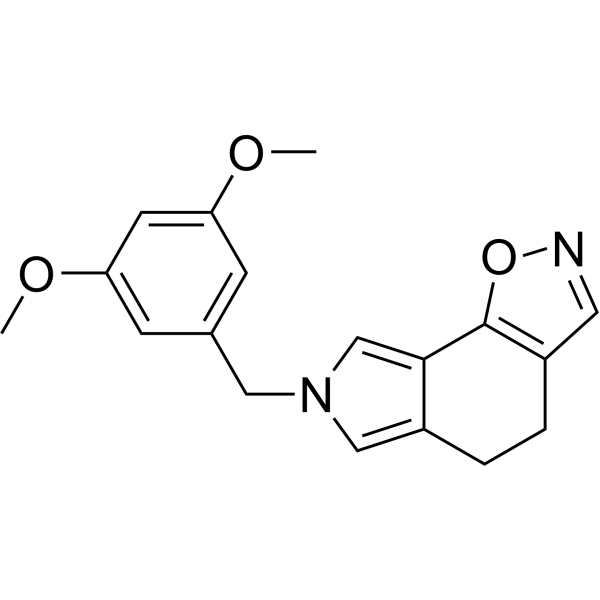 0 ImagesCat. No.: HY-151397CAS No.: 2011784-91-9Tubulin polymerization-IN-36 is a tubulin polymerization inhibitor (IC50: 2.8 μΜ). Tubulin polymerization-IN-36 binds to the colchicine site of tubulin and inhibits colchicine binding. Tubulin polymerization-IN-36 can be used in the research of cancers, such as lymphomas.
-
Microtubule inhibitor 2
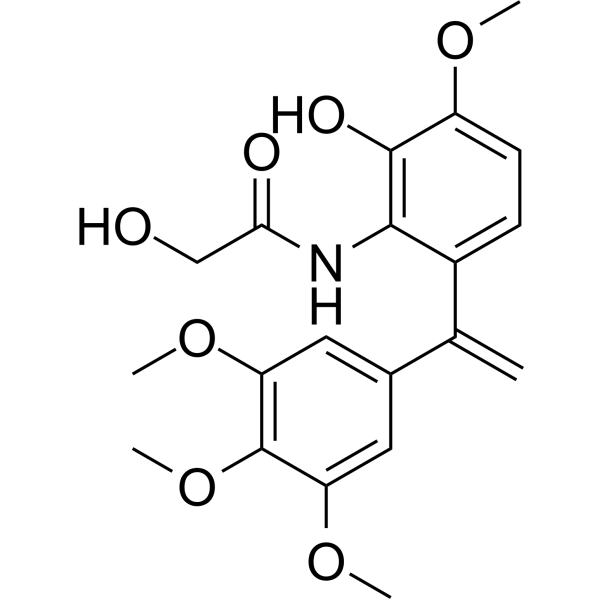 0 ImagesCat. No.: HY-145828CAS No.: 3031328-45-4Microtubule inhibitor 2 is a potent and selective, orally active microtubule inhibitor. Microtubule inhibitor 2 triggers cell death through ferroptosis . Microtubule inhibitor 2 shows antitumor activity.
-
Tubulin polymerization-IN-33
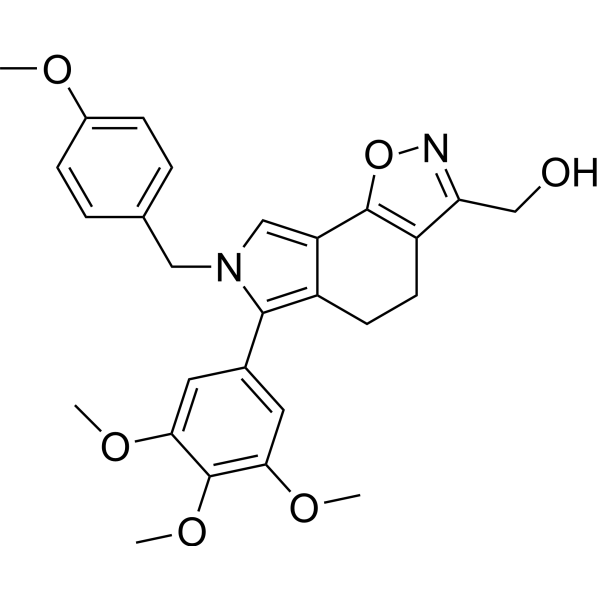 0 ImagesCat. No.: HY-151394CAS No.: 3051788-72-5Tubulin polymerization-IN-33 is an inhibitor of [1,2]oxazoloisoindoles tubulin polymerization, exhibits high antiproliferative activity against the NCI panel.
-
Antitumor agent-164
 0 ImagesCat. No.: HY-162594CAS No.: 2757188-21-7Antitumor agent-164 (compound 60c) is a colchicine-binding site inhibitor (CBSI) with potency against taxane-sensitive TNBC. Antitumor agent-164 is a next-generation derivative of VERU-111.




