



NAMPT
Nicotinamide phosphoribosyl transferase; PBEF; Visfatin; pre-B cell-enhancing factor; Pre-B cell colony enhancing factor
Nicotinamide phosphoribosyltransferase (NAMPT) is the rate-limiting enzyme which catalyzes the conversion of nicotinamide (NAM) and phosphoribosyl-pyrophosphates to nicotinamide mononucleotide (NMN) in the mammalian nicotinamide adenine dinucleotide (NAD+) synthetic salvage pathway. NAMPT exists in two forms, intracellular NAMPT (iNAMPT) and extracellular NAMPT (eNAMPT).
iNAMPT levels are high in brown adipose tissue (BAT), liver and kidney, intermediate in white adipose tissue (WAT), lung, spleen, testes and skeletal muscle, and undetectable in brain and pancreas. eNAMPT, thought to be produced through post-translational modification of iNAMPT, is released into plasma predominantly from adipose tissue, where it catalyses the synthesis of NMN. Although intracellular NAMPT is a key enzyme in controlling NAD metabolism, eNAMPT has been reported to function as a cytokine, with many roles in physiology and pathology. Circulating eNAMPT has been associated with several metabolic and inflammatory disorders, including cancer.
All Product Categories
-
NAMPT Related Products (90)
Related Products (90)

-
Antibodies (2)
-
NAMPT/IDO1-IN-1
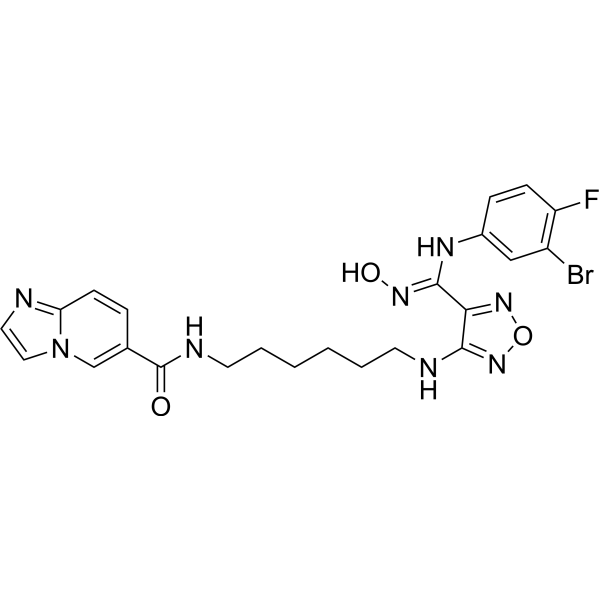 0 ImagesCat. No.: HY-148572CAS No.: 2247884-06-4NAMPT/IDO1-IN-1 is an orally active dual inhibitor of NAMPT and IDO1 with IC50s of 57.7 nM and 233 nM, respectively. NAMPT/IDO1-IN-1 blocks NAD+ biosynthesis, inhibits proliferation and migration of Paclitaxel (HY-B0015)- and FK866 (HY-50876)-resistant NSCLC cell lines (A549/R cells). NAMPT/IDO1-IN-1 has shown antitumor effects in mice and enhanced A549/R cell sensitivity to paclitaxel.
-
NAMPT activator-9
 0 ImagesCat. No.: HY-182062CAS No.: 931366-46-0NAMPT activator-9 (Compound DIPM) is an allosteric, non-competitive NAMPT activator, with an EC50 of 3.366 μM against hNAMPT. NAMPT activator-9 enhances the enzymatic activity of NAMPT via an allosteric, non-competitive mechanism. NAMPT activator-9 increases intracellular NAD+ levels. NAMPT activator-9 restores myotube diameter and reduces the expression of atrophy markers Atrogin-1 and MuRF1. NAMPT activator-9 is applicable to research related to muscle atrophy.
-
SR-34831
 0 ImagesCat. No.: HY-184246CAS No.: 2791469-19-5SR-34831 is a NAMPT activator, NAD level stabilizer and neuroprotective agent. SR-34831 enhances the enzymatic activity of human NAMPT, prevents intracellular NAD depletion, and counteracts neuronal death induced by toxic misfolded prion proteins. SR-34831 exhibits metabolic stability in human liver microsomes and can be used for the research of protein misfolding neurodegenerative diseases.
-
P7C3-S243
 0 ImagesCat. No.: HY-186105CAS No.: 1421622-85-6P7C3-S243 is a brain-penetrant P7C3 class of neuroprotective agent. P7C3-S243 augments synthesis of nicotinamide adenine dinucleotide through activation of the metabolic enzyme nicotinamide phosphoribosyltransferase. P7C3-S243 shows potent neuroprotective efficacy in parkinson’s disease mice models. P7C3-S243 can be used for the research of parkinson’s disease.
-
PARP1/NAMPT-IN-1
 0 ImagesCat. No.: HY-181254CAS No.: 3084810-86-3PARP1/NAMPT-IN-1 is a potent and dual PARP1 and NAMPT inhibitor with IC50 values of 1.2 nM and 6.7 nM, respectively. PARP1/NAMPT-IN-1 can disrupt the homologous recombination repair (HRR) pathway, leading to the accumulation of DNA double-strand breaks (DSBs), inducing cell cycle arrest and apoptosis, and also has antimigratory effects. PARP1/NAMPT-IN-1 exhibits excellent antitumor effects in a breast cancer xenograft model. PARP1/NAMPT-IN-1 can be used for the study of triple-negative breast cancer (TNBC).

-
MS7
 0 ImagesCat. No.: HY-159009CAS No.: 1593654-46-6MS7 is a potent inhibitor of nicotinamide phosphoribosyltransferase (NAMPT). NAMPT is overexpressed in many cancer cells to meet the continuous replenishment of NAD+ required for rapid proliferation. MS7, as a NAMPT target protein ligand, can be used to synthesize PROTAC A7, which is an effective NAMPT degrader. MS7 can be used in cancer research.
-
Nampt-IN-7
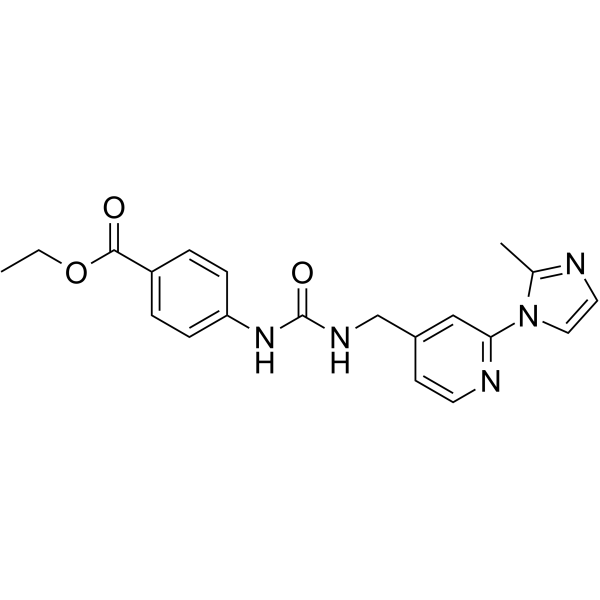 0 ImagesCat. No.: HY-147756CAS No.: 1223378-42-4Nampt-IN-7 (compound GF8) is a potent NAMPT inhibitor, with an IC50 of 7.31 μM. Nampt-IN-7 also displays cytotoxic activity against human HepG2 hepatocellular carcinoma cell line with an IC50 of 24.28 μM.

-
Daporinad hydrochloride
 0 ImagesCat. No.: HY-50876ACAS No.: 2727965-45-7Synonyms: FK866 hydrochloride; APO866 hydrochlorideDaporinad (FK866) hydrochloride is a non-competitive inhibitor of nicotinamide phosphoribosyltransferase (Nampt), with a Ki value of 0.3 nM. Daporinad hydrochloride depletes NAD+ and ATP levels, inhibits mTORC1 and MAPK/ERK pathways, and activates TFEB to induce autophagy. Daporinad hydrochloride causes the depletion of the endoplasmic reticulum Ca²⁺ pool, ultimately weakening the mitogen-induced Ca²⁺ signal and the activation and function of T cells. Daporinad hydrochloride induces cell cycle arrest and apoptosis, and inhibits cell proliferation. Daporinad hydrochloride can be used for the study of myeloma, liver cancer, and immunosuppression.
-
Nampt-IN-10 trihydrochloride
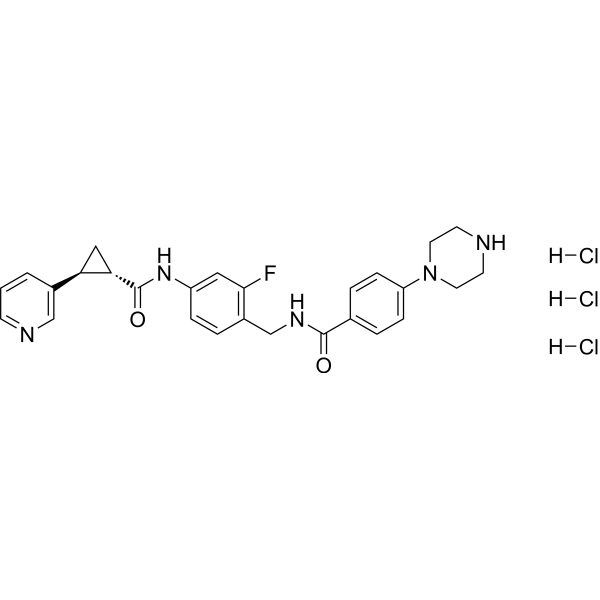 0 ImagesCat. No.: HY-147193ANampt-IN-10 trihydrochloride (compound 4) is a Nicotinamide Phosphoribosyltransferase (NAMPT) inhibitor. Nampt-IN-10 trihydrochloride shows cellular potency to A2780 and CORL23 cell lines with IC50 values of 5 and 19 nM, respectively. Nampt-IN-10 trihydrochloride can be used as a novel non-antimitotic payload for antibody-drug conjugate (ADC).
-
Nampt-IN-8
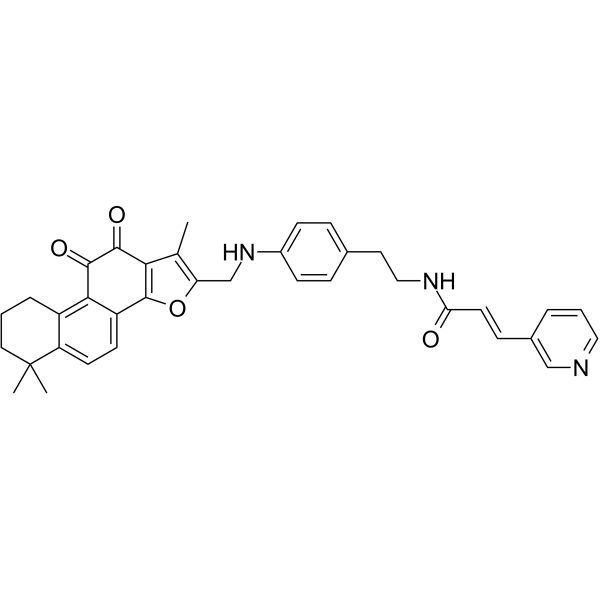 0 ImagesCat. No.: HY-147795CAS No.: 2453183-75-8
-
NAMPT degrader-1
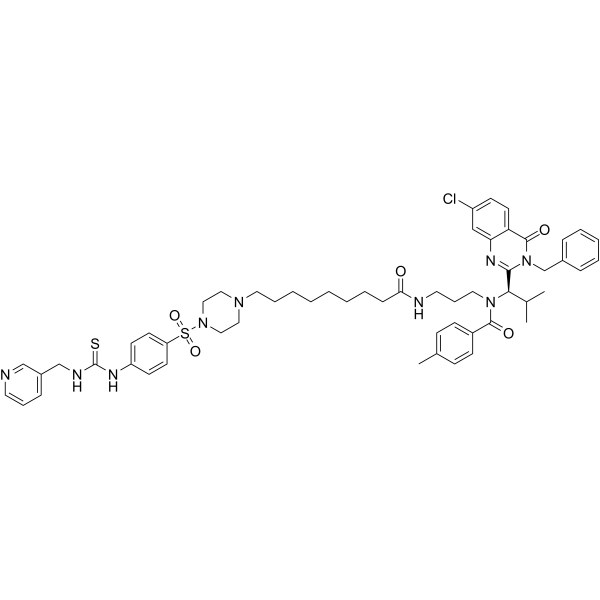 0 ImagesCat. No.: HY-147656CAS No.: 3011778-39-2NAMPT degrader-1 (Compound A3), an autophagosome-tethering compound (ATTEC), is an nicotinamide phosphoribosyltransferase (NAMPT) degrader with an IC50 of 0.023 μM. NAMPT degrader-1 significantly induces the degradation of NAMPT through the autophagy-lysosomal pathway and shows excellent cellular antitumor potency.
-
Nampt-IN-19
 0 ImagesCat. No.: HY-182567CAS No.: 2109805-79-8Nampt-IN-19 is an orally active and non-substrate nicotinamide phosphoribosyltransferase (NAMPT) inhibitor with a human Ki of 5.6 nM. Nampt-IN-19 blocks NAD+ biosynthesis from Nicotinamide (HY-B0150). Nampt-IN-19 acts as an antiproliferative agent in cancer cells. Nampt-IN-19 has preclinical pharmacokinetic properties supporting oral antitumor activity in mouse xenograft models. Nampt-IN-19 can be used for the research of colorectal cancer.
-
AS1604498
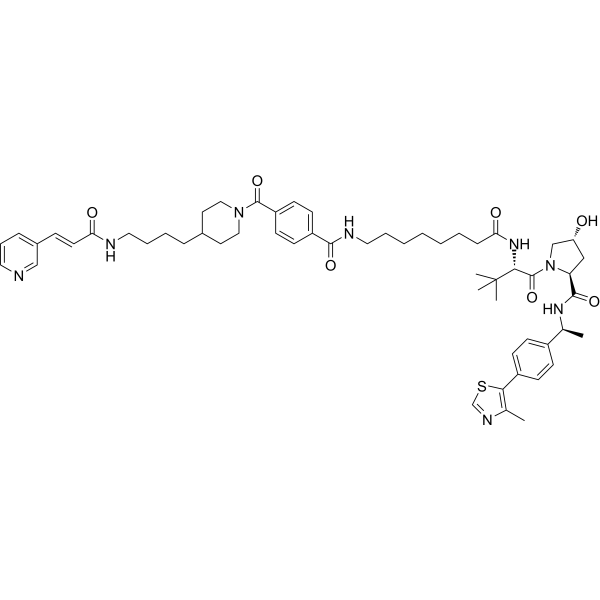
 0 ImagesCat. No.: HY-119159CAS No.: 361465-74-9AS1604498 is a highly specific competitive inhibitor of human NAMPT, with an IC50 of 44.4 nM. AS1604498 functionally inhibits NAMPT enzymatic activity, reduces nicotinamide mononucleotide production, decreases intracellular NAD levels, activates caspase 3/7 and induces cancer cell apoptosis. AS1604498 is applicable to research related to chronic myeloid leukemia.
-
PARP1/NAMPT-IN-2
 0 ImagesCat. No.: HY-170972CAS No.: 2755825-45-5PARP1/NAMPT-IN-2 (Compound 13j) is a dual PARP/NAMPT inhibitor with IC50 values of 0.8 nM and 18 nM for PARP1 and NAMPT, respectively. PARP1/NAMPT-IN-2 can inhibit the proliferation, migration and induce apoptosis of breast cancer cells. PARP1/NAMPT-IN-2 can be used for the research of triple-negative breast cancer.
-
LZFPN-90
 0 ImagesCat. No.: HY-162519Synonyms: LZ90LZFPN-90 (LZ90) is a dual NAMPT/PD-L1 targeting compound. LZFPN-90 inhibits PD-1/PD-L1 interaction and NAMPT activity. LZFPN-90 inhibits cell growth in a NAMPT-dependent manner and blocks the cell cycle, subsequently inducing apoptosis. LZFPN-90 exerted target-dependent antitumor activities, affecting metabolic processes and the immune system.
-
SHP2/NAMPT-IN-1
 0 ImagesCat. No.: HY-184650SHP2/NAMPT-IN-1 is an orally active dual inhibitor of SHP2 and NAMPT, with IC50 values of 30.5 nM and 24.4 nM, respectively. SHP2/NAMPT-IN-1 reduces NAD+ levels and p-ERK expression by inhibiting NAMPT. SHP2/NAMPT-IN-1 can inhibit the migration and colony formation of MDA-MB-231 cells and promote apoptosis. SHP2/NAMPT-IN-1 has anti-proliferative activity against a variety of tumor cell lines and can reverse PD-L1-mediated T-cell immunosuppression. SHP2/NAMPT-IN-1 can be used for breast cancer research.
-
Nampt-IN-18
 0 ImagesCat. No.: HY-181863Nampt-IN-18 (Compound Q24) is an orally active NAMPT inhibitor with an IC50 of 8.0 nM against hNAMPT. Nampt-IN-18 inhibits NAMPT enzymatic activity. Nampt-IN-18 inhibits DNA synthesis and induces Apoptosis. Nampt-IN-18 exhibits anticancer activity against gastric cancer and colorectal cancer. Nampt-IN-18 can be used for the research of gastrointestinal cancers.




