



PERK
Protein kinase R-like endoplasmic reticulum kinase; PKR-like endoplasmic reticulum kinase
Protein kinase R (PKR)-like endoplasmic reticulum kinase (PERK) is one of four known kinases that respond to cellular stress by deactivating the eukaryotic initiation factor 2 α (eIF2α) or other signal transduction cascades. PERK is highly expressed in pancreatic beta-cells and is essential in the beta-cell's development, differentiation and function.
PERK is a type I ER membrane protein containing a stress-sensing domain facing the ER lumen, a transmembrane segment, and a cytosolic kinase domain. Increase in unfolded proteins in the ER causes release of ER chaperones from the stress-sensing domain of PERK, which results in its activation via oligomerization and autophosphorylation at multiple serine, threonine, and tyrosine residues. Upon activation, PERK phosphorylates eIF2α at serine 51, rendering it an inhibitor of the ribosome translation initiation complex, consequently reducing overall protein synthesis. The reduction in translation reduces the ER burden, providing time for the cell to process or degrade the accumulated unfolded proteins to restore ER homeostasis. Although global protein synthesis is decreased, there is specific increased translation of certain mRNAs, such as ATF4, which modulate cellular survival pathways and enhance UPR function. Interfering with PERK function in cancer cells may limit their ability to thrive under hypoxia or nutrient deprived conditions and lead to apoptosis or tumor growth inhibition.
All Product Categories
-
PERK Related Products (203)
Related Products (203)

-
Antibodies (2)
-
Gy-CATH
 0 ImagesCat. No.: HY-P11467Gy-CATH is an anionic antimicrobial peptide. Gy-CATH activates MAPK and NF-κB signaling pathways (elevated levels of phospho-ERK, -p38, -JNK, -p65, and -IκBα). Gy-CATH upregulates the expression levels of three physiological anticoagulant pathways. Gy-CATH inhibits ADP-, Collagen-, and PMA-induced platelet aggregation. Gy-CATH has no direct antimicrobial activity, but shows significant preventive abilities against mice infected with Staphylococcus aureus, Escherichia coli, and Methicillin (HY-121544)-resistant Staphylococcus aureus. Gy-CATH exhibits potent immunomodulatory activity, enhancing macrophage-and neutrophil-mediated bactericidal functions. Gy-CATH significantly reduces the extent of pulmonary fibrin deposition and prevents thrombosis in mice.
-
PI3Kα-IN-27
 0 ImagesCat. No.: HY-178812CAS No.: 2098649-83-1PI3Kα-IN-27 (Compound 50b) is an orally active PI3K-α inhibitor, with an IC50 of 40 nM. PI3Kα-IN-27 effectively inhibits PAK3, p110α, phospho-mTOR and phospho-ERK1/2. PI3Kα-IN-27 induces early Apoptosis. PI3Kα-IN-27 shows anticancer activity against pancreatic cancer, lung cancer, breast cancer.
-
ABC294735
 0 ImagesCat. No.: HY-112385CAS No.: 917236-13-6ABC294735 is an orally active SK1/SK2 inhibitor. Combination of ABC294735 with Sorafenib (HY-10201) reduces pERK. ABC294735 exhibits anticancer activity against pancreatic adenocarcinoma and renal cell carcinoma. ABC294735 can be used in research related to pancreatic adenocarcinoma and renal cell carcinoma.
-
BRAFV600E/ABL2-IN-2
 0 ImagesCat. No.: HY-181726BRAFV600E/ABL2-IN-2 is a dual BRAFV600E and ABL2 kinase inhibitor, with an IC50 of 0.088 μM against human BRAFV600E and an IC50 of 0.3 μM against human ABL2. BRAFV600E/ABL2-IN-2 reduces the phosphorylation levels of downstream ERK1/2 and CrkL in melanoma cells. BRAFV600E/ABL2-IN-2 decreases the expression of P-glycoprotein (P-glycoprotein) in melanoma cells. BRAFV600E/ABL2-IN-2 induces G1 cell cycle arrest and apoptosis (Apoptosis) in melanoma cells. BRAFV600E/ABL2-IN-2 is applicable to relevant research on melanoma.
-
EGFR-IN-181
 0 ImagesCat. No.: HY-178939EGFR-IN-181 is an orally active, potent, brain-penetrant EGFRL858R/T790M/C797S triple mutations inhibitor (IC50 = 1.32 nM). EGFR-IN-181 can inhibit EGFR phosphorylation (p-EGFR) and phosphorylation of its downstream signaling proteins AKT (p-AKT) and ERK (p-ERK). EGFR-IN-181 can induce apoptosis and cause G2 phase arrest. EGFR-IN-181 can be used for the study of non-small cell lung cancer (NSCLC) and brain metastases.
-
PROTAC SOS1 degrader-10
 0 ImagesCat. No.: HY-161654CAS No.: 3043923-74-3PROTAC SOS1 degrader-10 is a SOS1 PROTAC degrader dependent on CRBN and the proteasome. PROTAC SOS1 degrader-10 degrades SOS1 in KRAS-mutant cancer cells SW620, A549 and DLD-1, with DC50 values of 2.23, 1.85 and 7.53 nM, respectively. PROTAC SOS1 degrader-10 inhibits ERK phosphorylation. PROTAC SOS1 degrader-10 suppresses the proliferation of KRAS-mutant cancer cells via antiproliferative activity. PROTAC SOS1 degrader-10 can be used in studies related to KRAS-mutant cancers.
-
Chalcomoracin
 0 ImagesCat. No.: HY-N20674CAS No.: 76472-89-4Chalcomoracin is an orally active anticancer agent. Chalcomoracin exhibits anticancer, antibacterial, and α-glucosidase inhibitory activities, with an IC50 of 14.23 µM against yeast α-glucosidase and an IC50 of 5.5 μM against FabI of Staphylococcus aureus. Chalcomoracin reduces the phosphorylation levels of ERK, JNK, and P38; enhances the phosphorylation level of ERK1/2; regulates the MAPK, mTOR, AKT, and p53 signaling pathways; upregulates the expression of Chop, Bip, PINK1, GRP78, and GADD153; and downregulates the expression of Alix. Chalcomoracin induces apoptosis (apoptosis), endoplasmic reticulum stress (endoplasmic reticulum stress), paraptosis (paraptosis), ROS production, mitophagy (mitophagy), and autophagy (autophagy); it inhibits cancer cell viability, colony-forming ability, migration, invasion, proliferation, tumorigenesis, fatty acid synthesis, S. aureus growth, vitreous-stimulated retinal cell activity, and cell cycle progression at the G0/G1 phase. Chalcomoracin can be used in research related to hepatocellular carcinoma, non-small cell lung cancer, triple-negative breast cancer, prostate cancer, proliferative vitreoretinopathy, pancreatic cancer, diabetes, and bacterial infections.
-
CSF1R-IN-27
 0 ImagesCat. No.: HY-183569CAS No.: 3034296-91-5CSF1R-IN-27 is a CSF1R inhibitor with oral effectiveness, kinome-wide selective profile, low cellular cytotoxicity, and CSF1R IC50 values of 19 nM, 88 nM, 173 nM, 797 nM, 1448 nM, and >3000 nM. CSF1R-IN-27 suppresses M-CSF-induced phosphorylation of CSF1R, AKT, and ERK in macrophages, and inhibits hepatic p-CSF1R/p-AKT/p-ERK signaling. CSF1R-IN-27 reduces serum transaminase levels, improves hepatic histopathology, alleviates inflammatory cell infiltration, and decreases circulating TNF-α and IL-6 levels. CSF1R-IN-27 can be used for the research of acute liver injury.
-
Cyprodinil-d5
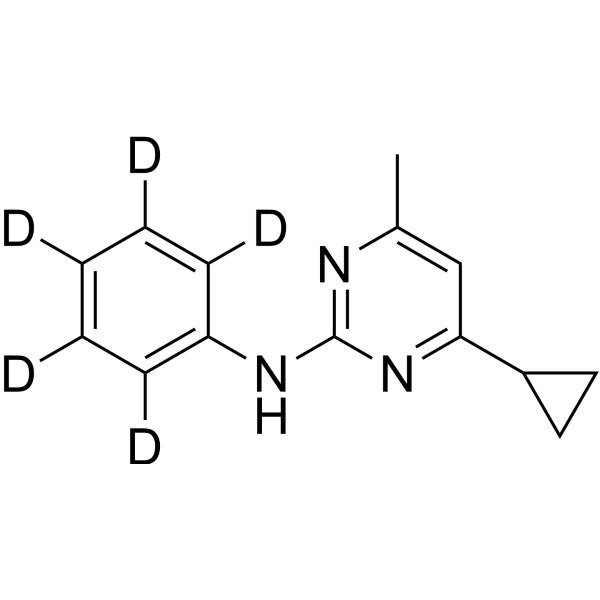 0 ImagesCat. No.: HY-116214SCAS No.: 1773496-67-5Synonyms: CGA-219417-d5Cyprodinil-d5(CGA-219417-d5) is the deuterium labeled Cyprodinil (HY-116214). Cyprodinil (CGA-219417) is a broad-spectrum anilinopyrimidine fungicide and an activator of the aryl hydrocarbon receptor. Cyprodinil also has anti-androgenic and androgenic activities. Cyprodinil can inhibit the biosynthesis of methionine in plant-pathogenic fungi and protect fruits and vegetables from a variety of pathogens.
-
BRAFV600E/JNK-IN-1
 0 ImagesCat. No.: HY-173153BRAFV600E/JNK-IN-1 (Compound 14c) is an inhibitor of JNK1, JNK2, JNK3 and BRAFV600E, with IC50 values of 0.51 μM, 0.53 μM, 1.02 μM and 0.009 μM, respectively. BRAFV600E/JNK-IN-1 can inhibit the phosphorylation of MEK1/2 and ERK1/2. In addition, BRAFV600E/JNK-IN-1 can inhibit tumor cell proliferation, NO release and PGE2 production, and has anti-tumor and anti-inflammatory activities.
-
AD-35
 0 ImagesCat. No.: HY-117710BCAS No.: 1531586-64-7AD-35 is an orally active, blood-brain barrier-permeable acetylcholinesterase inhibitor with an IC50 of 793 nM. AD-35 inhibits metal-induced amyloid-β aggregation and disassembles preformed amyloid-β aggregates. In rat models of cognitive impairment, AD-35 attenuates Aβ25-35-induced astrocyte activation, TNF-α and IL-1β release, inhibits ERK phosphorylation, and alleviates learning and memory deficits. AD-35 can be used for research on Alzheimer's disease.
-
CDC25A/NF-κB-IN-1
 0 ImagesCat. No.: HY-184446CDC25A/NF-κB-IN-1 is an effective dual-target inhibitor of CDC25A and NF-κB, and is a prodrug of Pt(IV). CDC25A/NF-κB-IN-1 has anticancer activity and low cytotoxicity to normal cells. CDC25A/NF-κB-IN-1 can trigger a variety of anticancer mechanisms, including S phase cell cycle arrest, mitochondrial endogenous apoptosis, endoplasmic reticulum stress, autophagy-dependent ferroptosis. CDC25A/NF-κB-IN-1 has good safety and can be used for ovarian cancer research.
-
RFRP-3 (mouse)
 0 ImagesCat. No.: HY-P10780Purity: 98.82%Synonyms: Neuropeptide NPVF (mouse)RFRP-3 (mouse) is a functional ortholog of avian gonadotropin inhibitory hormone (GnIH), binding to GPR147. RFRP-3 (mouse) reduces Progesterone synthesis by inhibiting FSHR and key enzymes involved in steroidogenesis (P450scc, 3β-HSD, StAR). RFRP-3 (mouse) induces Apoptosis (increase of p53). RFRP-3 (mouse) also suppresses the ERK signaling pathway. RFRP-3 (mouse) can be used for research of follicular development.
-
Nuvrumetinib
 0 ImagesCat. No.: HY-187882CAS No.: 3079099-31-0Synonyms: PAS-004Nuvrumetinib (PAS-004) is a macrocyclic MEK inhibitor. Nuvrumetinib functionally inhibits MEK1/2, thereby suppressing pERK in tumors. Nuvrumetinib inhibits the proliferation of NRAS-mutant cancer cells. Nuvrumetinib can be used in studies related to NRASG12C-mutant solid tumors, neurofibromatosis type 1 (NF1), RASopathies and laminopathies.
-
Swerchirin
 0 ImagesSwerchirin is an orally active, plant-derived xanthone that acts as an inhibitor of the Raf/MEK/ERK signaling pathway. Swerchirin downregulates the expression of phosphorylated MEK and phosphorylated ERK, induces mitochondrial apoptosis and cell cycle arrest, regulates Bcl-2 family proteins, triggers cytochrome c release, activates caspases, and drives PARP cleavage. Swerchirin reduces blood glucose levels in rat models under fasting, fed, glucose-loaded conditions, and following treatment with Tolbutamide (HY-B0401). Swerchirin can be used in research related to ovarian cancer, liver injury, and diabetes.
-
KRAS inhibitor-40
 0 ImagesCat. No.: HY-168442CAS No.: 3059496-56-6KRAS inhibitor-40 (Compound 41) is a KRAS inhibitor that interferes with the KRAS G12C-BRAF complex. KRAS inhibitor-40 inhibits the ERK phosphorylation of KRAS downstream signaling pathway. KRAS inhibitor-40 can inhibit the proliferation of tumor cells with different KRAS mutation types and has antitumor activity.
-
FLT3/VEGFR2-IN-1
 0 ImagesCat. No.: HY-168493FLT3/VEGFR2-IN-1 (Compound 26) is a FLT3/VEGFR2/HDAC inhibitor with IC50 values of 14.5 nM, 3.9 nM, and 30.8 nM for FLT3, VEGFR2, and HDAC1, respectively. FLT3/VEGFR2-IN-1 can inhibit the phosphorylation of STAT3 and ERK1/2 and the proliferation of leukemia cells. FLT3/VEGFR2-IN-1 has anti-tumor activity and can be used for the research of acute myeloid leukemia.
-
SAIT-301
 0 ImagesCat. No.: HY-P990661SAIT-301 is a Met-targeting monoclonal antibody. SAIT-301 inhibits Met activation, induces downregulated expression of phosphorylated Met(p-Met) and phosphorylated ERK(p-ERK), and reduces EGR-1 expression. SAIT-301 inhibits the migration and invasion of nasopharyngeal carcinoma cells. SAIT-301 is applicable to relevant research on nasopharyngeal carcinoma. For the isotype control of SAIT-301, refer to Human IgG1 kappa, Isotype Control (HY-P99001).
-
PERK-IN-3
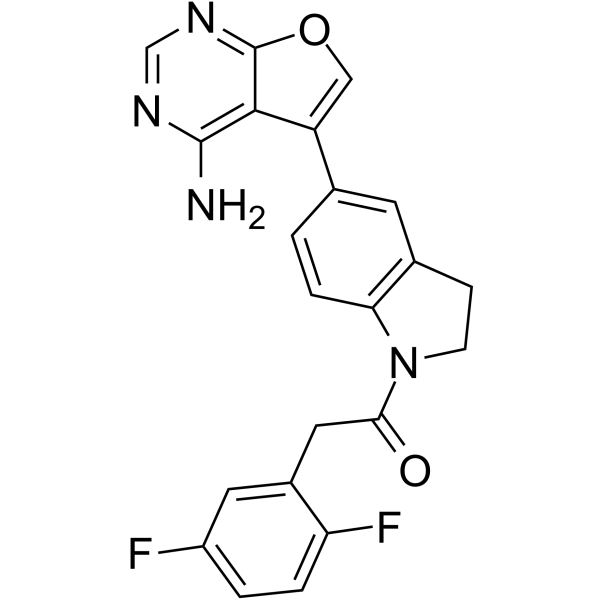 0 ImagesCat. No.: HY-130643CAS No.: 1337532-08-7PERK-IN-3 is a potent PERK inhibitor with an IC50 of 7.4 nM.
-
FGFR-IN-25
 0 ImagesCat. No.: HY-181005FGFR-IN-25 (Compound 19E) is a FGFR inhibitor (IC50s: 1.30 nM and 0.85 nM for FGFR1 and FGFR2, respectively) and radiosensitizer. FGFR-IN-25 effectively reduces the phosphorylation of FGFR1 and its key downstream effectors, pAKT and pERK. FGFR-IN-25 exerts broad-spectrum antitumor activity against gastric cancer, colorectal carcinoma, hepatocellular carcinoma, breast cancer, triple-negative breast cancer, and glioblastoma. FGFR-IN-25, when combined with radiotherapy, synergistically activates the ROS-Caspase-3-GSDME axis, downregulates PD-L1 expression, and induces immunogenic cell death (ICD). FGFR-IN-25 combined with radiotherapy improves the antitumor efficacy.




