



PERK Modulator
- 1
-
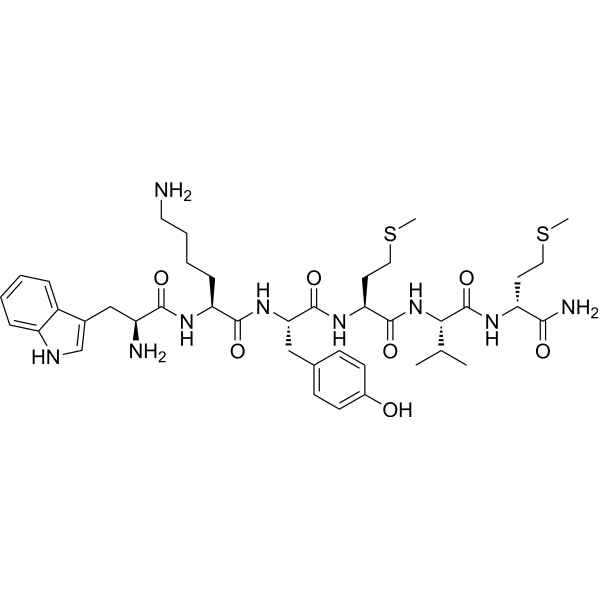
WKYMVm
 0 ImagesSynonyms: WKYMVm-amide; W-Peptide
WKYMVm is a selective formylpeptide receptor 2 (FPR2) agonist. WKYMVm has a powerful anti-inflammatory effect that can reduce lung injury and spinal cord injury. WKYMVm ameliorates obesity by regulating lipid metabolism and leptin signaling. WKYMVm is involved in the regulation of immune cells by activating FPRs. WKYMVm can promote the chemotactic migration of immune cells and inhibit the apoptosis of phagocytes. In addition, WKYMVm may play a favorable or unfavorable role in tumors, depending on the type of tumor.
-
Cofetuzumab
 0 ImagesSynonyms: PF-06523435; hu24
Cofetuzumab (PF-06523435) is a humanized IgG1-κ monoclonal antibody targeting PTK7. The expression system of Cofetuzumab is typically CHO (Chinese hamster ovary) cells. Cofetuzumab downregulates PTK7 expression, modulates its downstream signaling pathways, and inhibits tumor sphere formation of ovarian cancer cells. Cofetuzumab can be used to synthesize the ADC molecule Cofetuzumab pelidotin (HY-P99829). Cofetuzumab is applicable to the research of tumors such as ovarian cancer.
-
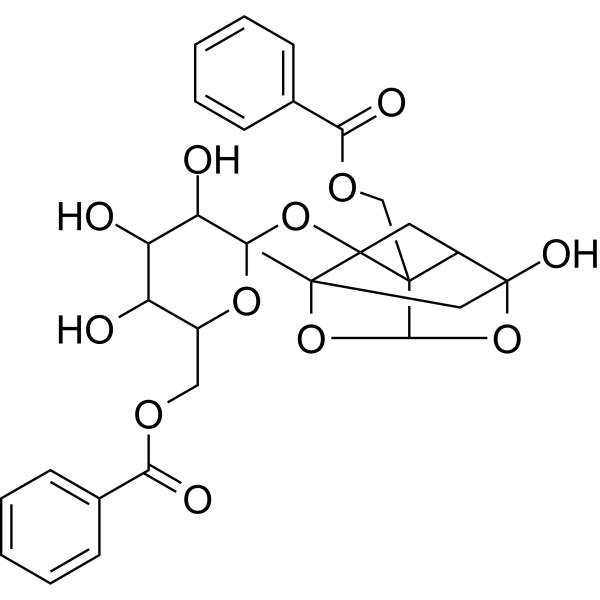
Benzoylpaeoniflorin
 0 Images
Benzoylpaeoniflorin is an orally active monoterpene glycoside compound. Benzoylpaeoniflorin exerts anti-inflammatory, anti-allergic, psoriasis-improving and sepsis-improving effects by inhibiting signaling pathways such as TNF/NF-κB and MAPK, as well as regulating immune homeostasis. Benzoylpaeoniflorin can be used in research related to immune, allergic and inflammatory diseases.
-
Elisrasib
 0 ImagesSynonyms: D3S-001
Elisrasib (D3S-001) is an orally active and selective inhibitor for KRAS. Elisrasib inhibits the proliferation of KRASG12C mutant H358 and MIA-PA-CA-2. D3S-001 also inhibits the phosphorylation of cellular ERK1/2. Elisrasib exhibits good metabolic stability in hepatocytes, liver microsomes, plasma and whole blood in various species. D3S-001 exhibits good pharmacokinetic characteristics and antitumor efficacy in mice.
-
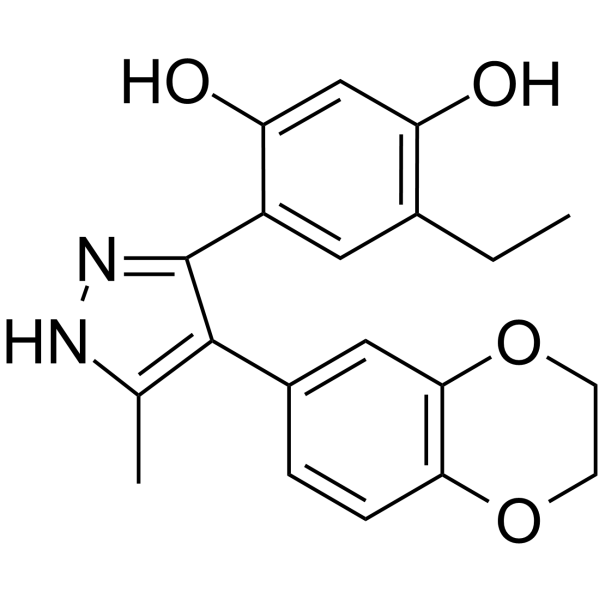
CCT018159
 0 Images
CCT018159 is an ATP-competitive HSP90β inhibitor, with an IC50 of 3.2 μM against human HSP90β ATPase and 6.6 μM against yeast HSP90β ATPase. CCT018159 induces cell cycle arrest and apoptosis in tumor cells, and inhibits invasion and angiogenesis. CCT018159 is applicable to cancer-related research.
-
Perfluorononanoic acid
 0 ImagesSynonyms: PFNA; Heptadecafluorononanoic acid
Perfluorononanoic acid (PFNA) is an orally active PPARα activator. Perfluorononanoic acid activates PPARα-mediated gene expression, including upregulating target genes associated with lipid metabolism and triglyceride storage. Perfluorononanoic acid exhibits certain developmental and reproductive toxicity. Perfluorononanoic acid causes hepatomegaly in pregnant mice, induces high postnatal mortality in neonatal mice, and leads to dose-dependent delays in eye-opening time and puberty onset in mouse offspring.
-
BMS-986408
 0 Images
BMS-986408 is an orally active inhibitor of DGKα and DGKζ, with IC50 values of 0.0003 μM and 0.002 μM, respectively. BMS-986408 activates intratumoral T cell responses, enhances the priming and expansion of tumor-reactive T cells in tumor-draining lymph nodes, and functions as an immunostimulant. BMS-986408 can be used in the research of tumors.
-
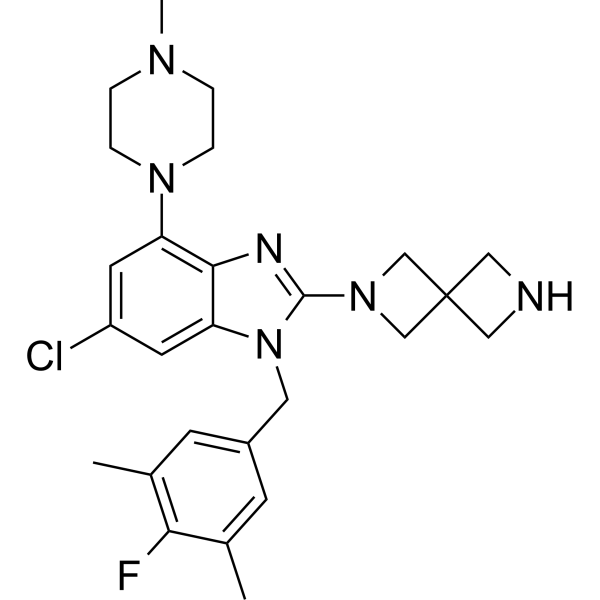
VUBI1
 0 ImagesSynonyms: SOS1 activator 1
VUBI1 (SOS1 activator 1) is a benzimidazole derivative and SOS1 activator with a Kd of 44 nM. VUBI1 can significantly activate RAS-GTP and regulate the phosphorylation of ERK. VUBI1 also can serve as a target ligand for synthesizing PROTACs, such as PROTAC SOS1 degrader-1 (HY-145737), to induce SOS1 degradation. VUBI1 can be used in the study of cancer.
-
Continentalic acid
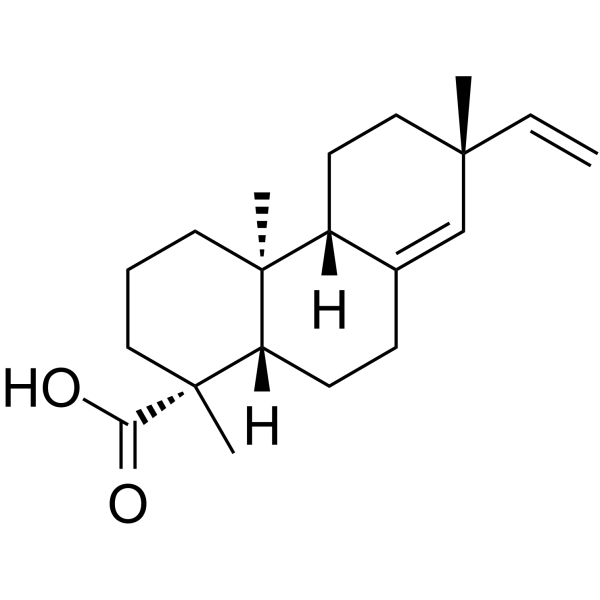 0 Images
Continentalic acid is a diterpenoid organic acid. Continentalic acid exhibits multiple activities including anti-inflammatory, antioxidant, neuroprotective, antibacterial and antitumor effects. Continentalic acid alleviates oxidative stress, reduces pro-inflammatory cytokine production, inhibits MAPK phosphorylation and neutrophil infiltration, and induces growth inhibition and apoptosis of cancer cells. Continentalic acid can be used in research related to traumatic brain injury, cancer, inflammation and infections.
-
WKYMVm TFA
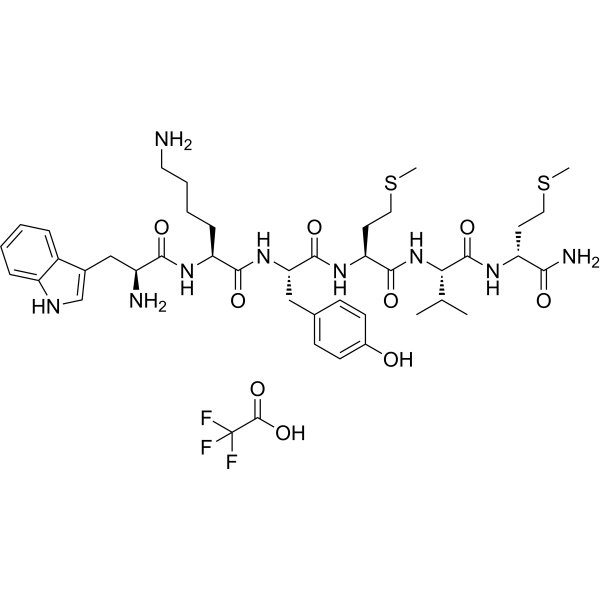 0 ImagesCat. No.: HY-P1120ACAS No.: 1313730-09-4
WKYMVm (TFA) is a selective formylpeptide receptor 2 (FPR2) agonist. WKYMVm has a powerful anti-inflammatory effect that can reduce lung injury and spinal cord injury. WKYMVm ameliorates obesity by regulating lipid metabolism and leptin signaling. WKYMVm is involved in the regulation of immune cells by activating FPRs, and WKYMVm can promote the chemotactic migration of immune cells and inhibit the apoptosis of phagocytes. In addition, WKYMVm may play a favorable or unfavorable role in tumors, depending on the type of tumor.
-
Continentalic acid (Standard)
 0 ImagesCat. No.: HY-N6908RCAS No.: 19889-23-7
Continentalic acid (Standard) is the analytical standard of Continentalic acid (HY-N6908). This product is intended for research and analytical applications. Continentalic acid is a diterpenoid organic acid. Continentalic acid exhibits multiple activities including anti-inflammatory, antioxidant, neuroprotective, antibacterial and antitumor effects. Continentalic acid alleviates oxidative stress, reduces pro-inflammatory cytokine production, inhibits MAPK phosphorylation and neutrophil infiltration, and induces growth inhibition and apoptosis of cancer cells. Continentalic acid can be used in research related to traumatic brain injury, cancer, inflammation and infections.
-
ER proteostasis regulator-1
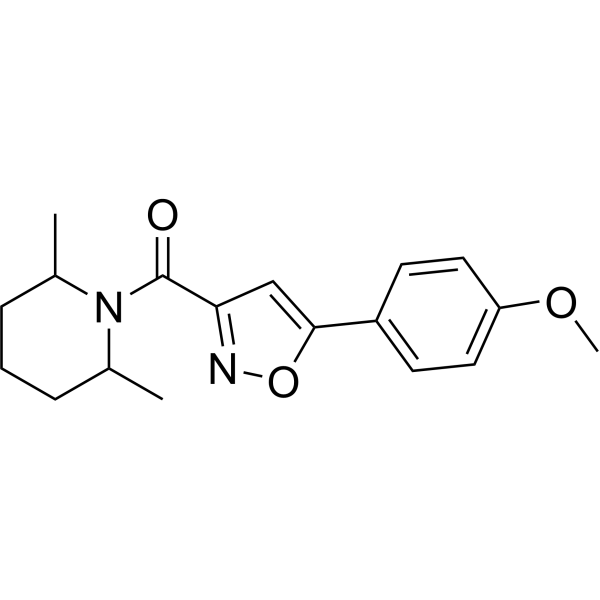 0 Images
ER proteostasis regulator-1 (compound 481) is a potent ER proteostasis regulator. ER proteostasis regulator-1 has the potential for the research of Alzheimer's disease and diabetes.
-
HDAC6-IN-74
 0 ImagesCat. No.: HY-181579
HDAC6-IN-74 is an orally active, selective histone deacetylase 6 (HDAC6) inhibitor with an IC50 of 0.036 μM. HDAC6-IN-74 induces tumor cell apoptosis, arrests cells at the S phase of the cell cycle, and impairs cell migration, invasion and colony-forming abilities. HDAC6-IN-74 exerts anticancer effects with no obvious toxicity. HDAC6-IN-74 can be used in the research of cancers such as liver cancer.
-
Benzoylpaeoniflorin (Standard)
 0 ImagesCat. No.: HY-N0852RCAS No.: 38642-49-8
Benzoylpaeoniflorin (Standard) is an analytical standard for Benzoylpaeoniflorin (HY-N0852). This product is intended for research and analytical applications. Benzoylpaeoniflorin is an orally active monoterpene glycoside compound. Benzoylpaeoniflorin exerts anti-inflammatory, anti-allergic, psoriasis-improving and sepsis-improving effects by inhibiting signaling pathways such as TNF/NF-κB and MAPK, as well as regulating immune homeostasis. Benzoylpaeoniflorin can be used in research related to immune, allergic and inflammatory diseases.
-
VUBI1 (Standard)
 0 ImagesCat. No.: HY-111671RCAS No.: 2245237-53-8Synonyms: SOS1 activator 1 (Standard)
VUBI1 (Standard) is the analytical standard of VUBI1 (HY-111671). This product is intended for research and analytical applications. VUBI1 (SOS1 activator 1) is a benzimidazole derivative and SOS1 activator with a Kd of 44 nM. VUBI1 can significantly activate RAS-GTP and regulate the phosphorylation of ERK. VUBI1 also can serve as a target ligand for synthesizing PROTACs, such as PROTAC SOS1 degrader-1 (HY-145737), to induce SOS1 degradation. VUBI1 can be used in the study of cancer.
- 1



