



Ras
Ras is the name given to a family of related proteins which is ubiquitously expressed in all cell lineages and organs. All Ras protein family members belong to a class of protein called small GTPase, and are involved in transmitting signals within cells. Ras is the prototypical member of the Ras superfamily of proteins, which are all related in 3D structure and regulate diverse cell behaviours. When Ras is 'switched on' by incoming signals, it subsequently switches on other proteins, which ultimately turn on genes involved in cell growth, differentiation and survival. As a result, mutations in ras genes can lead to the production of permanently activated Ras proteins. This can cause unintended and overactive signalling inside the cell, even in the absence of incoming signals. Because these signals result in cell growth and division, overactive Ras signaling can ultimately lead to cancer. The 3 Ras genes in humans (HRAS,KRAS, and NRAS) are the most common oncogenes in human cancer; Ras inhibitors are being studied as a treatment for cancer, and other diseases with Ras overexpression.
Ras Isoform Specific Products
All Product Categories
-
Ras Related Products (746)
Related Products (746)

-
Antibodies (36)
-
Ras Isoform Comparison
-
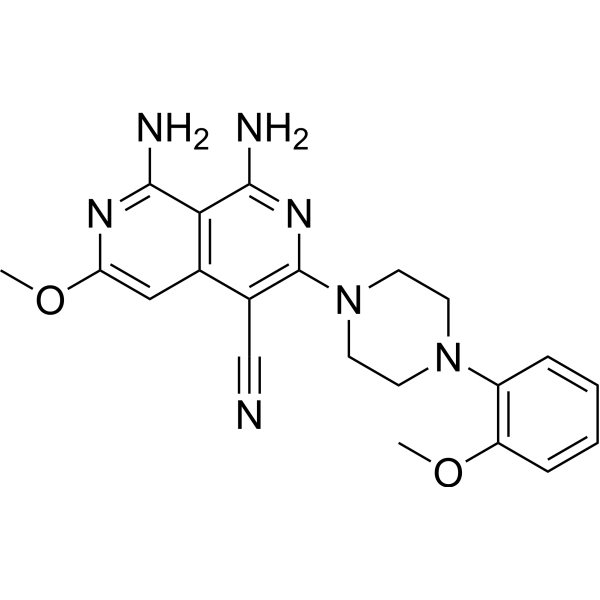
KRAS inhibitor-24
 0 ImagesCat. No.: HY-159474CAS No.: 3030576-47-4KRAS inhibitor-24 (compound 115c) is a pyridopyrimidine KRAS inhibitor, with an IC50 of < 100 nM for KRas G12V, KRas WT and KRas G12R.
-
KRAS G12D(8-16)
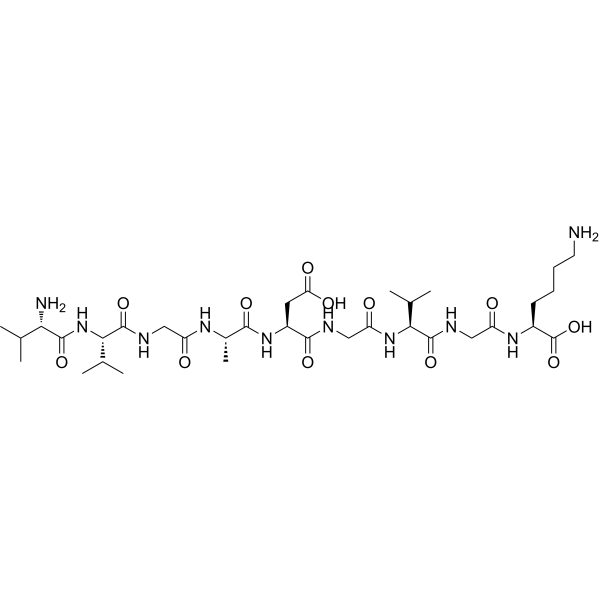 0 ImagesCat. No.: HY-P5192CAS No.: 199476-92-1KRAS G12D 8-16 is a mutant KRAS G12D 8-16 peptide.
-
6-Thio-GTP tetrasodium
 0 ImagesCat. No.: HY-131598CPurity: 99.7%Synonyms: 6-Thioguanosine-5'-triphosphate tetrasodium6-Thio-GTP (tetrasodium) is a Vav1-Rac inhibitor. 6-Thio-GTP (tetrasodium) inhibits TCR-stimulated T cell proliferation and CD28-mediated T cell survival. 6-Thio-GTP (tetrasodium) has an immunosuppressive effect in a mouse cardiac allograft transplant model and prolongs cardiac allograft survival.
-
YN14
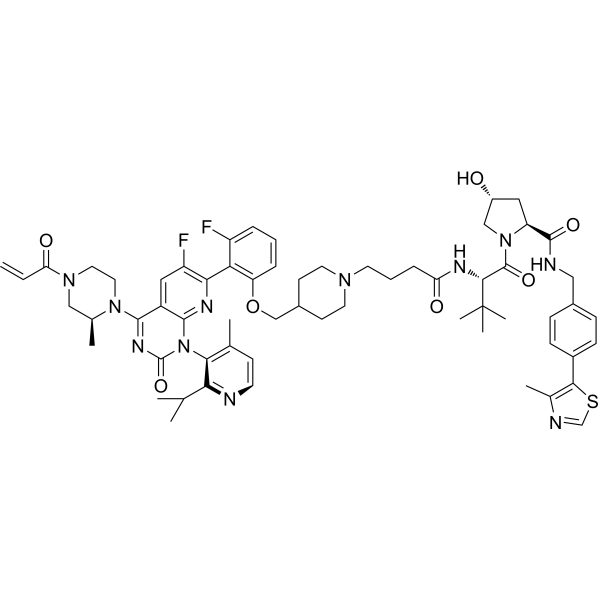 0 ImagesCat. No.: HY-155356Purity: 99.08%YN14 is a KRASG12C PROTAC degrader that recruits E3 ubiquitin ligase to induce the polyubiquitination and proteasomal degradation of KRASG12C. YN14 induces tumor cell apoptosis, cell cycle arrest, and cell migration inhibition. YN14 exhibits in vivo antitumor proliferative activity in tumor cell xenograft nude mice. YN14 can be used in cancer-related research.
-
Atrovastatin-PEG3-FITC
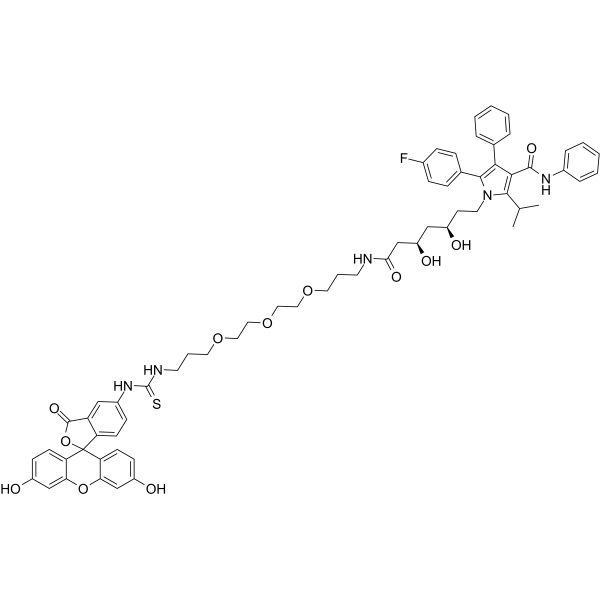 0 ImagesAtrovastatin-PEG3-FITC (compound S31) is a KRAS-PDEδ interaction inhibitor. Atrovastatin-PEG3-FITC acts as a ligand in fluorescence anisotropy assay.
-
(1R)-KRAS inhibitor-24
 0 Images(1R)-KRAS inhibitor-24 (compound 115c) is a pyridopyrimidine KRAS inhibitor, with an IC50 of < 100 nM for KRas G12V, KRas WT and KRas G12R.
-
CFL-120
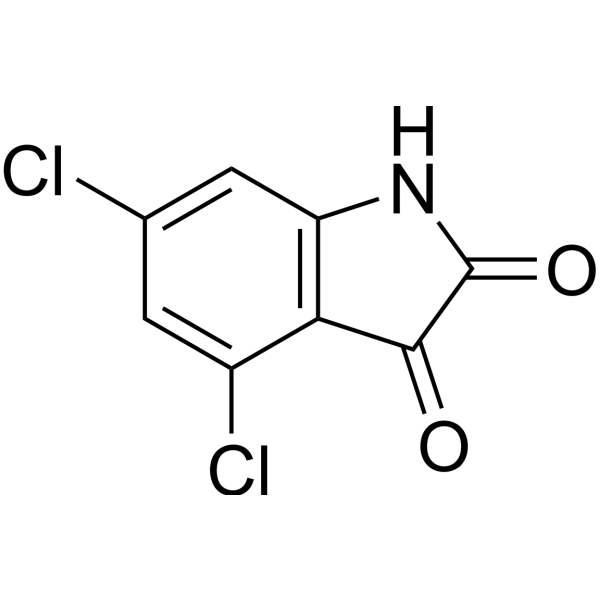 0 ImagesCFL-120 is a potent KRasG12C inhibitor. CFL-120 shows an antiproliferative effect. CFL-120 shows anticancer activity. CFL-120 has the potential for the research of lung cancer.
-
YK-8S
 0 ImagesCat. No.: HY-159591CAS No.: 3060515-08-1YK-8S is a dual-targeted K-Ras (G12D/G12C) covalent inhibitor. YK-8S shows no significant binding to wild-type K-Ras and other mutants (G12R, G13D, Q61R/K). YK-8S exhibits anti-proliferative activity against H358 (G12C) and AGS (G12D) cells. YK-8S inhibits the phosphorylation of p-AKT/p-ERK in BaF3/G12D and G12C cells. YK-8S can be used for pancreatic cancer, colorectal cancer and other tumors with high incidence of G12D.
-
PROTAC K-Ras Degrader-5
 0 ImagesCat. No.: HY-168669CAS No.: 3052745-16-8PROTAC K-Ras Degrader-5 is a cereblon-based K-Ras PROTAC degrader with a DC50 of <100 nM for KRASG12D. PROTAC K-Ras Degrader-5 recruits KRASG12D to the cereblon E3 ubiquitin ligase complex for ubiquitination and subsequent proteasomal degradation. PROTAC K-Ras Degrader-5 suppresses pERK levels downstream of KRASG12D degradation in cancer cells. PROTAC K-Ras Degrader-5 reduces proliferation of cancer cells. PROTAC K-Ras Degrader-5 induces caspase 3/7 activity and cPARP, markers of apoptosis, in pancreatic cancer spheroids and tumors. PROTAC K-Ras Degrader-5 can be used for the research of pancreatic cancer and colorectal cancer.

-
PROTAC SOS1 degrader-1 TFA
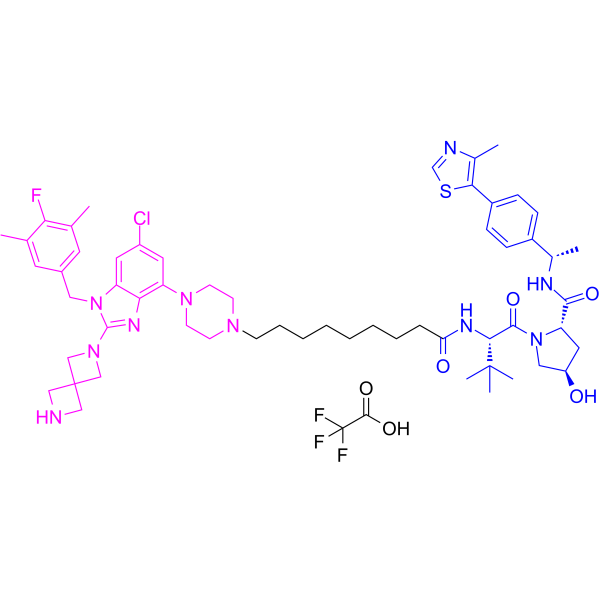 0 ImagesCat. No.: HY-145737APurity: 98.38%PROTAC SOS1 degrader-1 TFA is a degrader of SOS1 PROTAC, with a DC50 of 98.4 nM and a Kd value of 44 nM. PROTAC SOS1 degrader-1 TFA induces the formation of a ternary complex with SOS1 and the VCB E3 ubiquitin ligase complex, thereby promoting the ubiquitination and proteasomal degradation of SOS1. PROTAC SOS1 degrader-1 TFA reduces KRAS-GTP levels, inhibits the phosphorylation of ERK in the RAS-RAF-MEK-ERK pathway, and suppresses the proliferation of cancer cells carrying KRAS mutations. PROTAC SOS1 degrader-1 TFA inhibits tumor growth in mouse xenograft models. PROTAC SOS1 degrader-1 TFA can be used for the research of KRAS-driven cancers.
-
KRAS G12D inhibitor 3 TFA
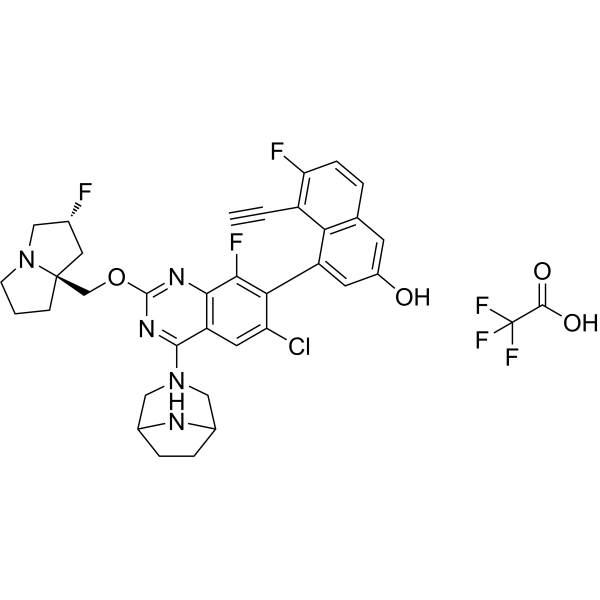 0 ImagesKRAS G12D inhibitor 3 TFA is a KRAS G12D inhibitor with an IC50 of <500 nM. KRAS G12D inhibitor 3 TFA has antitumor effects (WO2022002102A1; compound 146). KRAS G12D inhibitor 3 (TFA) is a click chemistry reagent, it contains an Alkyne group and can undergo copper-catalyzed azide-alkyne cycloaddition (CuAAc) with molecules containing Azide groups.
-
Rac1 Inhibitor W56 TFA
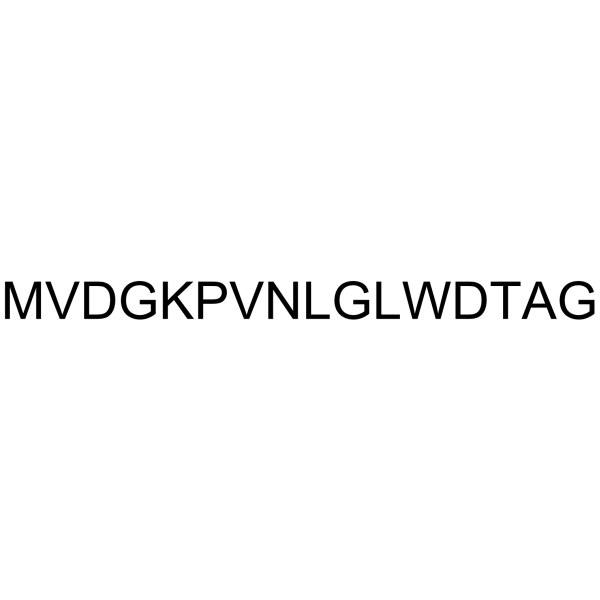 0 ImagesCat. No.: HY-P1382APurity: 99.92%Rac1 Inhibitor W56 TFA is a peptide containing residues 45-60 of Rac1. Rac1 Inhibitor W56 TFA inhibits Rac1 interaction with guanine nucleotide exchange factors TrioN, GEF-H1, and Tiam.
-
Z52-L16
 0 ImagesCat. No.: HY-178838CAS No.: 3077488-80-0Z52-L16 is Drug-Linker Conjugates for ADC, which is composed of a linker and a Ras inhibitor Z52 (HY-178842). Z52-L16 can be used for the research of cancer, such as pancreatic cancer.
-
KRASG12D-IN-1
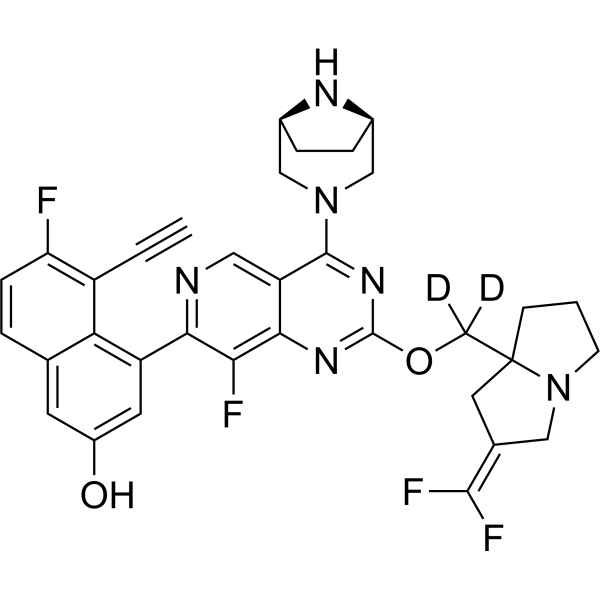 0 ImagesCat. No.: HY-157029SPurity: 98.00%KRASG12D-IN-1 (compound 22) is a KRASG12D Inhibitor. KRASG12D-IN-1 has dose-dependent anti-tumor efficacy in the AsPC-1 xenograft mouse models with a tumor growth inhibition.
-
Bragsin2
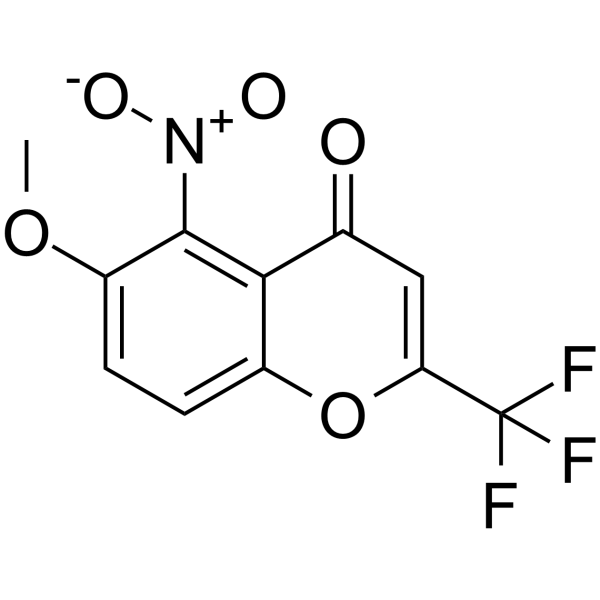 0 ImagesBragsin2 is a potent, selective and noncompetitive nucleotide exchange factor BRAG2 inhibitor, with an IC50 of 3 μM. Bragsin2 binds at the interface between the PH domain of BRAG2 and the lipid bilayer, leads BRAG2 unable to activate lipidated Arf GTPase. Bragsin2 affects breast cancer stem cells.
-
AZD4625
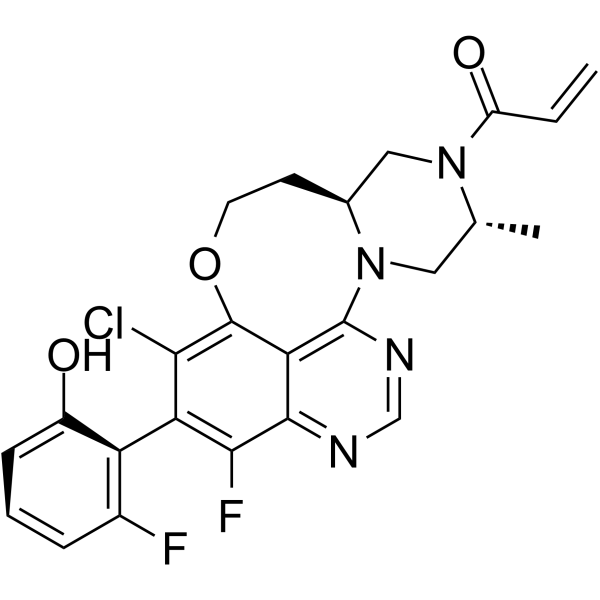 0 ImagesCat. No.: HY-146223Purity: 98.44%AZD4625 is an orally active, selective irreversible, covalent allosteric GTPase KRASG12C inhibitor with an IC50 of 3 nM. AZD4625 can inhibit the MAPK pathway (with decreased pCRAF, pMEK, and pERK) and the PI3K pathway (with decreased pAKT and pS6), and induce cell apoptosis. AZD4625 has no binding and inhibition of wild-type RAS or isoforms carrying non-KRASG12C mutations. AZD4625 can be used for the study of KRASG12C mutant non-small cell lung cancer.
-
PROTAC Axl Degrader 2
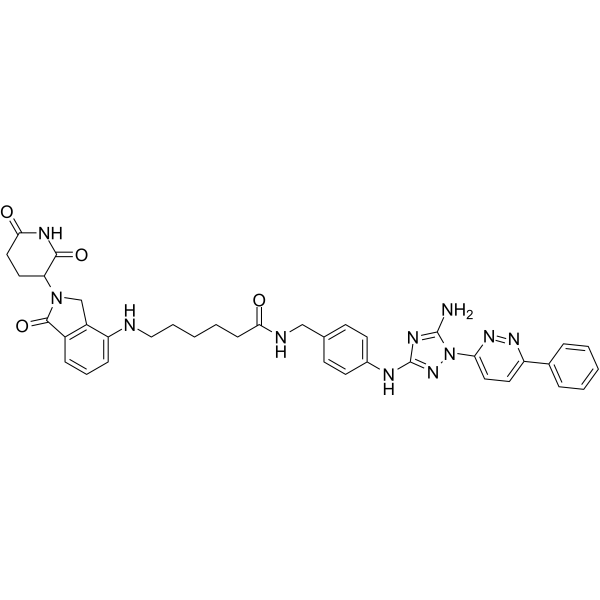 0 ImagesCat. No.: HY-144627CAS No.: 3033401-45-2PROTAC Axl Degrader 2 is an orally active and selective AXL PROTAC degrader with dual activities of AXL kinase inhibition and AXL protein degradation. PROTAC Axl Degrader 2 induces cytoplasmic vacuolization, excessive macropinosome production, oncosis, H-Ras activation, and Rac1-dependent non-apoptotic cell death. PROTAC Axl Degrader 2 inhibits the proliferation and migration of cancer cells, and also suppresses the growth of tumor cell xenografts under in vivo conditions. PROTAC Axl Degrader 2 can be used in research related to breast cancer.
-
RAS/RAS-RAF-IN-1
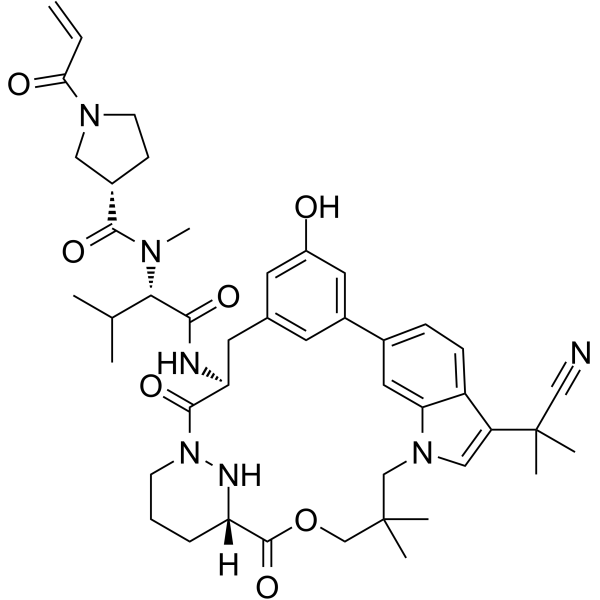 0 ImagesCat. No.: HY-138294CAS No.: 2447039-81-6RAS/RAS-RAF-IN-1 is a potent RAS and RAS-RAF inhibitor. RAS/RAS-RAF-IN-1 has a KD of 5.0 μΜ-15 μΜ for cyclophilin A (CYPA) binding affinity. RAS/RAS-RAF-IN-1 has antitumor activity.




