



TGF-beta/Smad
Transforming growth factor beta
Transforming growth factor-beta (TGF-β) is a member of a superfamily of pleiotropic proteins that regulate multiple cellular processes such as growth, development and differentiation. The intracellular effectors of TGF-beta signalling, the Smad proteins, are activated by receptors and translocate into the nucleus, where they regulate transcription. Although this pathway is inherently simple, combinatorial interactions in the heteromeric receptor and Smad complexes, receptor-interacting and Smad-interacting proteins, and cooperation with sequence-specific transcription factors allow substantial versatility and diversification of TGF-beta family responses. Other signalling pathways further regulate Smad activation and function.
In addition, TGF-beta receptors activate Smad-independent pathways that not only regulate Smad signalling, but also allow Smad-independent TGF-beta responses. Aberrant TGF-β signaling is associated with a variety of diseases, such as fibrosis, cardiovascular disease and cancer. Hence, the TGF-β signaling pathway is recognized as a potential drug target.
TGF-beta/Smad Isoform Specific Products
All Product Categories
-
TGF-beta/Smad Inhibitors
(203)
View all products
-
TGF-beta/Smad Agonists
(7)
View all products
-
TGF-beta/Smad Antagonist
(1)
View all products
-
TGF-beta/Smad Activators
(36)
View all products
-
TGF-beta/Smad Modulators
(6)
View all products
-
TGF-beta/Smad Inducers
(6)
View all products
-
TGF-beta/Smad Control
(1)
View all products
-
TGF-β1 Proteins
(39)
View all products
-
TGF-β2 Proteins
(9)
View all products
-
TGF-β3 Proteins
(6)
View all products
-
Smad Family Proteins
(8)
View all products
-
SMAD2 Proteins
(2)
View all products
-
SMAD3 Proteins
(3)
View all products
-
SMAD4 Proteins
(1)
View all products
-
SMAD5 Proteins
(2)
View all products
-
TGF-β Proteins
(53)
View all products
-
TGF-beta/Smad Related Products (285)
Related Products (285)

-
Recombinant Proteins (62)
-
Antibodies (18)
-
TGF-beta/Smad Isoform Comparison

-
Sphingosylphosphorylcholine-d9
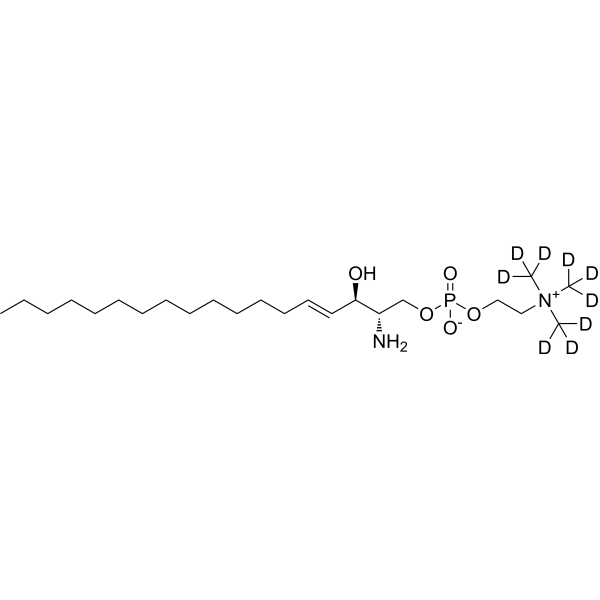 0 ImagesSphingosylphosphorylcholine-d9 is deuterium labeled Sphingosylphosphorylcholine.
-
PXS 64
 0 ImagesCat. No.: HY-181431CAS No.: 1253691-50-7PXS 64, a mannose-6-phosphate (M6P) analogue. a lipophilic prodrug of PXS 25 (HY-181430). PXS 64 is an effective anti-fibrotic agent by inhibiting the activation of latent TGF-β1. PXS64, inhibits fibrosis via TGF-β1 pathway in human lung fibroblasts. PXS 64 reduces TGFβ-mediated collagen IV, fibronectin, MCP-1, and phospho-smad2 expression in kidney cells. PXS 64 reduces collagen deposition in dermal scar fibroblasts. PXS 64 can be used for the research of chronic kidney disease, idiopathic pulmonary fibrosis, scarring.
-
(Rac)-Hesperetin (Standard)
 0 ImagesCat. No.: HY-N0168ARCAS No.: 69097-99-0(Rac)-Hesperetin (Standard) is the analytical standard of (Rac)-Hesperetin. This product is intended for research and analytical applications. (Rac)-Hesperetin is the racemate of Hesperetin (HY-N0168), an orally active multi-target inhibitor. (Rac)-Hesperetin exhibits significant anti-tumor and anti-inflammatory activities by blocking the TGF-β1-mediated Fyn/RhoA signaling axis and the TLR4-MyD88-NF-κB inflammatory pathway. (Rac)-Hesperetin inhibits the formation of actin stress fibers and the migration and invasion of cancer cells, and is suitable for triple-negative breast cancer research. In inflammation models, (Rac)-Hesperetin effectively alleviates lung injury by reducing the release of pro-inflammatory mediators and regulating the activity of oxidative stress enzymes, and is suitable for acute lung injury research. (Rac)-Hesperetin also interferes with the entry and early replication processes of channel catfish virus, inhibits viral gene expression and progeny virus production, thereby protecting cells from virus-induced cytopathic effects.
-
PDE1-IN-10
 0 ImagesCat. No.: HY-175971PDE1-IN-10 is a potent and sekective Phosphodiesterase 1 (PDE1) inhibitor with an IC50 of 5 nM. PDE1-IN-10 can suppress TGF-β/Smad-MAPK signaling and exhibit antifibrotic effects. PDE1-IN-10 can be used for the research of idiopathic pulmonary fibrosis.
-
PROTAC AR Degrader-13
 0 ImagesCat. No.: HY-184195PROTAC AR Degrader-13 is a proteolysis-targeting chimera (PROTACs) that targets the androgen receptor (AR). PROTAC AR Degrader-13 has a DC50 of 0.90 nM in LNCaP cells and a DC50 of 0.23 nM in hDPC cells. PROTAC AR Degrader-13 induces AR degradation, downregulates TGF-β1 expression, upregulates β-catenin levels, and restores the Wnt/β-catenin pro-proliferation signaling in hair follicles. In a testosterone-induced androgenetic alopecia mouse model, PROTAC AR Degrader-13 accelerates hair regeneration rate, increases hair density and hair diameter. PROTAC AR Degrader-13 can be used for the research of androgenetic alopecia.
-
Myostatin inhibitory peptide 2 TFA
 0 ImagesCat. No.: HY-P10476AMyostatin inhibitory peptide 2 (compd 2) TFA is a myostatin inhibitor with a Kd of 35.9 nM. Myostatin inhibitory peptide 2 TFA can be used for researches of muscle atrophic disorders.
-
2-Oleoylglycerol-d5
 0 ImagesCat. No.: HY-W701772CAS No.: 946524-37-4Synonyms: 2-OG-d52-Oleoylglycerol-d5 (2-OG-d5) is the deuterium labeled 2-Oleoylglycerol (HY-W011121). 2-Oleoylglycerol (2-OG) is a lipid found in the diet. It is a GPR119 agonist, with an EC50 value of 2.5 μM in activating hGPR119 in transiently transfected COS-7 cells. 2-Oleoylglycerol enhances the inflammatory response of macrophages and promotes fibrosis by activating the GPR119/TAK1/NF-κB/TGF-β1 signaling pathway. It also stimulates glucagon-like peptide 1 (GLP-1) secretion in vivo. 2-Oleoylglycerol is expected to be used in the research of non-alcoholic steatohepatitis (NASH) .
-
Alantolactone (Standard)
 0 ImagesSynonyms: (+)-Alantolactone (Standard); Alant camphor (Standard); Inula camphor (Standard)Alantolactone (Standard) is the analytical standard of Alantolactone. This product is intended for research and analytical applications. Alantolactone is a selective STAT3 inhibitor, with potent anticancer activity. Alantolactone induces apoptosis in cancer.
-
Compound 19A8.8
 0 ImagesCat. No.: HY-P11227Compound 19A8.8 is a cyclic peptide derived from a CD36 protein fragment. Compound 19A8.8 inhibits the TGF-β/Smad3 signaling pathway by suppressing the interaction between TSP1 and CD36. Compound 19A8.8 has no obvious cytotoxicity. Compound 19A8.8 can be used for research on colon injury and fibrosis.
-
Neohesperidin (Standard)
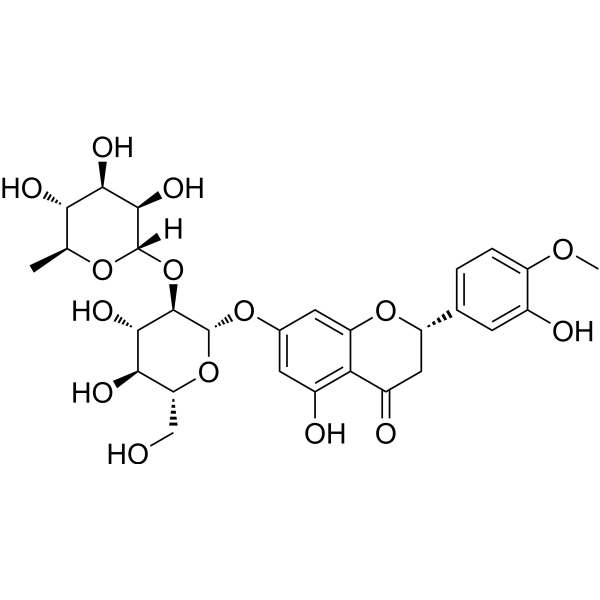 0 ImagesSynonyms: Hesperetin 7-O-neohesperidoside (Standard)Neohesperidin (Standard) is the analytical standard of Neohesperidin. This product is intended for research and analytical applications. Neohesperidin is a flavonoid compound found in high amounts in citrus fruits with anti-oxidant and anti-inflammatory effects.
-
ALK5-IN-28
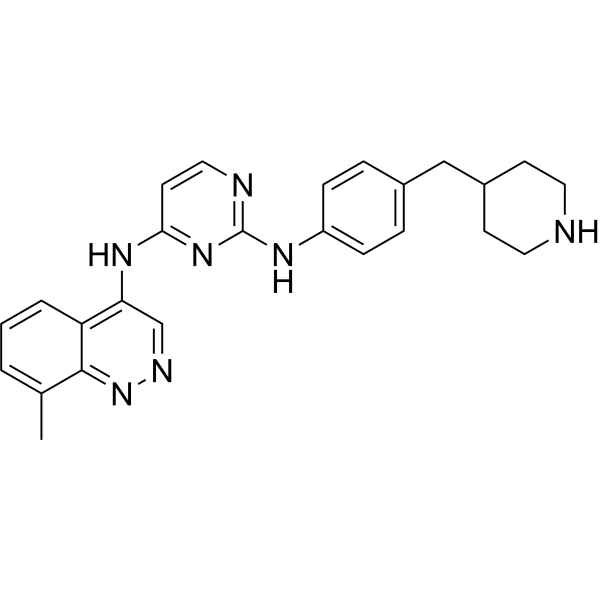 0 ImagesCat. No.: HY-151275CAS No.: 2785430-84-2ALK5-IN-28 (Compound Ex-05) is a selective ALK-5 inhibitor (IC50 ≤ 10 nM) that inhibits TGF-β-induced SMAD signaling. ALK5-IN-28 has the potential to inhibit tumor growth in vivo. ALK5-IN-28 can be used in the research of proliferative diseases such as cancer.
-
JNK3-IN-10
 0 ImagesCat. No.: HY-181556CAS No.: 3085181-00-3JNK3-IN-10 is a blood-brain barrier-impermeable JNK3 inhibitor (IC50=0.257 nM) with over 400-fold selectivity over JNK1. JNK3-IN-10 blocks the JNK3-mediated signaling pathway downstream of TGF-β1, inhibits TGF-β1-induced phosphorylation of c-Jun, reduces the expression of pro-fibrotic markers, and restores the expression of the epithelial protein E-cadherin. JNK3-IN-10 exhibits low cytotoxicity, anti-fibrotic, cytoprotective and renoprotective effects, and alleviates albuminuria, glomerulosclerosis and podocyte foot process fusion. JNK3-IN-10 can be used for the research of chronic kidney disease, glomerulosclerosis and adriamycin-induced nephropathy.
-
Nur77 modulator 3
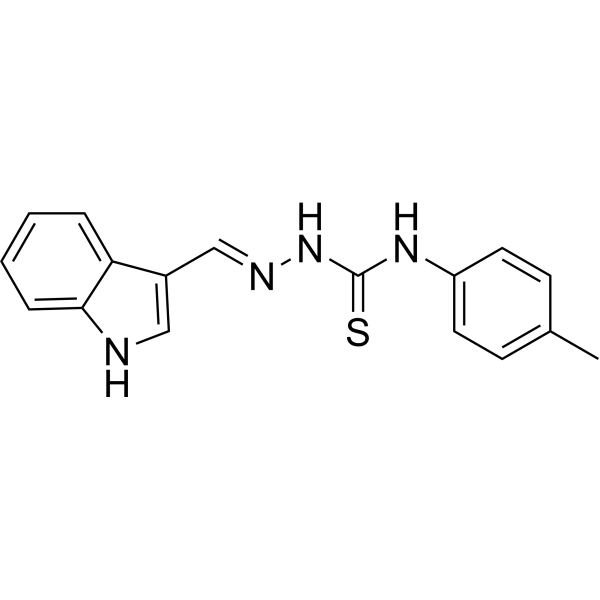 0 ImagesNur77 modulator 3 is a Nur77 modulator. Nur77 modulator 3 induces Nur77 expression, inhibits hepatic stellate cells (HSCs) activation, and reduces extracellular matrix (ECM) deposition. Nur77 modulator 3 enhances Nur77-denpendent autophagic flux and significantly inhibits the mTORC1 signaling pathway. Nur77 modulator 3 ameliorates HSCs activation, inflammation and hepatic fibrosis in vivo.
-
ALK5-IN-32
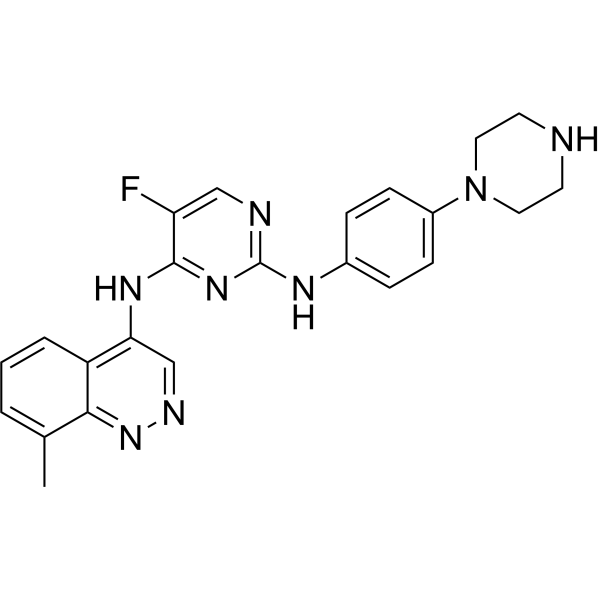 0 ImagesCat. No.: HY-151282CAS No.: 2785430-88-6ALK5-IN-32 (compound EX-09) is a selective ALK-5 inhibitor (10 nM<IC50<100 nM), inhibits TGF-β-induced SMAD signaling. ALK5-IN-32 has the potential to inhibit growth of tumour in vivo. ALK5-IN-32 can be used in study of proliferative diseases such as cancer, fibrotic diseases, and systemic sclerosis.
-
Mitochonic acid 35
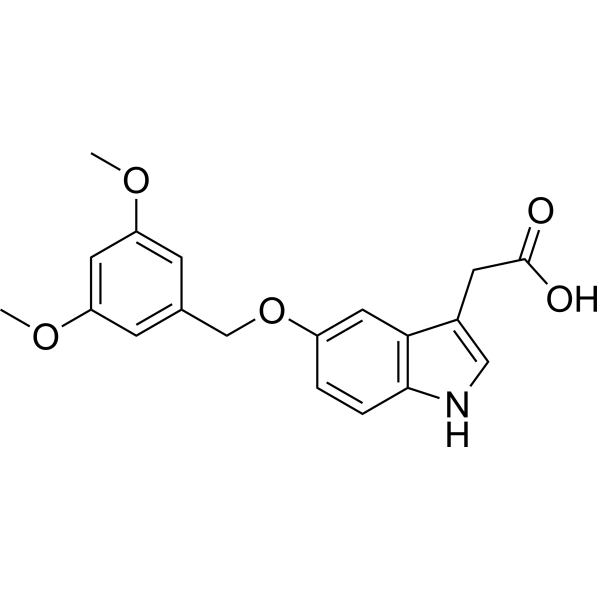 0 ImagesCat. No.: HY-115577CAS No.: 1611470-23-5Mitochonic acid 35 is an IAA analogue with cytoprotective effects.
-
Myostatin inhibitory peptide 7 TFA
 0 ImagesCat. No.: HY-P10242AMyostatin inhibitory peptide 7 TFA is a 23 amino acids peptide, which is derived from amino acids 21 to 43 of the mouse myostatin prodomain. Myostatin inhibitory peptide 7 TFA inhibits myostatin with a Kd of 29.7 nM. Myostatin inhibitory peptide 7 TFA can be used for researches of muscle atrophic disorders.
-
Regiafuran C
 0 ImagesCat. No.: HY-N17639CAS No.: 2059921-60-5Regiafuran C is a compound with both TGF-βRI inhibitory and anti-fibrotic activities. Regiafuran C effectively inhibits renal fibrosis by binding to TGF-βRI and interfering with the TGF-β/Smad and Wnt/β-catenin signaling pathways. Regiafuran C also exhibits free radical scavenging activity, but shows no anti-inflammatory activity in PGE2 competitive enzyme immunoassays. The ability of Regiafuran C to specifically block the Smad3-TGF-βRII interaction and inhibit fibrotic processes allows its use in renal fibrosis research.
-
Jolkinolide B (Standard)
 0 ImagesCat. No.: HY-N0732RCAS No.: 37905-08-1Jolkinolide B (Standard) is the analytical standard of Jolkinolide B (HY-N0732). This product is intended for research and analytical applications. Jolkinolide B is a bioactive diterpene isolated from the roots of Euphorbia fischeriana Steud with oral activity. Jolkinolide B downregulates XIAP, cIAP1, cIAP2, and phosphorylated Akt, upregulates Smac, activates caspase-3 and caspase-9, and inhibits NF-κB, TGFβ/smad3 and JAK/STAT3 pathways. Jolkinolide B exerts comprehensive biological effects including inducing cancer cell apoptosis, suppressing inflammatory responses, improving lung function, alleviating hepatic steatosis and eliminating intracellular Mycobacterium tuberculosis. Jolkinolide B can be used for the research of leukemia, histiocytic lymphoma, asthma, metabolic dysfunction-associated steatotic liver disease and tuberculosis.
-
Butaprost free acid
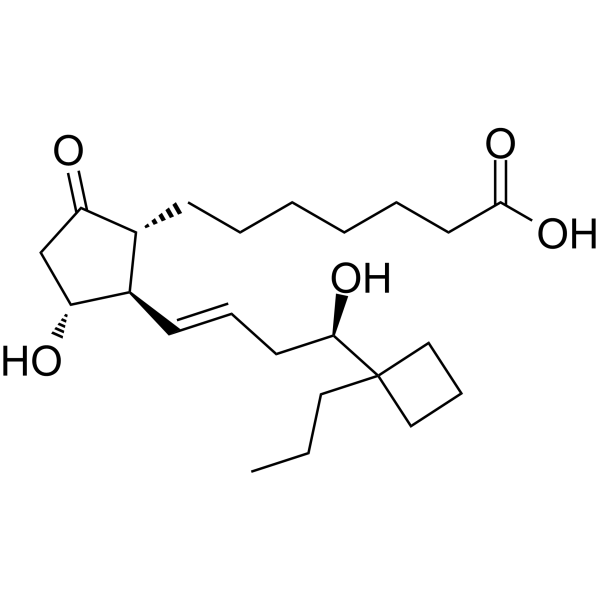 0 ImagesCat. No.: HY-120973CAS No.: 215168-33-5Butaprost free acid is a selective prostaglandin E receptor (EP2) agonist with an EC50 of 33 nM and a Ki of 2.4 μM for murine EP2 receptor. Butaprost free acid is less activity against murine EP1, EP3 and EP4 receptors. Butaprost free acid attenuates fibrosis by hampering TGF-β/Smad2 signalling.




