



TGF-beta/Smad Inducer
-
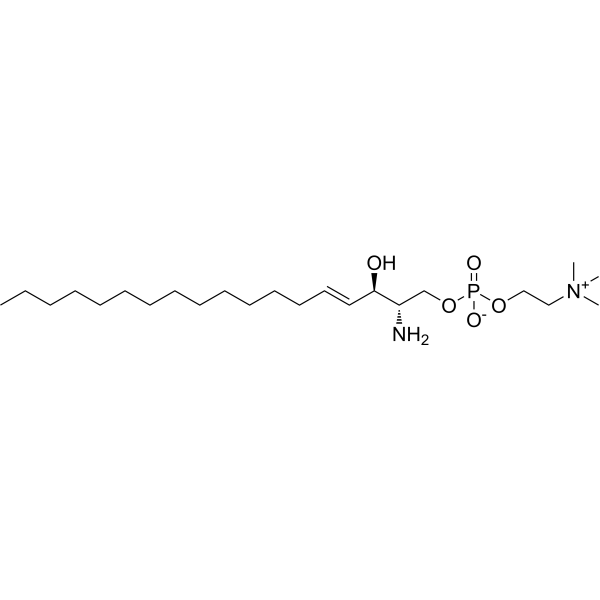
Sphingosylphosphorylcholine
 0 Images
Sphingosylphosphorylcholine is a bioactive lipid and a major component of plasma high-density lipoprotein that binds to OGR1 with a Kd of 33.3 nM. Sphingosylphosphorylcholine triggers delayed phosphorylation of Smad2, upregulates α-SMA expression, and activates TRPM3. Sphingosylphosphorylcholine reduces Apoptosis and upregulates the expression of uPA and its receptor uPA-R. Sphingosylphosphorylcholine exerts anti-apoptotic, anti-cardiac hypertrophy and pro-wound healing effects. Sphingosylphosphorylcholine induces scratching behavior in mice. Sphingosylphosphorylcholine is used in studies related to atopic dermatitis, promyelocytic leukemia, heart failure, myocardial ischemia/reperfusion injury, ovarian cancer, breast cancer, pancreatic cancer, and skin wound healing disorders in genetically impaired healing diabetes.
-
Amicoumacin B
 0 Images
Amicoumacin B can be produced by actinomycete, strain 04-5195T.. Amicoumacin B increases the expression of bone morphogenetic protein 2 (BMP-2). Amicoumacin B has inhibitory effect against C. violaceum (MIC = 250 µg/mL). Amicoumacin B has quorum sensing inhibitory activity, and reduces the expression of the C. violaceum operons vioA, vioB, vioD, and vioE, but increases the expression of vioC.
-
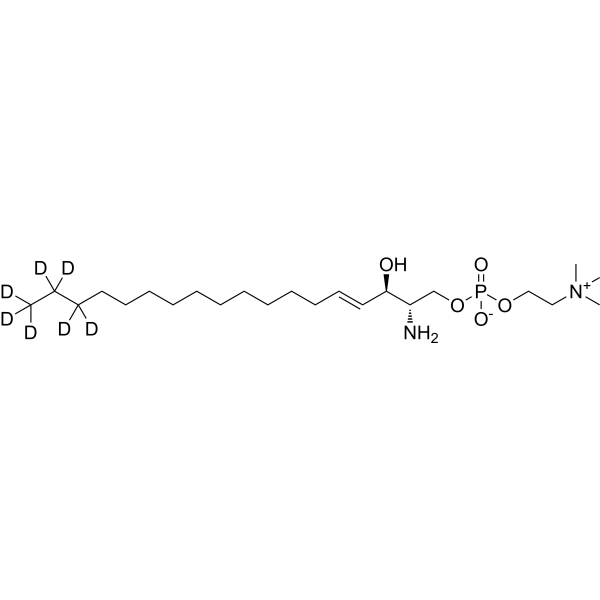
Sphingosylphosphorylcholine-d7
 0 Images
Sphingosylphosphorylcholine-d7 is the deuterium labeled Sphingosylphosphorylcholine (HY-132187).
-
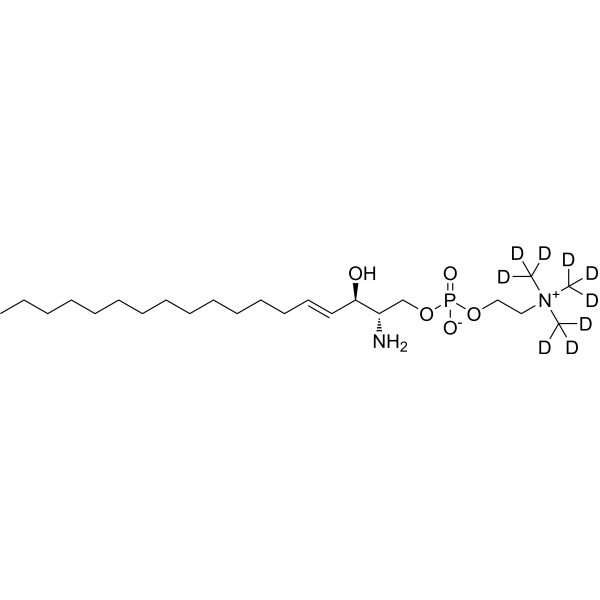
Sphingosylphosphorylcholine-d9
 0 Images
Sphingosylphosphorylcholine-d9 is deuterium labeled Sphingosylphosphorylcholine.
-
PXS 64
 0 ImagesCat. No.: HY-181431CAS No.: 1253691-50-7
PXS 64, a mannose-6-phosphate (M6P) analogue. a lipophilic prodrug of PXS 25 (HY-181430). PXS 64 is an effective anti-fibrotic agent by inhibiting the activation of latent TGF-β1. PXS64, inhibits fibrosis via TGF-β1 pathway in human lung fibroblasts. PXS 64 reduces TGFβ-mediated collagen IV, fibronectin, MCP-1, and phospho-smad2 expression in kidney cells. PXS 64 reduces collagen deposition in dermal scar fibroblasts. PXS 64 can be used for the research of chronic kidney disease, idiopathic pulmonary fibrosis, scarring.
-
Stevia Powder
 0 ImagesCat. No.: HY-N13208
Stevia Powder is a natural sweetener with antioxidant activity. Stevia Powder can downregulate pro fibrotic pathways in cirrhotic rats, including reduced hepatic myofibroblasts and decreased expression of matrix metalloproteinases MMP2 and MMP13, upregulate anti fibrotic molecule Smad7, prevent serum necrosis and elevated bile stasis markers, thereby inhibiting the development of liver fibrosis.



