



Aminotransferases (Transaminases)
-
Aminotransferases (Transaminases) Related Products (44)
Related Products (44)

-
Sesame Oil
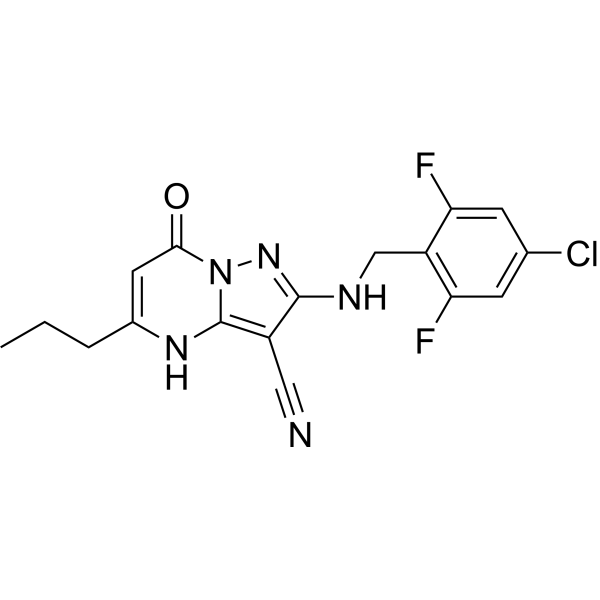
 0 ImagesSesame Oil is a vegetable oil. Sesame Oil can be extracted from the seeds of Sesamum indicum L. Sesame Oil decreases NF-κB, aspartate aminotransferase, alanine aminotransferase, IL-1β, IL-4 and nitric oxide. Sesame Oil has antitumor activity against malignant melanoma. Sesame Oil has protective effects against liver damage caused by various agents such as Cisplatin (HY-17394) and Acetaminophen (HY-66005). Sesame Oil shows antinociceptive and anti-inflammatory activities.
-
BCATc Inhibitor 2
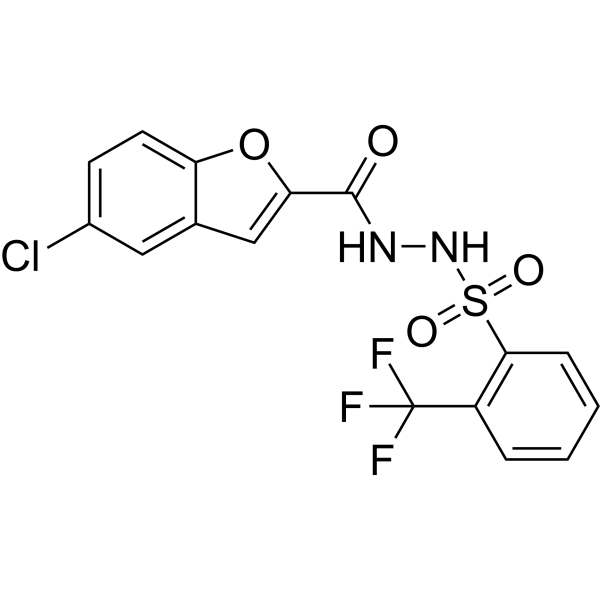 0 ImagesBCATc Inhibitor 2 is a selective branched-chain aminotransferase (BCAT) inhibitor for research of neurodegenerative diseases. The IC50s of 0.2 μM, 0.8 μM and 3.0 μM for rat cytosolic isoenzyme rBCATc, human cytosolic isoenzyme hBCATc and rat mitochondrial isoenzyme rBCATm, respectively. BCATc, also called BCAT1, is in the cytoplasm.
-
ERG240
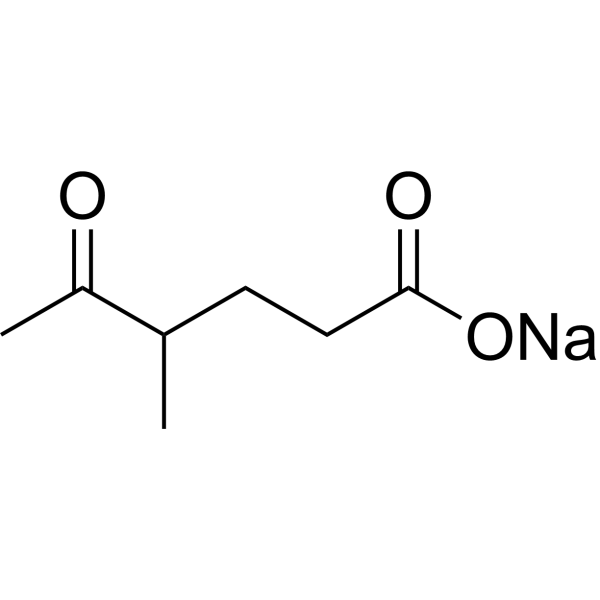 0 ImagesERG240 is an oral active branched-chain amino acid aminotransferase 1 (BCAT1) inhibitor. ERG240 can be used for the research of cancer, rheumatoid arthritis, and bone disease.
-
PF-04859989 hydrochloride
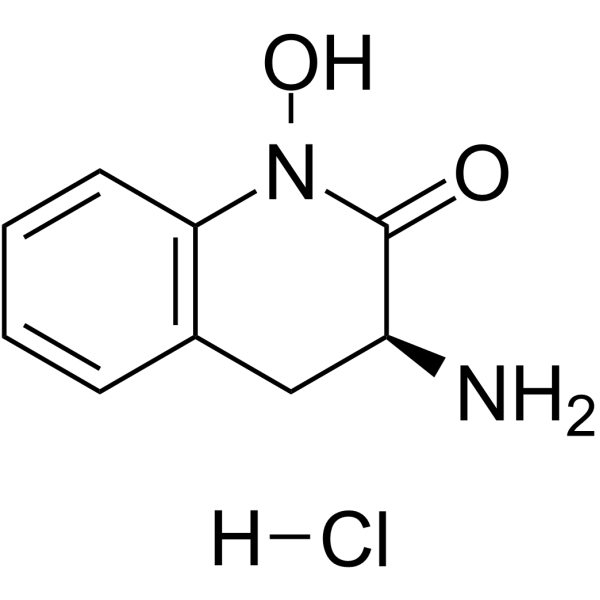 0 ImagesPF-04859989 hydrochloride is a brain-penetrant, irreversible kynurenine aminotransferase (KAT) II inhibitor with IC50s of 23 and 263 nM for hKAT II and rKAT II. PF-04859989 hydrochloride is selective for KAT II over human KAT I, KAT III, and KAT IV (IC50s of 22, 11, and >50 μM, respectively).
-
Estradiol disulfate
 0 ImagesEstradiol disulfate is an estradiol disulfate ester, belonging to sulfated steroid derivatives. Estradiol disulfate is a kynurenine transaminase inhibitor that acts by competing with pyridoxal phosphate for the binding site on the apoenzyme. Estradiol disulfate protects kynurenine apo-transaminase from inactivation associated with incubation. Estradiol disulfate can be used for research on kynurenine transaminase-related diseases.
-
TCL6148
 0 ImagesCat. No.: HY-P11929TCL6148 is a ferroptosis inducer targeting GOT1, with a KD of 25.84 μM for GOT1. TCL6148 inhibits the viability of renal cell carcinoma 786-O and A498 cells, with IC50 values of 7.896 μM and 7.468 μM, respectively. TCL6148 induces ferroptosis by increasing Fe2+, ROS and lipid peroxidation, reducing GSH and inhibiting the GOT1/GPX4 pathway; it also inhibits proliferation and migration of RCC cells, enhances cellular sensitivity to Sunitinib (HY-10255A) and suppresses the growth of RCC xenograft tumors. TCL6148 can be used in research on renal cell carcinoma and ferroptosis.
-
Asp-02
 0 ImagesCat. No.: HY-W083125CAS No.: 86711-45-7Asp-02 is an orally active AMPK activator. Asp-02 reduces non-fasting blood glucose levels, improves body weight, and normalizes elevated serum levels of aspartate transaminase (SGOT), alanine transaminase (SGPT), alkaline phosphatase (ALP), urea and creatinine. Asp-02 can be used in the research of type 2 diabetes.
-
Aspartate aminotransferase, porcine heart
 0 ImagesSynonyms: EC 2.6.1.1, porcine heart; GOT, porcine heart; AST, porcine heartAspartate aminotransferase (EC 2.6.1.1), porcine heart is a metabolic regulator with the highest activity in the heart, liver and skeletal muscle. Aspartate aminotransferase, porcine heart comprises two isozymes: the cytoplasmic form (AST1) and the mitochondrial form (AST2). By catalyzing reversible transamination reactions between oxaloacetate, L-glutamate and other substances, it is deeply involved in key physiological processes such as amino acid metabolism, the tricarboxylic acid cycle and neurotransmitter synthesis. Aspartate aminotransferase, porcine heart also provides substrate support for the synthesis of urea and purines/pyrimidines. Aspartate aminotransferase, porcine heart is a serum marker reflecting cardiac and hepatic injury, and its abnormal levels are also closely associated with myocardial infarction, cardiovascular diseases and various cancers.
-
ERG245
 0 ImagesCat. No.: HY-159730Purity: 99.49%ERG245 is a selective amino acid aminotransferase (BCAT1) inhibitor with a human IC50 of 0.5 nM. ERG245 enhances oxidative phosphorylation (OXPHOS) in CD8+ T cells by specifically inhibiting BCAT1 activity, thereby increasing the cytotoxicity of CD8+ T cells. ERG245 shows anti-inflammatory and anti-tumor activities. ERG245 can be used for the researches of cancer anf inflammation, such as colitis and colon cancer.
-
Diethyl phthalate
 0 ImagesDiethyl phthalate is an orally active plasticizer and detergent base. Diethyl phthalate increases the activities of ACP, ALP, SDH, and ALT in liver, muscle, or both tissues. Diethyl phthalate induces dose-dependent mortality and sluggish behavior in freshwater fish. Diethyl phthalate may induce male reproductive toxicity. Diethyl phthalate is added to plastic polymers to help maintain their flexibility.
-
Aspartate aminotransferase, Genetically engineered bacteria
 0 ImagesAspartate aminotransferase (EC 2.6.1.1), Genetically engineered bacteria is a metabolic regulator with the highest activity in the heart, liver and skeletal muscle. Aspartate aminotransferase, Genetically engineered bacteria comprises two isozymes: the cytoplasmic form (AST1) and the mitochondrial form (AST2). By catalyzing reversible transamination reactions between oxaloacetate, L-glutamate and other substances, it is deeply involved in key physiological processes such as amino acid metabolism, the tricarboxylic acid cycle and neurotransmitter synthesis. Aspartate aminotransferase, Genetically engineered bacteria also provides substrate support for the synthesis of urea and purines/pyrimidines. Aspartate aminotransferase, Genetically engineered bacteria is a serum marker reflecting cardiac and hepatic injury, and its abnormal levels are also closely associated with myocardial infarction, cardiovascular diseases and various cancers.
-
iGOT1-01
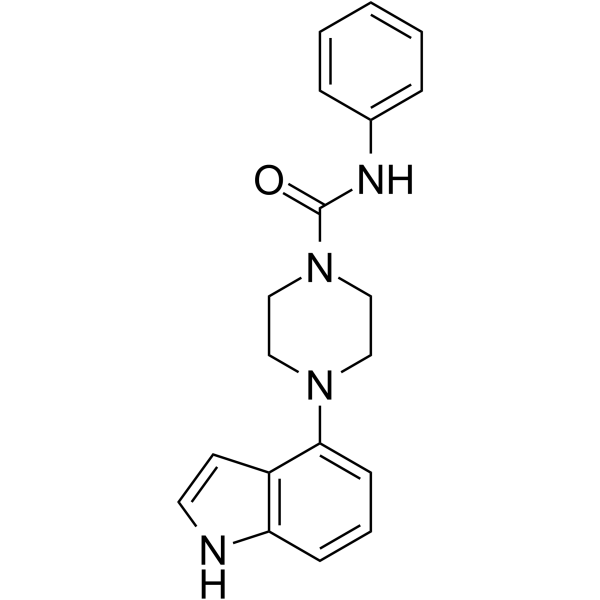 0 ImagesiGOT1-01 is a potent aspartate aminotransferase 1 (glutamate oxaloacetate transaminase 1; GOT1) inhibitor. iGOT1-01 has IC50s of 85 μM and 11.3 μM in MDH coupled GOT1 enzymatic assay and GOT1/GLOX/HRP assay, respectively. iGOT1-01 has anti-cancer activity.
-
BCAT-IN-1
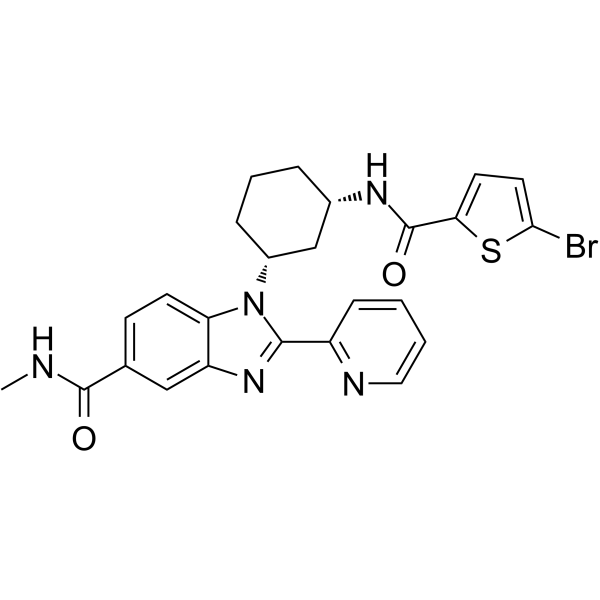 0 ImagesBCAT-IN-1 is a potent, selective and orally active inhibitor of BCATm, with a pIC50 of 7.3. BCAT-IN-1 shows 100-fold selectivity for BCATm over BCATc (pIC50=5.4). BCAT-IN-1 can be used for the research of metabolic diseases.
-
BFF-816
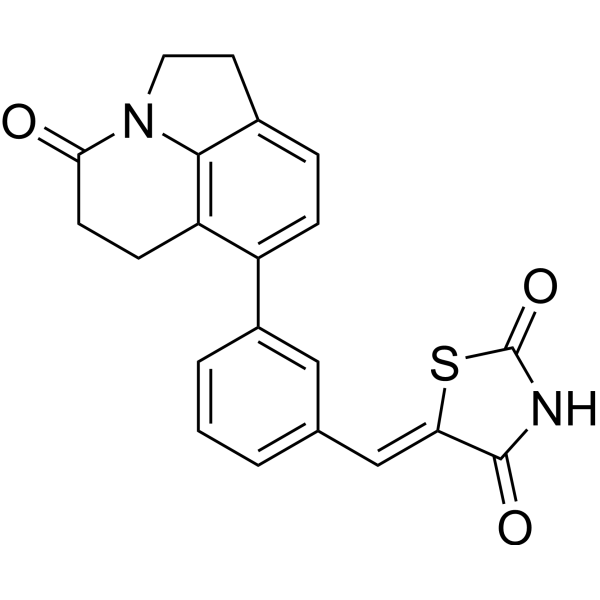 0 ImagesBFF-816 is an orally active kynurenine aminotransferase II (KAT II) inhibitor. BFF-816 can be used in the research of the neurobiology of KYNA.
-
Erythromycin estolate
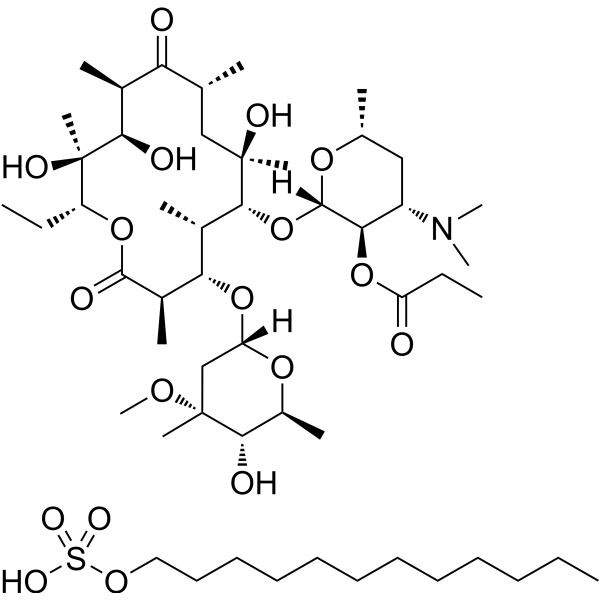 0 ImagesErythromycin estolate is the Erythromycin (HY-B0220) derivative, is a macrolide antibiotic used in the treatment of a wide variety of bacterial infections. Erythromycin estolate causes several cases of liver injury which mostly include cholestatic hepatitis. Erythromycin estolate toxicity is related to its inhibitory effect on bile acid transport.
-
Sodium glycolate, 98%
 0 ImagesSynonyms: Sodium hydroxyacetate, 98%Sodium glycolate, 98% (Sodium hydroxyacetate, 98%) is an orally active, versatile organic salt. Sodium glycolate, 98% acts as an enzyme activity regulator that increases the activities of glycolate oxidase (GAO) and lactate dehydrogenase (LDH), while reducing the activity of glycolate dehydrogenase (GAD). Sodium glycolate, 98% induces oxalate biosynthesis and causes hyperoxaluria in rats. Sodium glycolate, 98% reduces urinary calcium excretion in male albino rats. Sodium glycolate, 98% can be used in studies related to calcium oxalate urolithiasis and hyperoxaluria.
-
Dioctyl phthalate-d4
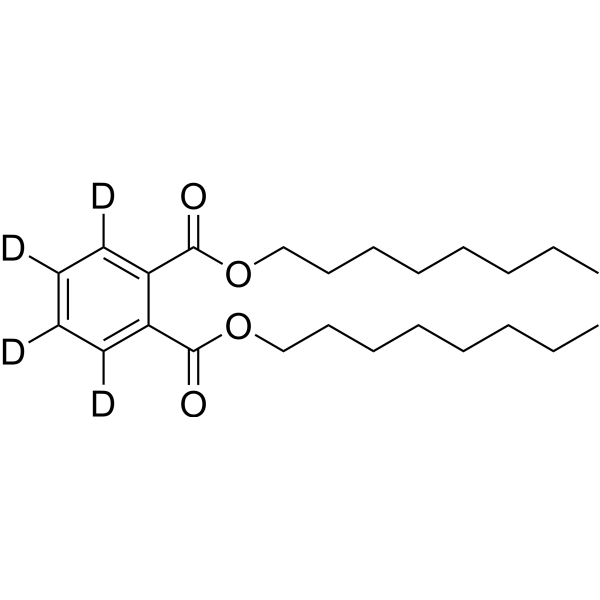 0 ImagesSynonyms: DNOP-d4; Di-n-octyl phthalate-d4; Phthalic acid dioctyl ester-d4Dioctyl phthalate-d4 (DNOP-d4) is the d4-labeled Dioctyl phthalate (HY-W013755). Dioctyl phthalate (DNOP) is a plasticizer. Dioctyl phthalate increases the activities of alanine aminotransferase (ALT) and alkaline phosphatase (ALP) in the liver, as well as the levels of creatinine and urea in the kidney. Exposure to Dioctyl phthalate disrupts the homeostasis of the intestinal microbial community, increases the abundance of pathogenic bacteria, and reduces the abundance of beneficial bacteria such as Lactobacillus. Dioctyl phthalate induces significant and dose-dependent inflammatory responses in the liver, spleen and kidney of mice.
-
Diethyl phthalate-d4
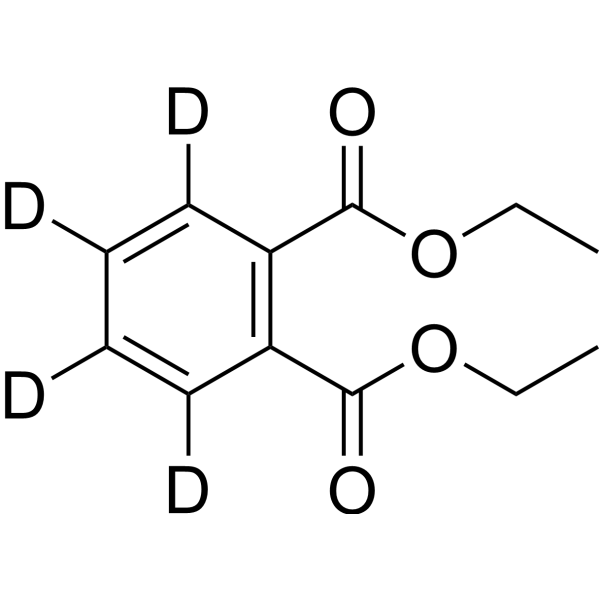 0 ImagesDiethyl phthalate-d4 is the d4 labeled Diethyl phthalate (HY-Y0284). Diethyl phthalate is an orally active plasticizer and detergent base. Diethyl phthalate increases the activities of ACP, ALP, SDH, and ALT in liver, muscle, or both tissues. Diethyl phthalate induces dose-dependent mortality and sluggish behavior in freshwater fish. Diethyl phthalate may induce male reproductive toxicity. Diethyl phthalate is added to plastic polymers to help maintain their flexibility.
-
HPG1860
 0 ImagesHPG1860 is an orally active, highly selective and potent FXR agonist, with an EC50 of 18 nM (FXR-luciferase reporter assay). HPG1860 has EC50 values >30.0 μM for TGR5 and 13 other related nuclear receptors (cAMP biological assay). HPG1860 can be used for the research of non-alcoholic steatohepatitis (NASH).



