



Diethyl phthalate
Based on 2 publication(s) in Google Scholar
Diethyl phthalate is an orally active plasticizer and detergent base. Diethyl phthalate increases the activities of ACP, ALP, SDH, and ALT in liver, muscle, or both tissues. Diethyl phthalate induces dose-dependent mortality and sluggish behavior in freshwater fish. Diethyl phthalate may induce male reproductive toxicity. Diethyl phthalate is added to plastic polymers to help maintain their flexibility.
연구목적의 판매만을 진행합니다. 환자를 대상으로 한 판매는 하지 않습니다.
- Purity : 99.93%
- CAS No.: 84-66-2
- 화학식: C12H14O4
- 분자량:222.24
-
보관:
Store at room temperature 3 years.
In solvent -80°C, 2 years , -20°C, 1 year


To place orders, for customer services and technical support, please contact: MedChemExpress USA
Tel: 609-228-6898 E-mail: [email protected] [email protected]


-
 Biological Activity
-
Chemical Information
-
용액&용해도
- Protocol
- 순도&문서
- References
-
 Help & FAQs


-
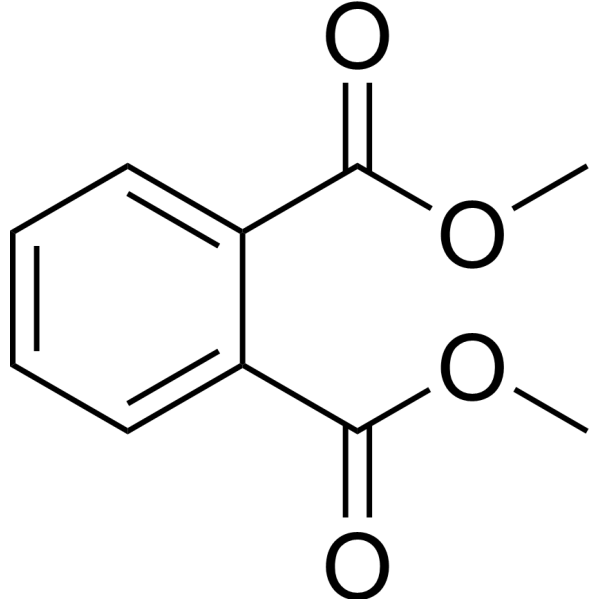
HY-N7106
Dimethyl phthalateEndocrine Disruptor -
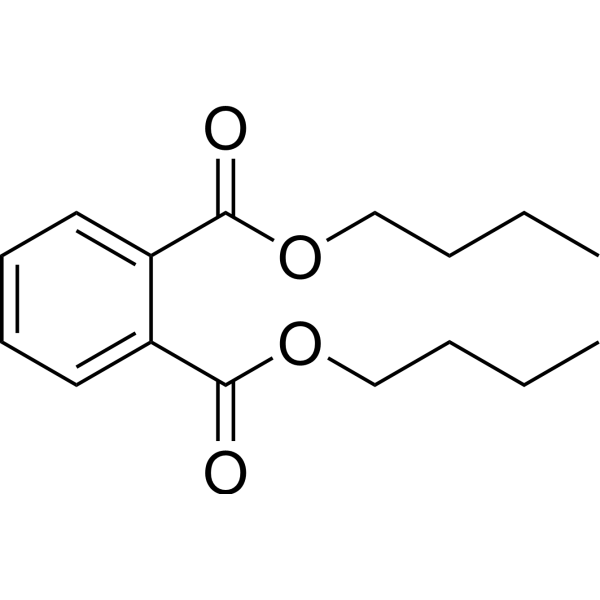
HY-Y0304
Dibutyl phthalatePlasticizer -

HY-B1945R
DEHP (Standard)Endogenous Metabolite -

HY-Y0320C
Dimethyl sulfoxideAprotic Solvent -
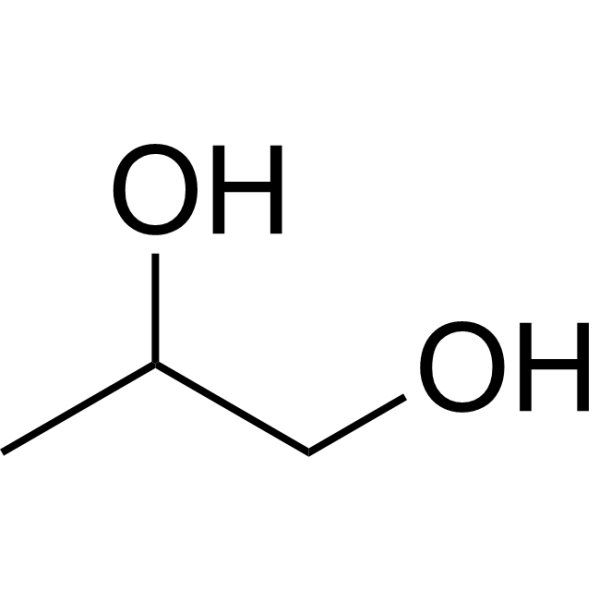
HY-Y0921
(±)-1,2-PropanediolCosolvent -

HY-116439
Diisononyl phthalateACE/AT1R Enhancer -
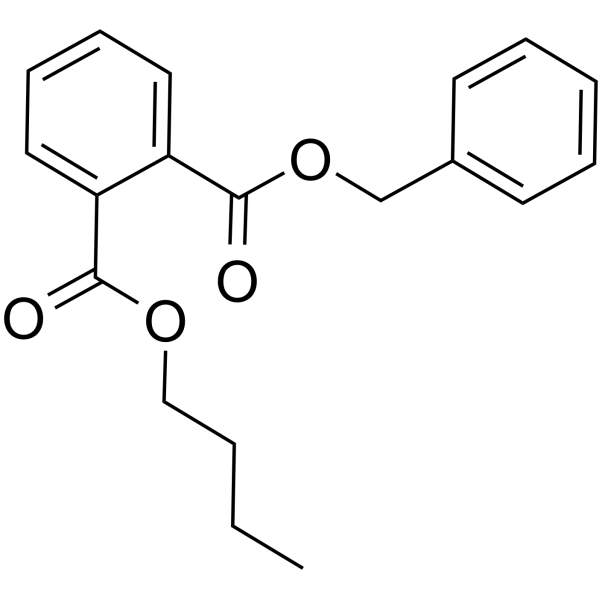
HY-W011338
Benzyl butyl phthalateAhR Activator -
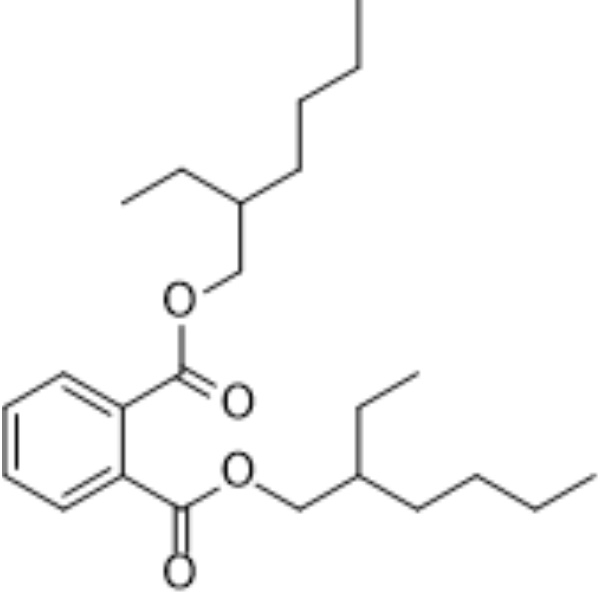
HY-B1945
DEHPEndogenous Metabolite -

HY-N7106R
Dimethyl phthalate (Standard)Endocrine Disruptor -

HY-Y0284R
Diethyl phthalate (Standard)Reference Standard -
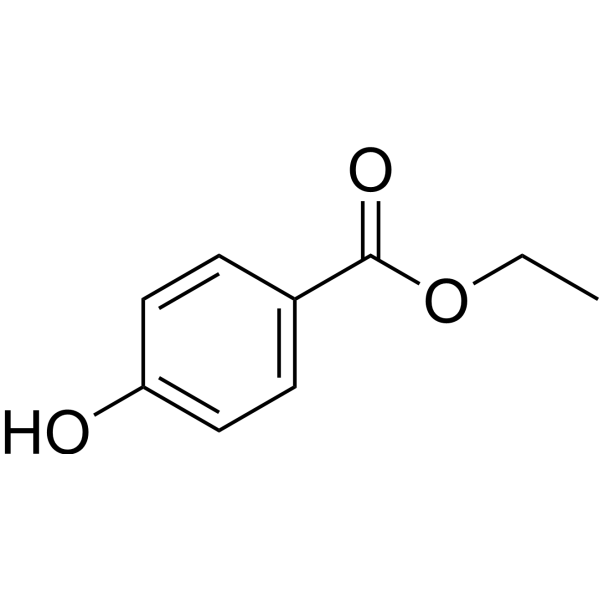
HY-B0934
EthylparabenAntifungal Agent -
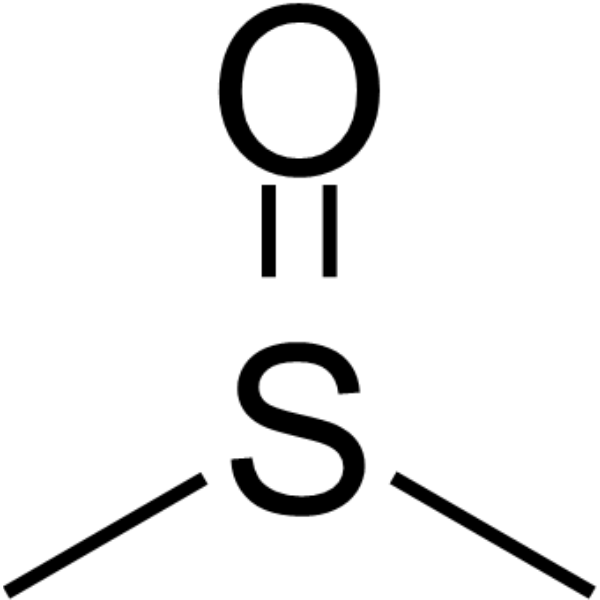
HY-Y0320
Dimethyl sulfoxide, meets analytical specification of Ch.P.Aprotic Solvent
Publications Citing Use of MedChemExpress (MCE) Diethyl phthalate
More

Biological Activity
제품 설명
In Vivo
Diethyl phthalate (p.o.) mainly distributes in the kidneys and liver of rats, and subsequently accumulates in adipose tissue[2].
MedChemExpress (MCE) has not independently confirmed the accuracy of these methods. They are for reference only.
-
Animal Model:Cirrhina mrigala (65 mm length, 4 g weight, 6 fish per group)[1]
-
Dosage:25 ppm, 50 ppm, 75 ppm, 100 ppm (mortality assessment); 25 ppm (enzyme activity assays)
-
Administration:aquatic exposure; continuous (mortality assessment); once daily; 3 days (enzyme activity assays)
-
Result:Caused 100% mortality within 24 hours in fish exposed to 75 ppm and 100 ppm DEP.
Caused 50% mortality within 72 hours in fish exposed to 50 ppm DEP.
Caused 10% mortality within 72 hours in fish exposed to 25 ppm DEP, with remaining fish surviving the extended 3-day treatment.
Significantly increased liver and muscle acid phosphatase (ACP) and alkaline phosphatase (ALP) activity compared to controls in fish treated with 25 ppm DEP for 3 days.
Significantly increased muscle succinate dehydrogenase (SDH) activity compared to controls in fish treated with 25 ppm DEP for 3 days.
Significantly increased liver alanine aminotransferase (ALT) activity (nearly double) compared to controls in fish treated with 25 ppm DEP for 3 days.
Significantly decreased brain acetylcholinesterase (AchE) activity compared to controls in fish treated with 25 ppm DEP for 3 days.
Significantly increased liver aspartate aminotransferase (AST) activity compared to negative controls (though lower than positive controls) in fish treated with 25 ppm DEP for 3 days.
Showed no significant change in liver SDH activity compared to controls in fish treated with 25 ppm DEP for 3 days.
Showed no significant change in muscle AchE activity compared to controls in fish treated with 25 ppm DEP for 3 days.


Chemical Information
-
CAS No. 84-66-2
-
Appearance Liquid (Density: 1.12 g/cm3)
-
분자량 222.24
-
화학식 C12H14O4
-
Color Colorless to light yellow
-
SMILES
O=C(C1=CC=CC=C1C(OCC)=O)OCC
-
선적
Room temperature in continental US; may vary elsewhere.
-
보관
Store at room temperature 3 years
In solvent -80°C 2 years -20°C 1 year


Publications (2)
-
Journal Impact Factor
-
Most Recent
-
Sci Rep
Integrative network toxicology and experimental evidence reveal mechanisms underlying diethyl phthalate-induced initiation and progression of endometrial cancer. [Abstract]2026 Feb 10;16(1):8066. PMID: 41667778 -
Food Chem Toxicol
Integrated network toxicology, molecular docking and transcriptomics reveal the mechanistic role of phthalate esters in metabolic disease pathogenesis. [Abstract]2026 Jan:207:115855. PMID: 41275904


용액&용해도
In Vitro:
DMSO : 200 mg/mL (899.93 mM; Need ultrasonic; Hygroscopic DMSO has a significant impact on the solubility of product, please use newly opened DMSO)
Please refer to the solubility information to select the appropriate solvent. Once prepared, please aliquot and store the solution to prevent product inactivation from repeated freeze-thaw cycles.
Storage method and period of stock solution: -80°C, 2 years; -20°C, 1 year. When stored at -80°C, please use it within 2 years. When stored at -20°C, please use it within 1 year.
Please refer to the solubility information to select the appropriate solvent. Once prepared, please aliquot and store the solution to prevent product inactivation from repeated freeze-thaw cycles.
Storage method and period of stock solution: -80°C, 2 years; -20°C, 1 year. When stored at -80°C, please use it within 2 years. When stored at -20°C, please use it within 1 year.
Concentration (start) × Volume (start) = Concentration (final) × Volume (final)


순도&문서
-
Data Sheet (278 KB)
-
SDS (762 KB)
- English - EN (762 KB)
- Français - FR (762 KB)
- Deutsch - DE (762 KB)
- Norwegian - NO (762 KB)
- Español - ES (762 KB)
- Swedish - SV (762 KB)
- Italian - IT (762 KB)
- Korean - KR (762 KB)
- Portuguese - PT (762 KB)
-
Handling Instructions (2659 KB)
References
[1]. Ghorpade N, et al. Toxicity study of diethyl phthalate on freshwater fish Cirrhina mrigala. Ecotoxicol Environ Saf. 2002;53(2):255-258. [Content Brief]
[2]. Weaver JA, et al. Hazards of diethyl phthalate (DEP) exposure: A systematic review of animal toxicology studies. Environ Int. 2020;145:105848. [Content Brief]


Complete Stock Solution Preparation Table
Please refer to the solubility information to select the appropriate solvent. Once prepared, please aliquot and store the solution to prevent product inactivation from repeated freeze-thaw cycles.
Storage method and period of stock solution: -80°C, 2 years; -20°C, 1 year. When stored at -80°C, please use it within 2 years. When stored at -20°C, please use it within 1 year.
| Optional Solvent | Concentration Solvent Mass | 1 mg | 5 mg | 10 mg | 25 mg |
|---|---|---|---|---|---|
| DMSO | 1 mM | 4.4996 mL | 22.4982 mL | 44.9964 mL | 112.4910 mL |
| 5 mM | 0.8999 mL | 4.4996 mL | 8.9993 mL | 22.4982 mL | |
| 10 mM | 0.4500 mL | 2.2498 mL | 4.4996 mL | 11.2491 mL | |
| 15 mM | 0.3000 mL | 1.4999 mL | 2.9998 mL | 7.4994 mL | |
| 20 mM | 0.2250 mL | 1.1249 mL | 2.2498 mL | 5.6245 mL | |
| 25 mM | 0.1800 mL | 0.8999 mL | 1.7999 mL | 4.4996 mL | |
| 30 mM | 0.1500 mL | 0.7499 mL | 1.4999 mL | 3.7497 mL | |
| 40 mM | 0.1125 mL | 0.5625 mL | 1.1249 mL | 2.8123 mL | |
| 50 mM | 0.0900 mL | 0.4500 mL | 0.8999 mL | 2.2498 mL | |
| 60 mM | 0.0750 mL | 0.3750 mL | 0.7499 mL | 1.8748 mL | |
| 80 mM | 0.0562 mL | 0.2812 mL | 0.5625 mL | 1.4061 mL | |
| 100 mM | 0.0450 mL | 0.2250 mL | 0.4500 mL | 1.1249 mL |


Diethyl phthalate Related Classifications
HY-Y0284 Related Classifications
 Powered by Bioz