



GOT/AST
GOT/AST (aspartate aminotransferase) is a pyridoxal phosphate-dependent aminotransferase that catalyzes the reversible transfer of amino groups between aspartate and α-ketoglutarate, thereby linking amino acid metabolism with the tricarboxylic acid cycle and cellular nitrogen flux[1][2]. Mechanistically, GOT/AST supports the malate-aspartate shuttle, maintains intracellular NAD+/NADH balance, and contributes to biosynthetic pathways required for nucleotide and protein synthesis[3]. In mammalian cells, AST exists as two closely related isoforms, the cytosolic enzyme GOT1 and the mitochondrial enzyme GOT2, which differ in subcellular localization and metabolic function despite substantial structural homology[3][4]. Compared with GOT1, GOT2 is a central component of mitochondrial redox transfer and malate-aspartate shuttle activity, linking glycolytic metabolism with mitochondrial energy production[3][4]. In disease settings, altered AST activity is widely associated with liver injury, cardiovascular disorders, metabolic dysfunction, and cancer-related metabolic reprogramming[1][3][5]. Experimental studies further indicate that GOT1 and GOT2 support proliferative metabolism in tumor cells through regulation of glycolytic and glutamine-dependent pathways, making these enzymes useful metabolic targets in cancer research models[4]. Therefore, characterization of GOT/AST isoform-specific functions provides a practical framework for investigating cellular bioenergetics, metabolic disease mechanisms, and metabolism-directed therapeutic strategies[3][4].
References:
- [1]. Sookoian S, et al. Liver enzymes, metabolomics and genome-wide association studies: from systems biology to the personalized medicine. World J Gastroenterol. 2015 Jan 21;21(3):711-25. [Content Brief]
- [2]. Mark A. Marzinke, Chapter 31 - Laboratory diagnosis of liver disease. Academic Press. 2020 Pages 545-559.
- [3]. Gjin Ndrepepa. Aspartate aminotransferase and cardiovascular disease—a narrative review. J Lab Precis Med 2021;6:6.
- [4]. Wikipedia.
- [5]. McGill MR. The past and present of serum aminotransferases and the future of liver injury biomarkers. EXCLI J. 2016 Dec 15;15:817-828. doi: 10.17179/excli2016-800. PMID: 28337112; PMCID: PMC5318690. et al. The past and present of serum aminotransferases and the future of liver injury biomarkers. EXCLI J. 2016 Dec 15;15:817-828. [Content Brief]
All Product Categories
-
GOT/AST Related Products (2)
Related Products (2)

-
Aspulvinone O
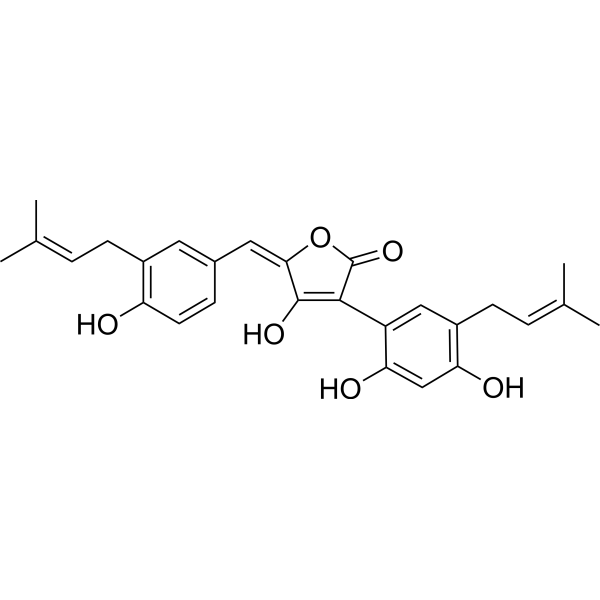 0 ImagesCat. No.: HY-N6237CAS No.: 914071-54-8Aspulvinone O is a selective inhibitor of glutamate oxaloacetate aminotransferase GOT1. Aspulvinone O inhibits glutamine metabolism and reduces NADPH production, thereby inducing oxidative stress and apoptosis in pancreatic ductal adenocarcinoma (PDAC) cells. Aspulvinone O inhibits PDAC cell proliferation in vitro and tumor growth in xenograft models.
-
Linoleylanilide
 0 ImagesCat. No.: HY-116509CAS No.: 19878-10-5Synonyms: Linoleic acid anilide; LAALinoleylanilide (Linoleic acid anilide) is a Linoleic acid (HY-N0729) derivative. Linoleylanilide slightly inhibits the PMA (HY-18739)-induced expression of CD11b. Linoleylanilide inhibits serum LDH, GOT and GPT activities. Linoleylanilide decreases red cell counts and hemoglobin content.



