



ERG240
Based on 5 publication(s) in Google Scholar
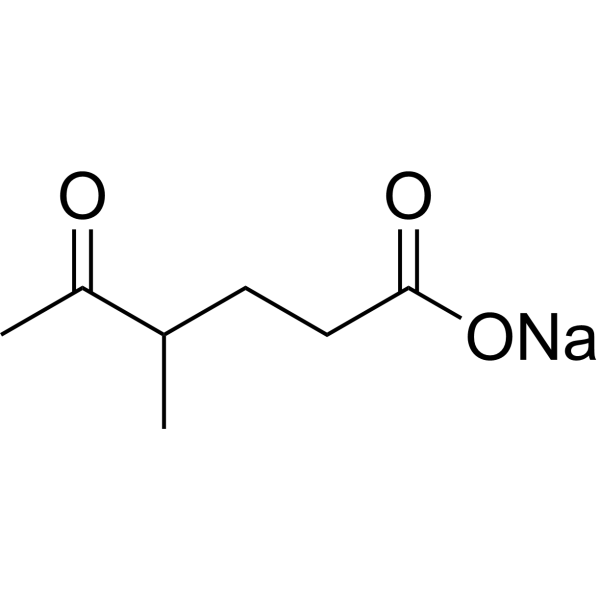
ERG240 is an oral active branched-chain amino acid aminotransferase 1 (BCAT1) inhibitor. ERG240 can be used for the research of cancer, rheumatoid arthritis, and bone disease.
商品は「研究用試薬」です。人や動物の医療用・臨床診断用・食品用の製品ではありません。
研究用途以外に使用した場合、当社は一切の責任を負いかねます。
- 純度 : 98.0%
- CAS 番号: 1415683-79-2
- 分子式: C7H11NaO3
- 分子量:166.15
-
保管条件:
4°C, sealed storage, away from moisture and light
* In solvent : -80°C, 6 months; -20°C, 1 month (sealed storage, away from moisture and light)

To place orders, for customer services and technical support, please contact: MedChemExpress USA
Tel: 609-228-6898 E-mail: [email protected] [email protected]


-
 生物活性
生物活性
-
化学情報
-
溶剤 & 溶解度
- プロトコル
- 純度とドキュメンテーション
- 参考文献
-
 Help & FAQs



 Customer Validation & Images

-
Cell Proliferation/Viability Assay


生物活性
製品説明
体外実験
ERG240 (20 µM, 3 hours) significantly reduces Irg1 mRNA and protein levels, along with itaconate production, in human monocyte-derived macrophages[2]. ERG240 (5 µM and 10 µM, 24 hours) significantly inhibits migration in bone marrow-derived macrophages (BMDMs)[2].
MedChemExpress (MCE) has not independently confirmed the accuracy of these methods. They are for reference only.
-
Cell Line:Human monocyte-derived macrophages (hMDMs)
-
Concentration:20 µM
-
Incubation Time:3 hours
-
Result:Resulted in a significant reduction in IRG1 and IL-1β protein levels, with no significant change in HIF1A and ACTB expression.
-
Cell Line:Bone Marrow-Derived Macrophages (BMDMs)
-
Concentration:5 µM and 10 µM
-
Incubation Time:24 hours
-
Result:Inhibited BMDM migration in a dose-dependent manner without affecting cell viability.
-
Cell Line:Human monocyte-derived macrophages (hMDMs)
-
Concentration:20 µM
-
Incubation Time:3 hours
-
Result:Significantly reduced Irg1 mRNA levels, along with itaconate production, without affecting HIF1A and IL1B mRNA levels.
体内実験
MedChemExpress (MCE) has not independently confirmed the accuracy of these methods. They are for reference only.
-
Animal Model:LPS (HY-D1056)-induced acute inflammation C57BL/6 mouse model[2]
-
Dosage:500 mg/kg
-
Administration:Intraperitoneal injection (i.p.), administered 30 min before and 8 h after LPS injection
-
Result:Reduced Irg1 mRNA and protein levels along with itaconate production.
-
Animal Model:Collagen (HY-NP102)-induced arthritis (CIA) DBA/1 mouse model[2]
-
Dosage:720 and 1000 mg/kg
-
Administration:Oral gavage (p.o.), once daily for 3 weeks (720 mg/kg) and 4 weeks (1000 mg/kg)
-
Result:Significantly reduced inflammation, cartilage damage, pannus formation, and bone resorption in CIA model; decreased serum levels of pro-inflammatory markers TNF and RANKL.
-
Animal Model:Nephrotoxic nephritis (NTN) WKY rat model induced by nephrotoxic serum (NTS) injection[2]
-
Dosage:500 mg/kg
-
Administration:Oral gavage (p.o.), once daily for 10 days
-
Result:Reduced glomerular crescent formation, proteinuria, serum creatinine, and collagen type I levels.


化学情報
-
CAS 番号 1415683-79-2
-
性状 Solid
-
分子量 166.15
-
分子式 C7H11NaO3
-
Color White to off-white
-
SMILES
O=C(CCC(C)C(C)=O)O[Na]
-
輸送条件
Room temperature in continental US; may vary elsewhere.
-
保管条件
4°C, sealed storage, away from moisture and light
* In solvent : -80°C, 6 months; -20°C, 1 month (sealed storage, away from moisture and light)


Publications (5)
-
Journal Impact Factor
-
Most Recent
-
Nature
2026 Apr;652(8112):1339-1348. PMID: 41813904 -
J Adv Res
Mitochondrial fatty acid oxidation as the target for blocking therapy-resistance and inhibiting tumor recurrence: The proof-of-principle model demonstrated for ovarian cancer cells. [Abstract]2025 Mar 17:S2090-1232(25)00186-9. PMID: 40107354
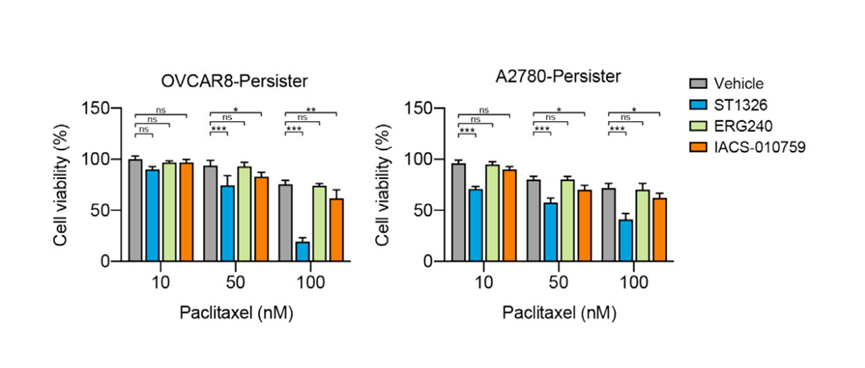
ERG240 purchased from MedChemExpress. Usage Cited in: J Adv Res. 2025 Mar 17:S2090-1232(25)00186-9. [Abstract]
OVCAR8-Persister (left) and A2780-Persister (right) cells were pretreated with vehicle, ST1326 (20 μM), ERG240 (60 μM) or IACS-010759 (2 nM) for 24 h and subsequently treated with paclitaxel for 48 h, and cell viability was assessed using a CCK-8 assay or CellTiter-Glo® assay.
-
Life Sci
2026 Jan 1:384:124108. PMID: 41314595 -
Oral Dis
BCAT1 promotes cell proliferation, migration, and invasion via the PI3K-Akt signaling pathway in oral squamous cell carcinoma. [Abstract]2025 Feb;31(2):364-375. PMID: 39056279 -


溶剤 & 溶解度
体外:
H2O : 100 mg/mL (601.87 mM; Need ultrasonic)
DMSO : 25 mg/mL (150.47 mM; ultrasonic and warming and heat to 60°C; Hygroscopic DMSO has a significant impact on the solubility of product, please use newly opened DMSO)
Please refer to the solubility information to select the appropriate solvent. Once prepared, please aliquot and store the solution to prevent product inactivation from repeated freeze-thaw cycles.
Storage method and period of stock solution: -80°C, 6 months; -20°C, 1 month (sealed storage, away from moisture and light). When stored at -80°C, please use it within 6 months. When stored at -20°C, please use it within 1 month.
* Note: If you choose water as the stock solution, please dilute it to the working solution, then filter and sterilize it with a 0.22 μm filter before use.
Please refer to the solubility information to select the appropriate solvent. Once prepared, please aliquot and store the solution to prevent product inactivation from repeated freeze-thaw cycles.
Storage method and period of stock solution: -80°C, 6 months; -20°C, 1 month (sealed storage, away from moisture and light). When stored at -80°C, please use it within 6 months. When stored at -20°C, please use it within 1 month.
* Note: If you choose water as the stock solution, please dilute it to the working solution, then filter and sterilize it with a 0.22 μm filter before use.
濃度 (開始) × 体積 (開始) = 濃度 (終了) × 体積 (終了)
体内:
Select the appropriate dissolution method based on your experimental animal and administration route.
- For the following dissolution methods, please ensure to first prepare a clear stock solution using an In Vitro approach and then sequentially add co-solvents:
- To ensure reliable experimental results, the clarified stock solution can be appropriately stored based on storage conditions. As for the working solution for In Vivo experiments, it is recommended to prepare freshly and use it on the same day.
- The percentages shown for the solvents indicate their volumetric ratio in the final prepared solution. If precipitation or phase separation occurs during preparation, heat and/or sonication can be used to aid dissolution.
Add each solvent one by one: 10% DMSO 40% PEG300 5% Tween-80 45% Saline
Solubility: ≥ 2.5 mg/mL (15.05 mM); Clear solution
This protocol yields a clear solution of ≥ 2.5 mg/mL (saturation unknown).
Taking 1 mL working solution as an example, add 100 μL DMSO stock solution (25.0 mg/mL) to 400 μL PEG300, and mix evenly; then add 50 μL Tween-80 and mix evenly; then add 450 μL Saline to adjust the volume to 1 mL.
Preparation of Saline: Dissolve 0.9 g sodium chloride in ddH₂O and dilute to 100 mL to obtain a clear Saline solution.
Add each solvent one by one: 10% DMSO 90% (20% SBE-β-CD in Saline)
Solubility: ≥ 2.5 mg/mL (15.05 mM); Clear solution
This protocol yields a clear solution of ≥ 2.5 mg/mL (saturation unknown).
Taking 1 mL working solution as an example, add 100 μL DMSO stock solution (25.0 mg/mL) to 900 μL 20% SBE-β-CD in Saline, and mix evenly.
Preparation of 20% SBE-β-CD in Saline (4°C, storage for one week): 2 g SBE-β-CD powder is dissolved in 10 mL Saline, completely dissolve until clear.
In Vivo Dissolution Calculator
Please enter the basic information of animal experiments:
-
-
-
-
Recommended: Prepare an additional quantity of animals to account for potential losses during experiments.
Working solution concentration: 0.22 mg/mL
This product has good water solubility, please refer to the measured solubility data in water/PBS/Saline for details.


純度とドキュメンテーション
-
データシート (277 KB)
-
SDS (252 KB)
- English - EN (252 KB)
- Français - FR (252 KB)
- Deutsch - DE (252 KB)
- Norwegian - NO (252 KB)
- Español - ES (252 KB)
- Swedish - SV (252 KB)
- Italian - IT (252 KB)
- Korean - KR (252 KB)
- Portuguese - PT (252 KB)
-
取扱説明書 (2659 KB)
参考文献


Complete Stock Solution Preparation Table
Please refer to the solubility information to select the appropriate solvent. Once prepared, please aliquot and store the solution to prevent product inactivation from repeated freeze-thaw cycles.
Storage method and period of stock solution: -80°C, 6 months; -20°C, 1 month (sealed storage, away from moisture and light). When stored at -80°C, please use it within 6 months. When stored at -20°C, please use it within 1 month.
| Optional Solvent | Concentration Solvent Mass | 1 mg | 5 mg | 10 mg | 25 mg |
|---|---|---|---|---|---|
| DMSO / H2O | 1 mM | 6.0187 mL | 30.0933 mL | 60.1866 mL | 150.4665 mL |
| 5 mM | 1.2037 mL | 6.0187 mL | 12.0373 mL | 30.0933 mL | |
| 10 mM | 0.6019 mL | 3.0093 mL | 6.0187 mL | 15.0466 mL | |
| 15 mM | 0.4012 mL | 2.0062 mL | 4.0124 mL | 10.0311 mL | |
| 20 mM | 0.3009 mL | 1.5047 mL | 3.0093 mL | 7.5233 mL | |
| 25 mM | 0.2407 mL | 1.2037 mL | 2.4075 mL | 6.0187 mL | |
| 30 mM | 0.2006 mL | 1.0031 mL | 2.0062 mL | 5.0155 mL | |
| 40 mM | 0.1505 mL | 0.7523 mL | 1.5047 mL | 3.7617 mL | |
| 50 mM | 0.1204 mL | 0.6019 mL | 1.2037 mL | 3.0093 mL | |
| 60 mM | 0.1003 mL | 0.5016 mL | 1.0031 mL | 2.5078 mL | |
| 80 mM | 0.0752 mL | 0.3762 mL | 0.7523 mL | 1.8808 mL | |
| 100 mM | 0.0602 mL | 0.3009 mL | 0.6019 mL | 1.5047 mL |
* Note: If you choose water as the stock solution, please dilute it to the working solution, then filter and sterilize it with a 0.22 μm filter before use.


ERG240 関連分類
HY-W193545A 関連分類
 Powered by Bioz