



Dioctyl phthalate
Based on 2 publication(s) in Google Scholar
Dioctyl phthalate (DNOP) is a plasticizer. Dioctyl phthalate increases the activities of alanine aminotransferase (ALT) and alkaline phosphatase (ALP) in the liver, as well as the levels of creatinine and urea in the kidney. Exposure to Dioctyl phthalate disrupts the homeostasis of the intestinal microbial community, increases the abundance of pathogenic bacteria, and reduces the abundance of beneficial bacteria such as Lactobacillus. Dioctyl phthalate induces significant and dose-dependent inflammatory responses in the liver, spleen and kidney of mice.
For research use only. We do not sell to patients.
- Purity : 99.40%
- CAS No.: 117-84-0
- Formula: C24H38O4
- Molecular Weight:390.56
-
Storage:
Store at room temperature, keep dry and cool.
In solvent -80°C, 1 year , -20°C, 6 months


To place orders, for customer services and technical support, please contact: MedChemExpress USA
Tel: 609-228-6898 E-mail: [email protected] [email protected]


-
 Biological Activity
-
Chemical Information
-
Solvent & Solubility
- Protocols
- Purity & Documentation
- References
-
 Help & FAQs


-
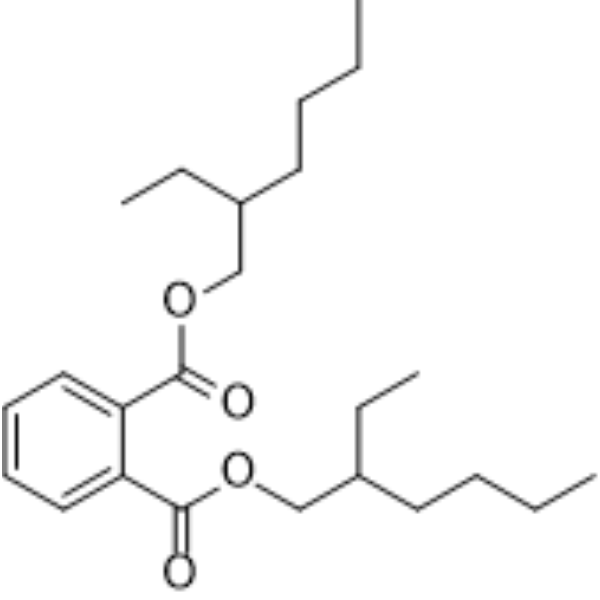
HY-B1945
DEHPEndogenous Metabolite -
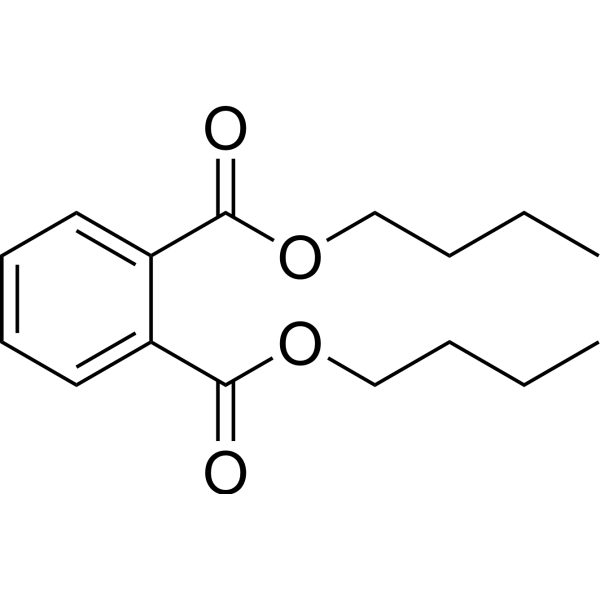
HY-Y0304
Dibutyl phthalatePlasticizer -

HY-B1945R
DEHP (Standard)Endogenous Metabolite -

HY-W011215
Dihexyl phthalateEnvironmental Endocrine Disruptor -

HY-Y0284
Diethyl phthalatePlasticizer -

HY-W011215R
Dihexyl phthalate (Standard)Reference Standard -

HY-Y0304R
Dibutyl phthalate (Standard)Plasticizer -
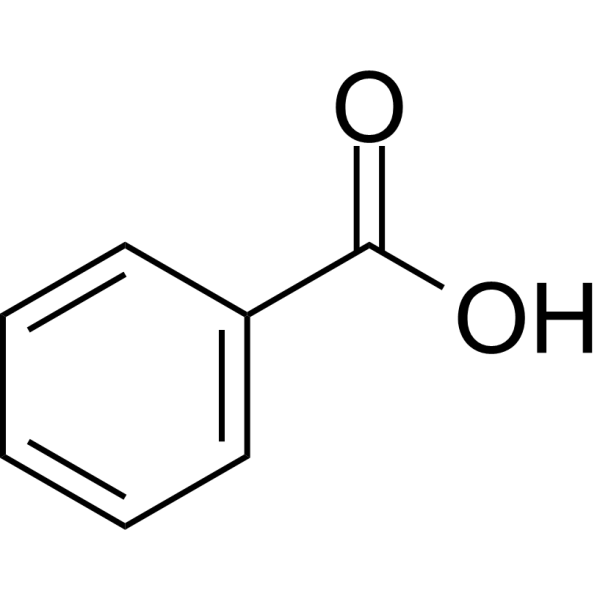
HY-N0216
Benzoic acidBacterial Inhibitor -
![Benzo[a]pyrene](https://file.medchemexpress.com/product_pic/hy-107377.gif)
HY-107377
Benzo[a]pyreneNoxious Pollutant -

HY-Y0344D
Sodium chloride, for cell cultureBiochemical Assay Reagent
Publications Citing Use of MedChemExpress (MCE) Dioctyl phthalate
More

Biological Activity
Description
In Vivo
MedChemExpress (MCE) has not independently confirmed the accuracy of these methods. They are for reference only.
-
Animal Model:C57BL/6J (4-week-old, male, 18-21 g, SPF-grade)[1]
-
Dosage:50 mg/kg⋅bw; 500 mg/kg⋅bw
-
Administration:daily; 12 weeks
-
Result:Caused sluggishness, lethargy, and decreased vitality in high-dose mice.
Increased body weight compared to controls, with smaller increase in high-dose group than low-dose group (P < 0.01).
Increased liver weight in both low-dose (P > 0.05) and high-dose (P < 0.01) groups compared to controls; increased liver-to-body weight ratio in a dose-dependent manner.
Significantly elevated hepatic ALT (P < 0.01) and ALP (P < 0.001) levels in high-dose group compared to controls.
Significantly increased spleen weight (P < 0.05) and spleen index (P < 0.01) in high-dose group compared to controls, with dose-dependent increases in both parameters.
Significantly elevated creatinine (P < 0.05) levels in high-dose group compared to controls; significantly elevated urea levels (P < 0.05) in both dose groups compared to controls.
Significantly increased serum diamine oxidase (DAO) and D-lactic acid levels in both dose groups compared to controls (P < 0.05).
Decreased Firmicutes relative abundance (50.9% in controls, 44.3% in low-dose, 39% in high-dose) and increased Bacteroidetes abundance (24.8% in controls, 35.9% in low-dose, 38.4% in high-dose) with increasing dose.
Significantly decreased Firmicutes/Bacteroidetes ratio in high-dose group compared to controls (P < 0.05).


Chemical Information
-
CAS No. 117-84-0
-
Appearance Liquid (Density: 0.978 g/cm3)
-
Molecular Weight 390.56
-
Formula C24H38O4
-
Color Colorless to light yellow
-
SMILES
O=C(OCCCCCCCC)C1=CC=CC=C1C(OCCCCCCCC)=O
-
Synonyms
DNOP; Di-n-octyl phthalate; Phthalic acid dioctyl ester
-
Shipping
Room temperature in continental US; may vary elsewhere.
-
Storage
Store at room temperature, keep dry and cool
In solvent -80°C 1 year -20°C 6 months


Publications (2)
-
Journal Impact Factor
-
Most Recent
-
Food Chem Toxicol
Integrated network toxicology, molecular docking and transcriptomics reveal the mechanistic role of phthalate esters in metabolic disease pathogenesis. [Abstract]2026 Jan:207:115855. PMID: 41275904 -
Planta Med
Discovery and characterization of panaxatriol as a novel thrombin inhibitor from Panax notoginseng using combination of computational and experimental approach. [Abstract]2024 Aug;90(10):801-809. PMID: 38838717


Solvent & Solubility
In Vitro:
DMSO : 100 mg/mL (256.04 mM; Need ultrasonic; Hygroscopic DMSO has a significant impact on the solubility of product, please use newly opened DMSO)
Please refer to the solubility information to select the appropriate solvent. Once prepared, please aliquot and store the solution to prevent product inactivation from repeated freeze-thaw cycles.
Storage method and period of stock solution: -80°C, 1 year; -20°C, 6 months. When stored at -80°C, please use it within 1 year. When stored at -20°C, please use it within 6 months.
Please refer to the solubility information to select the appropriate solvent. Once prepared, please aliquot and store the solution to prevent product inactivation from repeated freeze-thaw cycles.
Storage method and period of stock solution: -80°C, 1 year; -20°C, 6 months. When stored at -80°C, please use it within 1 year. When stored at -20°C, please use it within 6 months.
Concentration (start) × Volume (start) = Concentration (final) × Volume (final)
In Vivo:
Select the appropriate dissolution method based on your experimental animal and administration route.
- For the following dissolution methods, please ensure to first prepare a clear stock solution using an In Vitro approach and then sequentially add co-solvents:
- To ensure reliable experimental results, the clarified stock solution can be appropriately stored based on storage conditions. As for the working solution for In Vivo experiments, it is recommended to prepare freshly and use it on the same day.
- The percentages shown for the solvents indicate their volumetric ratio in the final prepared solution. If precipitation or phase separation occurs during preparation, heat and/or sonication can be used to aid dissolution.
In Vivo Dissolution Calculator
Please enter the basic information of animal experiments:
-
-
-
-
Recommended: Prepare an additional quantity of animals to account for potential losses during experiments.
Please enter your animal formula composition:
-
%DMSO +
Recommended: Keep the proportion of DMSO in working solution below 2% if your animal is weak.
-
%+
-
+%Tween-80 + +
-
%Saline +
The co-solvents required include: DMSO, . All of co-solvents are available by MedChemExpress (MCE). , Tween 80. All of co-solvents are available by MedChemExpress (MCE).
Working solution concentration: 0.22 mg/mL
Method for preparing stock solution: mg drug dissolved in μL DMSO. Stock solution concentration: mg/mL.
1. Take μL DMSO stock solution;
2. Add μL .
μL , mix evenly;
3. Then add μL Tween 80, mix evenly;
4. Then add μL
Please ensure that the stock solution in the first step is dissolved to a clear state, and add co-solvents in sequence. You can use ultrasonic heating (ultrasonic cleaner, recommended frequency 20-40 kHz), vortexing, etc. to assist dissolution.

Protocols
-
Nephrotoxicity Study
This protocol assesses nephrotoxicity by combining functional kidney injury readouts, urinary/tissue injury biomarkers, and renal histopathology. Serum creatinine and BUN reflect impaired kidney function, while KIM-1, NGAL, clusterin, osteopontin, IL-18, cystatin C, nephrin, Oat5, urinary protein, glucose, and alkaline phosphatase have been used to detect tubular injury in cisplatin-, gentamicin-, and acetaminophen-induced nephrotoxicity models.
-
Mesenchymal stromal/stem cell osteogenic differentiation
Mesenchymal stromal/stem cells can be induced toward an osteoblast-like lineage in vitro by culture in osteogenic medium containing dexamethasone, ascorbic acid or ascorbate-2-phosphate, and β-glycerophosphate; the differentiation process is commonly evaluated by alkaline phosphatase activity, osteogenic marker expression, collagenous matrix formation, and calcium-rich matrix mineralization. The main readouts are alkaline phosphatase activity as an early osteogenic marker and Alizarin Red S staining as a calcium-deposit readout for mineralized extracellular matrix; Alizarin Red S can be inspected microscopically or extracted and measured colorimetrically at 405 nm.
-
Research Protocol for Microbiome Analysis
Microbiome analysis characterizes microbial communities in biological or environmental samples by measuring community composition, diversity, taxonomic structure, functional potential, and associations with host or environmental phenotypes. 16S rRNA gene amplicon sequencing is commonly used for bacterial and archaeal taxonomic profiling, while shotgun metagenomics provides higher taxonomic resolution and direct functional information, including microbial genes, pathways, viruses, fungi, and antimicrobial-resistance genes when sequencing depth and host-DNA contamination are adequately controlled. Microbiome results are strongly affected by sample collection, storage, DNA extraction, contamination, sequencing method, reference database, and bioinformatic pipeline; therefore, standardized protocols, negative controls, mock communities, and transparent analysis workflows are required. Unresolved issues include low-biomass contamination, compositional-data bias, inconsistent species-level c
-
Hepatotoxicity Study
This protocol evaluates hepatotoxicity using complementary in vivo mouse APAP acute liver injury and in vitro hepatocyte-based cytotoxicity readouts. In vivo APAP injury is assessed by serum ALT/AST, liver histology, hepatic glutathione, protein adducts, necrosis, inflammation, and regeneration-related endpoints. In vitro hepatotoxicity is assessed by loss of viability, leakage of ALT/AST/LDH, oxidative-stress markers, mitochondrial function, nuclear morphology, intracellular calcium, and high-content imaging endpoints.


Purity & Documentation
-
Data Sheet (273 KB)
-
SDS (702 KB)
- English - EN (702 KB)
- Français - FR (702 KB)
- Deutsch - DE (702 KB)
- Norwegian - NO (702 KB)
- Español - ES (702 KB)
- Swedish - SV (702 KB)
- Italian - IT (702 KB)
- Korean - KR (702 KB)
- Portuguese - PT (702 KB)
-
Handling Instructions (2659 KB)
References


Complete Stock Solution Preparation Table
Please refer to the solubility information to select the appropriate solvent. Once prepared, please aliquot and store the solution to prevent product inactivation from repeated freeze-thaw cycles.
Storage method and period of stock solution: -80°C, 1 year; -20°C, 6 months. When stored at -80°C, please use it within 1 year. When stored at -20°C, please use it within 6 months.
| Optional Solvent | Concentration Solvent Mass | 1 mg | 5 mg | 10 mg | 25 mg |
|---|---|---|---|---|---|
| DMSO | 1 mM | 2.5604 mL | 12.8021 mL | 25.6043 mL | 64.0107 mL |
| 5 mM | 0.5121 mL | 2.5604 mL | 5.1209 mL | 12.8021 mL | |
| 10 mM | 0.2560 mL | 1.2802 mL | 2.5604 mL | 6.4011 mL | |
| 15 mM | 0.1707 mL | 0.8535 mL | 1.7070 mL | 4.2674 mL | |
| 20 mM | 0.1280 mL | 0.6401 mL | 1.2802 mL | 3.2005 mL | |
| 25 mM | 0.1024 mL | 0.5121 mL | 1.0242 mL | 2.5604 mL | |
| 30 mM | 0.0853 mL | 0.4267 mL | 0.8535 mL | 2.1337 mL | |
| 40 mM | 0.0640 mL | 0.3201 mL | 0.6401 mL | 1.6003 mL | |
| 50 mM | 0.0512 mL | 0.2560 mL | 0.5121 mL | 1.2802 mL | |
| 60 mM | 0.0427 mL | 0.2134 mL | 0.4267 mL | 1.0668 mL | |
| 80 mM | 0.0320 mL | 0.1600 mL | 0.3201 mL | 0.8001 mL | |
| 100 mM | 0.0256 mL | 0.1280 mL | 0.2560 mL | 0.6401 mL |


Dioctyl phthalate Related Classifications
HY-W013755 Related Classifications
 Powered by Bioz
Keywords
- Dioctyl phthalate
- 117-84-0
- DNOP
- Di-n-octyl phthalate
- Phthalic acid dioctyl ester
- Biochemical Assay Reagents
- Aminotransferases (Transaminases)
- Phosphatase
- Bacterial
- inflammation
- C57BL/6J male mice
- mouse liver
- mouse kidney
- mouse spleen
- alanine aminotransferase
- alkaline phosphatase
- Firmicutes/Bacteroidetes ratio
- gut microbiota
- ileum
- Inhibitor
- inhibitor
- inhibit