Flavivirus
Flavivirus
Flavivirus is a group of single-stranded positive-sense RNA viruses that are mainly transmitted by arthropods such as mosquitoes and ticks. The viral particles of the Flavivirus are spherical, with a diameter of approximately 40-60 nanometers and have an envelope. The envelope is embedded with spike glycoproteins, which play a crucial role in the recognition and binding process between the virus and host cells. Flavivirus contains a variety of viruses, such as the yellow fever virus and the dengue virus, etc., which can cause a variety of serious diseases and have a significant impact on global public health security[1].
All Product Categories
-
Flavivirus Related Products (193)
Related Products (193)

-
Antibodies (1)
-
Prochlorperazine dimaleate
 0 ImagesProchlorperazine dimaleate is an orally active phenothiazine-type dopamine D2 receptor (D2R) antagonist. Prochlorperazine exhibits anti-cancer activity in vitro against various cancer cell lines. Prochlorperazine dimaleate exhibits IC50 values of 6.4 μM, 4.5 μM and 2.3 μM for NOX1, NOX2 and NOX5, respectively. Prochlorperazine dimaleate has antedesmosidic activity against dengue virus (DENV). Prochlorperazine dimaleate can be used for research on nausea, vomiting, migraine, and schizophrenia.
-
Tiratricol
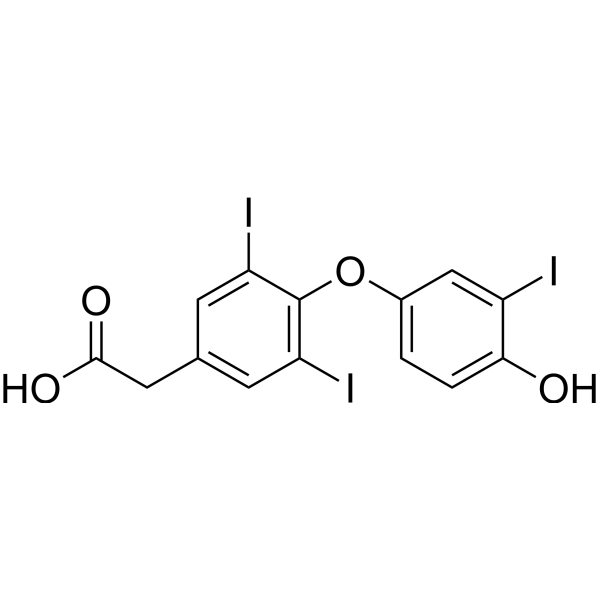 0 ImagesTiratricol is an orally available thyroid hormone analog that inhibits pituitary thyroid-stimulating hormone secretion. Tiratricol is an intracellular toxin neutralizer that inhibits LPS and lipid A cytotoxicity with IC50s of 20 μM and 32 μM, respectively. Tiratricol reduces TNF production in lipopolysaccharide-stimulated macrophages. Tiratricol also has antiviral activity and is an inhibitor of yellow fever virus (Flavivirus). It can bind to the RdRp domain of the viral NS5 protein to hinder YFV replication..
-
Quinine hydrochloride dihydrate
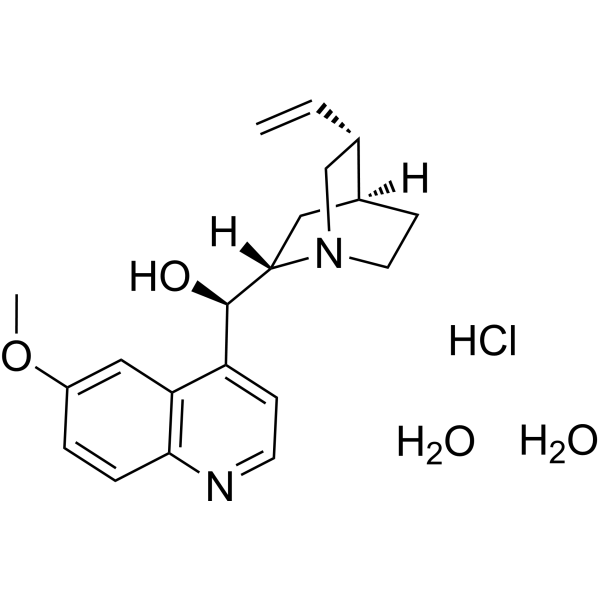 0 ImagesQuinine hydrochloride dihydrate (Qualaquin) is an orally active and can be used in anti-malarial studies. Quinine hydrochloride dihydrate is a potassium channel inhibitor that inhibits WT mouse Slo3 (KCa5.1) channel currents evoked by voltage pulses to +100 mV with an IC50 of 169 μM.
-
Merbromin
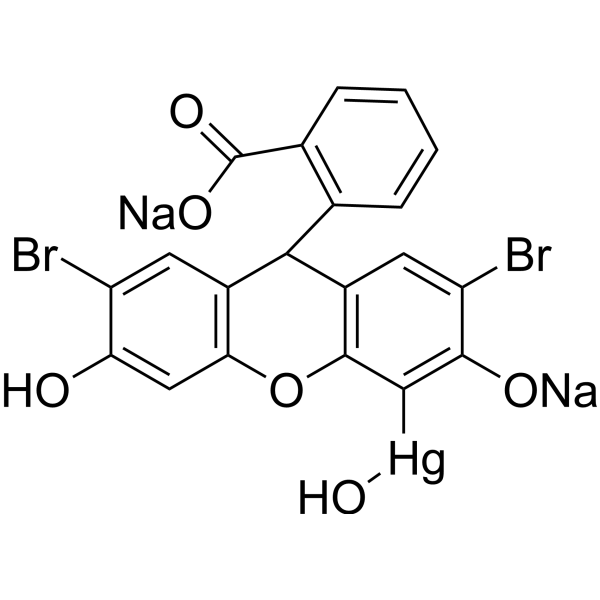 0 ImagesMerbromin is a mixed inhibitor of the 3-chymotrypsin-like protease (3CLpro) of SARS-CoV-2, with an IC50 of 2.7 μM. Merbromin effectively inhibits the replication of the Zika virus (ZIKV) and shows anti-ZIKV activity by inhibiting ZIKVpro. Merbromin can also be used as a topical disinfectant for cuts and scrapes, and it serves as a biological dye.
-
PKI 14-22 amide,myristoylated TFA
 0 ImagesCat. No.: HY-P1291APurity: 99.79%PKI 14-22 amide, myristoylated TFA is a selective, cAMP-dependent, competitive PKA inhibitor with Ki=~36 nM. The myristoylation modification of PKI 14-22 amide, myristoylated TFA makes it more permeable to cell membranes and blood-brain barriers than the precursor molecule. PKI 14-22 amide, myristoylated TFA can block the phosphorylation of cAMP-dependent downstream targets (such as CREB). PKI 14-22 amide, myristoylated TFA can prevent the development of analgesic tolerance in mice, and also inhibits protein translation and negative-strand RNA synthesis of Zika virus. PKI 14-22 amide, myristoylated TFA can be used in research fields such as opioid tolerance mechanisms and antiviral drugs.
-
Hirsutine
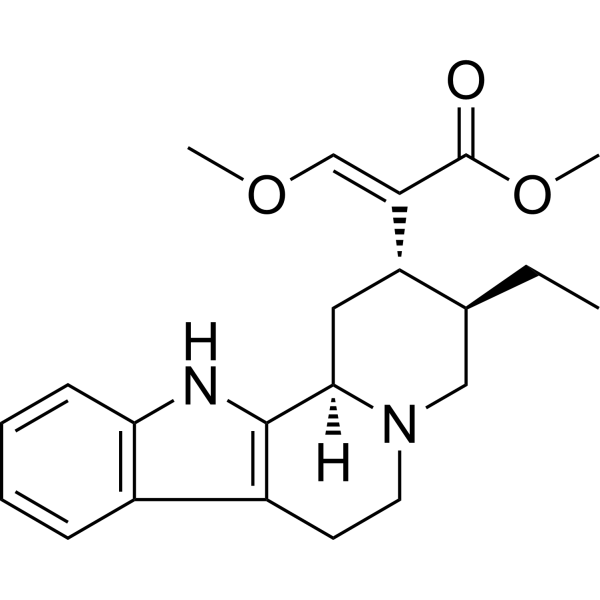 0 ImagesHirsutine, an indole alkaloid of Uncaria rhynchophylla, exhibits anti-cancer activity. Hirsutine induces apoptosis and is a potent Dengue virus inhibitor exhibiting low cytotoxicity.
-
Palonosetron hydrochloride
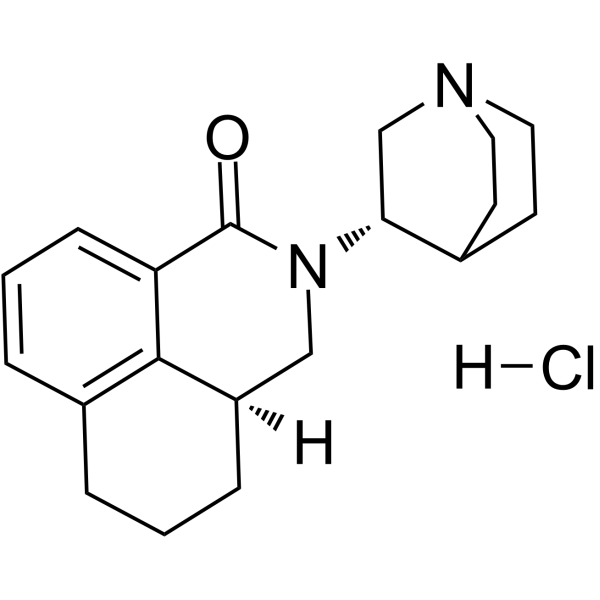 0 ImagesPalonosetron hydrochloride is a 5-HT3 antagonist primarily used to prevent acute, delayed, and overall chemotherapy-induced nausea and vomiting. In addition, Palonosetron hydrochloride exhibits moderate anti-flavivirus activity and potent anti-Zika virus activity in mammalian cells. Palonosetron hydrochloride also possesses antidepressant activity.
-
NITD-688
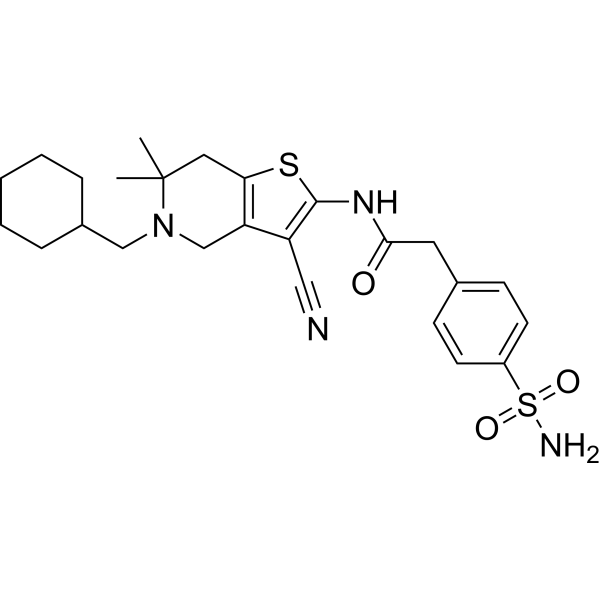 0 ImagesSynonyms: EYU-688NITD-688 is an orally active pan-serotype inhibitor of the dengue virus NS4B protein. NITD-688 can be used in the research of dengue virus (DENV).
-
SN 2
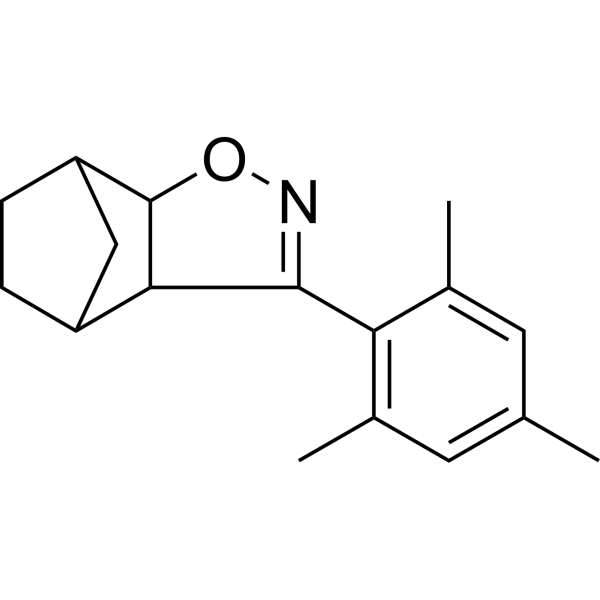 0 ImagesSN 2 is a potent activator of TRPML3 ion channel with an EC50 of 1.8 μM. SN 2 also acts as a potent inhibitor of Dengue virus 2 (DENV2) and Zika virus (ZIKV).
-
(+)-JNJ-A07
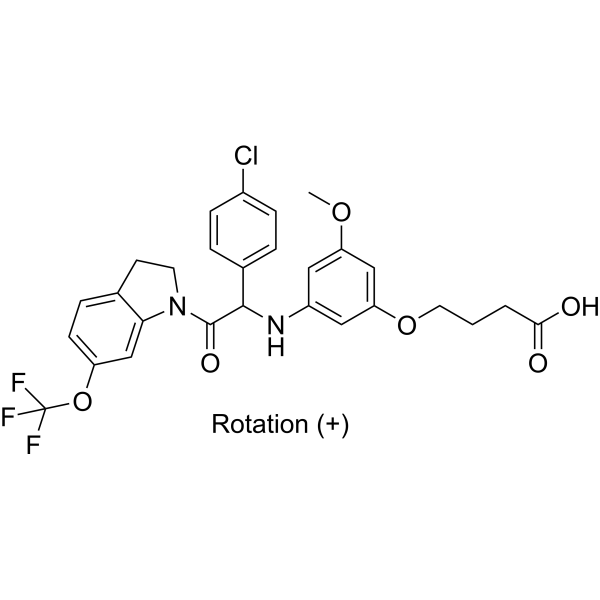 0 Images(+)-JNJ-A07 is a highly potent, orally active pan-serotype dengue virus inhibitor targeting the NS3-NS4B interaction. (+)-JNJ-A07 exerts nanomolar to picomolar activity against a panel of 21 clinical isolates. (+)-JNJ-A07 has a favourable pharmacokinetic profile that results in outstanding efficacy against dengue virus infection in mouse infection models.
-
Lactimidomycin
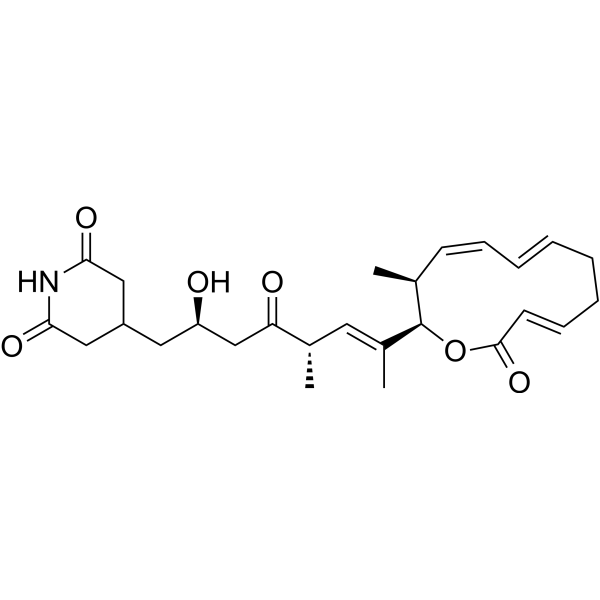 0 ImagesLactimidomycin is a glutarimide-containing compound isolated from Streptomyces. Lactimidomycin is a potent inhibitor of eukaryotic translation elongation. Lactimidomycin has a potent antiproliferative effect on tumor cell lines and selectively inhibit protein translation. Lactimidomycin inhibits protein synthesis with an IC50 value of 37.82 nM. Lactimidomycin is also a potent and non-toxic inhibitor of dengue virus 2 and other RNA viruses. Anticancer and antiviral activities.
-
2-Thiouridine
 0 Images2-Thiouridine is an orally active modified nucleobase. 2-Thiouridine stabilizes U:A base pairs and destabilizes U:G wobble base pairs. 2-Thiouridine significantly improves the efficiency and accuracy of nonenzymatic replication of mixed-sequence A/U-containing RNA templates. 2-Thiouridine exhibits antiviral activity against multiple positive-sense single-stranded RNA viruses (DENV2, ZIKV, YFV, JEV, WNV, CHIKV, human coronaviruses ( [HCoV]-229E, HCoV-OC43, SARS-CoV), and MERS-CoV).
-
Mycophenolic acid sodium
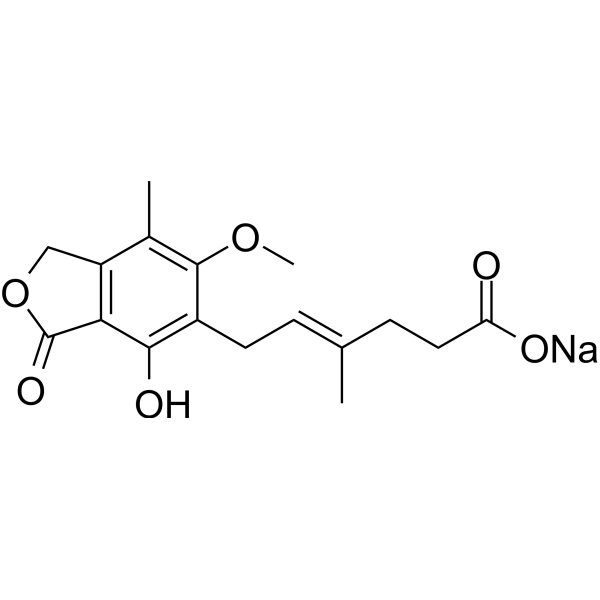 0 ImagesSynonyms: Mycophenolate sodiumMycophenolic acid sodium is a potent uncompetitive inosine monophosphate dehydrogenase (IMPDH) inhibitor with an EC50 of 0.24 µM. Mycophenolic acid sodium demonstrates antiviral effects against a wide range of RNA viruses including influenza. Mycophenolic acid sodium is an immunosuppressive agent. Antiangiogenic and antitumor effects.
-
Mycophenolic acid-d3
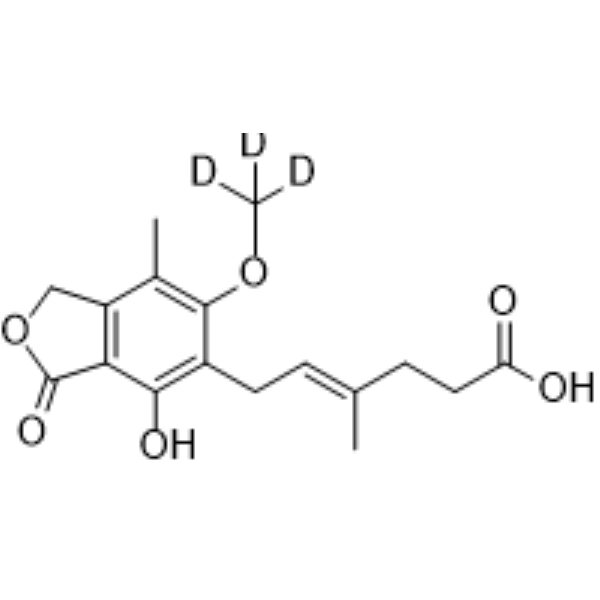 0 ImagesSynonyms: Mycophenolate-d3Mycophenolic acid-d3 (Mycophenolate-d3) is deuterium labeled Mycophenolic acid (HY-B0421). Mycophenolic acid is a potent uncompetitive inosine monophosphate dehydrogenase (IMPDH) inhibitor with an EC50 of 0.24 μM. Mycophenolic acid demonstrates antiviral effects against a wide range of RNA viruses including influenza. Mycophenolic acid is an immunosuppressive agent. Antiangiogenic and antitumor effects.
-
KIN1408
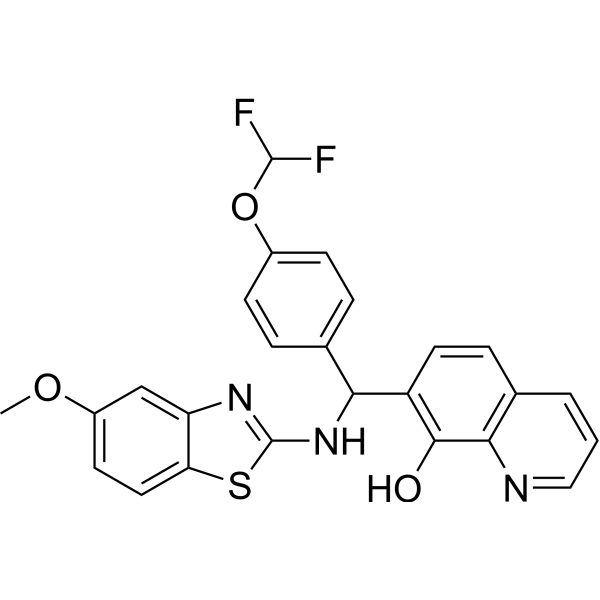 0 ImagesKIN1408 is an agonist of the RIG-1-like receptor (RLR) pathway and exhibits a broad-spectrum antiviral activity. KIN1408 exhibits activity against HCV, influenza A, dengue virus 2, Ebola, Nipah, and Lassa viruses.
-
NS2B/NS3-IN-2
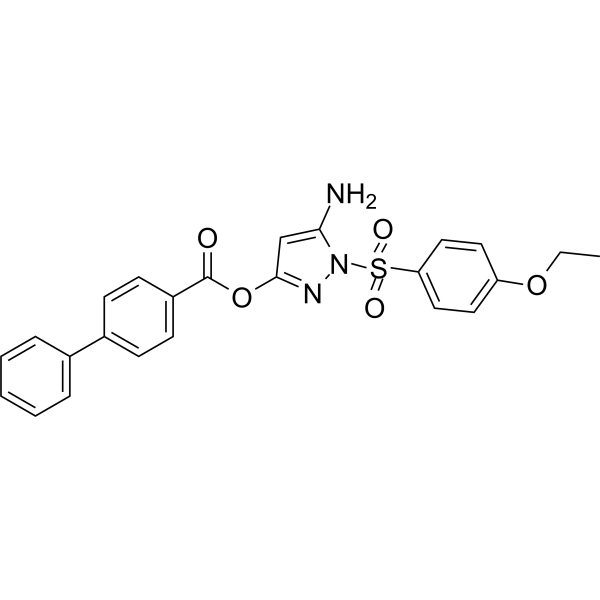 0 ImagesNS2B/NS3-IN-2 is a potent dengue virus (DENV) NS2B/NS3 covalent inhibitor with an IC50 of 6.0 nM and Ki of 0.66 µM. NS2B/NS3-IN-2 shows no cytotoxicity and markedly increases the cell survival rate.
-
Naringenin-d4
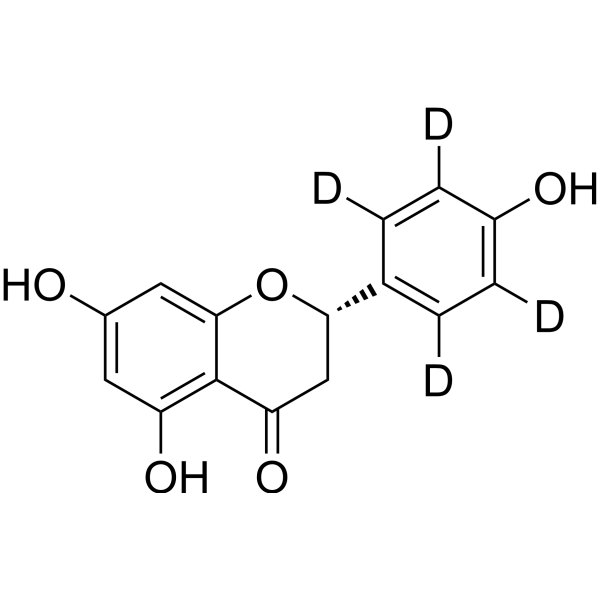 0 ImagesNaringenin-d4 is the deuterated version of Naringenin (HY-N0100). Naringenin shows strong anti-inflammatory and antioxidant activities. Naringenin has anti-dengue virus (DENV) activity.
-
Nanchangmycin
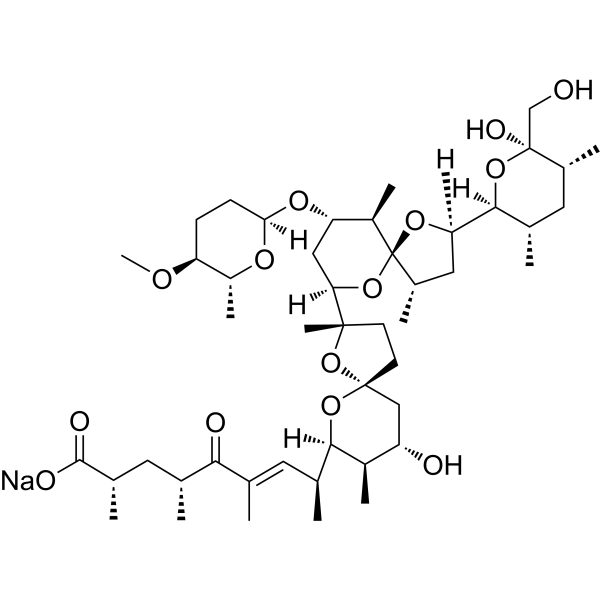 0 ImagesSynonyms: Nanchangmycin ANanchangmycin, a polyether antibiotic produced by Streptomyces nanchangensis NS3226, inhibits gram-positive bacteria. Nanchangmycin is a broad spectrum antiviral active against Zika virus.
-
Aminomethyltrioxsalen hydrochloride
 0 ImagesAminomethyltrioxsalen hydrochloride is a psoralen derivative. Aminomethyltrioxsalen hydrochloride can penetrate intact cells and react with nucleic acid secondary structures in vivo without disrupting the tissue structure of natural nucleoproteins. Aminomethyltrioxsalen hydrochloride inactivates viruses by crosslinking nucleic acid pyrimidine residues after exposure to UV-A radiation. Aminomethyltrioxsalen hydrochloride can be used in research related to dengue virus infection.