



iGluR
Ionotropic glutamate receptors
iGluR (ionotropic glutamate receptor) is a ligand-gated ion channel that is activated by the neurotransmitter glutamate. iGluR are integral membrane proteins compose of four large subunits that form a central ion channel pore. Sequence similarity among all known glutamate receptor subunits, including the AMPA, kainate, NMDA, and δ receptors.
AMPA receptors are the main charge carriers during basal transmission, permitting influx of sodium ions to depolarise the postsynaptic membrane. NMDA receptors are blocked by magnesium ions and therefore only permit ion flux following prior depolarisation. This enables them to act as coincidence detectors for synaptic plasticity. Calcium influx through NMDA receptors leads to persistent modifications in the strength of synaptic transmission.
iGluR Isoform Specific Products
All Product Categories
-
iGluR Inhibitors
(132)
View all products
-
iGluR Agonists
(128)
View all products
-
iGluR Antagonists
(345)
View all products
-
iGluR Activators
(35)
View all products
-
iGluR Modulators
(93)
View all products
-
iGluR MDM2 Inhibitor
(1)
View all products
-
iGluR Controls
(5)
View all products
-
iGluR Ligands
(3)
View all products
-
iGluR Related Products (825)
Related Products (825)

-
Antibodies (11)
-
iGluR Isoform Comparison
-
Neboglamine
 0 ImagesCat. No.: HY-114753CAS No.: 163000-63-3Synonyms: CR-2249; XY-2401Neboglamine (CR-2249; XY-2401) is a modulator for N-methyl-D-aspartate (NMDA) receptor. Neboglamine increases the levels of fos-like immunoreactivity (FLI)-positive cells in the prefrontal cortex, nucleus accumbens, and lateral septal nucleus in rat models, .restores NMDA (HY-17551) -mediated neurotransmitter release, and inhibits phencyclidine-induced hyperlocomotion.
-
(R)-AMPA
 0 ImagesCat. No.: HY-100815CAS No.: 83654-13-1(R)-AMPA is an inactive AMPA receptor ligand that inhibits the release of excitatory amino acids from neurons. (R)-AMPA is inactive in experiments that enhance the release of [3H]D-aspartate induced by electrical stimulation. (R)-AMPA is inhibited by competitive and noncompetitive AMPA receptor selective antagonists in response to AMPA and glutamate.
-
UBP 302
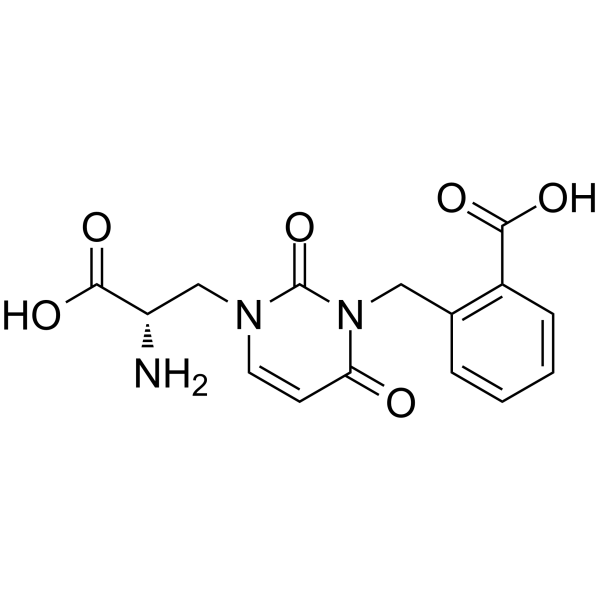 0 ImagesUBP 302 is a potent and selective GLUK5-subunit containing kainate receptor antagonist (apparent Kd=402 nM), and displays very little affinity on GluK2 (GluR6) kainate receptors. Anxiolytic effects.
-
FLY26
 0 ImagesCat. No.: HY-172876Purity: 99.66%FLY26 is a selective partial GluN2B antagonist with an IC50 value of 0.64 μM. FLY26 partially inhibits the GluN2B subunit of NMDA receptors, reduces calcium ion influx and reactive oxygen species (ROS) production and activates the BDNF/TrkB/CREB neuroprotective signaling pathway to alleviate neuronal excitotoxicity and mitochondrial dysfunction. FLY26 is promising for research of neurological deficits caused by cerebral ischemia-reperfusion injury.
-
DAAO inhibitor-1
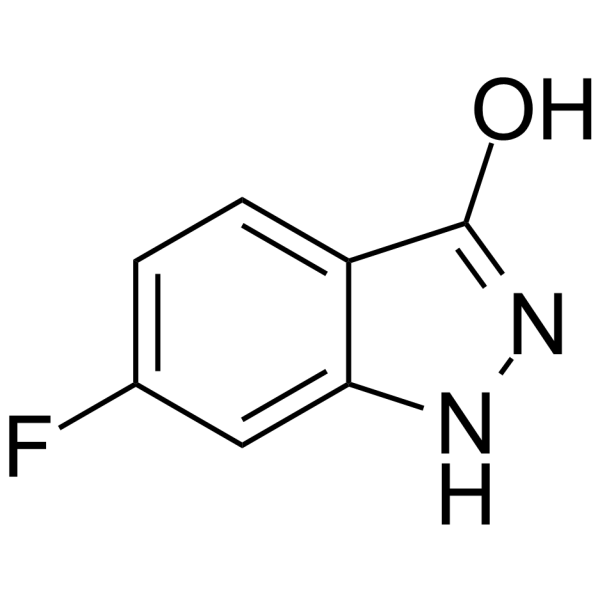 0 ImagesDAAO inhibitor-1 is a potent D-amino acid oxidase (DAAO) inhibitor with an IC50 of 0.12 μM.
-
TCN 213
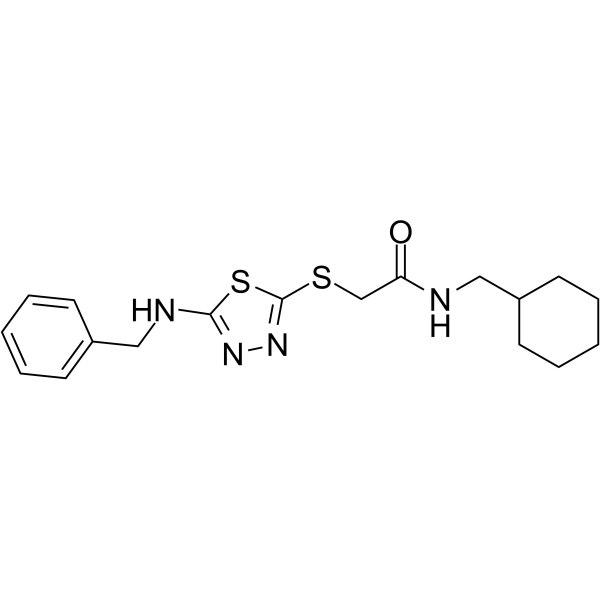 0 ImagesTCN 213 is a selective, surmountable, glycine-dependentlly GluN1/GluN2A NMDAR antagonist with IC50s of 0.55, 3.5, 40 μM in the presence of 75, 750, 7500 nM glycine, respectively. TCN 213 can be used to monitor, pharmacologically, the switch in NMDAR expression in developing cortical neurones.
-
1-BCP
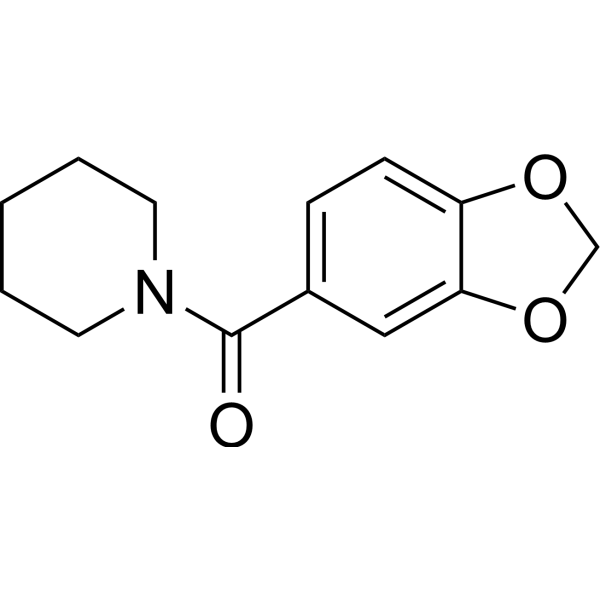 0 ImagesSynonyms: Piperonylic acid piperidide1-BCP (Piperonylic acid piperidide) is a centrally active agent that modulates AMPA receptor gated currents. 1-BCP is a memory-enhancing agent.
-
Decanoic acid-13C
 0 ImagesDecanoic acid-13C is the 13C-labeled Decanoic acid (HY-W015309). Decanoic acid is a key component of the medium-chain triglyceride (MCT) found in coconut oil. Decanoic acid is a brain-penetrant and non-competitive inhibitor of AMPA receptor showing antiseizure activity in rats. Decanoic acid reduces tyrosinase activity and inhibits melanosome maturation. Decanoic acid suppresses the phosphorylation of c-Met and induced apoptosis in hepatocellular carcinoma (HCC) cells by inhibiting the expression of various oncogenic proteins, which is promising for research in the field of mTORC1 signaling, HCC and epilepsy.
-
Parishin C (Standard)
 0 ImagesParishin C (Standard) is the analytical standard of Parishin C (HY-N2125). This product is intended for research and analytical applications. Parishin C is a brain-penetrant major bioactive component found in Gastrodia elata Blume. Parishin C is a 5-HT1A receptor agonist with an EC50 of 34 nM. Parishin C has antipsychotic and neuroprotective effects. Parishin C protects against Aβ-induced long-term potentiation damage and NMDA receptor current impairment. Parishin C reduces oxidative stress, pro-inflammatory cytokine levels, caspase activity, brain water content, and cerebral infarct volume; increases antioxidant enzyme activity and BDNF levels; improves nerve function and histopathological brain damage. Parishin C attenuates phencyclidine-induced immobility time increases, sociability deficits, and visual recognition memory impairment. Parishin C can be used for the research of ischemic stroke, Alzheimer's disease, and schizophrenia-like psychosis.
-
L-689560
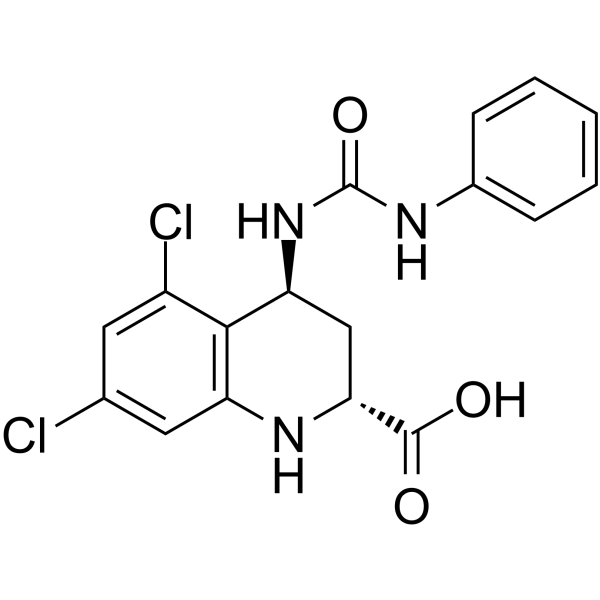 0 ImagesL-689560 is a potent N-methyl-D-aspartate (NMDA) receptor antagonist at the GluN1 glycine binding site. L-689560 is widely used as a radiolabeled ligand in binding studies and used for study the roles of NMDA receptors in normal neurological processes as well as in diseases.
-
(S)-(-)-HA 966
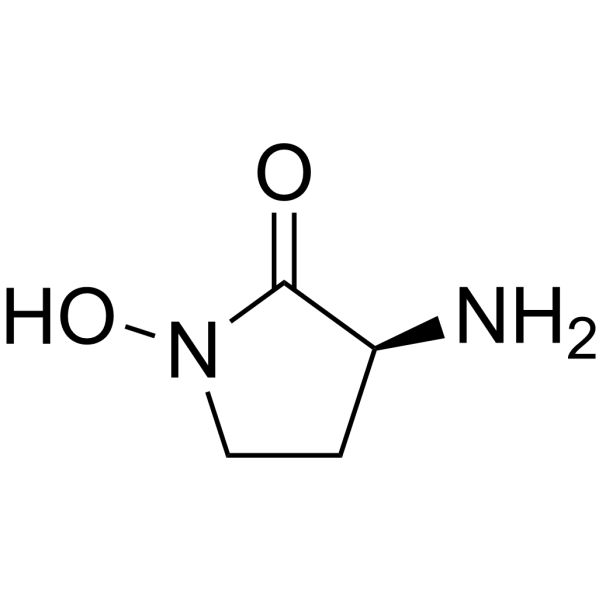 0 ImagesCat. No.: HY-100822ACAS No.: 111821-58-0Synonyms: (-)-HA 966(S)-(-)-HA 966 ((-)-HA 966), a γ-Hydroxybutyrate-like agent, is weakly active as an NMDA-receptor antagonist. (S)-(-)-HA 966 possesses muscle relaxant action and prevents enhanced mesocorticolimbic dopamine metabolism and behavioral correlates of restraint stress, conditioned fear.
-
Cl-HIBO
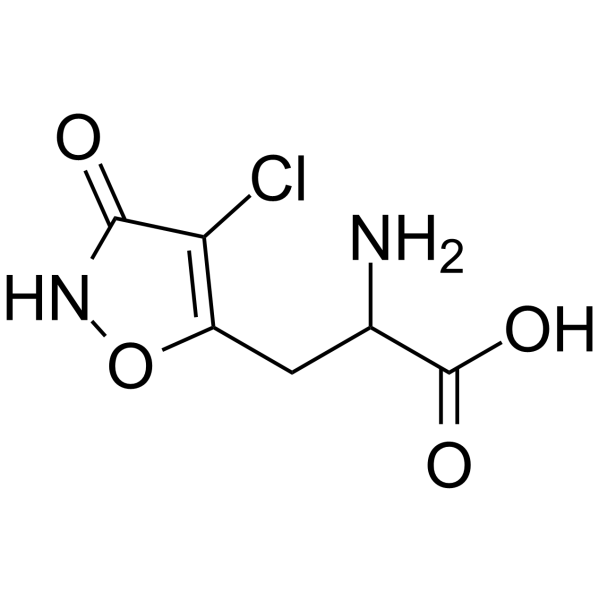 0 ImagesCl-HIBO is a highly subtype-selective GluR1/2 agonist (EC50=4.7 and 1.7 μM, respectively). Cl-HIBO is a potent AMPA receptor agonist (IC50=0.22 μM). Cl-HIBO has desensitizing properties.
-
Isoxsuprine-d6 hydrochloride
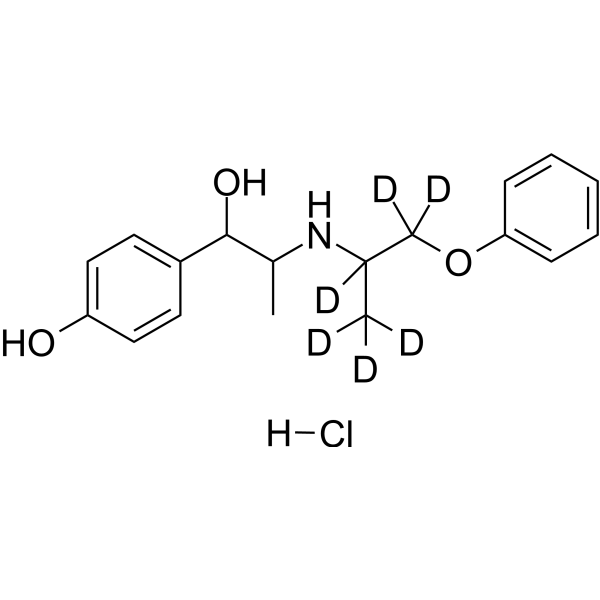 0 ImagesIsoxsuprine-d6 (hydrochloride) is the deuterium labeled Isoxsuprine hydrochloride. Isoxsuprine hydrochloride is a beta-adrenergic receptor agonist with Kis of 13.65 μΜ and 3.48 μΜ for myometrial and placcntal beta-adrenergic receptor, respectively. Isoxsuprine hydrochloride is also a NMDA receptor antagonist.
-
GluN2B-NMDAR Allosteric modulator 1
 0 ImagesGluN2B-NMDAR Allosteric modulator 1 is a selective GluN2B-NMDAR positive allosteric modulator. GluN2B-NMDAR Allosteric modulator 1 can increase glutamate- and aspartate-evoked GluN2B-NMDAR-gated currents with EC50 values of 43.7 and 18 nM. GluN2B-NMDAR Allosteric modulator 1 can reverse anxiety-like behavior and social cognition deficits in mice. GluN2B-NMDAR Allosteric modulator 1 can be used for the research of neurological disease, such as anxiety.
-
L-Glutamic acid-13C2
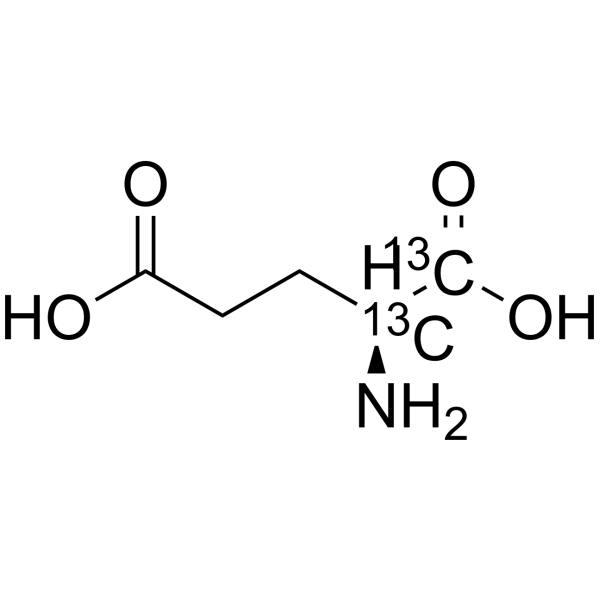 0 ImagesL-Glutamic acid-13C2 is the 13C labeled L-Glutamic acid. L-Glutamic acid acts as an excitatory transmitter and an agonist at all subtypes of glutamate receptors (metabotropic, kainate, NMDA, and AMPA). L-Glutamic acid shows a direct activating effect on the release of DA from dopaminergic terminals.
-
ZCAN262
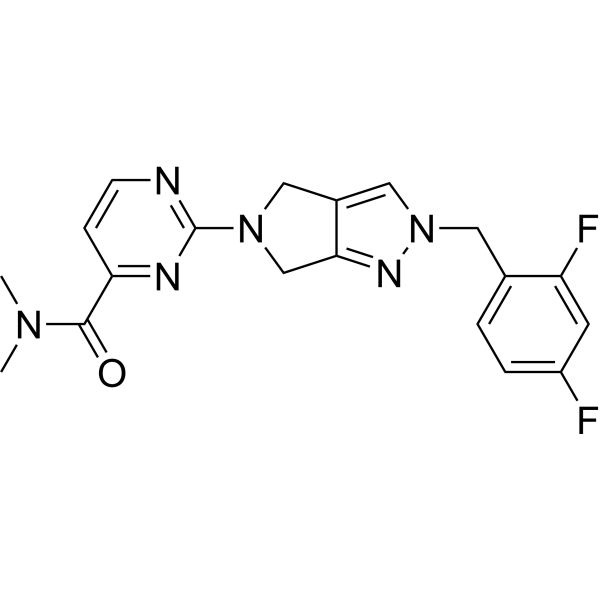 0 ImagesZCAN262 (compound 6 ) is an AMPA modulator. ZCAN262 prevents AMPA-mediated excitotoxicity by targeting an allosteric binding site.
-
Licostinel
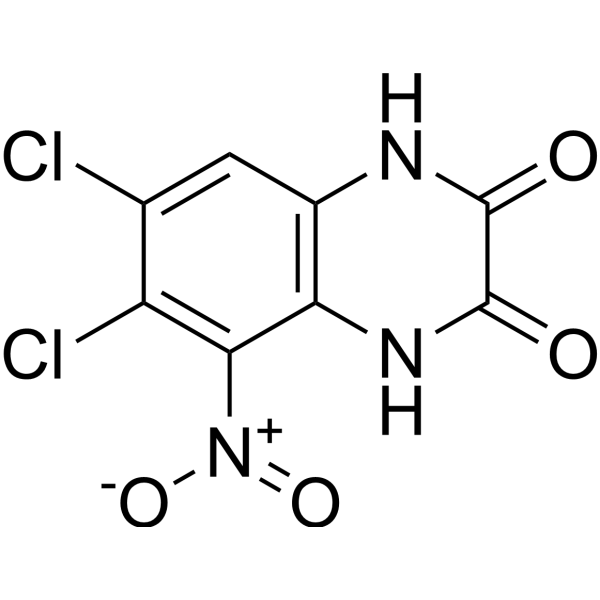 0 ImagesSynonyms: ACEA-1021Licostinel (ACEA-1021) is a glycine receptor antagonist (IC50: 59 nM). Licostinel has neuroprotective activity.
-
Pep2-AVKI
 0 ImagesPep2-AVKI is a selective peptide inhibitor of the binding of the AMPA receptor subunit (GluR2) at the C-terminal PDZ site to C-kinase (PICK1). Pep2-AVKI does not affect the binding of (AMPA-type glutamate receptor) GluA2 to GRIP or ABP. Pep2-AVKI does not increase the amplitude of AMPA currents. pep2-AVKI can be used to study neurological diseases.
-
L-Aspartic acid-13C4,15N,d3
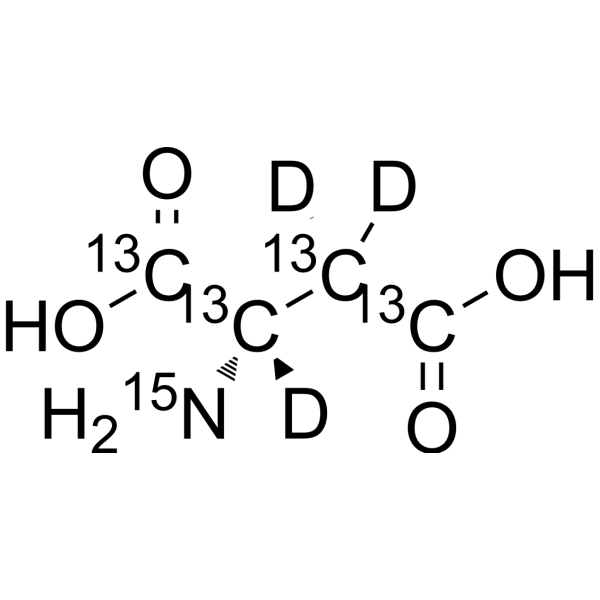 0 ImagesCat. No.: HY-N0666S5CAS No.: 1217475-13-2L-Aspartic acid-13C4,15N,d3 is the 15N, deuterated, 13C-labeled L-Aspartic acid (HY-N0666). L-Aspartic acid is a NMDA receptor agonist and acidic amino acid. L-Aspartic acid has no independent analgesic activity. L-Aspartic acid can antagonize the analgesic effects of D-Aspartic acid and Morphine. L-Aspartic acid regulates polymorph transformation, crystal growth/aggregation and nucleation processes of calcium carbonate, and can serve as a biomineralization template. L-Aspartic acid promotes burst firing of central neurons. L-Aspartic acid can be used in studies related to cerebral ischemia and epilepsy.
-
Neramexane hydrochloride
 0 ImagesNeramexane hydrochloride is an oral N-methyl-D-aspartate (NMDA) receptor antagonist, as a potential neuroprotectant for various central nervous system disorders, including Alzheimer's disease, and for the potential study of drug and alcohol dependence, and pain.




