



iGluR
Ionotropic glutamate receptors
iGluR (ionotropic glutamate receptor) is a ligand-gated ion channel that is activated by the neurotransmitter glutamate. iGluR are integral membrane proteins compose of four large subunits that form a central ion channel pore. Sequence similarity among all known glutamate receptor subunits, including the AMPA, kainate, NMDA, and δ receptors.
AMPA receptors are the main charge carriers during basal transmission, permitting influx of sodium ions to depolarise the postsynaptic membrane. NMDA receptors are blocked by magnesium ions and therefore only permit ion flux following prior depolarisation. This enables them to act as coincidence detectors for synaptic plasticity. Calcium influx through NMDA receptors leads to persistent modifications in the strength of synaptic transmission.
iGluR Isoform Specific Products
All Product Categories
-
iGluR Inhibitors
(131)
View all products
-
iGluR Agonists
(131)
View all products
-
iGluR Antagonists
(347)
View all products
-
iGluR Activators
(35)
View all products
-
iGluR Modulators
(93)
View all products
-
iGluR MDM2 Inhibitor
(1)
View all products
-
iGluR Controls
(5)
View all products
-
iGluR Ligands
(3)
View all products
-
iGluR Related Products (829)
Related Products (829)

-
Antibodies (11)
-
iGluR Isoform Comparison
-
Dynorphin A (1-10)
 0 ImagesCat. No.: HY-P1594CAS No.: 79994-24-4Dynorphin A (1-10) an endogenous opioid neuropeptide, binds to extracellular loop 2 of the κ-opioid receptor. Dynorphin A (1-10) also blocks NMDA-activated current with an IC50 of 42.0 μM.
-
Caroverine
 0 ImagesCat. No.: HY-106467CAS No.: 23465-76-1Caroverine is a potent, competitive and reversible antagonist of NMDA and AMPA glutamate receptor. Caroverine is also an antioxidant and calcium-blocking agent that exhibits vasorelaxant action. Caroverine can be used for the research of inner ear tinnitus.
-
Felbamate-d5
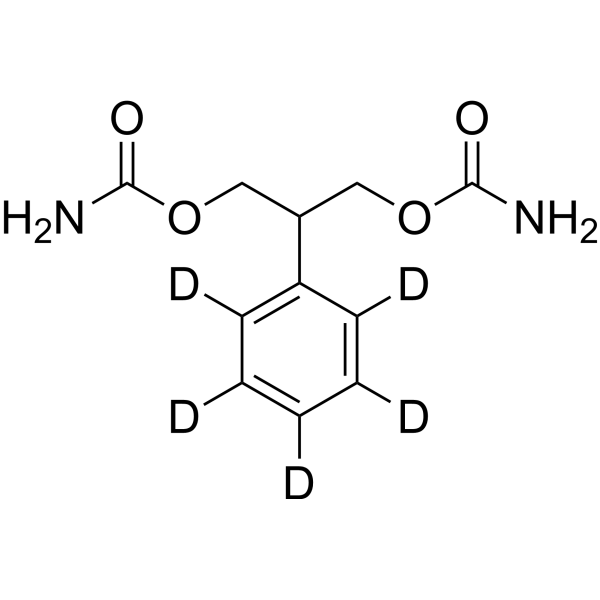 0 ImagesCat. No.: HY-B0184S1CAS No.: 1191888-51-3Synonyms: Felbamyl-d5; Felbatol-d5; Taloxa-d5Felbamate-d5 is the deuterium labeled Felbamate. Felbamate (W-554) is a potent nonsedative anticonvulsant whose clinical effect may be related to the inhibition of N-methyl-D-aspartate (NMDA).
-
Oleoyl-D-lysine sodium
 0 ImagesCat. No.: HY-148708AOleoyl-D-lysine sodium is a selective Glycine Transporter-2 (GlyT2) inhibitor based on lipid. Oleoyl-D-lysine sodium reverses neuropathic pain in mice, shows antidrowsiness effect on chronic neuropathic pain. Oleoyl-D-lysine sodium is safe and effective without respiratory depression.
-
(Rac)-Dizocilpine
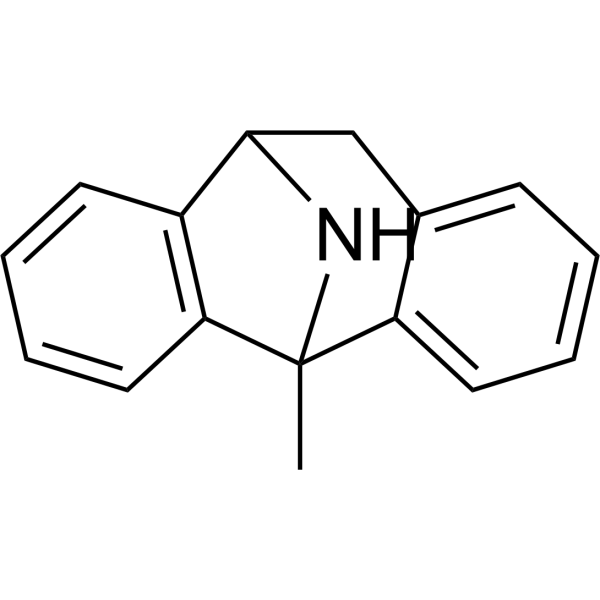 0 ImagesCat. No.: HY-107694CAS No.: 70449-94-4Synonyms: (Rac)-MK-801(Rac)-Dizocilpine ((Rac)-MK-801) is the racemate of Dizocilpine (HY-15084B). Dizocilpine (MK-801), a potent anticonvulsant, is a selective and non-competitive N-methyl-D-aspartate (NMDA) receptor antagonist.
-
GluN2B-NMDAR antagonist-2
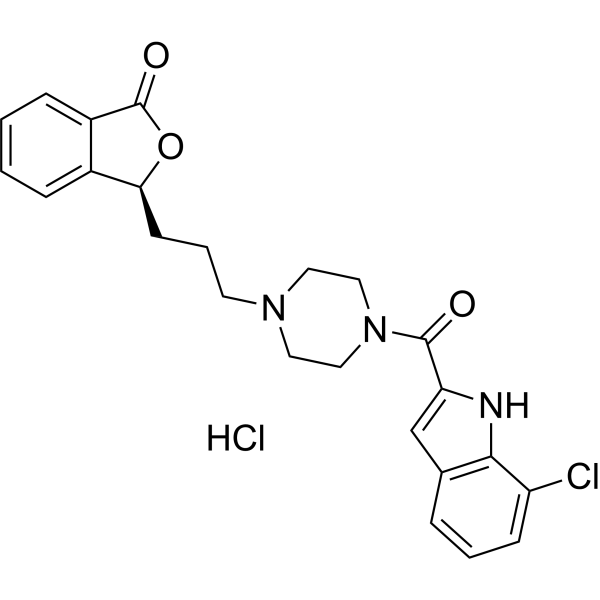 0 ImagesCat. No.: HY-157936CAS No.: 3034593-10-4GluN2B-NMDAR antagonist-2 (compound S-58) is a potent, selective and cross the blood-brain barrier NMDAR-GluN2B antagonist with an IC50 value of 74.01, nM. GluN2B-NMDAR antagonist-2 shows mild cytotoxicity. GluN2B-NMDAR antagonist-2 decreases the cerebral infarction rates and neurologic deficit scores. GluN2B-NMDAR antagonist-2 has the potential for the research of stroke.
-
Ampullosporin A
 0 ImagesCat. No.: HY-N5159CAS No.: 197960-94-4Ampullosporin A is a peptaibol-type polypeptide that can be isolated from the fungus Sepedonium ampullosporum HKI-0053, exhibiting neuroleptic-like activity. Ampullosporin A can inhibit hyperactivity induced by NMDA receptor antagonist MK-801 (HY-15084B) and ameliorate social behavior abnormalities caused by subchronic drug treatment. Ampullosporin A alters the activity of glutamate receptors without affecting dopamine D1 and D2 receptors.
-
(2R,3S)-Chlorpheg
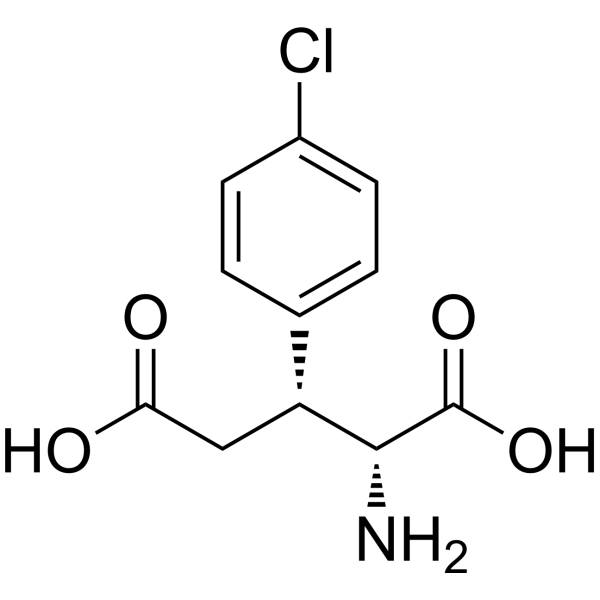 0 ImagesCat. No.: HY-101229CAS No.: 140924-23-8(2R,3R)-Chlorpheg is a week antagonist of L-homocysteic acid (L-HCA) induced depolarization.(2R,3R)-Chlorpheg also is a weak N-methyl-D-aspartate (NMDA) antagonist.
-
Flupirtine-d6 hydrochloride
 0 ImagesCat. No.: HY-W709349SSynonyms: D 9998-d6 hydrochlorideFlupirtine-d6 (D 9998-d6) hydrochloride is the deuterium labeled Flupirtine hydrochloride (HY-W709349). Flupirtine hydrochloride is an orally active, blood-brain barrier-crossing non-opioid analgesic and neuroprotective agent. Flupirtine hydrochloride is a neuronal potassium channel opener (Kv7 activator), a NMDA receptor antagonist and a GABA receptor activator. Flupirtine hydrochloride stabilizes blood-brain-barrier integrity, reduces oxidative stress and brain leukocyte infiltration, enhances angioneurogenesis, suppresses calcium influx, stabilizes neuronal resting membrane potential, and counteracts focal cerebral ischemia. Flupirtine hydrochloride exhibits analgesic, muscle relaxant properties, protects neurons from excitotoxic, ischemic, or cytokine-mediated death. Flupirtine hydrochloride functions as a non-opioid analgesic without antipyretic or antiphlogistic properties, shows no relevant affinity to opiate receptor. Flupirtine hydrochloride can be used for the research of focal cerebral ischemia, pain, Alzheimer’s disease, or multiple sclerosis.
-
Conantokin G
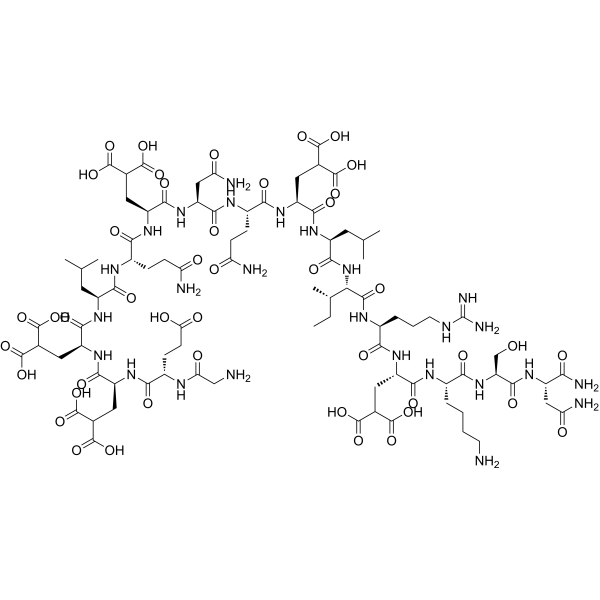 0 ImagesCat. No.: HY-P1293CAS No.: 93438-65-4Conantokin G, a 17-amino-acid peptide, is a potent, selective and competitive antagonist of N-methyl-D-aspartate (NMDA) receptors. Conantokin G inhibits NMDA-evoked currents in murine cortical neurons with an IC50 of 480 nM. Conantokin G has neuroprotective properties.
-
8-F-2-(Me-Pip-Me)-Tryptanthrin
 0 ImagesCat. No.: HY-184078CAS No.: 1563106-65-98-F-2-(Me-Pip-Me)-Tryptanthrin is a tryptanthrin derivative with blood-brain barrier penetration. 8-F-2-(Me-Pip-Me)-Tryptanthrin protects neurons from Aβ-induced apoptosis, inhibits Aβ-induced Tau protein hyperphosphorylation and neuronal synaptic damage, and improves learning and memory abilities in Alzheimer's disease mice. 8-F-2-(Me-Pip-Me)-Tryptanthrin can be used for the research of nervous system diseases, including diseases related to abnormal Tau protein phosphorylation and abnormal PSD-95 function.
-
BTS 72664
 0 ImagesCat. No.: HY-182548CAS No.: 165383-52-8BTS 72664 is a broad-spectrum, non-sedating, orally effective anticonvulsant. Its anticonvulsant effect mainly arises from enhancing GABAA receptor (GABAA receptor)-mediated chloride channel currents, while it exerts weak blocking effects on Na+ channels (Ki = 350 μM) and NMDA receptors (NMDA receptor) (IC50 = 43 μM). BTS 72664 prevents the elevation of extracellular glutamate, glycine and serine concentrations in neurons, reduces cerebral infarct size, promotes functional recovery, prevents multiple types of epileptic seizures, and has low sedative potential. BTS 72664 can be used for the research of epilepsy, stroke and migraine.
-
GluR23Y
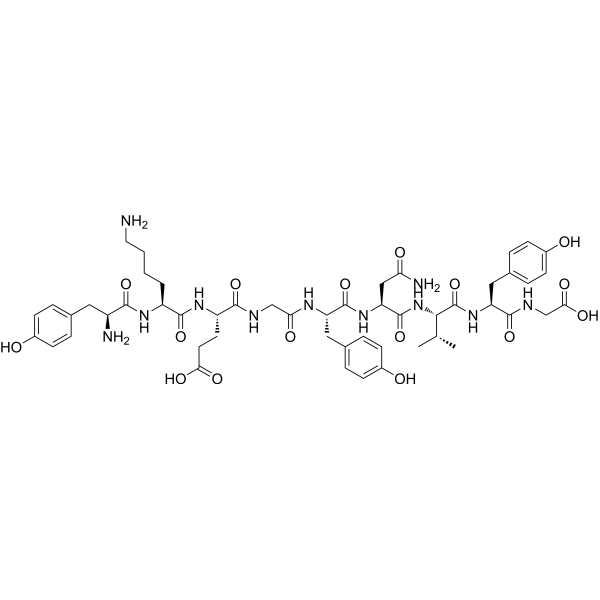 0 ImagesCat. No.: HY-P5487CAS No.: 696659-27-5GluR23Y is a biological active peptide. (This GluR23Y peptide was used in ELISA cell-surface assay for the insulin-stimulated endocytosis of native AMPA receptors in cultured hippocampal neurons. GluR23Y prevented any insulin-induced reduction. The blockade of insulin action was observed when the GluR23Y peptide was delivered into neurons by fusing it to the membrane transduction domain of HIV-1.)
-
ZL006-05
 0 ImagesCat. No.: HY-184108CAS No.: 2486316-20-3ZL006-05 is an orally active, brain-penetrant nNOS–PSD-95 and α2-containing GABAA dual-target inhibitor. ZL006-05 blocks the nNOS-PSD-95 protein-protein interaction and selectively potentiatesα2-containing GABAA receptors. ZL006-05 attenuates central sensitization and strengthens inhibitory GABAergic synaptic transmission. ZL006-05 can be used for the study of neuropathic pain, cancer pain, chemotherapy-induced peripheral neuropathic pain, ischemic stroke, poststroke depression and anxiety.
-
D-Serine (Standard)
 0 ImagesSynonyms: (R)-Serine (Standard)D-Serine (Standard) is the analytical standard of D-Serine. This product is intended for research and analytical applications. D-Serine ((R)-Serine), an endogenous amino acid involved in glia-synapse interactions that has unique neurotransmitter characteristics, is a potent co-agonist at the NMDA glutamate receptor. D-Serinee has a cardinal modulatory role in major NMDAR-dependent processes including NMDAR-mediated neurotransmission, neurotoxicity, synaptic plasticity, and cell migration[1][2].
-
(S)-3-Hydroxyphenylglycine
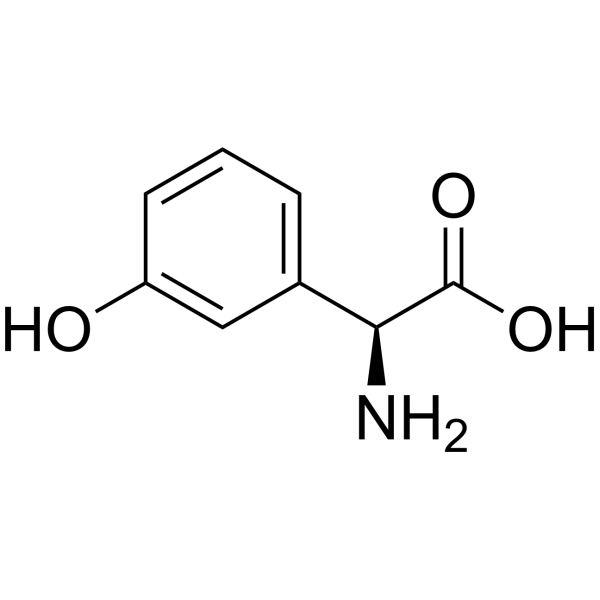 0 ImagesCat. No.: HY-100841ACAS No.: 71301-82-1Synonyms: (S)-3HPG(S)-3-Hydroxyphenylglycine ((S)-3HPG) is a metabotropic glutamate receptor (mGluR) agonist with an EC50 of 98 μM in rats. (S)-3-Hydroxyphenylglycine stimulates phosphoinositide hydrolysis, inhibits ACPD-induced depolarization, and exerts weak agonistic and inhibitory effects on mGluR1-mediated signal transduction. (S)-3-Hydroxyphenylglycine selectively activates mGluR1/5, downregulates NMDA receptor channels, reduces NMDA whole-cell currents and intracellular Ca2+ accumulation, and induces rapid intracellular Ca2+ oscillations in cortical neurons.
-
DL-AP7
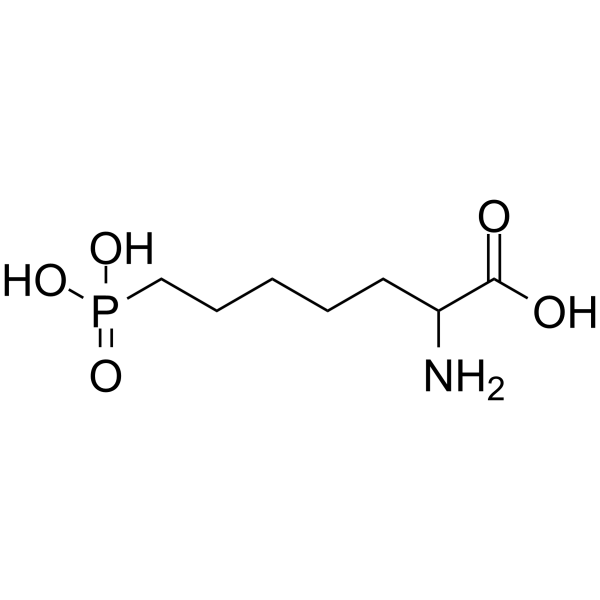 0 ImagesCat. No.: HY-100782CAS No.: 85797-13-3Synonyms: 2-APH; 2-Amino-7-phosphonoheptanoic acidDL-AP7 is a competitive NMDA antagonist and an anticonvulsant. DL-AP7 blocks the NMDA-induced convulsions and impairs learning performance in a passive avoidance task in mice.
-
NMDA receptor antagonist 7
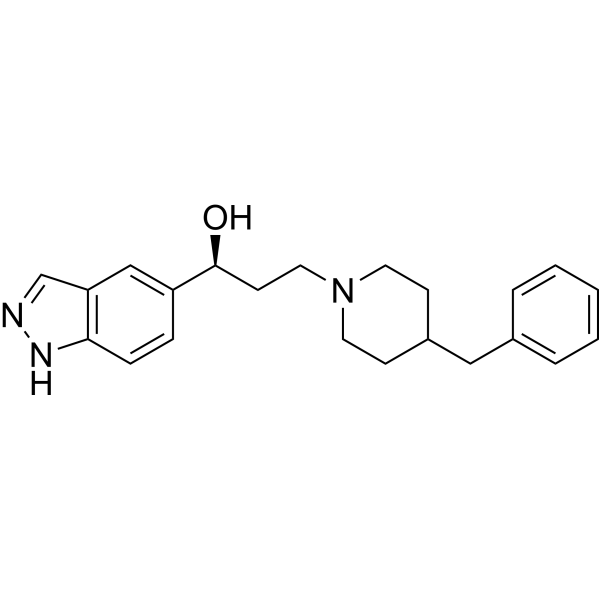 0 ImagesCat. No.: HY-155185CAS No.: 3033746-13-0NMDA receptor antagonist 7 (Compound (S)-10a) is GluN2B subunit-selective NMDA Receptor antagonist, with an Ki of 93 nM and an IC50 of 72 nM. NMDA receptor antagonist 7 can be used for research of neurodegenerative diseases.
-
Tat-NR2Baa TFA
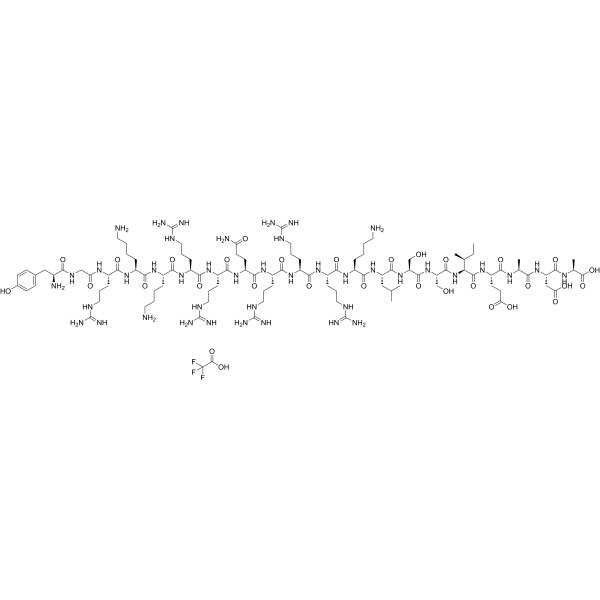 0 ImagesCat. No.: HY-P2307ATat-NR2BAA TFA is the control peptide of Tat-NR2B9c (HY-P0117), inactive. The sequence of Tat-NR2BAA TFA is similar to Tat-NR2B9c, but it has a double-point mutation in the COOH terminal tSXV motif, making it incapable of binding PSD-95. Tat-NR2B9c is a membrane-permeant peptide and disrupts PSD-95/NMDAR binding, correlate with uncoupling NR2B- and/or NR2A-type NMDARs from PSD-95.
-
NMDAR blocker 1
 0 ImagesCat. No.: HY-131691CAS No.: 76991-05-4NMDAR blocker 1 is an NMDA receptor channel blocker with an IC50 of 5.0 μM. NMDAR blocker 1 exhibits fast on-off blockade kinetics and strong voltage dependence, and does not compete with glutamate or glycine. NMDAR blocker 1 prevents glutamate/NMDA-induced intracellular Ca2+ overload, modulates the glutamate-nitric oxide-cGMP pathway. NMDAR blocker 1 prevents in vitro excitotoxic neurodegeneration of cultured cerebellar and hippocampal neurons. NMDAR blocker 1 attenuates excitotoxic insult in an mouse model of hyperammonemia-induced excitotoxicity. NMDAR blocker 1 can be used for the research of neurodegenerative diseases.




