



mAChR
Muscarinic acetylcholine receptor
mAChRs (muscarinic acetylcholine receptors) are acetylcholine receptors that form G protein-receptor complexes in the cell membranes of certainneurons and other cells. They play several roles, including acting as the main end-receptor stimulated by acetylcholine released from postganglionic fibersin the parasympathetic nervous system. mAChRs are named as such because they are more sensitive to muscarine than to nicotine. Their counterparts are nicotinic acetylcholine receptors (nAChRs), receptor ion channels that are also important in the autonomic nervous system. Many drugs and other substances (for example pilocarpineand scopolamine) manipulate these two distinct receptors by acting as selective agonists or antagonists. Acetylcholine (ACh) is a neurotransmitter found extensively in the brain and the autonomic ganglia.
mAChR Isoform Specific Products
All Product Categories
-
mAChR Inhibitors
(115)
View all products
-
mAChR Agonists
(148)
View all products
-
mAChR Antagonists
(320)
View all products
-
mAChR Activators
(20)
View all products
-
mAChR Modulators
(48)
View all products
-
mAChR Inducer
(1)
View all products
-
mAChR Controls
(9)
View all products
-
mAChR Ligands
(10)
View all products
-
mAChR Related Products (723)
Related Products (723)

-
Antibodies (2)
-
mAChR Isoform Comparison
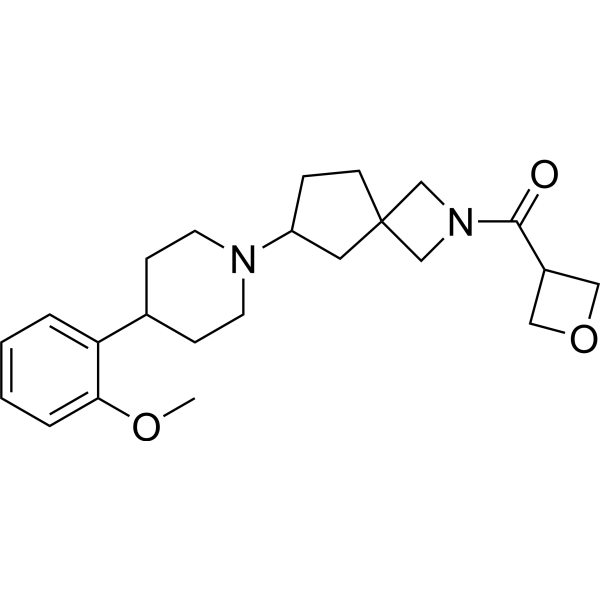
-
L 689660 maleate
 0 ImagesCat. No.: HY-120915CAS No.: 144860-79-7L 689660 maleate, a cholinomimetic agent, is a selective M1 and M3 muscarinic receptors agonist. L 689660 maleate is a potent M1 muscarinic receptor full agonist in the rat superior cervical ganglion (pEC50 of 7.3). L 689660 maleate is a potent M3 receptors agonist in the guinea-pig ileum myenteric plexus-longitudinal muscle or in trachea (pEC50 of 7.5 and 7.7, respectively).

-
Milameline hydroiodide
 0 ImagesCat. No.: HY-107650ASynonyms: CI 979 hydroiodide; RU 35926 hydroiodideMilameline (CI 979; RU35926) hydroiodide is a nonselective, partical and orally active muscarinic receptor agonist that improves cognition. Milameline hydroiodide has equal affinity for different subtypes of human muscarinic receptors with IC50 of 1.3 µM for M1-, 1.1 µM for M2-, 1.5 µM for M3-, and 1.9 µM for M4-muscarinic receptors. Milameline hydroiodide has a higher affinity for sites [3H]CMD (IC50 = 20 nM), than [3H]QNB, (IC50 = 3059 nM). Milameline hydroiodide produces both central and peripheral cholinergic effects and reverses the cognitive deficits induced by Scopolamine (HY-N0296). Milameline hydroiodide can be used for the study of Alzheimer’s Disease.
-
Dicyclomine
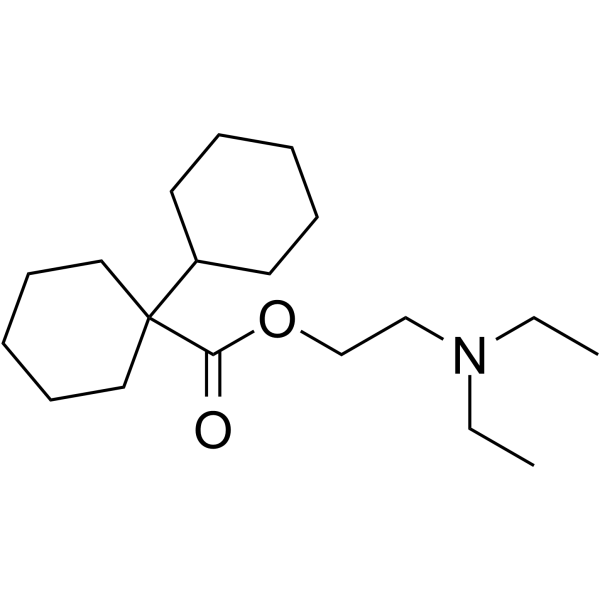 0 ImagesDicyclomine (Dicycloverine) is a potent and orally active muscarinic cholinergic receptors antagonist. Dicyclomine (Dicycloverine) shows high affinity for muscarinic M1 receptor subtype (Ki=5.1 nM) and M2 receptor subtype (Ki=54.6 nM) in brush-border membrane and basal plasma membranes, respectively. Dicyclomine is an antispasmodic agent and relieves smooth muscle spasm of the gastrointestinal tract in vivo.
-
Clozapine N-oxide dihydrochloride (Standard)
 0 ImagesClozapine N-oxide (dihydrochloride) (Standard) is the analytical standard of Clozapine N-oxide (dihydrochloride). This product is intended for research and analytical applications. Clozapine N-oxide dihydrochloride is a major metabolite of Clozapine and a human muscarinic designer receptors (DREADDs) agonist. Clozapine N-oxide dihydrochloride activates the DREADD receptor hM3Dq and hM4Di. Clozapine N-oxide dihydrochloride can cross the blood-brain barrier[1][2][3][4]. Clozapine is a potent dopamine antagonist and also a potent and selective muscarinic M4 receptor (EC50=11 nM) agonist[5][6].
-
Arecoline hydrobromide (Standard)
 0 ImagesSynonyms: methyl 1,2,5,6-tetrahydro-1-methyl-3-pyridinecarboxylate hydrobromide (Standard)Arecoline hydrobromide (Standard) is the analytical standard of Arecoline hydrobromide. This product is intended for research and analytical applications. Arecoline hydrobromide, a naturally brain-penetrant and orally active occurring psychoactive alkaloid, is a partial agonist of nicotinic and muscarinic acetylcholine receptor. Arecoline hydrobromide exhibits stimulation, alertness, anxiolysis and anti-parasitic effects. Arecoline hydrobromide also can induce oxidative stress.
-
(±)-Muscarine chloride
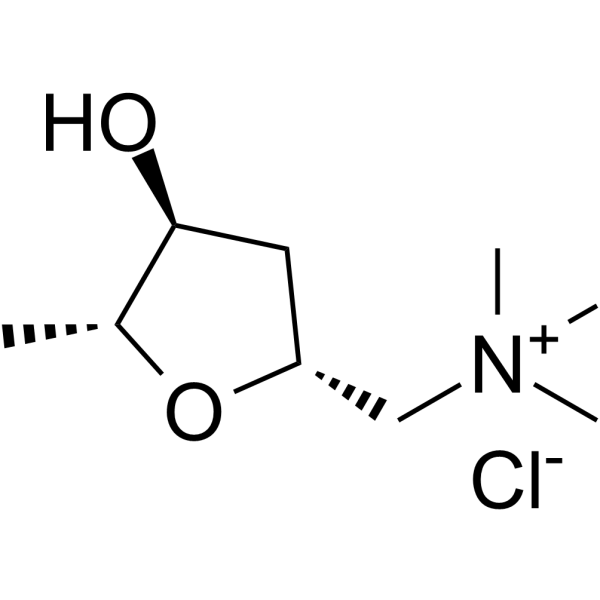 0 Images(±)-Muscarine chloride is the racemate of Muscarine chloride. Muscarine is a prototype muscarinic acetylcholine receptor agonist.
-
A-72055
 0 ImagesCat. No.: HY-108157CAS No.: 150358-76-2A-72055 is a partial agonist of muscarinic receptors. A-72055 has binding activity to both M1 and M2 receptors, with Ki values of 32 nM and 30 nM, respectively. A-72055 can enhance cognitive function and improve learning and memory deficits. A-72055 has better security. A-72055 can be used for research on neurological disorders such as cognitive impairment.
-
YM-796 dihydroxybutanedioate
 0 ImagesCat. No.: HY-19092CAS No.: 171252-79-2YM-796 dihydroxybutanedioate is a selective muscarinic M1 receptor agonist. YM-796 dihydroxybutanedioate can improve cognitive impairment and reduce amyloid plaque deposition. YM-796 dihydroxybutanedioate can be used in the research of cognitive impairment diseases such as Alzheimer's disease.
-
M1/M2/M4 muscarinic agonist 1
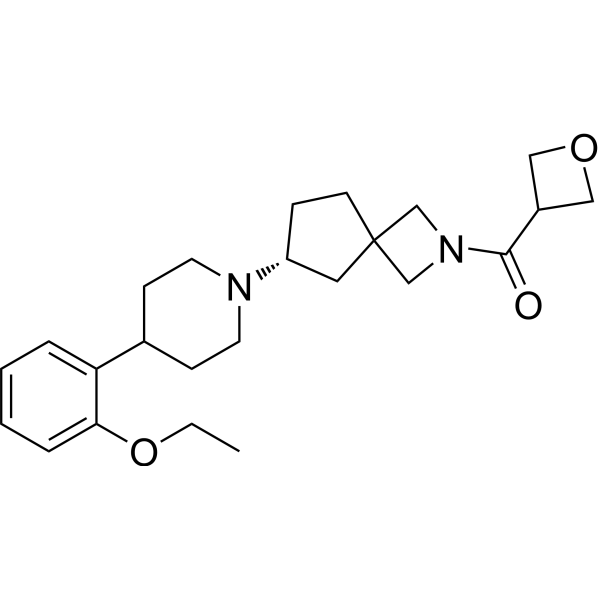 0 ImagesCat. No.: HY-149704CAS No.: 2640109-42-6M1/M2/M4 muscarinic agonist 1 (Compound 42) is a muscarinic M4/M1/M2 agonist with EC50 values of 6.5, 26 and 210 nM for M4/M1/M2, respectively. M1/M2/M4 muscarinic agonist 1 can be used for research on mental diseases, such as schizophrenia, delusion, etc.
-
M3 mAChR agonist 1
 0 ImagesCat. No.: HY-131196CAS No.: 1624297-26-2M3 mAChR agonist 1 is an M3-preferring M3/M5 mAChR dual positive allosteric modulators (PAM). M3 mAChR agonist 1 shows excellent subtype selectivity over other subtypes of mAChRs including M1, M2, and M4 mAChRs. M3 mAChR agonist 1 increases the contraction of isolated rat bladder strips by modulating the M3 muscarinic acetylcholine receptor, leading to enhanced signaling pathways. M3 mAChR agonist 1 can be used for the research of endocrinology.
-
Methacholine bromide
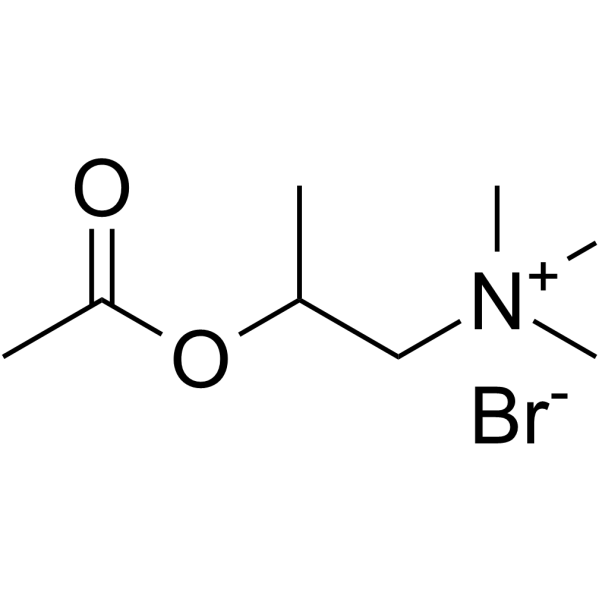 0 ImagesMethacholine (Acetyl-β-methylcholine) bromide is a potent muscarinic-3 (M3) agonist. Methacholine bromide acts directly on acetylcholine receptors on smooth muscle causing bronchoconstriction and airway narrowing. Methacholine bromide shows a high sensitivity to identify bronchial hyperresponsiveness (BHR). Methacholine bromide can be used to measure airway hyperresponsiveness (AHR) as a diagnostic aid in the assessment of individuals with asthma-like symptoms and normal resting expiratory flow rates.
-
Betovumeline
 0 ImagesCat. No.: HY-172418CAS No.: 1314018-44-4Betovumeline is the agonist for muscarinic receptor and can be used for researchs of neurological disorders.
-
Muscarine-d9 iodide
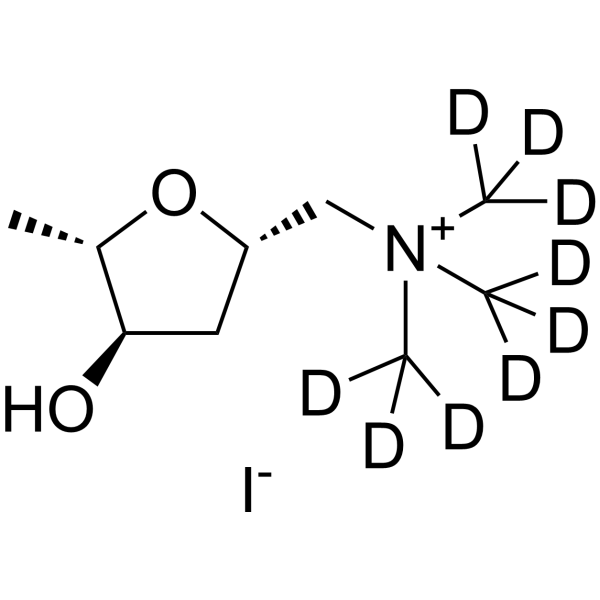 0 ImagesCat. No.: HY-107654SSynonyms: (+)-Muscarine-d9 iodideMuscarine-d9 (iodide) is the deuterium labeled Muscarine iodide. Muscarine ((+)-Muscarine) iodide is a toxin that can stimulate the parasympathetic nervous system. Muscarine iodide is a prototype muscarinic acetylcholine receptor agonist.
-
AF710B
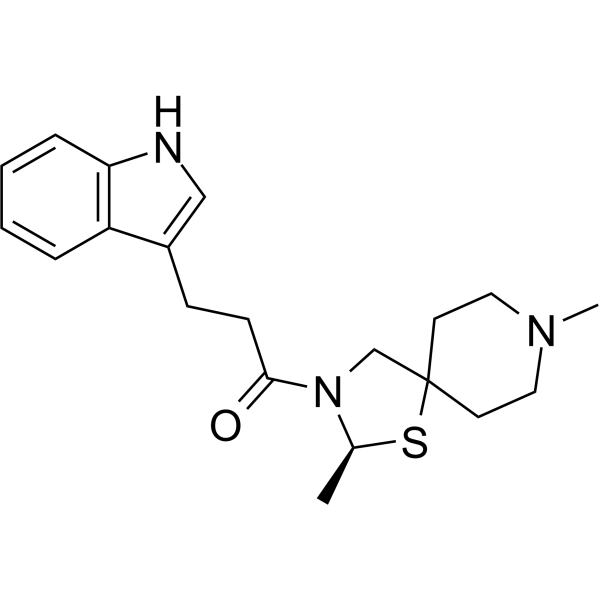 0 ImagesCat. No.: HY-116586AF710B is an orally effective allosteric agonist for the M1 muscarinic receptor and σ1 receptor. AF710B activates the downstream phosphorylated ERK1/2 and phosphorylated CREB signaling pathways. AF710B simultaneously improves cognitive function and alleviates the core pathological features of Alzheimer's disease, including Aβ deposition, excessive Tau phosphorylation and neuroinflammation. AF710B is applicable to the research of Alzheimer's disease.
-
Pilocarpine-d5 hydrochloride
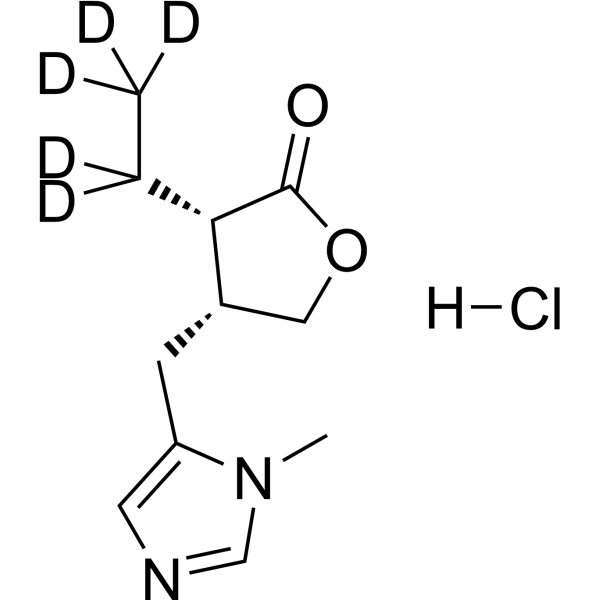 0 ImagesCat. No.: HY-B0726S1Pilocarpine-d5 hydrochloride is deuterated labeled Pilocarpine hydrochloride (HY-B0726). Pilocarpine Hydrochloride is a potent M3-type muscarinic acetylcholine receptor (M3 muscarinic receptor) agonist.
-
TAAR1 agonist 2
 0 ImagesCat. No.: HY-W909173CAS No.: 1804128-38-8TAAR1 agonist 2 (compound 30) is a full agonist of trace amine-associated receptor 1 (TAAR1) (pEC50=7.5). TAAR1 agonist 2 also exhibits agonist activity at H1 receptors and activates several members of the muscarinic acetylcholine receptor family, such as the M2 receptor (pEC50=5). TAAR1 agonist 2 can be used in the study of neuropsychiatric diseases.
-
Muscarinic M1 receptor agonist-1
 0 ImagesCat. No.: HY-177410CAS No.: 1803346-97-5Muscarinic M1 receptor agonist-1 (Ex.1-21) is a Muscarinic M1 receptor agonist. Muscarinic M1 receptor agonist-1 can be used in the research of psychiatric disorders such as schizophrenia.
-
KTX-005
 0 ImagesCat. No.: HY-173031CAS No.: 162182-77-6KTX-005 is the agonist for mAChR that regulates the signaling pathway of the neurotransmitter acetylcholine, and can be used for research of schizophrenia.




