



mAChR
Muscarinic acetylcholine receptor
mAChRs (muscarinic acetylcholine receptors) are acetylcholine receptors that form G protein-receptor complexes in the cell membranes of certainneurons and other cells. They play several roles, including acting as the main end-receptor stimulated by acetylcholine released from postganglionic fibersin the parasympathetic nervous system. mAChRs are named as such because they are more sensitive to muscarine than to nicotine. Their counterparts are nicotinic acetylcholine receptors (nAChRs), receptor ion channels that are also important in the autonomic nervous system. Many drugs and other substances (for example pilocarpineand scopolamine) manipulate these two distinct receptors by acting as selective agonists or antagonists. Acetylcholine (ACh) is a neurotransmitter found extensively in the brain and the autonomic ganglia.
mAChR Isoform Specific Products
All Product Categories
-
mAChR Inhibitors
(115)
View all products
-
mAChR Agonists
(147)
View all products
-
mAChR Antagonists
(320)
View all products
-
mAChR Activators
(20)
View all products
-
mAChR Modulators
(48)
View all products
-
mAChR Inducer
(1)
View all products
-
mAChR Controls
(9)
View all products
-
mAChR Ligands
(10)
View all products
-
mAChR Related Products (722)
Related Products (722)

-
Antibodies (2)
-
mAChR Isoform Comparison
-
Propantheline-d3 bromide
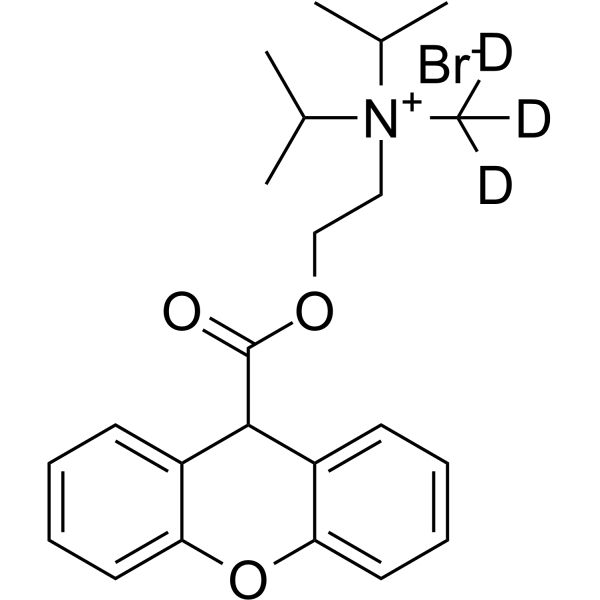 0 ImagesPropantheline-d3 (bromide) is the deuterium labeled Propantheline bromide. Propantheline bromide is an antimuscarinic agent, used for the treatment of hyperhidrosis, cramps or spasms of the stomach, intestines or bladder, and enuresis.
-
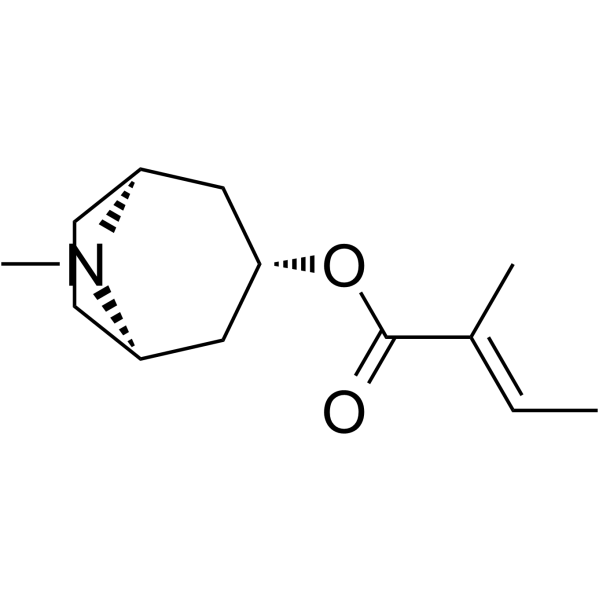
PF-06767832
 0 ImagesPF-06767832 is a potent muscarinic M1 selective positive allosteric modulator (PAM), with the EC50 of 60 nM. PF-06767832 has good brain penetration.
-
LASSBio-873
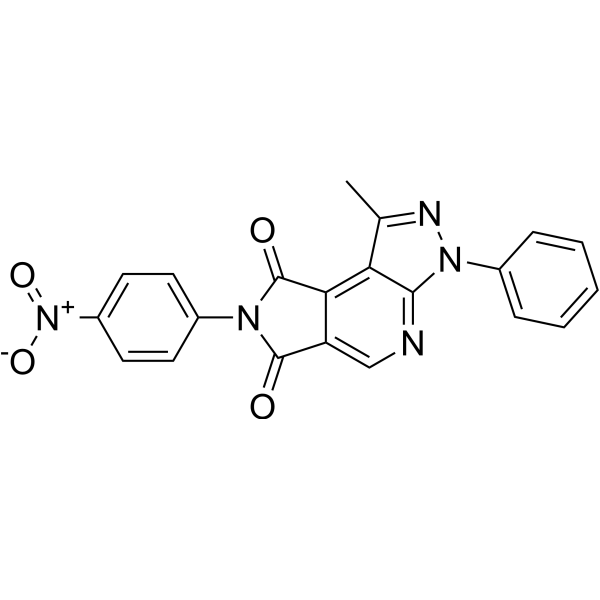 0 ImagesLASSBio-873 is an orally active muscarinic cholinergic receptor (mAChR) agonist that crosses the blood-brain barrier. LASSBio-873 has potent analgesic effects on acute and inflammatory pain. The analgesic effect of LASSBio-873 can be inhibited by intrathecal injection of the M2 receptor antagonist methoctramine.
-
(R)-Oxybutynin hydrochloride
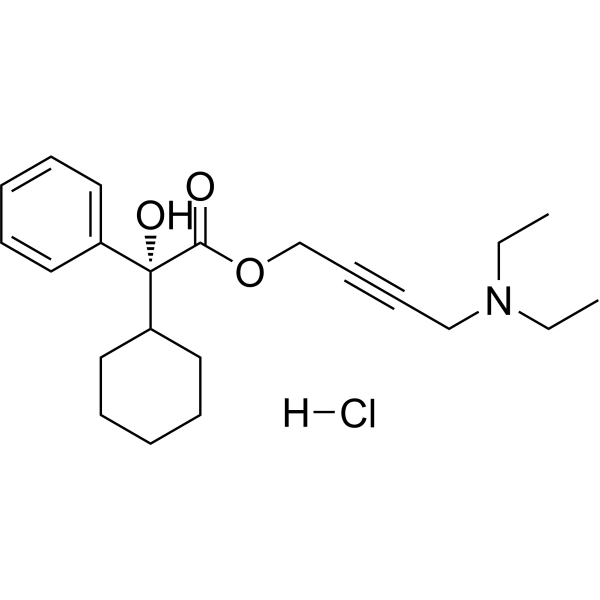 0 ImagesSynonyms: Aroxybutynin hydrochloride(R)-Oxybutynin hydrochloride (Aroxybutynin hydrochloride), an enantiomer of Oxybutynin hydrochloride, is an orally active muscarinic receptor antagonist. (R)-Oxybutynin hydrochloride exhibits antispasmodic and anticholinergic activities, and competitively antagonizes carbachol-induced contractions. (R)-Oxybutynin hydrochloride can be used in the research of urinary incontinence caused by neurogenic bladder dysfunction.
-
VU 6008667
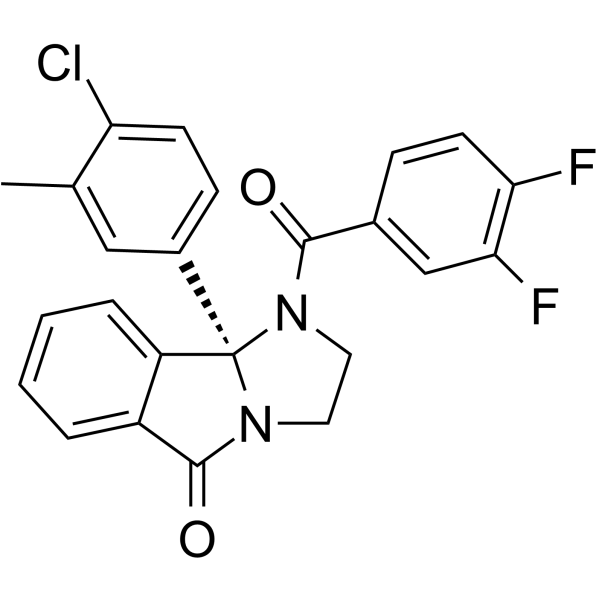 0 ImagesVU 6008667 is a selective negative allosteric modulator of M5 NAM with IC50s of 1.2 μM and 1.6 μM for human M5 and rat M5, respectively. High CNS penetration.
-
VU6008055
 0 ImagesSynonyms: AF98943VU6008055 (AF98943) is a brain-penetrant, orally active and selective muscarinic acetylcholine receptor subtype 4 (mAChR4) activator with human EC50 values of 73.4 nM. VU6008055 potentiates mAChR4 receptor activity in the presence of acetylcholine, and exhibits no activity at mAChR1, mAChR3, or mAChR5. VU6008055 can be used for the research of schizophrenia, parkinson’s disease, alzheimer’s disease.
-
Clozapine-d8
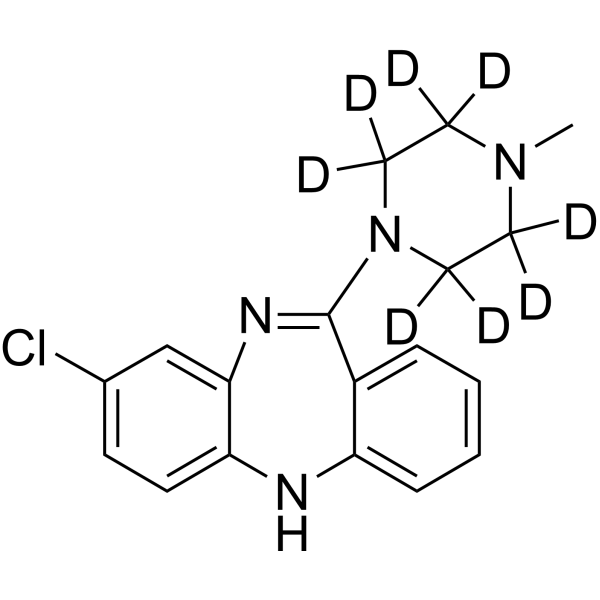 0 ImagesCat. No.: HY-14539SCAS No.: 1185053-50-2Synonyms: HF 1854-d8Clozapine-d8 is the deuterium labeled Clozapine. Clozapine is an antipsychotic used for the research of schizophrenia. Clozapine has high affinity for a number of neuroreceptors.
-
VU0152100
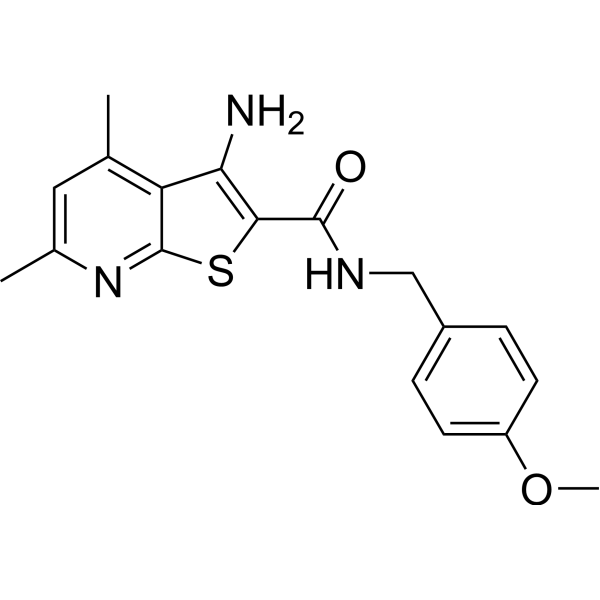 0 ImagesSynonyms: VU152100VU0152100 (VU152100) is a highly selective mAChR positive allosteric modulator (permeable to the blood-brain barrier). VU0152100 reverses Amphetamine-induced hypermotility in rats and increased levels of extracellular dopamine in nucleus accumbens and caudate-putamen. VU0152100 has good research potential in psychosis and cognitive impairment associated with mental disorders such as schizophrenia.
-
VU6000918
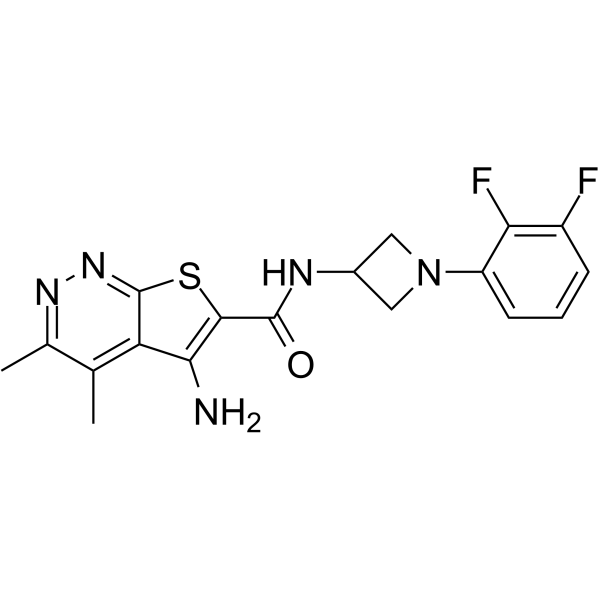 0 ImagesVU6000918 is a muscarinic acetylcholine (M4) positive allosteric modulator, with an EC50 of 19 nM for hM4.
-
Brompheniramine
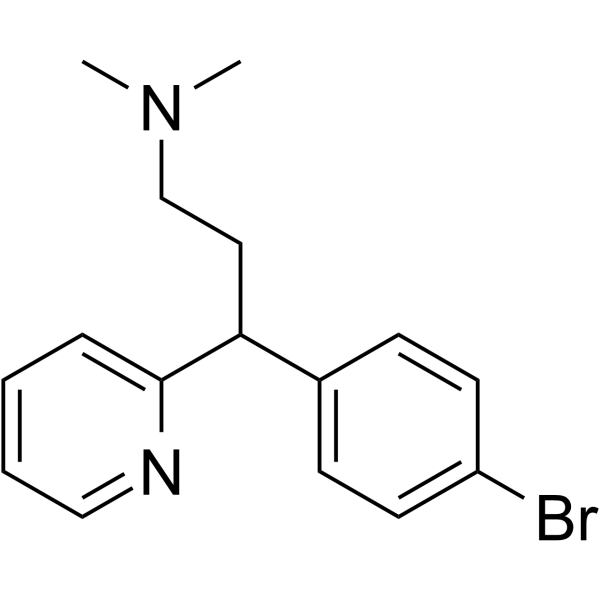 0 ImagesBrompheniramine ((±)-Brompheniramine) is a potent and orally active antihistamine of the alkylamine class. Brompheniramine is a selective histamine H1 receptor antagonist with a Kd of 6.06 nM. Brompheniramine can block the hERG channels, calcium channels, and sodium channels with IC50s of 0.90 μM, 16.12 μM and 21.26 μM, respectively. Brompheniramine has anticholinergic, antidepressant and anesthetic properties and can be used for allergic rhinitis research.
-
VU0467485
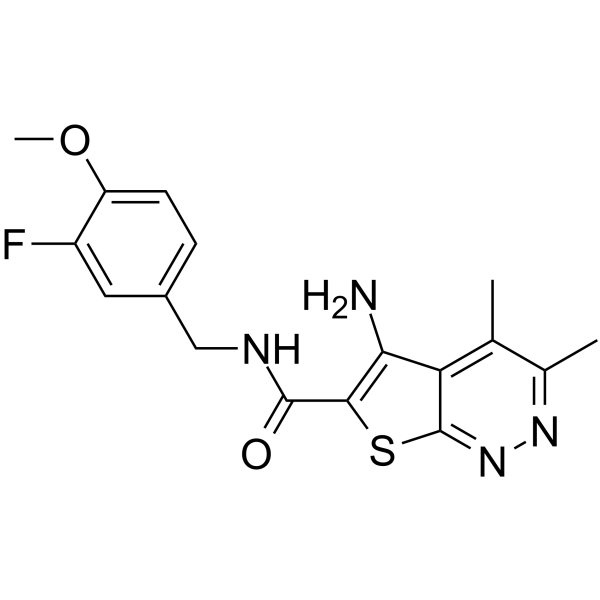 0 ImagesSynonyms: AZ13713945VU0467485 (AZ13713945) is a potent, selective, and orally bioavailable muscarinic acetylcholine receptor 4 (M4) positive allosteric modulator (PAM). VU0467485 (AZ13713945) potentiates activity of ACh at M4 with EC50s of 26.6 nM and 78.8 nM at rat and human M4 receptors, respectively. VU0467485 (AZ13713945) shows selectivity for M4 over human and rat M1/2/3/5. VU0467485 (AZ13713945) displays moderate to high CNS penetration. VU0467485 (AZ13713945) has antipsychotic-like activity.
-
DAU 5884 hydrochloride
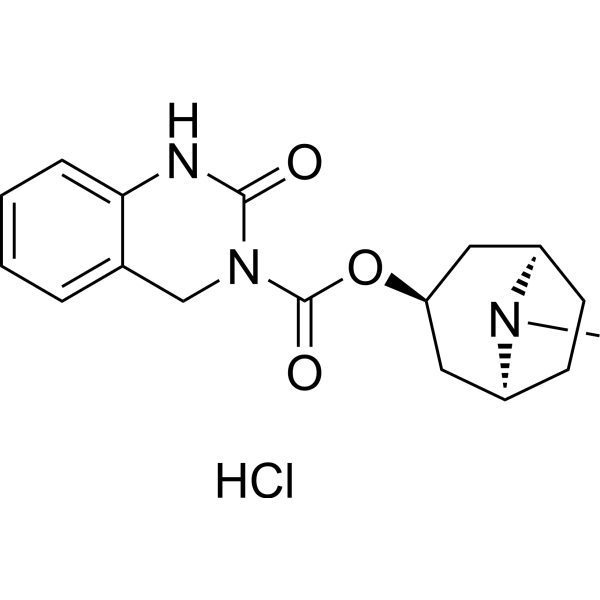 0 ImagesDAU 5884 hydrochloride is a potent muscarinic M3 receptor antagonist. DAU 5884 hydrochloride inhibits methacholine-dependent effects on cell proliferation and muscle contractility.
-
PCS1055
 0 ImagesPCS1055 is a selective and competitive antagonist for muscarinic M4 receptor with an IC50 of 18.1 nM and a Kd of 5.72 nM. PCS1055 inhibits radioligand [3H]-NMS binding to the M4 receptor with a Ki of 6.5 nM. PCS1055 is also an inhibitor for AChE with IC50 of 22 nM and 120 nM for electric eel and human AChE, respectively.
-
Cimetropium Bromide
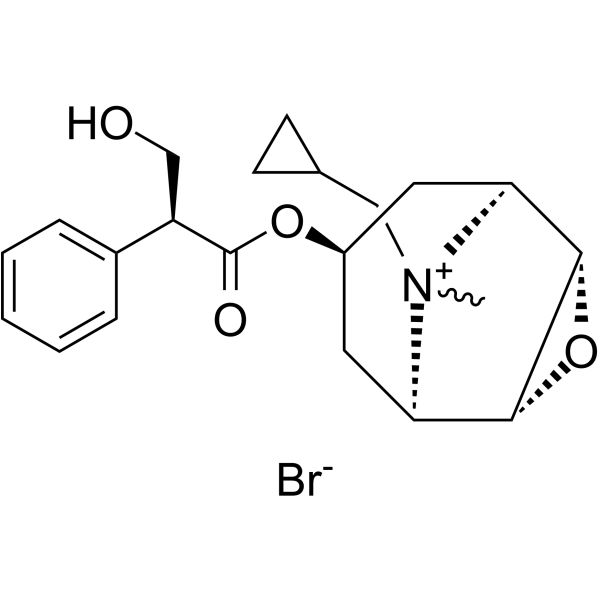 0 ImagesCat. No.: HY-U00106CAS No.: 51598-60-8Synonyms: DA-3177Cimetropium Bromide (DA-3177) is a mAChR antagonist for long-term treatment of irritable bowel syndrome.




