



TrxR
Thioredoxin Reductase
TrxR (Thioredoxin Reductase) is a selenium-containing pyridine nucleotide-disulphide oxidoreductase. There are three isoforms of mammalian TrxRs: TrxR1 (TXRND1), TrxR2 (TXNRD2) and TrxR3 (TGR). TrxRs catalyze the NADPH-dependent reduction of the redox protein thioredoxin (Trx). TrxR is important in regulating the intracellular redox environment, cell growth and transformation, as well as the recycling of ascorbate from its oxidized form. Trx/TrxR system is associated with the cancers, metabolic syndrome, insulin resistance, and type 2 diabetes, as well as in hypertension and atherosclerosis[1][2].
Références:
- [1]. Mustacich D, et al. Thioredoxin reductase. Biochem J. 2000 Feb 15;346 Pt 1(Pt 1):1-8. [Content Brief]
- [2]. Tinkov AA, et al. The role of the thioredoxin/thioredoxin reductase system in the metabolic syndrome: towards a possible prognostic marker? Cell Mol Life Sci. 2018 May;75(9):1567-1586. [Content Brief]
TrxR Isoform Specific Products
All Product Categories
-
TrxR Produits associés (46)
Produits associés (46)

-
Anticorps (6)
-
TrxR Isoform Comparison

-
TP-TRFS
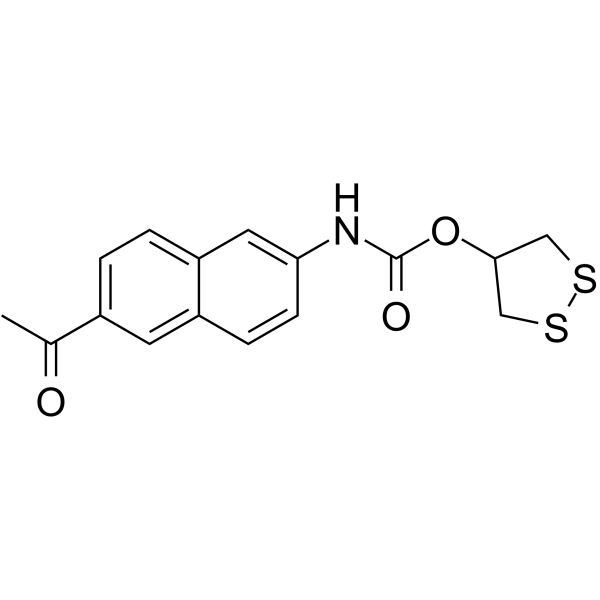 0 ImagesCat. No.: HY-D1253CAS No.: 2937819-61-7TP-TRFS is a highly selective and the first two-photon fluorescent probe of thioredoxin reductase (TrxR).
-
BGC4
 0 ImagesCat. No.: HY-172115BGC4 is a biphenyl-based gold(III) complex. BGC4 inhibits human recombinant thioredoxin reductase (TrxR) with an IC50 of 10.7 μM, exhibits cytotoxicity (IC50 for MDA-MB-231 is 5.4 μM), and induces apoptosis. BGC4 exhibits antitumor efficacy in mouse models.
-
As-CA11
 0 ImagesCat. No.: HY-179712As-CA11 is a Thioredoxin reductase (TrxR) inhibitor with an IC50 of 18.7 nM. As-CA11 can induce cancer cells apoptosis and ROS production. As-CA11 can reduce the level of reduced Trx and increase the level of oxidized Trx. As-CA11 demonstrates anti-tumor activity in the 4T1 tumor-bearing mouse model.
-
TrxR-IN-3
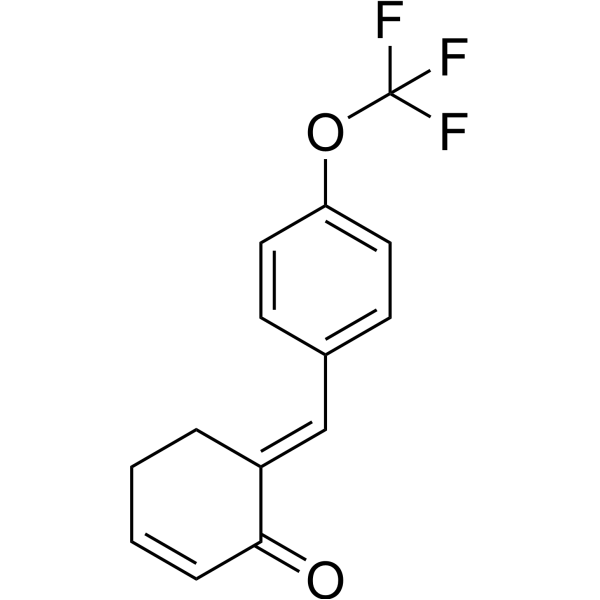 0 ImagesCat. No.: HY-146307CAS No.: 2445565-58-0TrxR-IN-3 (Compound 2c) is a potent inhibitor of TrxR. TrxR-IN-3 exhibits potent antiproliferative activities against five human cancer cell lines, especially against breast tumor cells. TrxR-IN-3 increases ROS levels and resulted in marked apoptosis by regulating apoptosis-related proteins expressed in the breast cancer cells. TrxR-IN-3 also triggers the formation of autophagosomes and autolysosomes by promoting the expression of LC3-II and Beclin-1 and diminishing the expression of LC3-I and p62 proteins.
-
TrxR1-IN-1
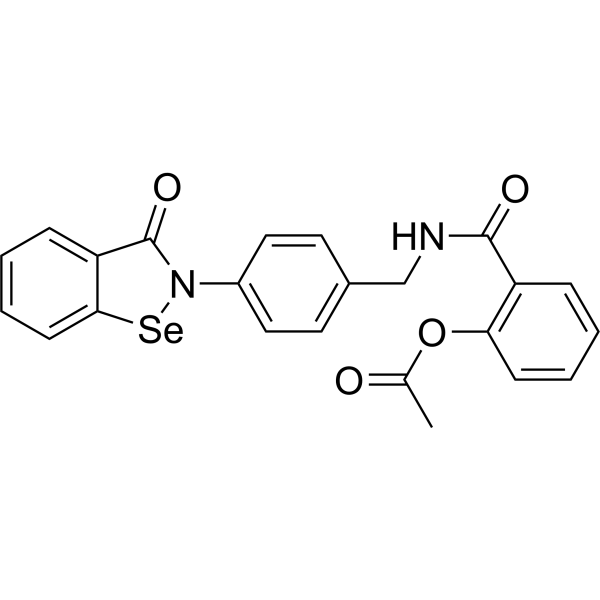 0 ImagesCat. No.: HY-149390CAS No.: 3052303-04-2TrxR1-IN-1 (Compound 5j) is a TrxR1 inhibitor (IC50: 8.8 μM). TrxR1-IN-1 has anticancer activity, with IC50s of MCF-7 (1.5 μM), HeLa (1.7 μM), BGC-823 (2.4 μM), SW-480 (2.8 μM), A549 (2.1 μM). TrxR1-IN-1 has antioxidant activity, and scavenges DPPH radical.

-
CS47
 0 ImagesCat. No.: HY-175806CAS No.: 1372792-51-2CS47 is a Thioredoxin Reductase 1 (TRXR1) inhibitor and ferroptosis inducer. CS47 binds non-covalently to sites between the FAD and NADPH pockets of TRXR1. CS47 drives glutathione depletion, lipid reactive oxygen species accumulation, HMOX1-dependent iron overload, and selective cytotoxicity in lung cancer cells. CS47 can be used for the research of lung cancer.
-
Aurothiomalate disodium
 0 ImagesCat. No.: HY-W010270ACAS No.: 74916-57-7Aurothiomalate disodium acts as an inhibitor of PKCI and TrxR1. Aurothiomalate disodium disrupts the PKCI-Par6-Rac1 signaling pathway, and also inhibits TrxR1 activity, TNFα-induced NF-κB activation, and the expression of pro-inflammatory genes. Aurothiomalate disodium blocks Kras-mediated BASC expansion and lung tumor growth, inhibits anchorage-independent growth and tumorigenicity of lung cancer cells, and suppresses neutrophil chemotaxis, phagocytosis, and leukocyte extravasation. Aurothiomalate disodium can be used in research related to rheumatoid arthritis and non-small cell lung cancer.
-
TrxR-IN-6
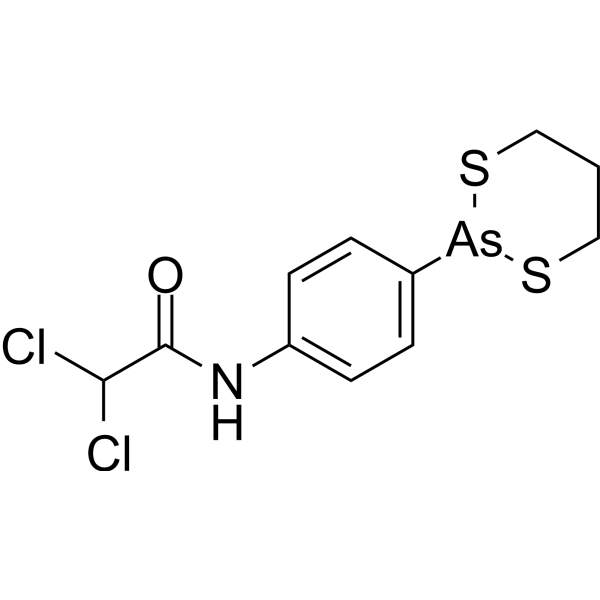 0 ImagesCat. No.: HY-157158CAS No.: 3032446-53-7TrxR-IN-6 is a thioredoxin reductase (TrxR) inhibitor. TrxR-IN-6 induces reactive oxygen species (ROS) accumulation and cell apoptosis. TrxR-IN-6 induces mitochondrial dysfunction, endoplasmic reticulum stress and DNA damage. TrxR-IN-6 can be used for the research of breast cancer, leukemia.
-
TrxR-IN-4
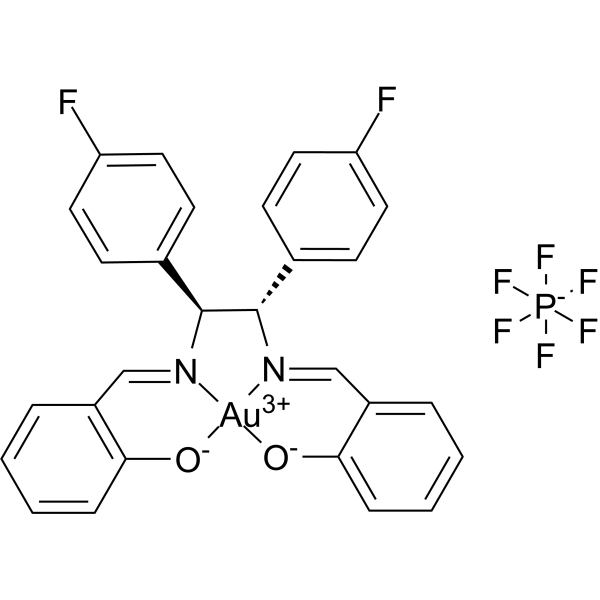 0 ImagesCat. No.: HY-146350CAS No.: 2414906-32-2TrxR-IN-4 is a thioredoxin reductase (TrxR) inhibitor with a rat IC50 of 0.37 μM. TrxR-IN-4 inhibits TrxR activity, elevates reactive oxygen species (ROS) and induces apoptosis. TrxR-IN-4 mediates endoplasmic reticulum stress and induces mitochondrial dysfunction. TrxR-IN-4 can be used for the research of hepatocellular carcinoma.
-
Platinum(IV) Prodrug-1
 0 ImagesCat. No.: HY-183544Platinum (IV) Prodrug-1 is a Pt (IV) prodrug and selective TrxR1 inhibitor. Platinum (IV) Prodrug-1 induces ferroptosis (Ferroptosis) by depleting glutathione, accumulating intracellular lipid peroxides, and inactivating Glutathione peroxidase 4. Platinum (IV) Prodrug-1 triggers endoplasmic reticulum stress and immunogenic cell death via excessive accumulation of intracellular ROS. Platinum (IV) Prodrug-1 exhibits anticancer activity against both Cisplatin (HY-17394)-sensitive and Cisplatin-resistant triple-negative breast cancer cells. Platinum (IV) Prodrug-1 can be used for the research of triple-negative breast cancer.
-
TrxR-IN-7
 0 ImagesCat. No.: HY-172086TrxR-IN-7 is a thioredoxin reductase (TrxR) inhibitor with an IC50 of 3.5 μM. TrxR-IN-7 induces reactive oxygen species (ROS) generation and apoptosis in tumor cells. TrxR-IN-7 can be used for the research of liver cancer and breast cancer.

-
LW-216
 0 ImagesCat. No.: HY-163724CAS No.: 2146090-18-6
-
CPUL1
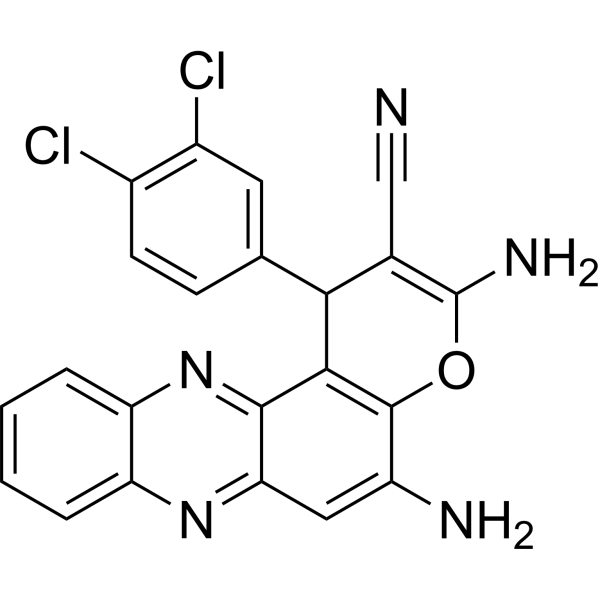 0 ImagesCat. No.: HY-151802CAS No.: 2043660-80-4CPUL1 is a TrxR inhibitor, which shows proliferation-inhibitory and anti-metastatic activity against A549 cells. CPUL1 influences EMT (epithelial-mesenchymal transition) via inducing ROS-mediated ERK/JNK signaling by inhibiting TrxR1 enzyme activity. CPUL1 in combination with α-Lipoic Acid (HY-N0492) or Dithiodipropionic acid (HY-W014395) is more effective.
-
FEACYP
 0 ImagesCat. No.: HY-161811FEACYP is a thioredoxin reductase (TrxR) inhibitor. FEACYP inhibits thioredoxin reductase activity, induces ROS by increasing basal cellular hydrogen peroxide production, suppresses tumor growth, exerts cytotoxicity against human cancer cells, and exhibits antiproliferative activity in human pancreatic cancer 3D spheroids. FEACYP can be used in the research of ovarian cancer, colon cancer, pancreatic cancer, and lung cancer.
-
TrxR/EGFR-IN-1
 0 ImagesCat. No.: HY-168492CAS No.: 3038386-42-1TrxR/EGFR-IN-1 (Compound L1Au2) is a TrxR/EGFR inhibitor. TrxR/EGFR-IN-1 is active against both Gefitinib (HY-50895)-sensitive and resistant lung cancers, effectively inhibiting tumor proliferation and promoting apoptosis. TrxR/EGFR-IN-1 promotes the degradation of GPX4 protein through autophagolysosomal and proteasomal pathways, leading to ferroptosis. In addition, TrxR/EGFR-IN-1 can induce endoplasmic reticulum stress and trigger immunogenic cell death. TrxR/EGFR-IN-1 can be used for the research of Gefitinib (HY-50895)-resistant lung cancer.
-
TrxR2-IN-1
 0 ImagesCat. No.: HY-182324CAS No.: 3085154-16-8TrxR2-IN-1 is a thioredoxin reductase 2 (TrxR2) inhibitor with an IC50 value of 0.83 μM. TrxR2-IN-1 accumulates in mitochondria, impairs mitochondrial function and membrane potential, increases reactive oxygen species (ROS) levels, activates ASK1-mediated caspase-dependent apoptosis (apoptosis), induces G2/M cell cycle arrest, and inhibits cancer cell migration. TrxR2-IN-1 can be used in the research of hepatocellular carcinoma.
-
TrxR-IN-8
 0 ImagesCat. No.: HY-173403CAS No.: 2857180-28-8TrxR-IN-8 (Compound 6f) is a selective TrxR inhibitor (IC50: 10.2 μM). TrxR-IN-8 induces apoptosis through oxidative stress by stimulating the production of reactive oxygen species (ROS), reducing intracellular thiols, and lowering the glutathione/glutathione ratio. TrxR-IN-8 exhibits significant cytotoxicity against non-small cell lung cancer (NSCLC) cells.




